Permascaping, by Homegrown Foods

Landscaping on Flood Irrigation in Phoenix

If your yard floods every couple of weeks, you’ve got one of the best growing setups in the desert. Here’s how it works, what can go wrong, and how to turn it into food.

12-minute read · By Jérémy Chevallier · Updated November 2026

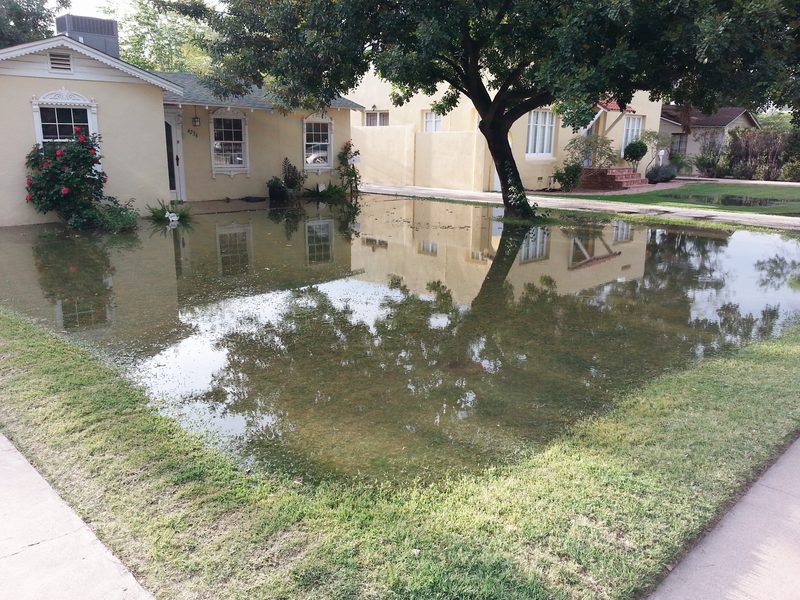
Some Phoenix yards get a gift most of the Valley never sees. Every week or two, canal water rolls in and covers the whole yard a few inches deep.

That water is raw lake and river water. It’s cheap, it’s never chlorinated, and it soaks in deep. That’s why irrigated streets have the biggest trees in town.

But most irrigated yards are just lawn and a few shade trees. We think they could feed whole neighborhoods. This guide covers how it works, the real headaches, and how to design a flood yard for food.

Thumbnail for the Blog & guides card and link previews. Click the photo to replace it; until then the main photo is used.

What flood irrigation is

Flood irrigation is the oldest way to water in the Valley. You open a valve, the yard fills up, and the water soaks in.

The Hohokam people farmed this valley with Salt River water more than a thousand years ago. They dug hundreds of miles of canals by hand. When settlers showed up in the 1860s, they cleaned out some of those old canals and used them again.

In 1903, local landowners teamed up to build dams and canals. That group became SRP. Roosevelt Dam was finished in 1911. Today SRP runs 131 miles of canals and about 1,000 miles of smaller ones called laterals, and some still follow Hohokam routes.

From the big canals, water runs into neighborhood ditches and pipes, then through a valve into your yard. It moves almost entirely by gravity. A low dirt wall around the yard, called a berm, holds it in until it soaks down.

See it from above

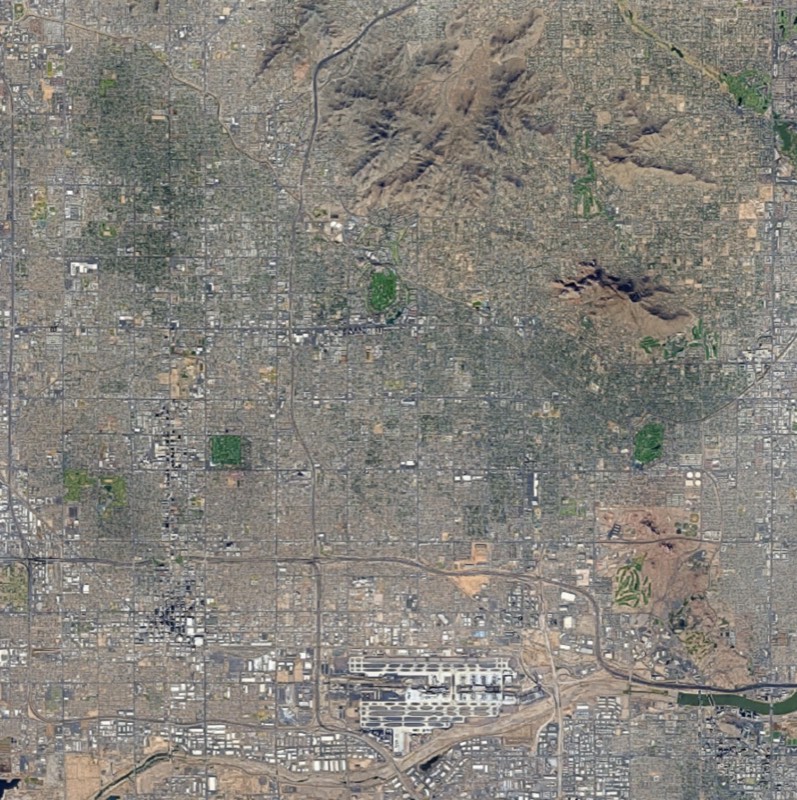
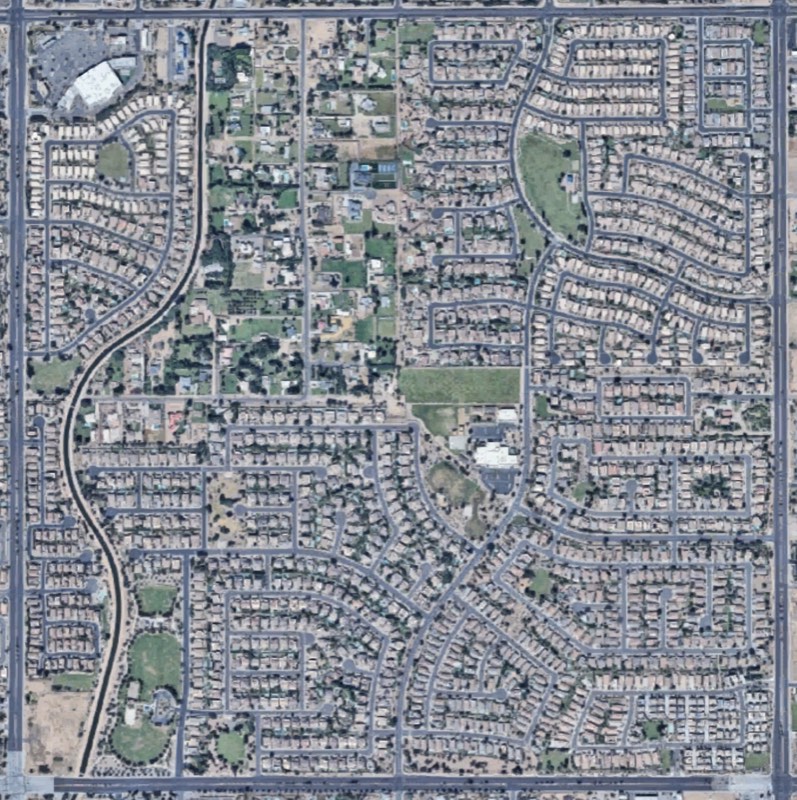
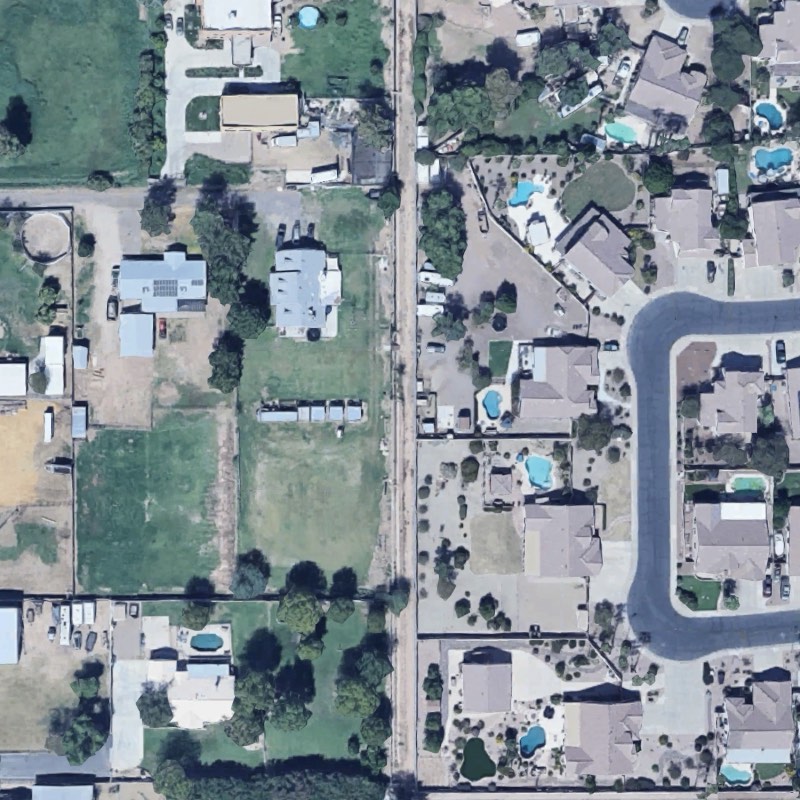
Flood-irrigated neighborhoods jump out on an aerial map. Look for big trees and green yards in a sea of tan.

Can you tell where the flood irrigated neighborhoods are?
How about now?
The closer we get, the starker the contrast. It’s a real privilege.

Why it’s a gift

Flood irrigation beats a hose or sprinklers in a few big ways. Here’s what you get.

  • It waters deep

    Each turn covers your yard with 2 to 3 inches of water that soaks in, usually within a few hours. The water goes deep, and the roots follow it.
  • It costs a lot less

    SRP’s own example puts a typical irrigated yard at about $180 a year, versus about $1,200 on city water for the same lawn and trees. Your costs will vary, but it’s a small fraction of tap.
  • No chlorine

    Irrigation water isn’t treated at all. It’s raw lake and river water, so nothing gets added on the way to your roots.
  • Natural fertility

    SRP calls it nutrient-rich. It picks up nutrients as it runs off the forests up north and sits in the lakes. Your soil life loves it.
  • A cooler block

    Irrigated streets grow big shade trees. SRP says flood irrigation helps cut the urban heat island effect. You can feel it walking under that canopy in July.
  • It refills the aquifer

    Water that soaks past the roots keeps going down. SRP says irrigation water helps recharge the groundwater under the Valley.

Who delivers it, and how to tell if you have it

About 20,000 properties in metro Phoenix get flood irrigation from SRP. A few other providers serve the rest. Rules, schedules and fees differ for each one.

SRP brings water to a delivery gate at the high point of your area. From there, the ditches, pipes and valves belong to you and your neighbors. Some streets share the work informally. Others form an Irrigation Water Delivery District, a county district that collects money for repairs.

Some cities run the neighborhood side for you. Tempe handles about 850 homes, mostly in older neighborhoods near downtown. Glendale runs its own urban irrigation around downtown too. In the East Valley, the Roosevelt Water Conservation District serves parts of Mesa, Gilbert and Chandler.

Not sure if a place has it? Look for a concrete standpipe or a valve near the edge of the lot, and dirt berms around the yard. Then call SRP at (602) 236-3333 with the address. They can set up an account and even walk your system with you for free.

How a turn works

Every provider runs a little differently. This is the typical SRP flow. Check your own schedule for the details.

  1. Order your water. Order online, in the SRP Water app, by phone, or sign up for recurring orders. Your neighborhood has an order deadline. You order in five-minute blocks, up to your property’s max.

  2. Get your time. Once the schedule posts, look up your exact slot. Water runs day and night, so your turn might be at 3 a.m. In summer it comes about every 14 days. In winter it’s about every 28.

  3. Get the yard ready. Walk your berms and patch low spots and gopher holes. Clear grates and ditches. Move anything that shouldn’t get wet. Know who goes right before and after you.

  4. Open up. At your time, open your valve or pull the port cover. Watch it fill. You want the whole yard under 2 to 3 inches of water, with nothing getting out.

  5. Close it on time. Shut your valve when your time ends so the next neighbor gets theirs. If water shows up early, give the next person a heads up so nothing floods.

  6. Check the next day. The water should be gone within hours. If a puddle hangs on, fill or loosen that spot before the next turn. Soft, wet soil also makes this the best time to plant and pull weeds.

The real challenges

Flood irrigation isn’t all upside. Here’s what trips people up, and how to handle it.

  • Standing water and mosquitoes

    Maricopa County’s health code says you can’t let water sit where mosquitoes breed. The rule doesn’t set a clock. But the county warns mosquitoes can come out of standing water in four to five days, so fix any spot that stays wet.
  • Berms take upkeep

    SRP suggests berms 12 to 18 inches wide and 3 inches taller than your deepest water. They slump, wash out and get dug up by gophers. Walk them before every turn.
  • Missing a turn

    Miss the order deadline and you could wait two to four weeks. Most years there’s also a break in late fall or winter while the canals get cleaned. Have a hose plan for young trees.
  • Bermuda grass and weeds

    Bermuda spreads by runners above and below ground. In irrigated soil, its roots can go more than 6 inches deep and several feet out. Canal water can carry weed seeds too. Plan on edging and thick mulch.
  • Trunk and crown rot

    Water sitting against a citrus trunk invites Phytophthora, a soil disease that rots the bark. The University of Arizona says don’t let water stand around the crown. Peach and apple trees can get it in soggy soil too.
  • Water near the house

    Keep the flood away from foundations, slabs, pool decks and block walls. SRP notes block walls are porous and should be sealed or bermed off. Grade or berm these areas so water never reaches them.
  • Shared, aging pipes

    Your neighborhood system may be decades old. SRP doesn’t fix private systems, so repairs fall to you and your neighbors. A broken valve during a turn can flood a street fast.
  • Rising costs and service changes

    Providers are feeling the squeeze. Tempe says its flood irrigation fees never covered the full cost of the service. It raised them about 25% in July 2026. Expect costs to keep climbing across the Valley.

Designing a flood yard for food
A flood yard is one big, shallow basin that fills on a schedule. Good design decides where that water sits and who gets to drink it.

Start with the grade. The yard should be close to level so water spreads evenly and soaks in. High spots stay dry and low spots puddle, so fix both before you plant. Our watershed planner helps you map where water goes.

Next, lift what can’t sit in water. Citrus, peaches and young trees go on wide, low mounds or inside a raised ring, a little dirt donut that keeps water off the trunk. Make it wide so the roots still reach the flooded ground. Veggies like kale and garlic go in raised beds you water by drip or hose.

Everything else can drink the flood. Big fruit trees, shrubs and groundcovers fill the low ground in layers, like a forest. Read up on the seven layers of a food forest, then lay yours out in the planting planner. Got a big lawn to clear first? We do lawn removal too.

Wet roots, dry trunks. Every tree in the flood zone should sit high enough that water soaks its roots but never stands against its bark.

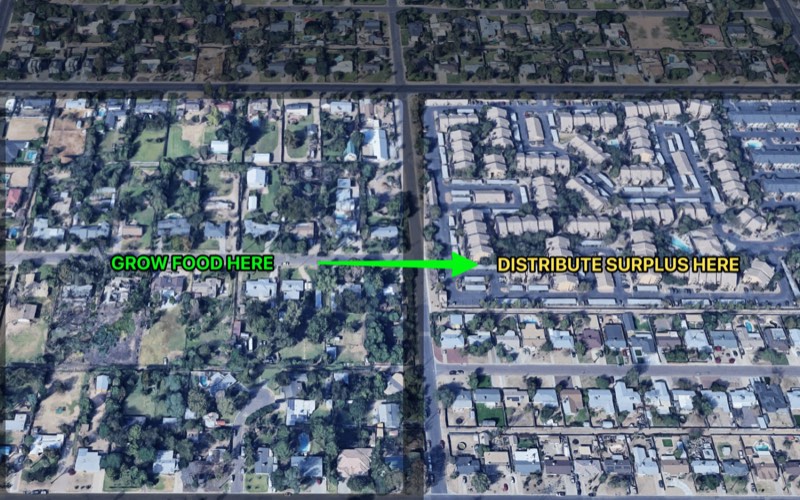
Our model: flood-irrigated land across the Valley, growing food for the neighborhoods around it.

Your flood yard checklist

  • Level the yard and rebuild the berms first.
  • Put citrus and stone fruit on mounds or rings so the trunk stays dry.
  • Grow vegetables and herbs in raised beds.
  • Mulch thick to feed living soil, but keep it off trunks and away from valves.
  • Chop and drop prunings and cover crops right where they grow.
  • Plant and spread compost right after a turn, while the soil is soft.

What to plant

Some plants love a deep soak every two weeks. Others need a little height. Here’s how we sort them.

  • Trees that love a soak

    Mulberry, fig, pomegranate and pecan do great with deep, regular water. Pecans get huge, so give them room. Try a Pakistan mulberry or a Black Mission fig.
  • Citrus, on a raised ring

    Meyer lemon, Valencia orange and other citrus can thrive on flood water, as long as the trunk stays dry. Plant on a wide, low mound or ring the trunk with dirt. Keep the bud union 4 to 6 inches above the soil.
  • Stone fruit and apples, a little higher

    Desert Gold peach and Anna apple like deep water but hate a wet crown. Plant them on mounds, just like citrus. Our fruit tree planting guide walks you through it.
  • Food forest understory

    Under the big trees, grow things that like it moist and a bit shady. Sugarcane makes a fast screen, and mint loves the damp. Banana does well in a sheltered spot, on a mound so winter water drains. Run grapes up a fence.
  • Groundcovers and chop-and-drop

    Cover bare ground so Bermuda has less room to move in. Microclover adds nitrogen in the cool months, and frogfruit makes a low, living carpet. Cut back fast growers like mulberry and sugarcane and drop the trimmings as mulch.
  • Desert natives, on high ground

    Palo verde, mesquite and desert willow don’t need the flood. Too much water makes them grow fast and weak, so they break more easily in a storm. Put them on berms, edges or higher ground.

Buying or selling a flood-irrigated home

Irrigation can be the best thing about a property. But it isn’t always what the listing says. Check before you fall in love.

Call the provider with the address before you make an offer. For SRP, that’s (602) 236-3333. Ask if the land has irrigation rights, if the account is active and paid up, and how recently water was delivered. Listings can be wrong, and not every lot on an irrigated street gets water.

It’s worth the call. With SRP, the water right belongs to the land, not the owner, so it comes with the lot. That means cheap water, big trees and a head start on a food garden. Irrigated homes often sell for more, though bigger lots and old shade trees are part of that.

Ask the seller a few things. Do they run the turns, or pay an irrigator? How long do they usually order? Are there district fees or shared repair costs? Any trouble with the valve, standpipe or berms? If you can, walk the yard during a turn.

Why this matters for Phoenix

Flood-irrigated land is some of the best growing ground in the desert. But most of it grows lawn. And the systems behind it are getting harder to pay for. Tempe’s rate study showed its fees covered only about half the cost, and lots of neighborhood pipes are aging. Some residents could end up high and dry.

We want to change that. Permascaping is working to turn irrigated yards into food: fruit trees, food forests and gardens that feed families and neighbors. Put that water to work, and Phoenix gets closer to a resilient, regenerative food system its people own.

Common mistakes

We see these all the time. Each one is easy to avoid.

  • Planting citrus flat in the flood zone, with no ring or mound.
  • Burying the bud union, or piling soil and mulch against trunks.
  • Letting berms slump until water runs into the neighbor’s yard.
  • Ordering more water than the yard can hold.
  • Using light mulch that floats off and clogs grates and valves.
  • Putting a palo verde or mesquite in the middle of a flooded lawn.

Questions

Can I drink flood irrigation water?

No. It’s raw, untreated water from lakes, rivers and wells. It’s for plants only.

Is it safe for my vegetables?

We play it safe. Grow veggies in raised beds and water them by drip or hose. Let the flood handle trees and shrubs, and keep raw water off the parts you eat.

How often does the water come?

With SRP, about every 14 days from April through September, and about every 28 days from October through March. Other providers vary. Most years there’s also a break in late fall or winter for canal cleaning.

What if I miss my turn?

Call your provider right away. SRP can sometimes take a late order if the schedule isn’t final yet. If not, you’ll wait for the next one, so hand water young trees in the heat.

Will it bring mosquitoes?

Not if the water drains. It should soak in within a few hours. County code bars letting water sit where mosquitoes breed, so fix any spot that stays wet.

Can I hire someone to run my turns?

Yes. Lots of neighborhoods use commercial irrigators. They order the water, run the turns and often fix the system. They work for you, not for SRP.

Do I pay for the water itself?

With SRP, the water belongs to your land. You pay yearly charges and fees for storage, delivery and upkeep instead. Cities that run the service, like Tempe, charge their own fees.

Your yard floods for a reason

This water has fed the Valley for more than a thousand years. Use it to grow food, and your yard becomes part of that story.