
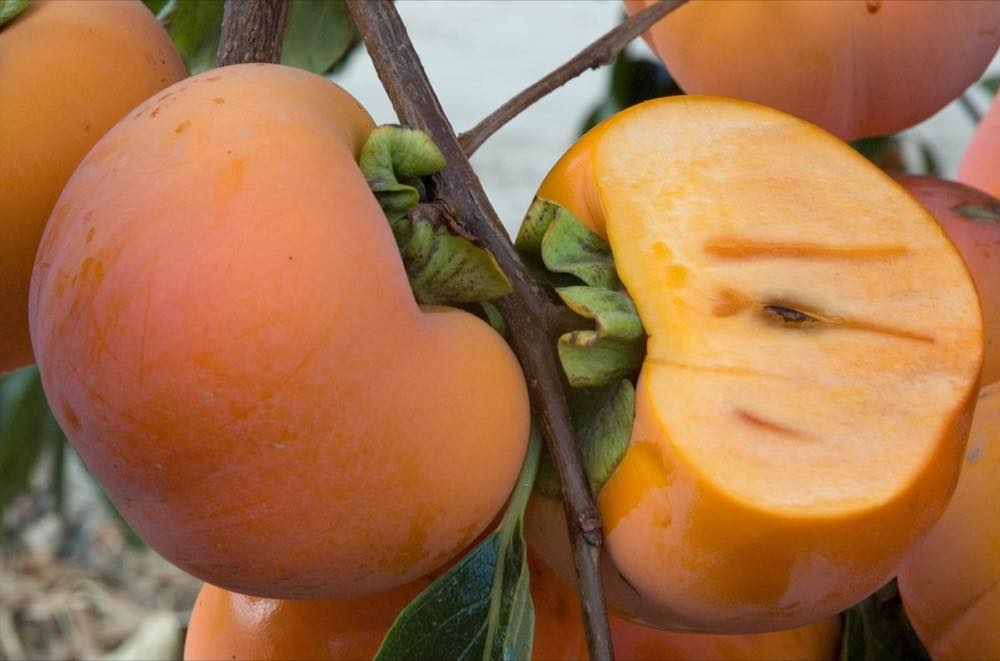
Persimmons · Dave Wilson Nursery
Giant Fuyu Persimmon
Bigger and rounder than regular Fuyu, still crunchy, sweet and non-astringent when ripe. It ripens a little earlier than Jiro and is easy in both hot and cool climates, so it fits the low desert and milder mid elevation. Thin fruit lightly in heavy years so the big fruit do not break limbs.
- Chill hours
- 200 hours
- Harvest
- October to early November in the low desert; later at elevation
- Pollination
- Self-fruitful
- Mature size
- 20–25 ft unpruned on Lotus; easy to hold at 10–12 ft with summer pruning
Which one
Every persimmon side by side
Same fruit, different seasons and different jobs. Pick the row that fits your ground and your calendar.
| Bigger and rounder than regular Fuyu, still crunchy, sweet and non-astringent when ripe. It ripens a little earlier than Jiro and is easy in both hot and cool climates, so it fits the low desert and milder mid elevation. Thin fruit lightly in heavy years so the big fruit do not break limbs. | Small to medium oblong red fruit with firm, brown, spicy-sweet flesh, often called the connoisseur's persimmon. It is non-astringent, so you can eat it firm, and it tastes best with seeds, when the flesh turns chocolate brown, so a second persimmon nearby helps. It ripens late, so plant it in the low desert and keep water steady. | An early, non-astringent persimmon with a spicy cinnamon-pastry flavor, ripening three to four weeks ahead of Fuyu, so you can eat it firm. Unlike most persimmons it needs a second variety nearby to crop, and Chocolate or Gosho are the matches. Early ripening helps it at mid elevation as well as in the low desert. | A large, squarish, flattened Fuyu that is non-astringent and crunchy like an apple when ripe, so there is no waiting for it to soften. Easy, self-fruitful and nearly pest-free, it fits the low desert and the milder parts of mid elevation. Steady water and a whitewashed trunk help against sunburn and fruit drop. | Medium, flat, crunchy fruit you eat firm like an apple, with no astringency. A top pick for first-timers, since it is self-fruitful, nearly pest free and happy in both hot and cool climates, from the low desert to the milder parts of mid elevation. Steady watering helps avoid fruit drop in summer heat. | A large, deep orange, acorn-shaped persimmon that is very sweet but astringent until it is completely soft, like jelly. It needs a hot summer to mature, which makes it a natural for the low desert, and it ripens late, so mid elevation is risky. Wait until the fruit is soft, or freeze and thaw it, before eating. | A round, very sweet, non-astringent persimmon that ripens about three weeks before Fuyu, on a smaller tree that is a good backyard pick. Early ripening helps it at mid elevation as well as in the low desert. You can eat it firm, and thinning in heavy years keeps the fruit large. | A medium, round, glossy orange-red persimmon with a very sweet, rich flavor. It is non-astringent, and when pollinated by another persimmon the flesh turns dark cinnamon and gets seeds. It ripens by midseason, so it works in the low desert and the milder parts of mid elevation. | An elongated yellow-orange, astringent persimmon that is very sweet with a renowned flavor once it is soft, and the tree turns red, orange and yellow in fall. It ripens late and wants a long hot summer, so it is a low desert tree. Wait until the fruit is jelly-soft before eating it. | A large, flat persimmon with thick reddish-orange skin and light orange flesh, shaped like a squashed tomato. It is astringent, so wait until it is soft before eating. It ripens late and likes a long hot summer, so it is a low desert tree. | |
|---|---|---|---|---|---|---|---|---|---|---|
| Harvest | October to early November in the low desert; later at elevation | Late October to November in the low desert | Mid September to October in the low desert; October at elevation | Mid October to November in the low desert; later at elevation | Mid October to November in the low desert; later at elevation | Late October to November in the low desert | Late September to October in the low desert; later at elevation | October in the low desert; later at elevation | Late October to November in the low desert | November in the low desert (late ripener) |
| Chill hours | 200 hours | 200 hours | 200 hours or less | 200 hours | 200 hours | 200 hours | 200 hours | 200 hours | 200 hours | 200 hours |
| Pollination | Self-fruitful | Self-fruitful; a second persimmon nearby adds seeds and dark flesh | Needs a partner such as Chocolate or Gosho | Self-fruitful | Self-fruitful | Self-fruitful | Self-fruitful | Self-fruitful; pollination darkens and seeds the flesh | Self-fruitful | Self-fruitful |
| Mature size | 20–25 ft unpruned on Lotus; easy to hold at 10–12 ft with summer pruning | 20–25 ft unpruned on Lotus; easy to hold at 10–12 ft with summer pruning | 20–25 ft unpruned on Lotus; easy to hold at 10–12 ft with summer pruning | 20–25 ft unpruned on Lotus; easy to hold at 10–12 ft with summer pruning | 20–25 ft unpruned on Lotus; easy to hold at 10–12 ft with summer pruning | 25–30 ft unpruned on Lotus; easy to hold at 10–12 ft with summer pruning | 12–15 ft unpruned on Lotus; easy to hold at 8–10 ft with summer pruning | 20–25 ft unpruned on Lotus; easy to hold at 10–12 ft with summer pruning | 20–25 ft unpruned on Lotus; easy to hold at 10–12 ft with summer pruning | 20–25 ft unpruned on Lotus; easy to hold at 10–12 ft with summer pruning |
| From | $42 | $47 | $35 | $35 | $35 | $42 | $38 | $42 | $35 | $38 |
Where this tree sits
Persimmons sit in the lower canopy layer.
Lower canopy
Fruit trees kept below the tall ones. Most of this year's program lives here, held to eight or ten feet by summer pruning.
Other options in the lower canopy layer
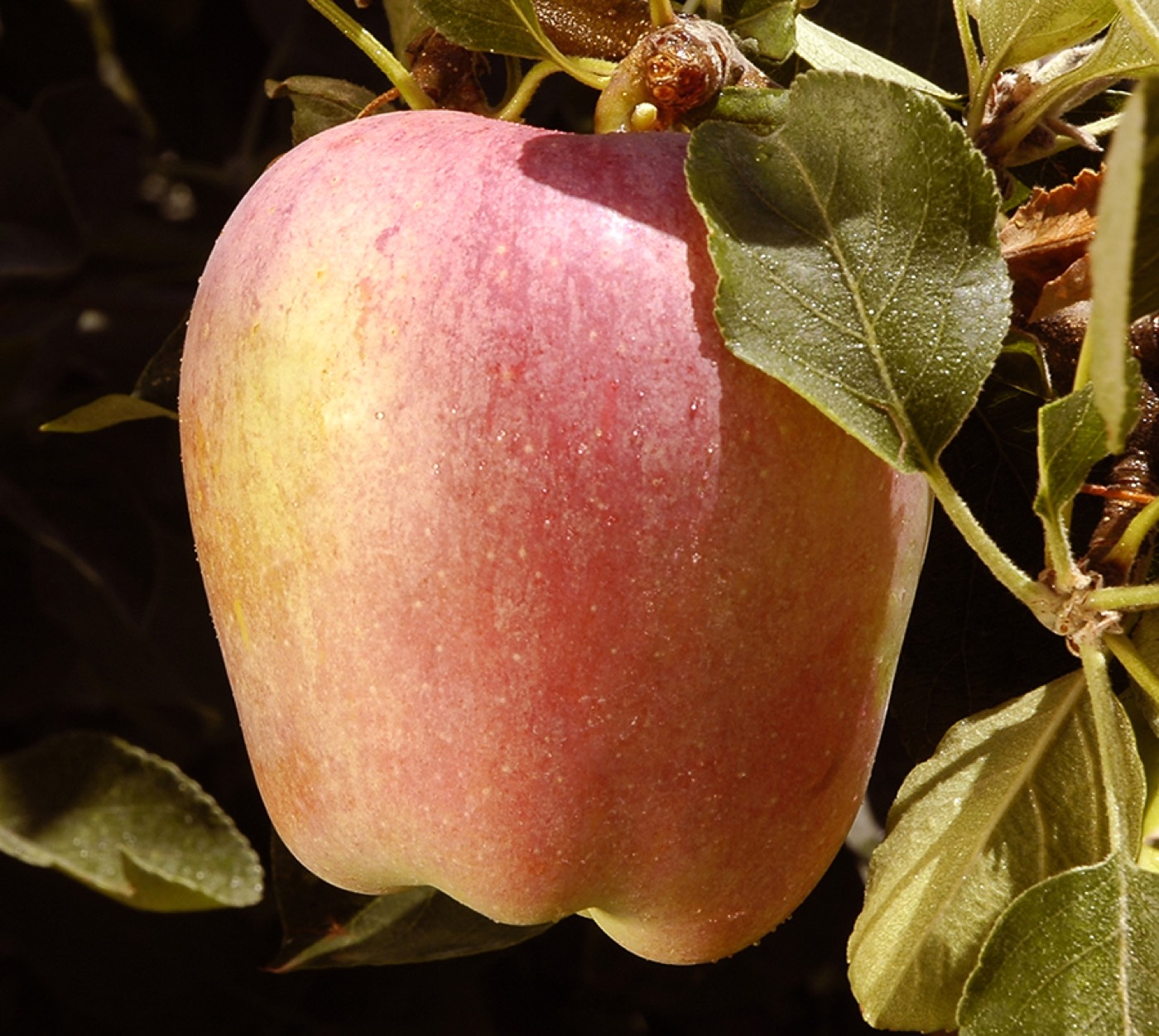 ApplesIn this year's order
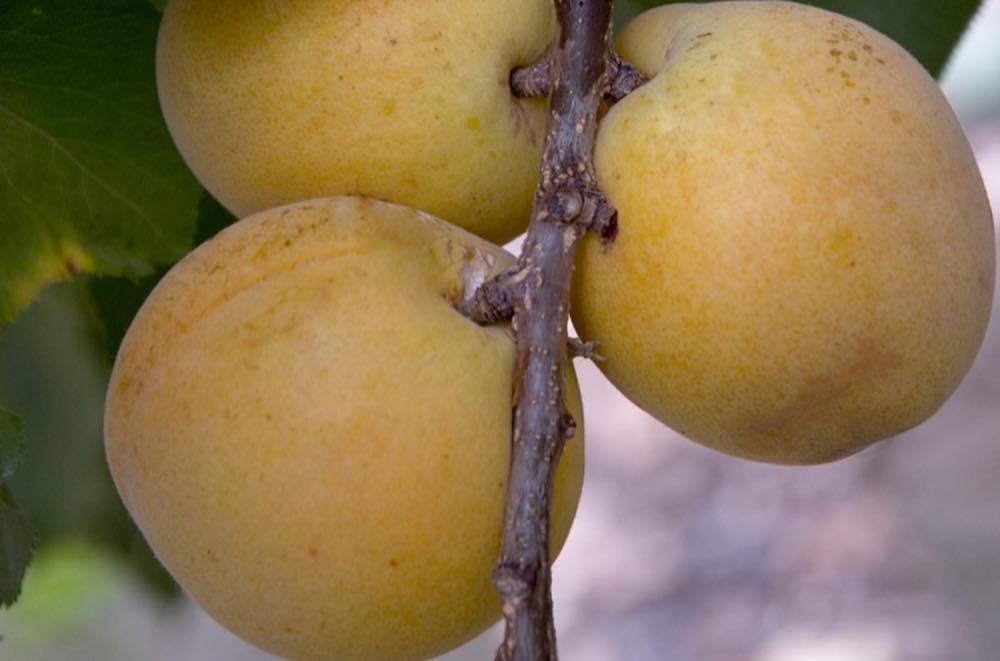 ApricotsIn this year's order
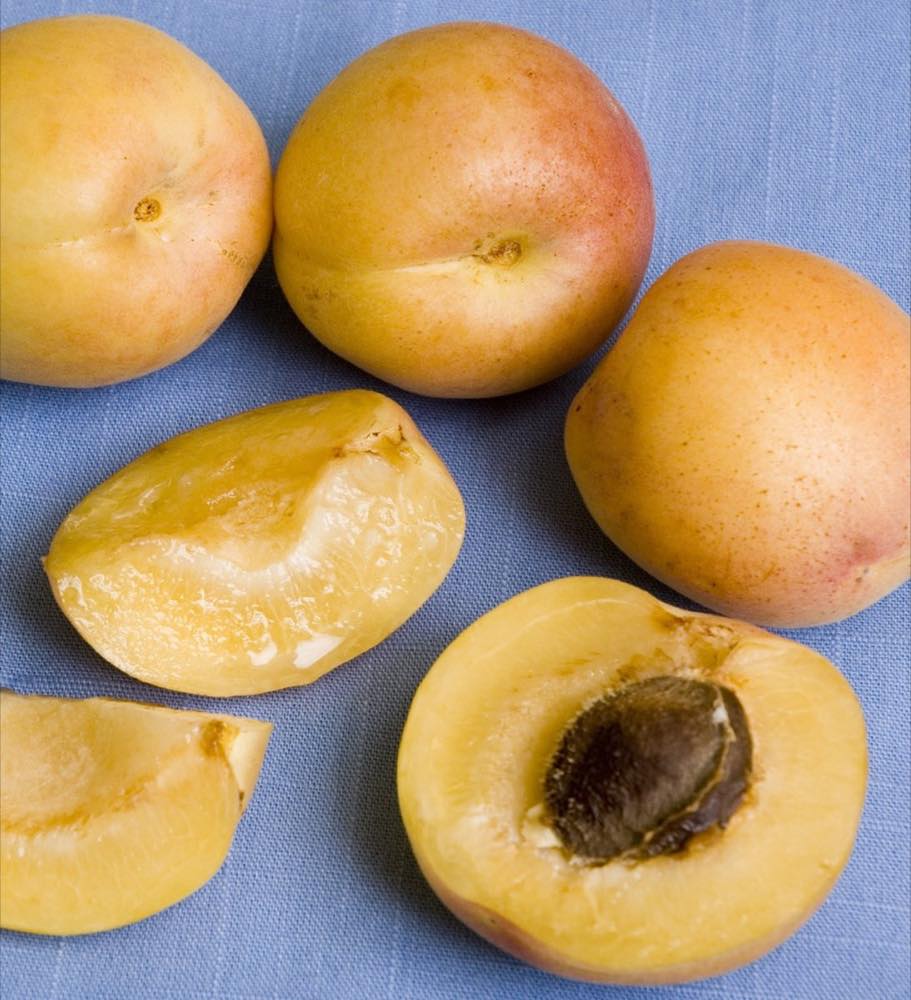 ApriumsIn this year's order
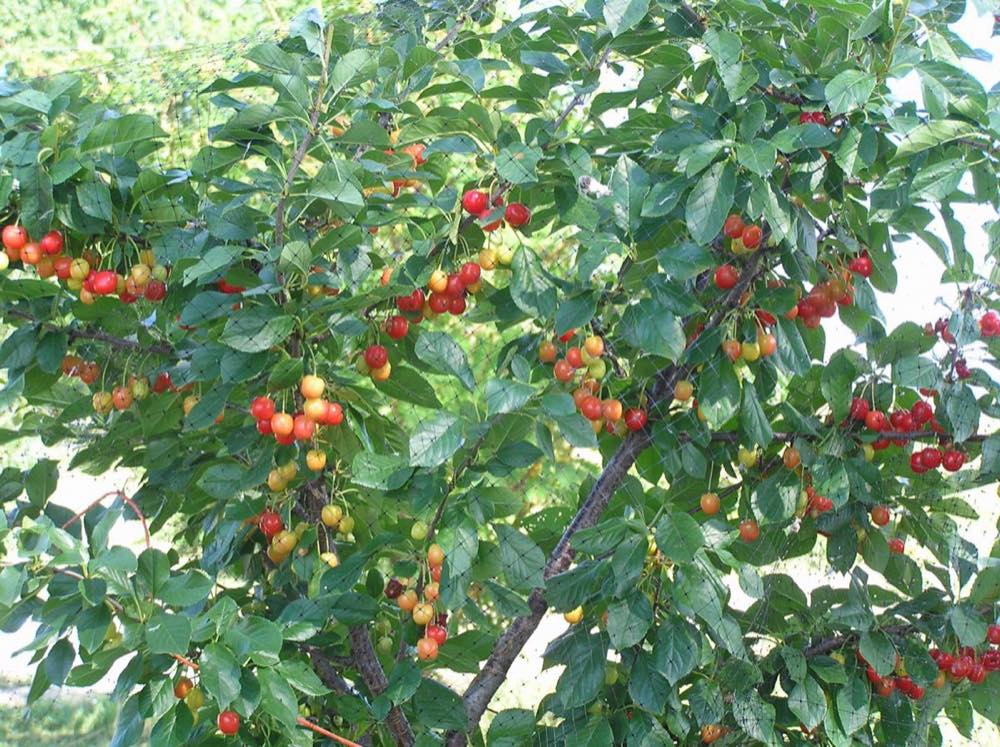 CherriesIn this year's order
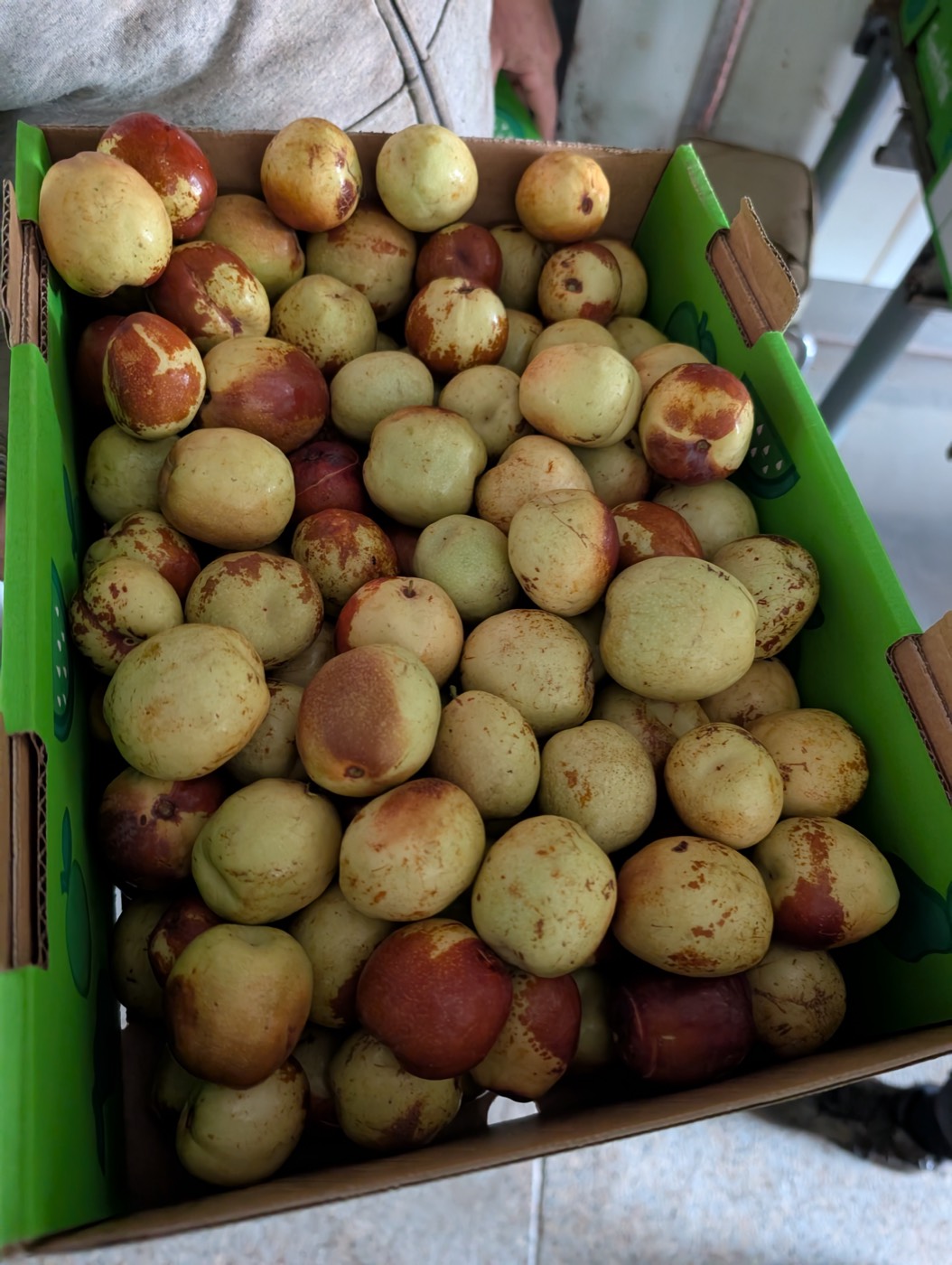 JujubesIn this year's order
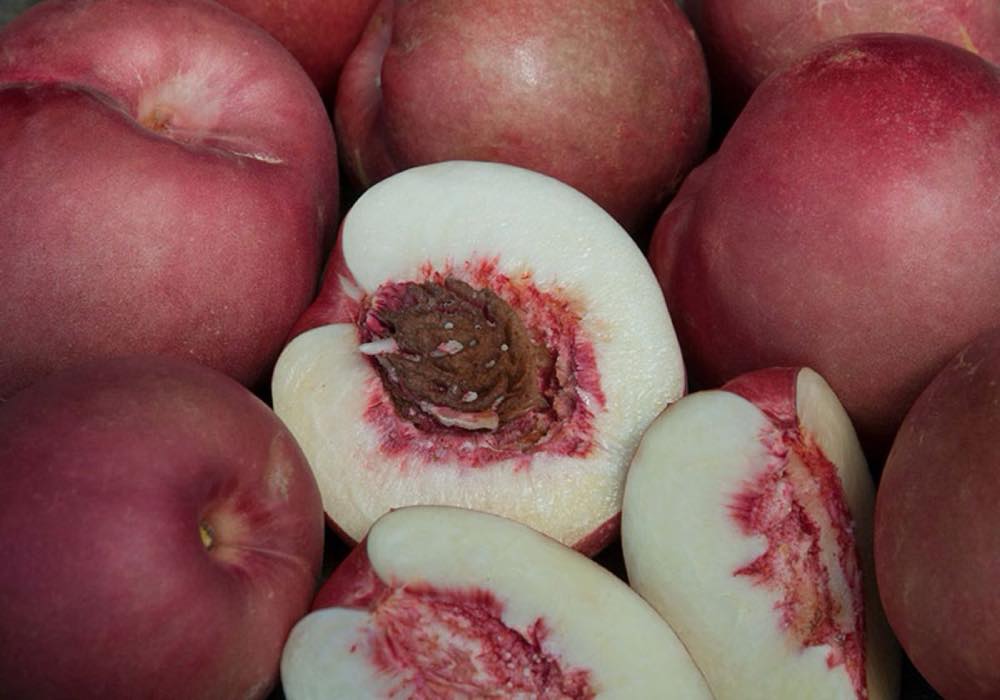 Pluots & interspecificsIn this year's order
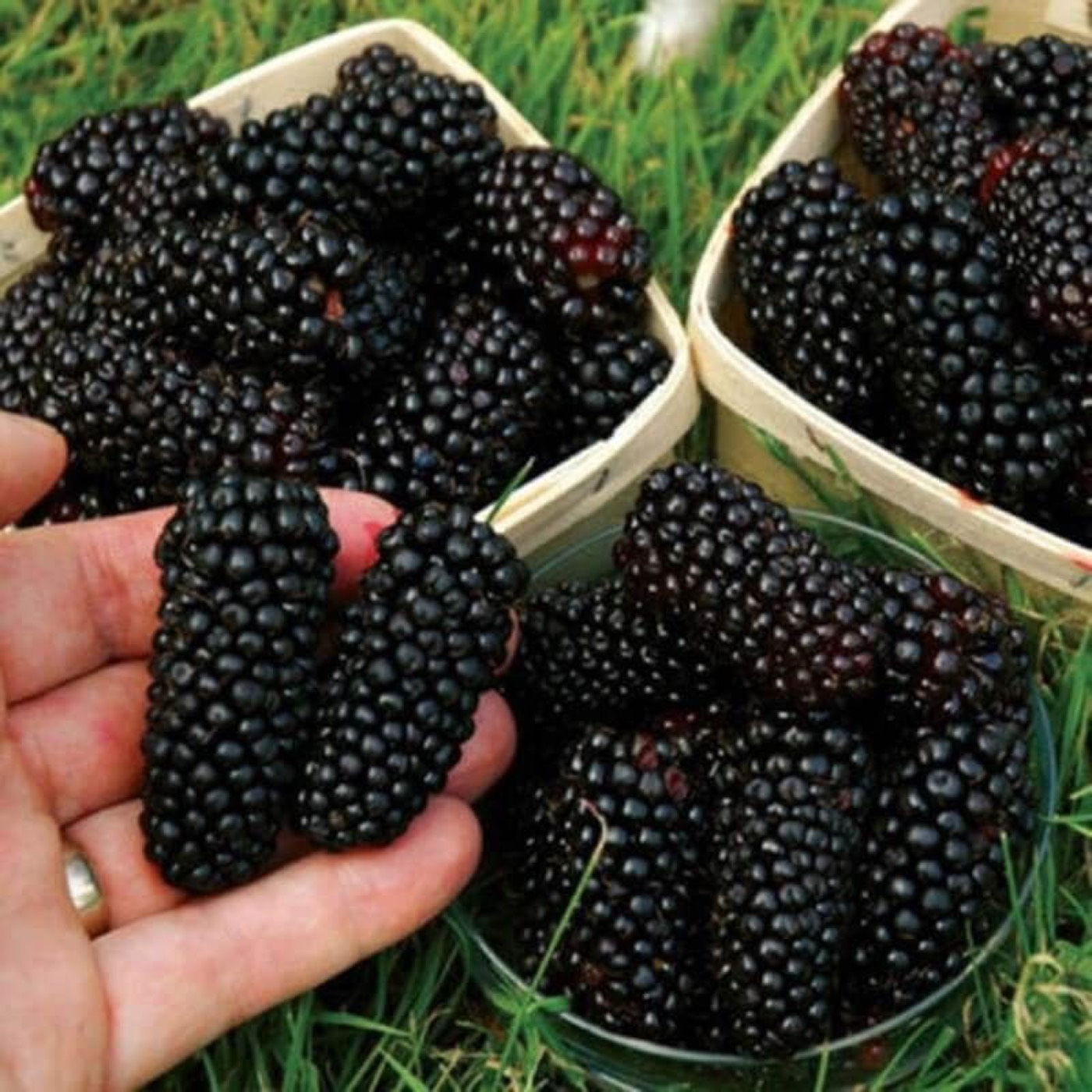 MulberriesIn this year's order
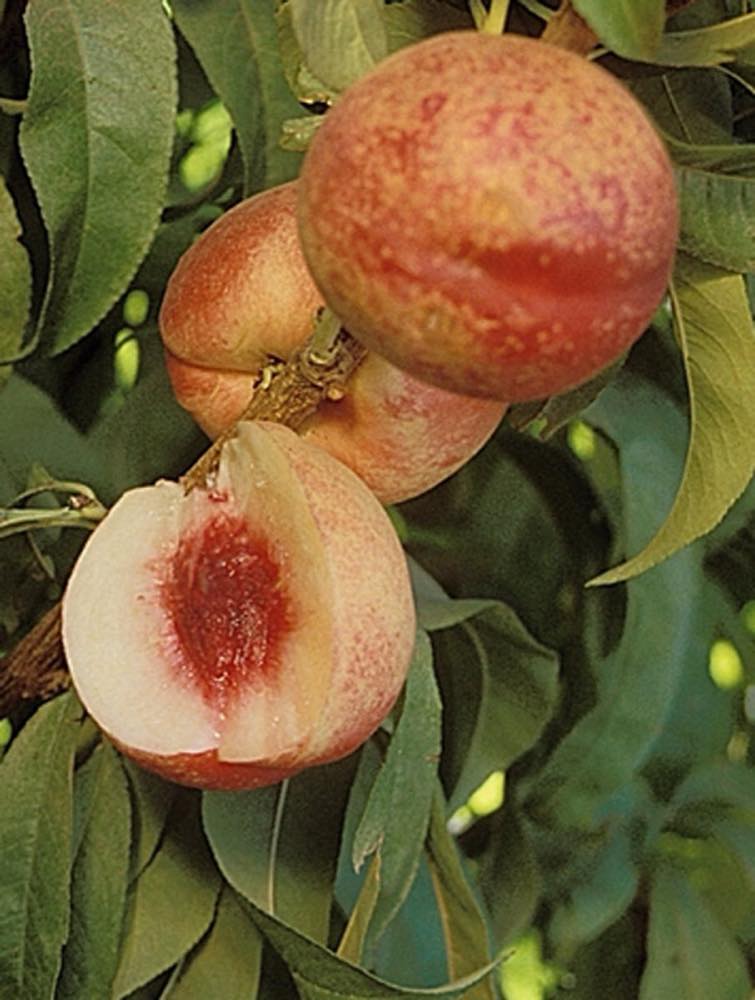 NectarinesIn this year's order
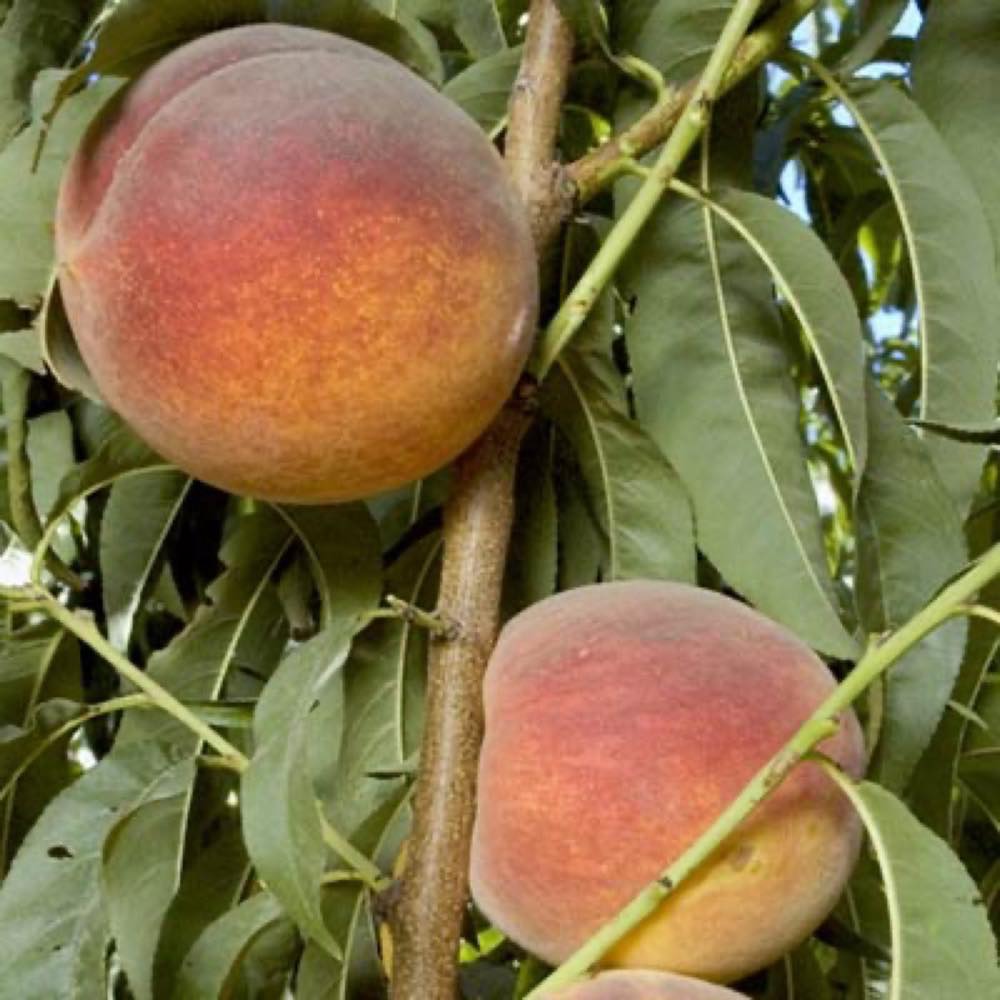 PeachesIn this year's order
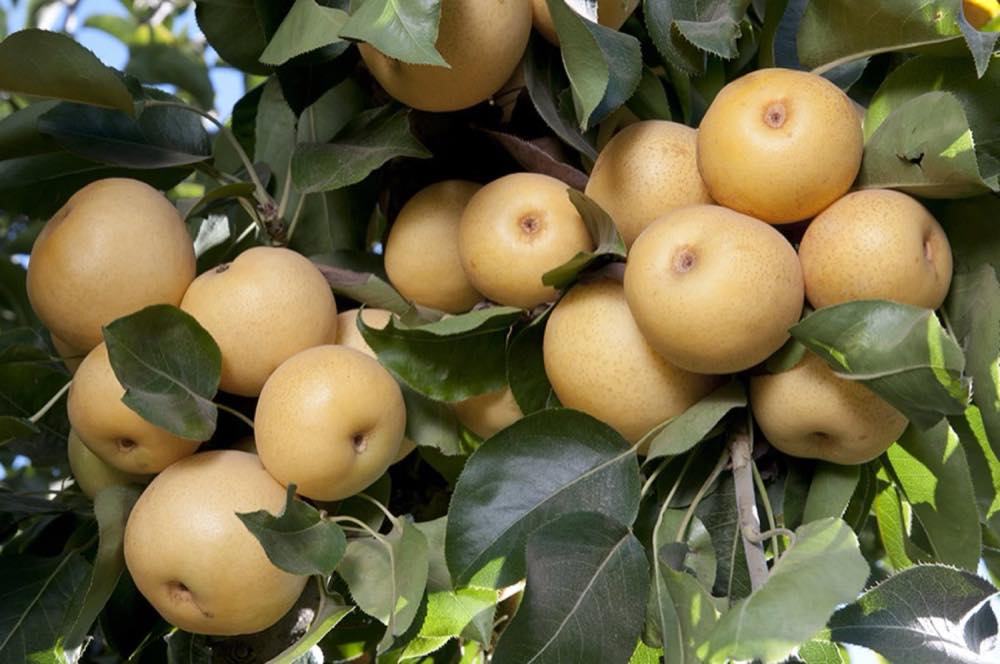 Asian pearsIn this year's order
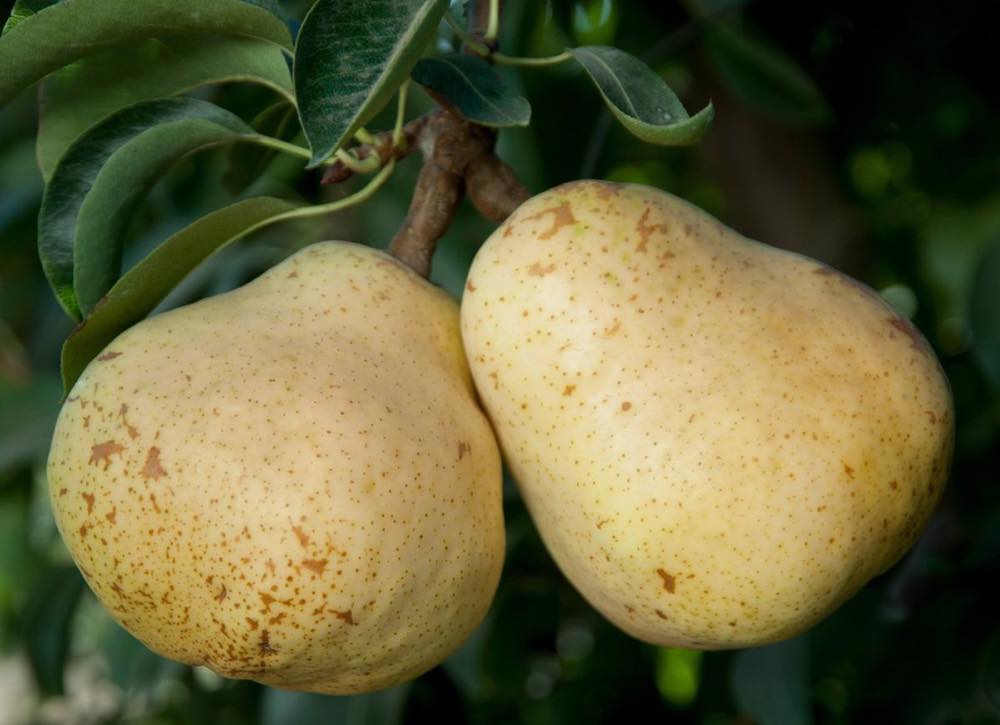 PearsIn this year's order
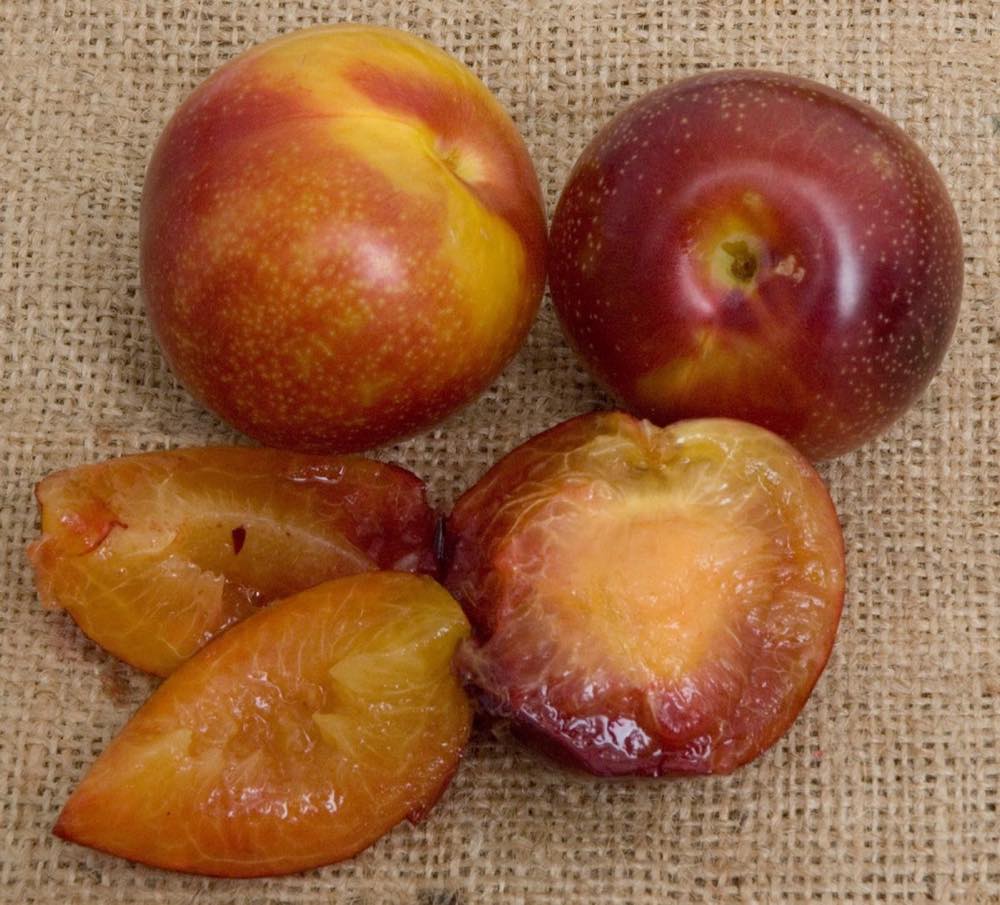 PlumsIn this year's order
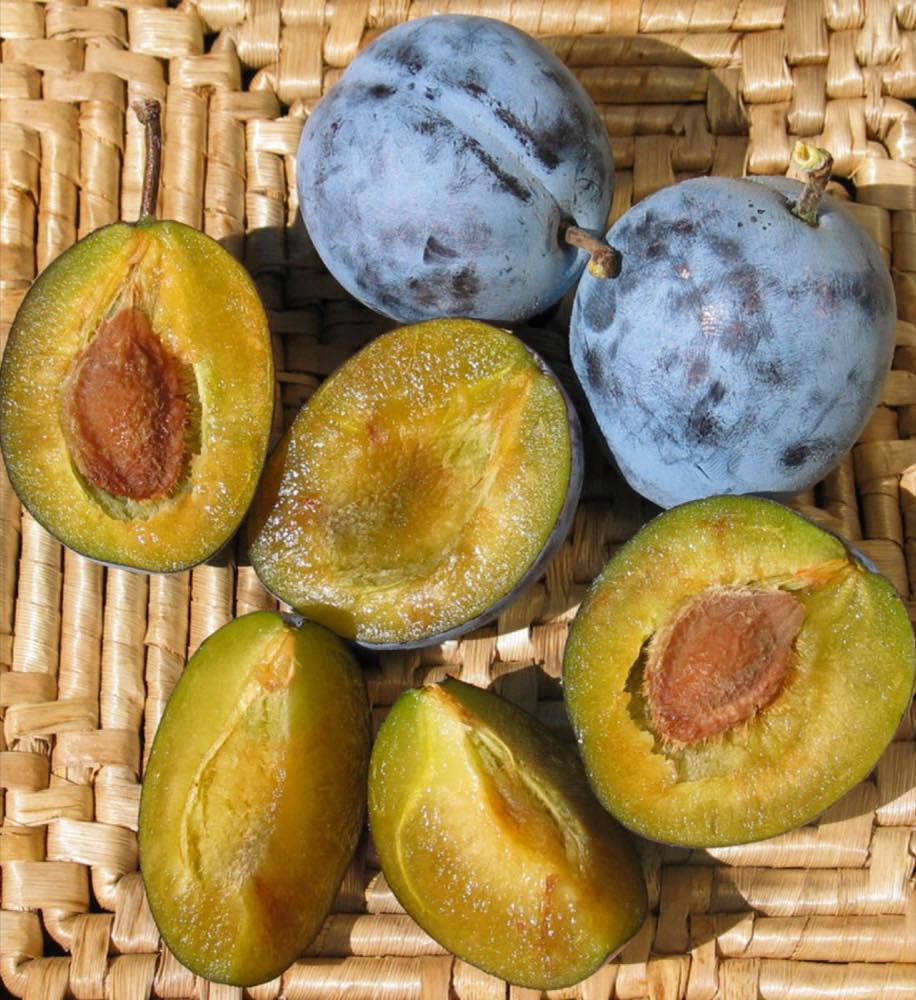 PrunesIn this year's order
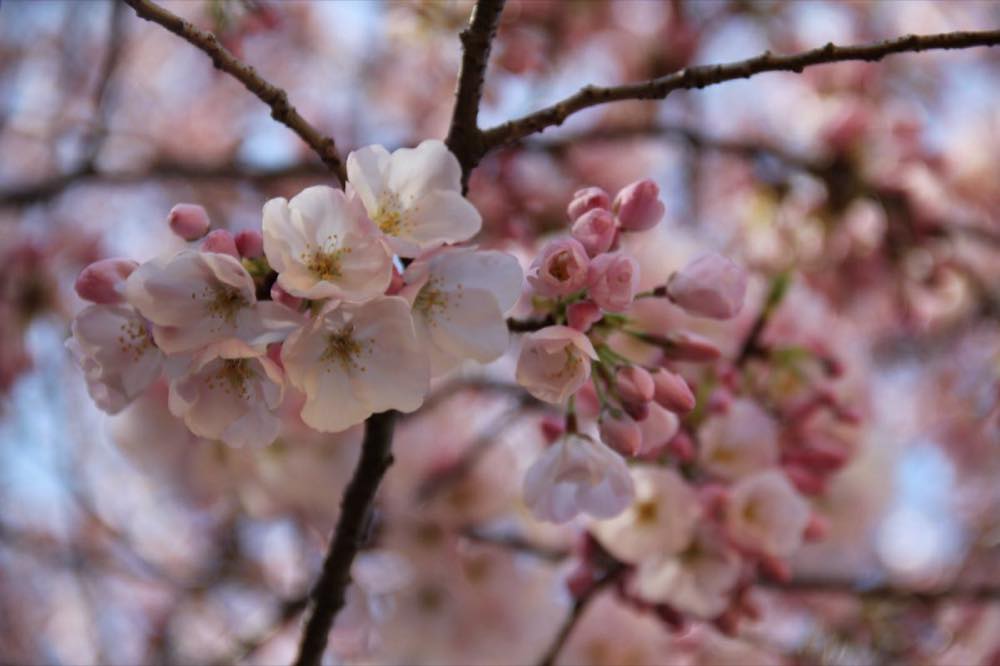 Flowering treesIn this year's order
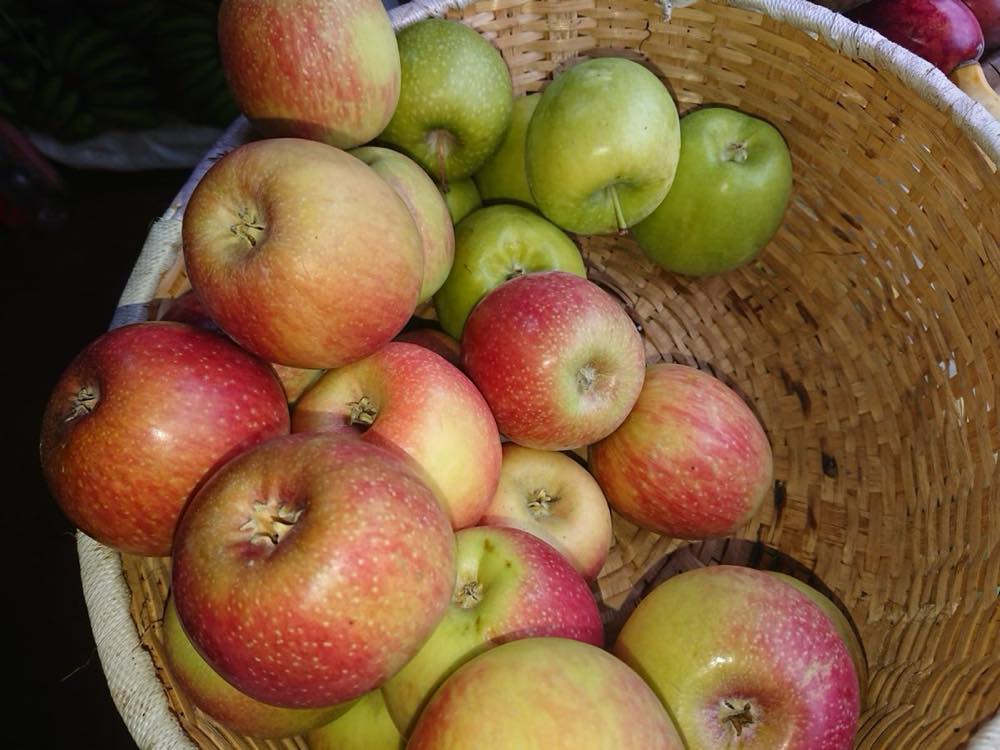 Multi-graftedIn this year's order
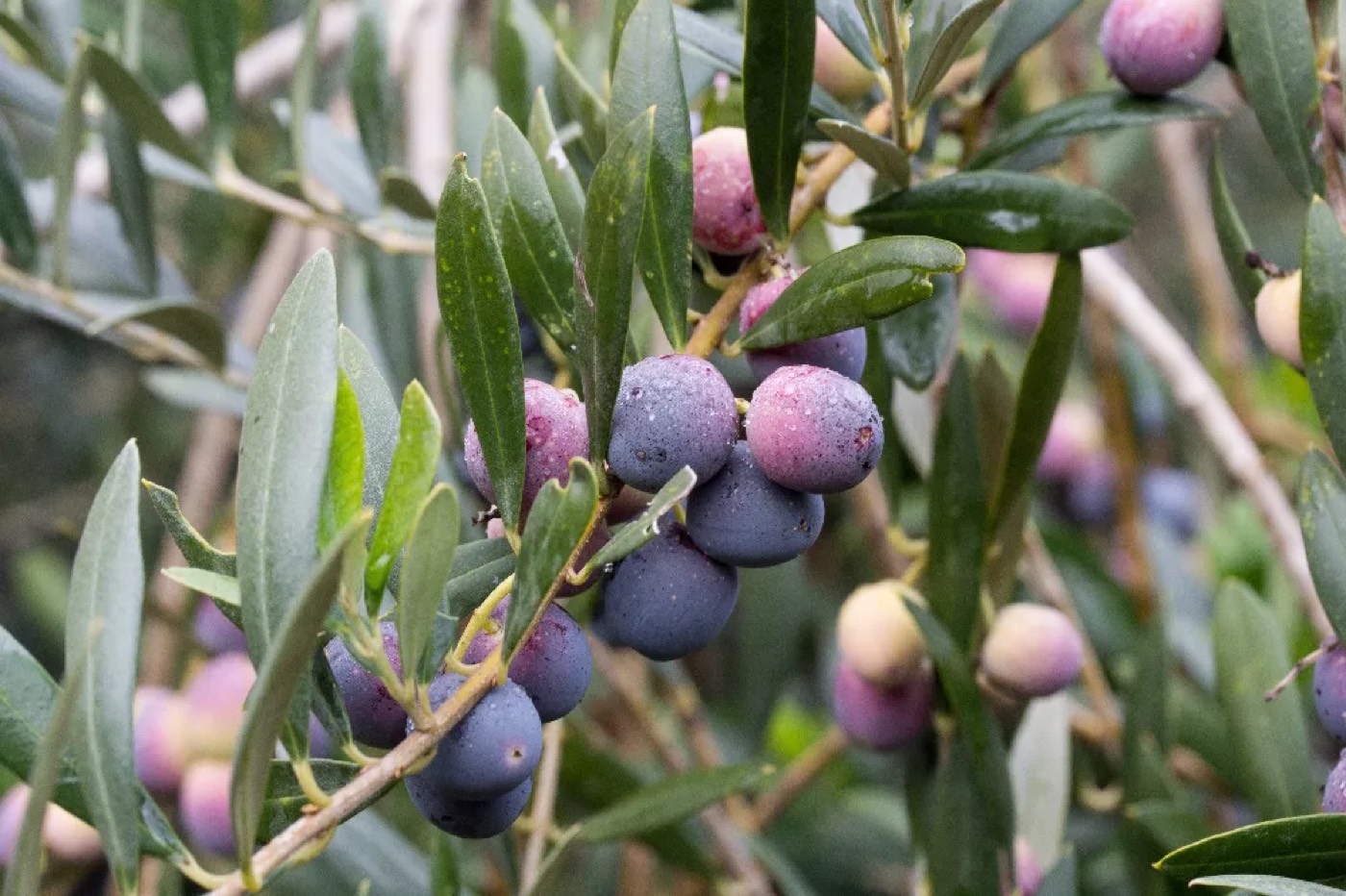 OlivesIn this year's order
Not in the current wholesale fruit tree program. Add it to your wishlist or a future wholesale preorder.
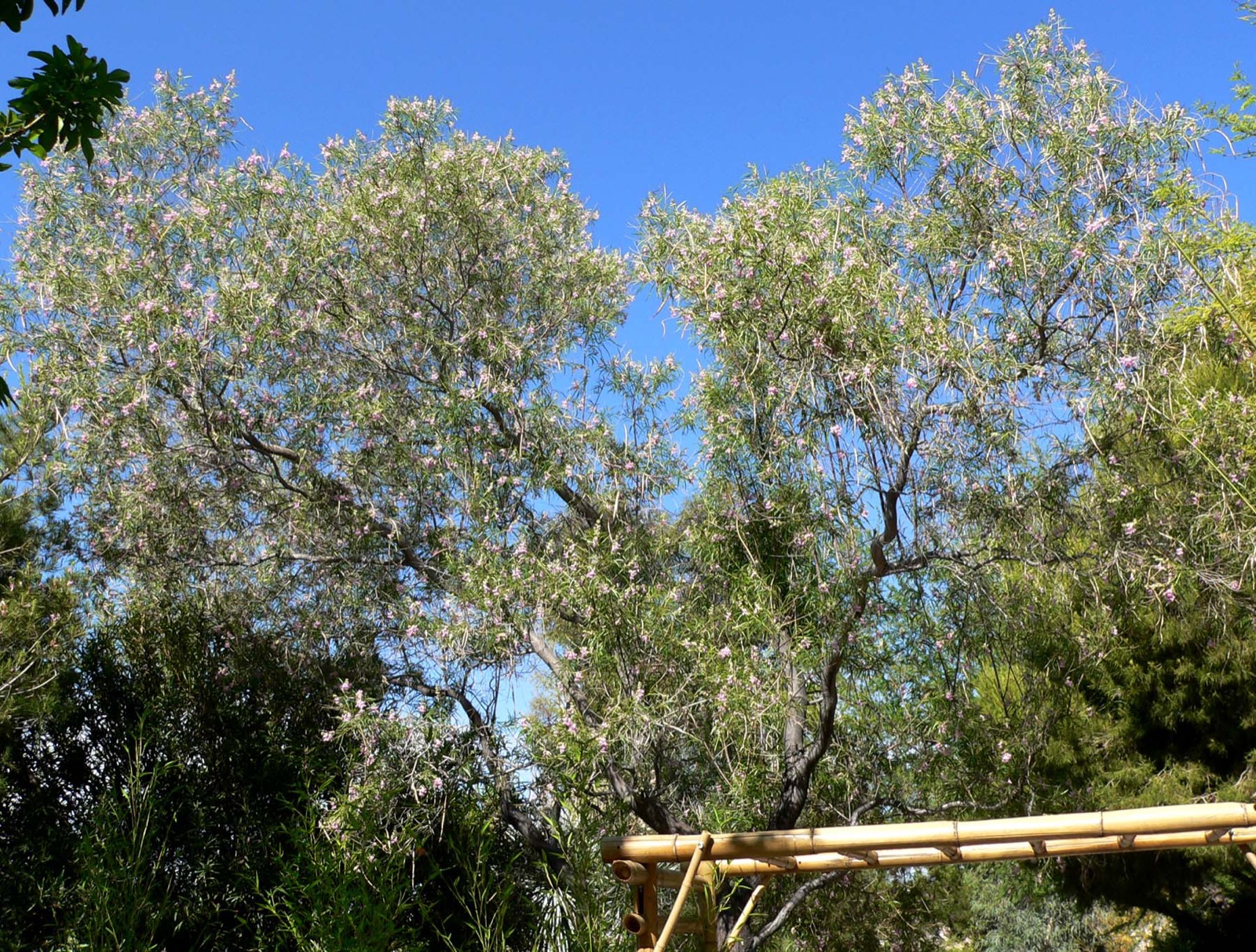 Desert willowChilopsis linearis
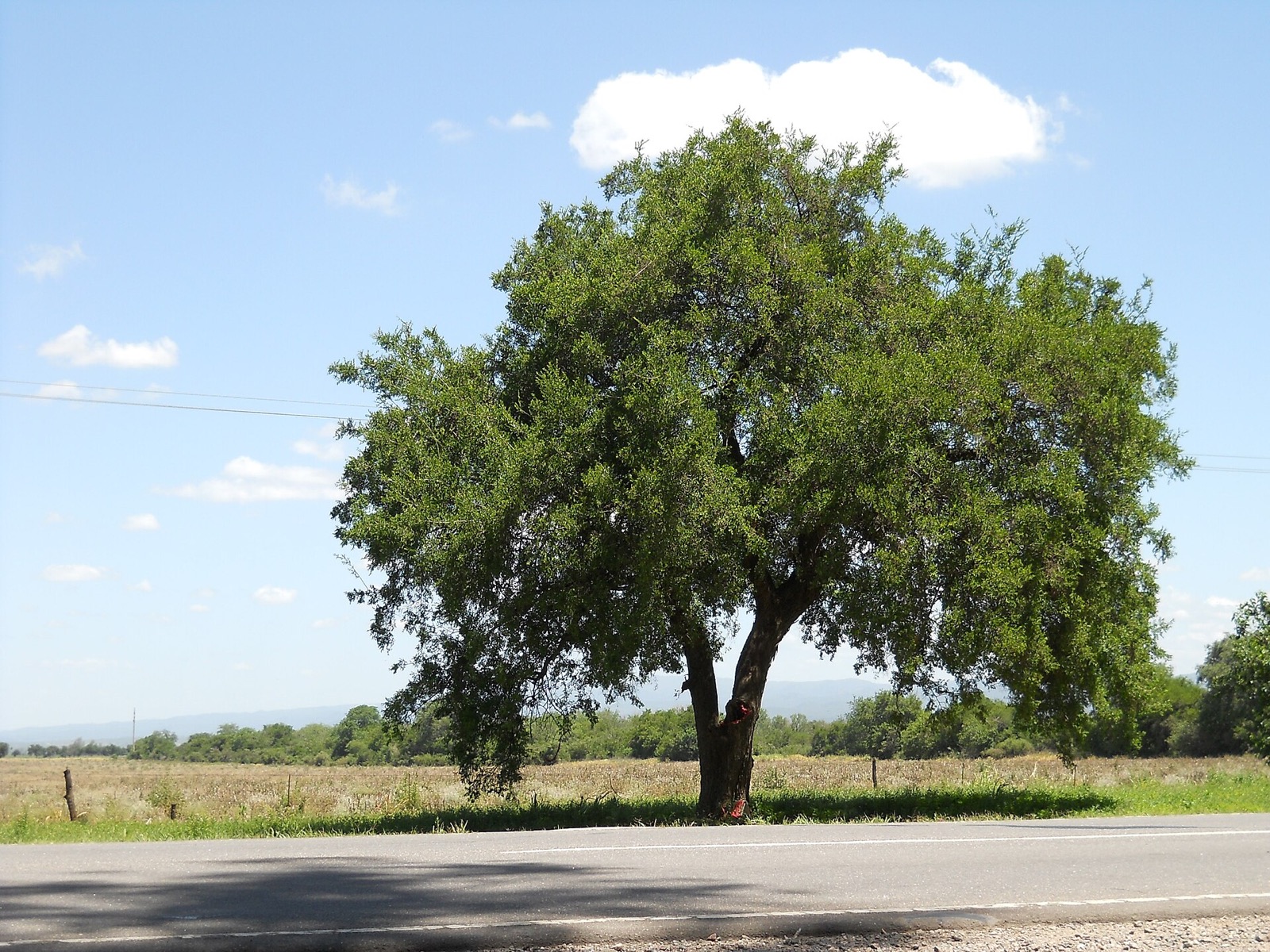 Desert hackberryCeltis pallida
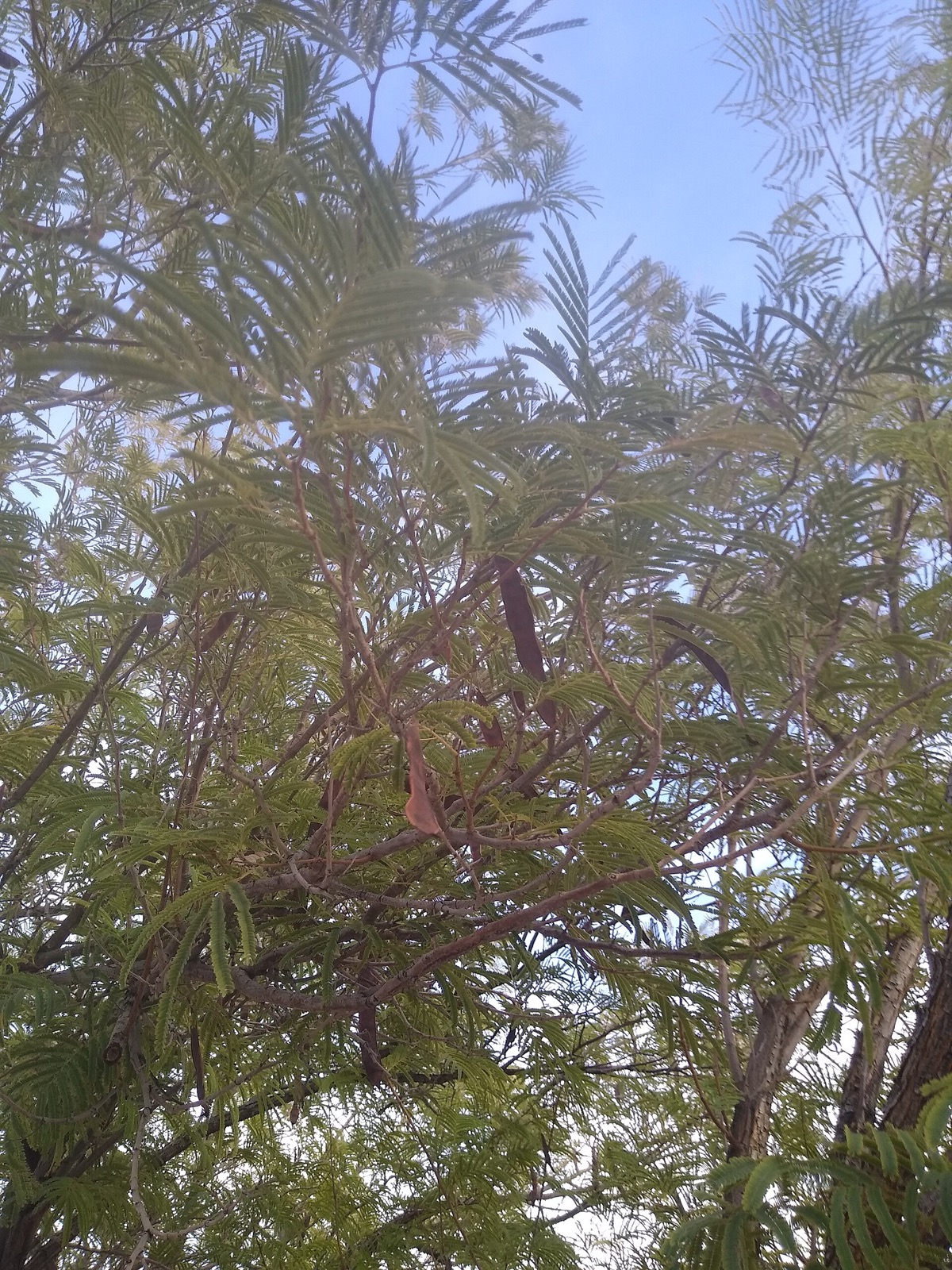 Desert fernLysiloma watsonii
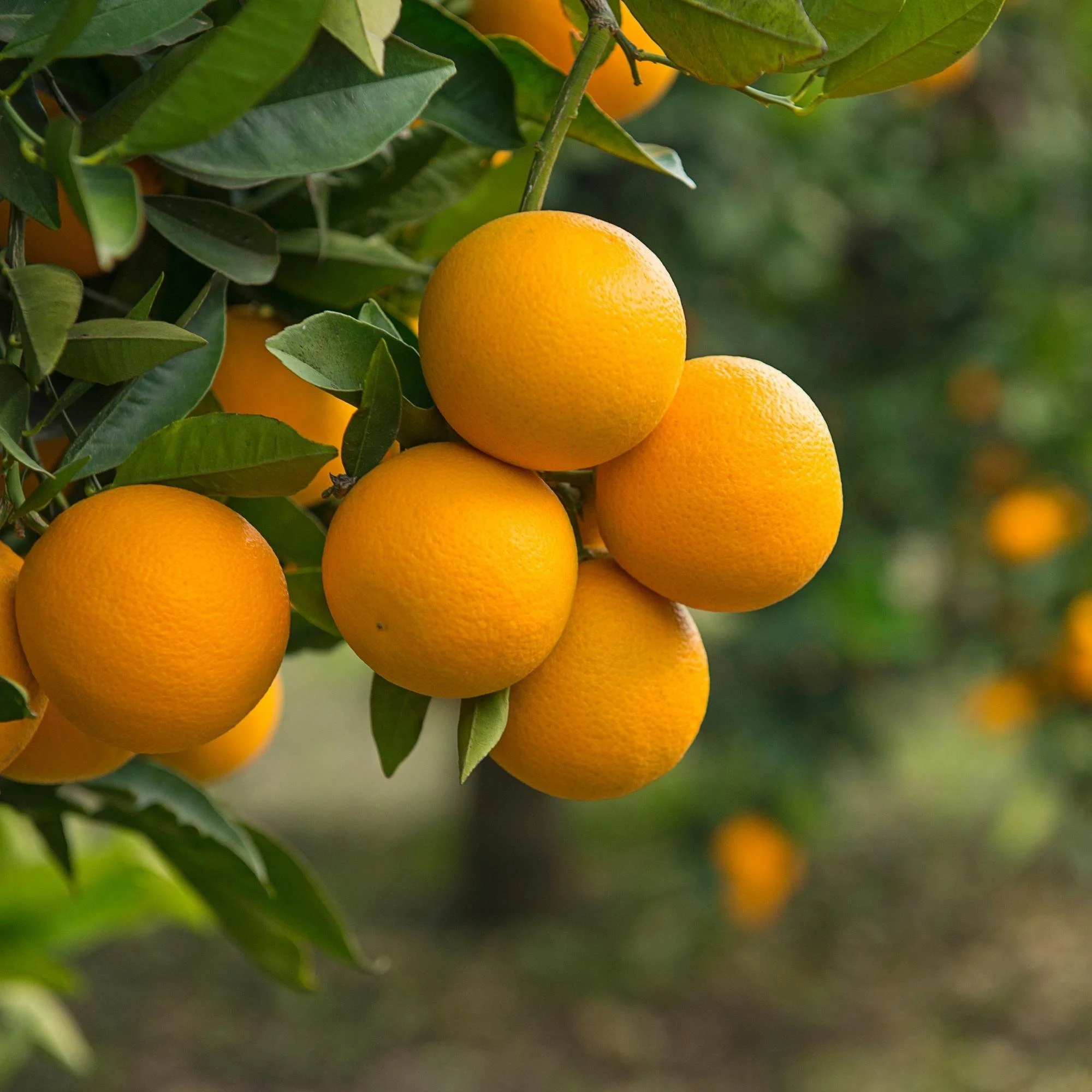 Diller Arizona sweet orangeCitrus sinensis ‘Diller’