Pick your trees
Every variety is open from the start. Enter your address and we sort to the ones that grow well in your part of Arizona, or ask us to narrow it to three.

2027 wholesale fruit tree program (Preorders close Dec 1st)
Explore Arizona-ready deciduous fruit trees in one clear guide. Preorders are open now and close December 1st.
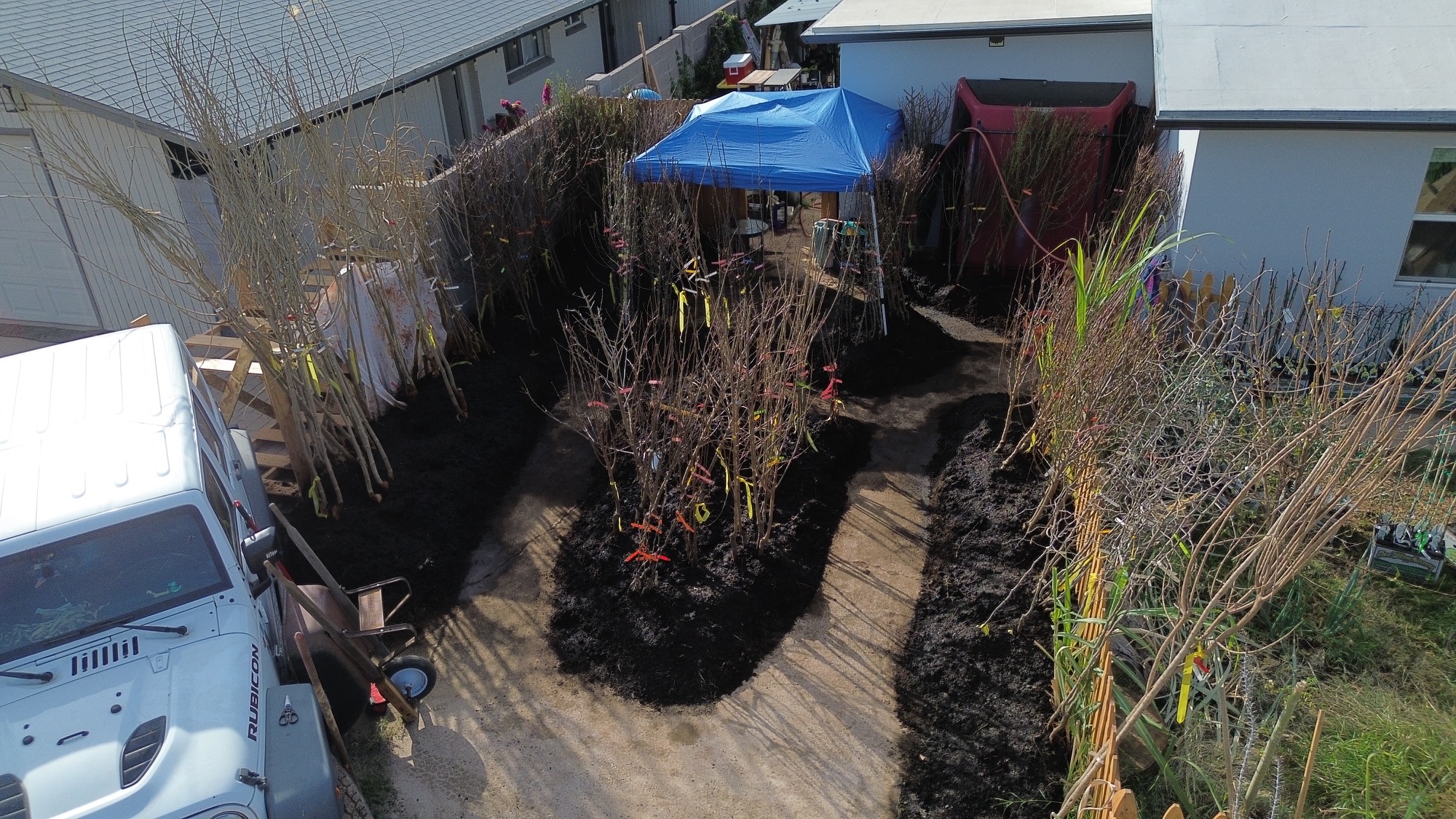
Every variety is open from the start. Enter your address and we sort to the ones that grow well in your part of Arizona, or ask us to narrow it to three.
Add them to your preorder and pay at checkout. Preorders close December 1st.
Optional, while you shop: place each tree at its mature size on a satellite map of your yard.
Every variety in the 2027 program, open from the start. Enter your address and the ones that grow well where you are come first.
565 trees
Apples
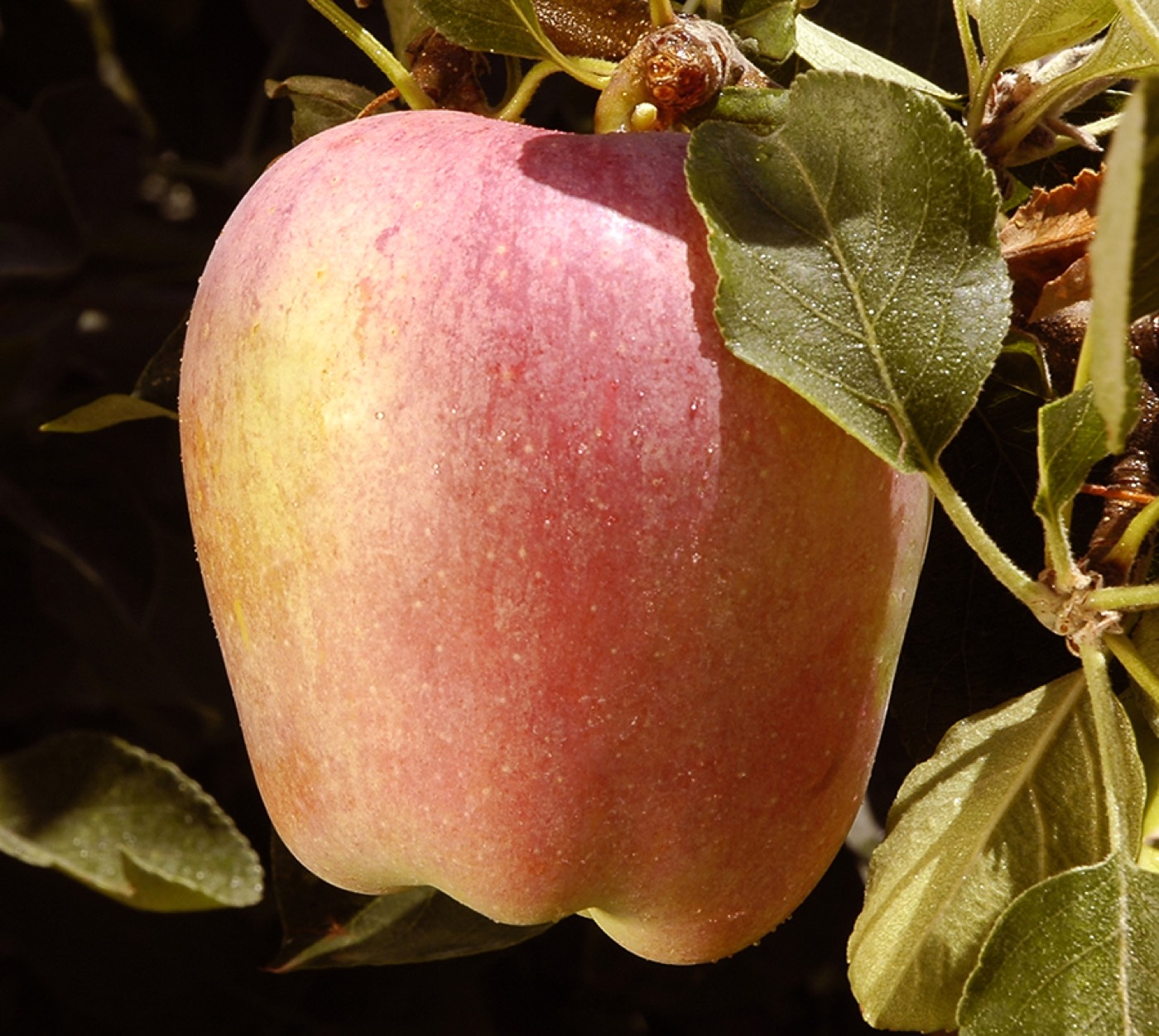
Sweet, crisp and ready by early summer, Anna is one of the apples that makes growing apples in Phoenix realistic, cropping heavily on very little chill. It sets fruit alone, but Dorsett Golden or Einshemer nearby gives bigger crops. Thin the fruit hard so the branches don't snap, and skip it at mid elevation, where its early bloom meets frost.
Apples
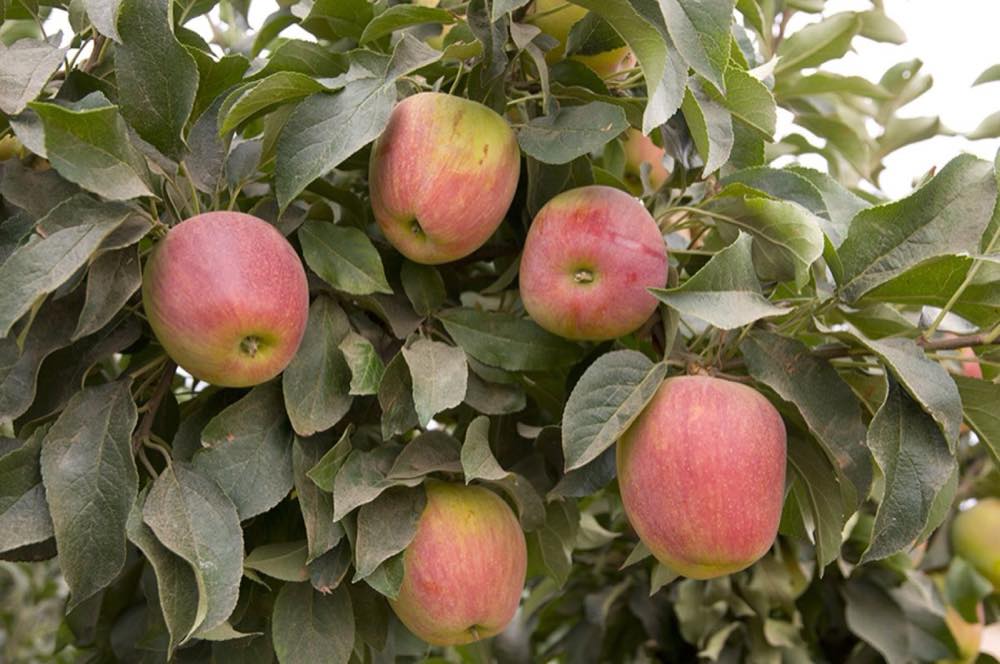
A genetic dwarf that tops out around 8–10 feet with almost no pruning, so it suits small yards and big pots. The fruit is red, crisp and sweet, with clean, russet-free skin that handles warm inland summers. It needs around 700 chill hours, so plant it at mid elevation or in the high country, with a second apple like Garden Delicious for pollen.
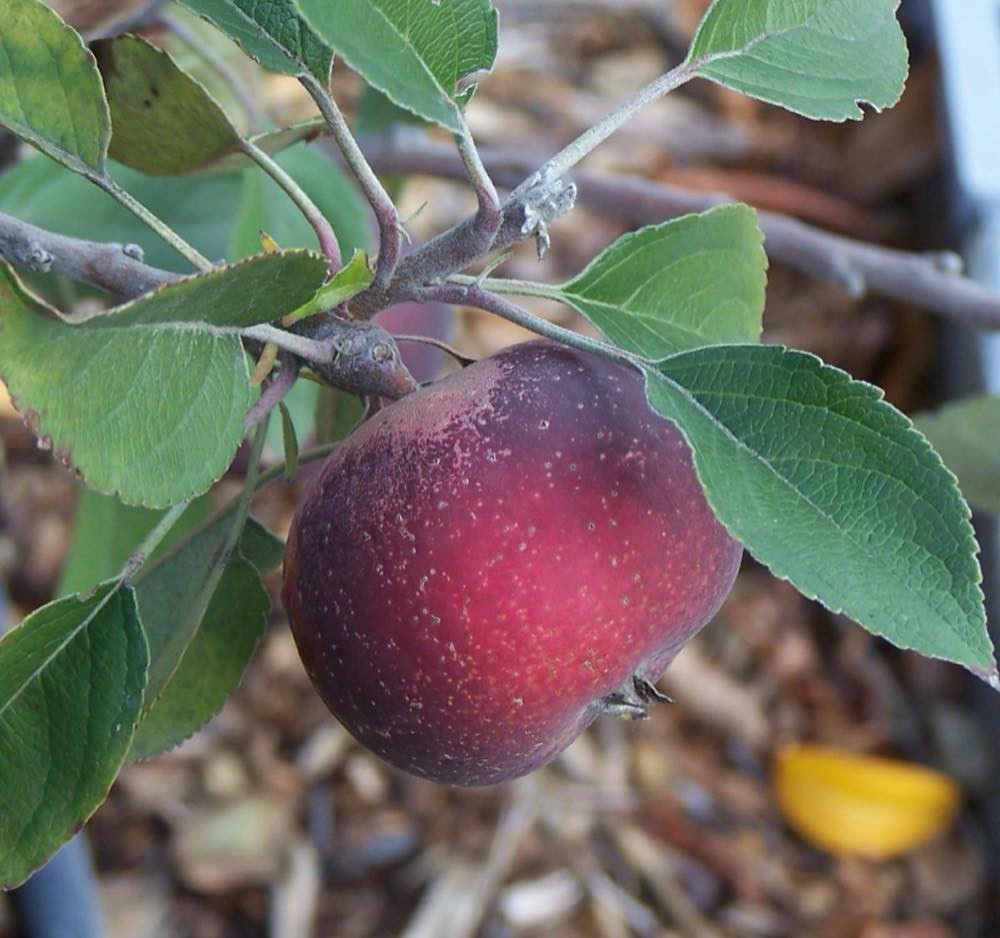
A large, dark red late apple that is hard and tart at first and mellows after a few weeks in storage. It copes with warm nights better than most late apples, so it suits the warmer parts of mid elevation, though 500–600 chill hours is a stretch in Phoenix. It also has some resistance to fire blight and cedar rust.
Apples
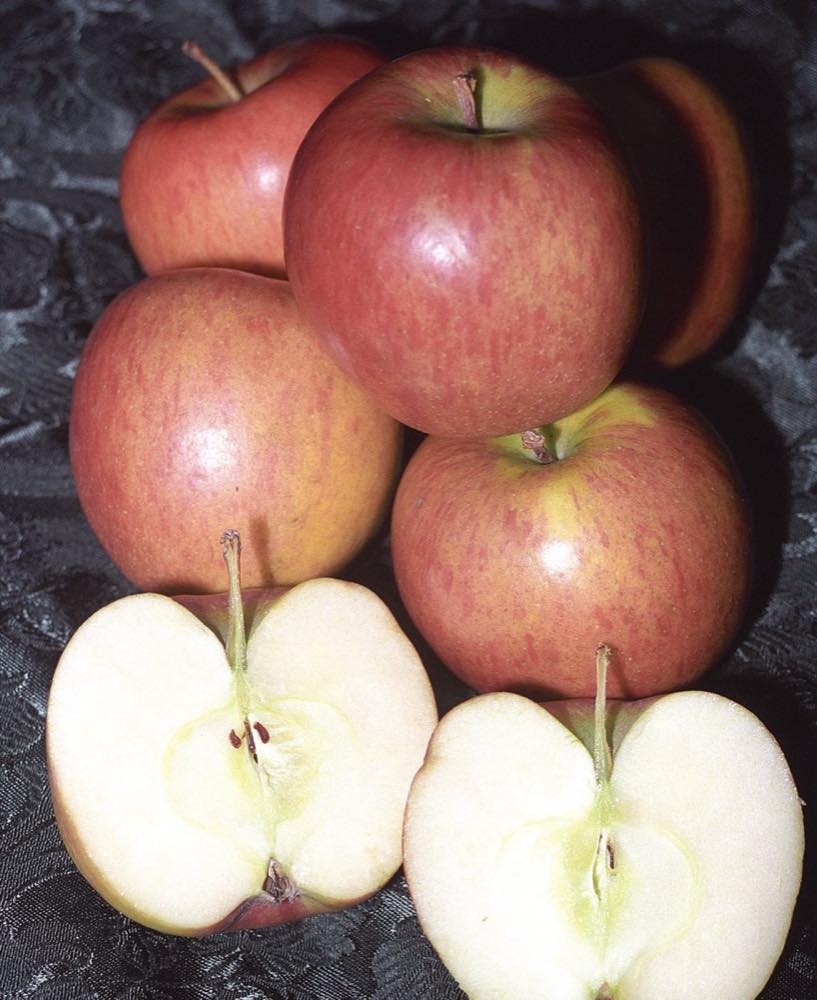
Crisp, tangy and richer in flavor than a Granny Smith, with a long storage life. It needs about 700 chill hours, so it belongs at mid elevation rather than in Phoenix. It ripens late and tends to crop heavily one year and lightly the next, so thin the fruit in good years to keep it steady.
Apples
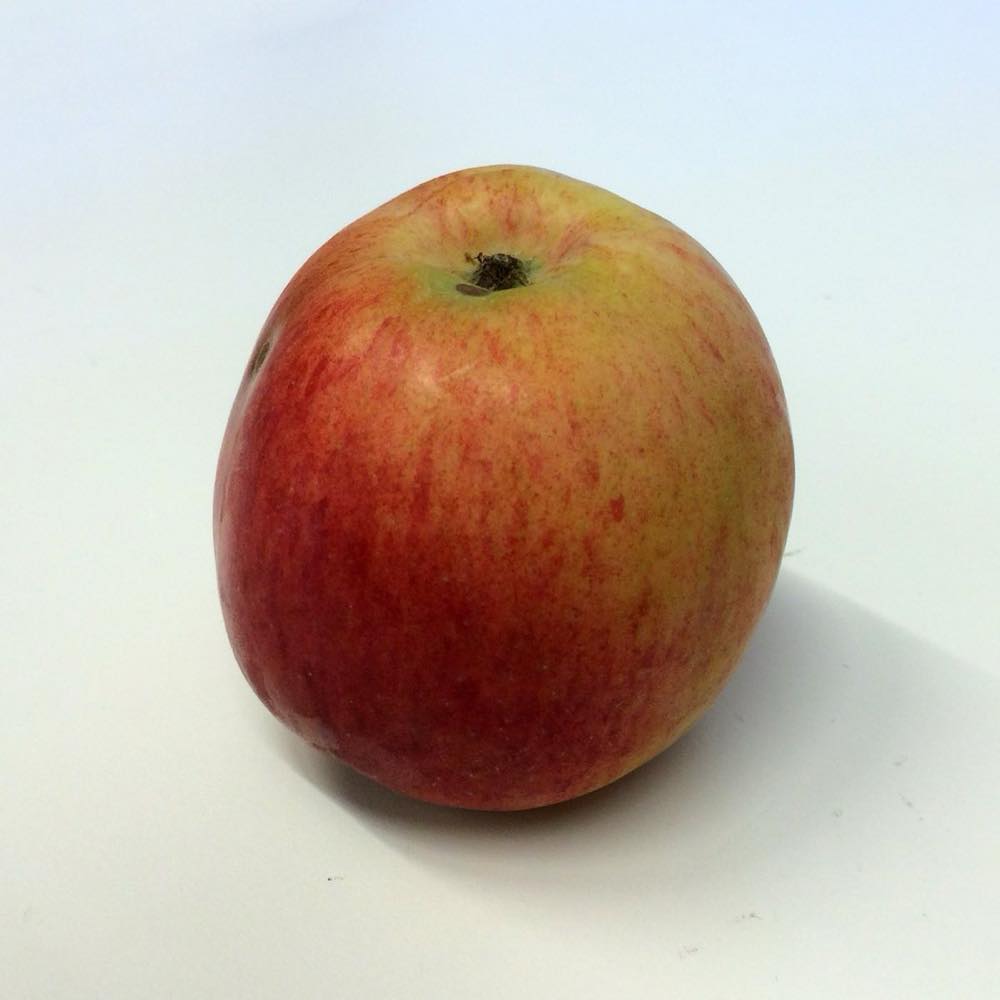
A large red McIntosh-type apple with white flesh that is slow to brown, good fresh, baked or pressed for cider. It is very cold hardy and bears young, so it fits the high country and the upper end of mid elevation. Like McIntosh, the fruit softens in real heat, so keep it away from Phoenix and the hottest valleys.
Apples
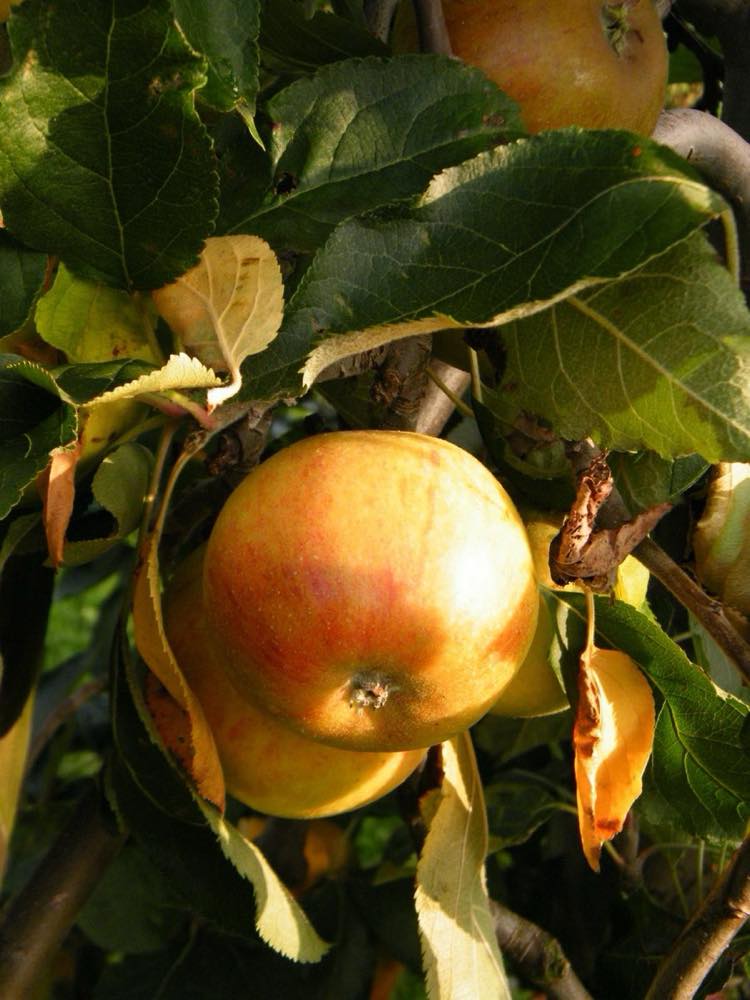
A classic English dessert apple with rich, aromatic flavor, for people who want something beyond Fuji and Gala. It likes moderate summers, so it suits mid elevation and the lower high country best. It is a fussy tree even in its home climate and we found little Arizona track record, so treat it as a project for experienced growers.
Apples
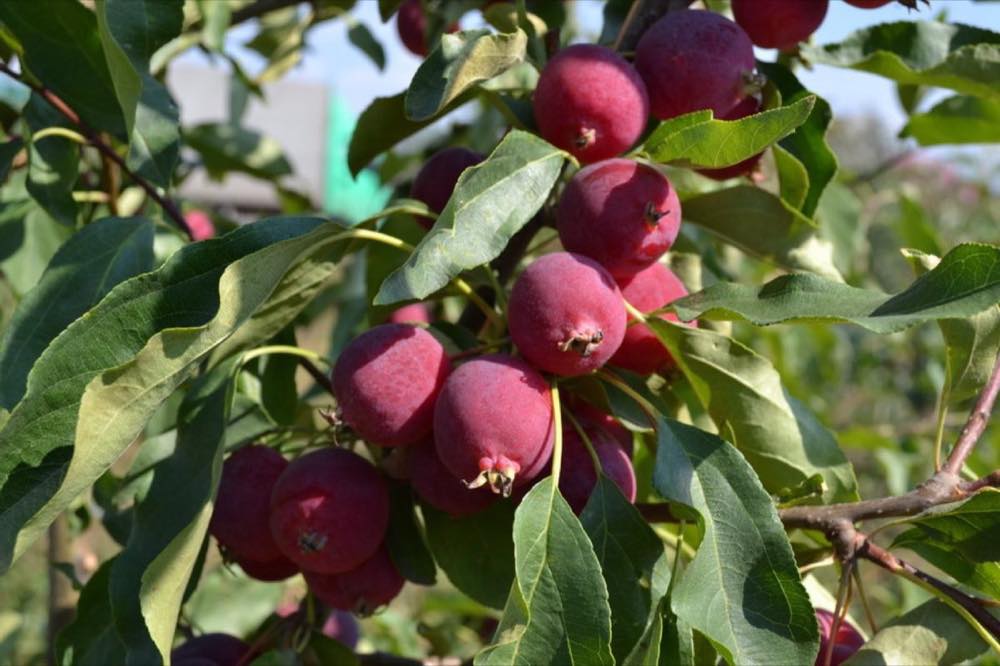
A tough, vigorous crabapple with fragrant white blossom in spring and small, bright red fruit that makes a tart, ruby jelly. Its long bloom makes it a handy pollen source for other apples at mid elevation and in the high country. It resists scab, rust, mildew and fire blight, so it is an easy tree, but plan for a big one.
Apples
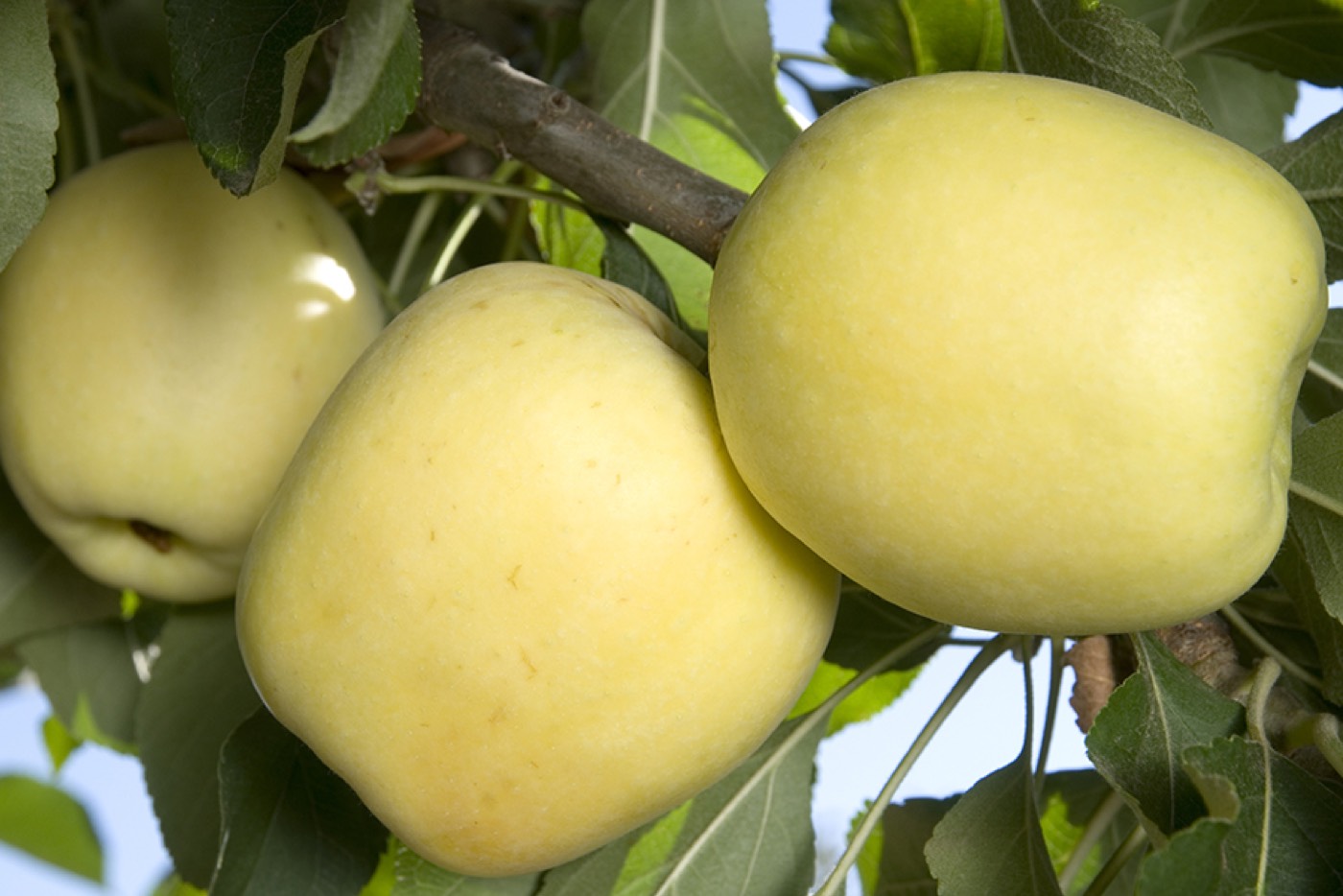
Firm, sweet, yellow apples in June, before the worst of the summer heat, on almost no winter chill. That makes it a reliable low desert pick, and it sets fruit alone, though Anna nearby gives bigger crops. Thin the fruit so the limbs don't break, and skip it at mid elevation, where its early bloom meets frost.
Apples
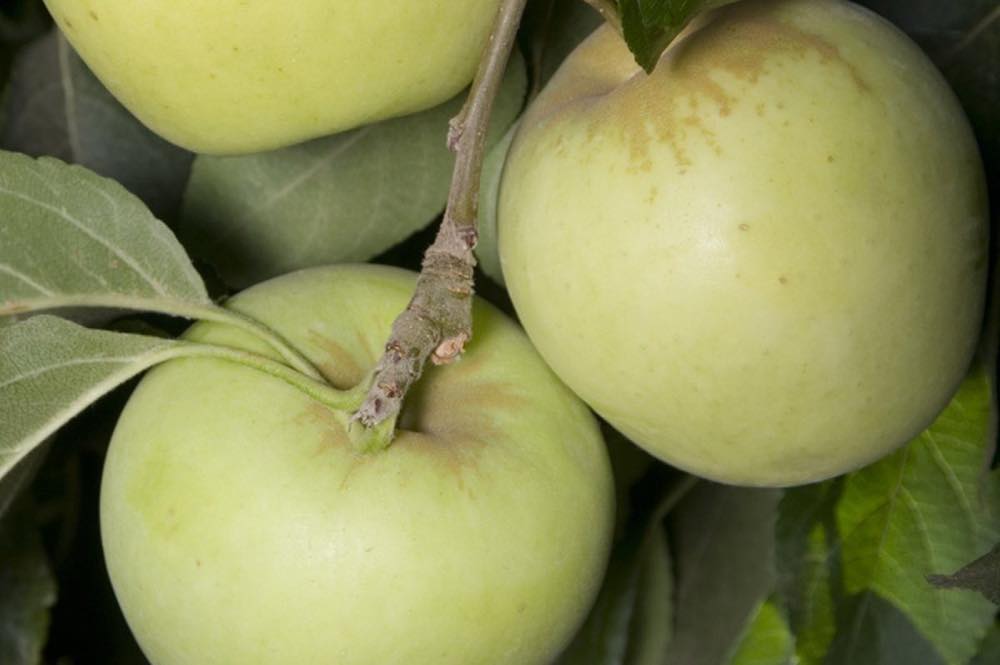
One of the earliest apples you can grow, with sweet yellow fruit in late spring to early summer on very low chill. It bears heavily in the low desert and is the standard partner for Anna. Ripening before July means the fruit mostly misses sunburn, but it blooms very early, so it is not a pick for mid elevation.
Apples
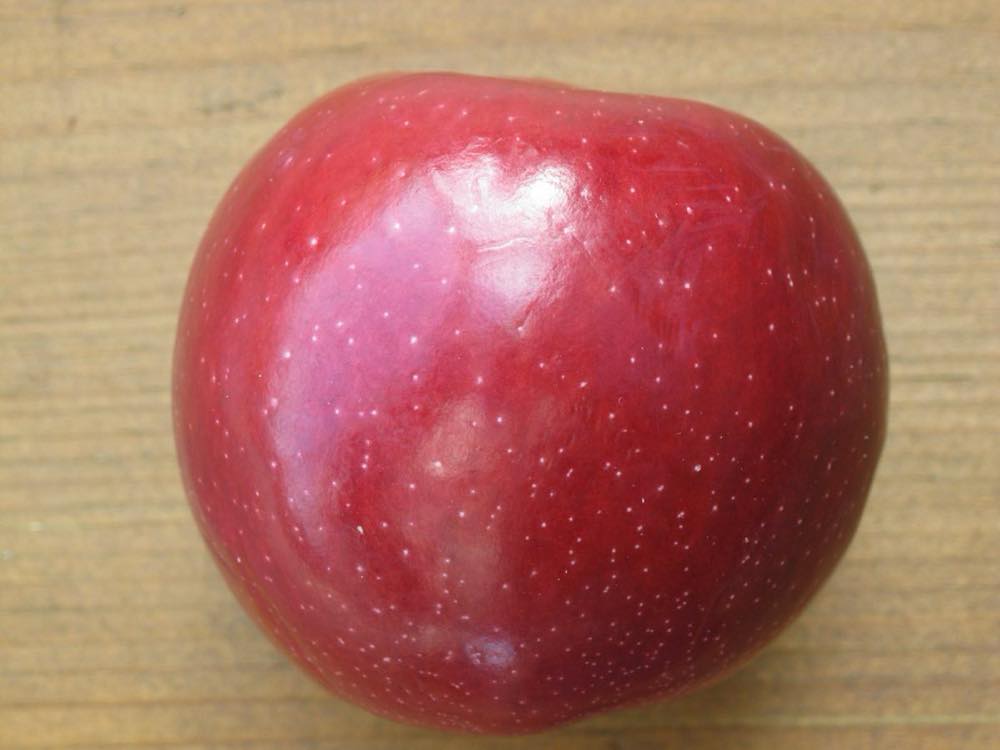
A cross of McIntosh and Red Delicious, sweet and juicy with a little sparkle. It copes with warm summers better than most McIntosh types and bears heavily. At about 800 chill hours it belongs at mid elevation or in the high country, and it is a useful pollen partner for apples that can't pollinate themselves.
Apples
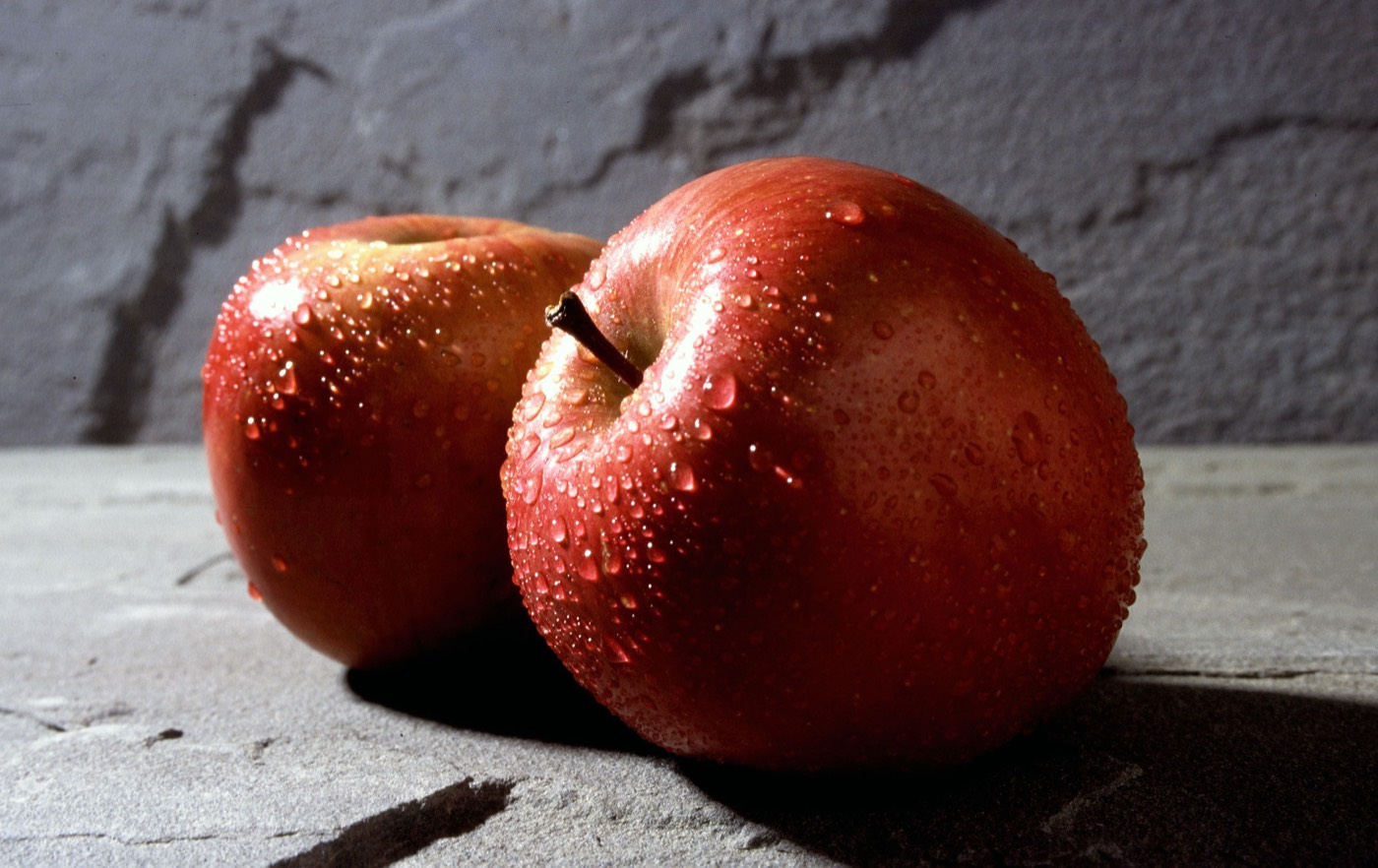
Very sweet, crisp and one of the best keepers, and one of the better apples for mid elevation, especially around 3,000–4,300 feet. It blooms late, which helps with frost, and needs a warm fall to color up. It will fruit in Phoenix, but chill is marginal and the fruit comes out softer and paler, and fire blight hits it hard, so cut out blackened tips quickly.
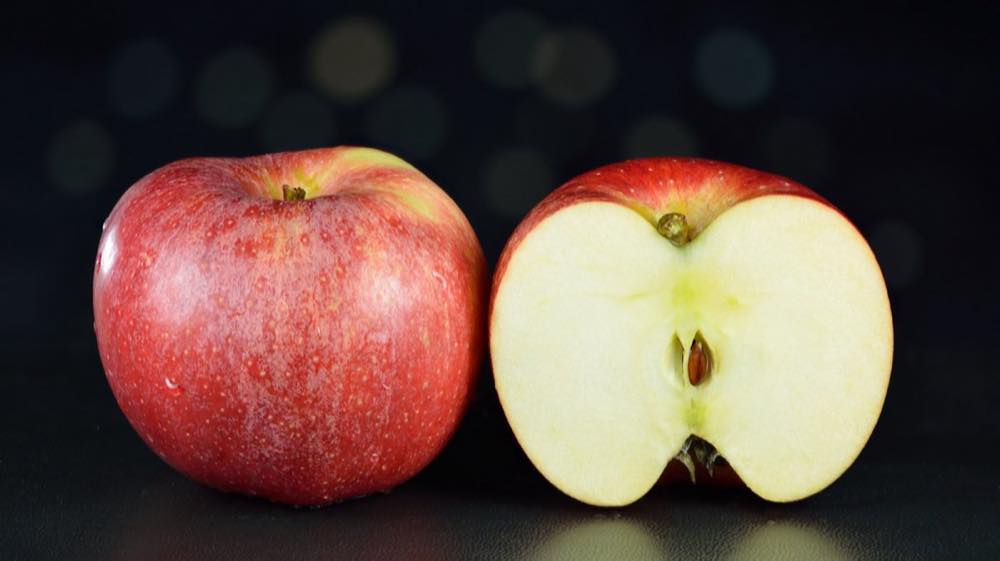
Apples
Crisp, sweet with a little tang, and one of the first apples to ripen each season. It does best at mid elevation, around 3,500–4,300 feet. In Phoenix it sets fruit on low chill but tends to sunburn and go soft, so it is marginal there, and it is prone to fire blight, so cut out infected shoots right away.
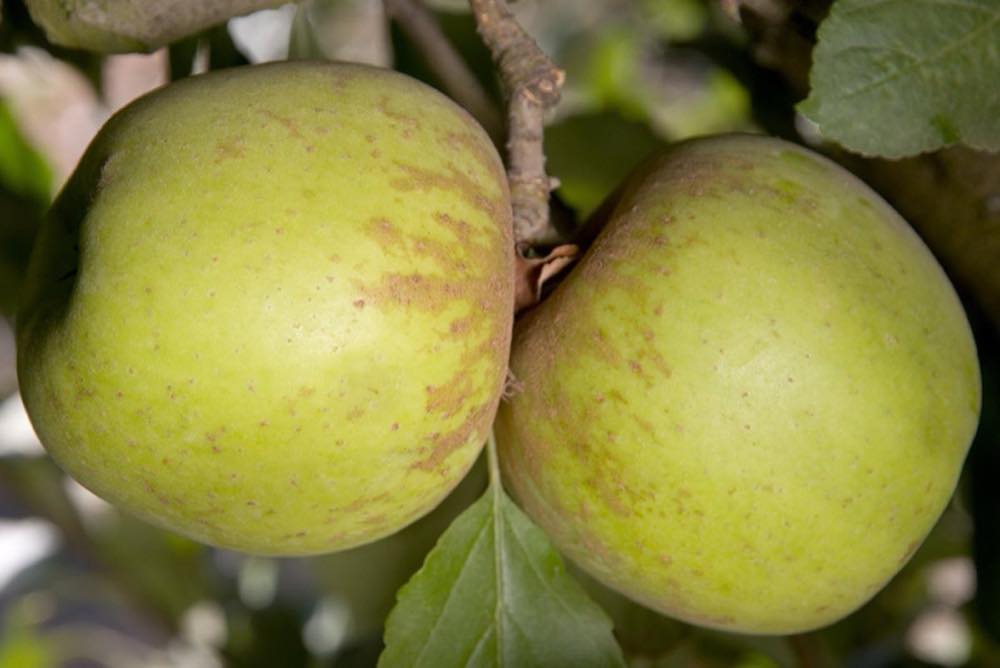
Apples
A genetic dwarf apple, 8–10 feet tall, with sweet, crisp, red-blushed fruit that keeps its flavor in warm summers. Its late bloom helps it dodge frost, which makes it a safer choice at mid elevation and in the high country. A good one for small yards and large pots, and it resists scab.
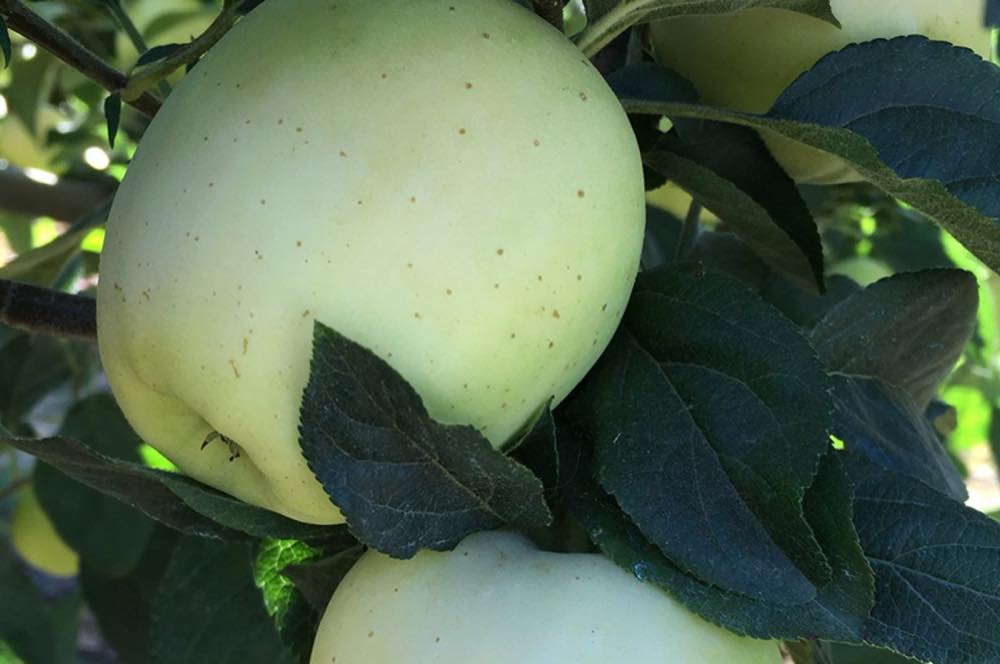
Apples
A white-skinned, white-fleshed apple with a sweet, mild flavor and a very early harvest. It copes with heat and its chill need is modest, so try it in the low desert or the warmer parts of mid elevation, with Fuji or Gala nearby for pollen. We found little Arizona track record, so it is a fun experiment.
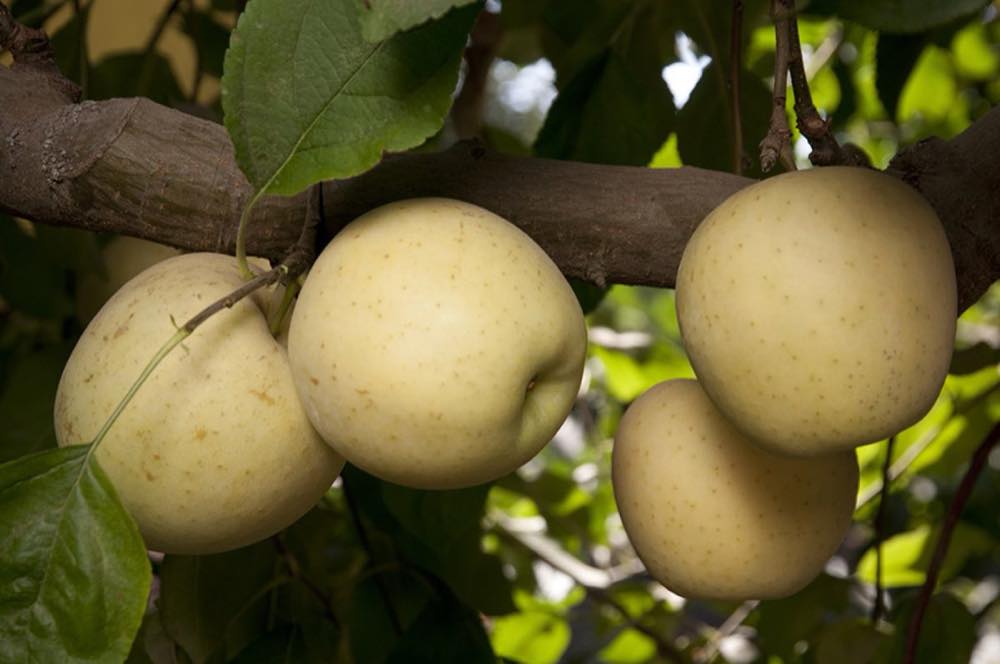
Apples
A dependable, sweet apple that adapts to many climates and has a long bloom, so it is a good pollen partner too. At 700 chill hours it is a mid elevation and high country apple, not a Phoenix one. Steady watering helps avoid bitter pit, the dark pitting that shows up under the skin in uneven summers.
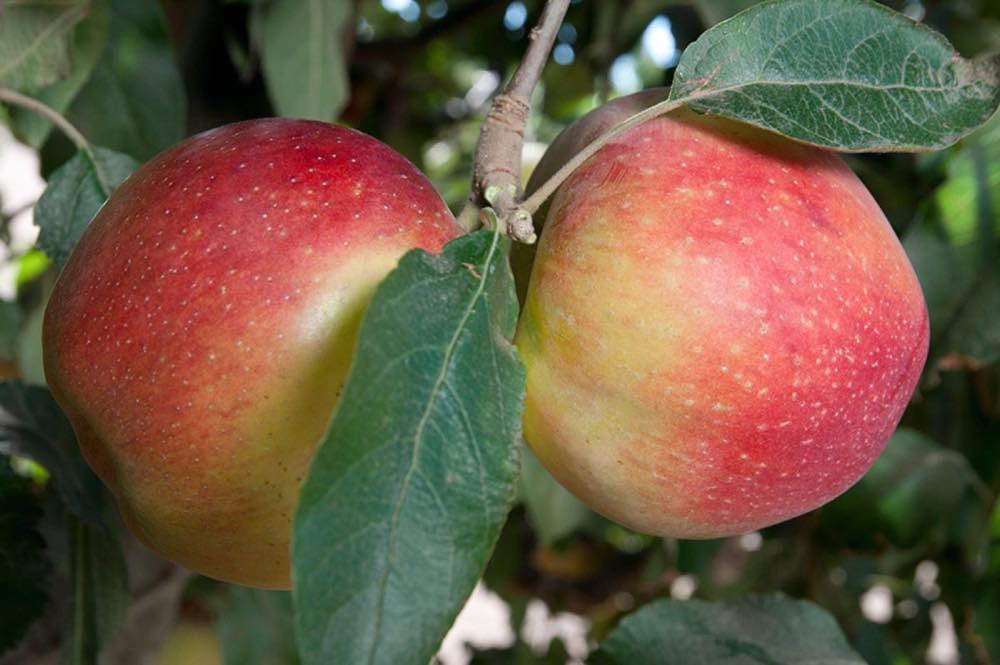
Apples
A red-over-green apple for eating fresh or cooking, ripening in late summer. It has been tried and has done well in the low desert, and it sets fruit on its own, so one tree is enough. At about 400 chill hours it is on the edge in a warm Phoenix winter, so expect lighter crops after mild seasons.
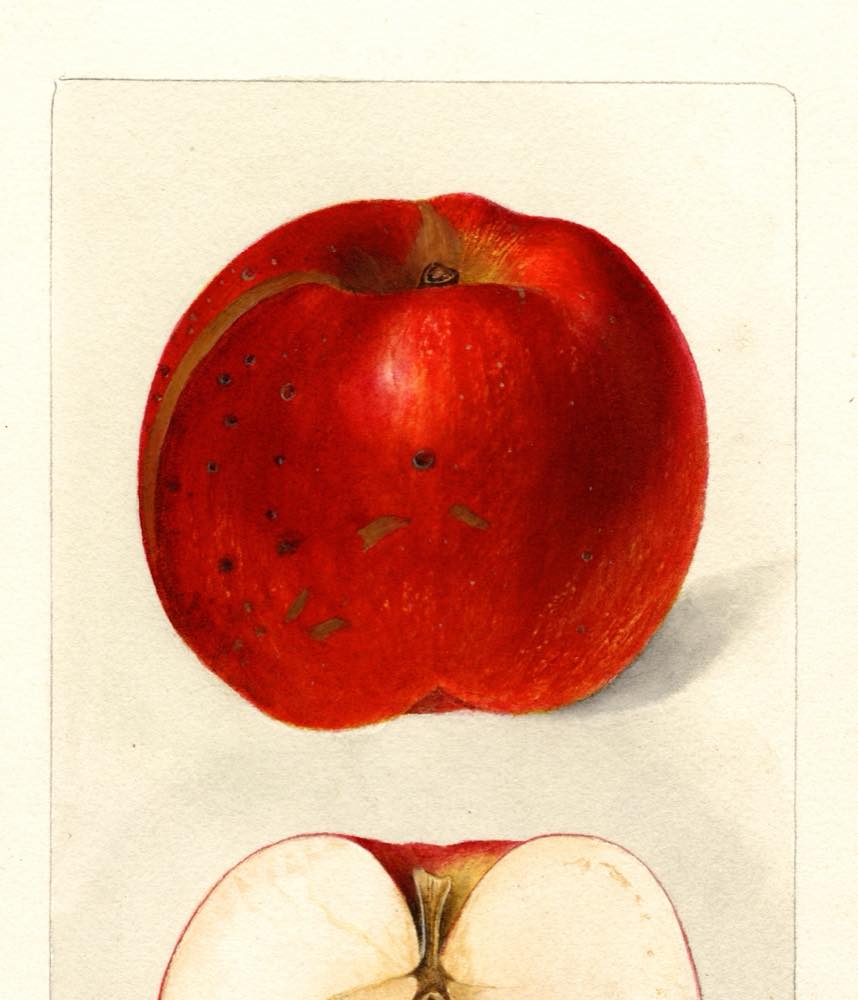
Apples
The same early, tart sauce-and-pie Gravenstein, in a red-striped version that looks better on the counter. It prefers cooler climates, so it fits mid elevation and the high country rather than Phoenix, and the vigorous tree is prone to fire blight. Its pollen is sterile, so plant Gala or Fuji nearby for pollination.
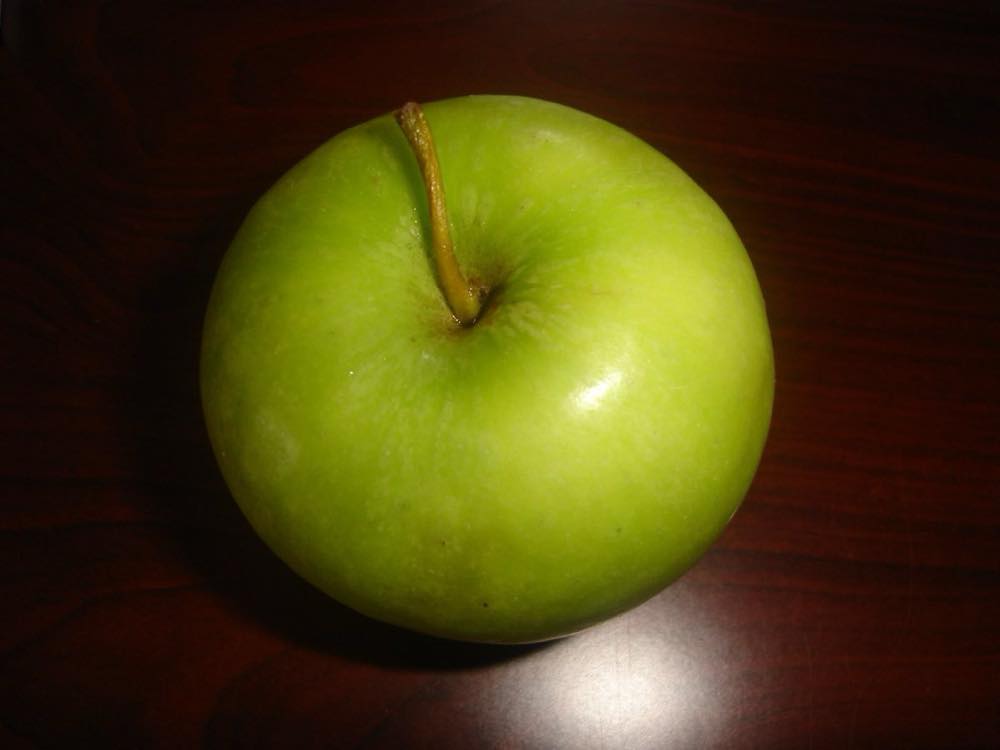
Apples
The classic tart green apple, crisp and a great keeper. It wants a long, hot summer to ripen, which suits the low desert and warm mid-elevation sites, though at about 400 chill hours it is on the edge in Phoenix and crops run lighter after warm winters. It is prone to fire blight, so cut out infected shoots promptly.
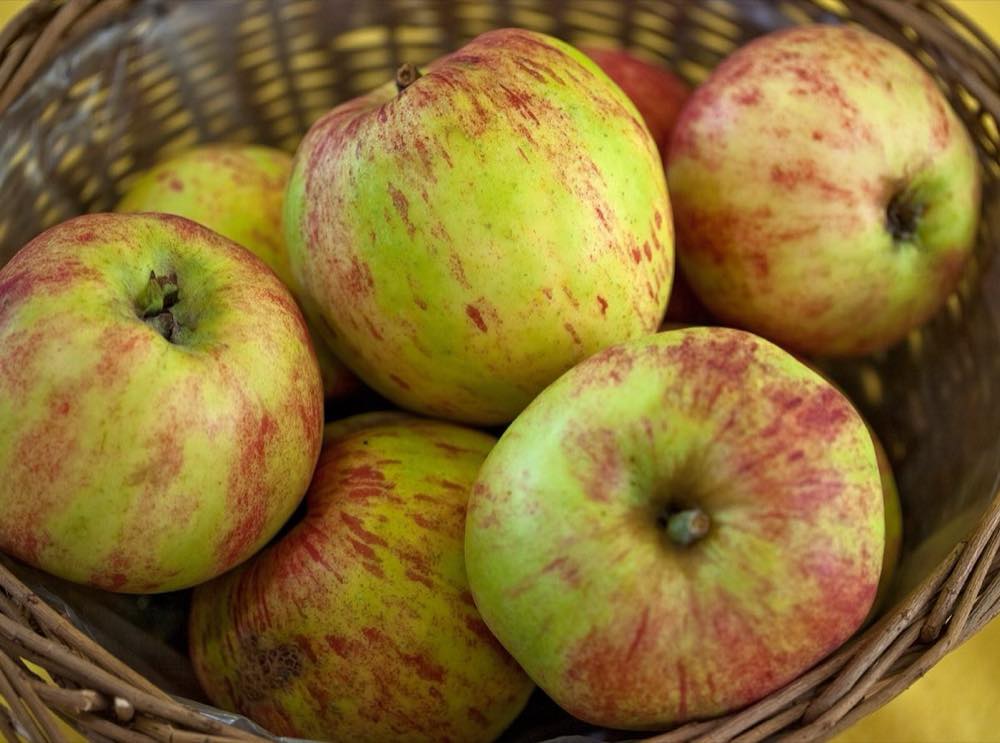
Apples
A famous sauce and pie apple, crisp, juicy and tart, and one of the first to ripen in the season. It does best in cooler climates, so plant it at mid elevation or in the high country, and expect a big, vigorous tree that is prone to fire blight. Its pollen is sterile, so it needs another apple nearby and gives nothing back as a pollinator.
Apples
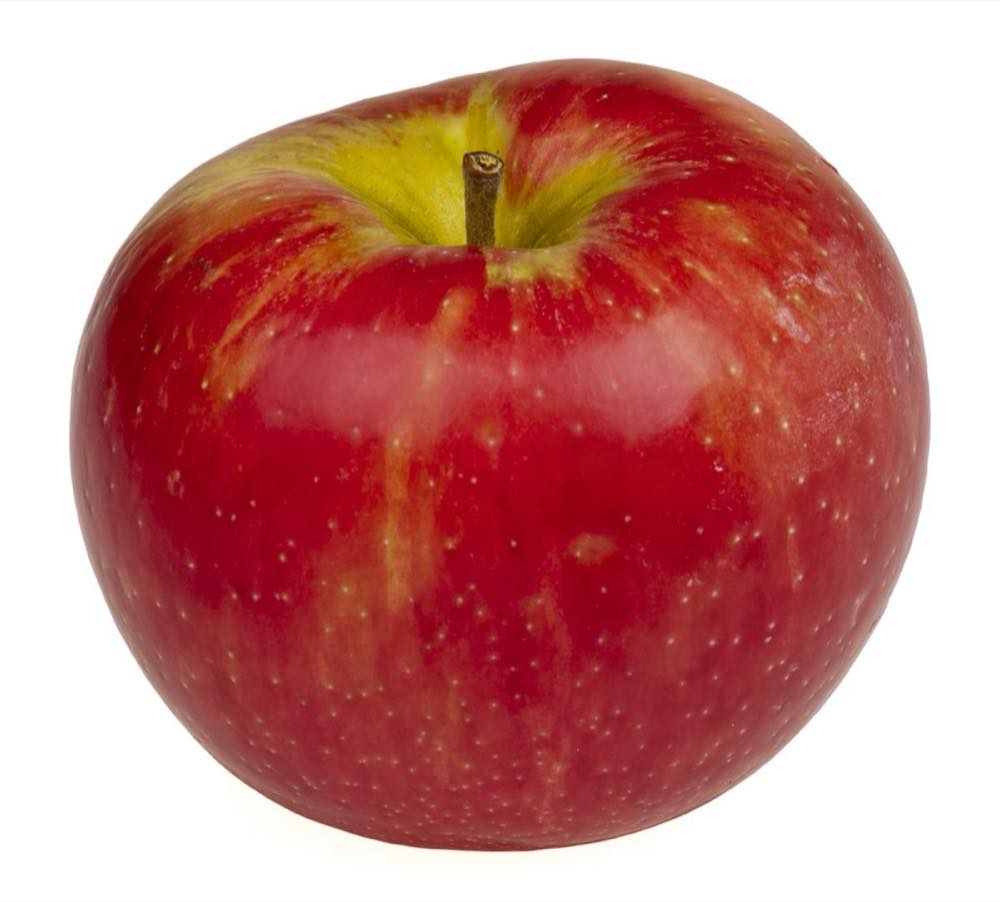
Juicy, snappy and very popular, but not the easiest tree. It does best in the high country and the cooler end of mid elevation, where it wants cool nights and steady water, since it is prone to bitter pit when calcium and water are uneven. Fruit color suffers in hot summers, and Gala, Empire or McIntosh nearby will pollinate it.
Apples
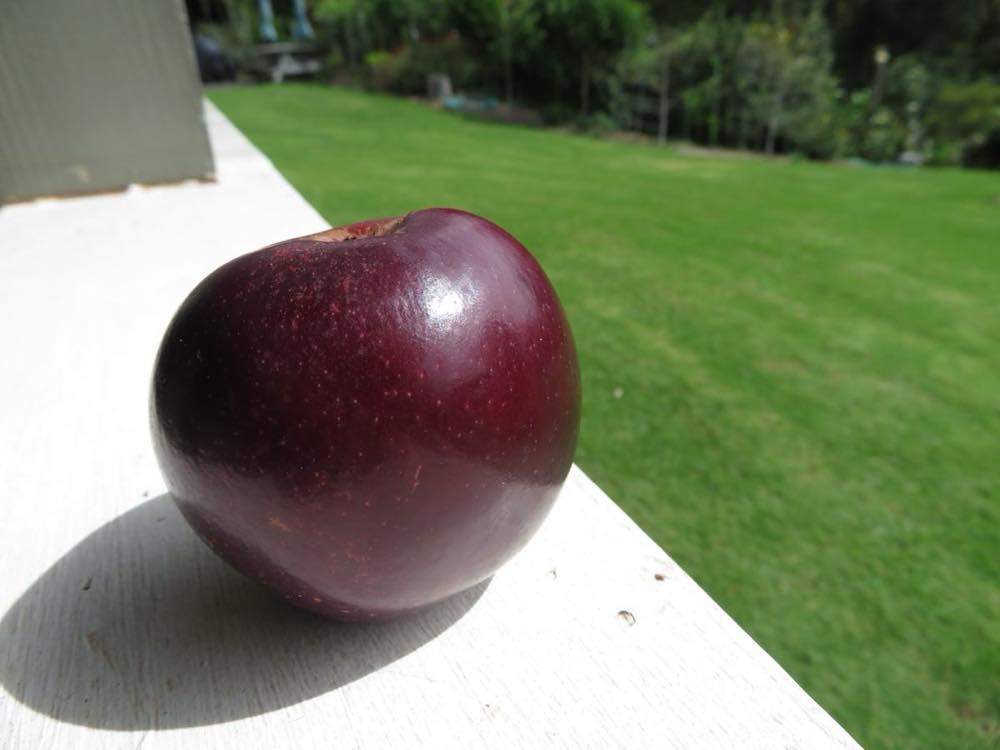
A balanced sweet-tart apple with a spicy, slightly winey flavor, ripening late in the year. It needs under 300 chill hours, so it suits the low desert. We found little Arizona track record, but it follows the same pattern as Pink Lady and Lady Williams, so plant it with either one for pollen.
Apples
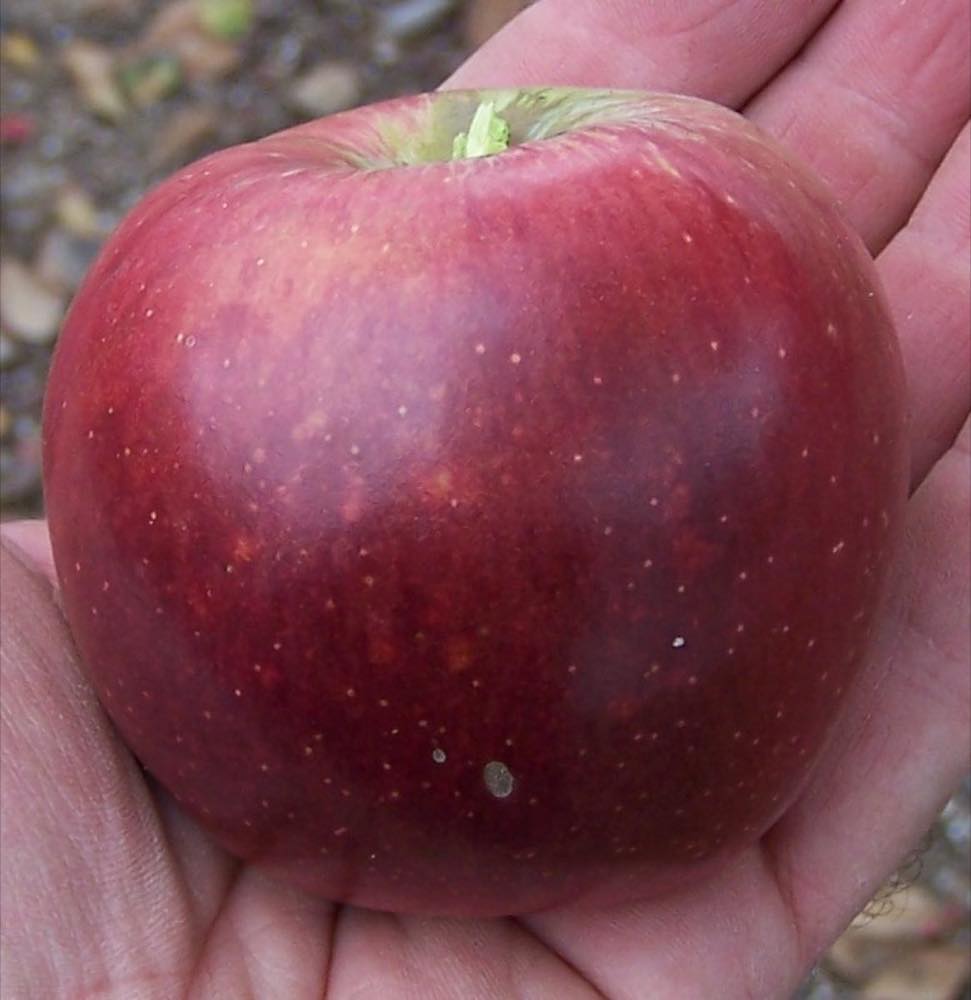
An Australian apple with pink-red stripes and firm, crisp, sweet white flesh, good fresh, baked or pressed for cider. It needs only 200–300 chill hours and likes a long warm season, so it suits the low desert, ripening in November. Plant it with Pink Lady or Sundowner for pollination.
Apples
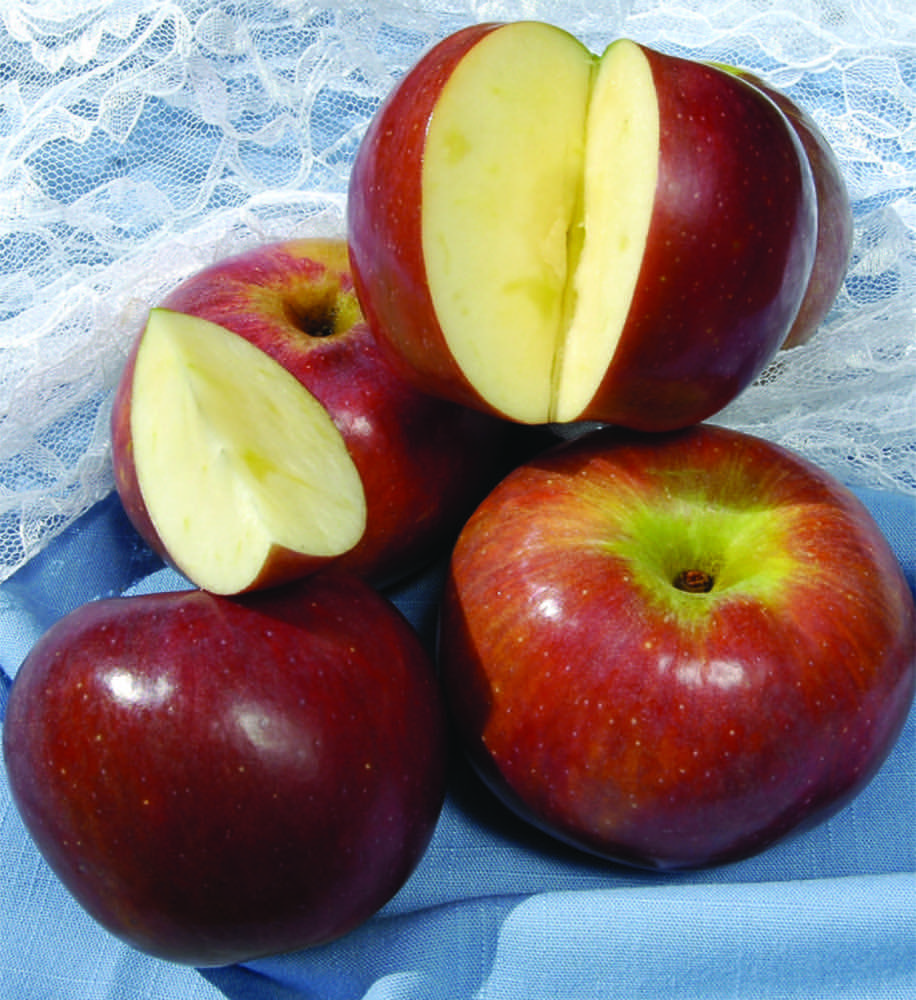
A tough, disease-resistant apple with crisp, rich flavor that colors solid red even in warm weather. It resists scab, rust, mildew and fire blight, which makes it a smart pick where fire blight is a problem. At about 800 chill hours it belongs at mid elevation or in the high country.
Apples
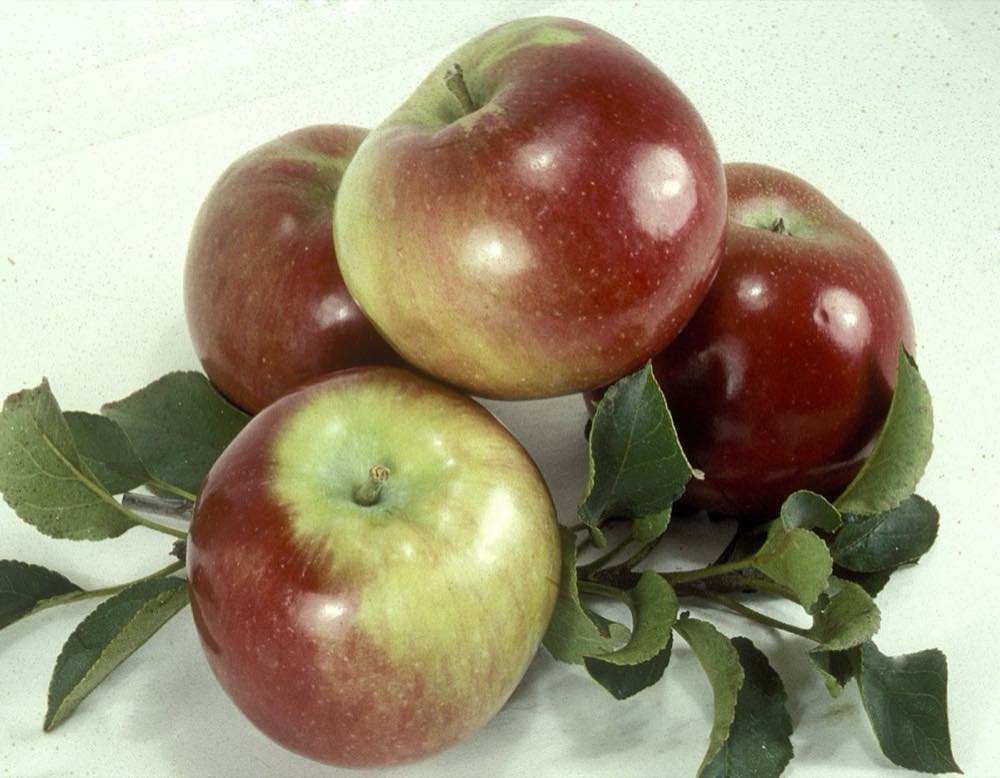
Sweet, aromatic and best in cool climates, since the fruit softens and loses its tang in real heat. It fits the high country and the cooler end of mid elevation, above roughly 5,000 feet, and needs about 900 chill hours. Watch for mildew and fire blight, and thin hard because it crops heavily.
Apples
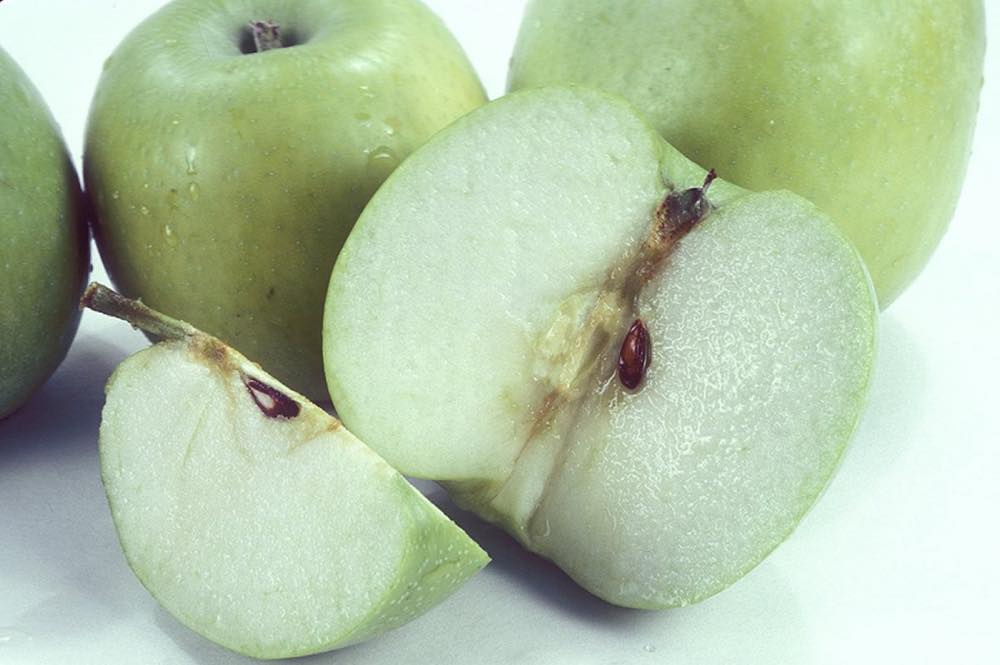
A very large, crisp, spicy apple that you can pick green or let turn yellow on the tree, and an excellent keeper. The tree is big and vigorous with good mildew resistance, and at about 500 chill hours it is a mid elevation apple, with Phoenix a stretch. Its pollen is sterile, so plant Gala or Fuji nearby.
Apples
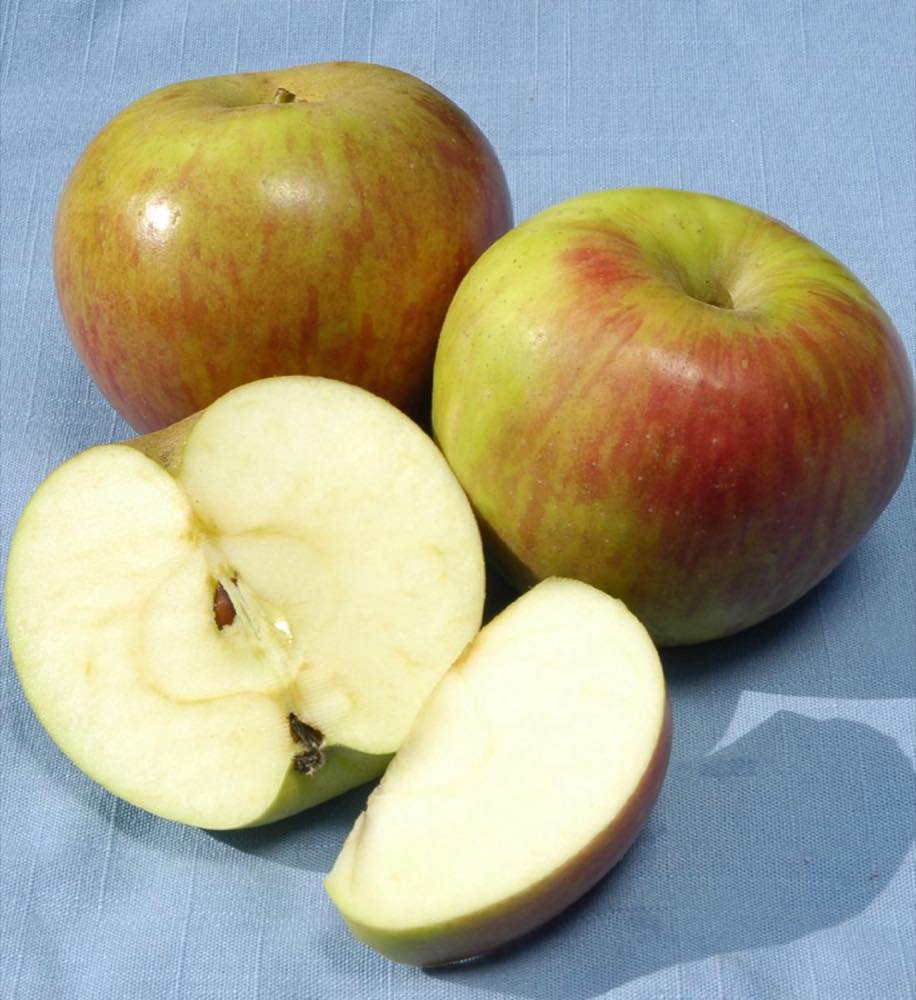
A tart, firm, old-fashioned apple for pies and storage, with a late bloom that helps dodge frost. It is famously slow to start fruiting, though the smaller M-7 rootstock helps it start sooner. At about 1,000 chill hours it fits the high country and the upper end of mid elevation, with Golden Delicious nearby for pollen.
Apples
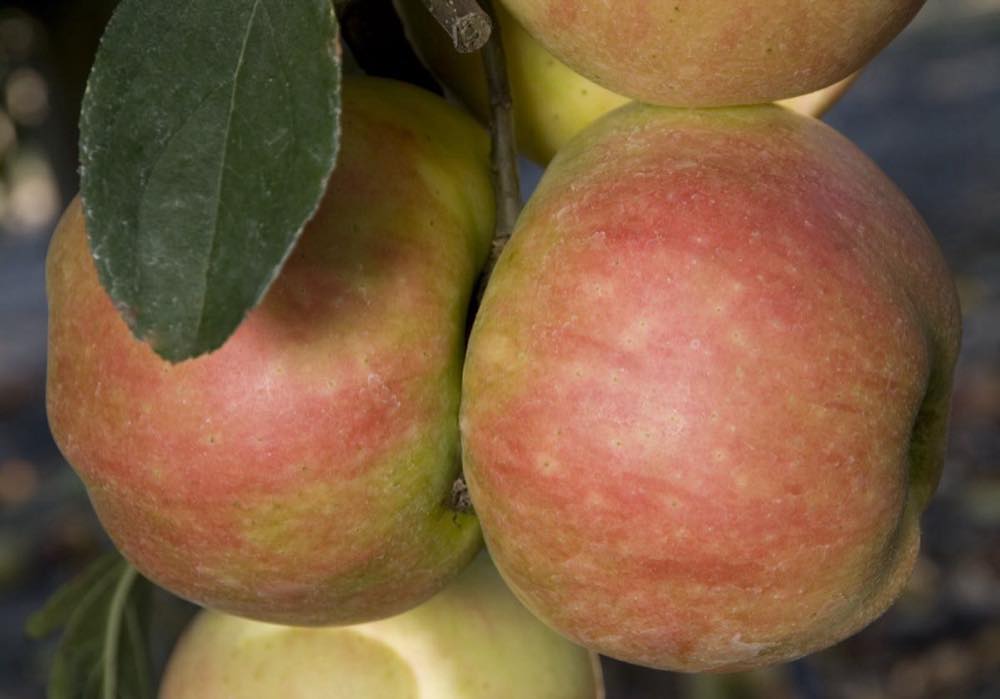
A large, crisp, red-over-green apple with a good sugar-acid balance and a long keeping life. It needs only about 300 chill hours and sets fruit on its own, so it suits the low desert, ripening late September to October after the worst heat has passed. We found little Arizona track record, so treat it as an experiment.
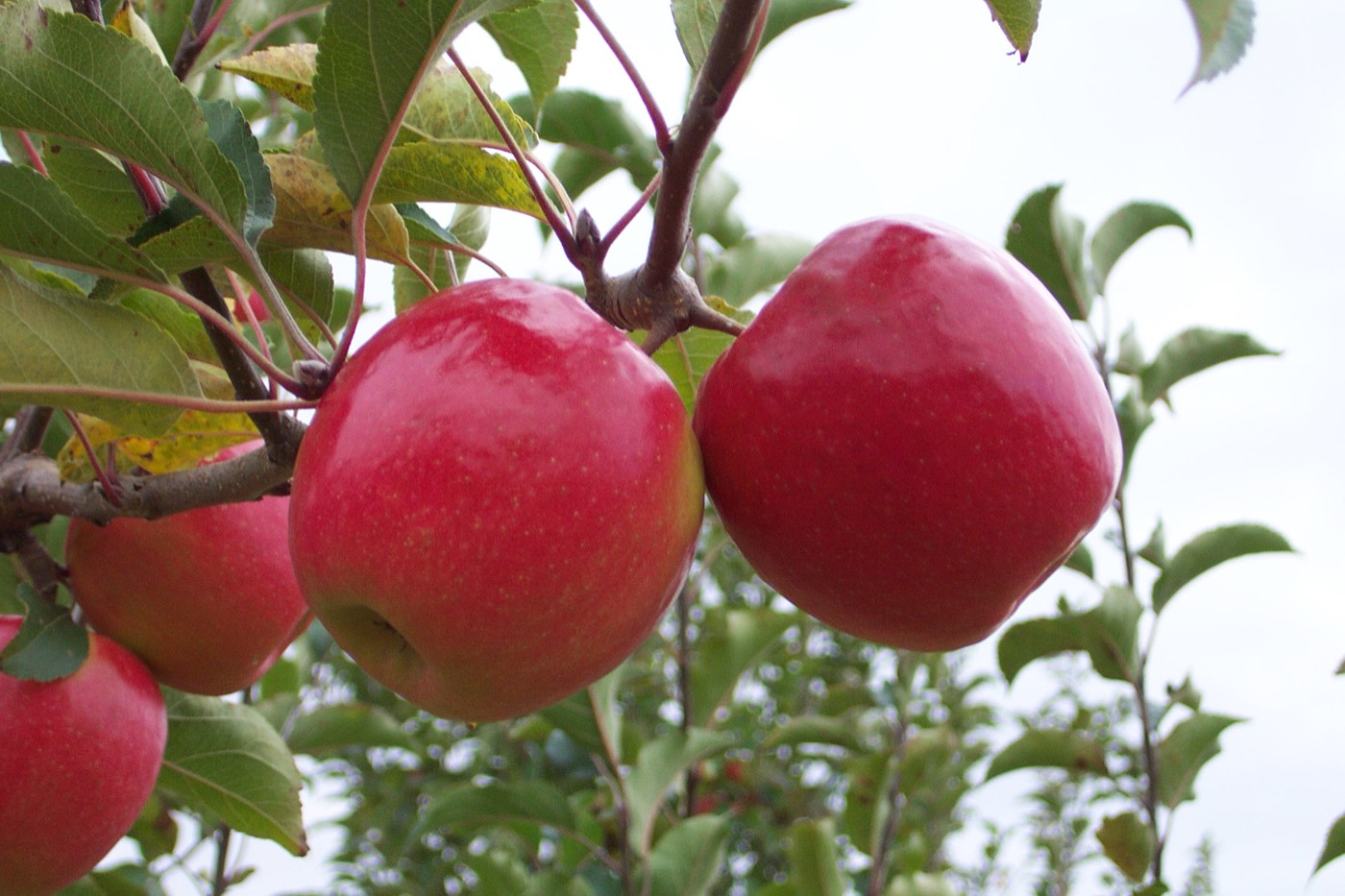
Apples
Crisp, sweet-tart and slow to ripen, with white flesh that resists browning. It is a long-season, warm-climate apple that does well in the low desert and warmer parts of mid elevation, though 300–400 chill hours is marginal in a mild Phoenix winter. In cooler places it may not ripen before frost, and it is prone to fire blight.
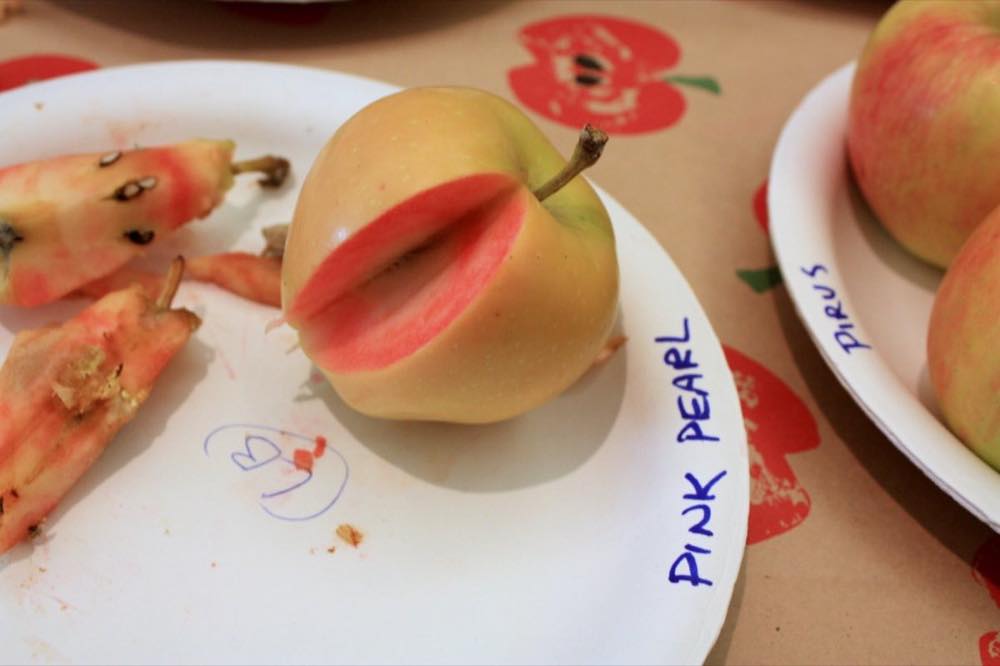
Apples
A novelty apple with pink flesh and pink blossoms, tart to sweet-tart depending on how long you leave it on the tree. It blooms early, so a late frost can cost the crop at mid elevation, and a sheltered spot or gentle slope helps. It needs about 600 chill hours and a second apple for pollination.
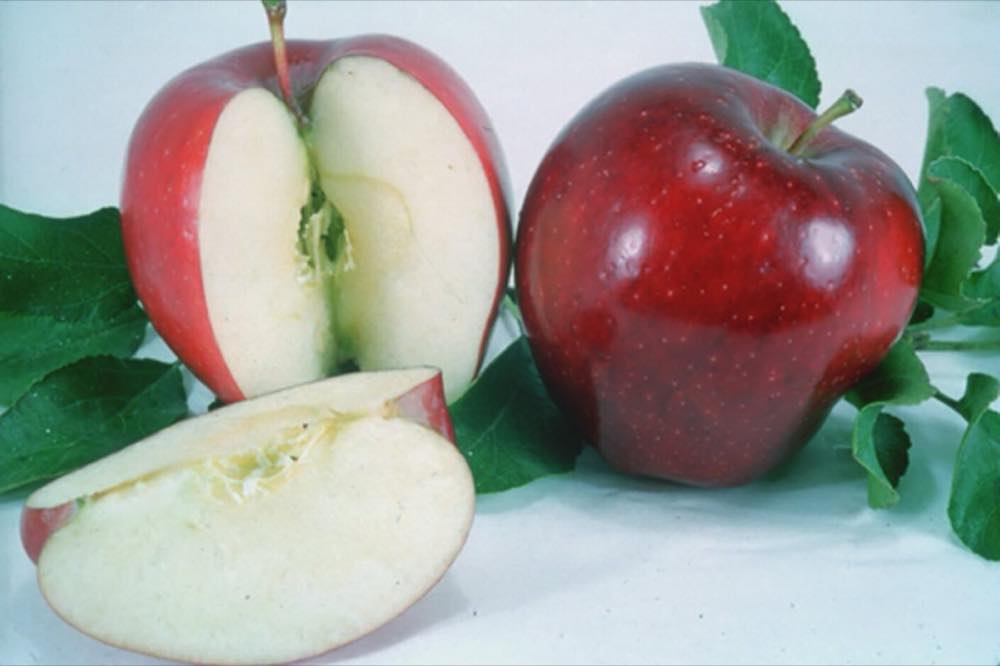
A compact, spur-type Red Delicious with sweet, crisp, flavorful fruit and a tree small enough to pick without a ladder. It is also a good pollen source for other apples. At about 700 chill hours it belongs at mid elevation and in the high country, where cool nights help the fruit color up.
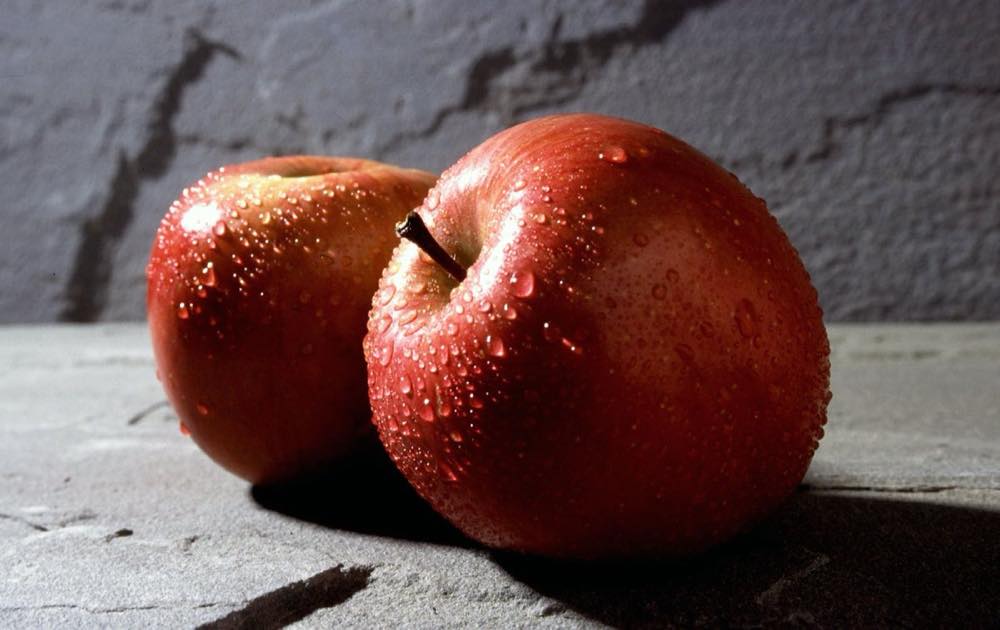
Apples
The same sweet, crisp, long-keeping Fuji, but with deeper red skin. It does best at mid elevation, where a warm fall helps it color, and at 400–500 chill hours it is marginal in Phoenix, where the fruit runs softer and paler. Fuji is very prone to fire blight, so cut out blackened tips at once.
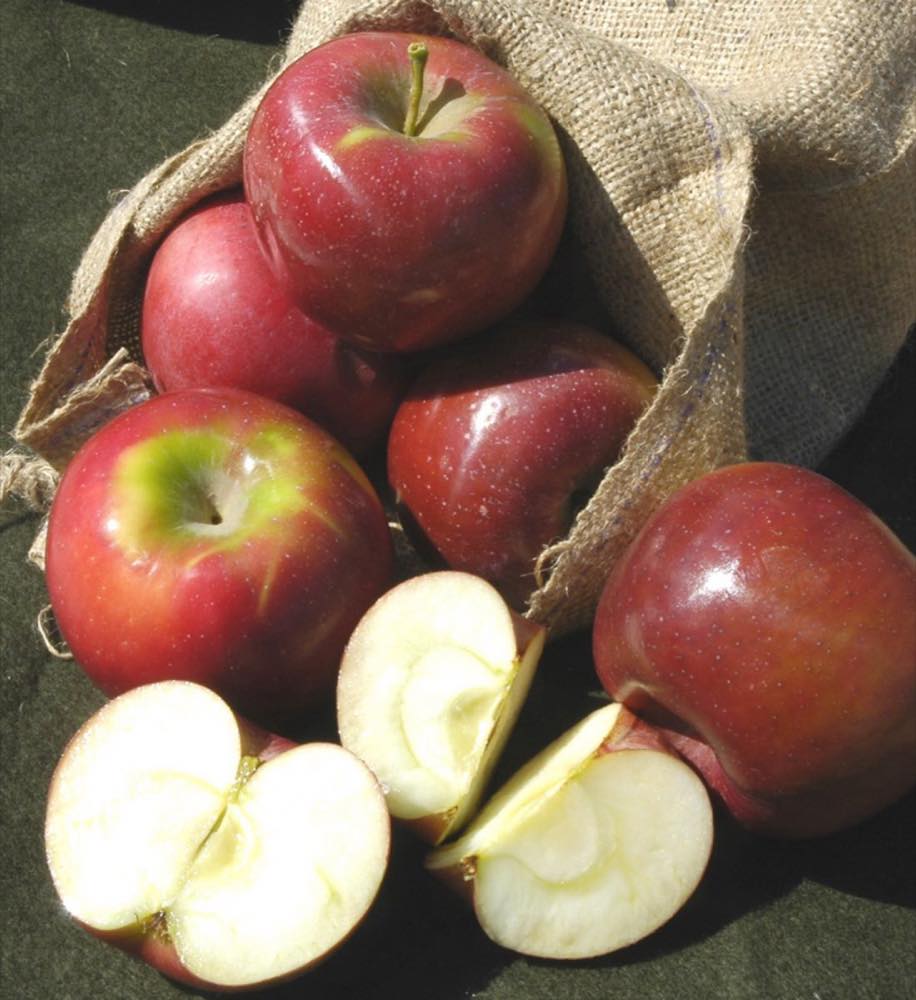
Apples
A large, round, red baking apple that cooks into a soft, tangy sauce, and a heavy bearer. It blooms late, which helps in frost-prone spots at mid elevation. It needs about 1,000 chill hours, colors poorly in extreme heat, and is prone to fire blight, so it is not a Phoenix apple.
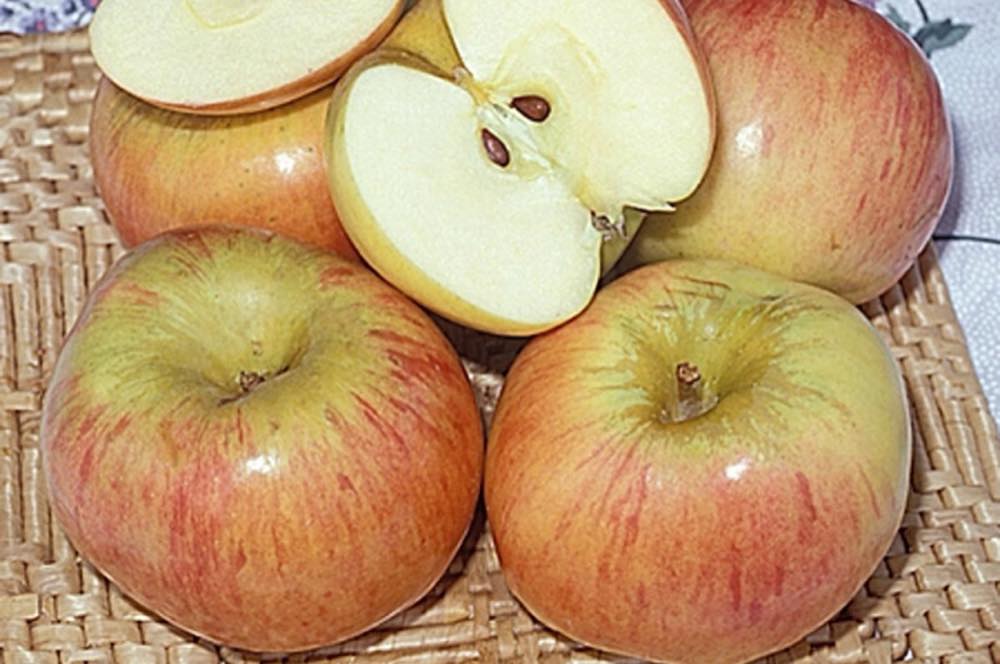
Apples
A yellow apple with a red blush and a rich, tangy, moderately sweet flavor that is good fresh or cooked and stores well. It ripens late, in October, so it suits mid elevation sites with a long, warm season. It needs 700–800 chill hours and sets fruit on its own.
Apples
An old apple that some fans rank among the best dessert apples ever: firm, juicy and richly flavored. It has a reputation for being a fussy, light-bearing tree, so it is for patient growers at mid elevation or the warmer parts of the high country. It needs about 800 chill hours and a mid-season apple nearby for pollen.
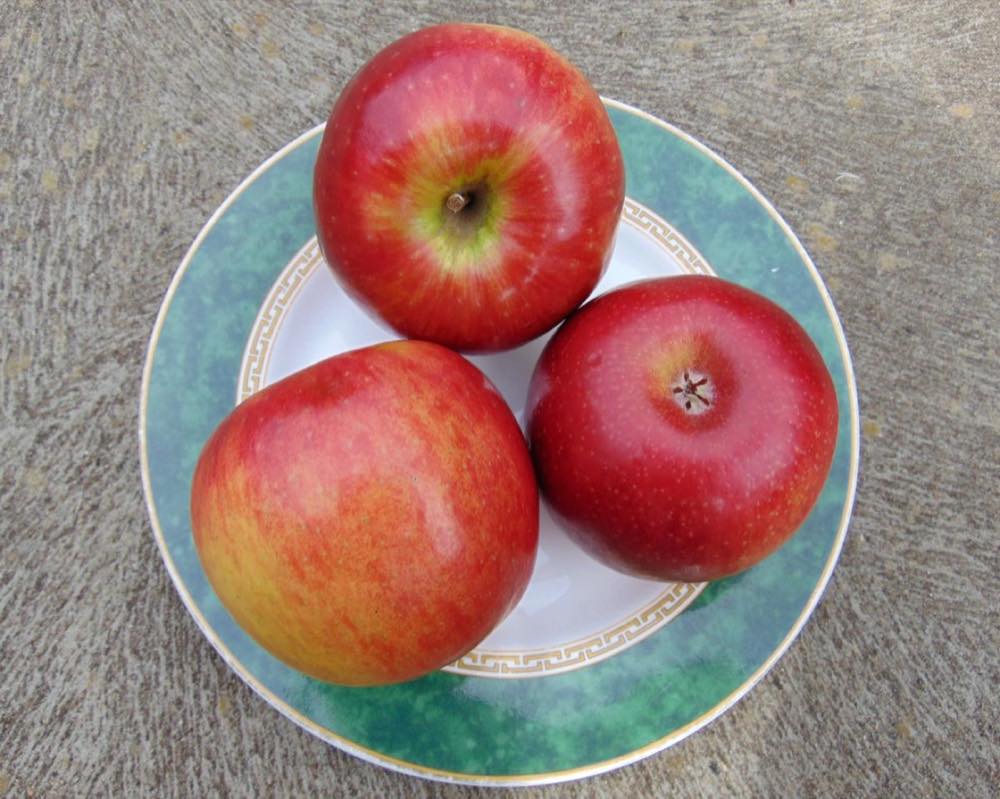
Apples
A late, sweet, crisp apple with white flesh and good flavor that handles tough desert conditions. It needs just 200–300 chill hours and sets fruit on its own, so it is a good low desert pick, though the November harvest takes patience. Lady Williams or Pink Lady nearby gives a heavier set.
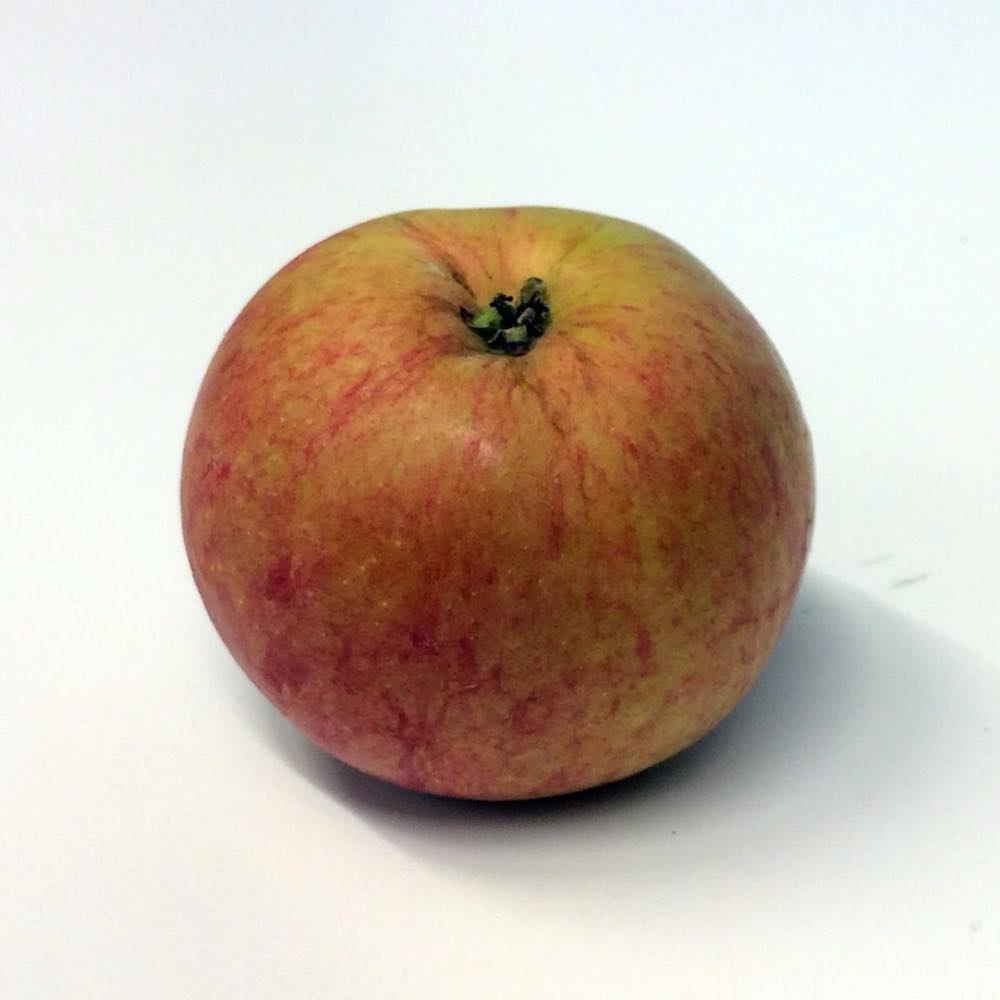
Apples
An old, very hardy, all-purpose apple, pale yellow ripening to scarlet, with crisp, juicy white flesh. Its long bloom makes it a good pollen partner for other apples too. It fits the high country and the upper end of mid elevation, and needs 800–1,000 chill hours.
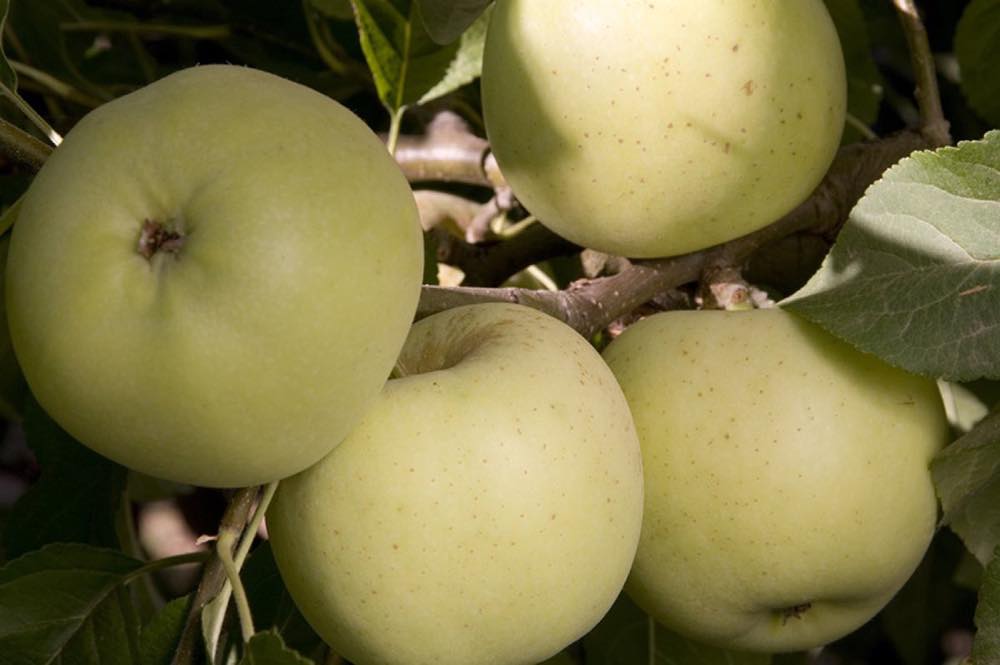
Apples
A large, pale yellow apple blushed pink, with a mild, aromatic, banana-like flavor. It is rated under 400 chill hours, so we place it in the low desert and mid elevation, but it is an old variety and we found little Arizona data. Partly self-fruitful, with bigger crops when a second apple blooms nearby.
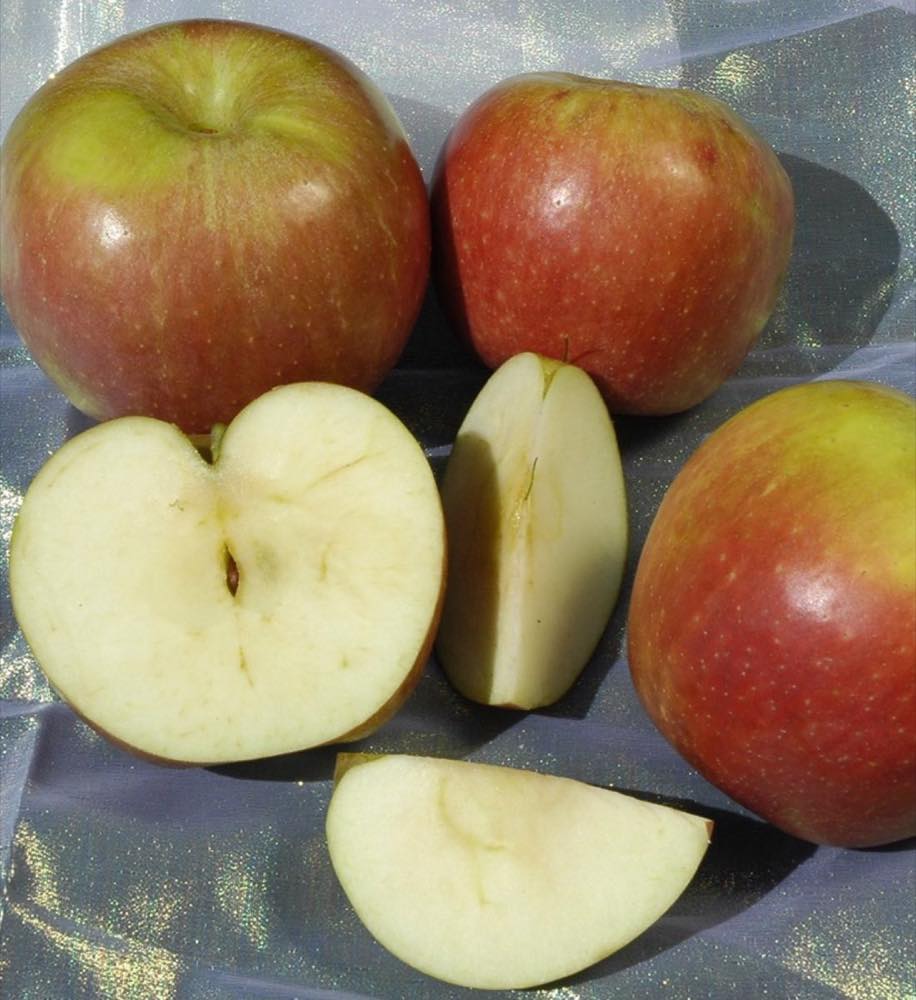
A late red apple with a juicy, smooth texture and a lively flavor, for fresh eating or cooking. It needs a long season to ripen fully, plus about 800 chill hours, so it is a mid elevation choice, and Winesap types are reported to resist fire blight. Its pollen is sterile, so plant Golden Delicious, Fuji or Gala nearby.
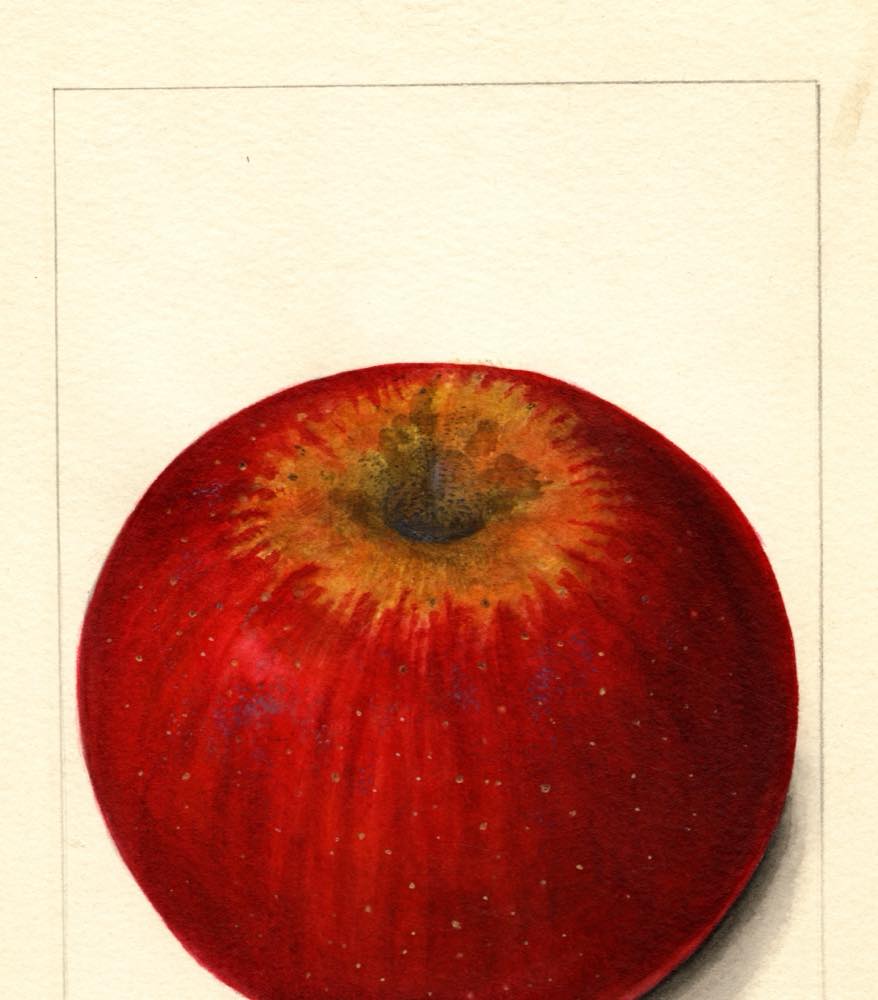
Apples
Famous for huge fruit, often big enough for a whole pie, with mild, juicy flesh for cooking and drying. It is very cold hardy, so it fits the high country and the upper end of mid elevation. It needs about 1,000 chill hours and does better with a late-blooming partner nearby.
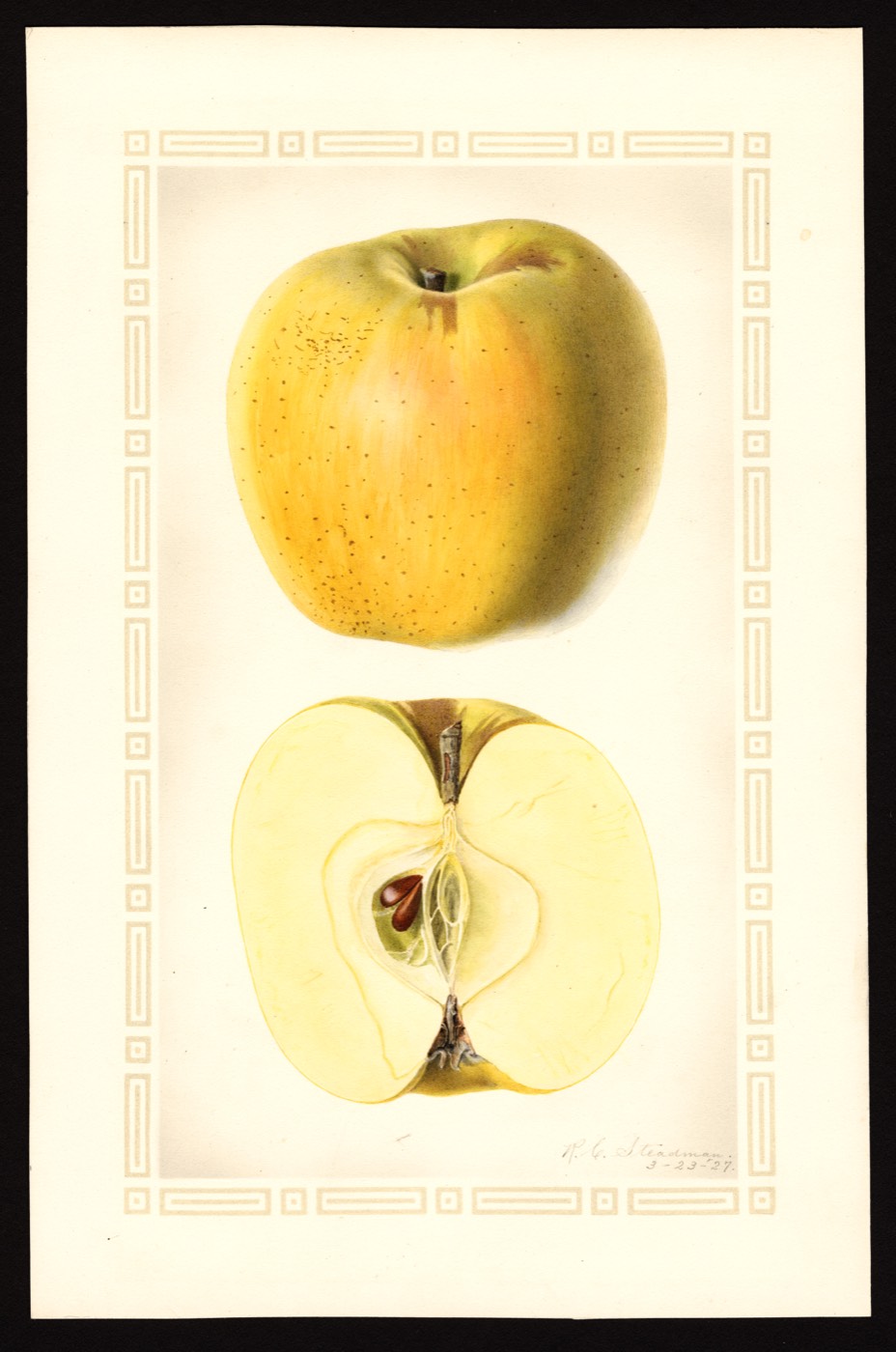
A firm, crisp, yellow-green apple with a slightly tart, rich flavor, equally good fresh, cooked or dried, and a great keeper. It blooms late and ripens late, so it suits mid elevation sites with a long season, and at 700 chill hours it is not a Phoenix apple. It sets fruit on its own, and the flavor is best when you let it hang into late October.
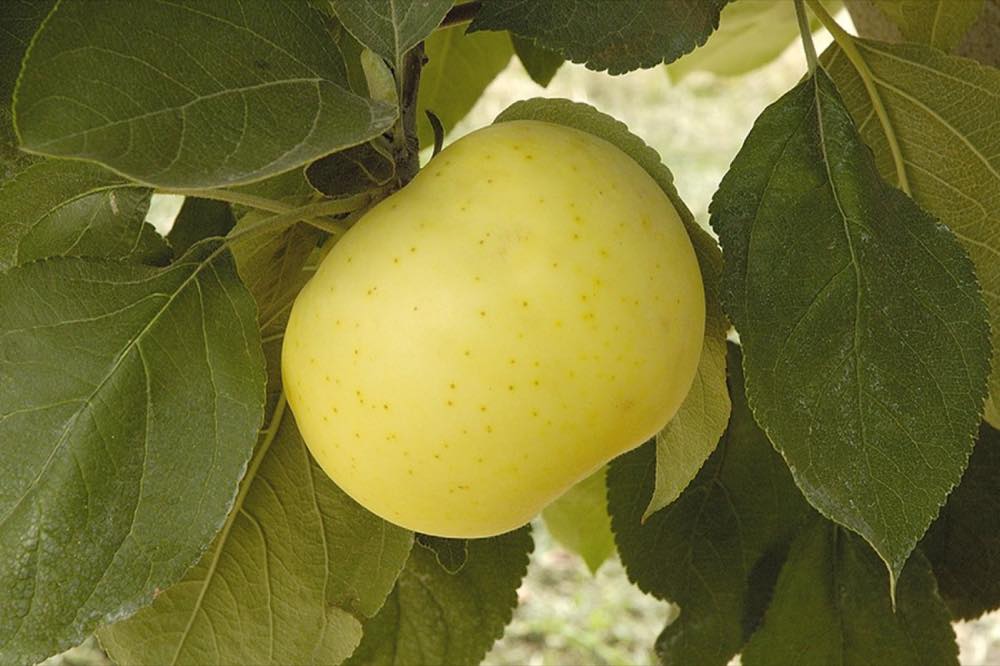
Apples
The first apple of the year, crisp and sour, ideal for sauce and pies, though it bruises easily and does not keep. It is extremely hardy, so it suits the high country and mid elevation, where it ripens in July. It needs 800–1,000 chill hours and sets fruit on its own.
Apricots
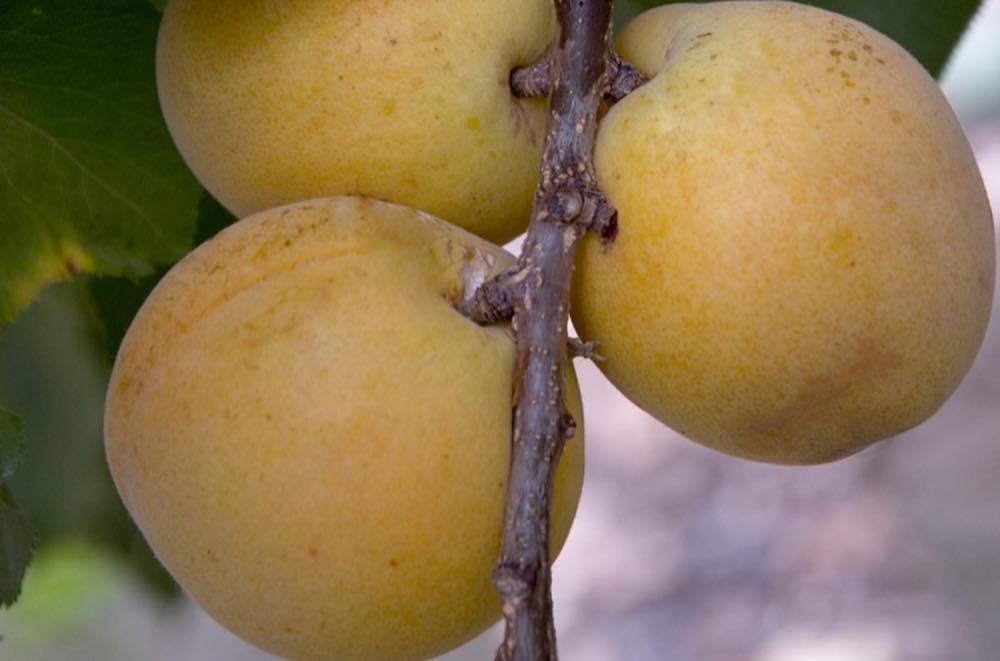
A late-season apricot with a strong reputation for flavor, ripening mid August to early September, long after other apricots are done. Its best home here is mid elevation, where winters give plenty of chill and late summer is mild. It blooms early for its chill need, so a late frost can take the crop in some years. In the low desert it is a gamble: chill is marginal and the fruit ripens in peak heat.
Apricots
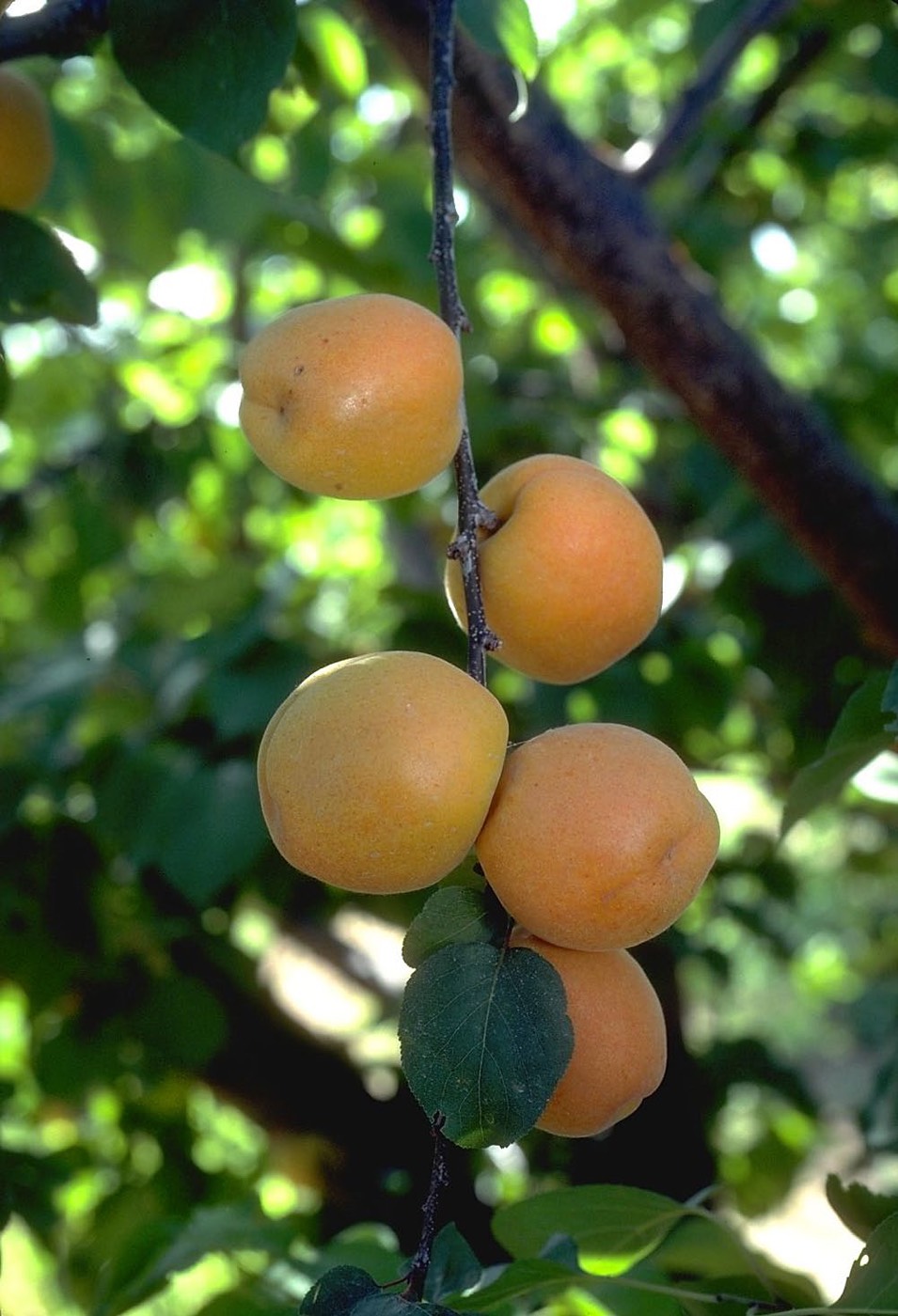
A yellow-skinned apricot with pale orange flesh that ripens in September, well after other apricots. It does best at mid elevation, where winters give far more chill than its 400 hours and September weather is mild. It blooms early, so pick a sheltered spot and cover the blossoms on frost nights. In the low desert chill is usually enough, but August ripening means heat and some sunburn on exposed fruit.
Apricots
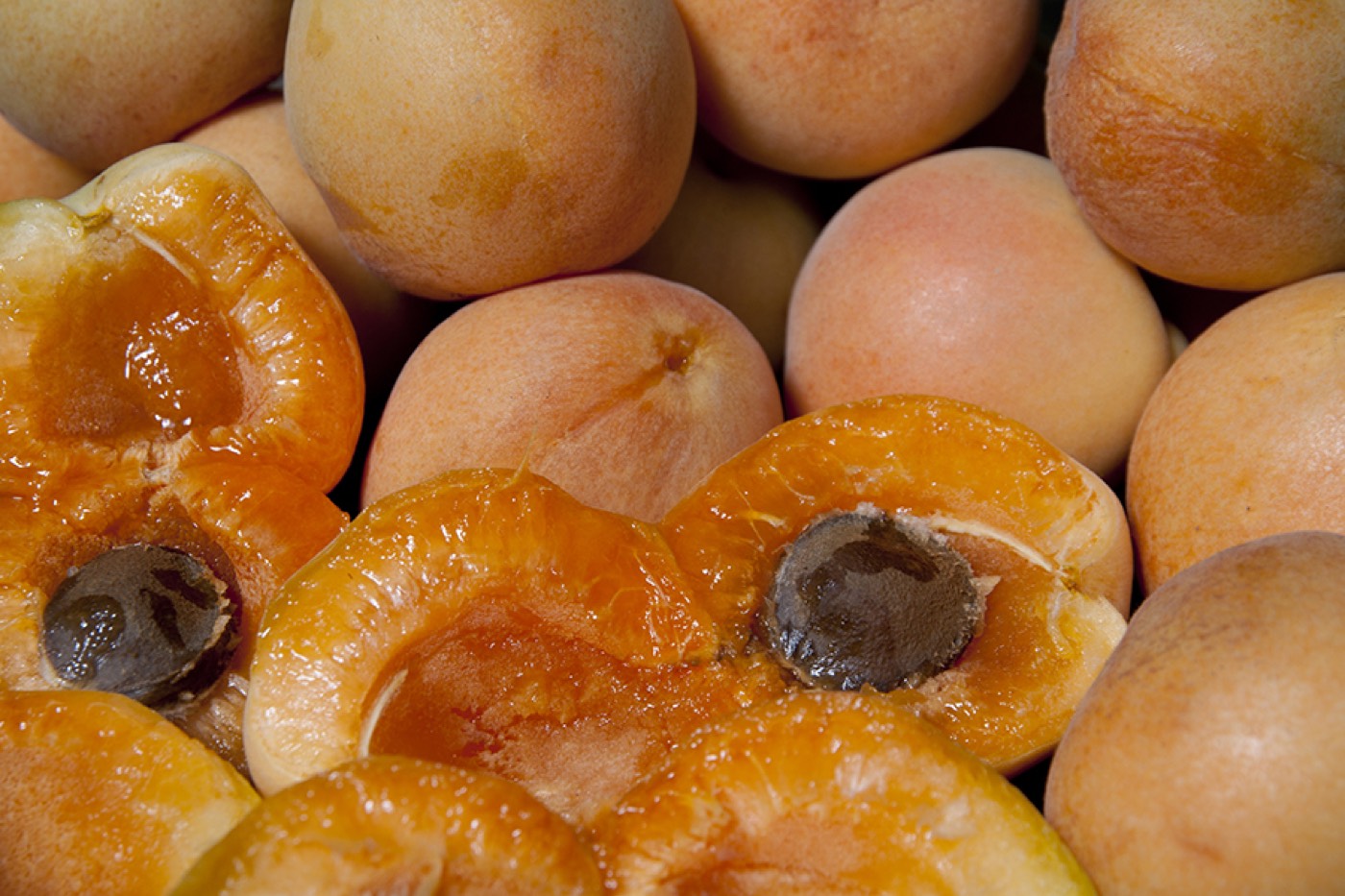
The classic sweet, aromatic apricot, a freestone that is good fresh, dried or in jam. At roughly 400 chill hours it sits right at the edge of Phoenix winters, so bloom can be thin after a warm winter, but in most years it crops in early to mid June ahead of the worst heat. It blooms early, so it is a low desert tree and not a mid elevation one.
Apricots
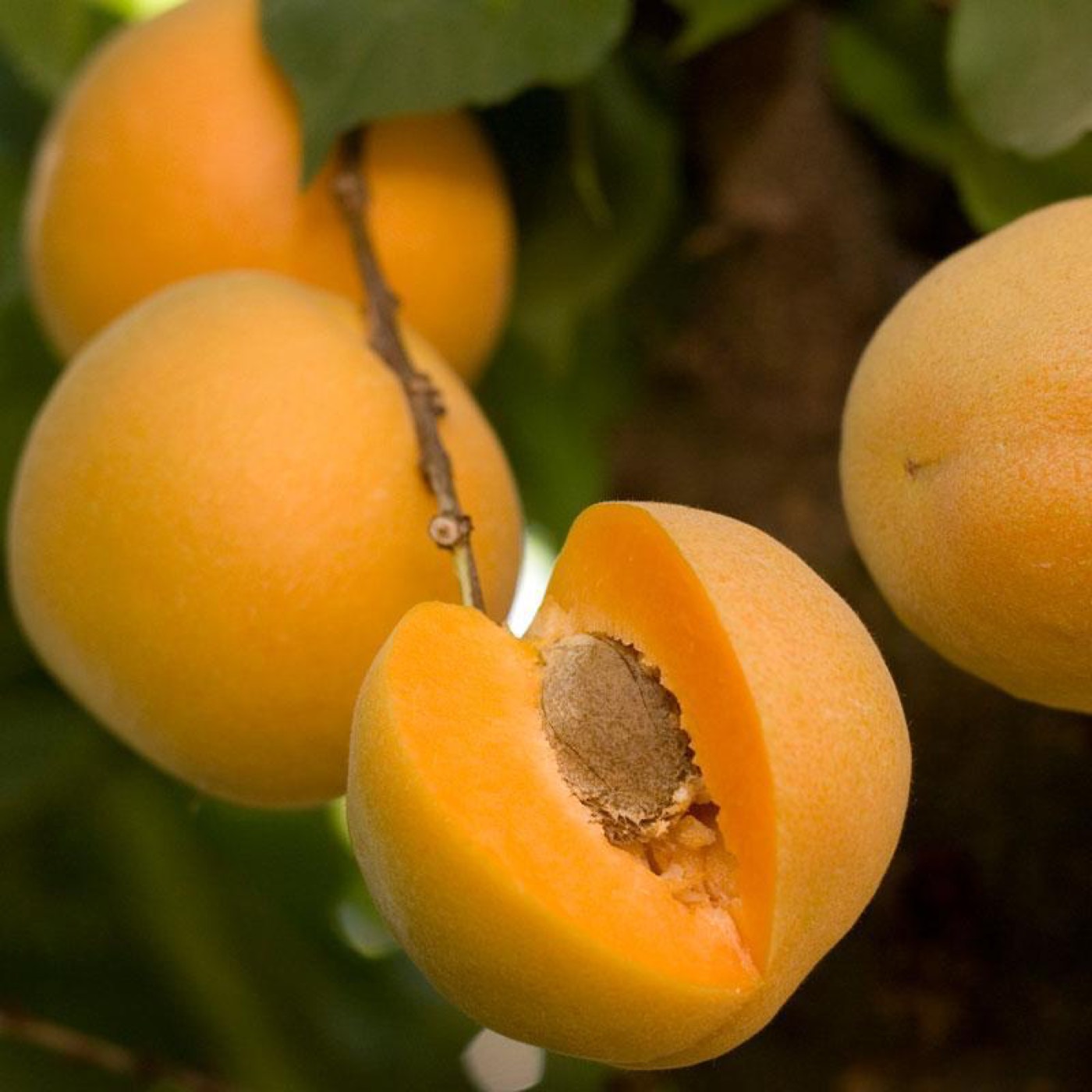
A large, firm apricot that can hang on the tree for three weeks or more, so there is no rush to pick at the right moment. It needs more winter than the low desert gives, so it is a mid elevation choice, ripening late July to mid August. It has a name for performing where other apricots struggle, but keep a frost cloth handy at bloom.
Apricots
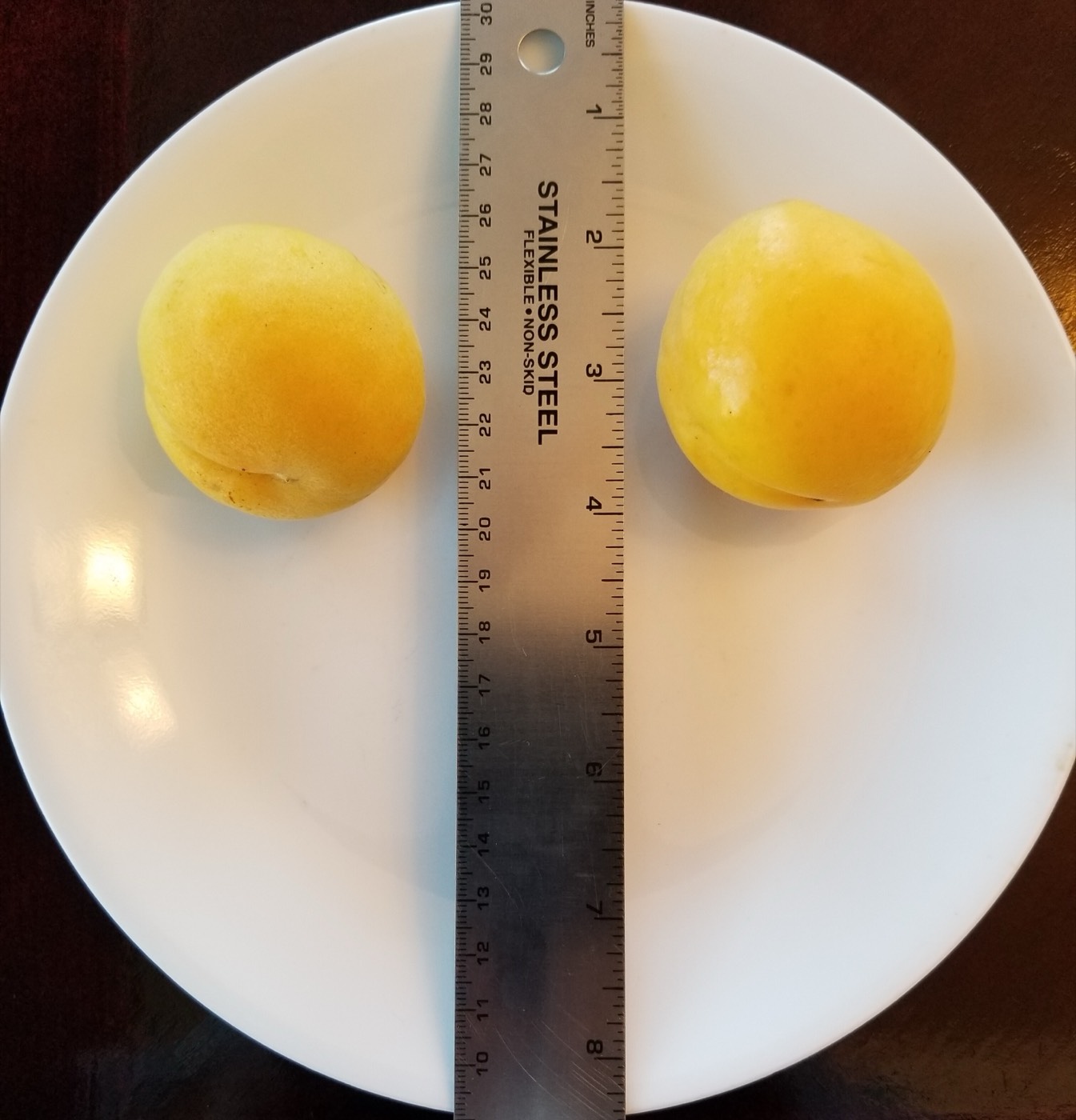
A pale, almost white-fleshed apricot with a syrupy-sweet taste and firm texture, and a top scorer in nursery taste tests. It needs about 700 chill hours, so it is a mid elevation tree. It cannot set a crop alone, so plant a late-blooming apricot such as Harcot or Harglow close by. Fruit ripens in early to mid August.
Apricots
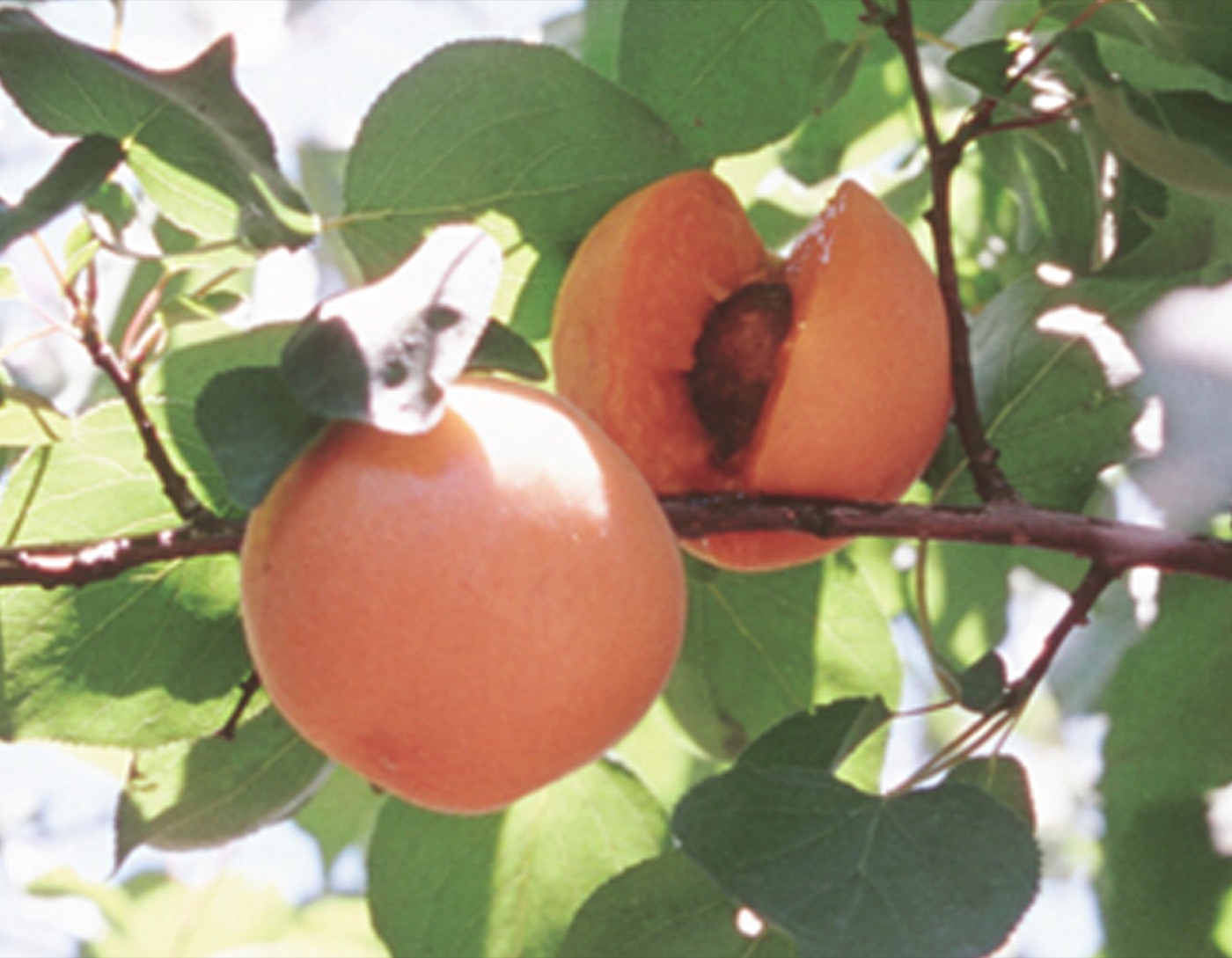
A tough, frost-hardy apricot with small to medium sweet fruit and heavy crops, sometimes sold as the Mormon apricot. It needs about 700 chill hours, so it fits Prescott, Payson, the Verde Valley and, in a sheltered spot, Flagstaff and Show Low yards. Self-fruitful, so one tree is enough. Not for the low desert.
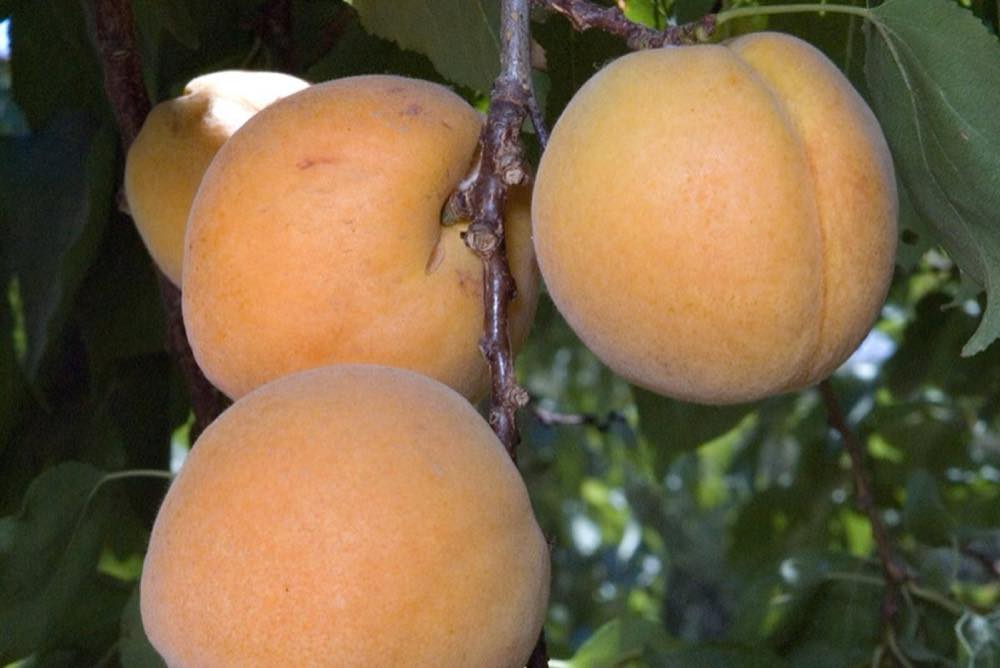
Apricots
An apricot that ripens in August, with good flavor fresh or dried. It does best at mid elevation, where winters give the chill it wants and August is milder than in the desert. Its low chill need means early bloom, so frost is the main risk and a sheltered spot helps. In the low desert it will flower, but the fruit ripens in peak summer heat and may sunburn, so give it some afternoon shade.
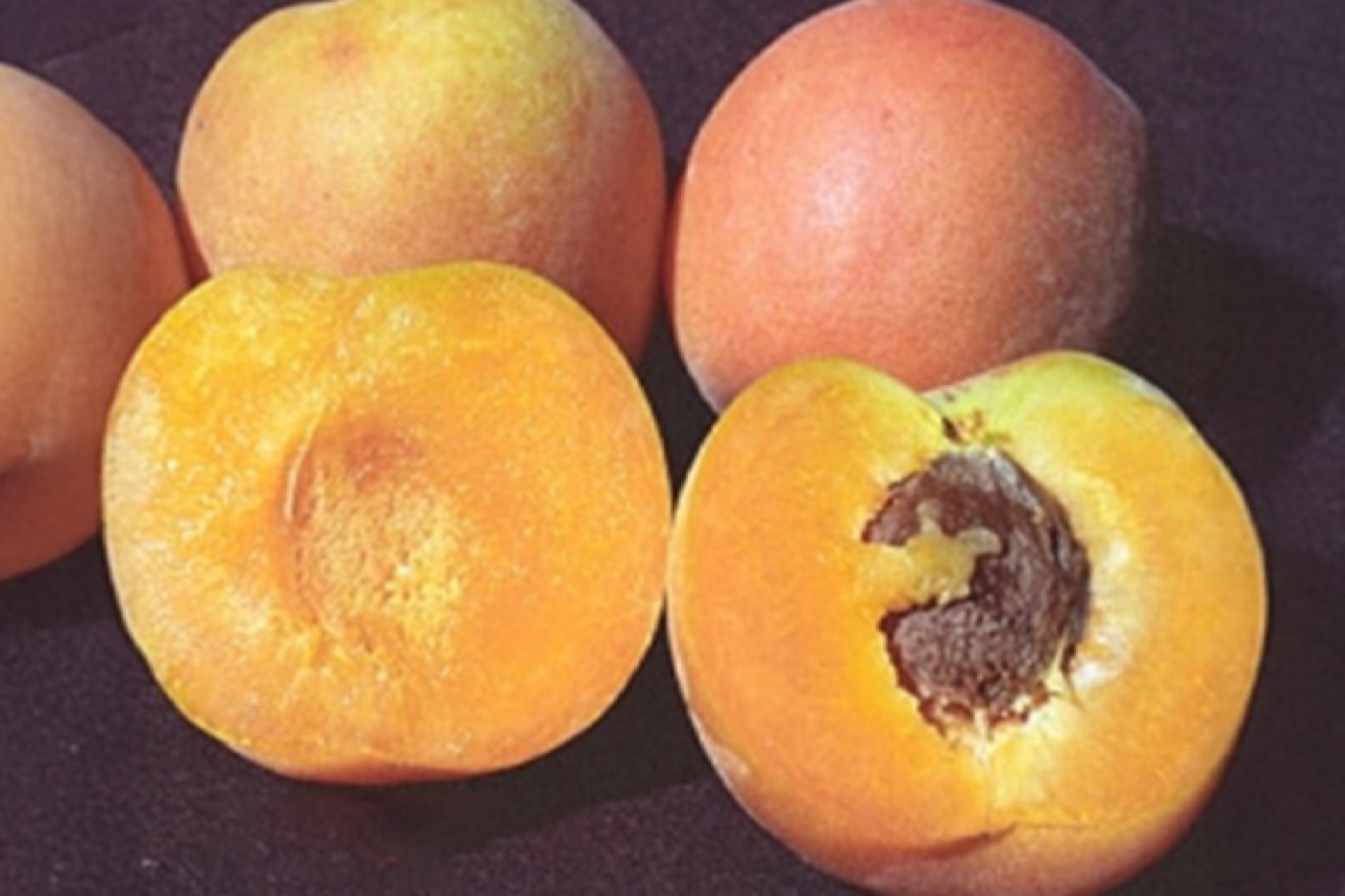
Apricots
Very large, sweet-tart apricots among the first fruit of the year, ripening mid to late May in the low desert. It is rated at up to 500 chill hours, so Phoenix is borderline and a warm winter can mean a light crop. Self-fruitful, so one tree works. Thin the fruit so the heavy apricots do not overload the branches.
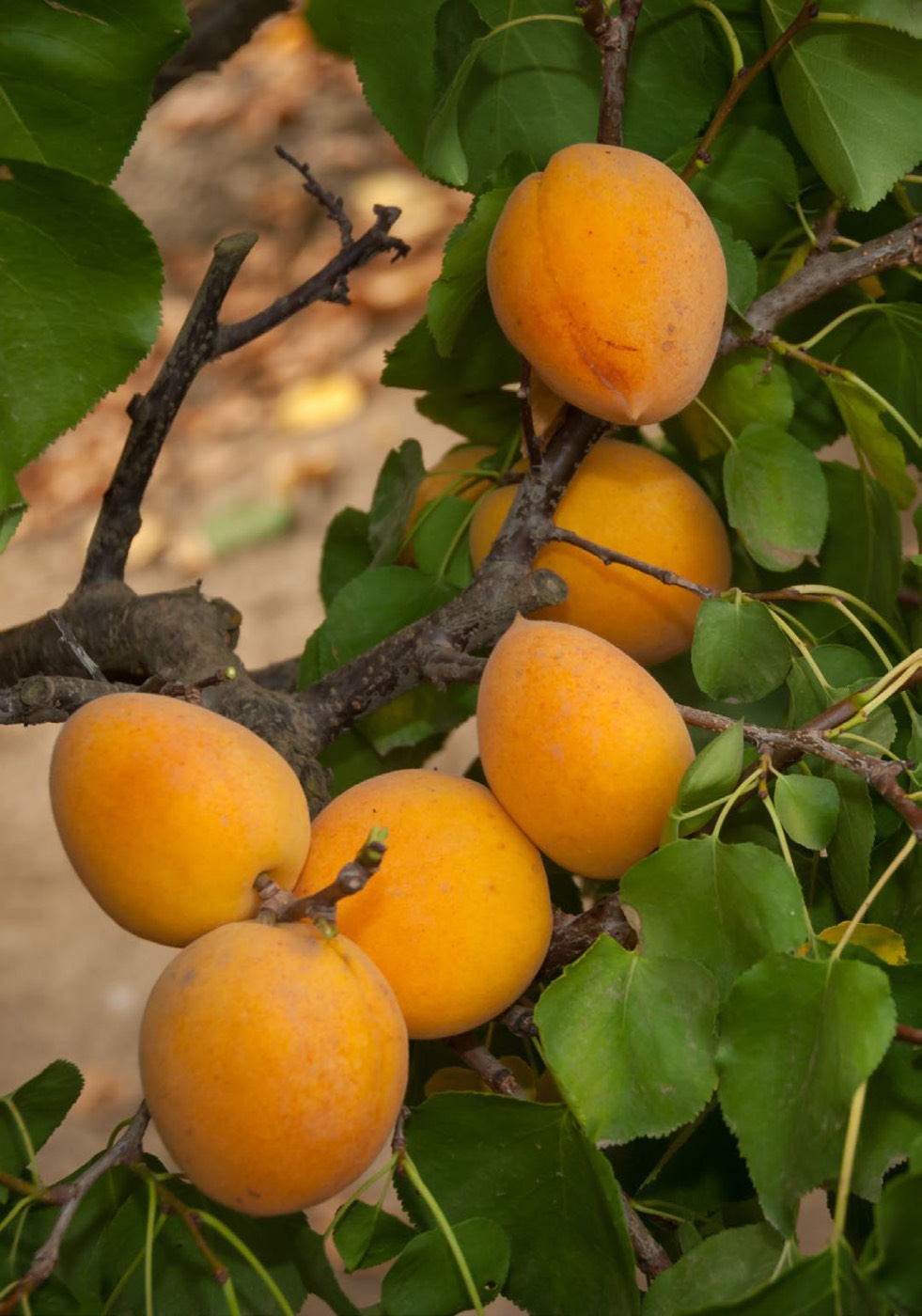
Apricots
A large apricot with light orange skin, firm flesh and excellent flavor, and good resistance to pit burn, the heat disorder that browns the flesh around the pit in some apricots. It needs about 600 chill hours, so it is a mid elevation tree, ripening in mid to late July. Like most apricots it blooms early, so a sheltered spot and a frost cloth help. Pollination is not stated, so a second apricot nearby is a sensible precaution.
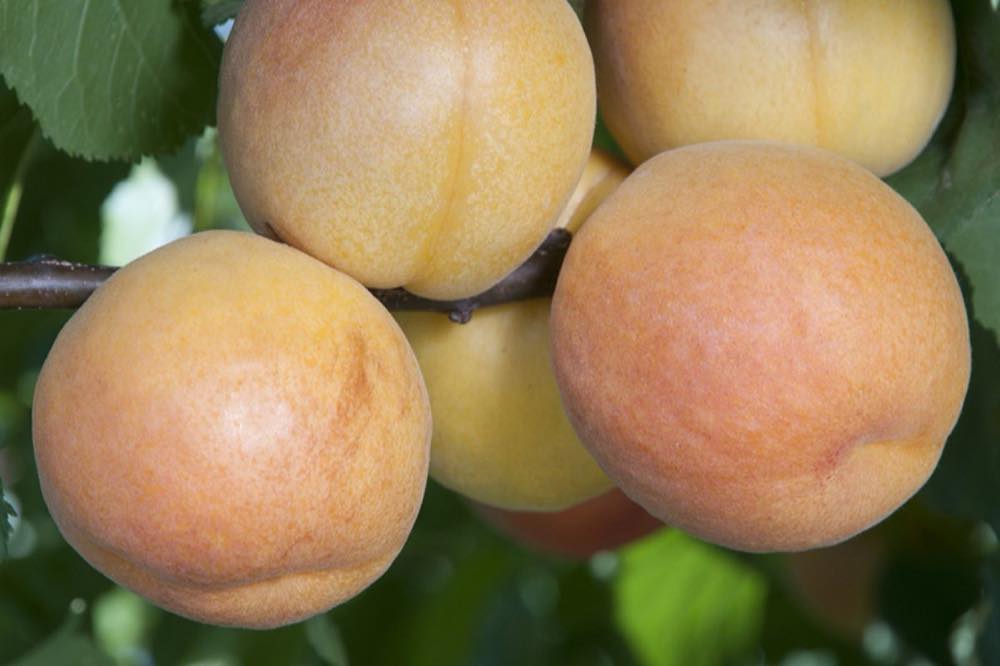
Apricots
A dependable freestone apricot bred for warm winters, and one of the safest apricots for Phoenix at about 300 chill hours. It bears heavily and ripens mid to late May, well ahead of the summer heat. Thin the crop so the limbs hold up. Early bloom means a late frost can still catch it in colder low desert pockets.
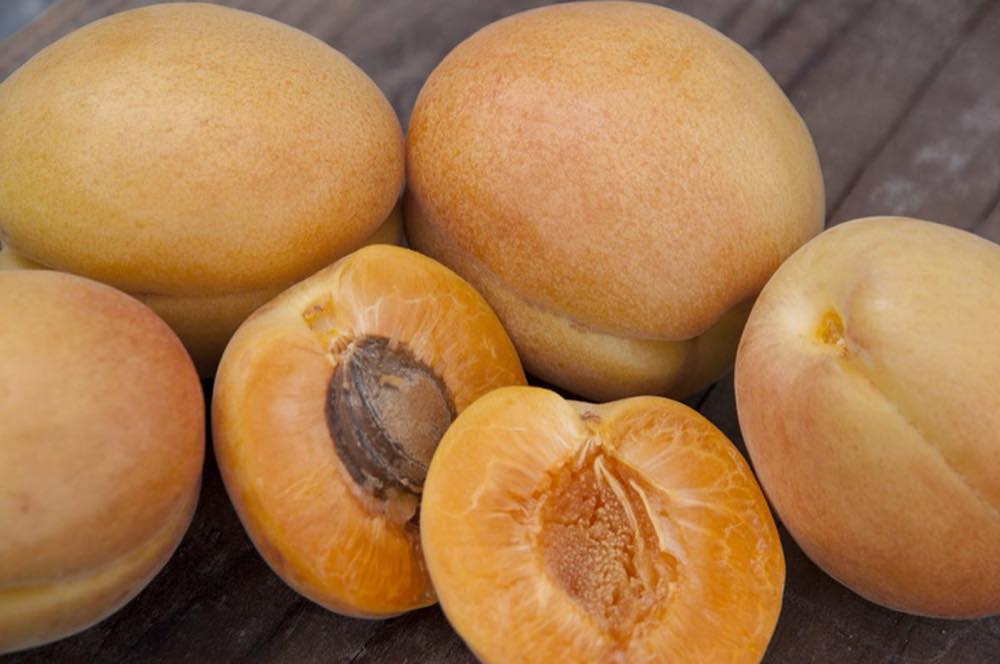
Apricots
A Canadian apricot with sweet, juicy, rich fruit that blooms late enough to dodge many spring frosts, which is why it is a favorite for cold places. It needs about 700 chill hours, so it fits Prescott, Payson and the Verde Valley, and a sheltered spot in Flagstaff or Show Low. It resists brown rot and canker. Self-fruitful.
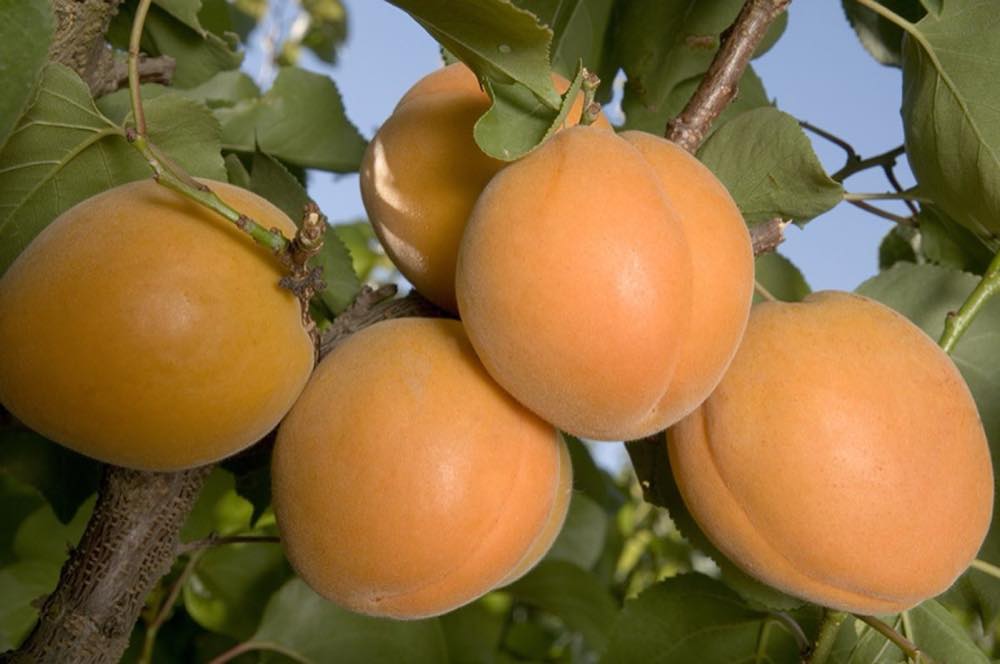
Apricots
A late-blooming Canadian apricot with bright orange freestone fruit that is firm and sweet, with good resistance to fruit cracking and canker. It needs about 800 chill hours, so it suits mid elevation and sheltered high country spots, where the late bloom helps it miss frost. Skip it in the low desert, where it would not get enough winter.
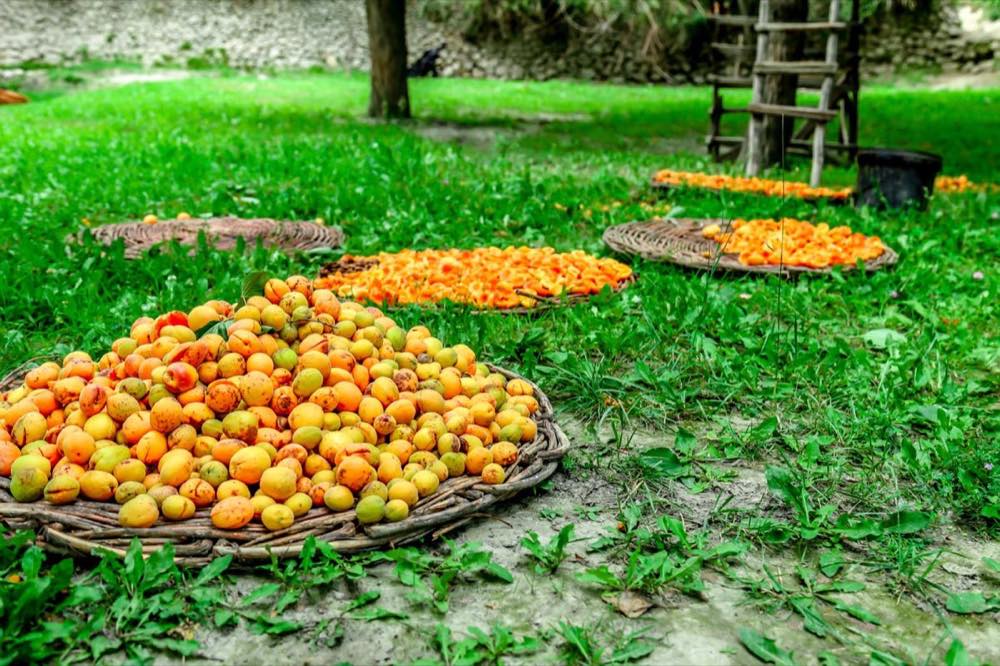
Apricots
A very cold-hardy apricot from the mountain valleys of Pakistan, known for sweet, flavorful fruit that is often dried. It is a good gamble for the coldest places where other apricots freeze out, from mid elevation up into the high country. Published chill and harvest details are thin, so treat 700 hours as our best estimate.
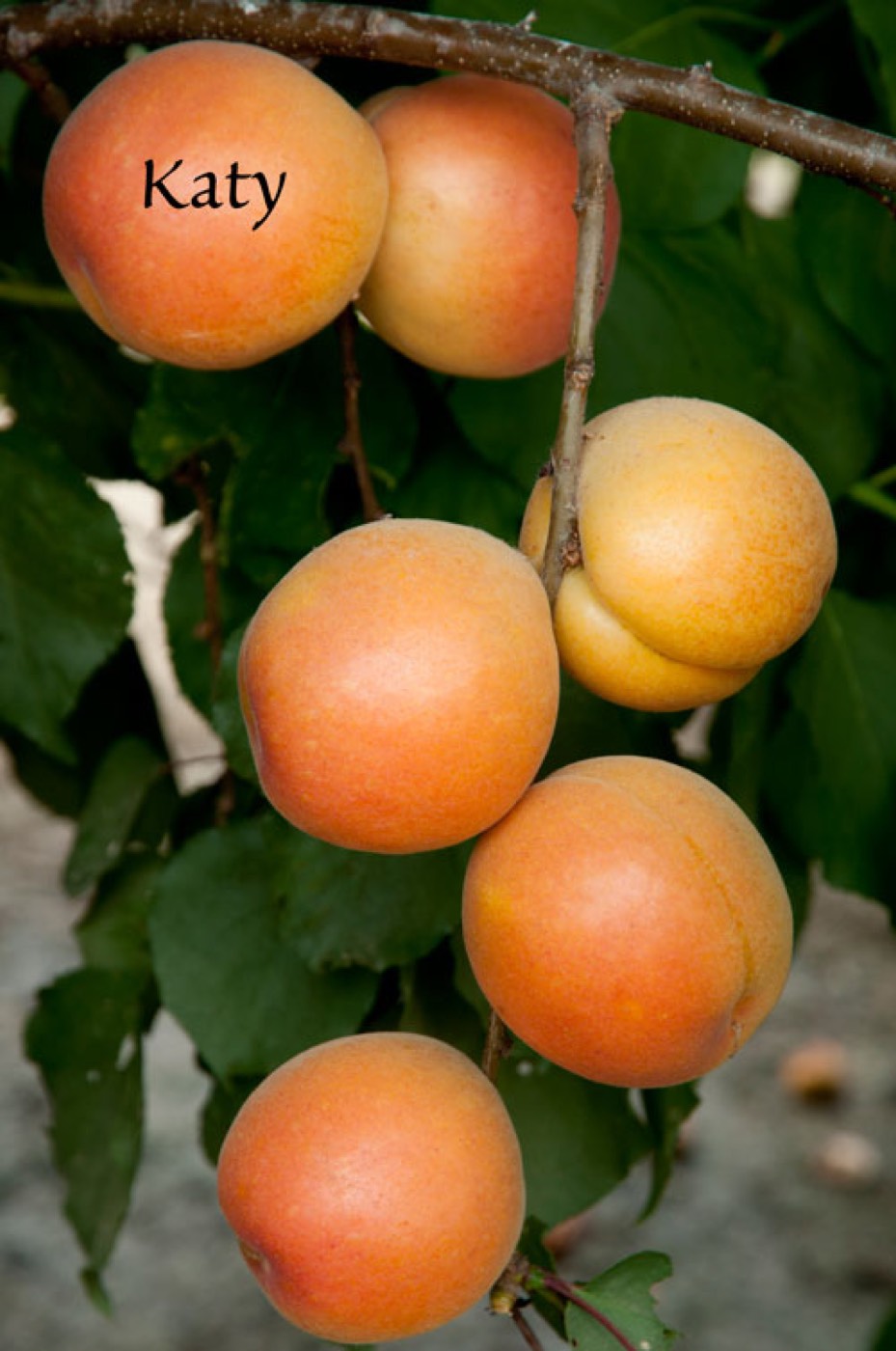
Apricots
A large, flavorful freestone apricot that is mild rather than sharp when tree-ripe, and a proven performer in Phoenix. It crops mid to late May, ahead of the heat, and is self-fruitful. Bloom is early, so a frost cloth on cold nights helps in colder low desert spots. Thin the fruit so heavy crops do not break branches.
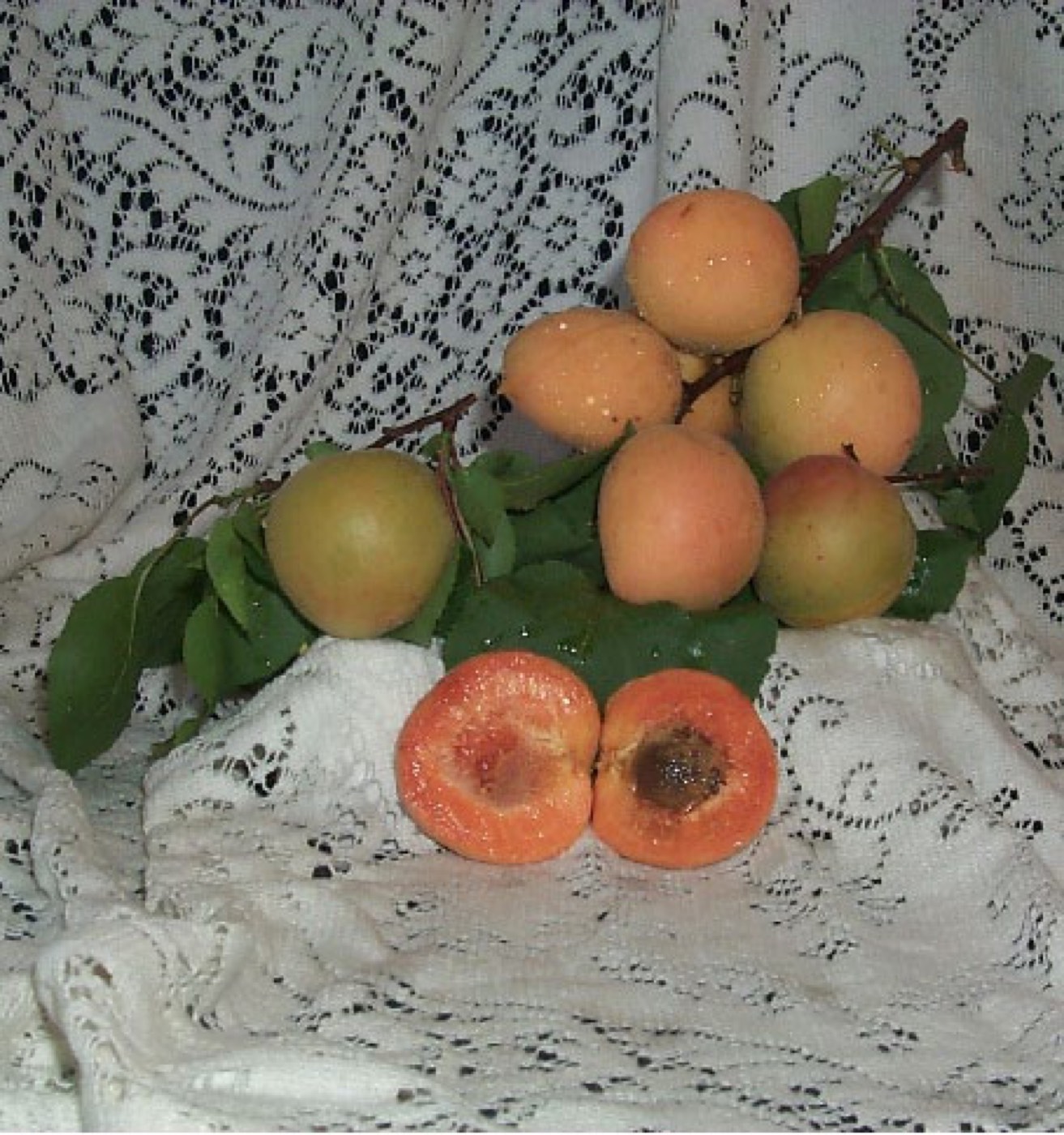
Apricots
A Colorado seedling with real cold hardiness and a late bloom that resists frost, bearing large, sweet yellow fruit with a red blush and an edible pit. At about 600 chill hours it fits mid elevation and sheltered high country yards. Self-fruitful, so one tree is enough. Not for the low desert.
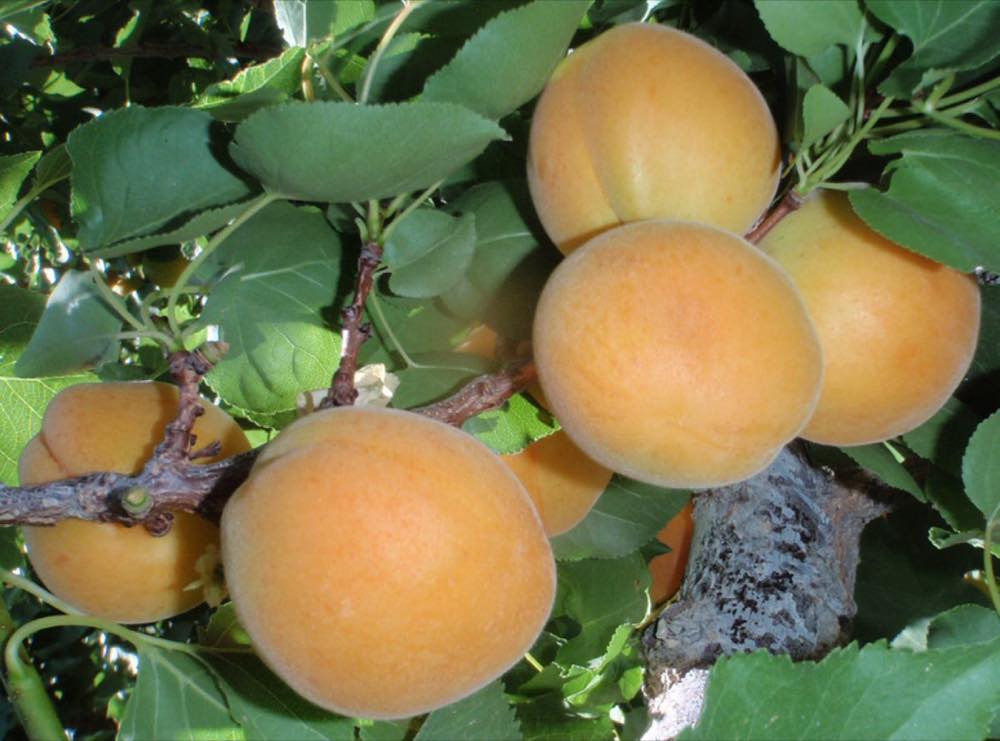
Apricots
The old favorite for rich flavor and aroma, good fresh or canned. It needs about 600 chill hours, so it is a mid elevation tree, ripening mid to late July. It can lose blossoms to a spring frost in some years, so plant it in a protected spot. Self-fruitful, so one tree is enough.
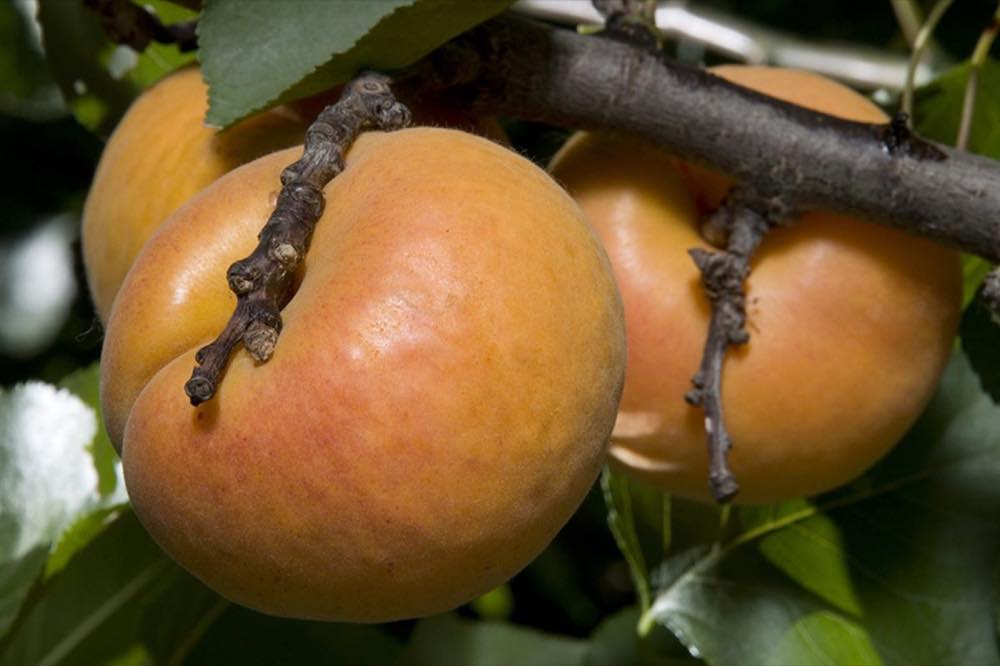
Apricots
A vigorous yellow freestone apricot with orange skin and a red blush, ripening late May to early June in the low desert. It is rated at up to 500 chill hours, so Phoenix is borderline and the crop can be light after a warm winter. Self-fruitful, so one tree is enough.
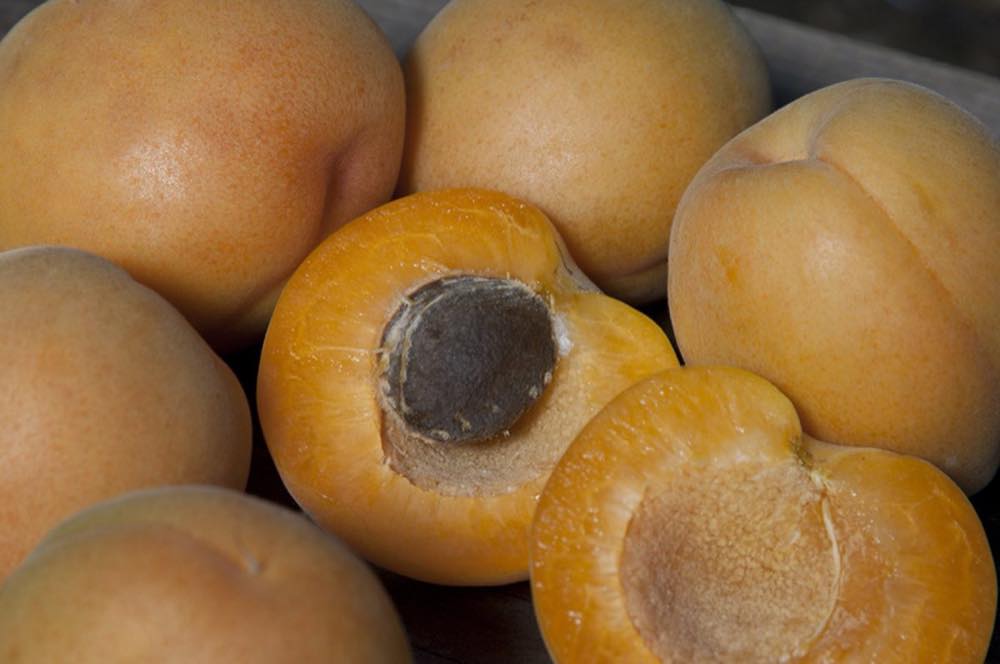
Apricots
A hardy, productive apricot with very large, sweet, juicy fruit, grown where spring frost is a problem. Reported chill needs are about 700 hours, so it fits mid elevation and sheltered high country yards. Pollination is not confirmed, so a second apricot nearby is a sensible precaution.
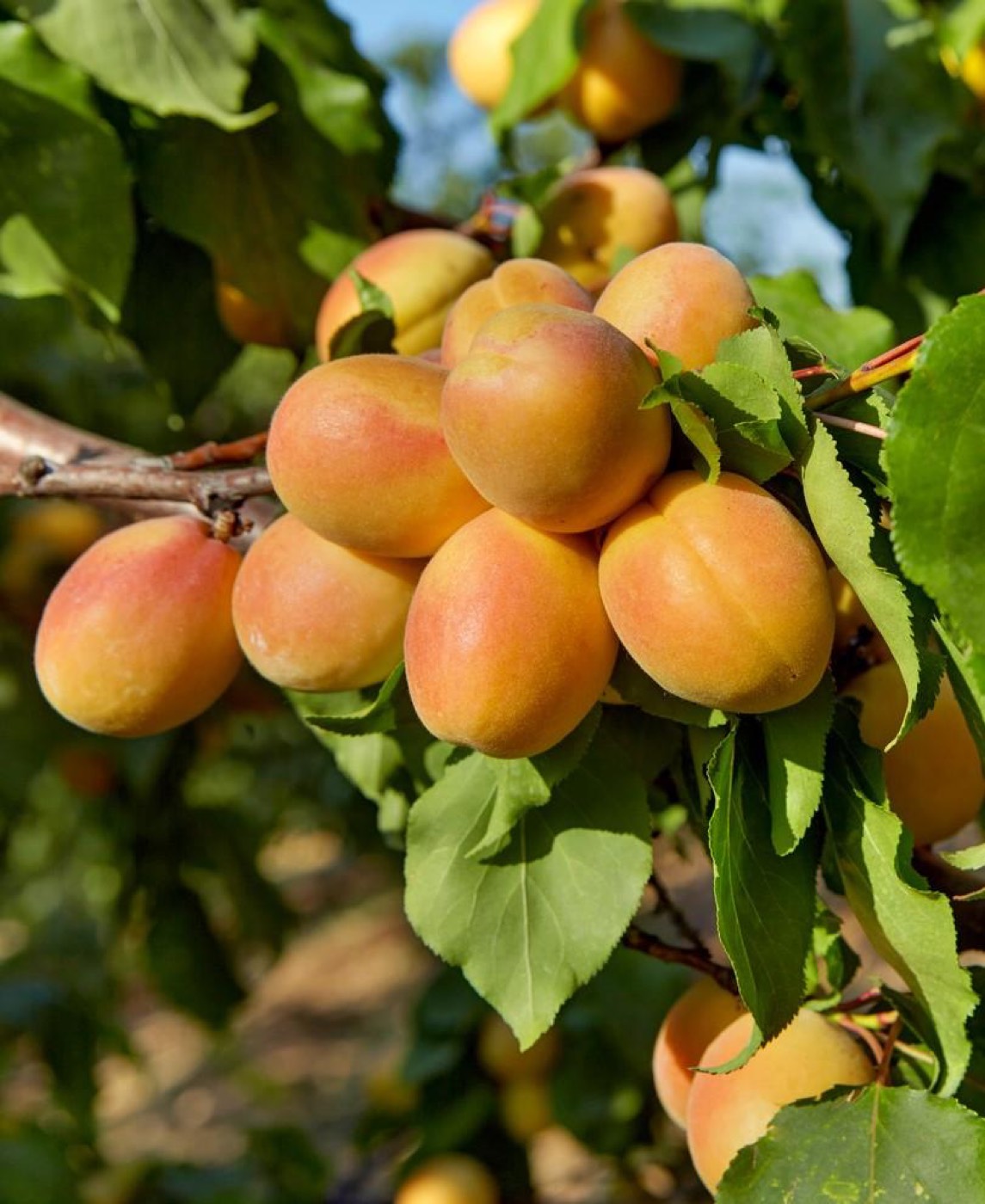
Apricots
Large, flavorful apricots from a variety proven in the cool, wet Pacific Northwest, where spring weather is hard on apricots. It needs about 600 chill hours, so it suits mid elevation, with fruit in early to mid August. Self-fruitful. As with any apricot, a late frost can still take the blossoms.
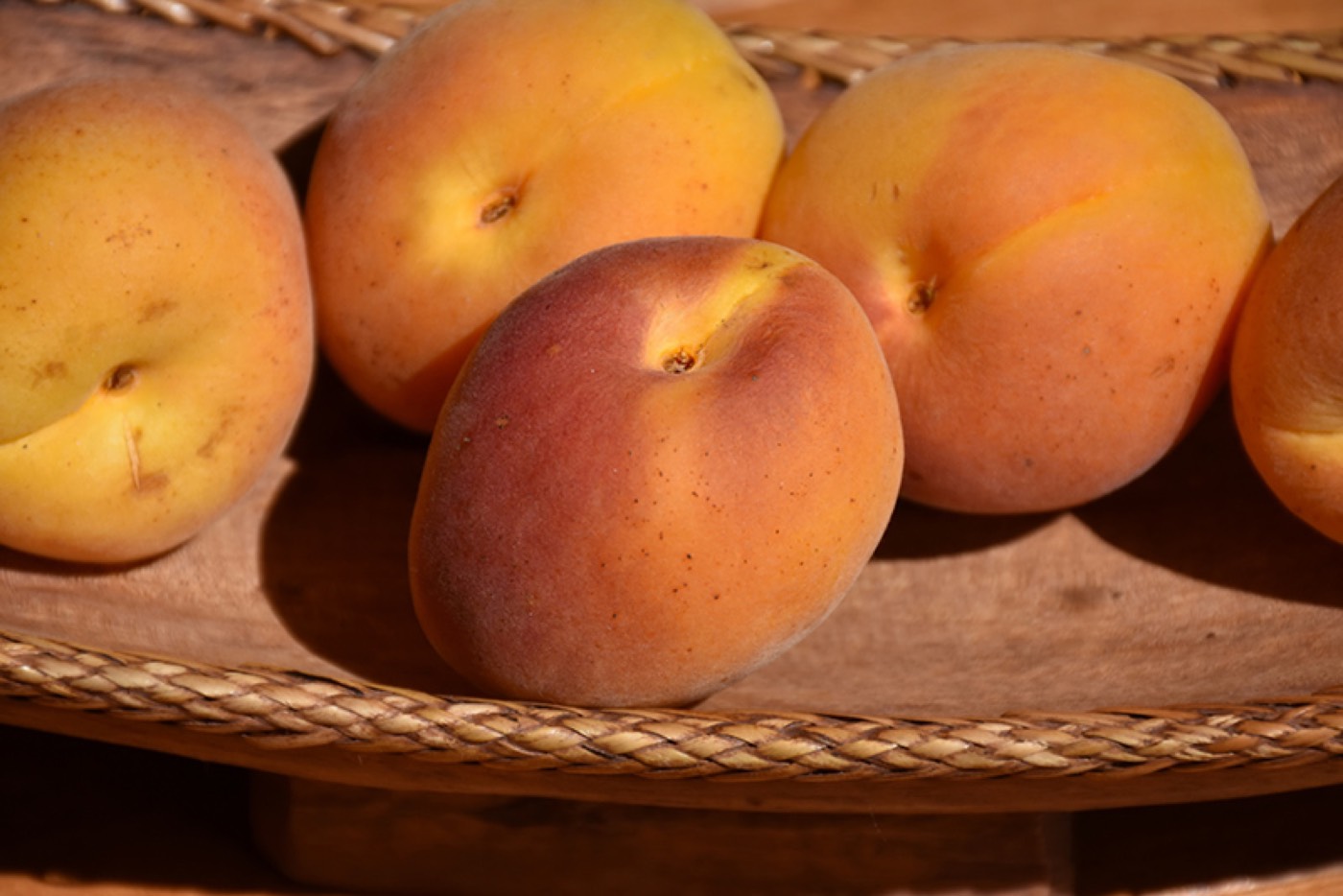
Apricots
A large oval apricot with an aromatic, slightly tart flavor and an orange-red blush, from a heavy, dependable bloom. It needs 700 to 800 chill hours, so it is a mid elevation choice, and it needs an early-blooming apricot such as Blenheim or Tomcot nearby to set fruit. Not for the low desert, which does not give enough winter.
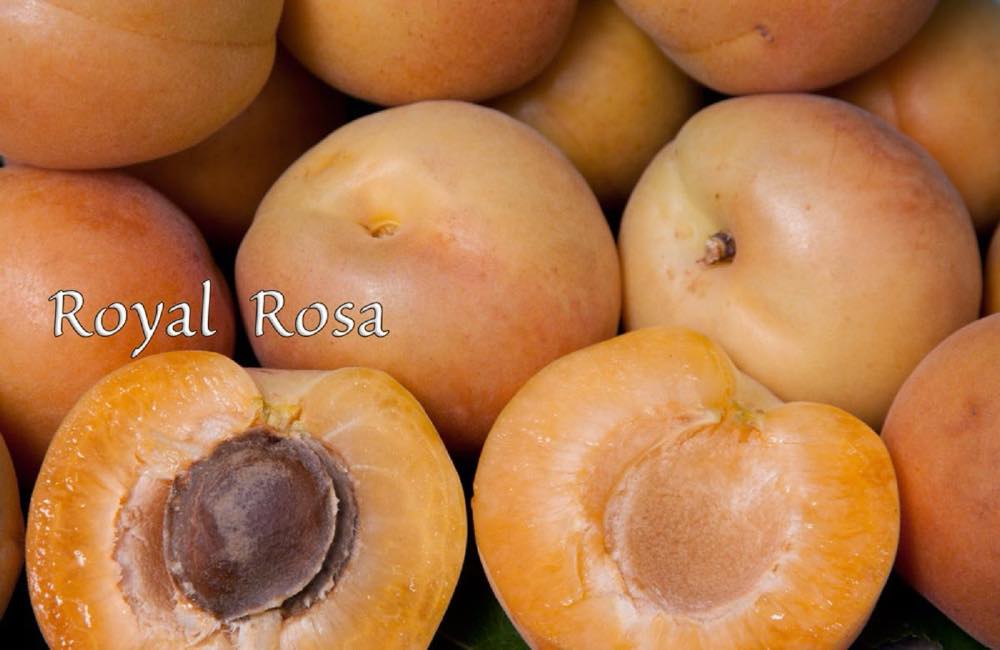
Apricots
A very early, sweet, low-acid apricot that bears young and heavy, ripening early to mid May in the low desert. It is rated around 500 chill hours, so Phoenix is marginal in a warm winter, though it is known for vigor and good disease tolerance. Self-fruitful. Early bloom makes frost a problem outside the low desert.
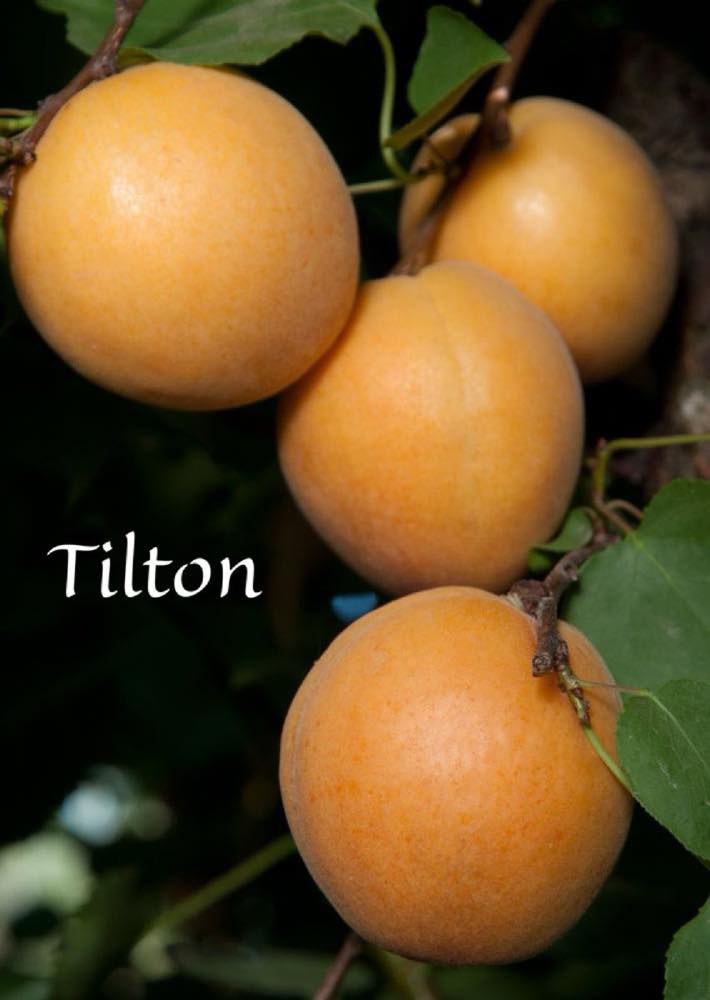
Apricots
Prized for canning but just as good fresh or dried, a medium to large apricot with firm flesh and rich flavor. It needs about 600 chill hours, so it is a mid elevation tree, ripening early to mid July. It is among the better apricots for colder yards, but still cover the bloom on frost nights. Self-fruitful.
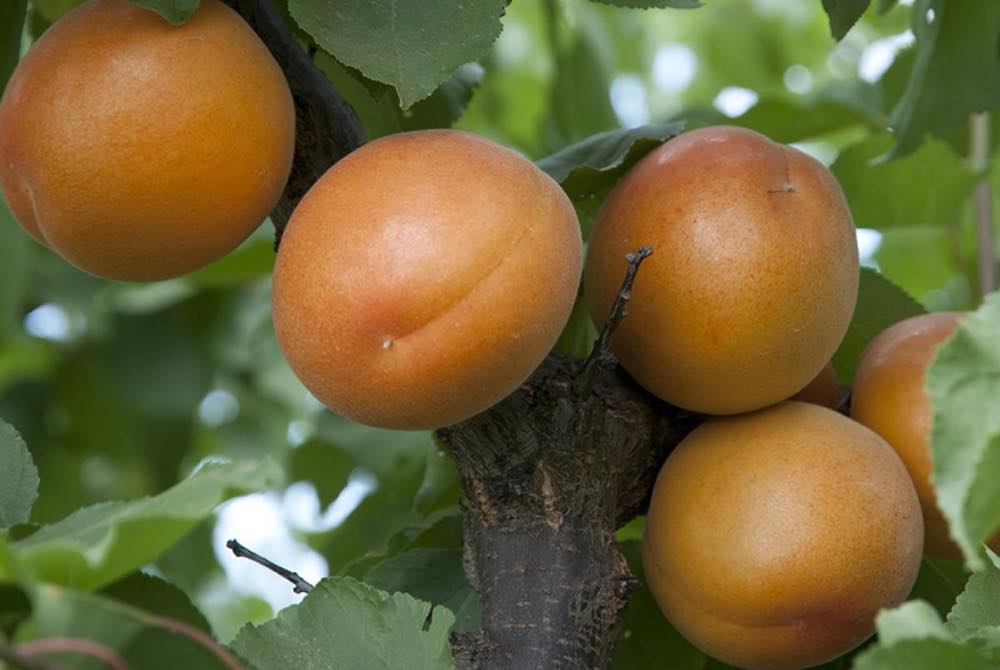
Apricots
A consistent producer of large, orange, firm apricots with a sweet, slightly tart flavor, ripening early for a cold-hardy type. Its modest chill need means an early bloom, so frost is the main risk at mid elevation and a sheltered spot matters. Partly self-fruitful, with bigger crops if another apricot is nearby.
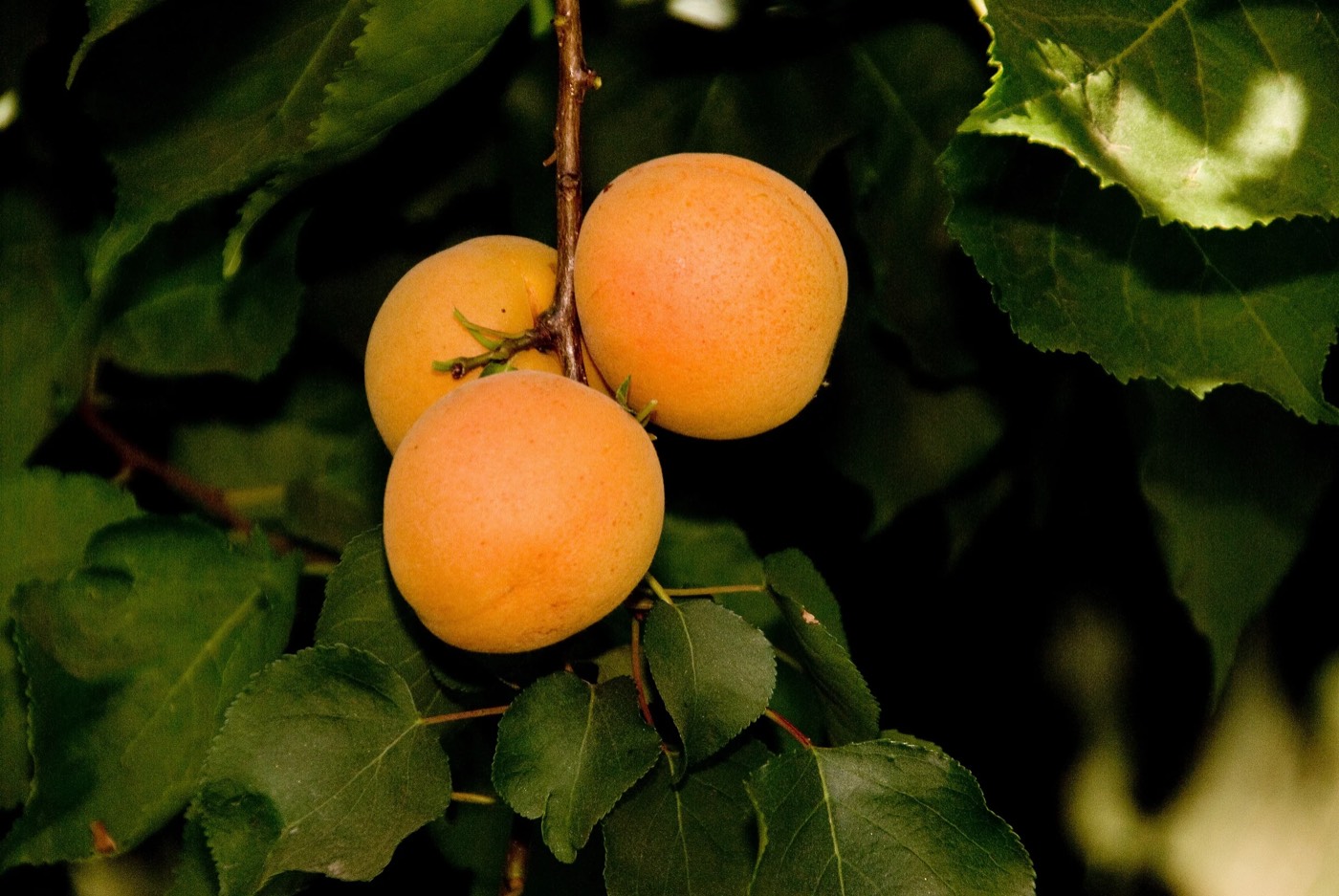
Apricots
A medium to large apricot with golden skin, an orange-red blush and a reputation for excellent flavor. It needs 350 chill hours or fewer, so it is a good low desert pick, ripening early to mid June. Self-fruitful. It ripens a little later than Katy or Gold Kist, so keep some leaf cover to protect the fruit from sunburn.
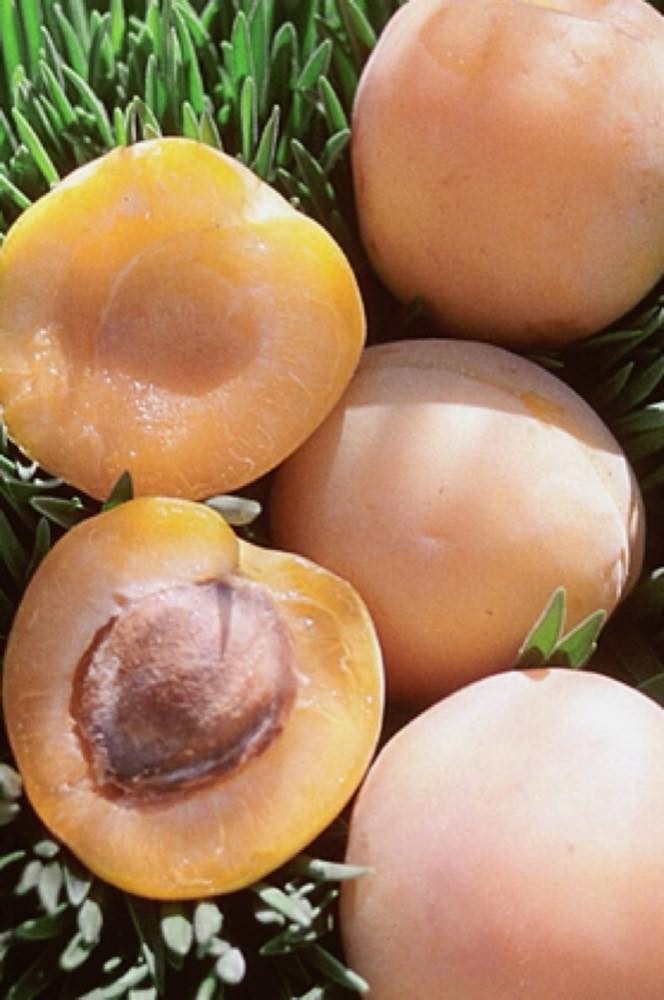
Apricots
A long-time Pacific Northwest favorite, good fresh, dried or canned, and happy where spring weather is tricky. It needs about 700 chill hours, so it fits mid elevation, with fruit in late June to early July. Self-fruitful. Skip it in the low desert, where winters are too mild to bring it into bloom properly.
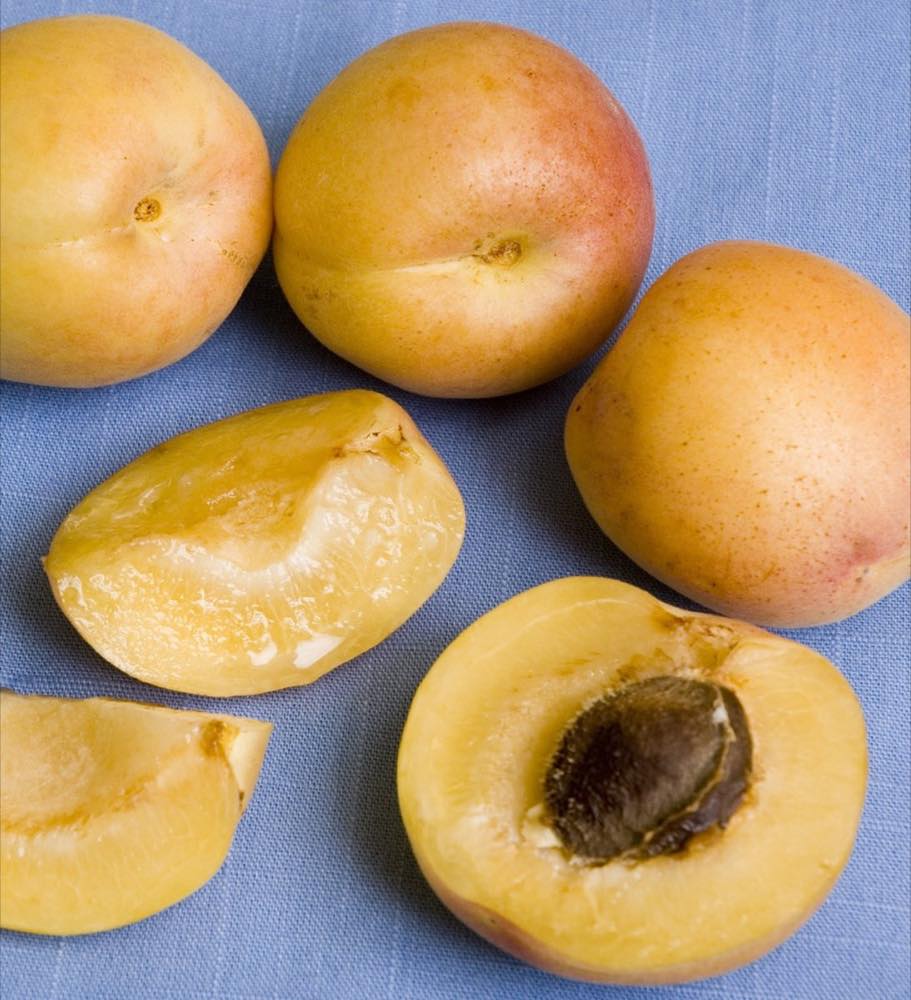
Apriums
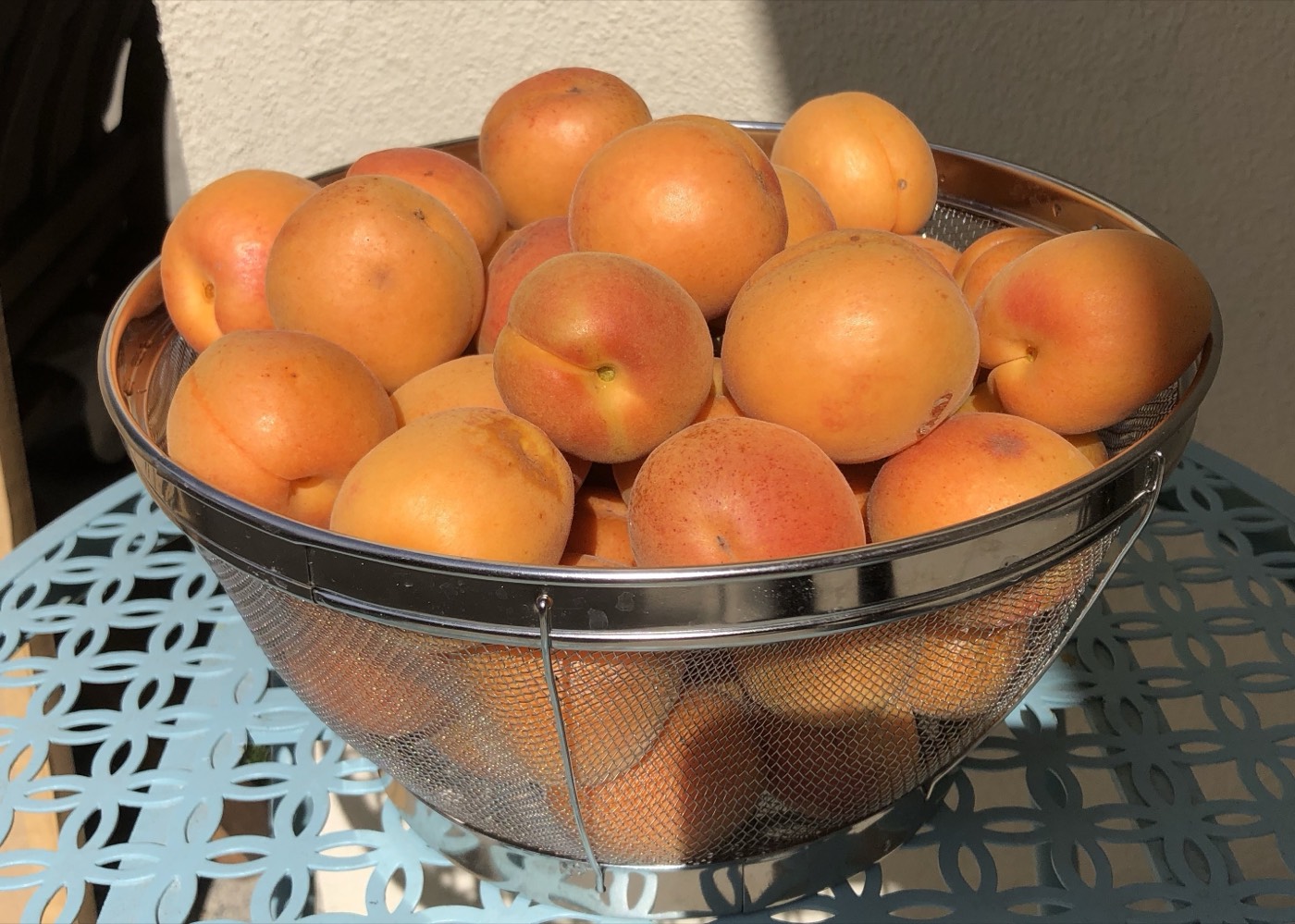
A white-fleshed apricot-plum cross with very sweet, juicy fruit, ripening late May to early June in the low desert. It needs about 400 chill hours, so Phoenix is borderline but usually enough. Self-fruitful, and it helps pollinate nearby apricots and apriums. Thin the crop so the fruit sizes up.
Apriums
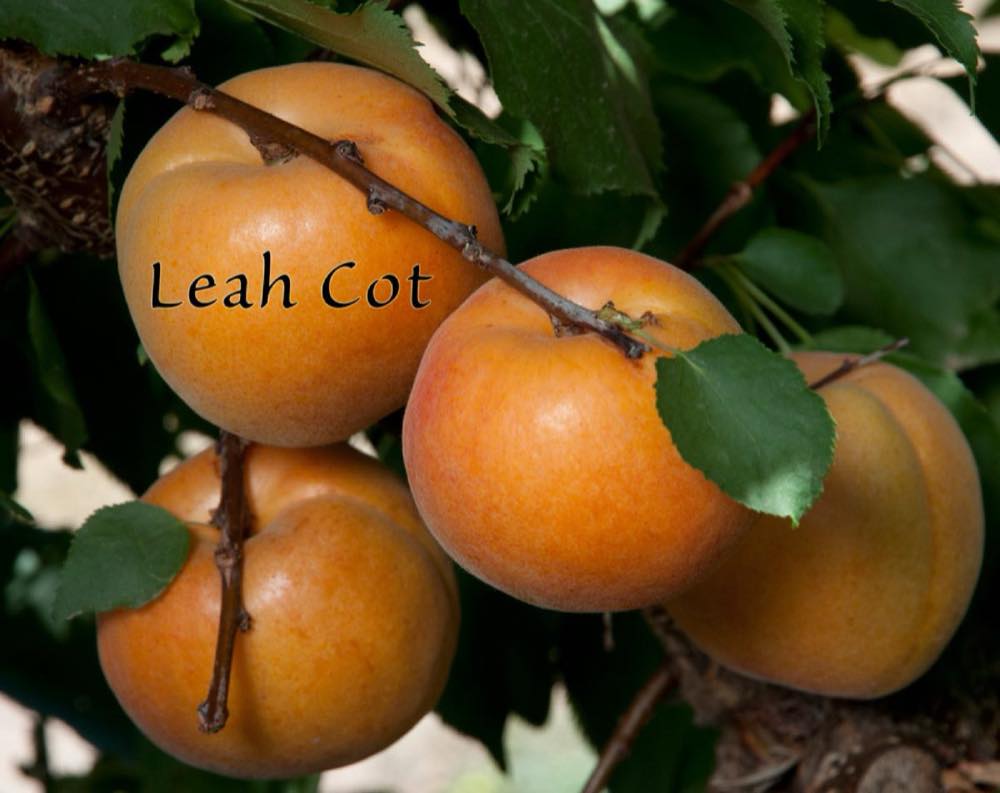
An apricot-plum cross that looks like an apricot but has a flavor and texture of its own, and a good low desert pick. It needs under 300 chill hours and ripens mid to late May in the low desert. Self-fruitful, though it crops heavier with an apricot such as Katy close by.
Apriums
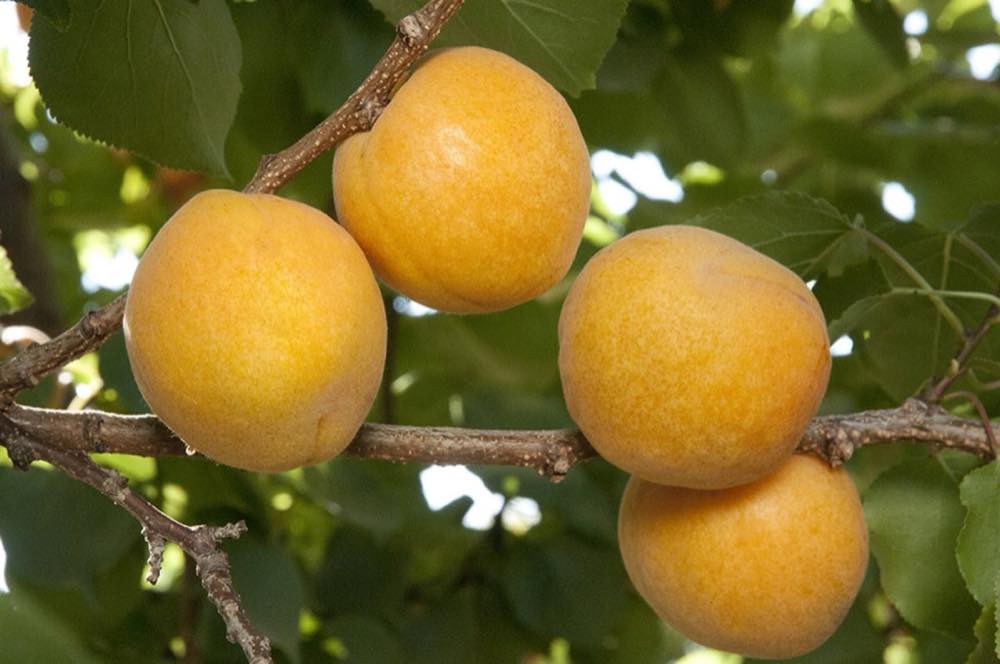
A large aprium, deep orange inside and out, with firm texture and strong flavor. It is rated at up to 500 chill hours, so Phoenix is borderline and a warm winter can cut the crop, but it ripens mid to late May in the low desert, ahead of the heat. Self-fruitful, and a reliable yearly bearer once settled in.
Apriums
A juicy aprium with real apricot flavor and a late-season ripening. It can work in two places. At mid elevation it ripens in August, and the main risk is a late frost on early blossoms. In the low desert it is borderline on chill (up to 500 hours) and the fruit ripens in July heat, so it may sunburn. Self-fruitful. Flavor Delight is the safer low desert aprium.
Cherries
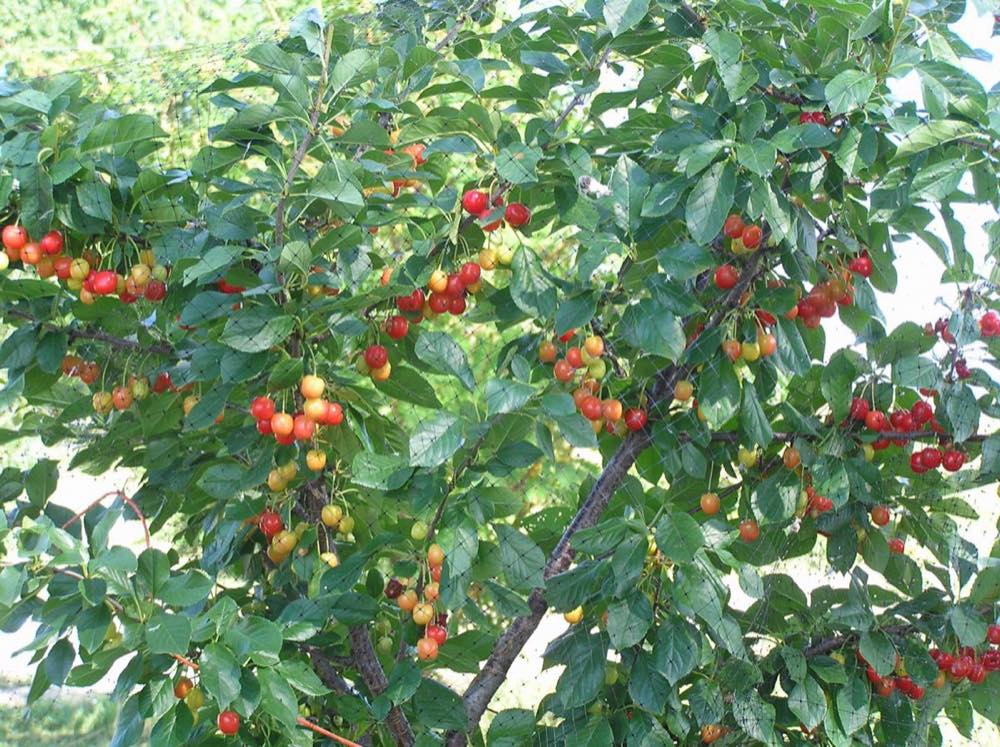
A naturally small sour cherry that tops out near 7 ft, so it fits a patio corner or a small yard. The fruit is large and among the sweeter sour cherries, good fresh once fully ripe and better still in pies. It ripens late and takes extreme cold, so it suits mid elevation and high country. One tree is enough.
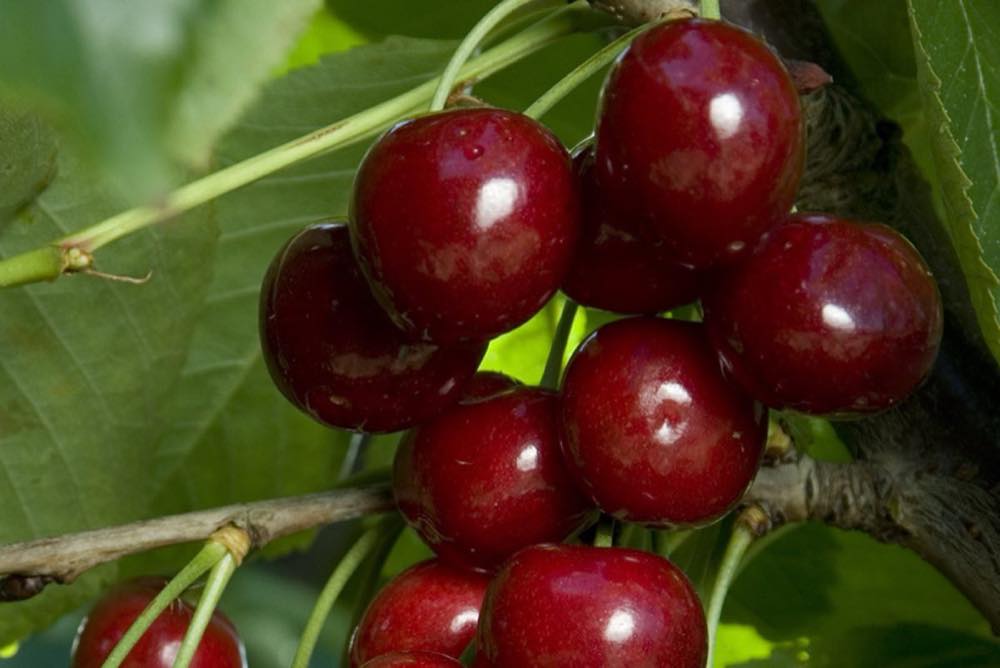
Cherries
The classic dark, sweet, firm cherry and still the benchmark for flavor. It needs a second sweet cherry nearby to set fruit, and Lapins, Van or Black Tartarian all work. Plan on mid elevation or higher, where winters give it the cold it needs. Spring frost on the blossoms is the usual risk, so a spot where cold air drains away helps.
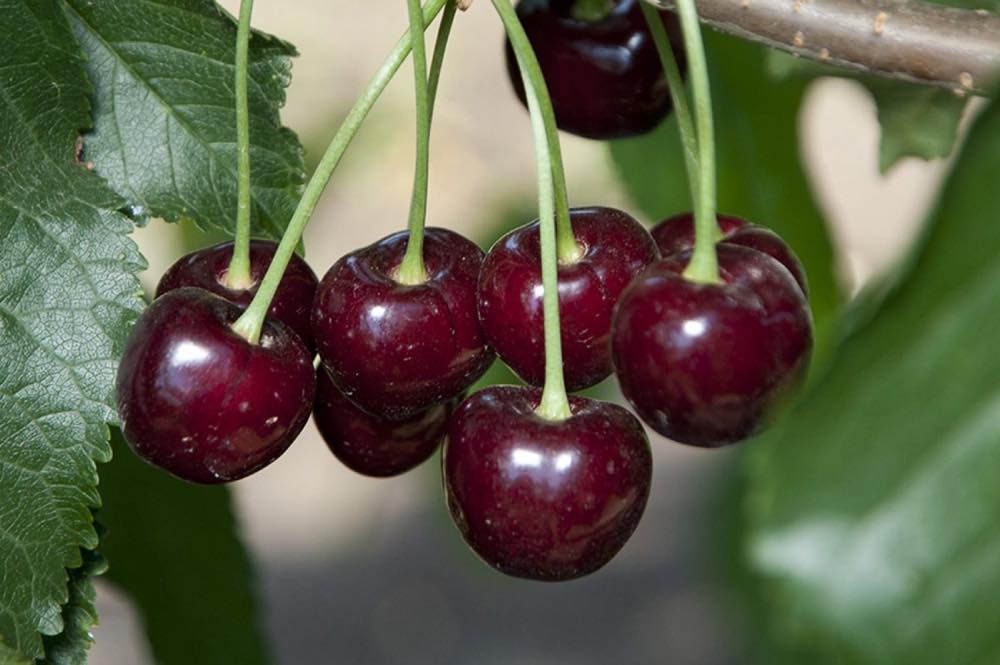
Cherries
An early, nearly black sweet cherry with a lively flavor on a vigorous, productive tree. It crosses with all the popular sweet cherries, so it is a handy pollinator for Bing or Van. Grow it at mid elevation or higher and protect the blossoms from late frost. Phoenix does not get nearly enough winter chill for it.
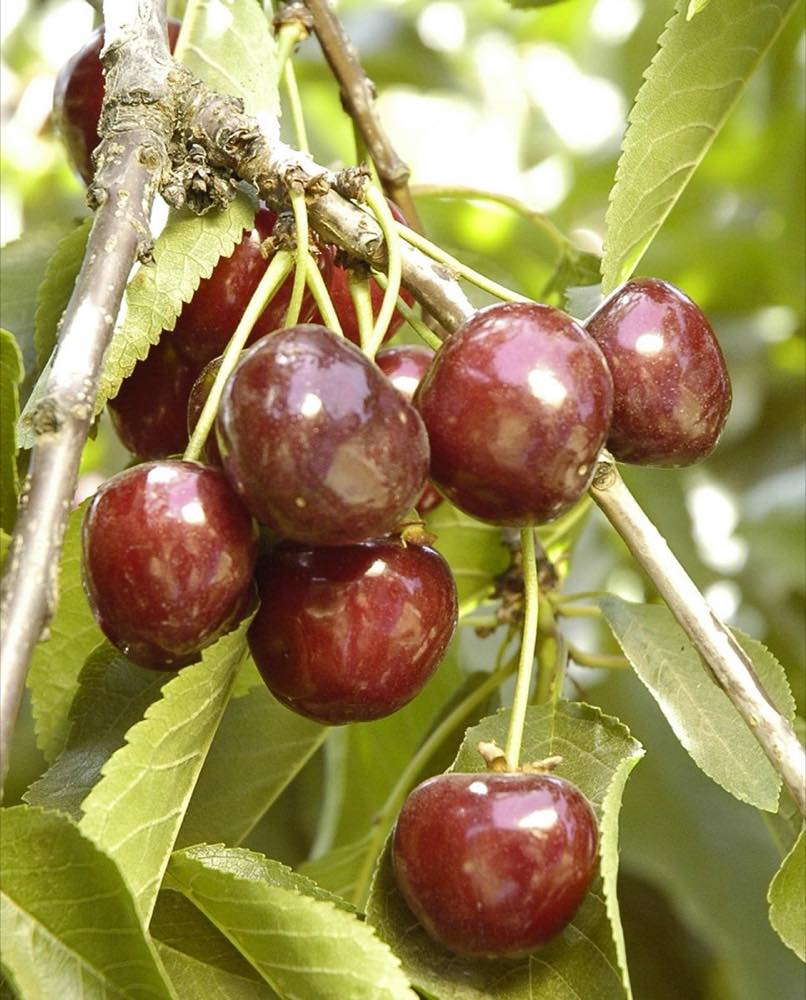
Cherries
A dark, spicy, very firm sweet cherry on a naturally smaller tree, which makes netting and picking easier. It sets some fruit alone but crops better with a late-blooming sweet cherry nearby. It blooms late, which helps with spring frost, so it suits mid elevation and the milder parts of high country. Too little chill for Phoenix.
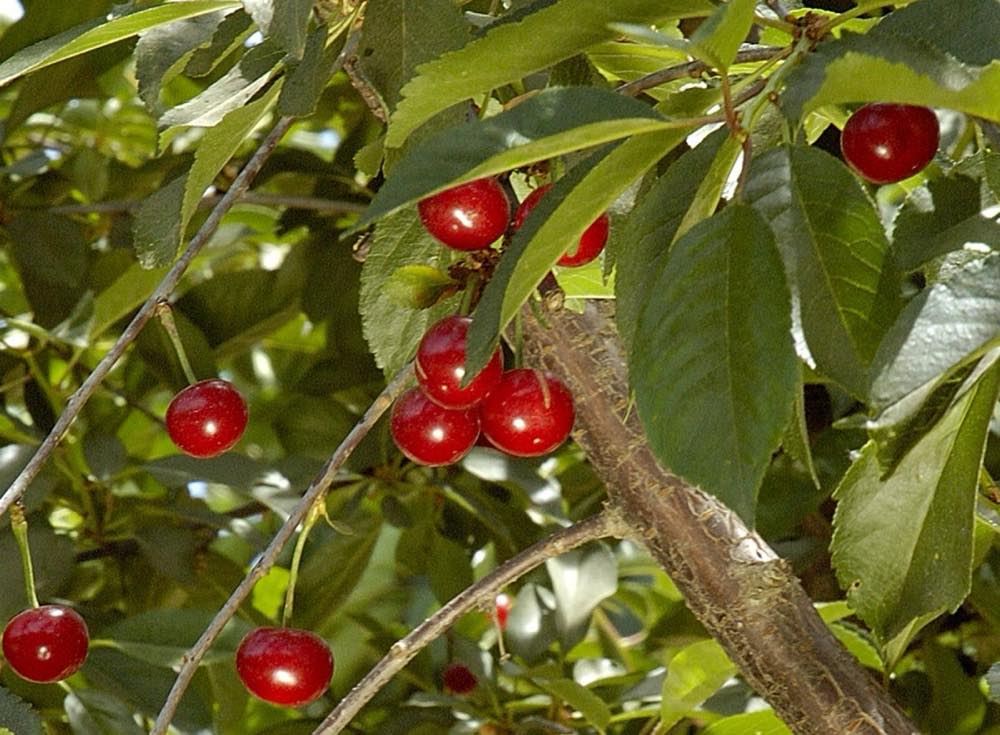
Cherries
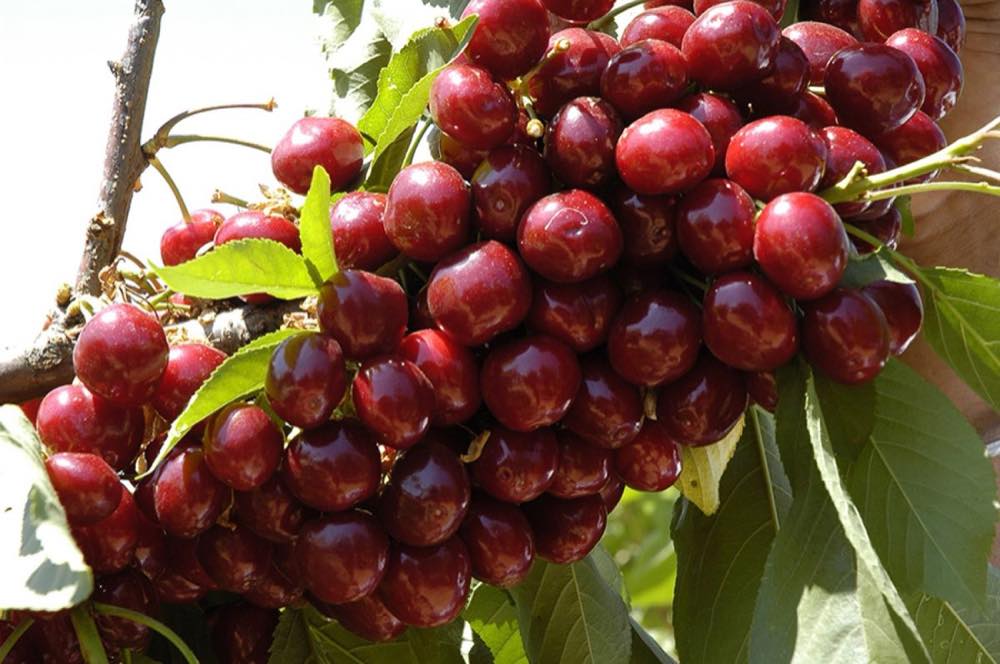
A bright red, juicy sour cherry for pies, jam and canning, and fine fresh when fully ripe. It is a heavy, adaptable bearer that needs no partner, so one tree is enough. It handles cold well, which makes it a dependable pick for mid elevation and high country. Phoenix winters are too mild for it.
Cherries
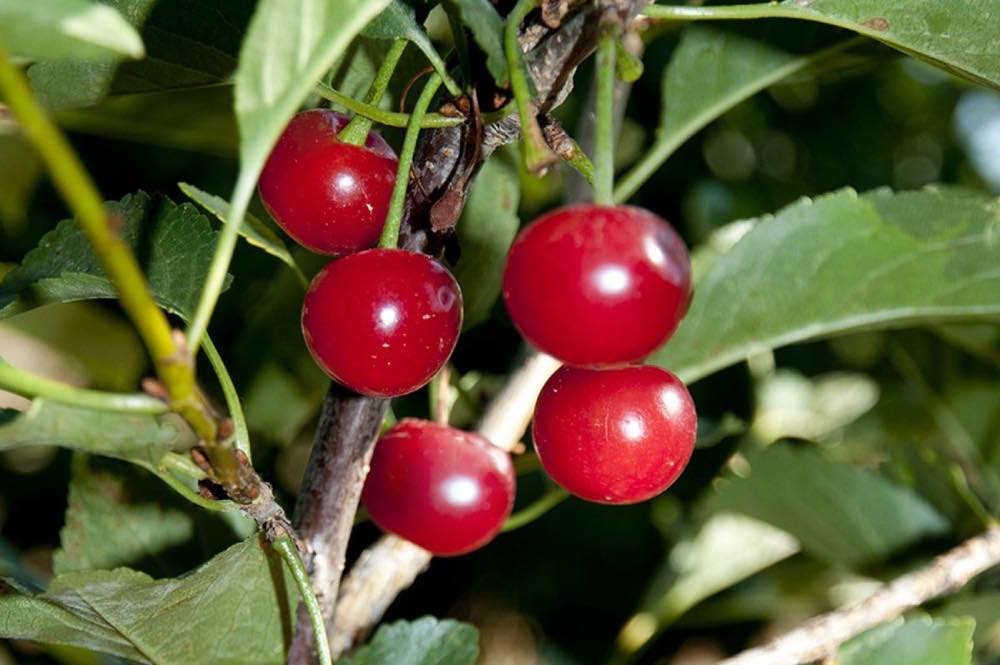
A dark, firm, good-tasting sweet cherry that sets fruit on its own, which is the big reason to choose it. It also pollinates Bing and Rainier if you want a second tree. It does best at mid elevation and in high country. At 500 hours it is marginal for Phoenix, where most winters fall short.
Cherries
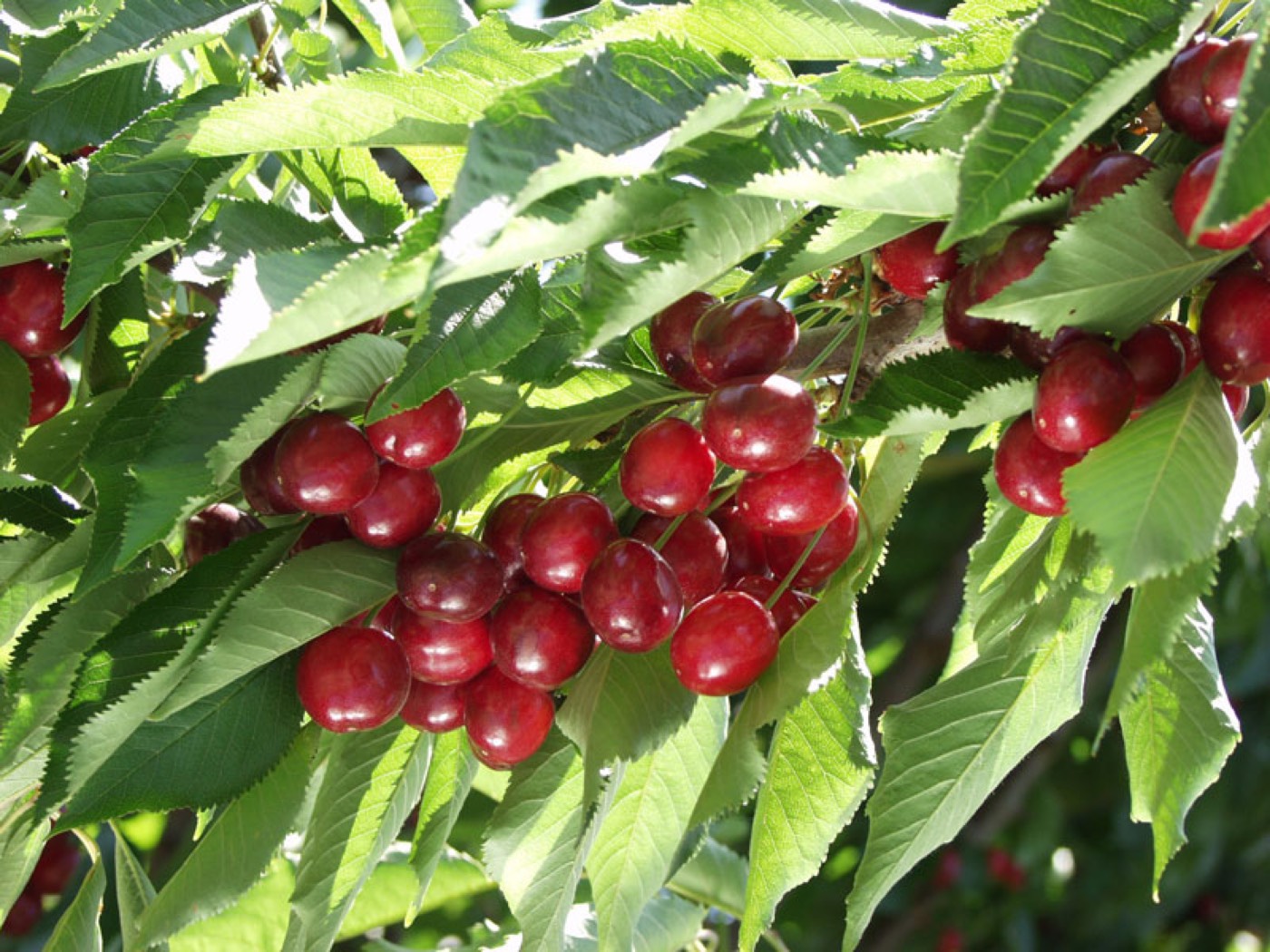
A naturally small sour cherry with large, bright red fruit that is tart and meaty, mainly for pies and cooking. It blooms about a week after Montmorency, which gives it a better chance of missing a late frost. It needs real winter chill and tolerates extreme cold, so plant it at mid elevation or in high country.
Cherries
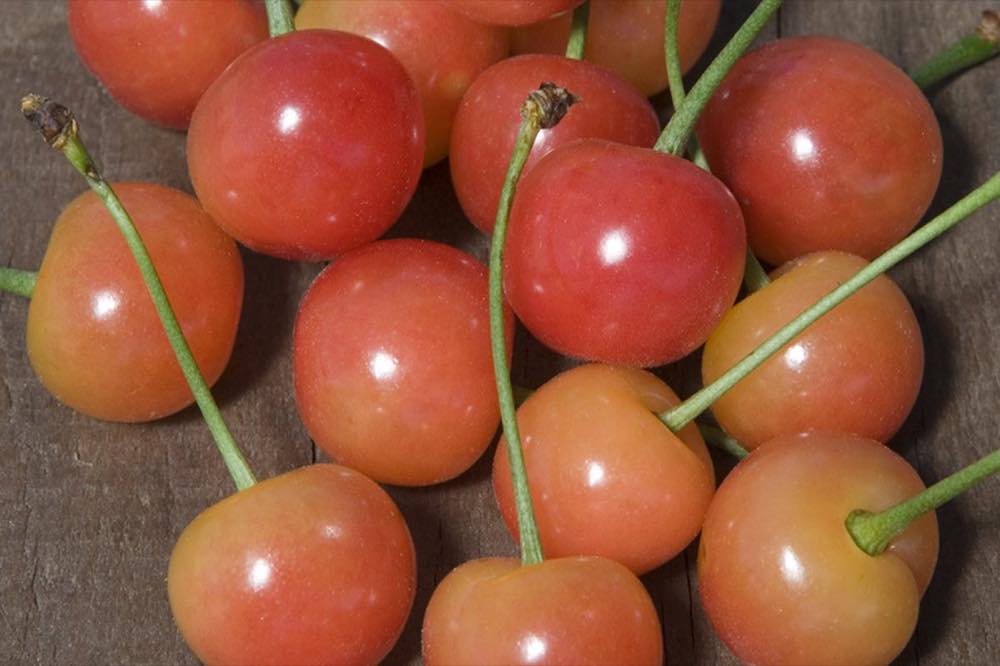
A very low chill sweet cherry, medium to large and red with firm flesh and good flavor. In the low desert it is an experiment rather than a sure thing: it has fruited with very little winter chill elsewhere, but Phoenix track records are short. Plant it with Royal Lee or Royal Crimson for pollination, and expect the very early bloom to need frost cover.
Cherries
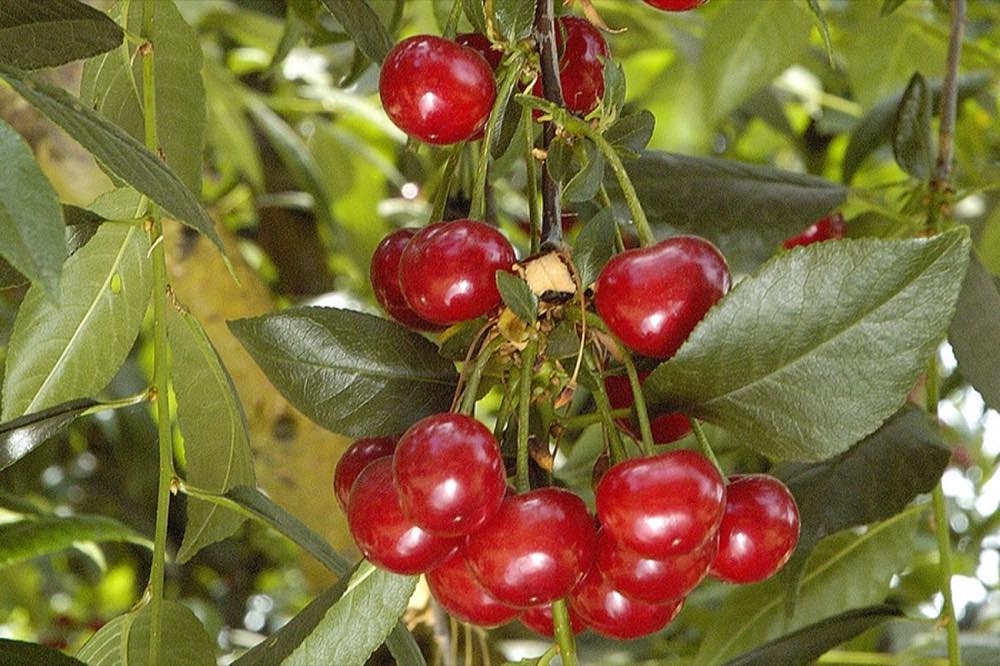
The standard pie cherry, with light red skin, yellow flesh and a clean tart flavor. It is extremely hardy, heavy bearing and self-fruitful, so one tree is enough. It suits mid elevation and high country, where it gets the winter chill it needs, and it blooms later than sweet cherries so late frost is less of a threat.
Cherries
A compact sour cherry that stays around 8 to 10 ft, which makes it one of the easiest cherries to net against birds. The fruit is large, meaty and tart, great for pies and good fresh when fully ripe. It is self-fruitful, very cold hardy and often bears by its second year, so it suits mid elevation and high country.
Cherries
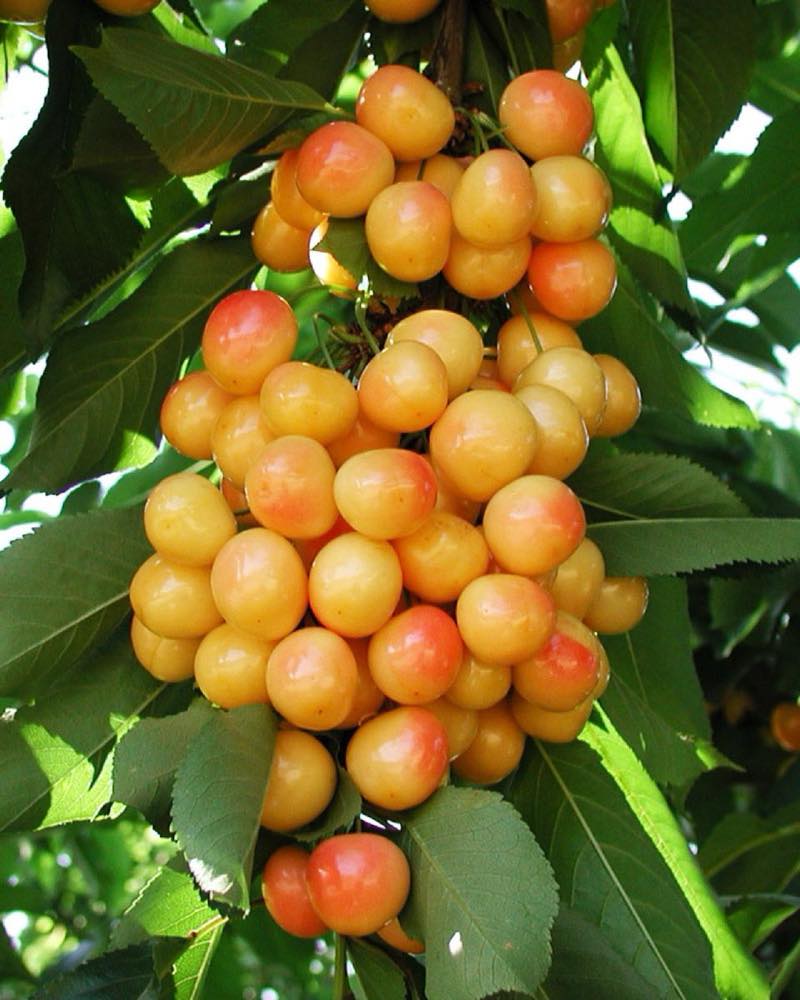
A large yellow cherry with a red blush and a very sweet, clean flavor, often rated the best of the light cherries. The skin is thin, so birds and rain splitting are the main headaches. It needs another sweet cherry such as Bing or Lapins nearby for pollination, and it suits mid elevation and high country.
Cherries
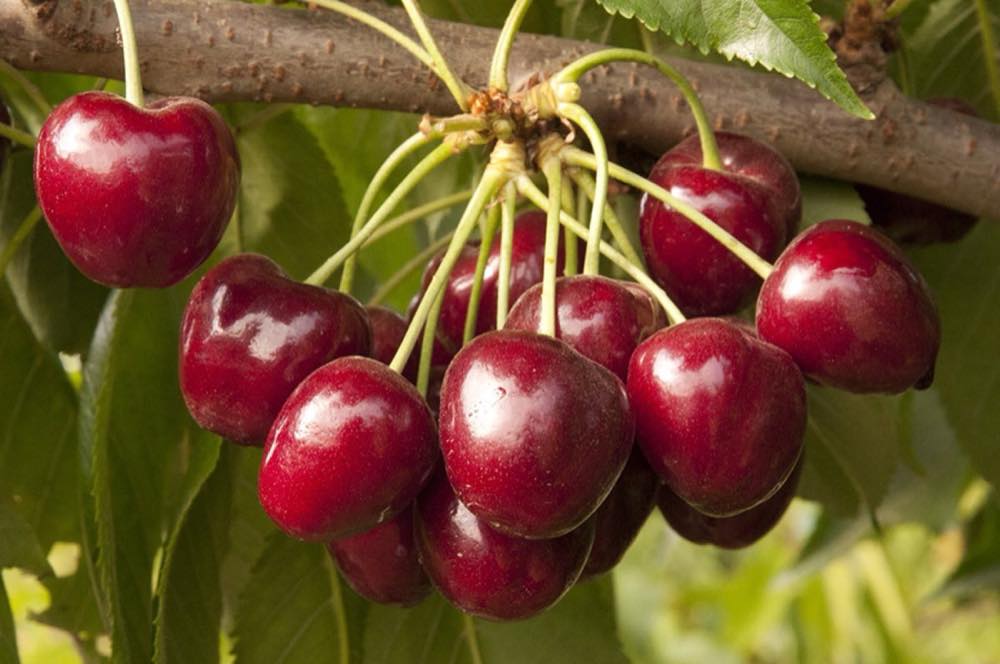
A very low chill sweet cherry that sets fruit on its own, which makes it the simplest of the low chill trio for a single-tree yard. The fruit is large, crimson and tasty. In Phoenix it is still experimental, since sweet cherries are unproven there, and very early blooms can be hurt by a cold snap. It blooms too early to be a good bet at mid elevation.
Cherries
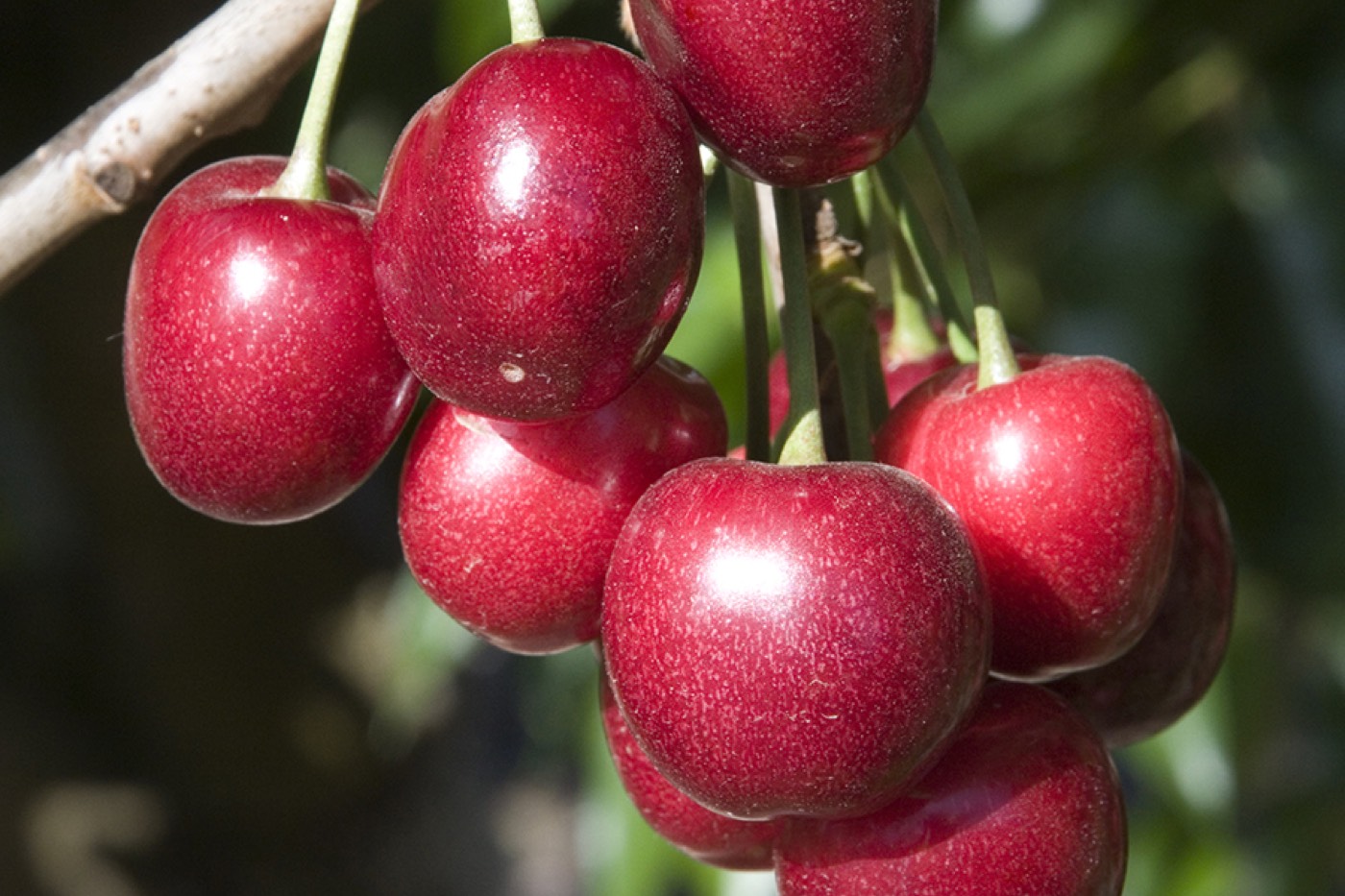
A very firm, crunchy, dark red low chill sweet cherry with excellent flavor, ripening about a week after Minnie Royal. It needs Minnie Royal or Royal Crimson alongside for pollination. Treat it as an experiment in the Phoenix area. In young trees it can bloom a little later than Minnie Royal, so adding Royal Crimson improves the odds.
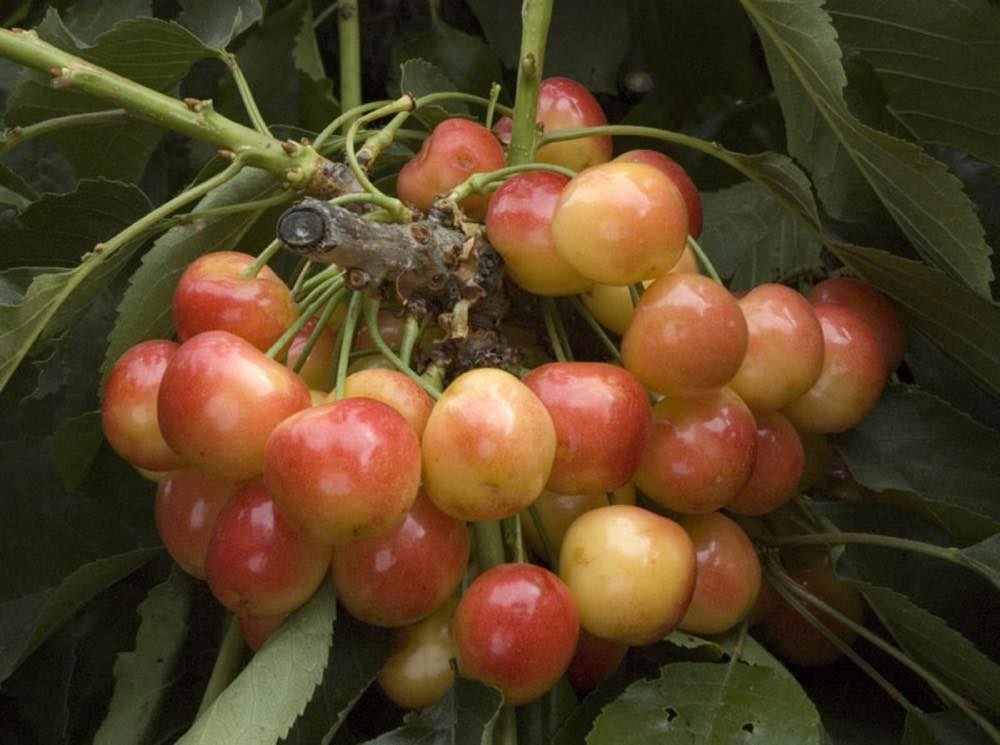
Cherries
A large yellow cherry with more red blush than Rainier, excellent flavor, and fruit that ripens a few days sooner. It needs another sweet cherry such as Bing or Lapins nearby. It asks for less chill than Rainier, but 500 hours is still too much for Phoenix, so plant it at mid elevation or in high country and watch for frost at bloom.
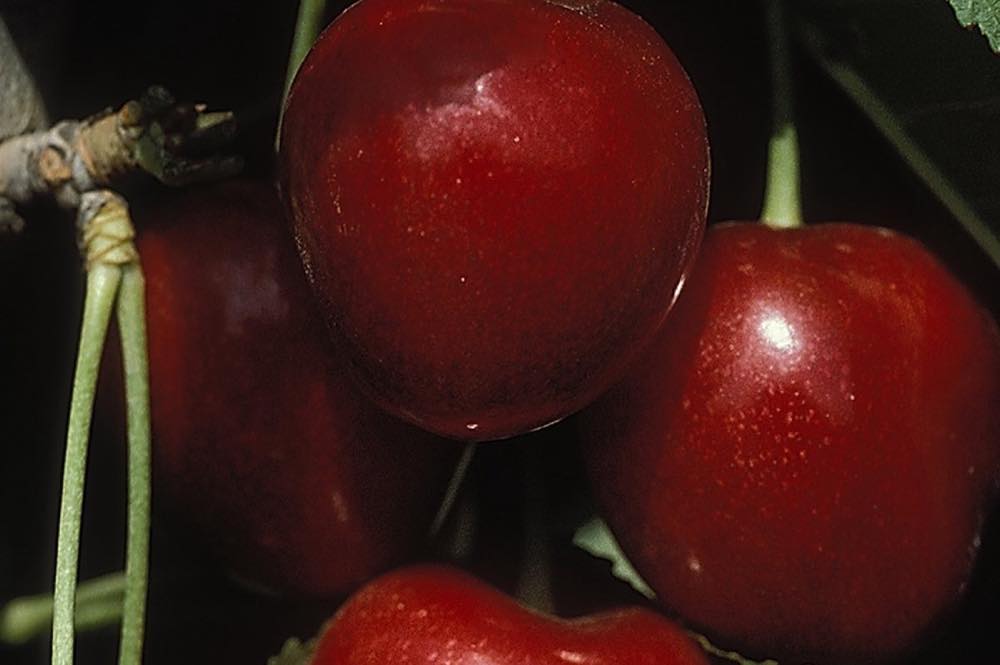
Cherries
A large, dark, richly flavored sweet cherry that sets fruit alone, so a single tree works. That makes it a good choice if you only have room for one cherry. It does best at mid elevation and in high country. Some sources put its chill need well above 400 hours, so treat Phoenix as a gamble.
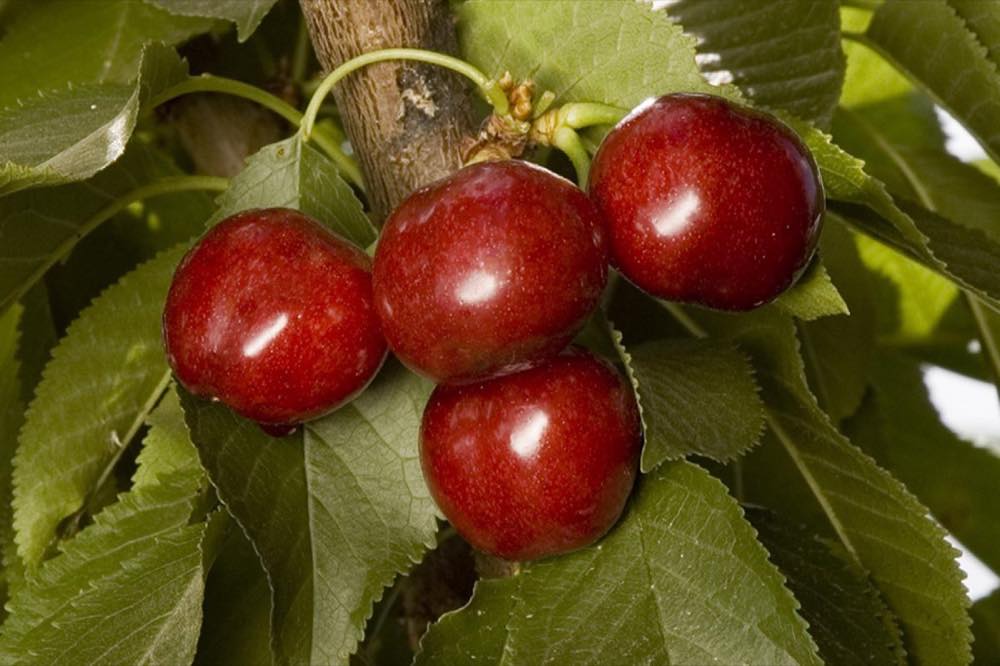
Cherries
Large, firm and flavorful, a favorite sweet cherry in Utah that rarely forms double fruit and cans well. It needs real winter cold and a second sweet cherry like Bing or Van nearby. Best at mid elevation and in high country. Phoenix winters are far too mild.
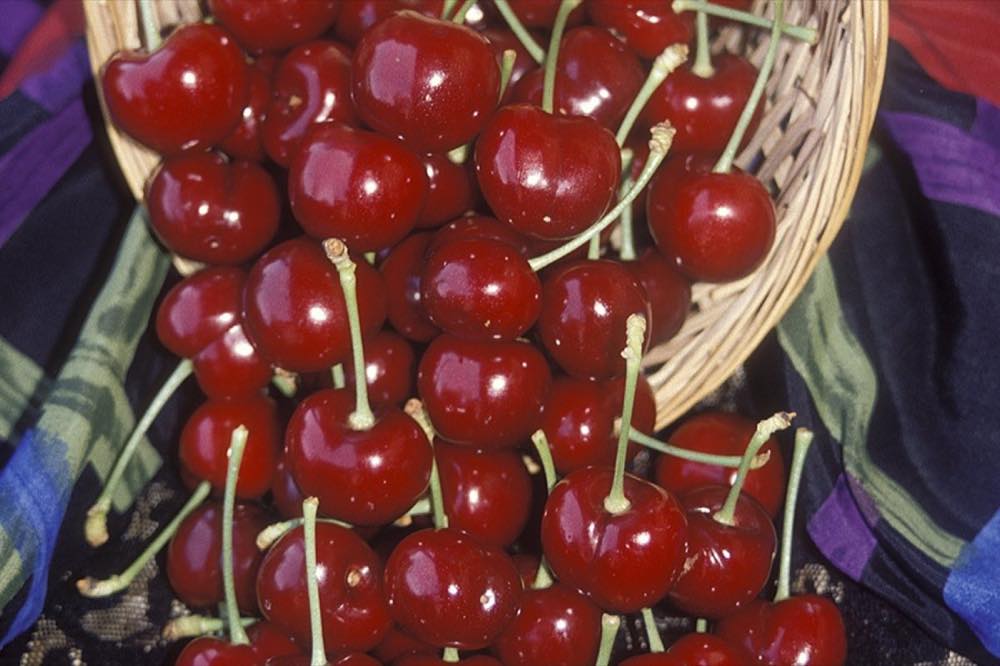
Cherries
A reliable, heavy-bearing sweet cherry with dark fruit like Bing but usually a little smaller. It is very cold hardy and crosses with the other popular sweet cherries, so it makes a good partner tree. It suits mid elevation and high country and needs a second cherry for pollination.
Jujubes
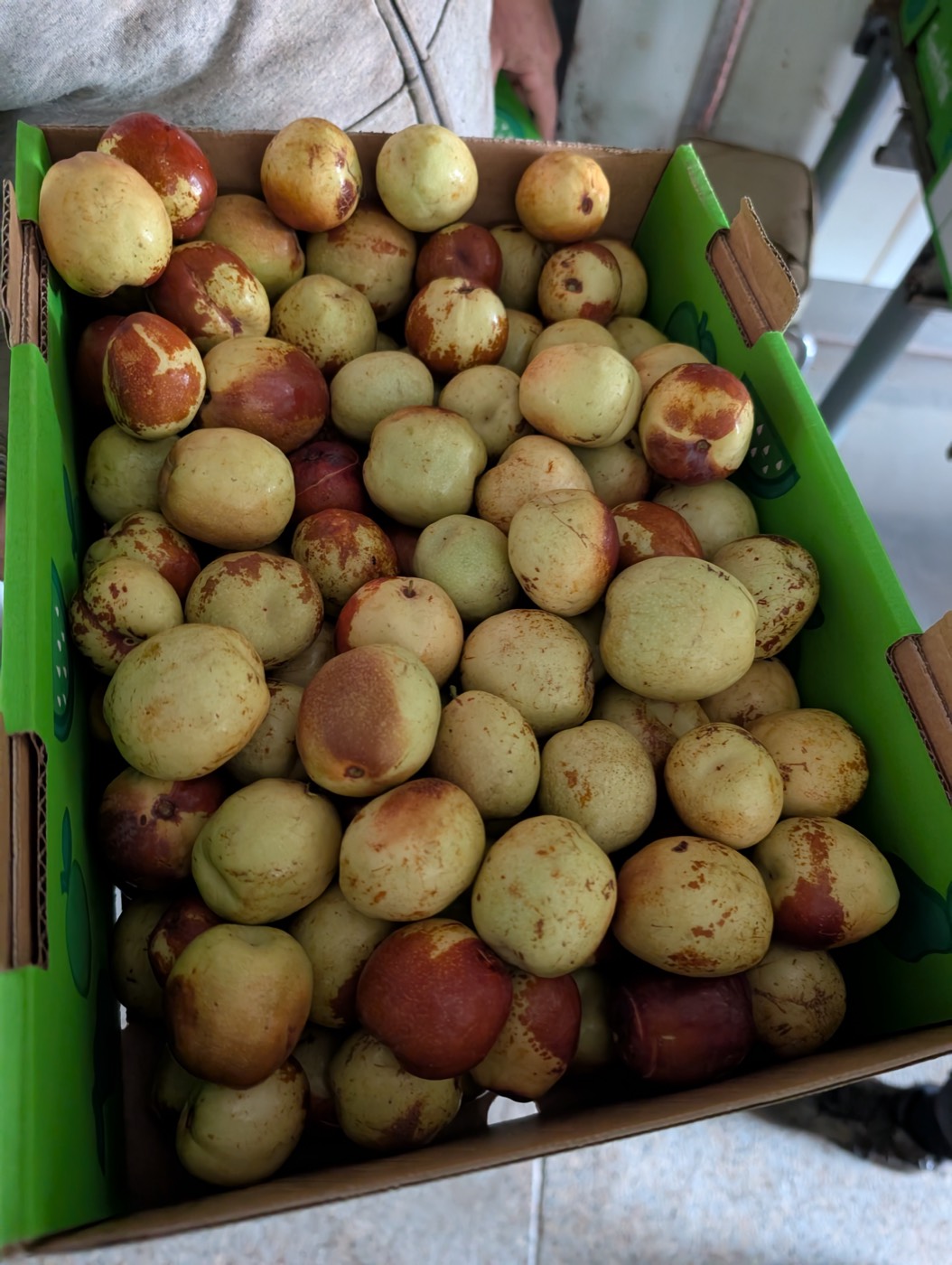
Round, flat-bottomed fruit that looks like a small apple, sweet and crisp fresh and good dried too. Like all jujubes it loves long, hot summers, shrugs off alkaline soil and drought and takes winter cold far below anything in Arizona. It fits the low desert and the warmer parts of mid elevation.
Jujubes
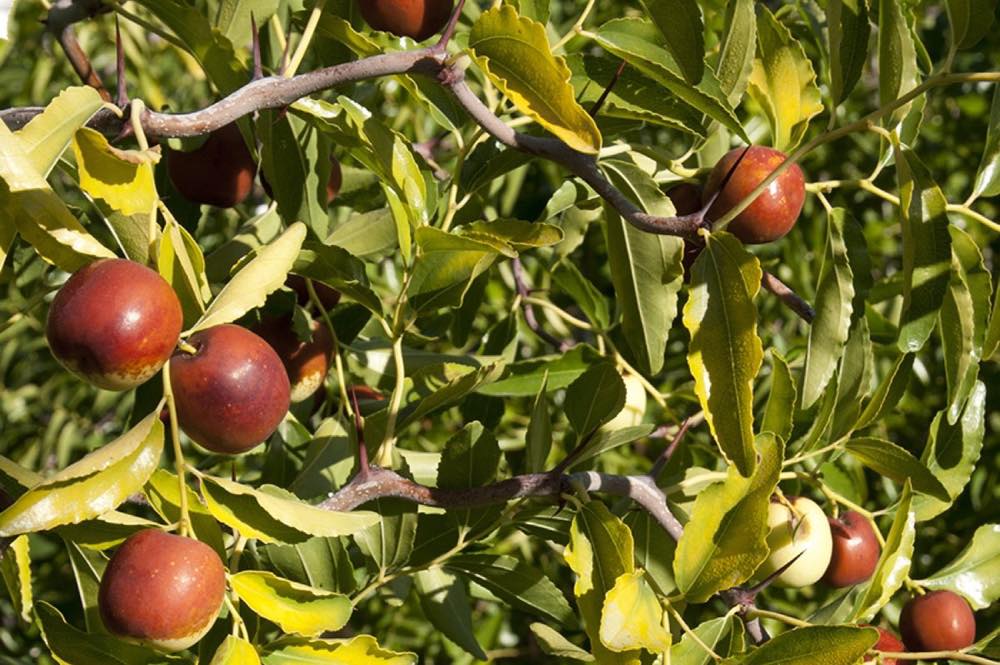
Grown mostly for its twisted, corkscrew branches that look striking in winter, with round Li-like fruit you can eat firm or dry at room temperature until chewy. Slow and smaller than other jujubes, and nearly pest free. It wants a long, hot summer, so it suits the low desert and warm mid elevation yards.
Jujubes
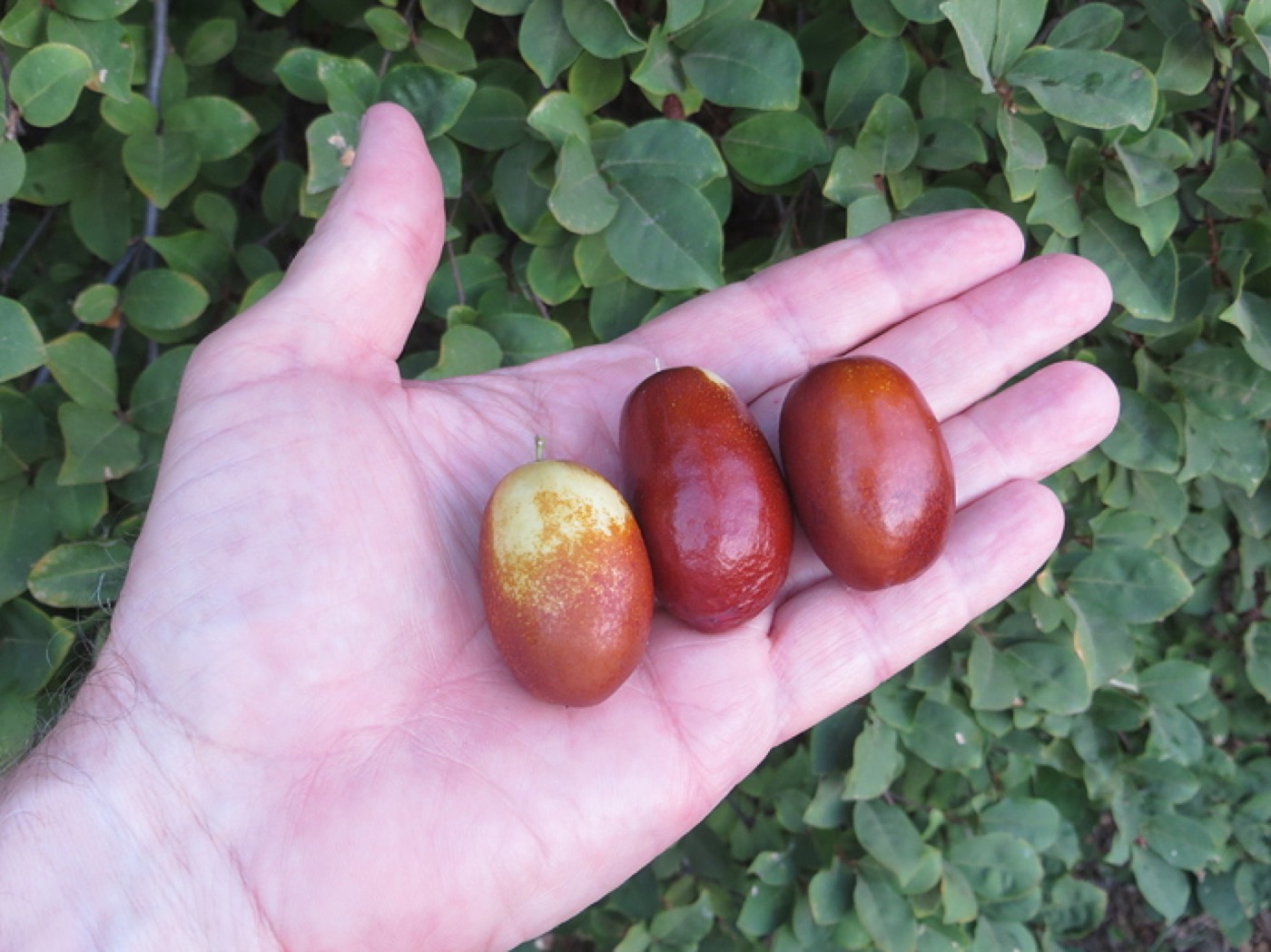
A long, two-inch fruit that is exceptionally sweet with an apple-like flavor, ripening in mid autumn. Some growers in cooler or wetter places report patchy crops, so give it the long hot summer it likes and plant it in the low desert or a warm mid elevation yard. Hardy, drought tolerant and nearly pest free.
Jujubes
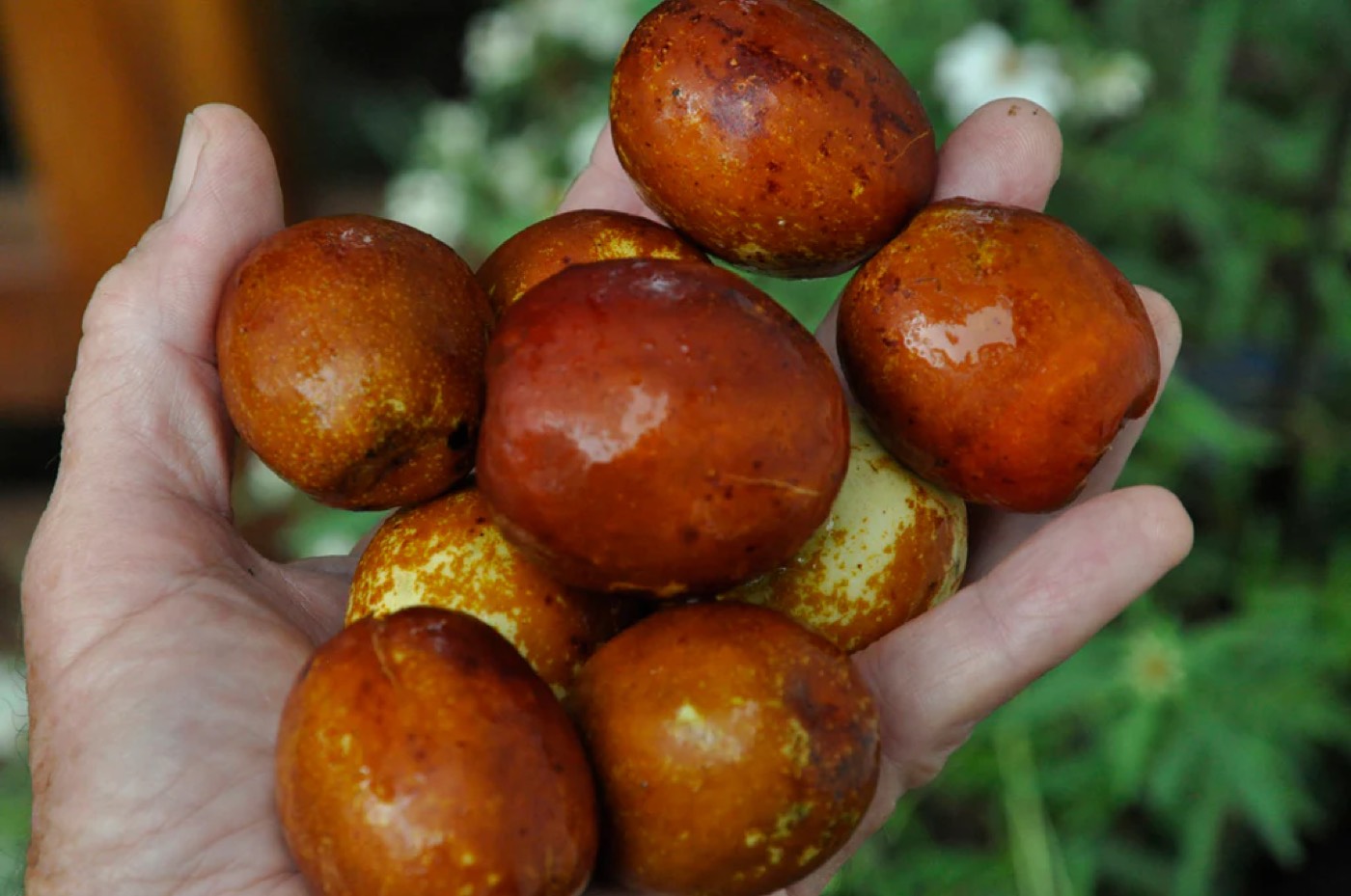
Extremely sweet, small to medium round fruit on a compact tree that handles drought well, best eaten fresh. Jujubes love the low desert's long hot summers and tolerate alkaline soil, and this one also suits warm mid elevation yards. A second jujube nearby, such as Li, helps the crop.
Jujubes
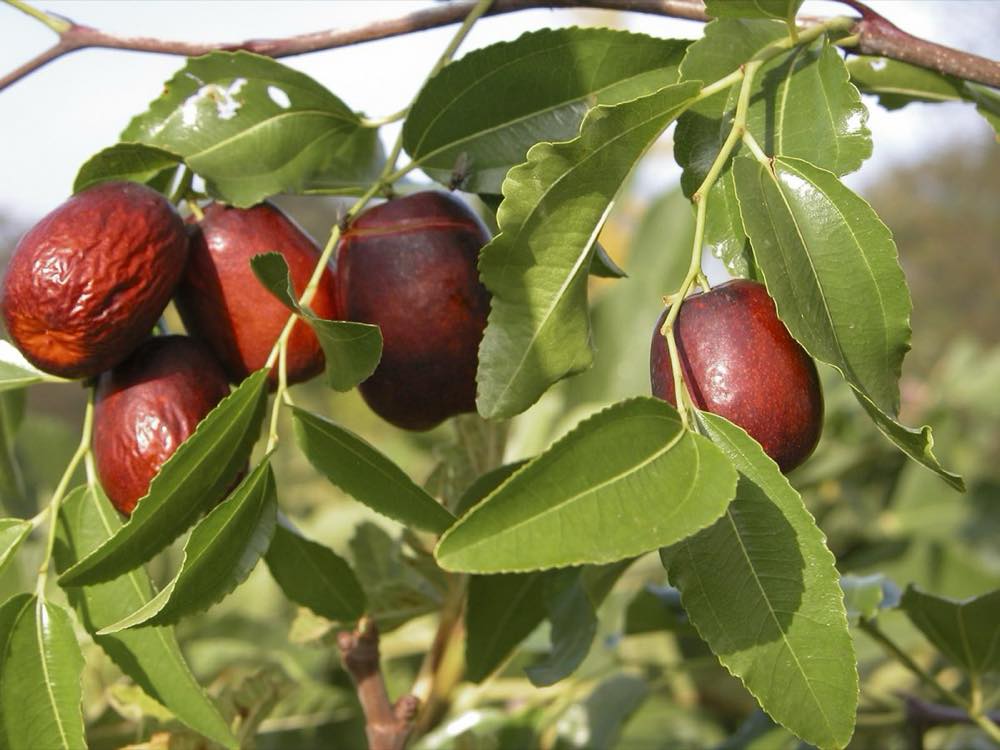
Pear-shaped fruit that you leave on the tree until fully reddish-brown, when it turns dry, wrinkled and chewy like a date. It does not set well alone, so plant it with Li or another jujube. Loves long hot summers and takes cold and alkaline soil, so it fits the low desert and warm mid elevation yards.
Jujubes
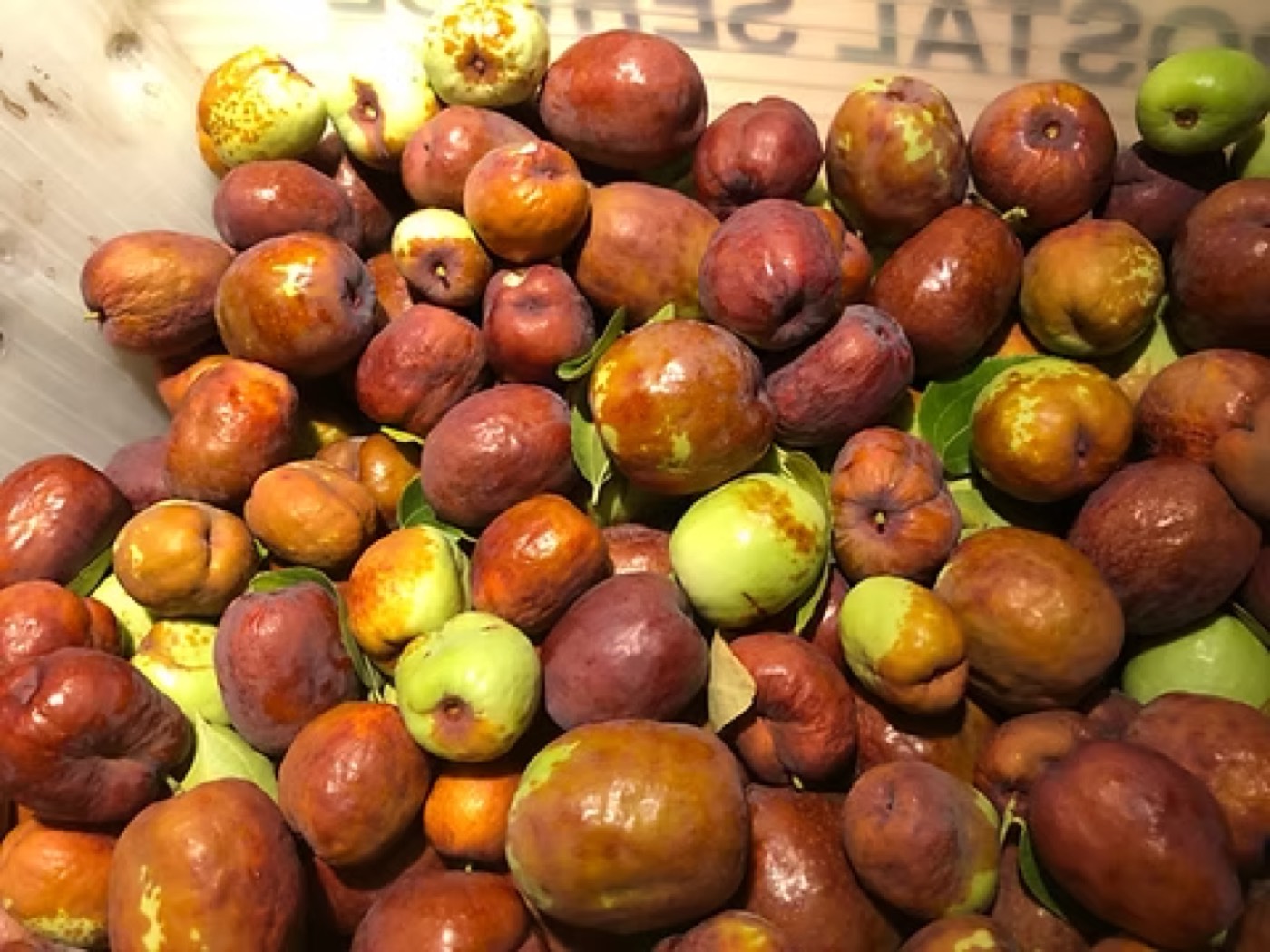
The most popular jujube, round, bigger than Lang, crisp like a little apple when fresh and chewy like a date when dried. The tree is tough, nearly pest free and thrives in the low desert's long hot summers, alkaline soil and drought. Self-fruitful, so one is enough, and it also works at mid elevation where summers are warm.
Jujubes
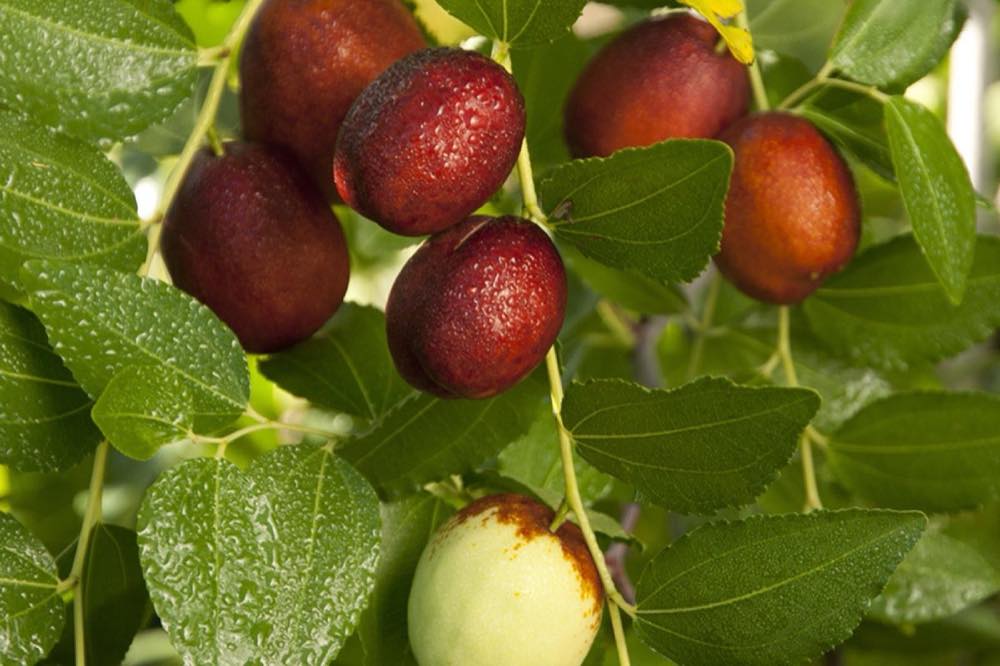
The largest of the popular jujubes, over two inches across, with an apple-like flavor that gets even sweeter when dried. It sets fruit on its own and also pollinates other jujubes, so it makes a good partner tree. Likes long hot summers, so it fits the low desert and warm mid elevation yards.
Jujubes
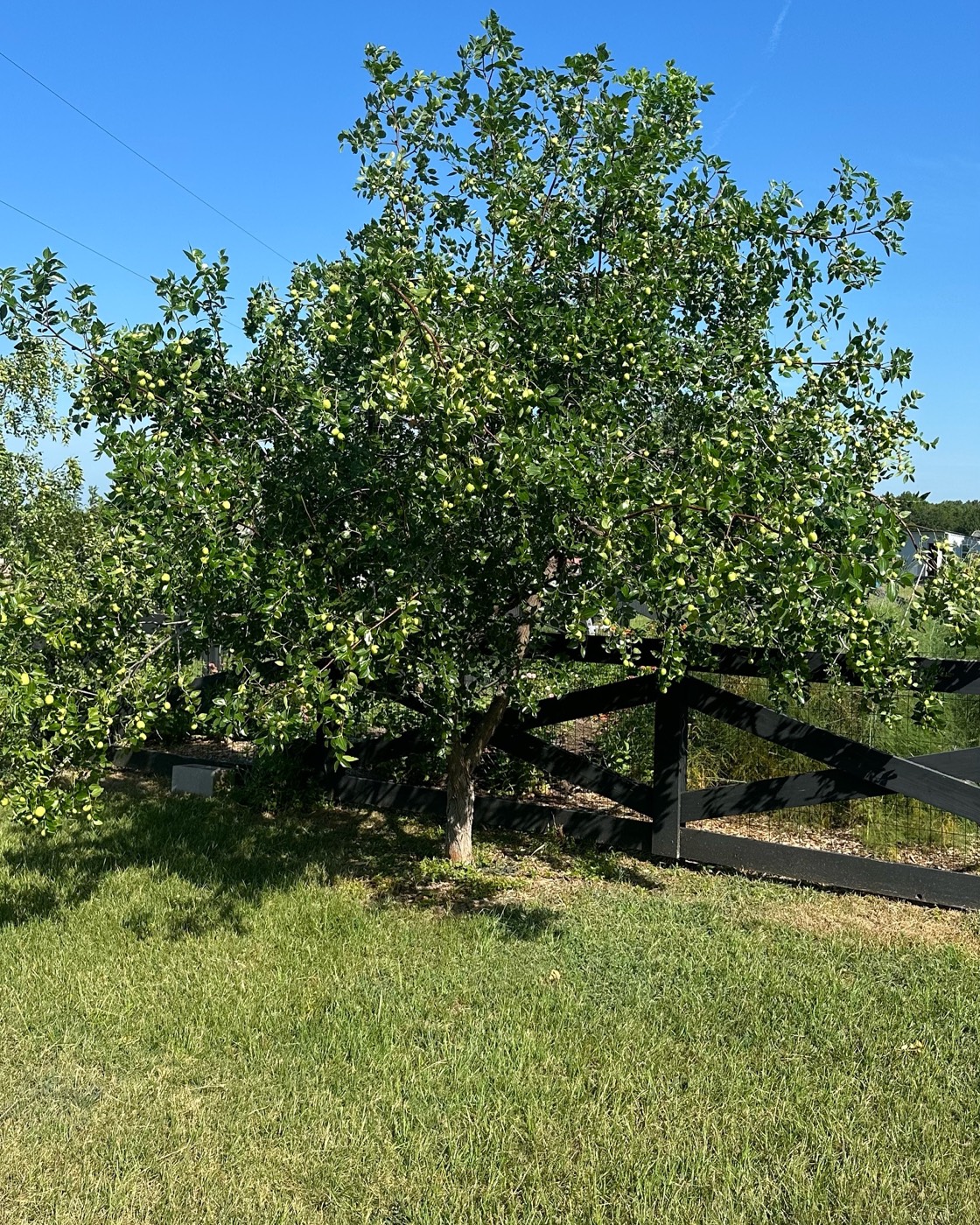
A lesser-known jujube without much published track record, so treat it like the standard types. Jujubes love the low desert's long hot summers, take alkaline soil and drought, and shrug off winter cold, so it should suit the low desert and warm mid elevation yards. Plant it with Li or Lang for the best chance of a good crop.
Jujubes
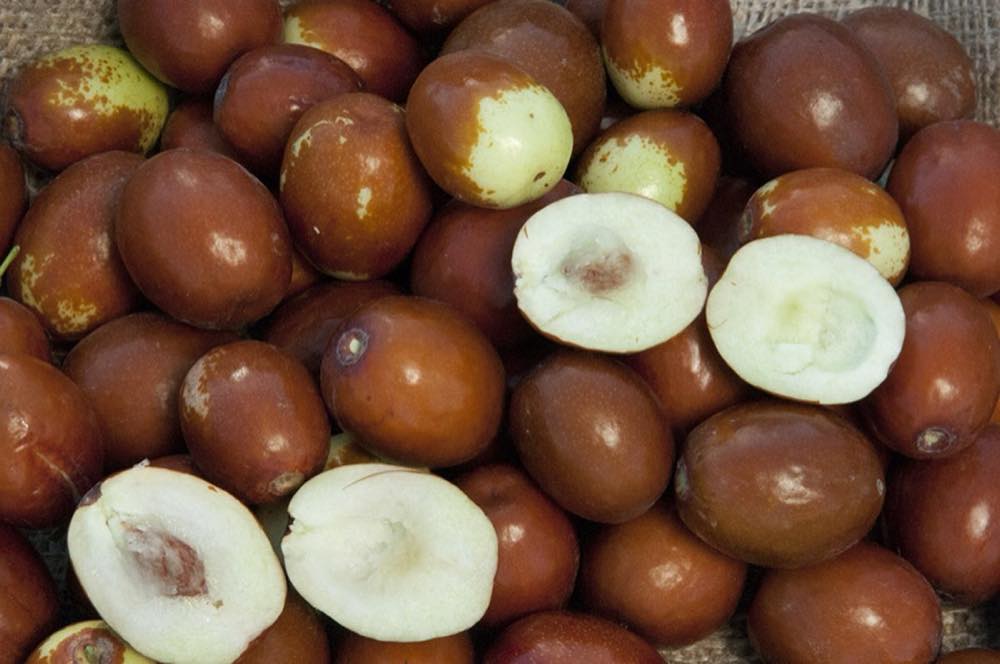
Small round fruit with very sweet, crunchy flesh, good fresh. The tree starts early and is hardy and drought tolerant, but it is very thorny, so keep it away from paths and play areas. It wants a long hot summer, so it suits the low desert and warm mid elevation yards.
Pluots & interspecifics
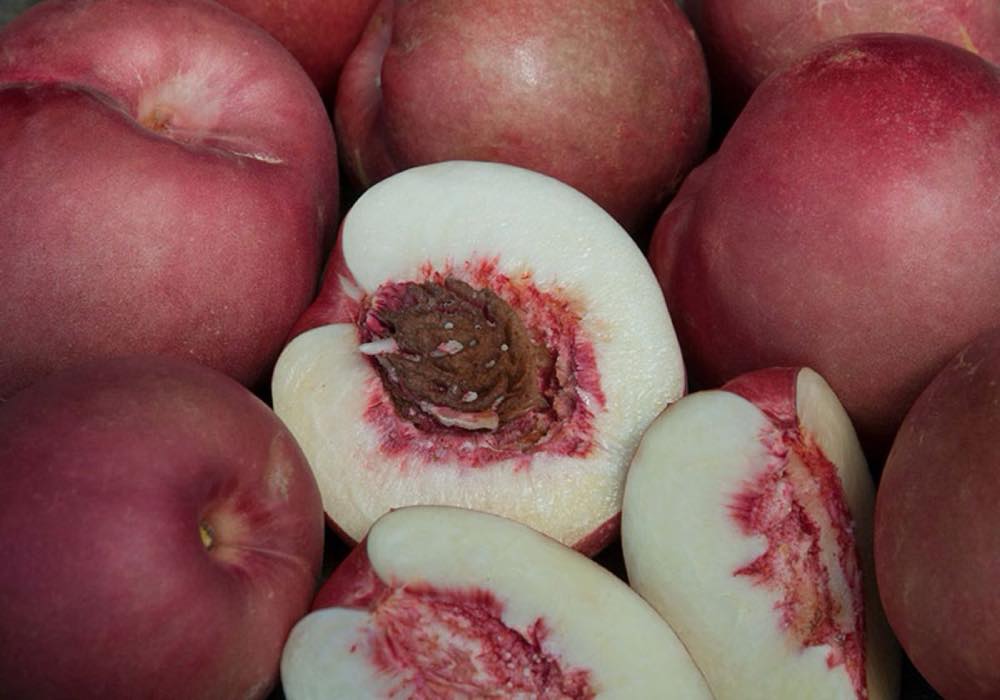
A white-fleshed nectarine and plum cross with dark maroon skin that turns pale pink when ripe, and a flavor that carries both parents. It is very productive, and the purplish-pink bloom and red new leaves make it a pretty tree. At 200 to 300 hours it suits the low desert. Early bloom is exposed to frost at elevation.
Pluots & interspecifics
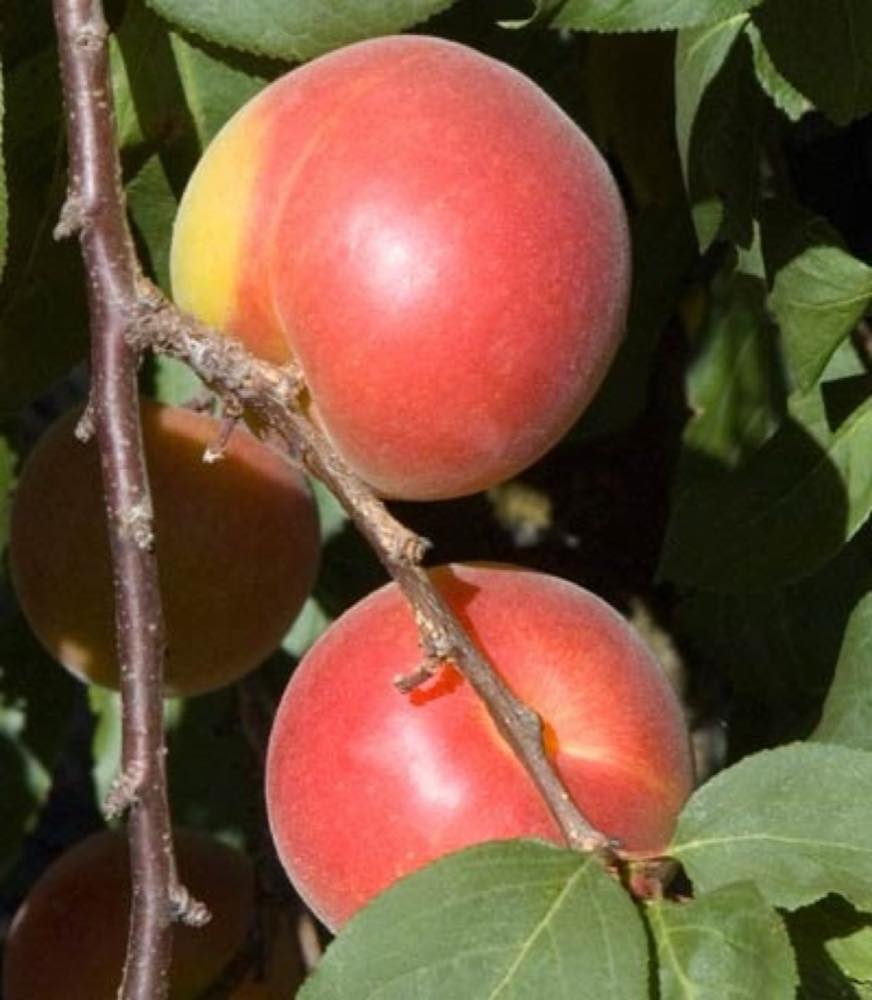
A peach, apricot and plum cross with slightly fuzzy yellow skin blushed red and mildly sweet amber flesh under a tart skin. It ripens in early summer. The apricot side means early bloom, so frost can cost you the crop in some years at mid elevation, and Phoenix is short on the 500 hours it wants. Plant it near an apricot or a Flavor Grenade pluot.
Mulberries
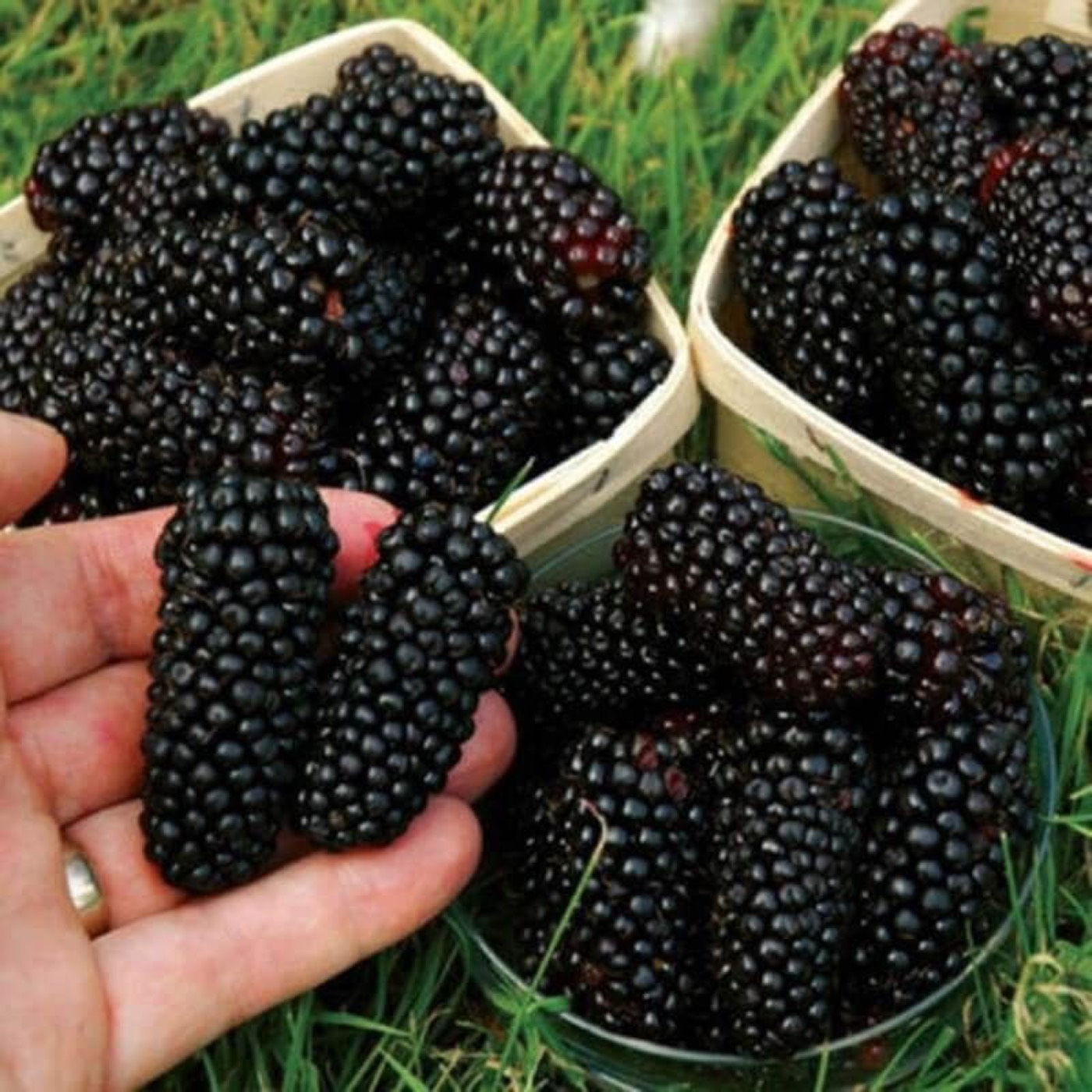
Large, glossy, deep purple-black berries with a rich, sweet-tart flavor like a good blackberry. It grows as a tree or a big shrub, fruits young and handles low desert heat easily. The fruit stains whatever is under the tree and birds love it, so plant it away from walkways, patios and parked cars.
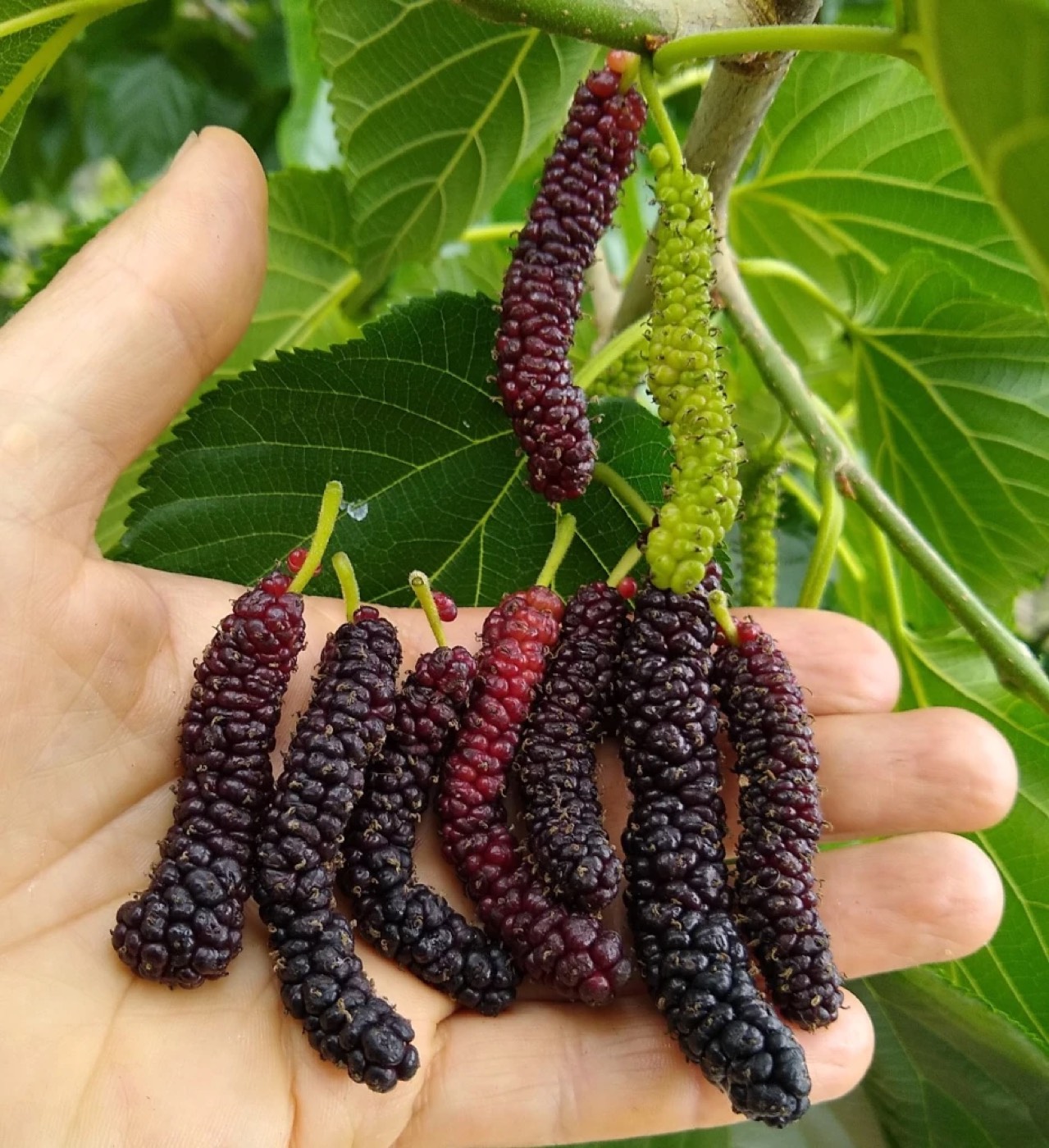
Mulberries
Long, firm, sweet red-to-black berries up to 3 inches, and the juice does not stain the way most mulberries do. It makes a large, vigorous, disease-resistant tree with a month-long harvest in late spring. A reliable low desert fruit tree, though tender wood can freeze in the low teens, so it is not a mid elevation pick.
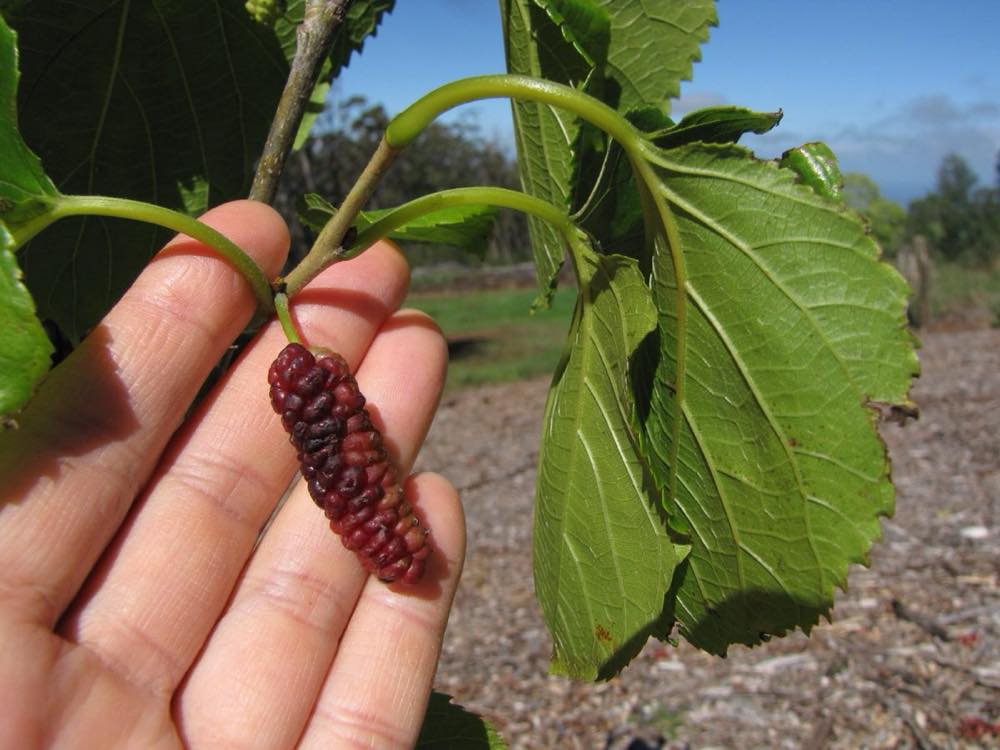
Mulberries
A selection of Pakistan with very sweet fruit that can reach 5 inches long, bearing heavily once it gets going. It is a low desert tree, since cold snaps below the low 20s can damage it and the nursery says it may not be reliably hardy in colder climates. Fruiting types drop fruit onto paths and patios, so site it with that in mind.
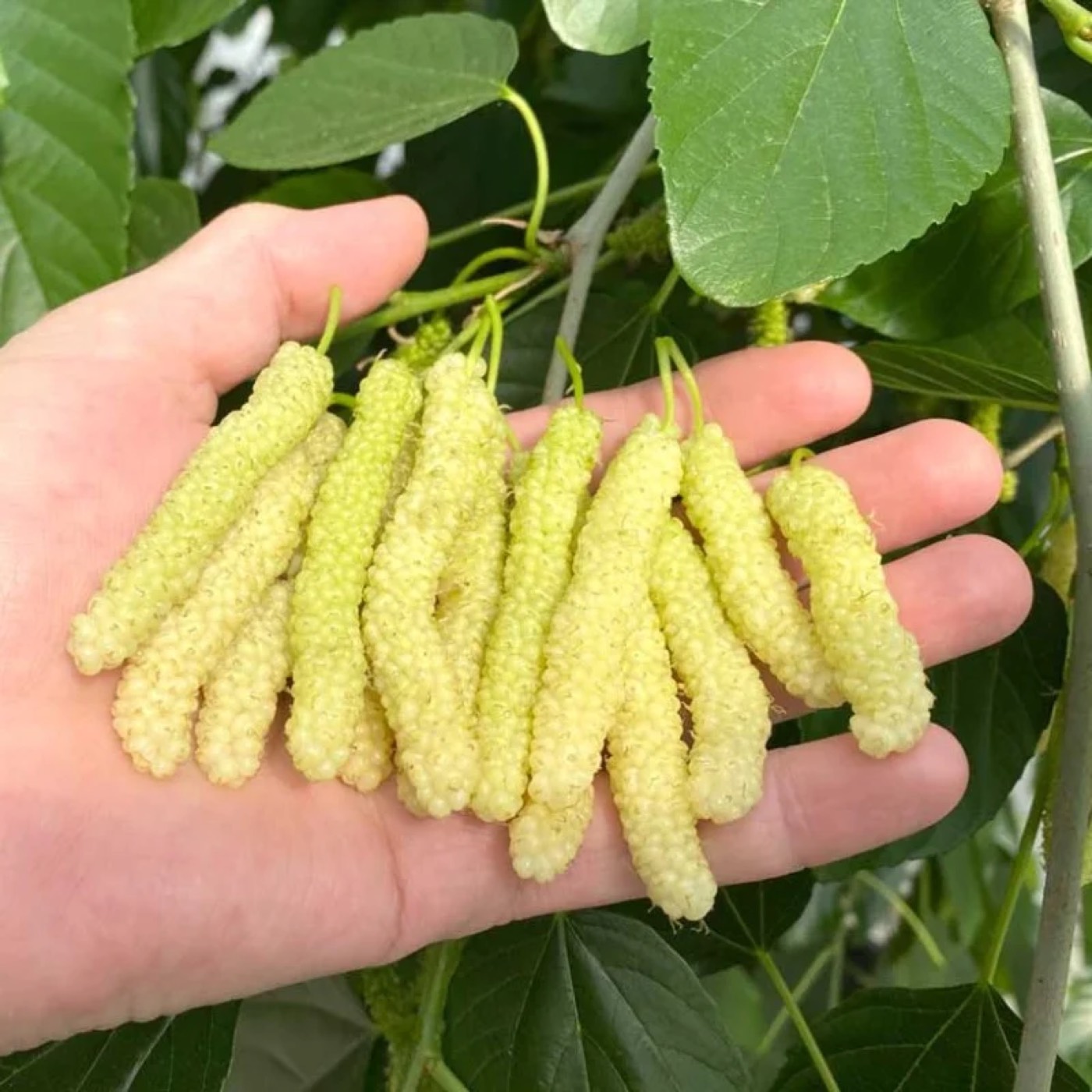
Mulberries
A white-fruited cousin of Pakistan, with long, sweet, pale fruit and juice that does not stain. It makes a fast, big shade tree that fruits heavily in spring, with a milder, sweeter flavor than the dark types. Plant it in the low desert and keep it away from patios.
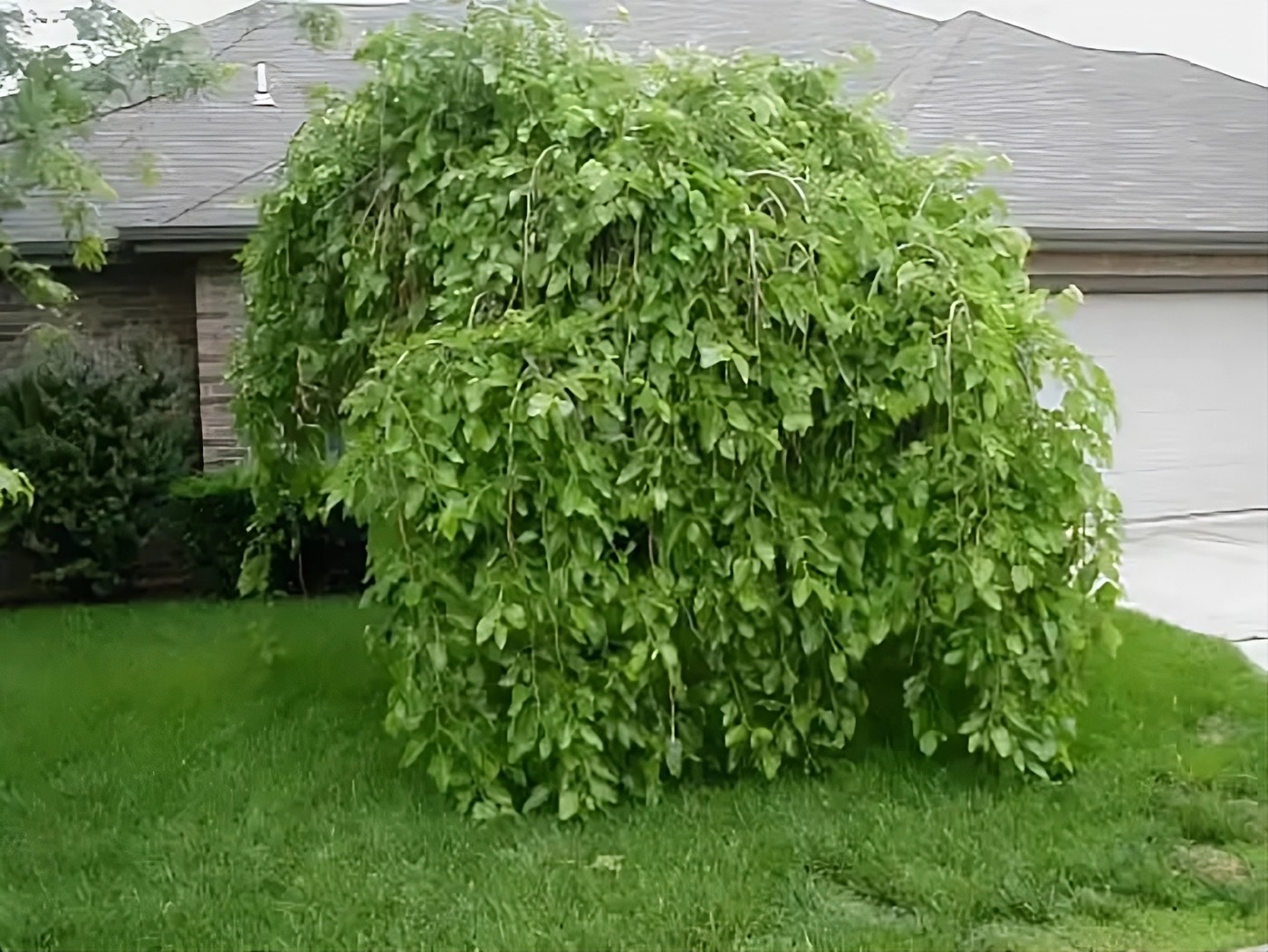
Mulberries
A fast, heat-loving weeping mulberry that gives umbrella-like shade and blackberry-like fruit at the same time. Unlike the fruitless shade mulberries, this one fruits, so berries drop and stain and birds come. A good low desert shade tree for a spot away from the pool and patio.
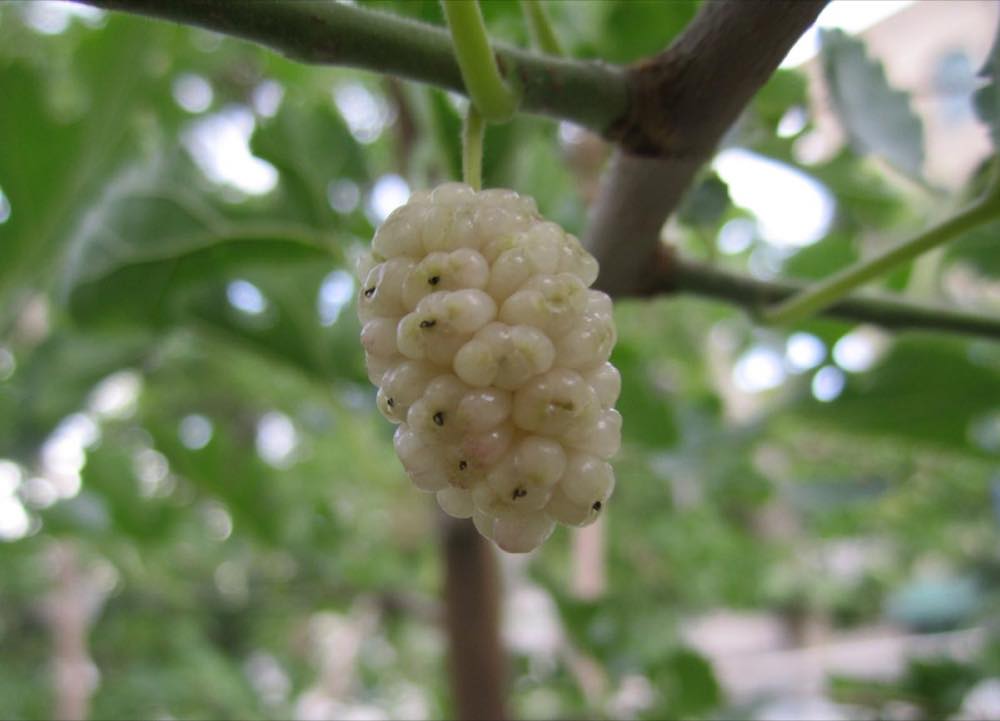
Mulberries
Sweet white fruit shaped like blackberries on a big, drought-tolerant tree that grows larger and faster with irrigation. It is a fruiting tree, not one of the fruitless shade mulberries, so expect fruit drop and bird visits. Fits the low desert and warmer parts of mid elevation, and needs lots of room.
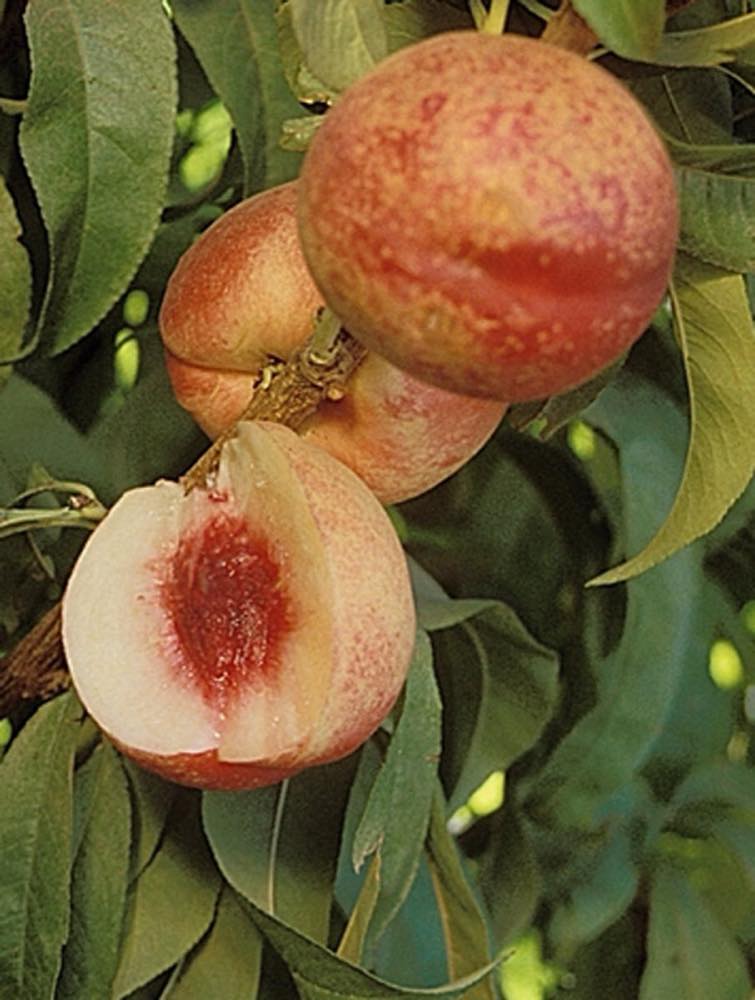
Nectarines
A large white nectarine with firm, rich fruit early on that turns very sweet when soft-ripe, and low in acid. It needs 700 to 800 chill hours, so it is a mid elevation tree and ripens late August into September. Self-fruitful. White nectarines can scar from thrips in dry spring weather, which spoils looks, not flavor.
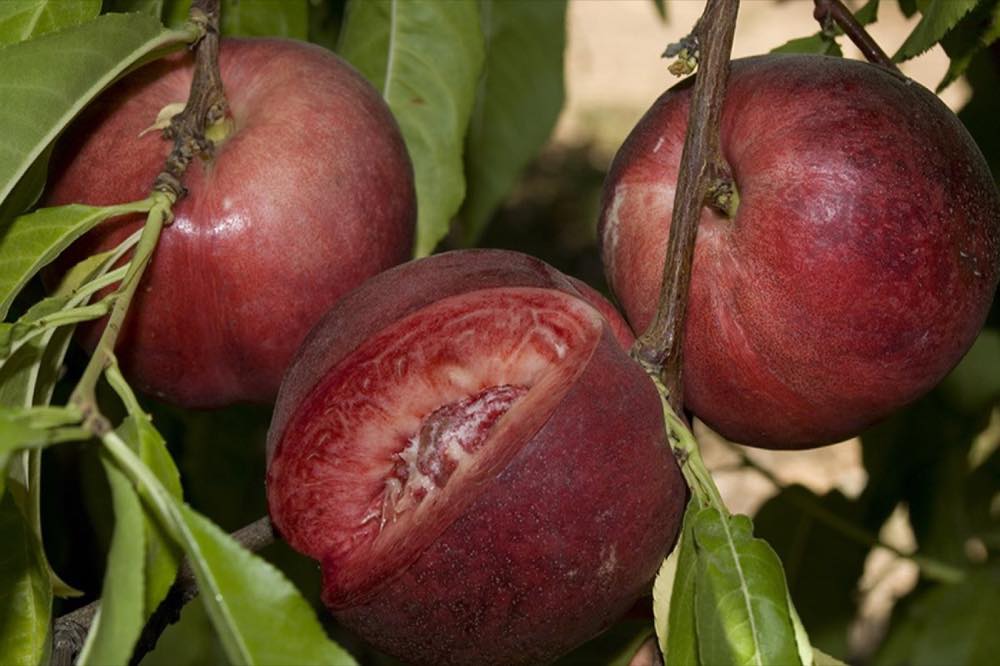
Nectarines
An early white nectarine, sprightly sweet with a good balance of sugar and acid, and a taste test winner. At 400 to 500 chill hours it is marginal in Phoenix, so expect lighter crops after a warm winter. Fruit ripens in June in the low desert. Self-fruitful. Thrips can scar the skin in dry springs, but the flesh is fine.
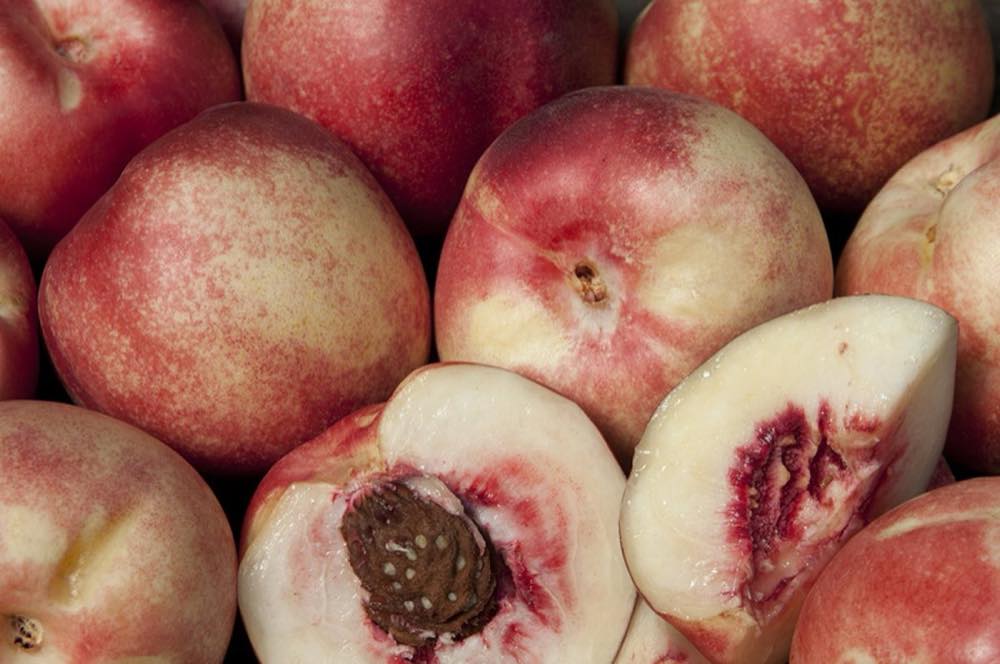
Nectarines
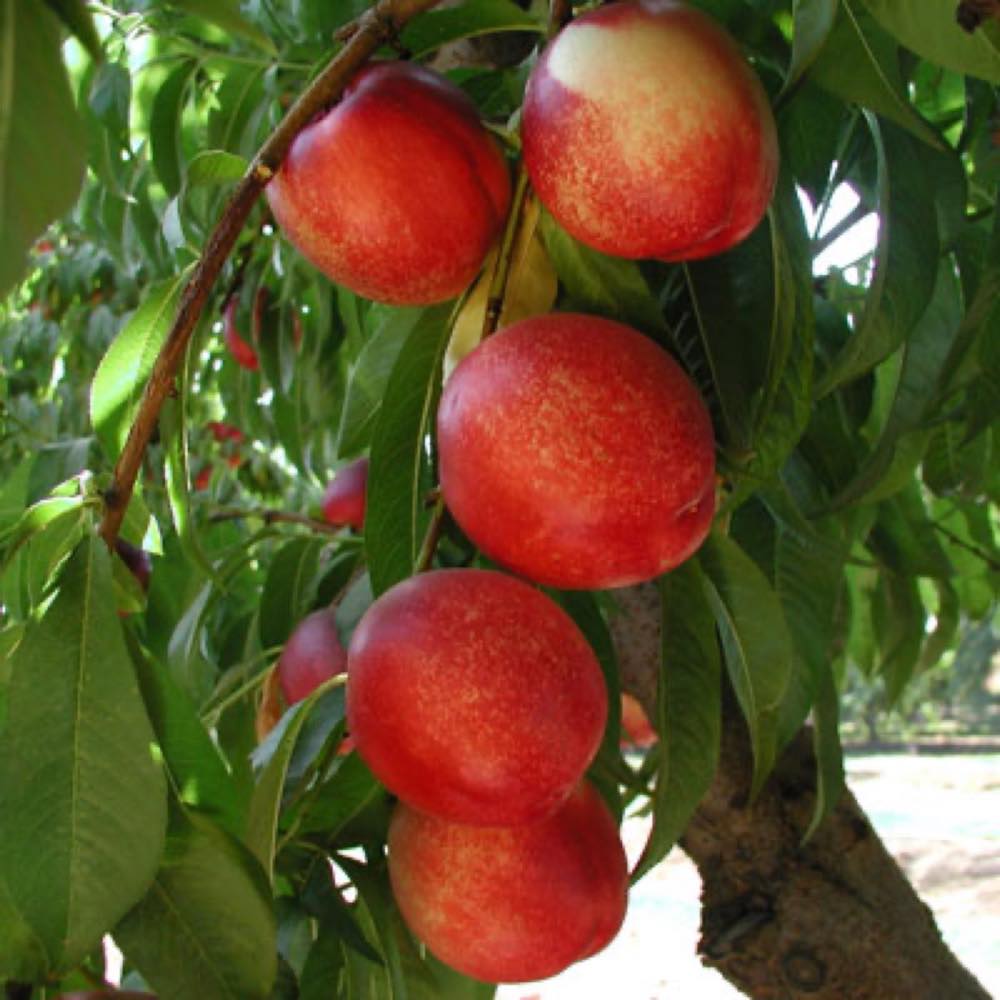
A richly flavored white nectarine with firm freestone fruit and a good balance of sugar and acid, ripening after Arctic Glo. It is rated at up to 500 chill hours, so it is marginal in Phoenix and the best crops follow cooler winters. Self-fruitful. Watch for thrips scarring on the skin in dry springs.
Nectarines
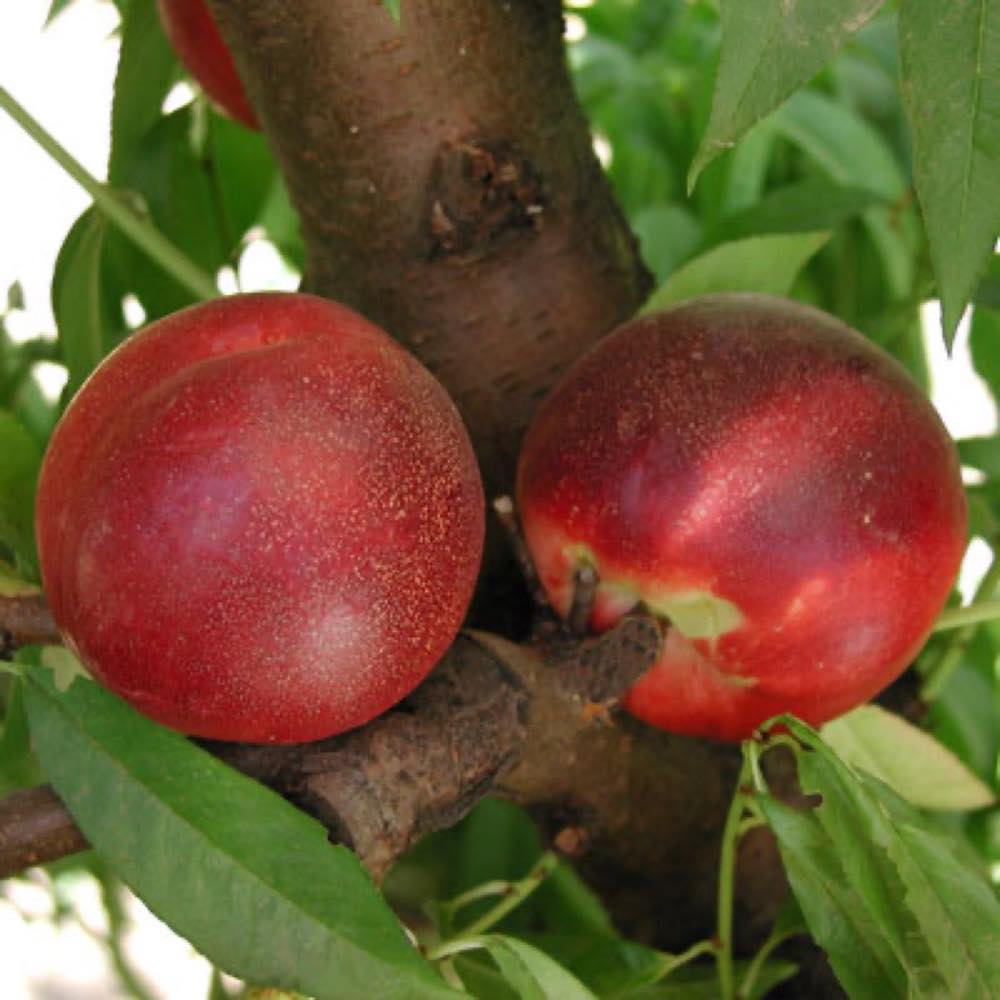
A super-sweet white nectarine with a crisp, crunchy bite when firm and a very sweet taste when fully ripe. It needs 600 to 700 chill hours, so it is a mid elevation tree, with fruit in mid to late August. Self-fruitful. Thrips can scar the skin in dry weather, so check blossoms and young fruit.
Nectarines
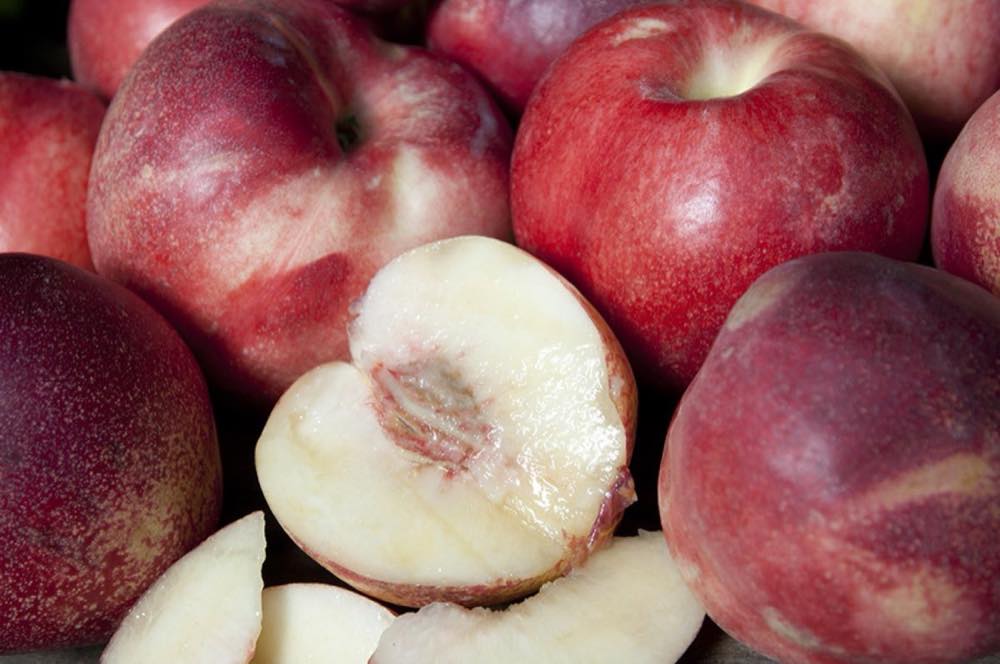
A super-sweet white nectarine, crunchy when firm and extremely sweet when fully ripe, and a repeat taste test winner. It needs 600 to 700 chill hours, so it is a mid elevation choice, ripening mid to late July. Self-fruitful. Late frost on the blossoms is the main risk, so avoid cold pockets.
Nectarines
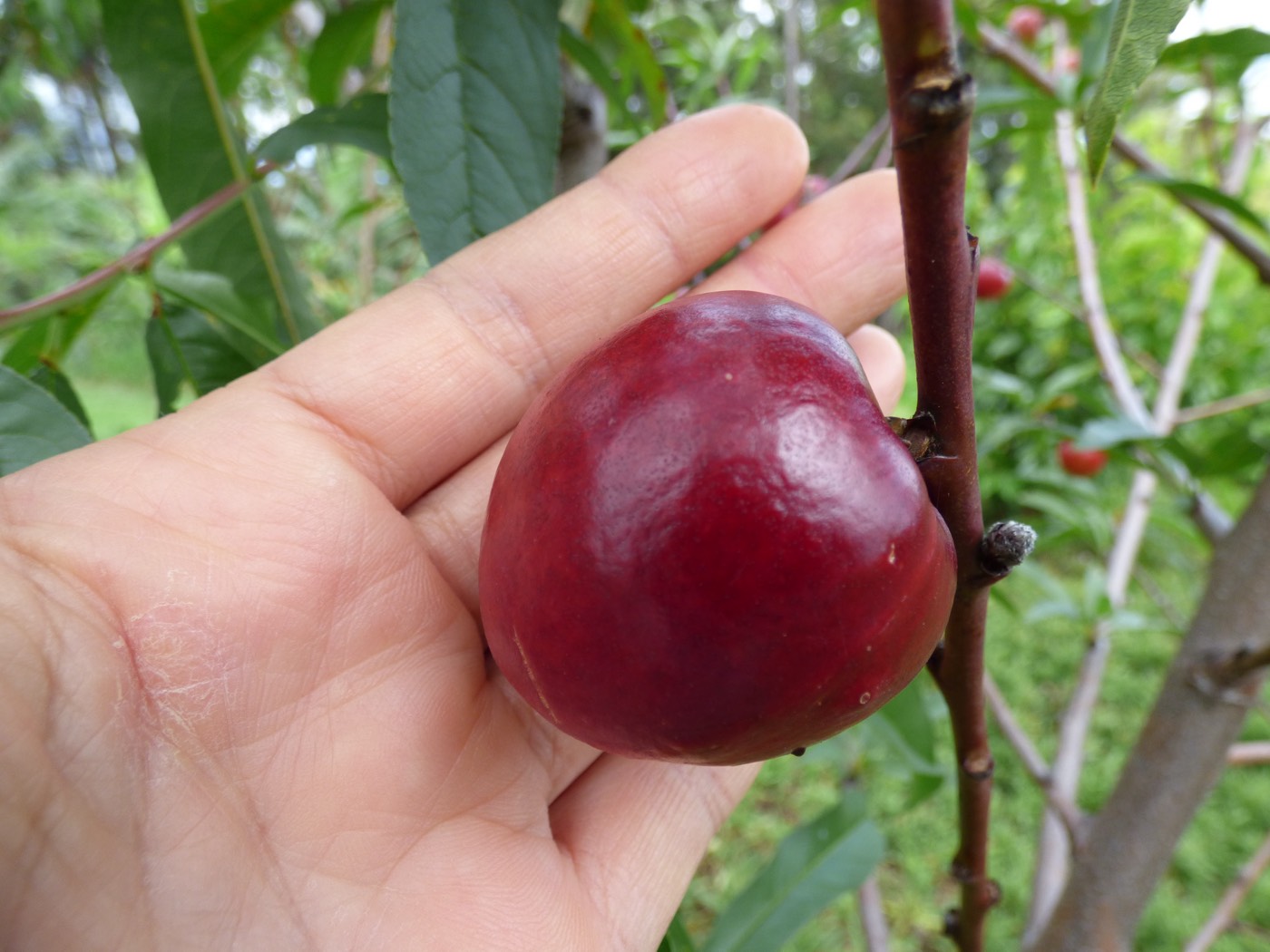
The earliest of the sweet, low-acid white nectarines, with dark red skin and snow-white semi-freestone flesh. At about 300 chill hours it is a solid Phoenix pick, ripening late May to early June in the low desert. Self-fruitful. Early fruit mostly beats the heat, though thrips can scar the skin in dry springs.
Nectarines
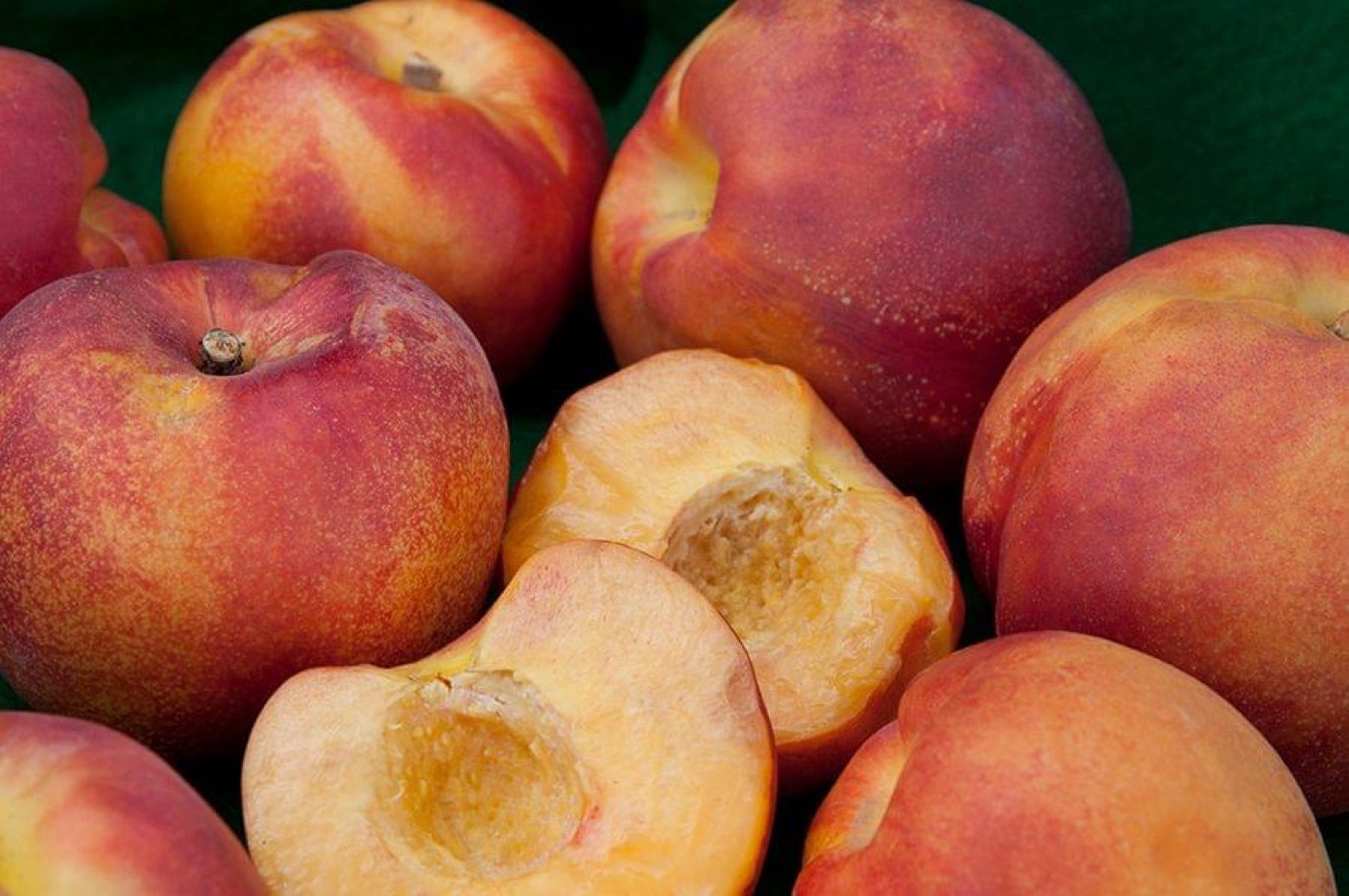
A heavy-bearing nectarine for warm winters, with solid red skin and juicy, rich yellow flesh that is semi-freestone. It needs only about 250 chill hours and ripens early to mid May in the low desert, ahead of the heat. Self-fruitful. Thin for bigger fruit, and watch for thrips scarring in dry springs.
Nectarines
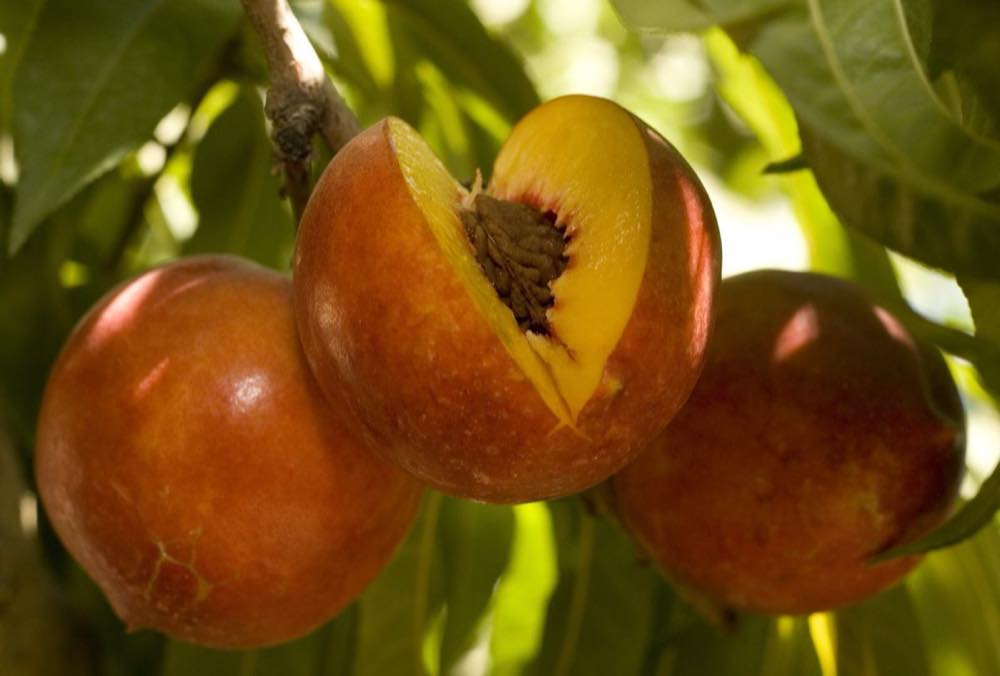
An early, reliable nectarine for warm winters, with bright red skin, large fruit and rich yellow flesh. It needs only 100 to 200 chill hours, so it blooms very early and ripens mid to late May in the low desert. Self-fruitful. A good Phoenix and Yuma tree, but too early a bloomer for places with spring frost.
Nectarines
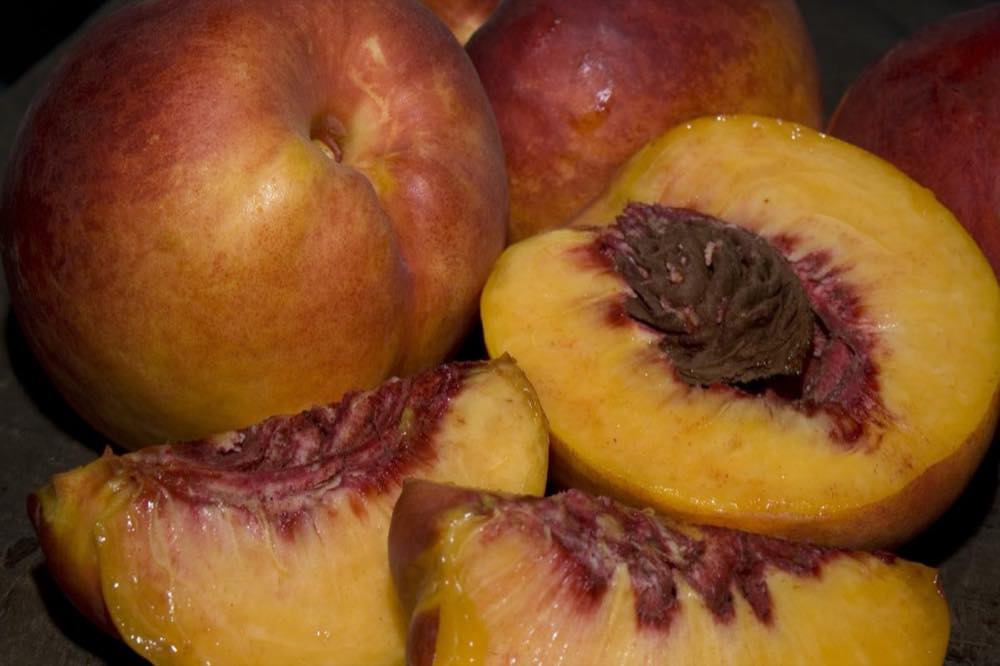
The yellow nectarine with the flavor reputation, rich and aromatic, plus showy double pink blossoms that make it a handsome yard tree. It needs about 300 chill hours and ripens mid to late June in the low desert. Self-fruitful and freestone. Thin the fruit for size, and watch for thrips scarring in dry springs.
Nectarines
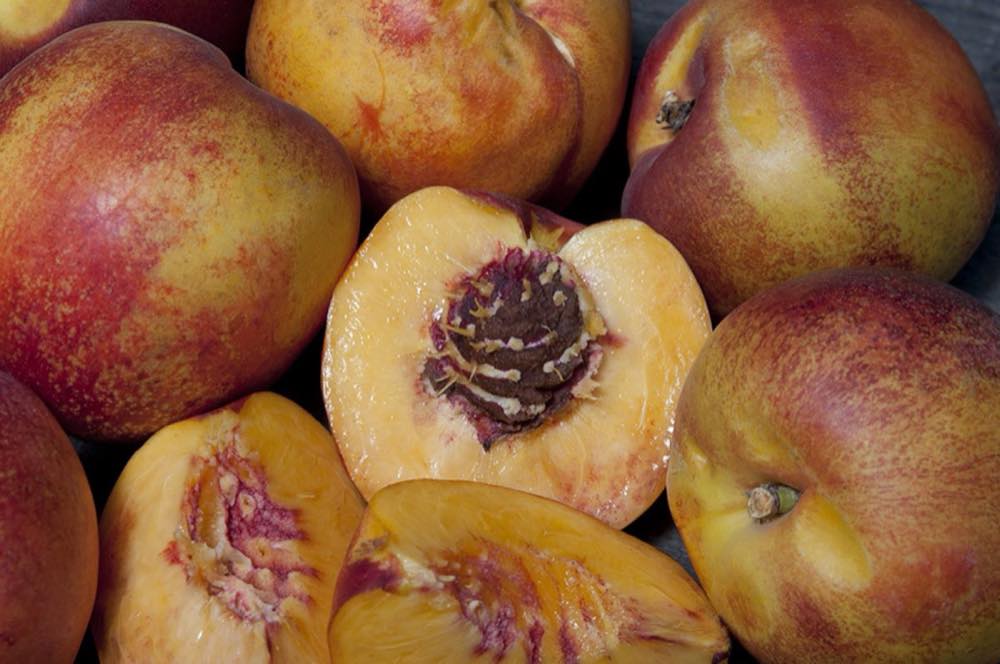
A big, popular yellow freestone nectarine. Picked firm it is tangy, and left to ripen longer it turns sweet and rich. It is rated at up to 500 chill hours, so Phoenix is marginal in a warm winter, and fruit ripens late June to mid July in the low desert. Self-fruitful. Thrips can scar the skin in dry springs.
Nectarines
A large, firm yellow freestone nectarine that scores near the top in taste tests, with big showy blossoms. It needs about 650 chill hours, so it is a mid elevation tree, ripening late July to early August. Self-fruitful. The blossoms open early enough to need frost watching, and thrips can scar the skin in dry weather.
Nectarines
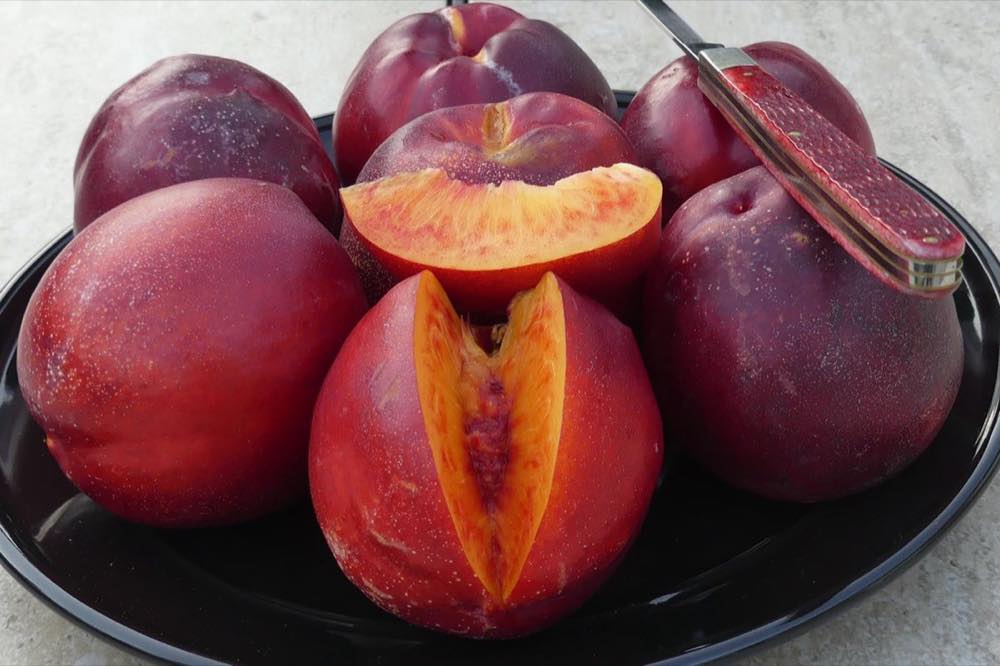
Dark red over yellow with sugar spots, intense nectarine flavor and a touch of tang to balance the sugar. It is good firm or soft, and the fruit hangs on the tree a good while. It needs 400 to 600 chill hours, which suits mid elevation yards. Fruit ripens late July to August. Self-fruitful. Thrips can scar the skin in dry spring weather.
Nectarines
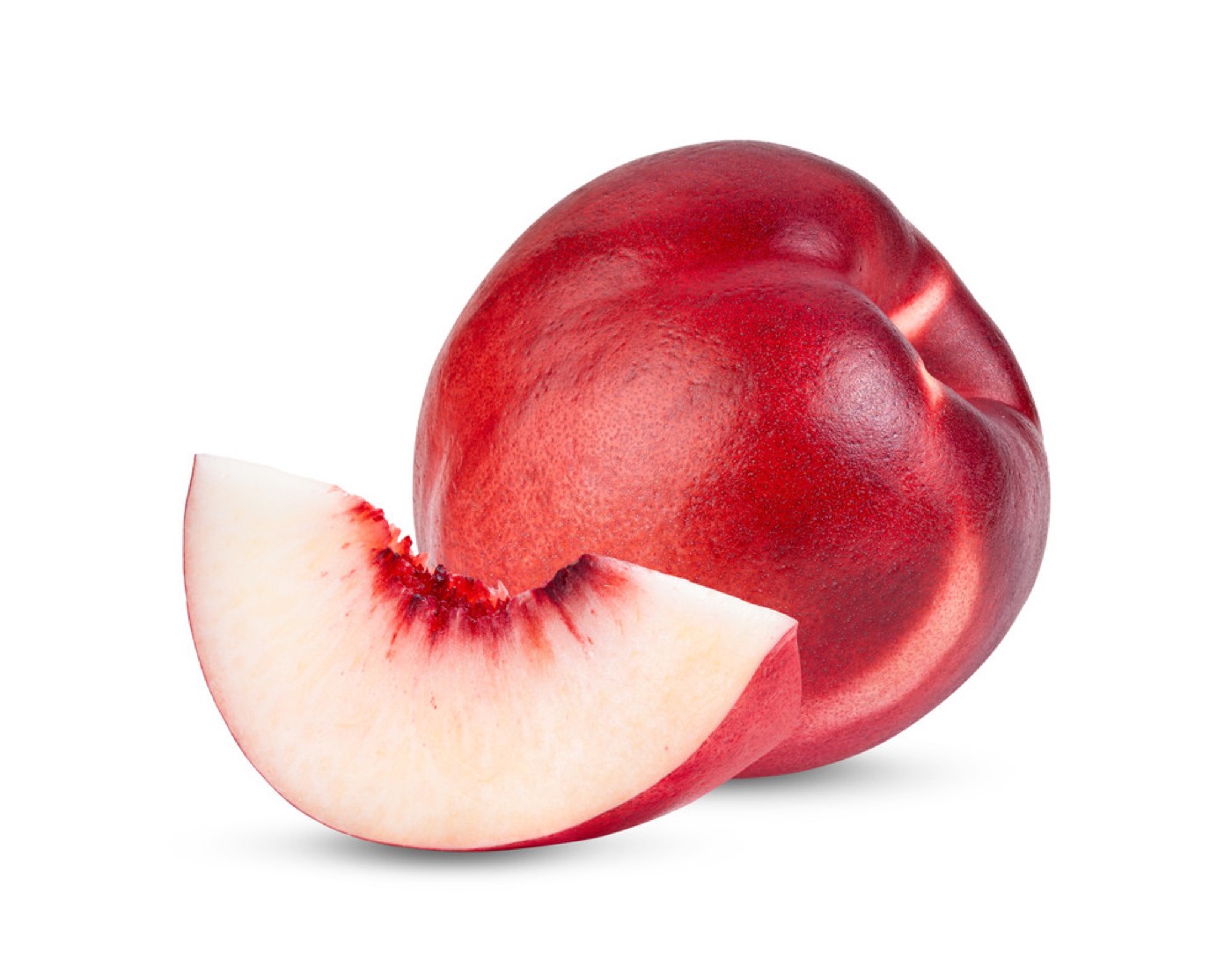
A long-time California favorite white nectarine, small to medium, freestone, aromatic, juicy and sweet. It needs about 400 chill hours, so it works in Phoenix in most winters, and it ripens early to mid July in the low desert, later than most low desert nectarines. Self-fruitful. Thin the fruit, and watch for thrips scarring.
Nectarines
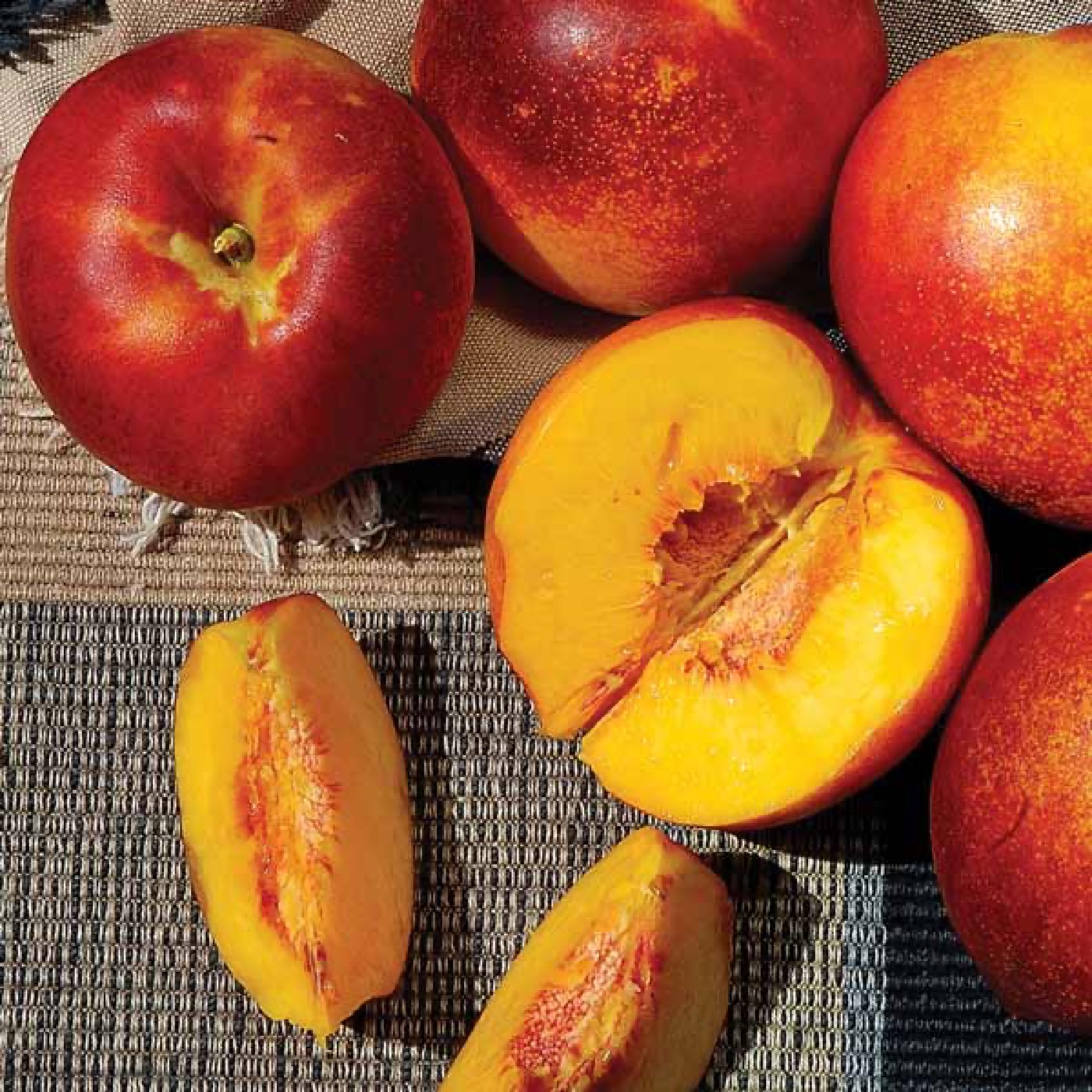
A very hardy Canadian nectarine with yellow fruit, one of the best scorers in nursery tastings, and good tolerance of bacterial spot and brown rot. It needs about 800 chill hours, so it suits mid elevation and a sheltered spot in the high country. Self-fruitful. Skip it in the low desert, where winters are too mild for it.
Nectarines
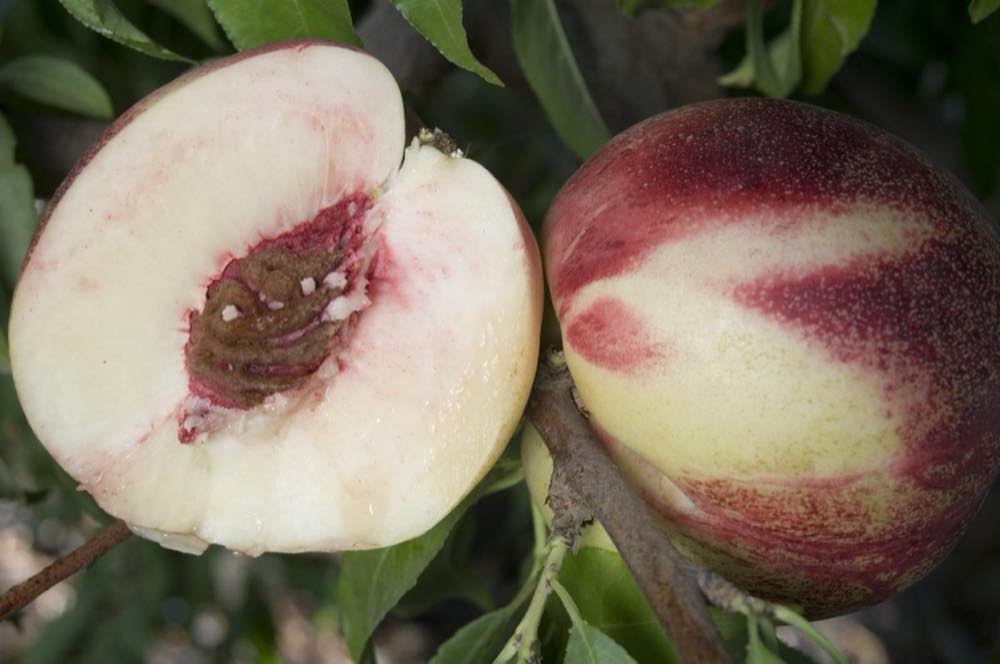
A very large, firm white freestone nectarine with a rich, complex flavor and a good balance of sweet and tart, and a repeat taste test winner. It needs about 650 chill hours, so it is a mid elevation tree, ripening late July to early August. Self-fruitful. Thrips can scar the skin in dry springs.
Nectarines
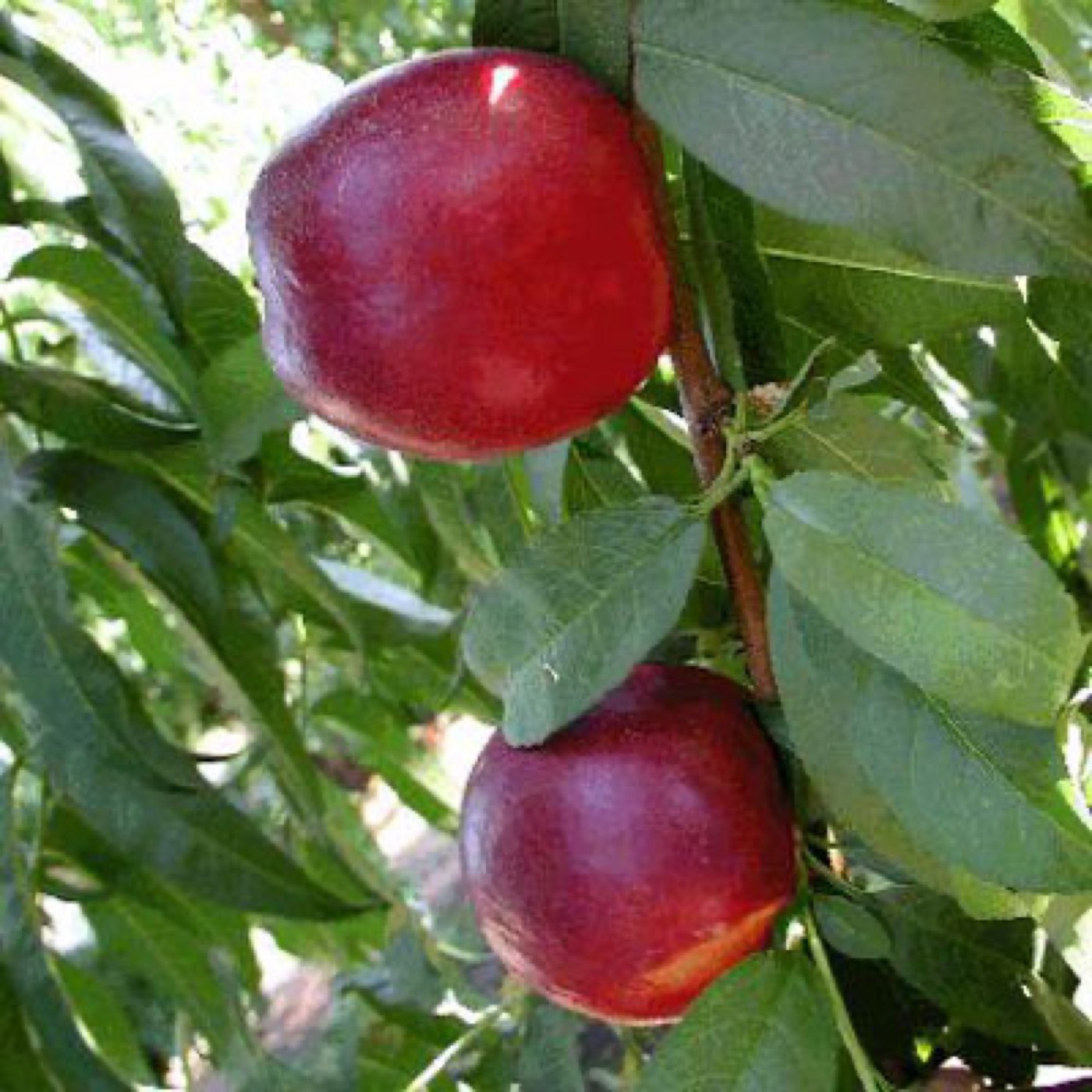
A yellow nectarine with high sugar and low acid, so no tartness at all, for people who find nectarines too sharp. It needs about 500 chill hours, so it is marginal in Phoenix, but it ripens early to late June in the low desert, well before the worst heat. Self-fruitful. Thrips can scar the skin in dry springs.
Nectarines
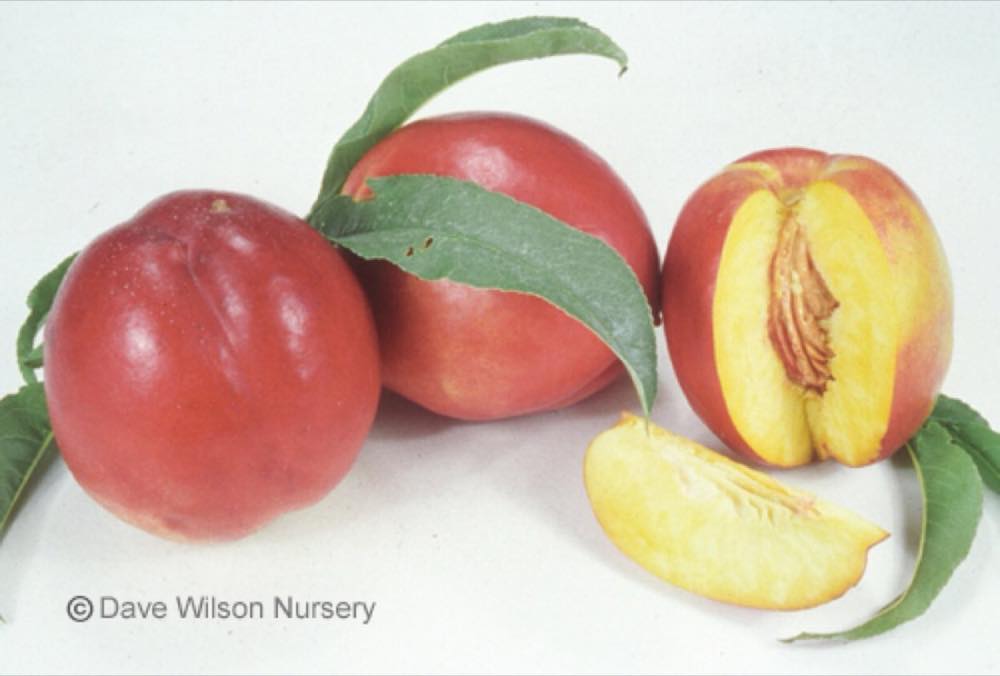
A bright red nectarine with firm yellow freestone fruit that is tangy and sweet, a dependable producer that handles cold winters well. It needs about 700 chill hours, so it is a mid elevation tree, ripening in July. Self-fruitful. Frost on the blossoms is the main risk, and thrips can scar the skin in dry spring weather.
Nectarines
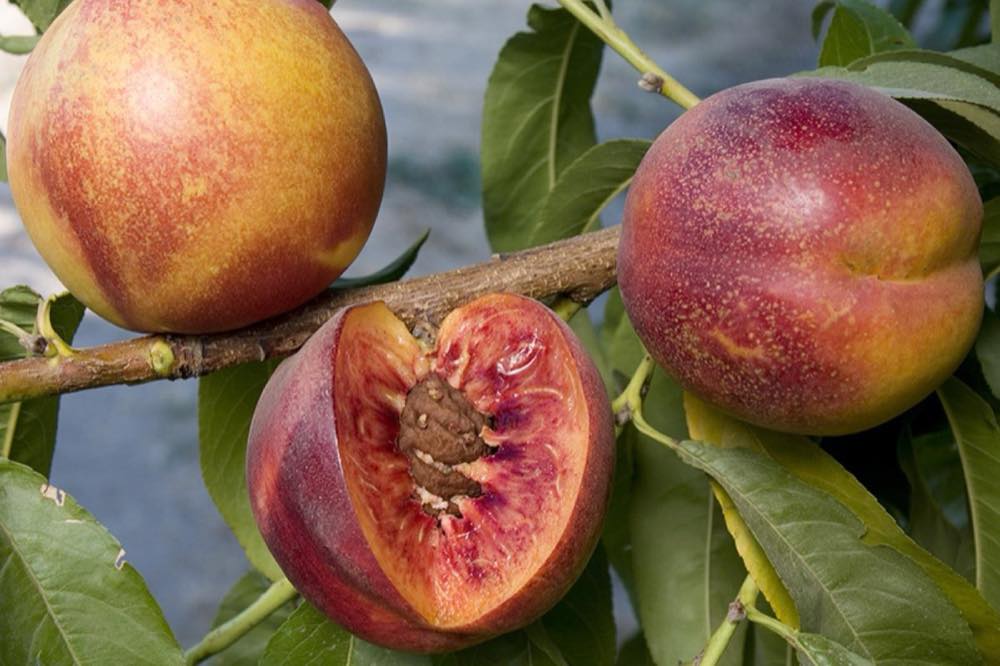
A late nectarine with sprightly, spicy, intense flavor, ripening in early to mid September when other fruit is long finished. Chill needs are quoted from 600 to 800 hours, so it is for mid elevation yards, not the low desert. Self-fruitful. Its long season wants a sunny, warm spot to ripen fully.
Nectarines
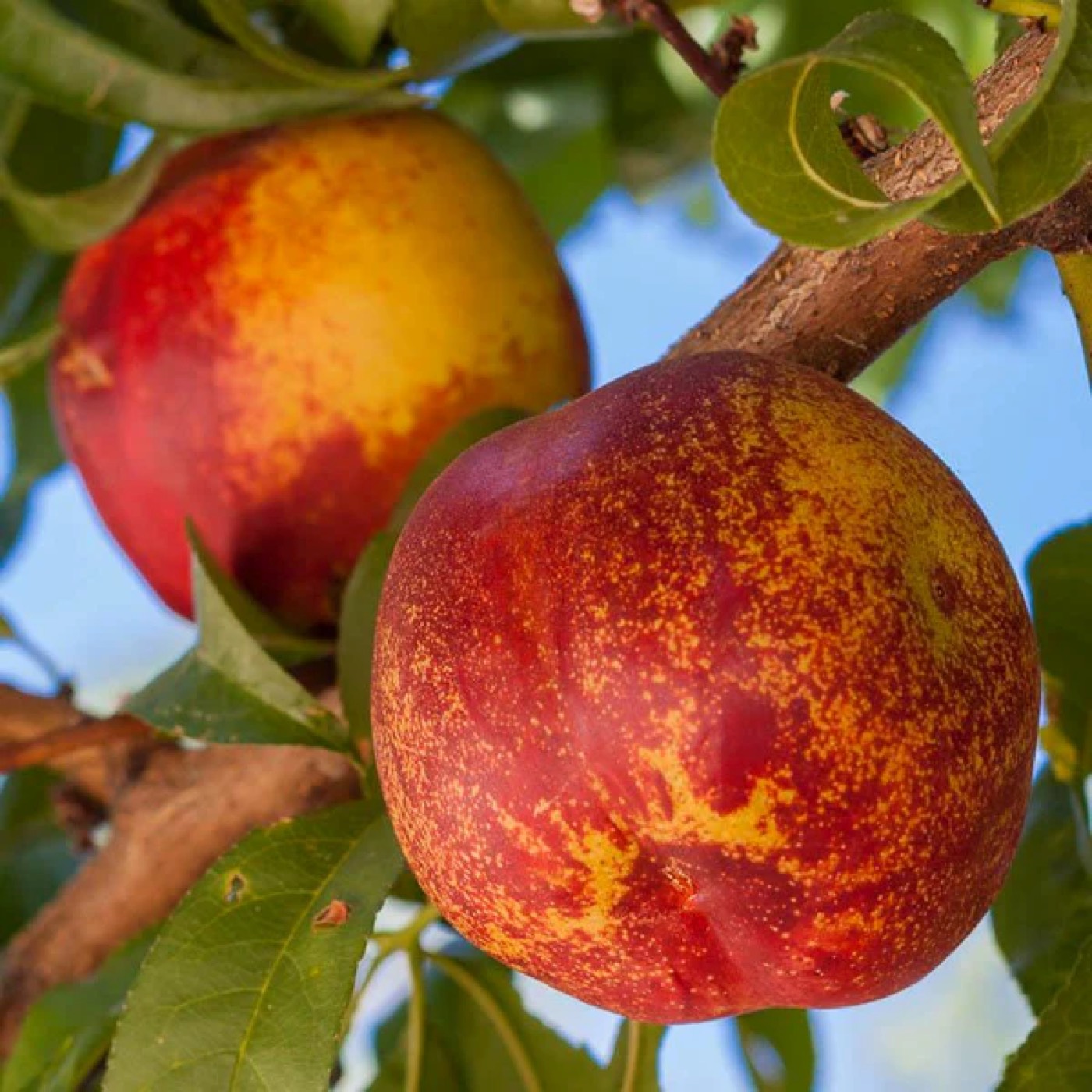
A tough, frost-hardy nectarine with a late bloom and large, red-skinned yellow fruit with a rich, tangy flavor. It needs about 800 chill hours, so it fits mid elevation and a sheltered spot in the high country, where it is one of the safer nectarines. Self-fruitful. Not for the low desert.
Nectarines
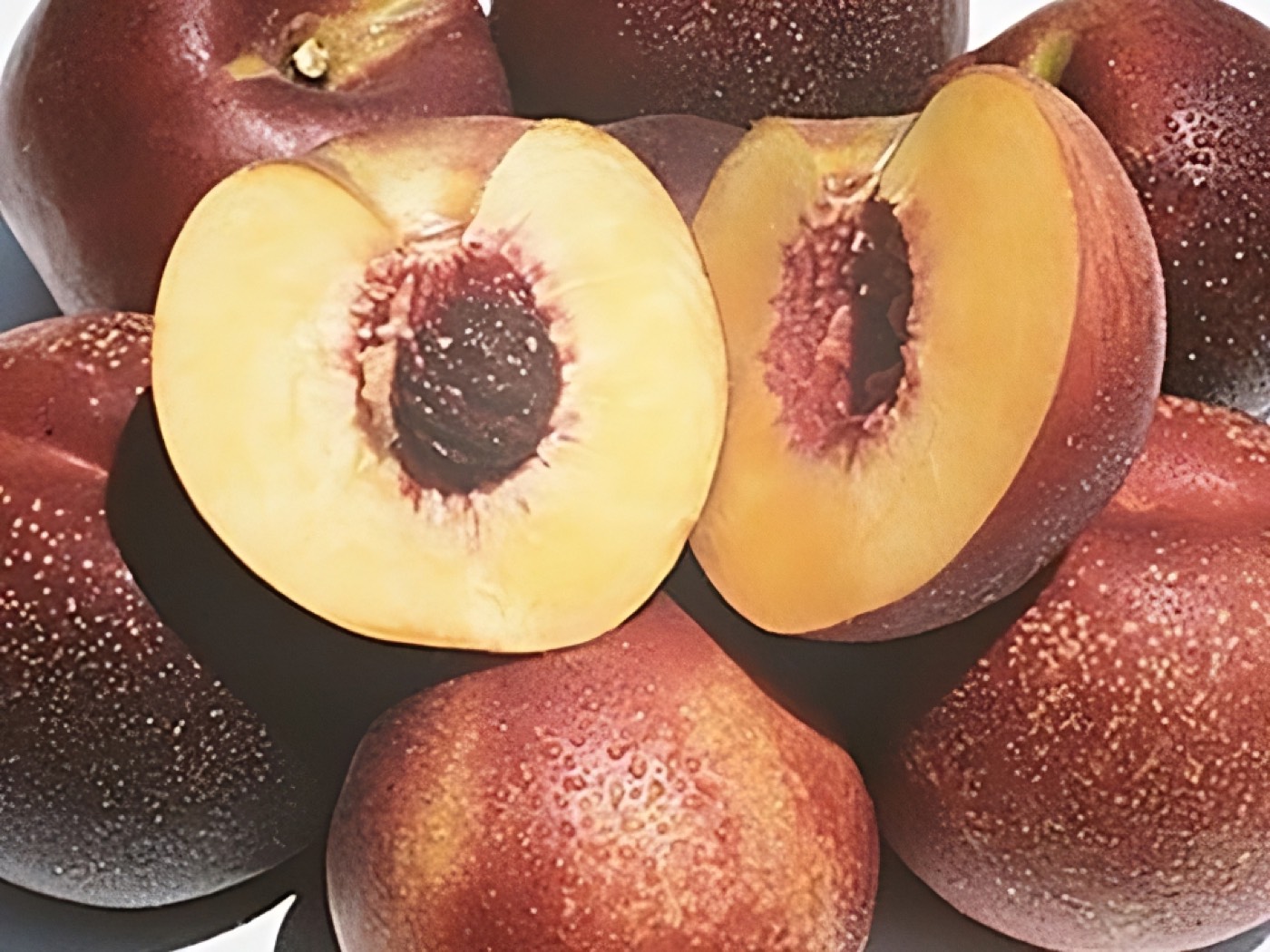
A long-time favorite for warm winters, with red-skinned yellow freestone fruit that is aromatic with a good balance of sugar and acid. It needs only about 250 chill hours and ripens late June to mid July in the low desert. Self-fruitful. On Nemaguard rootstock it resists root-knot nematodes, common in Phoenix soil. Watch for thrips scarring.
Nectarines
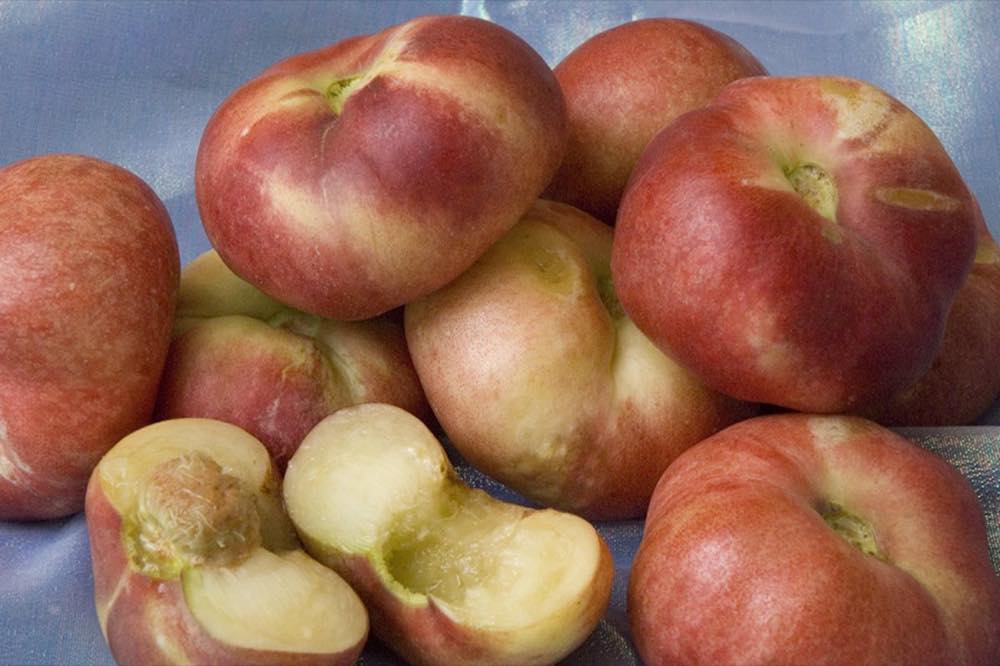
A flat, donut-shaped white nectarine, sweet and juicy with red skin blushed yellow, and the first of its kind. It needs up to 500 chill hours, so Phoenix is marginal, but it fruits young and ripens late May to early June in the low desert. Thin hard, since a heavy set stays small. Thrips can scar the skin in dry springs.
Nectarines
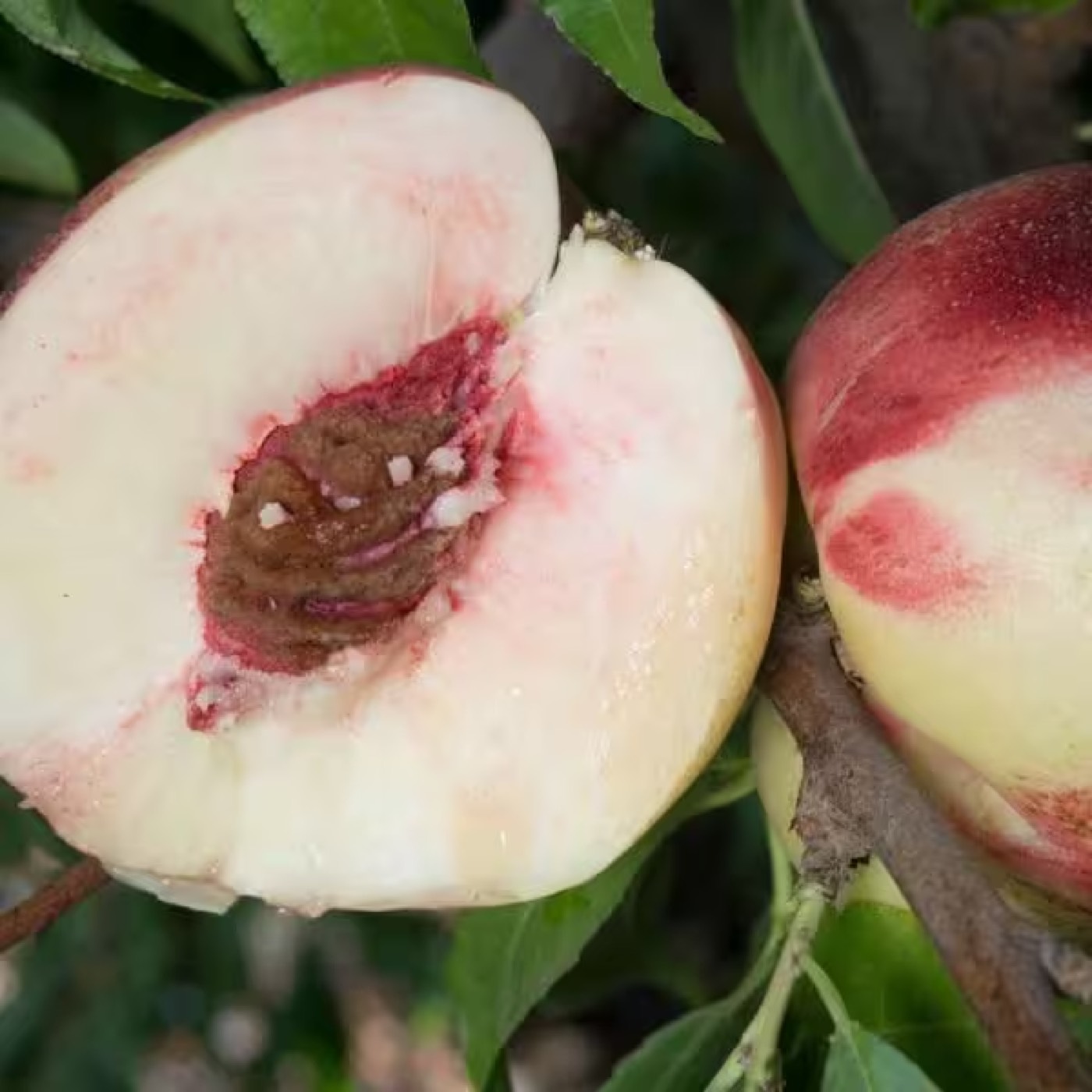
An early white freestone nectarine, sweet and juicy with a classic nectarine flavor, and a long-time favorite in warm winter areas. It needs 250 to 300 chill hours and ripens early to mid June in the low desert. Self-fruitful. Some fruit can crack, so water evenly, and thrips can scar the skin in dry springs.
Nectarines
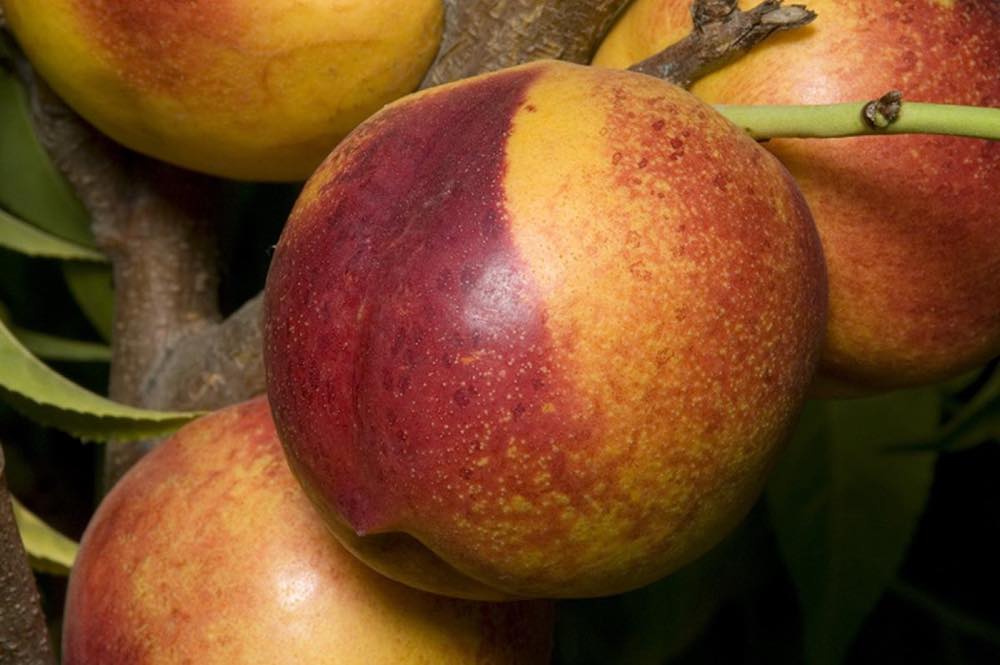
Dark red nectarines with a classic, zesty flavor and a good balance of sweet and tart, ripening in late summer about two weeks after Fantasia. It needs 600 to 700 chill hours, so it is a mid elevation tree. Self-fruitful, with showy pink blossoms. Thrips can scar the skin in dry springs.
Peaches
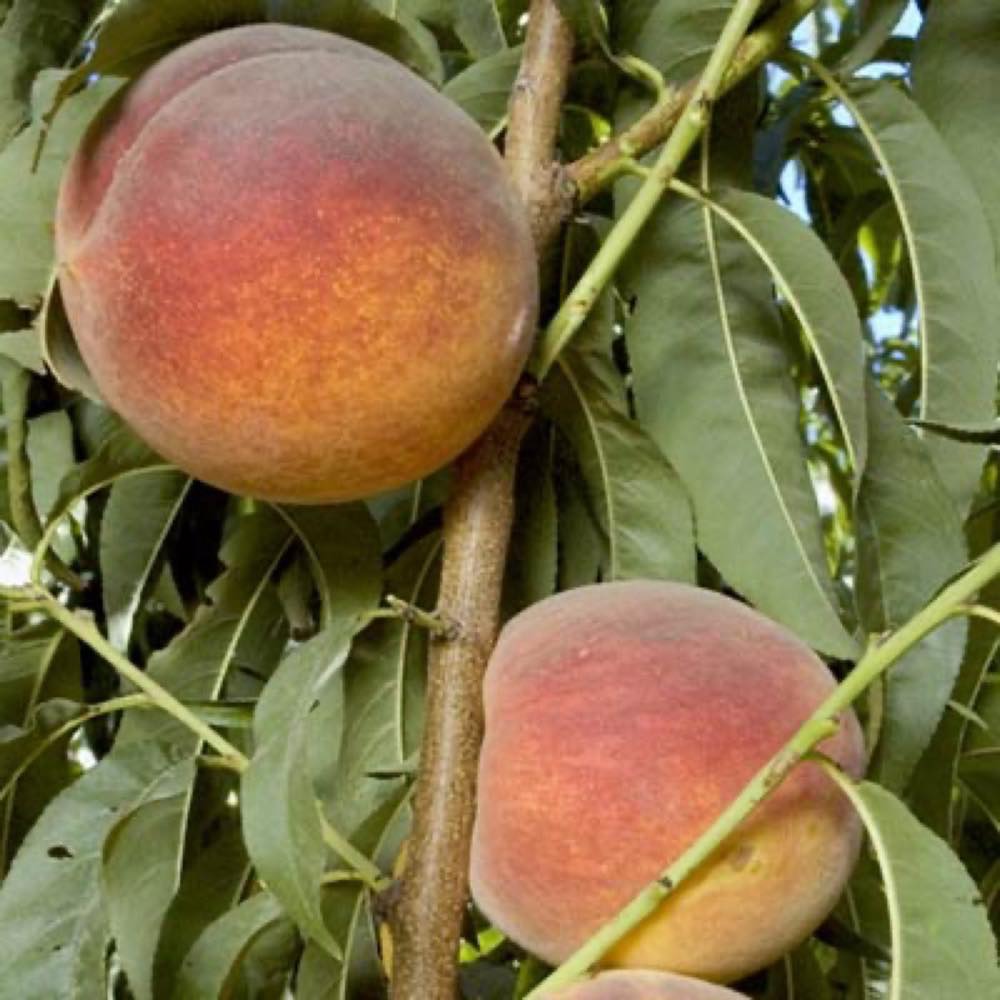
A big, red-blushed yellow freestone with mild, low-acid flesh that ripens just after Elberta. It needs about 800 chill hours, so it suits mid elevation yards and is far too high-chill for the Phoenix area. Plant it where cold air drains away, because a hard spring freeze is what usually costs a crop at these elevations.
Peaches
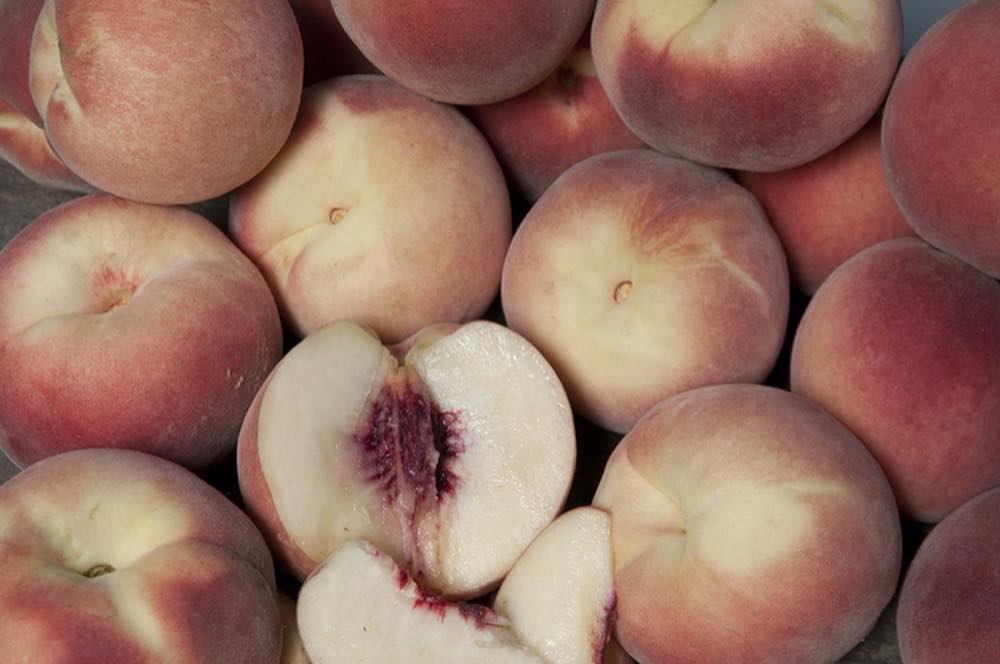
A large white peach with red over cream skin, firm flesh and a sweet, fine, slightly tangy flavor. It needs about 700 chill hours, so it fits mid elevation orchards and is too high-chill for Phoenix. On Citation rootstock the tree stays smaller, which makes thinning and picking easier.
Peaches
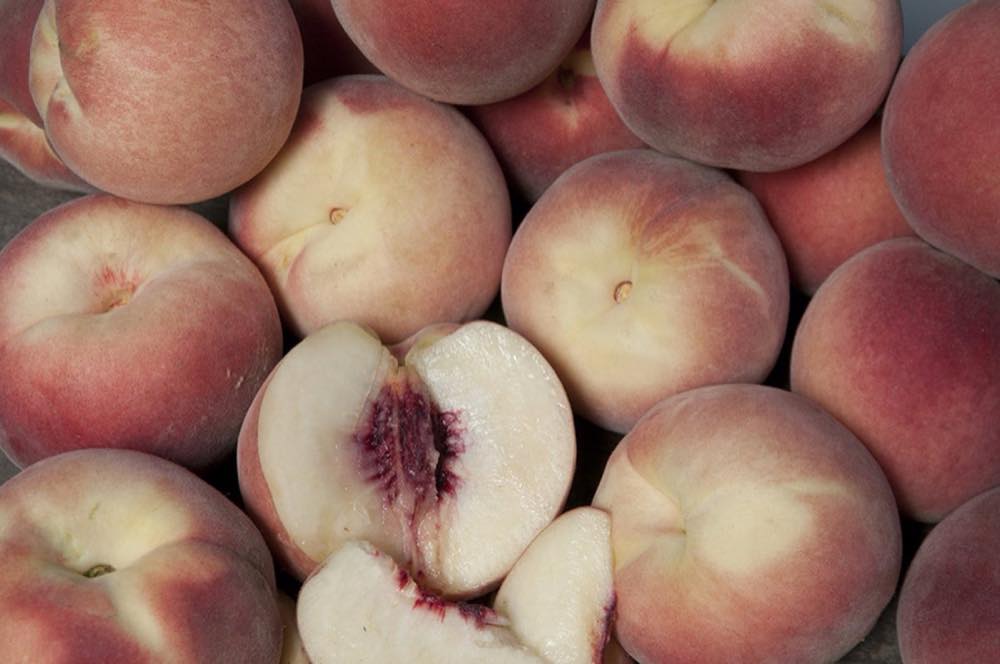
A large white-fleshed peach, red over cream, with a sweet, slightly tangy flavor and firm texture that has won taste tests. It needs around 700 chill hours, so it belongs at mid elevation and not in the low desert. The fruit is nearly freestone when fully ripe, so let it soften a little on the tree before picking.
Peaches
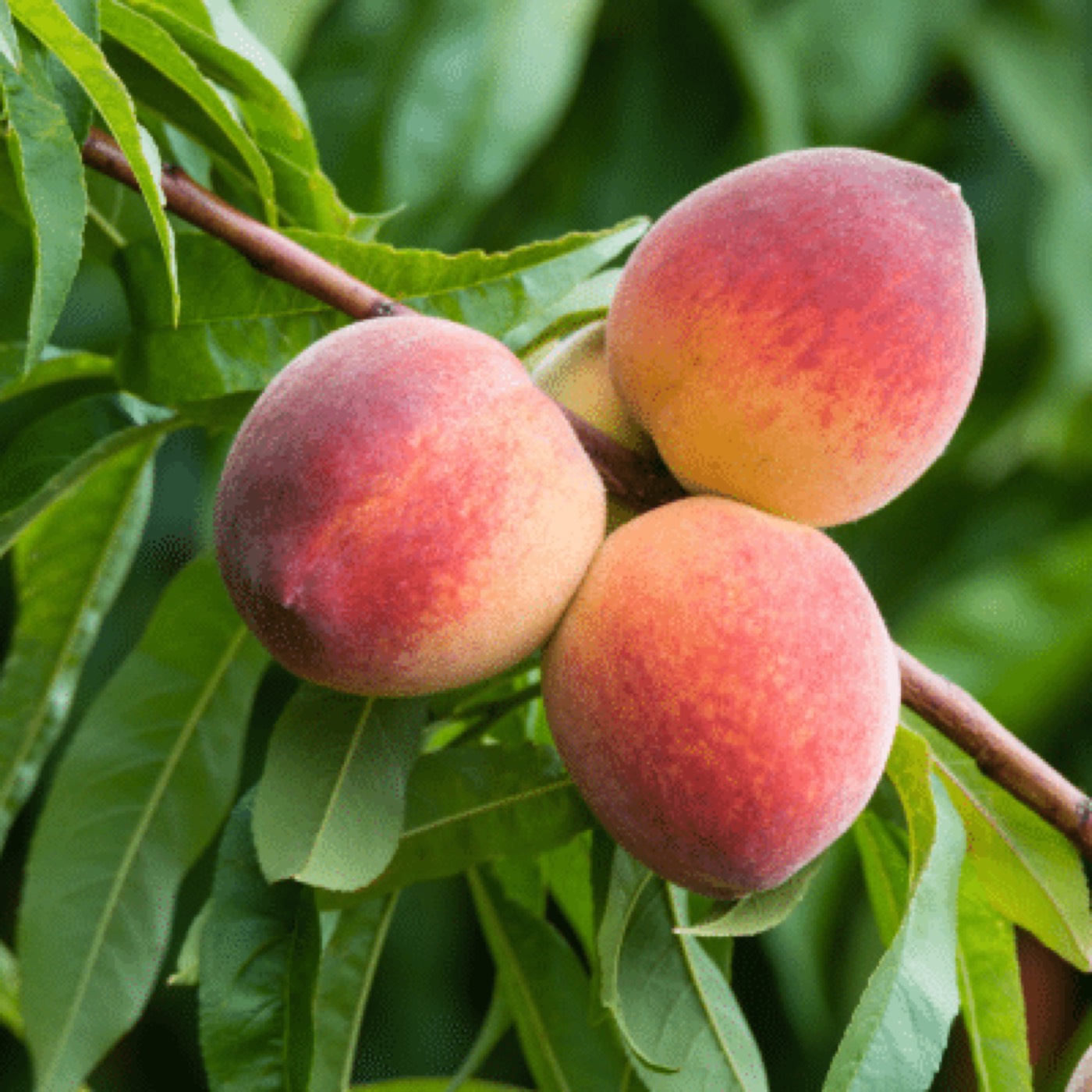
A large, sweet, aromatic yellow freestone and one of the better all-round peaches for Phoenix yards. It needs under 300 chill hours, so it sets fruit in most winters, and it ripens a few weeks after the May peaches for a second wave of fruit. Thin early for size and paint the trunk white to prevent sunburn.
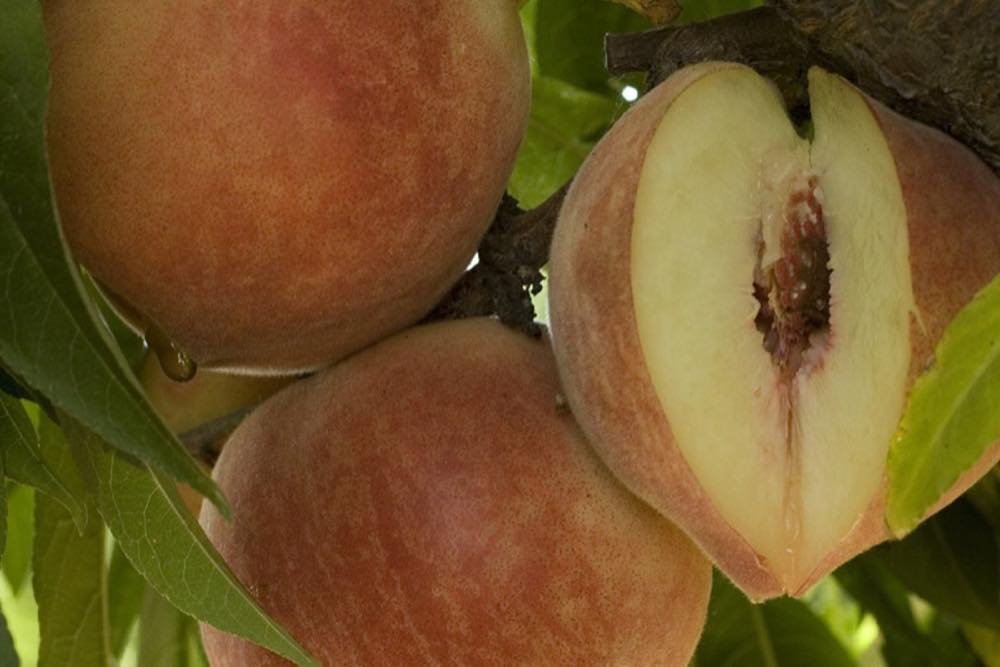
Peaches
A classic white-fleshed freestone with sweet, juicy, aromatic, low-acid fruit. At 250–300 chill hours it is dependable in the Phoenix area, and it does not bloom as early as many low-chill peaches. On Citation rootstock it makes a smaller tree that is easy to net and pick.
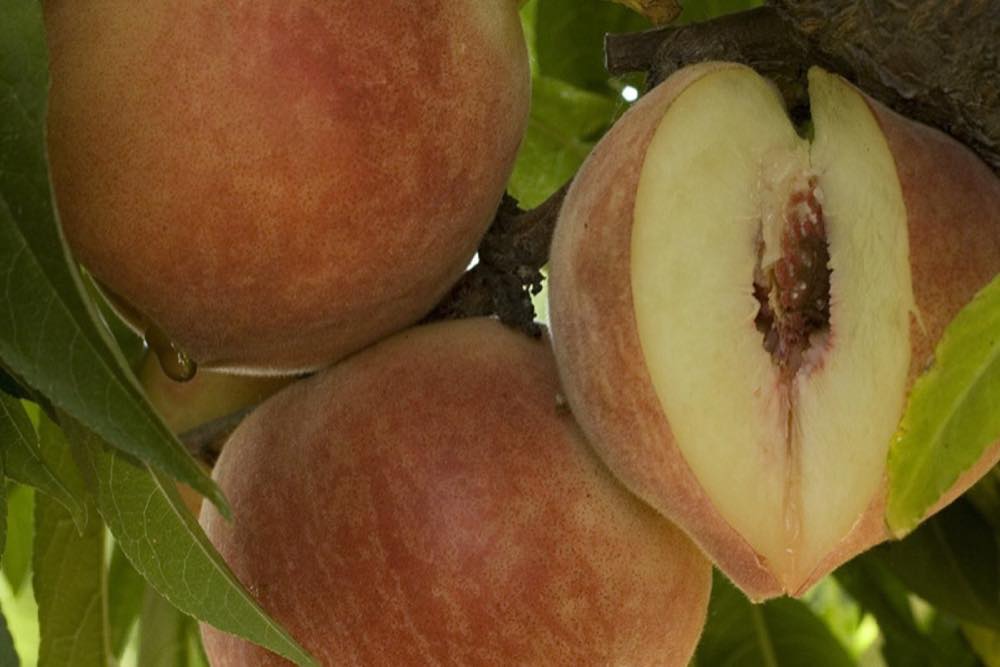
Peaches
A long-time favorite white freestone, sweet and juicy with a low-acid, old-fashioned peach aroma. It needs only 250–300 chill hours and blooms later than many low-chill peaches, so it crops reliably around Phoenix. It is not a good fit at mid elevation, where it still blooms early enough to meet frost.
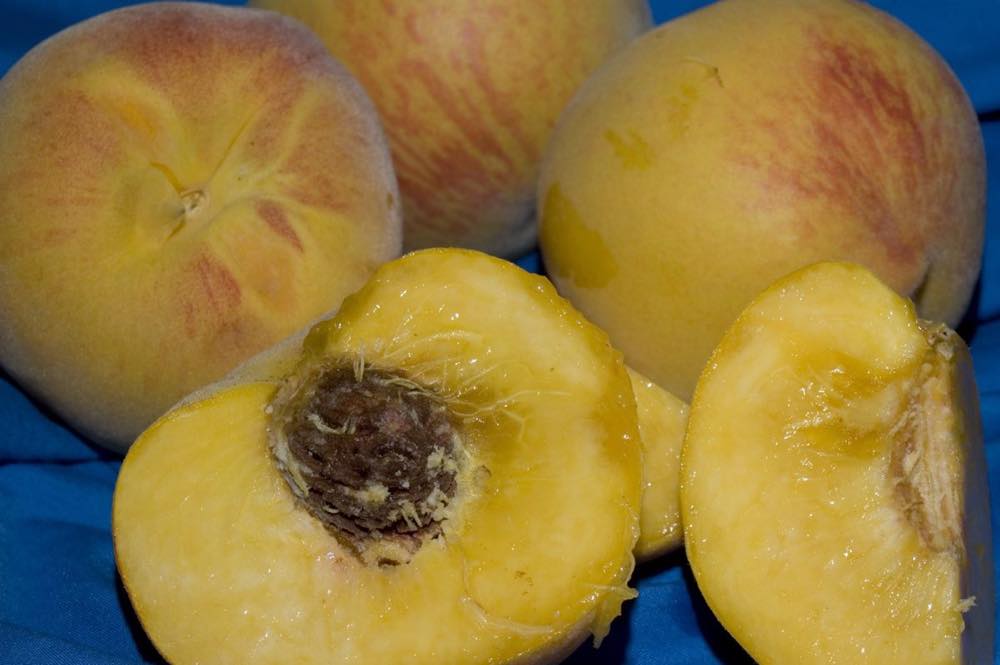
Peaches
An old favorite with small, golden, intensely flavored freestone fruit, ripening about a week ahead of Elberta. It needs around 800 chill hours, so it is a mid elevation tree and not for the low desert. The fruit is small by nature, so judge it on flavor rather than size.
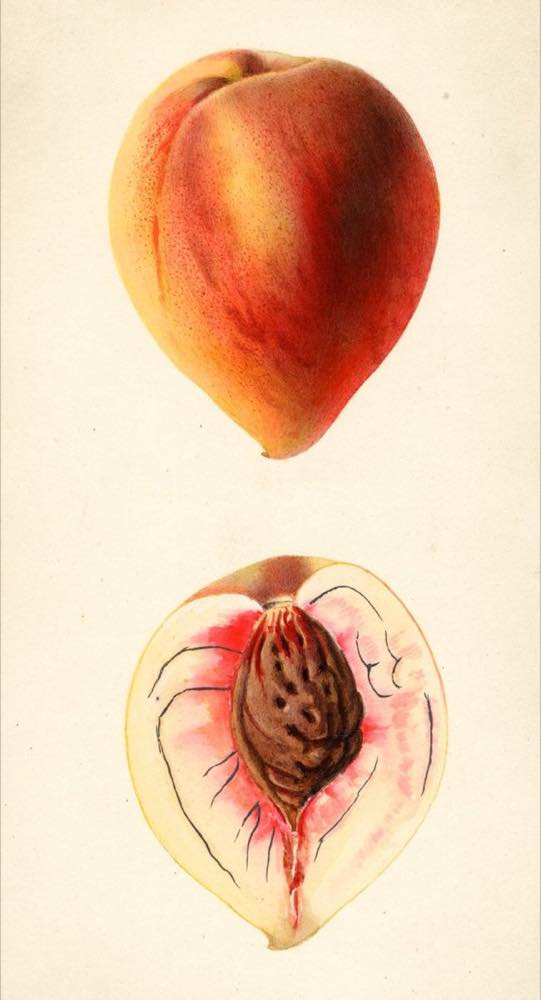
Peaches
A reliable old white peach from the 1870s with a red blush and firm freestone flesh tinged red. It is very bud hardy, which counts for something in a spring cold snap. It needs 800–850 chill hours, so it is a mid elevation tree and not for the low desert.
Peaches
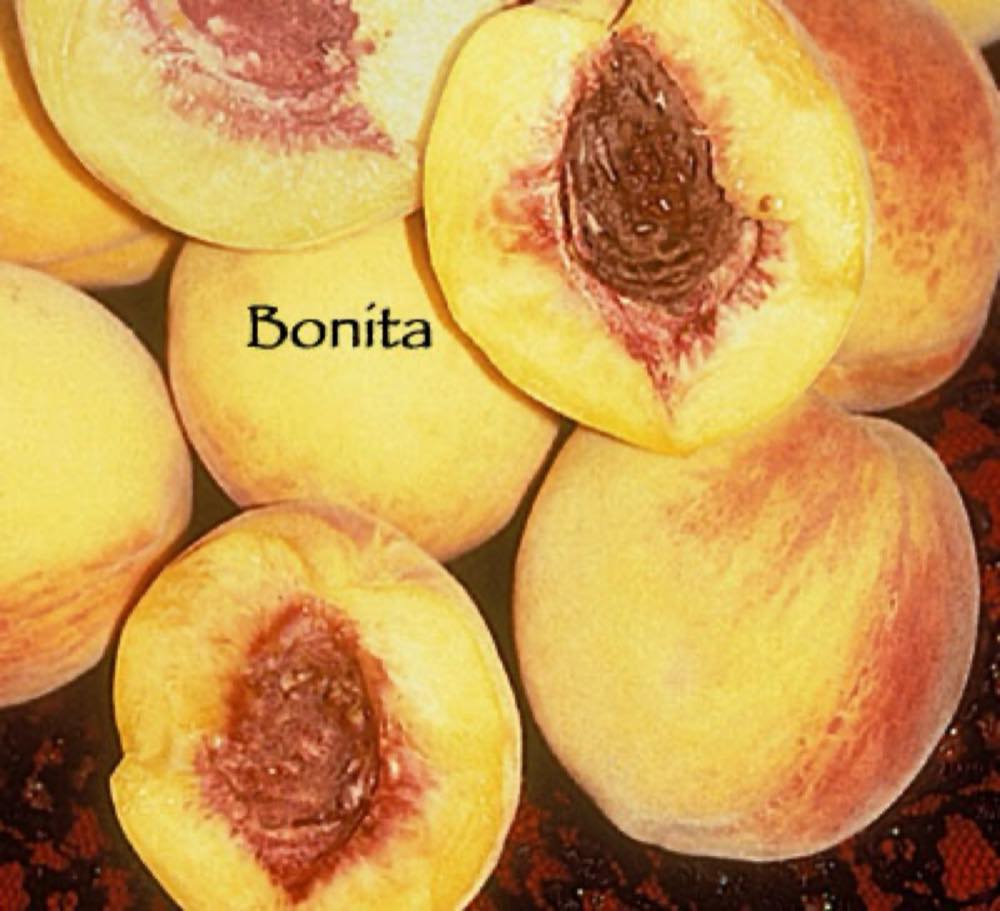
A medium to large yellow freestone with a red blush and a sweet, slightly tart, full flavor that does well in inland Southern California. Rated under 400 chill hours, it should crop in most Phoenix winters. It ripens later than the May peaches, so keep it well watered and the trunk painted white as the fruit finishes in early summer heat.
Peaches
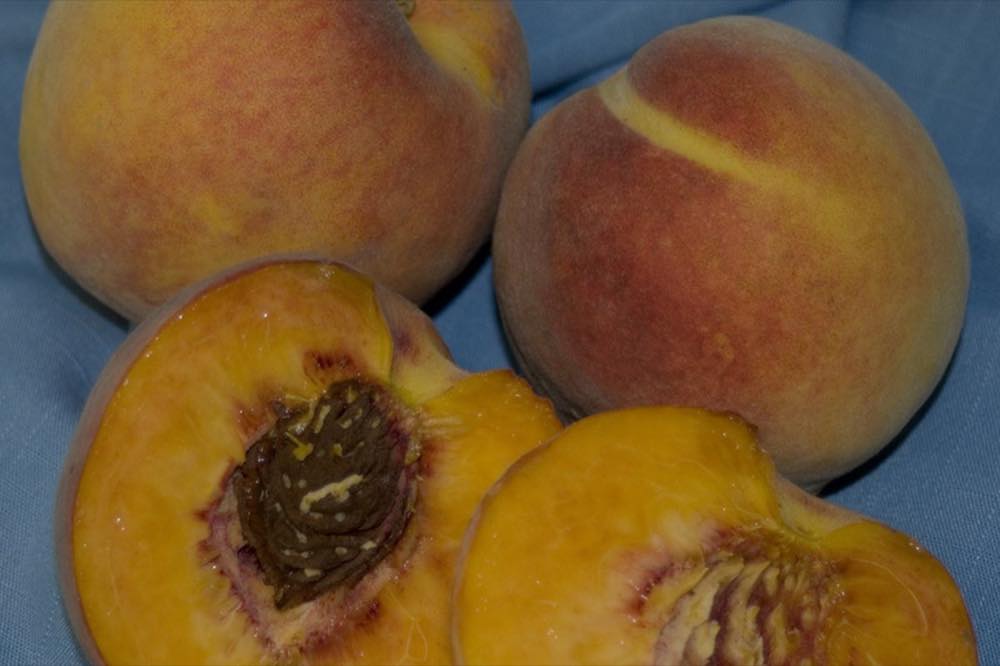
A vigorous, late-blooming yellow freestone from Ontario with firm fruit that is almost fully red. It is about as cold hardy as Redhaven and wants around 1,000 chill hours, so it suits mid elevation and the high country, not the low desert. Late bloom helps it dodge the spring frost that is the main risk up high.
Peaches
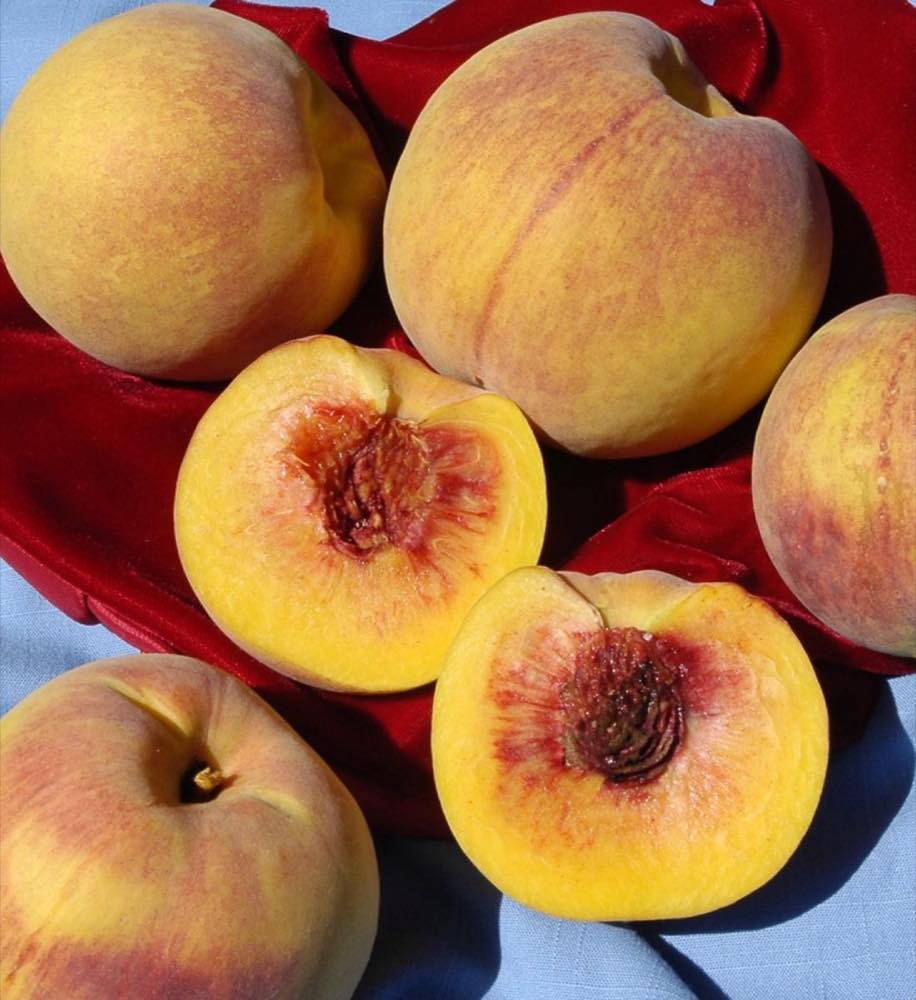
A very late yellow freestone with large red-skinned fruit and a long wait, ripening from late September into October. It suits the warmer end of mid elevation, such as Verde Valley and Sierra Vista, where fall stays frost-free late. At about 500 chill hours it blooms early, so a spring freeze can cost the crop, and in the low desert that chill figure is marginal.
Peaches
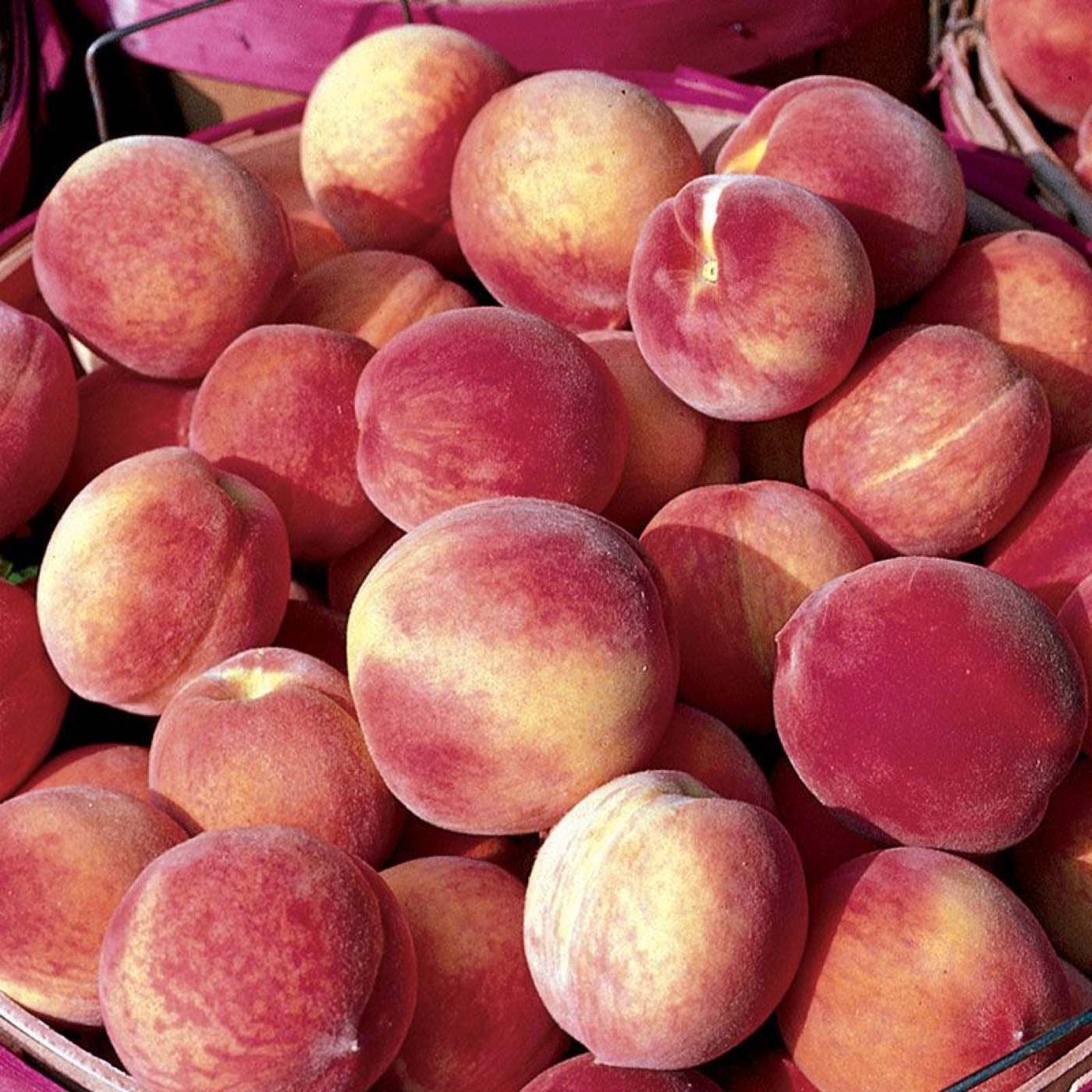
A proven yellow freestone for cold country, with firm, sweet, aromatic fruit and flesh that resists browning. The buds tolerate frost better than most because it blooms late, which is why it is a favorite from Prescott up into the high country. It needs about 800 chill hours, so skip it in the low desert.
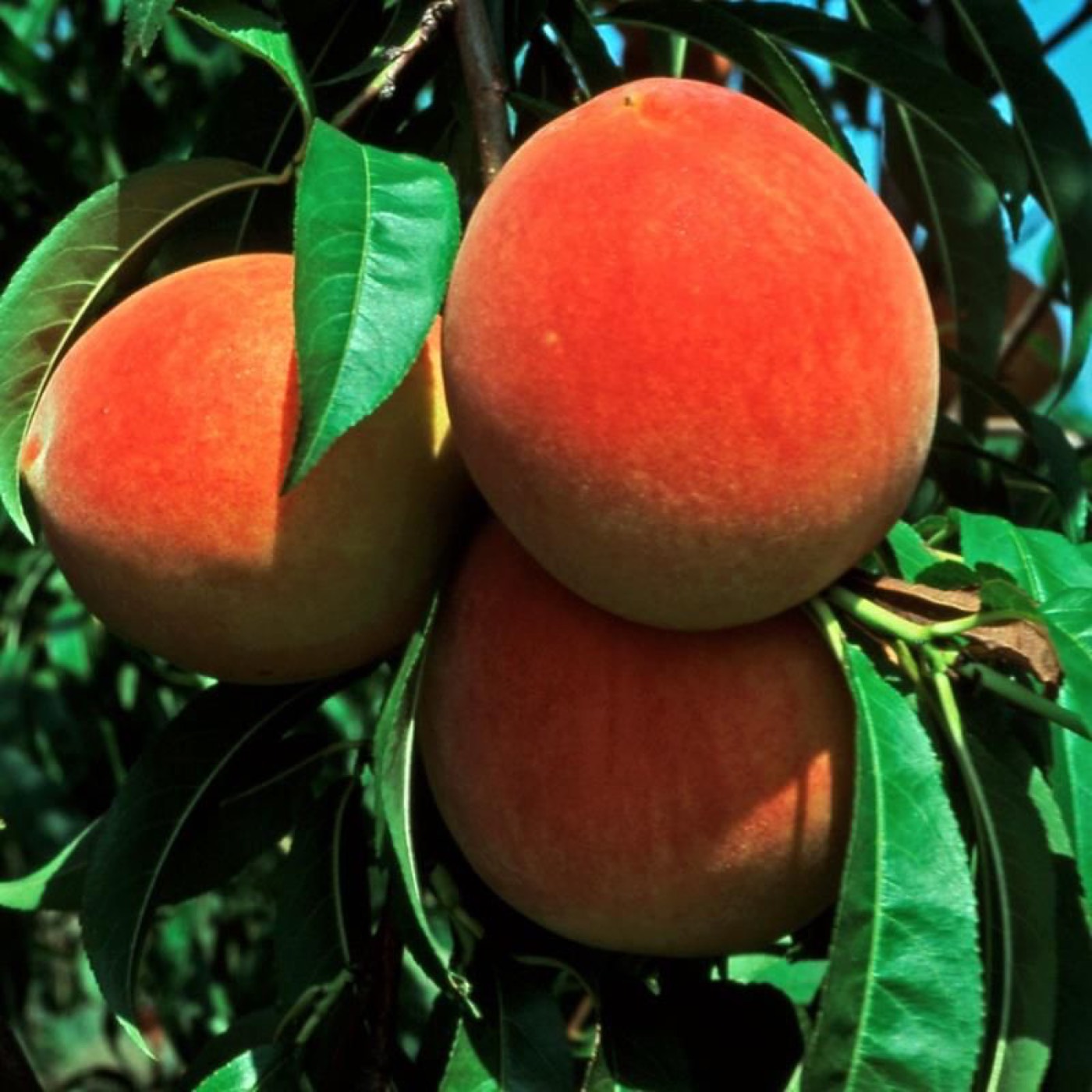
Peaches
A late yellow freestone with a bright red blush, firm juicy flesh and a red tint at the pit. It is on the University of Arizona's list for backyard fruit at 3,500 to 6,000 feet and holds up well for canning or freezing. It needs about 850 chill hours, so it is a mid elevation tree and not for the low desert.
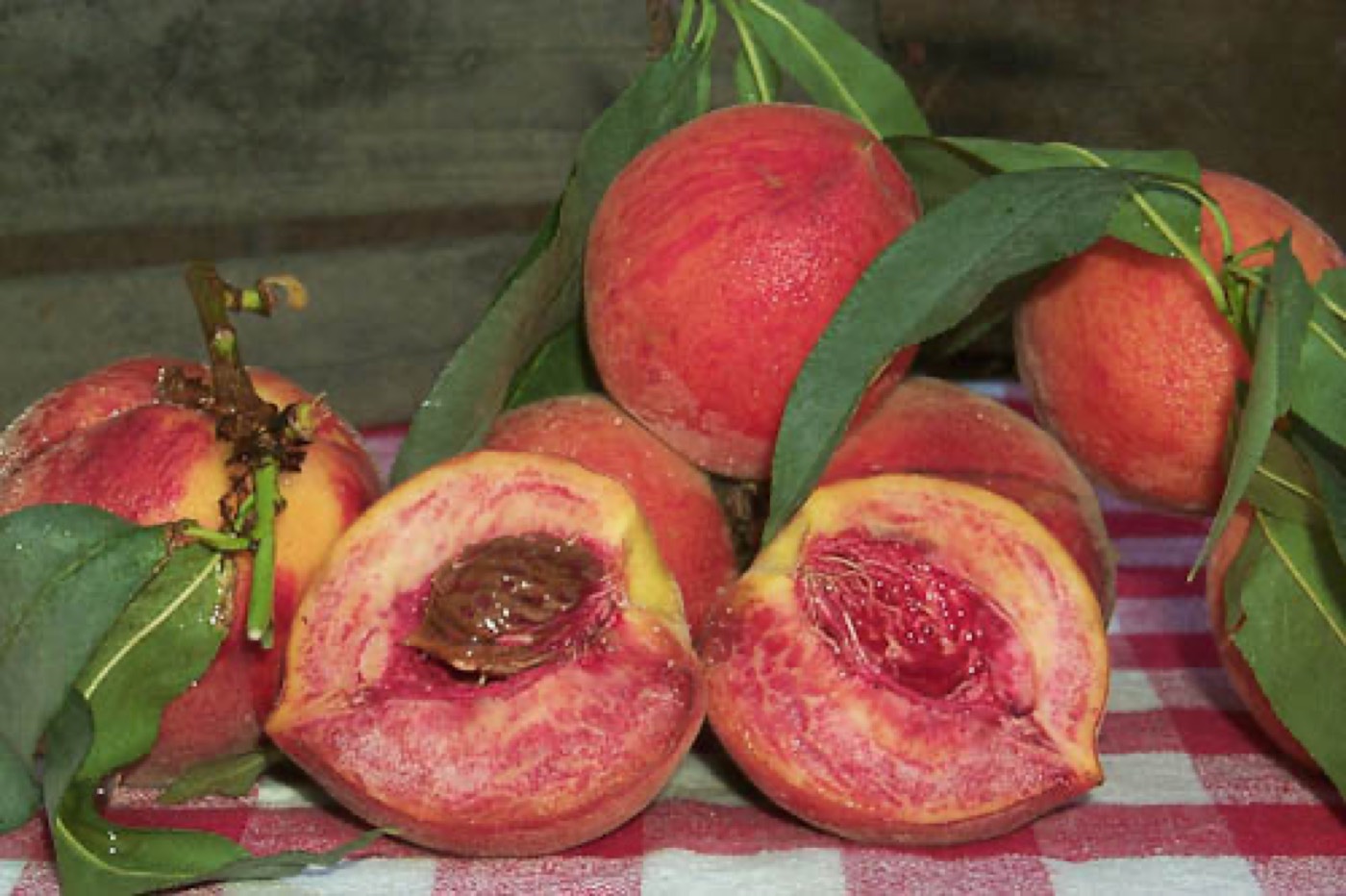
Peaches
One of the first peaches you can pick in Phoenix, usually ripening in mid May before the heat builds. It is a yellow clingstone, so the flesh holds to the pit, but it is sweet and well flavored for such an early fruit. It bears heavily, so thin it, and skip it at mid elevation, where its early bloom meets frost.
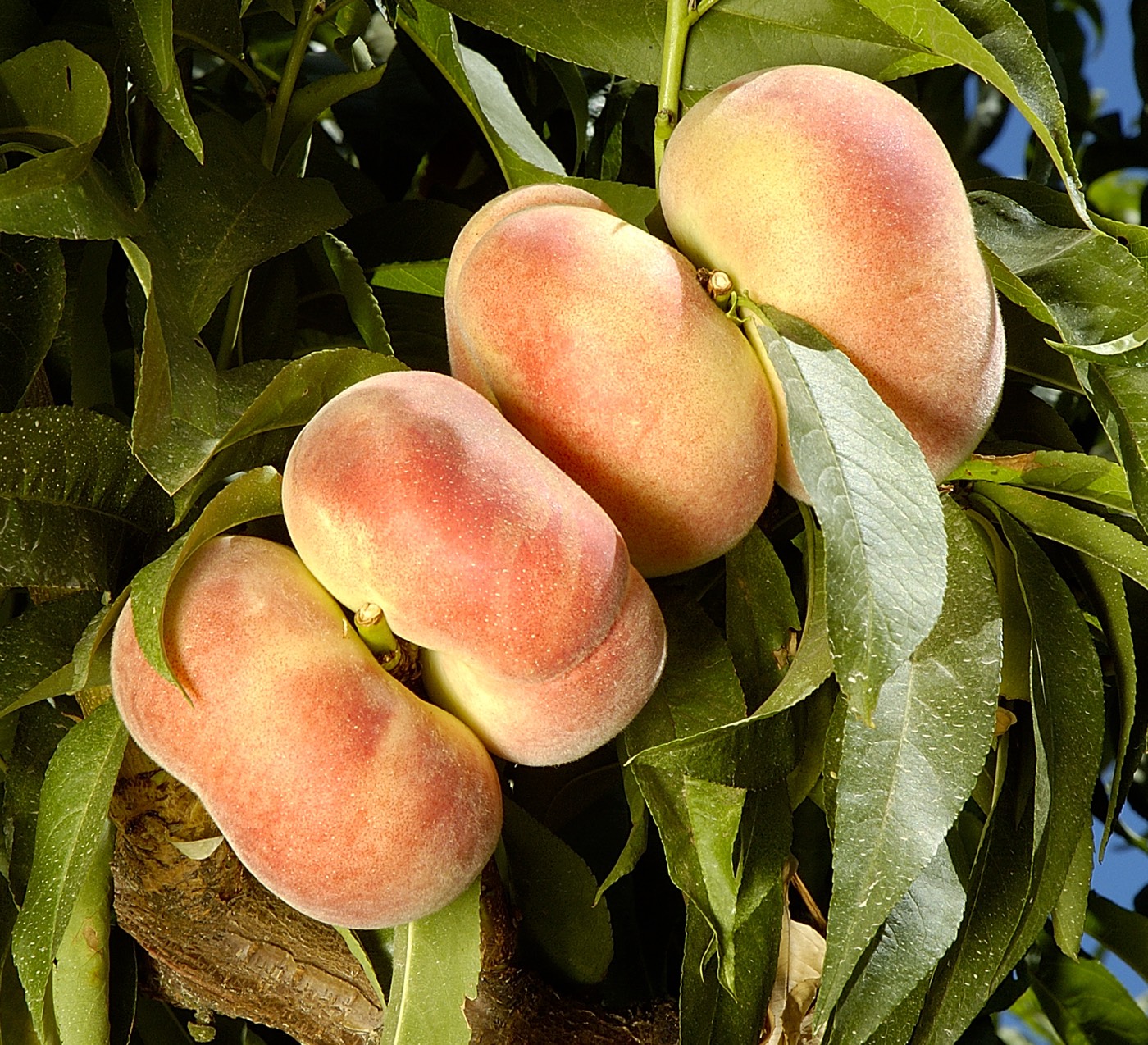
Peaches
A flat, doughnut-shaped white peach, sweet and mild with a hint of almond. It needs only 200–300 chill hours, so it does well in the Phoenix area and ripens before the worst heat. The fruit is tender, so pick it when it gives slightly and handle it gently.
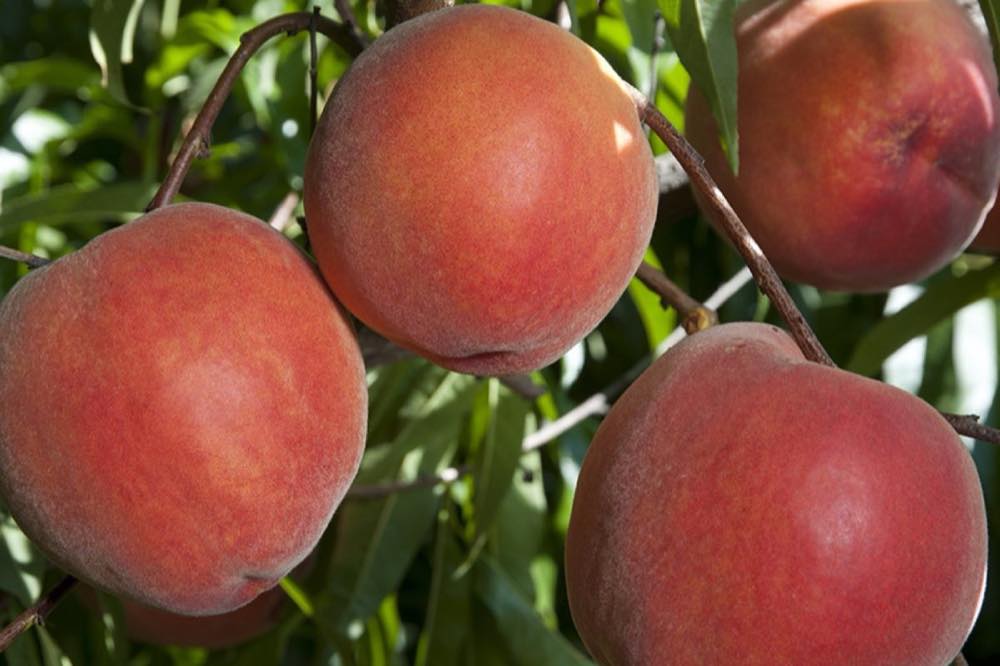
Peaches
A flowering and fruiting peach with showy double pink blossoms in late winter, followed by large yellow freestone fruit. It needs 300–400 chill hours, the upper end for Phoenix, so it does best in normal to cool winters. It blooms later than most low-chill peaches but ripens early, which is handy in the desert.
Peaches
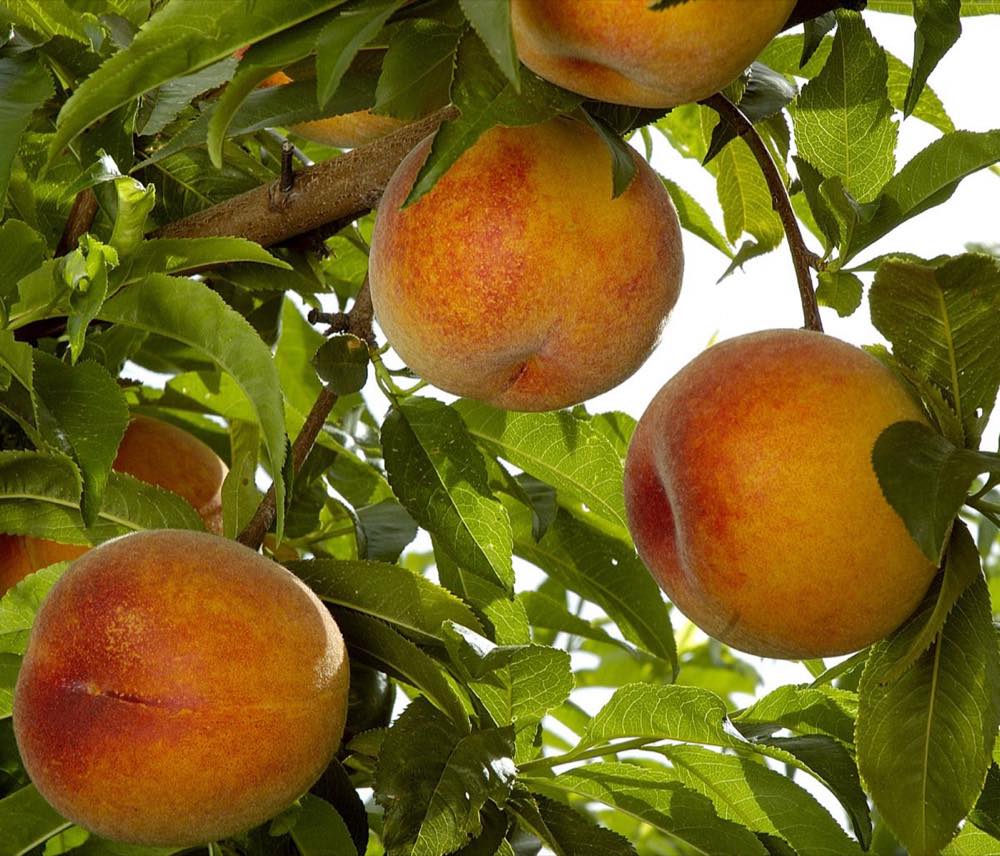
A full-flavored, juicy yellow semi-freestone bred for mild winters that ripens early, in late May to mid June in the low desert. At 300–350 chill hours it is near the top of what Phoenix reliably gets, so it suits normal to cool winters best. It blooms very early, so keep it out of the mountains.
Peaches
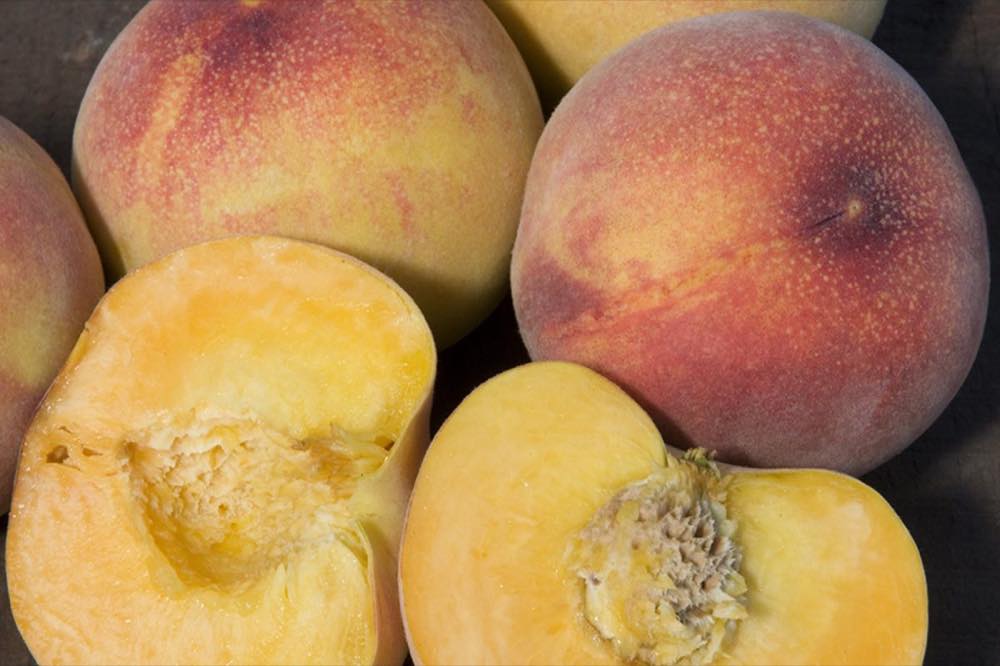
A medium-sized yellow semi-freestone from the Gulf Coast of Texas that ripens in early to mid May, well ahead of the heat. It needs about 300 chill hours and has a long record in Arizona, so it is a safe choice for Phoenix. The fruit is not huge, so thin it to get decent size.
Peaches
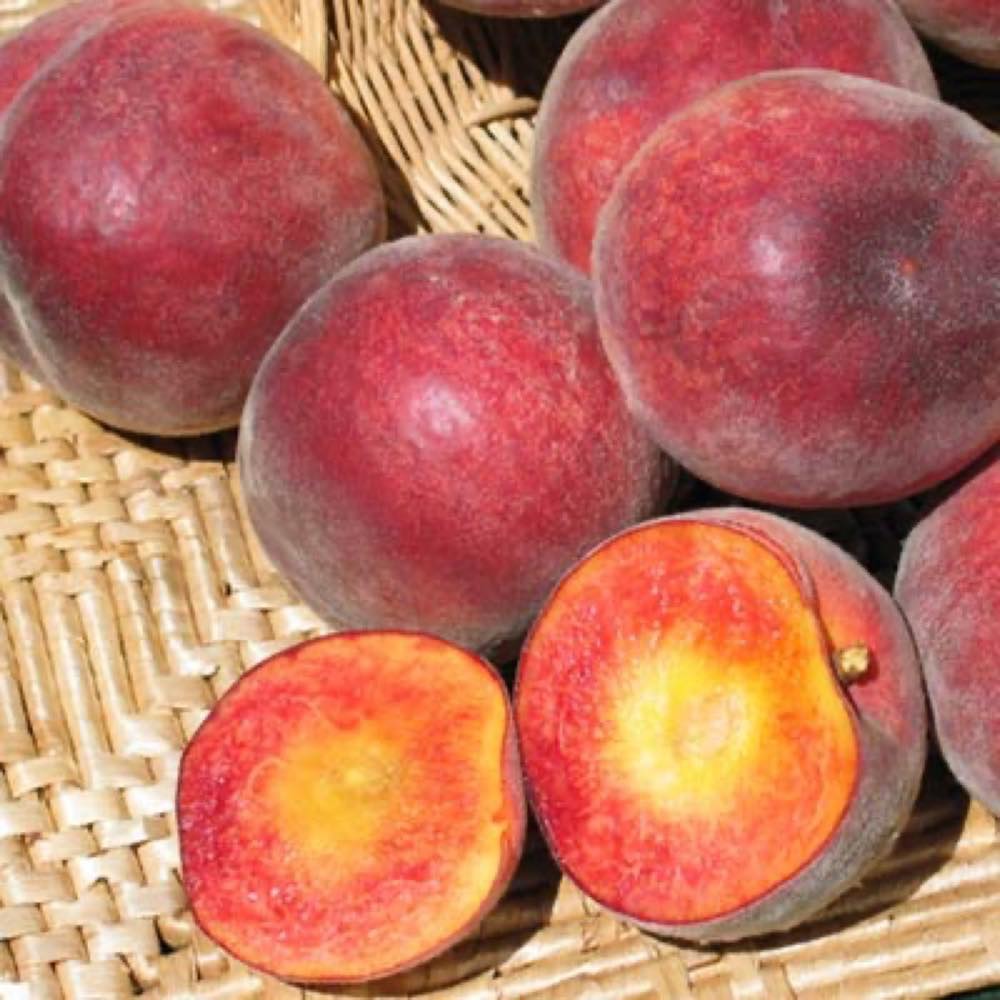
A very early yellow freestone with a nice balance of sugar and acid, ripening before the heat arrives. It is rated 500 hours or less (one source says 450), which is more than Phoenix gets in many winters, so it fits best in cooler low-desert spots such as lower Tucson, and bloom can be thin in a mild winter. At mid elevation its early bloom is a frost risk.
Peaches
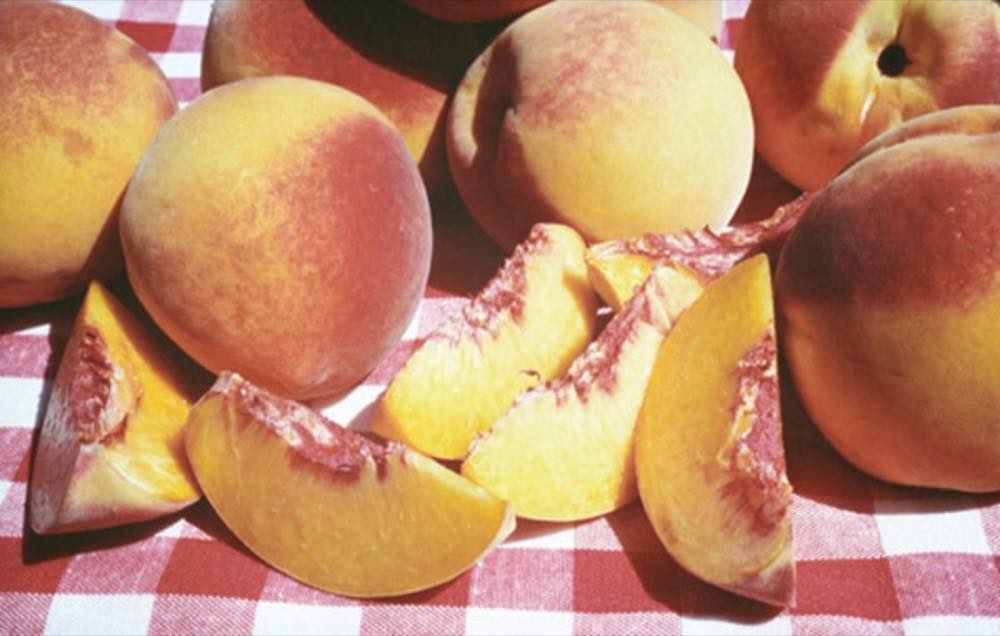
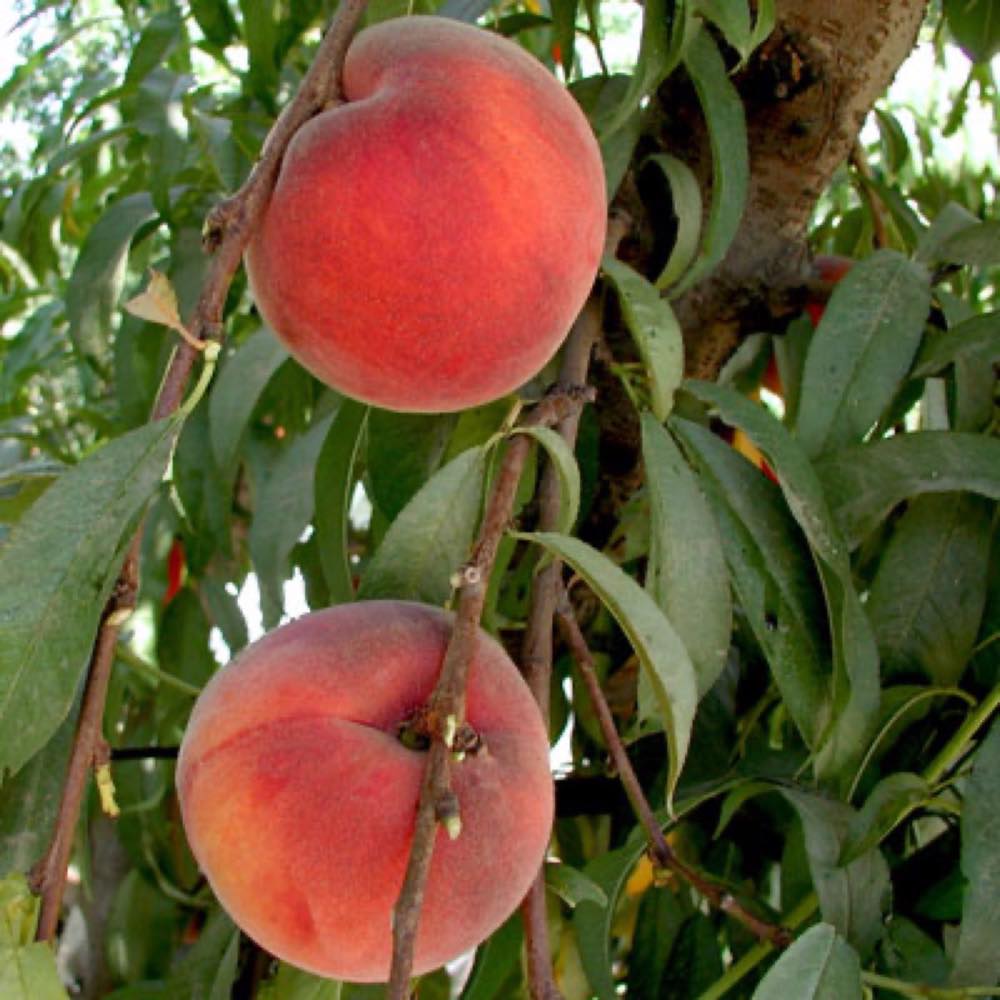
The classic yellow freestone, with rich old-fashioned peach flavor that is good fresh, canned or frozen. It needs about 600 chill hours, so it belongs at mid elevation and is too much chill for the low desert. Thin it hard each year so the branches can carry the load.
Peaches
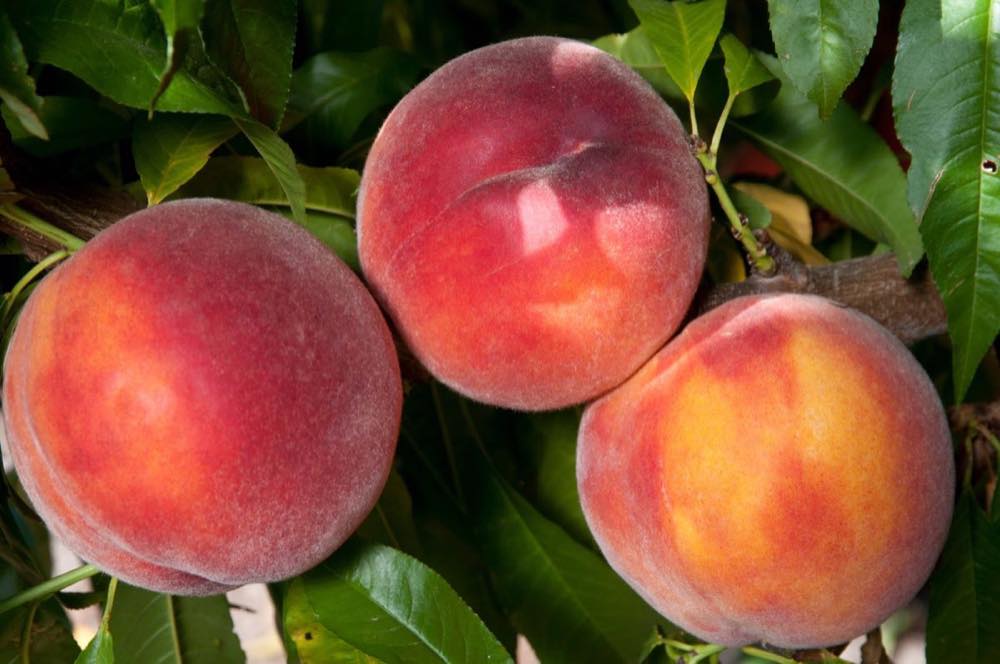
A large, firm yellow freestone with bright red at the pit, long a favorite for the fresh market. It needs 700–800 chill hours, so it is for mid elevation yards and not Phoenix. Nemaguard rootstock are less cold hardy than Lovell, so this one suits Verde Valley, Globe or Sierra Vista better than Prescott or Payson.
Peaches
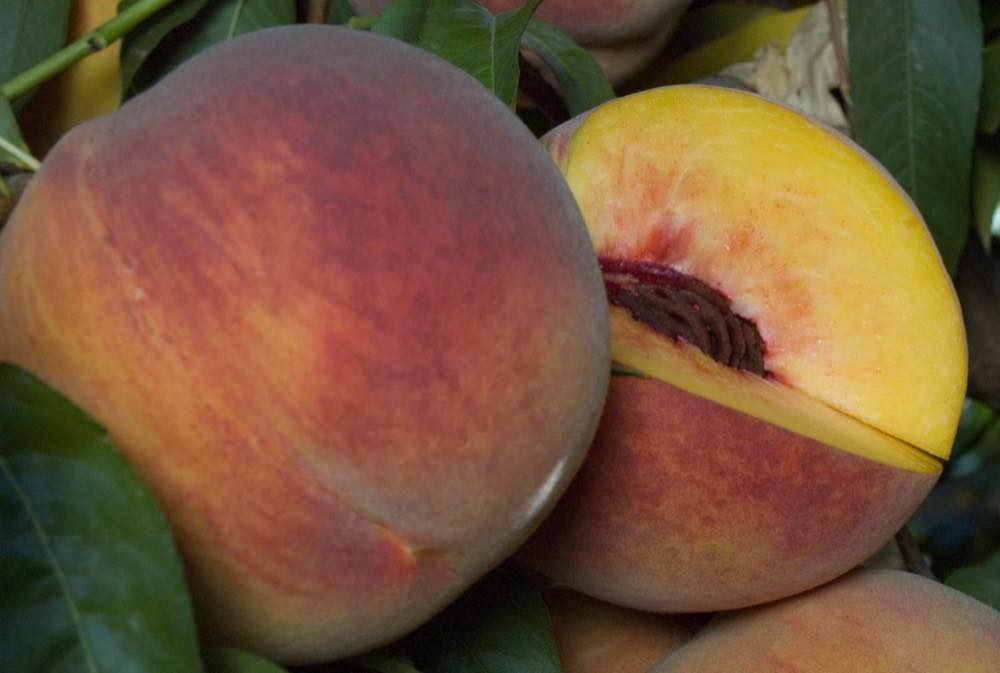
A fine-flavored yellow freestone with a very low chill need and a red marbling through the flesh. It ripens through May in the low desert and is a heavy producer, so thinning is the main job. It is a dependable first peach for a Phoenix yard and sets fruit on its own.
Peaches
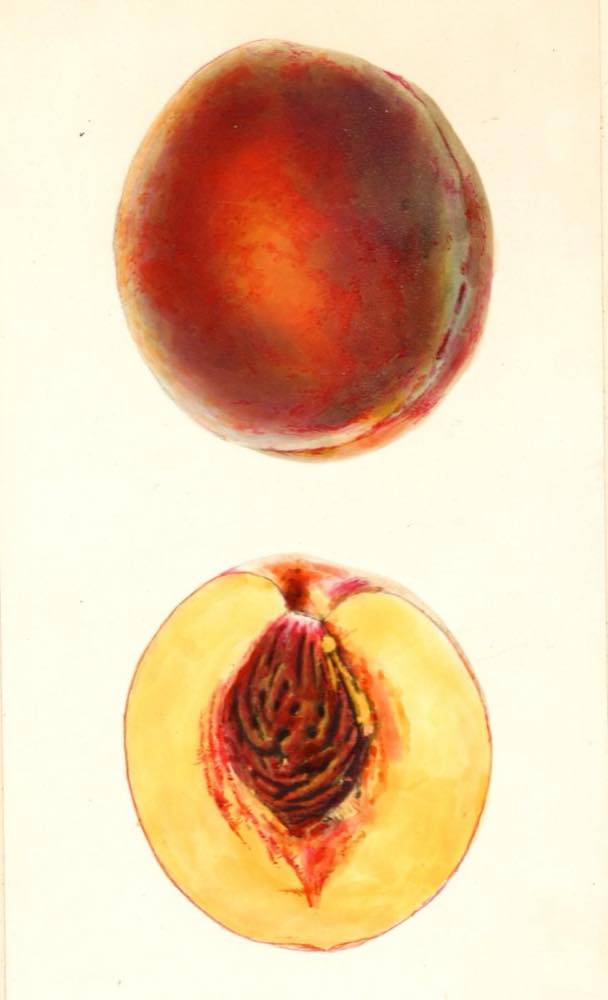
A very large yellow freestone with excellent flavor that ripens very late, in mid September in central California. It fits the warmer end of mid elevation, where chill is plentiful and fall stays frost-free late. At 400–500 hours it blooms early, so a spring freeze can cost the crop, and in the low desert the chill is marginal and fruit would finish in summer heat.
Peaches
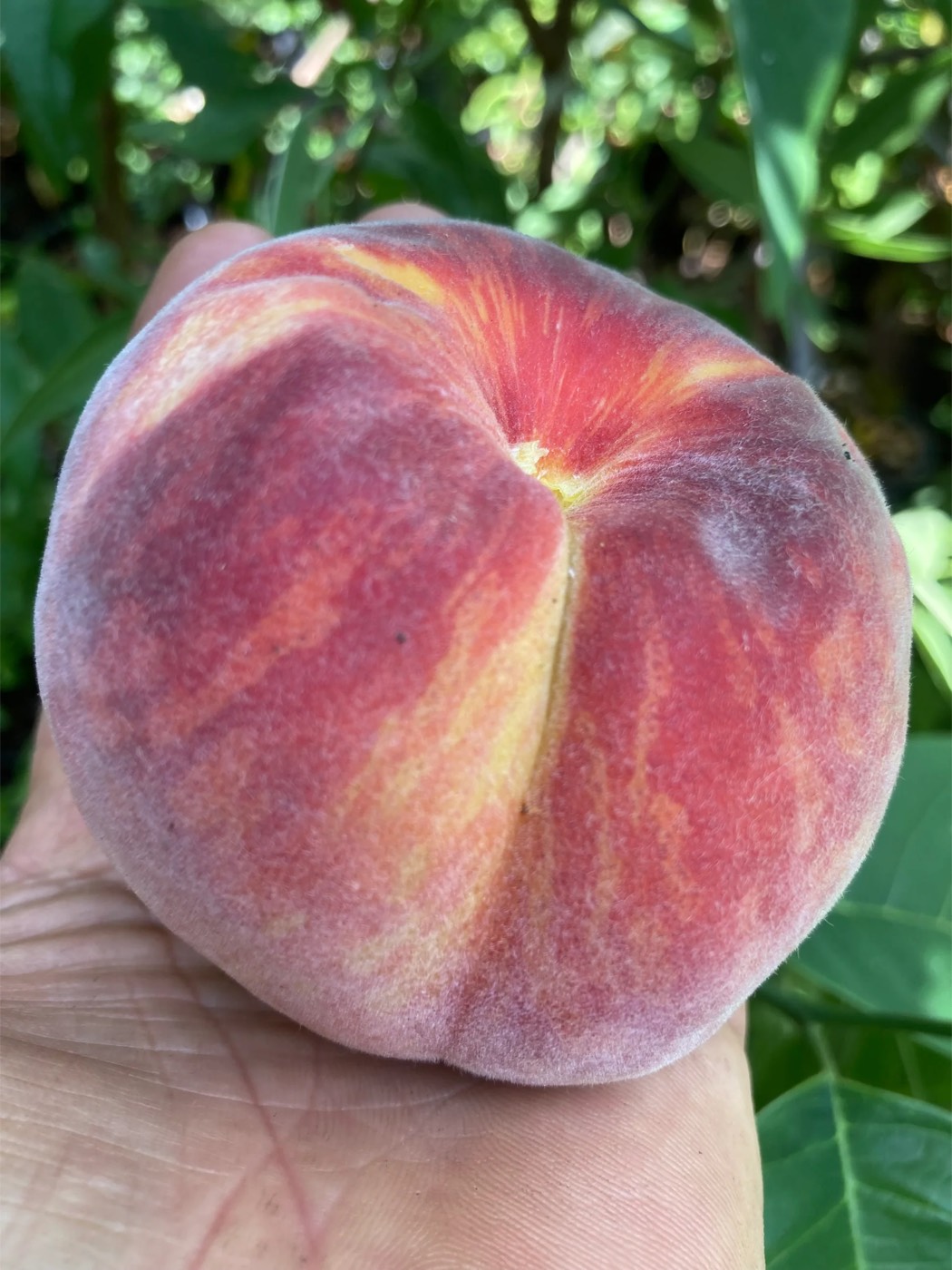
A popular yellow freestone, juicy and moderately sweet, that ripens right alongside Elberta. It needs about 700 chill hours, so it suits mid elevation yards and not the low desert. It is a good canning and freezing peach, and it needs thinning so the limbs can carry the load.
Peaches
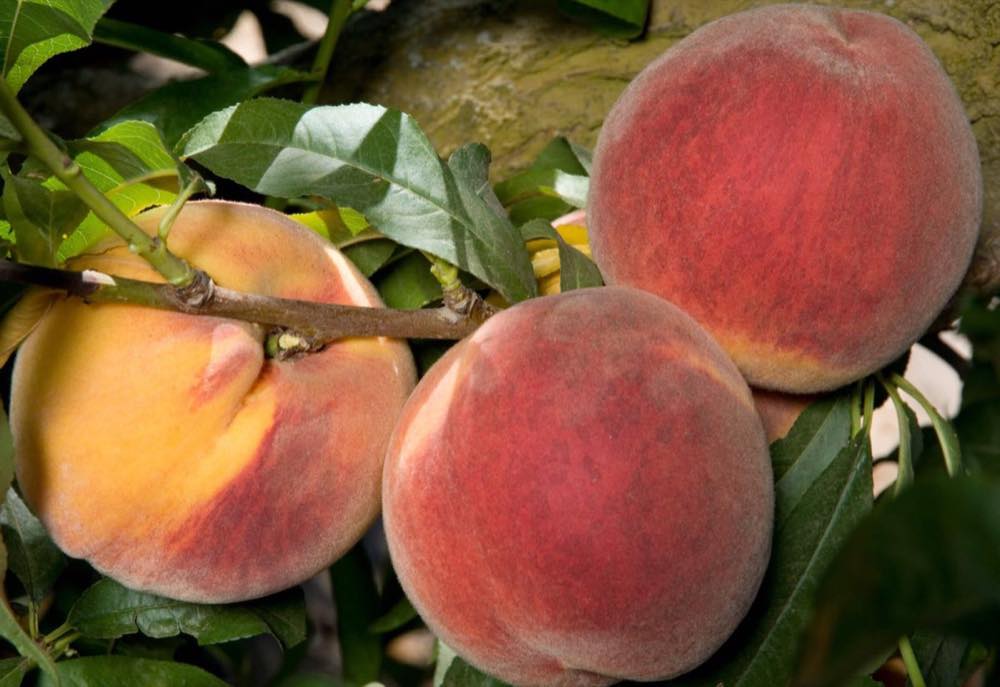
An exceptionally early peach from Florida that has a long record in the low desert, with flavorful yellow semi-cling fruit in late April and early May. It needs only about 150 chill hours, and it handles desert heat better than Desert Gold, with larger fruit. It blooms very early, so it is not for mid elevation.
Peaches
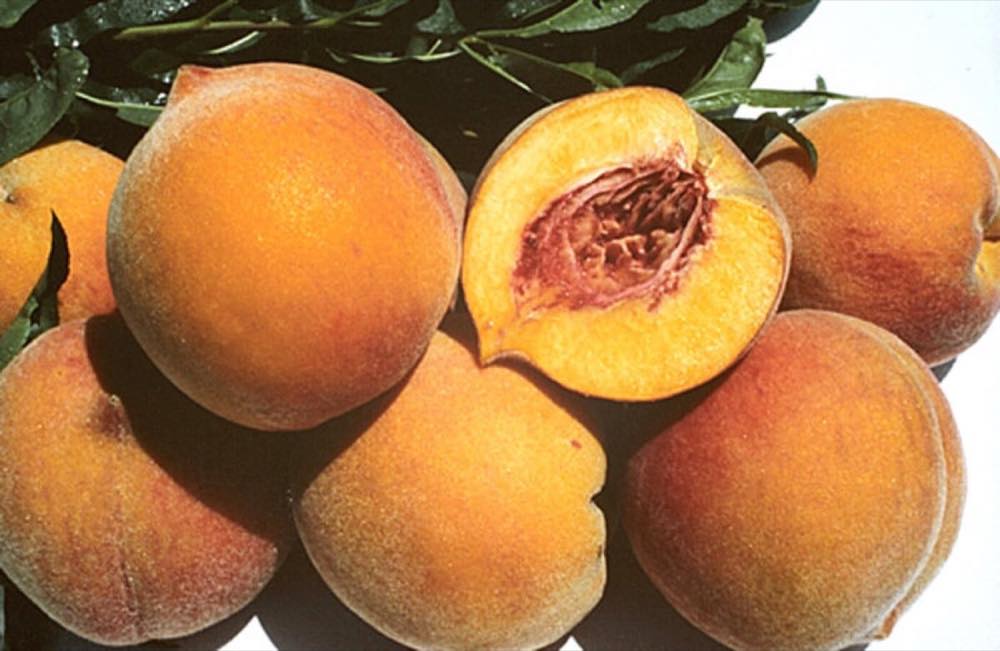
A large yellow freestone with the fine dessert quality of its parent J.H. Hale, ripening about a week before Fay Elberta. It needs around 700 chill hours, so it fits mid elevation and not Phoenix. Unlike J.H. Hale, it sets fruit on its own, so you do not need a second tree.
Peaches
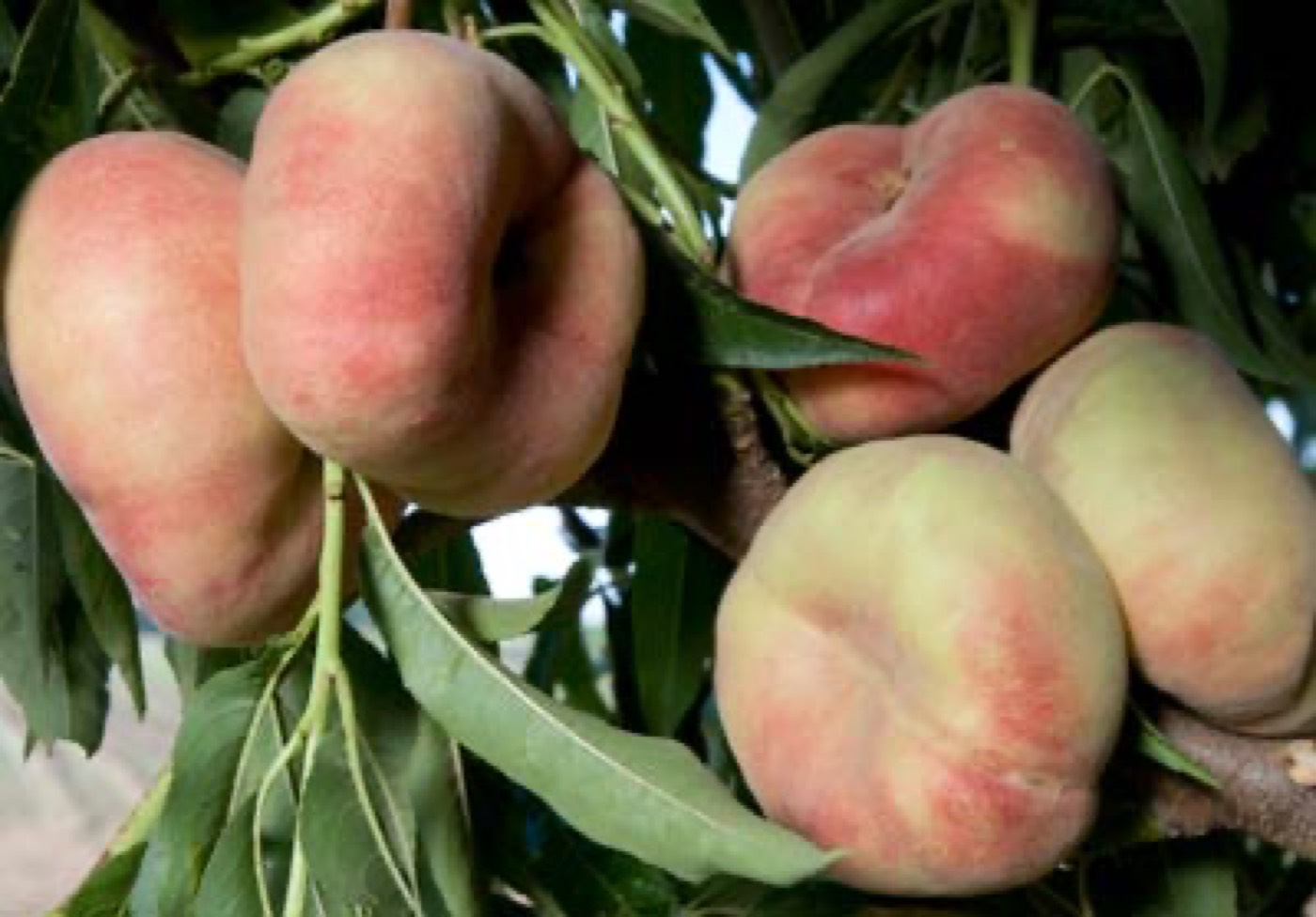
A heavy-bearing yellow freestone that stayed clean of peach leaf curl through ten years of Washington State trials, which is a real help in cool, damp springs. It needs about 700 chill hours and does well from mid elevation up into the high country. It is good fresh or canned, and it needs thinning for size.
Peaches
A flat, saucer-shaped white peach, larger than the Donut peach at about 6 ounces, with sweet, flavorful flesh. Published chill runs from 450 to 600 hours, so it fits mid elevation, where a late freeze on the early bloom is the risk. In the low desert that chill is marginal, and the Donut peach is the safer flat peach there.
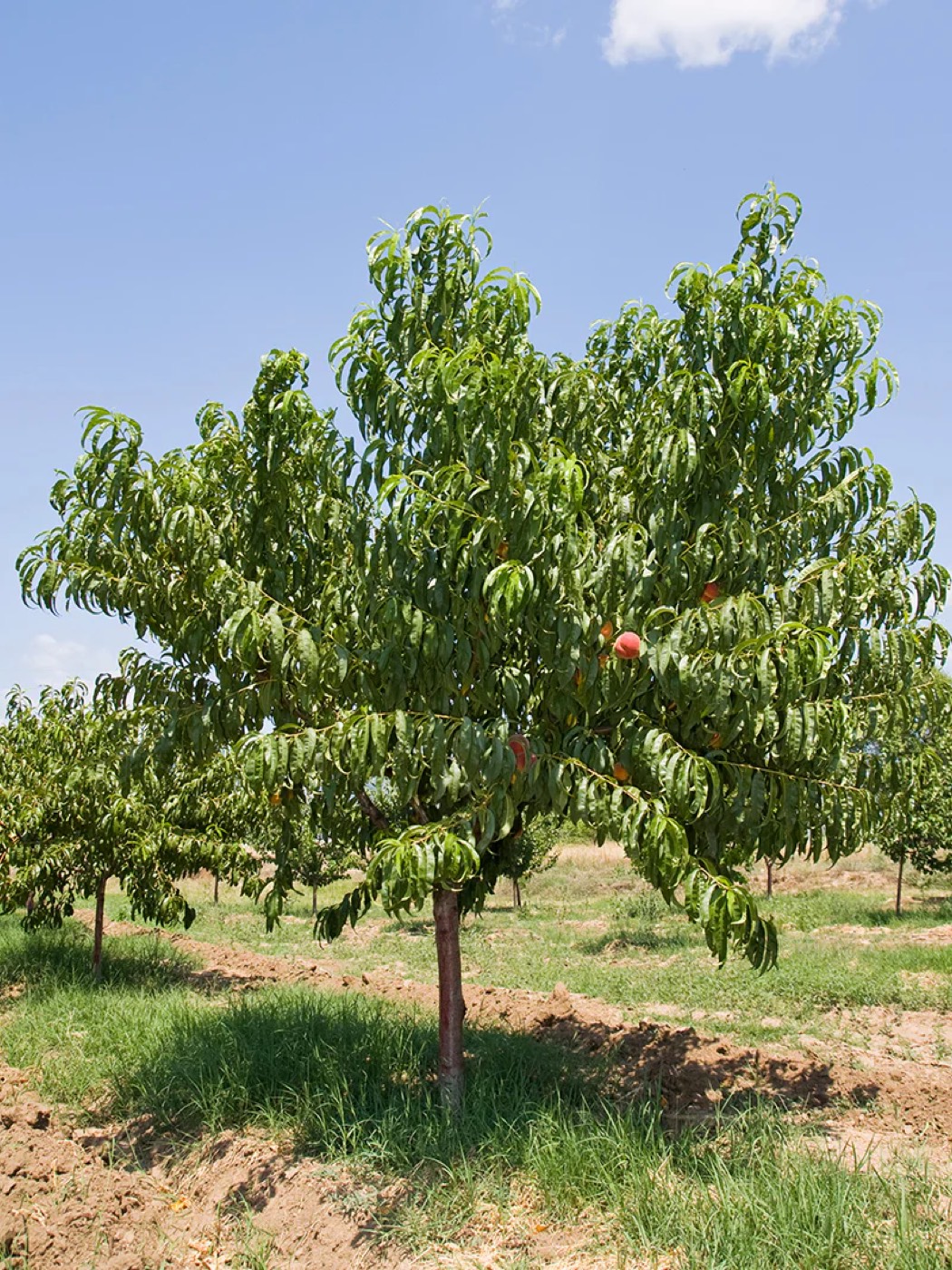
Peaches
A large, red-skinned white freestone, sweet and aromatic and very close to Babcock in flavor. At 500 chill hours it fits mid elevation, and its Babcock family is not among the very earliest bloomers, though a hard freeze can still cost a crop. In the low desert it needs more winter than Phoenix reliably gives, so plain Babcock is the safer white peach there.
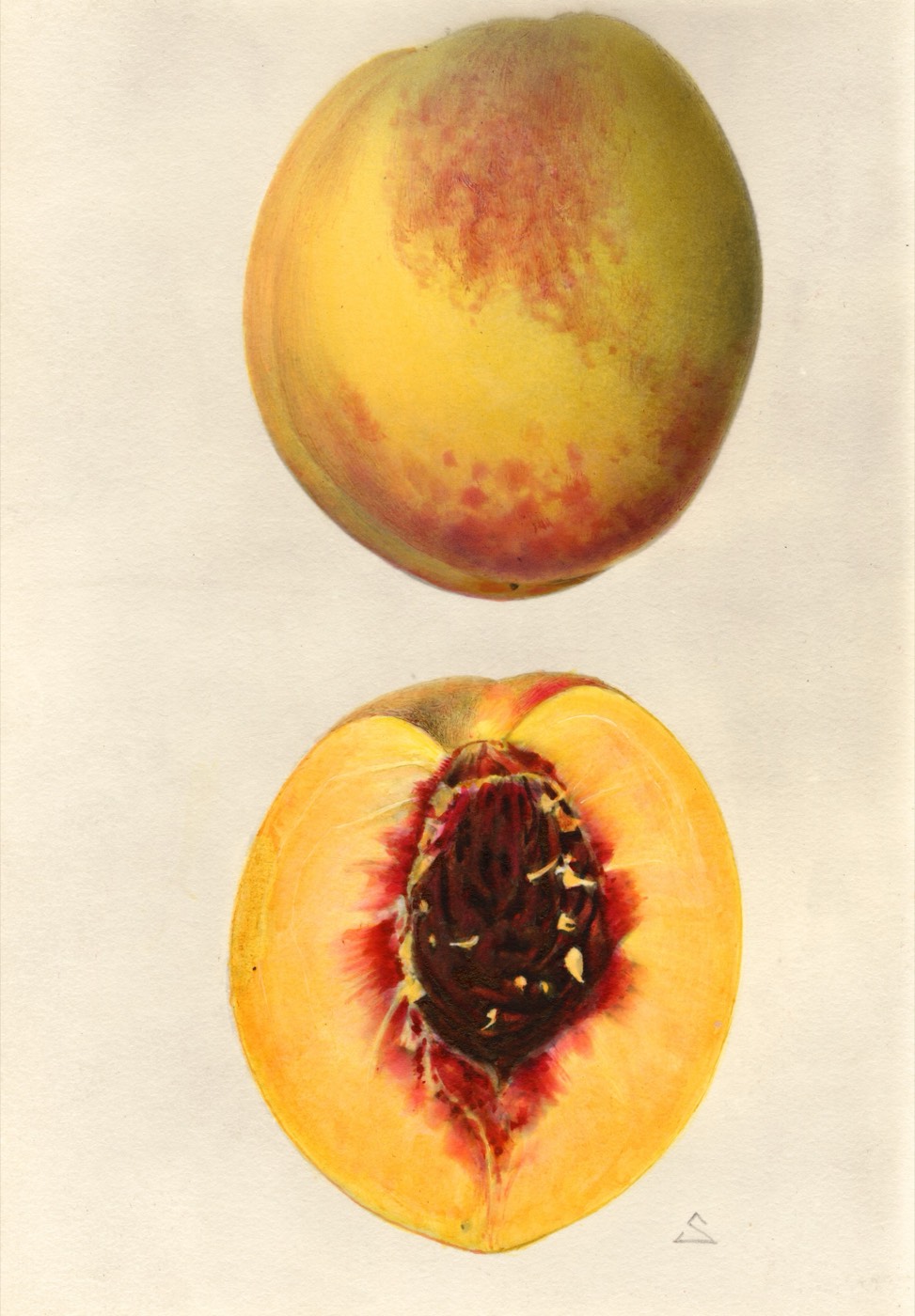
Peaches
An earlier strain of Elberta, sold as Improved or Lemon Elberta, that ripens about ten days ahead of it. It is a big yellow freestone with classic peach flavor and needs about 800 chill hours, so it belongs at mid elevation. A late spring freeze is the main thing that can cost the crop.
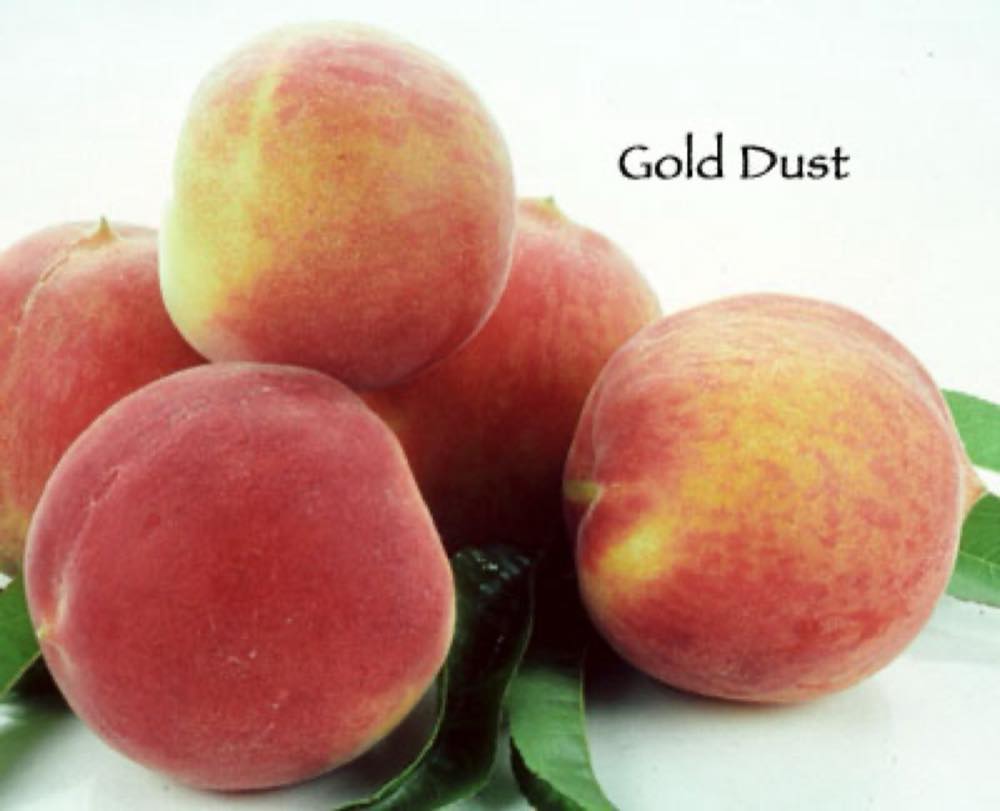
Peaches
A very flavorful early yellow semi-freestone that ripens a few weeks ahead of Redhaven and scores well in taste tests. It is not an early bloomer, which matters where late frosts are a worry. At 550 chill hours it suits mid elevation, and it is too much chill for most of the low desert.
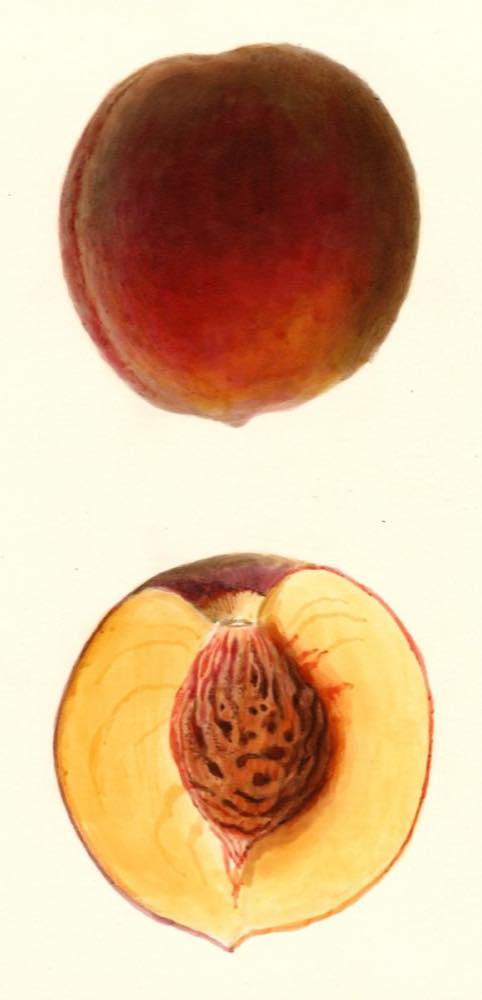
Peaches
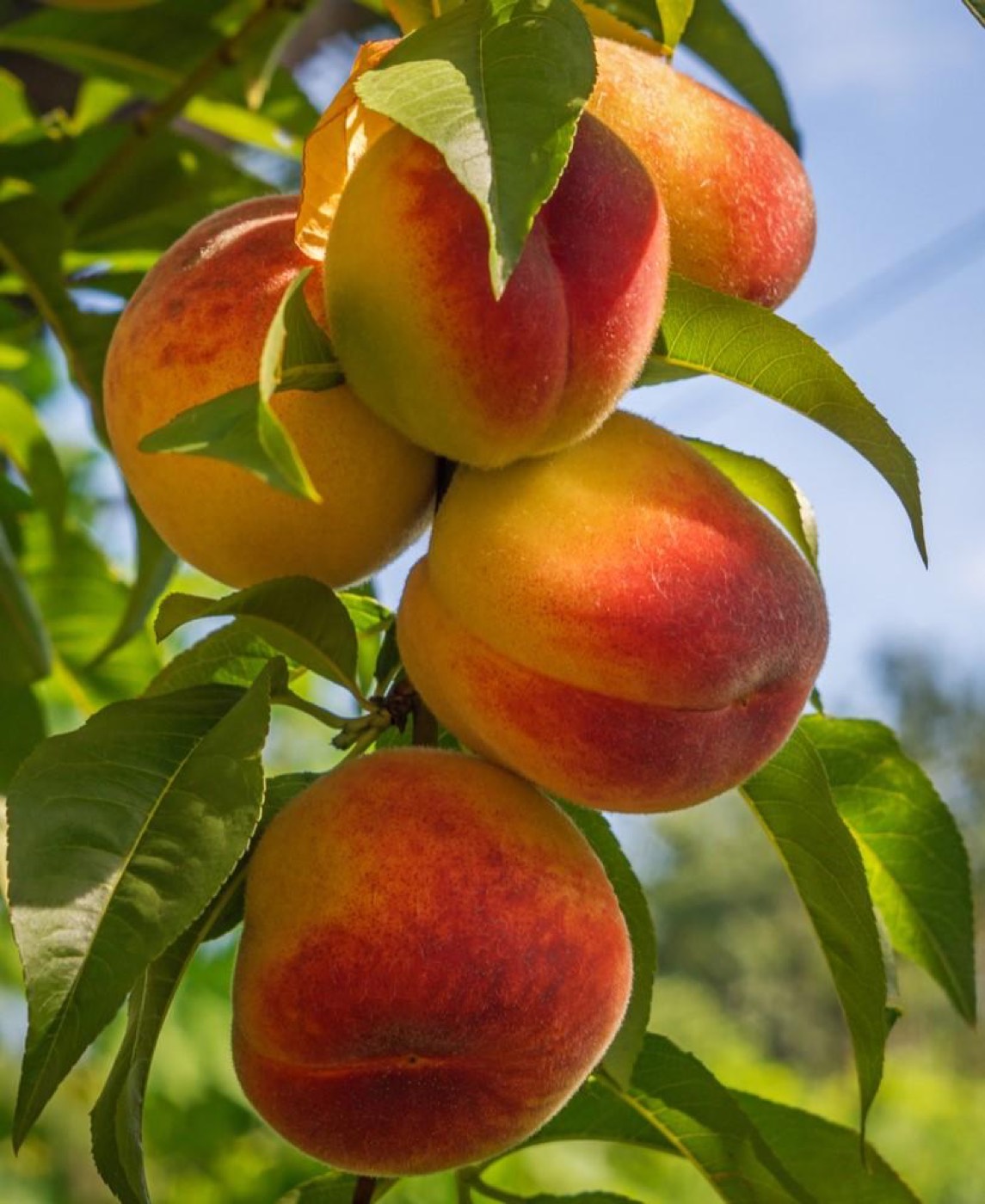
A medium to large yellow freestone, juicy, sweet and low in acid, that is both winter and frost hardy. It ripens about two weeks before Elberta, which suits shorter summers. At 900 chill hours it fits mid elevation and the lower high country, not the low desert.
Peaches
A red-skinned, medium yellow freestone with sweet flavor and flesh that does not brown, from the same Canadian breeding as Canadian Harmony. It ripens a few days after Redhaven, early enough for short mountain summers. It needs about 800 chill hours, so it is a mid elevation and high country tree, not a Phoenix one.
Peaches
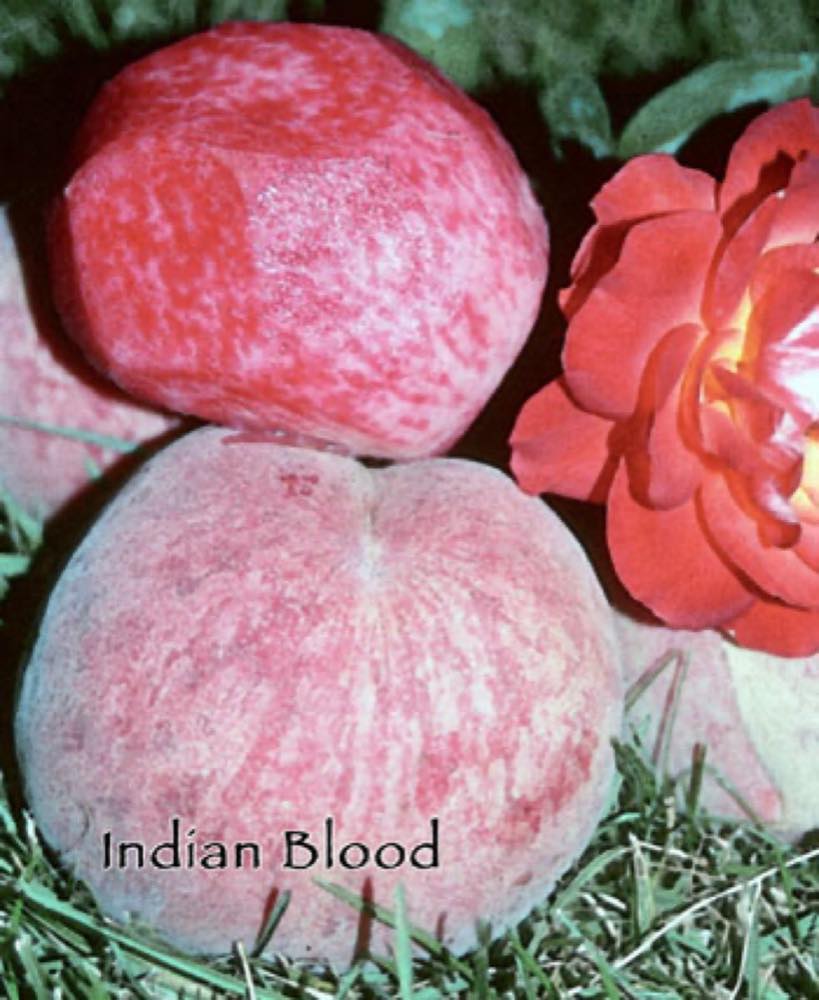
An old red-skinned, red-fleshed clingstone with rich flavor, grown mostly for canning, jam and cooking. It blooms late and sets heavy crops, a good trait in frost country. It needs about 800 chill hours and ripens late, so give it a spot with a long frost-free summer at mid elevation.
Peaches
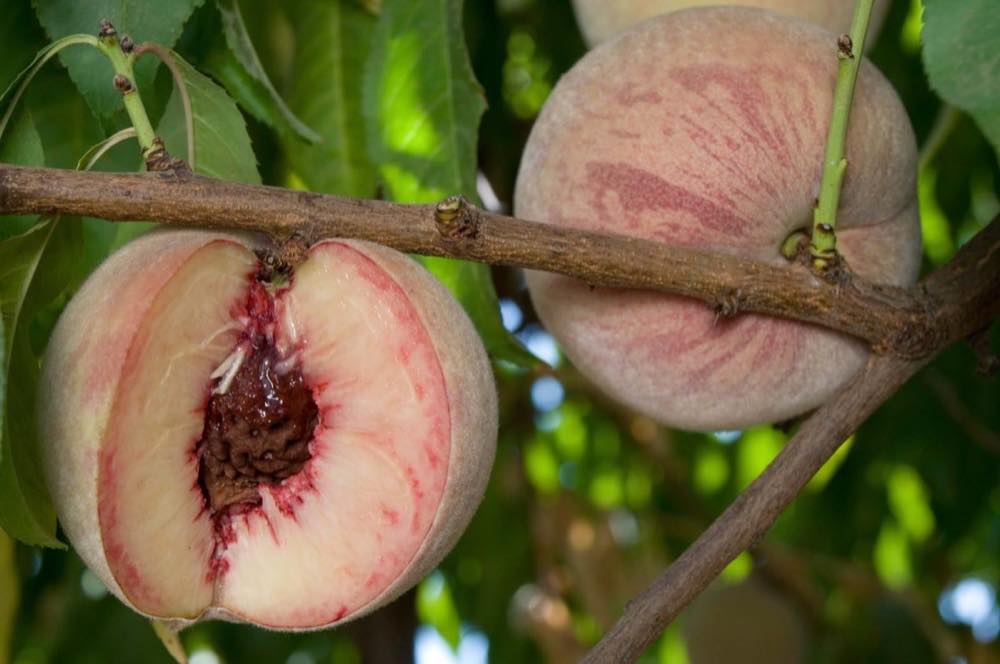
A taste-test winner with large, crimson-and-cream freestone fruit that is tart until fully ripe, then richly aromatic, and it resists peach leaf curl. It is on the University of Arizona's list for backyard fruit at 3,500 to 6,000 feet, but its pollen is sterile, so plant a second peach nearby. At 700 chill hours it is not for Phoenix.
Peaches
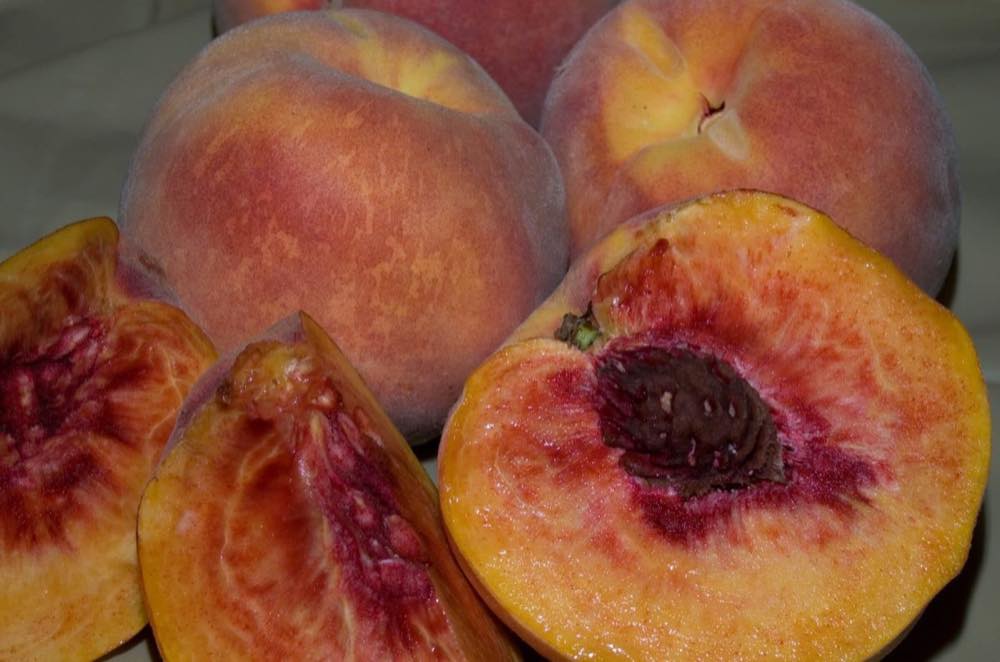
An old variety with very large, firm yellow freestone fruit and a superb flavor that has kept it in orchards for a century. It will not set fruit alone, so plant another peach that blooms at the same time. It needs about 800 chill hours, so it suits mid elevation and not the low desert.
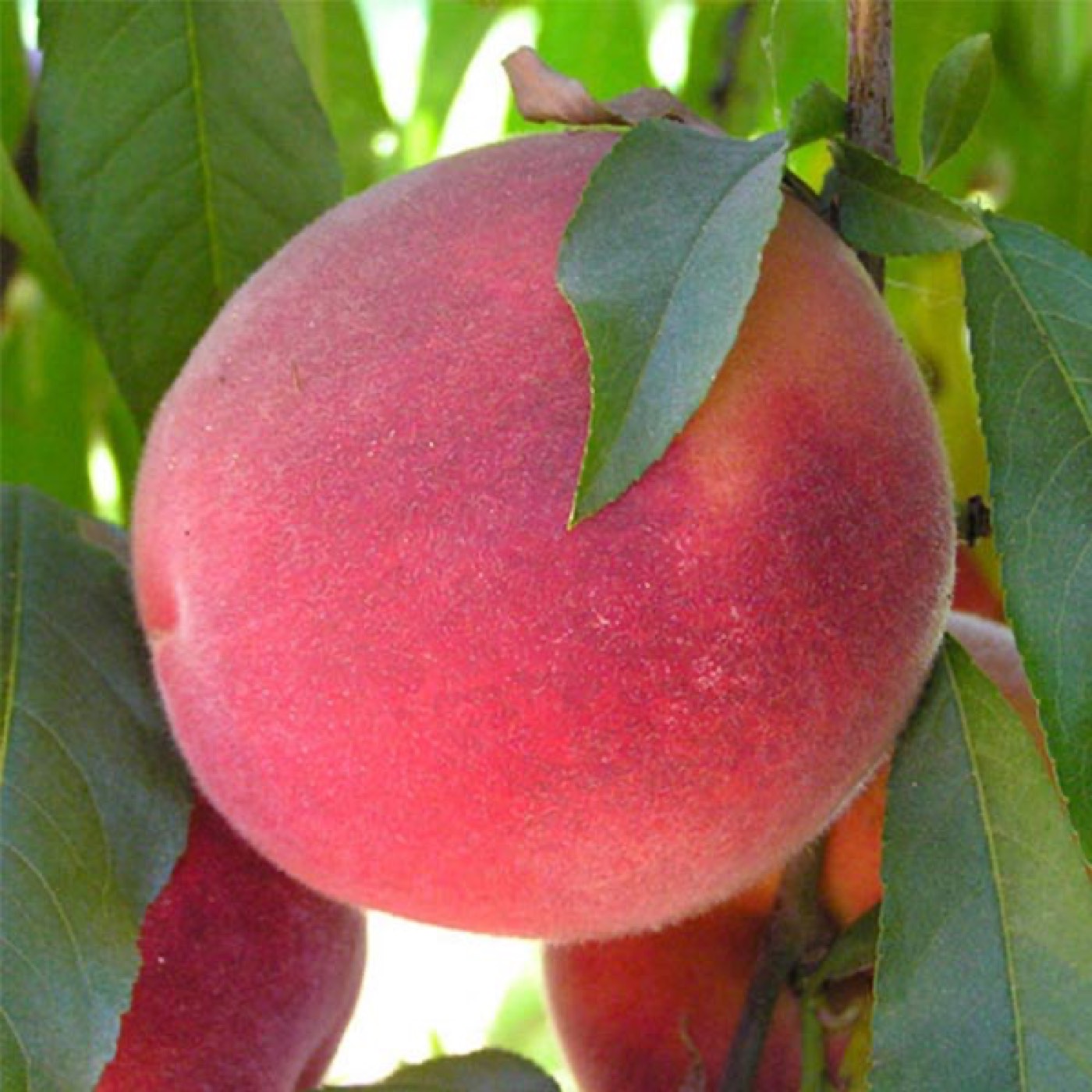
Peaches
A large yellow freestone with a red blush and very good flavor, from a Texas breeding program built for warm winters. At 450 chill hours it fits the warmer end of mid elevation, where a spring freeze on the early bloom is the main risk. It may also work in the cooler corners of the low desert, but 450 hours is more than Phoenix gets in many winters.
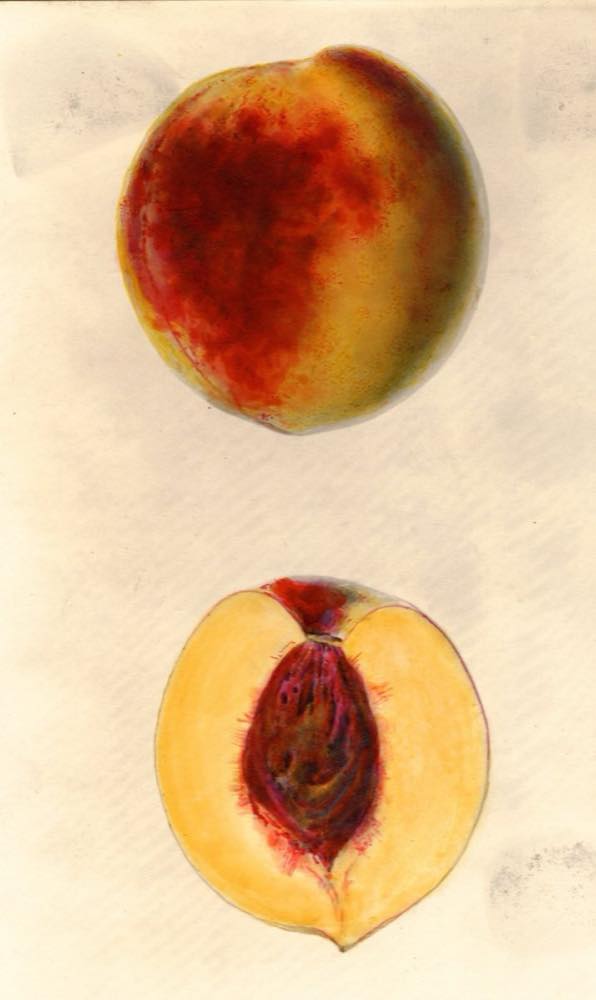
Peaches
An early strain of Elberta, also sold as Early Elberta, with juicy, sweet yellow freestone fruit and a record of reliable heavy crops. At 400–500 chill hours it suits the warmer end of mid elevation, where a late freeze on the blossoms is the main risk. It is marginal for chill in the low desert.
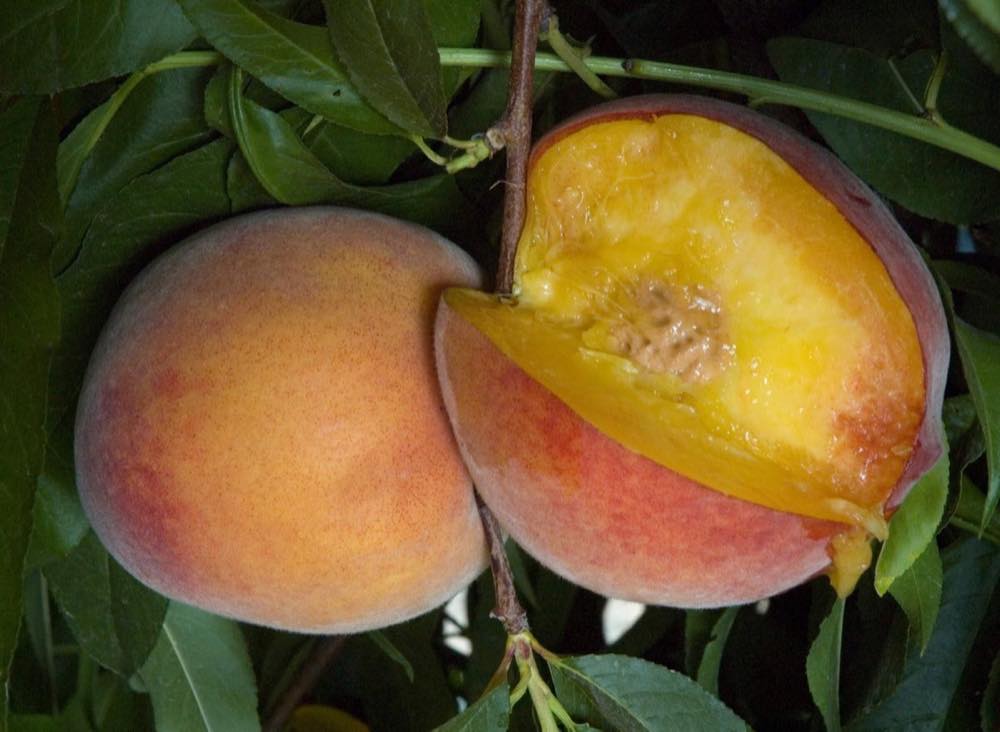
Peaches
A large, firm, red-skinned yellow freestone that ripens a week or so before Redhaven, so it is one of the earlier peaches for mid elevation. It needs about 600 chill hours and has frost-hardy blossoms, which helps in spring cold snaps. It is too much chill for Phoenix.
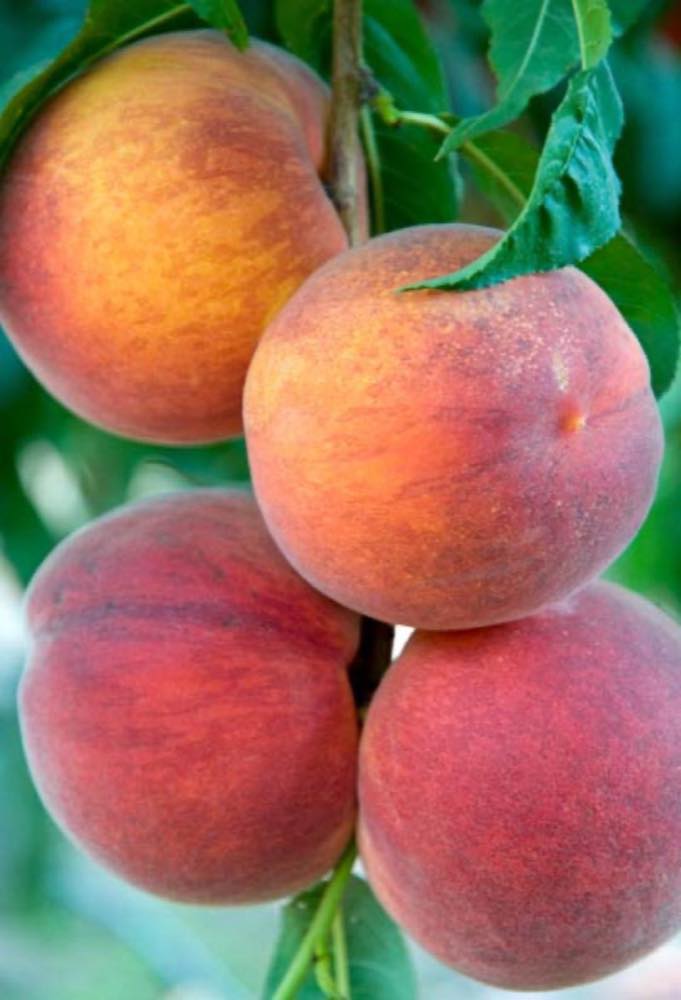
Peaches
A late-summer yellow peach known for steady heavy crops, large fruit and a true peach flavor with good sugar-to-acid balance. Low-chill trials put it under 500 hours, so it suits the warmer end of mid elevation, though it comes on Nemaguard rootstock only, which are less cold hardy than Lovell. Chill is marginal in the low desert.
Peaches
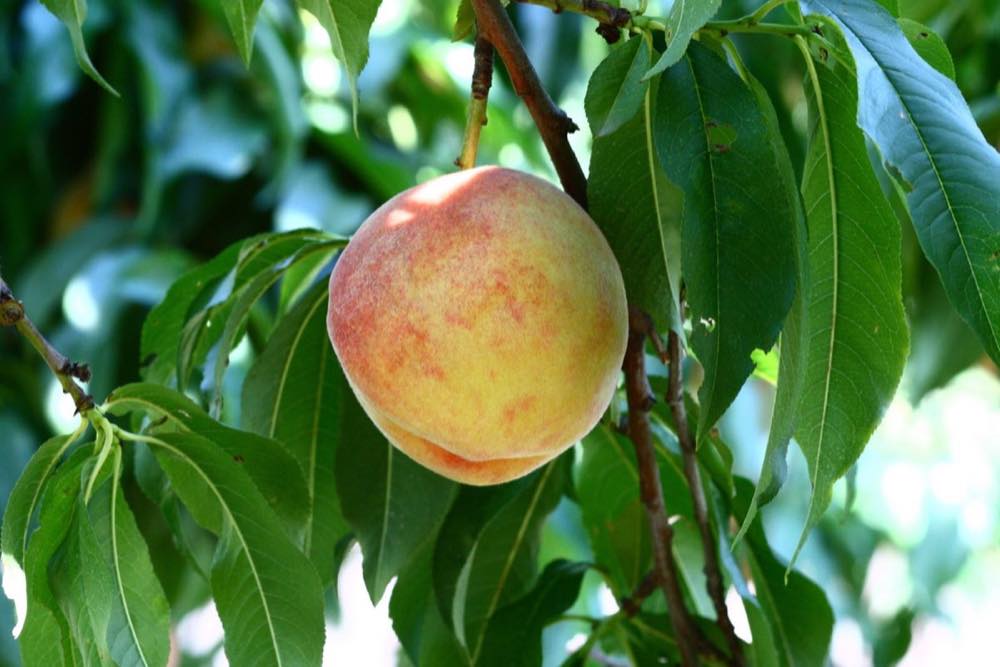
A large, firm yellow freestone with a classic peach flavor that has won taste tests. It ripens in mid to late July in central California, so expect early to mid August at mid elevation. At about 750 chill hours it belongs at mid elevation, not in Phoenix.
Peaches
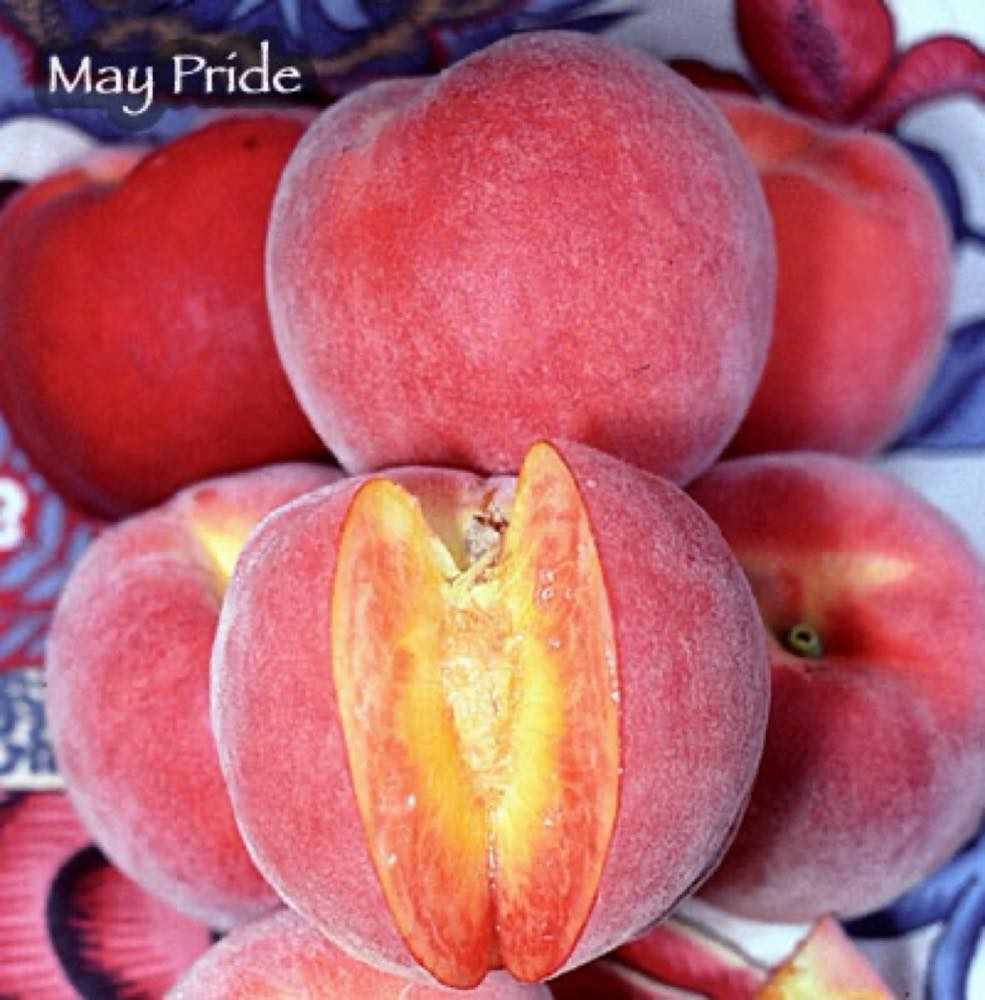
A very early, large yellow semi-freestone with a sweet, tangy flavor that ripens in May alongside Desert Gold. It needs only 150–200 chill hours and has big, showy pink blossoms in late winter. At that chill level it blooms far too early for mountain frosts, so it is a low desert tree.
Peaches
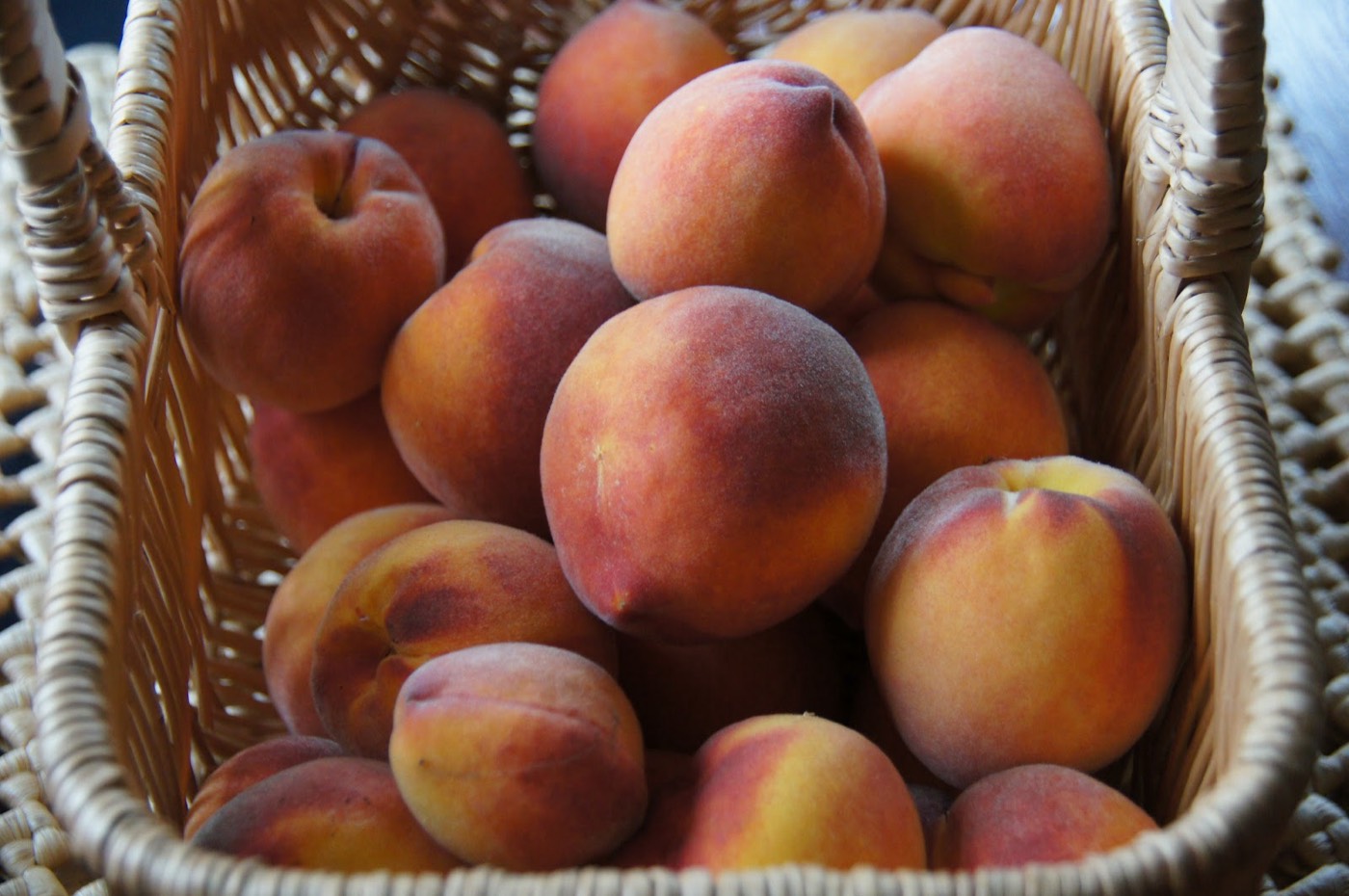
Often called the best yellow freestone for warm-winter areas, and a good second wave after the May peaches. It needs about 250 chill hours and ripens in late May and June in the low desert, ahead of the worst heat. A solid Phoenix tree for fresh eating.
Peaches
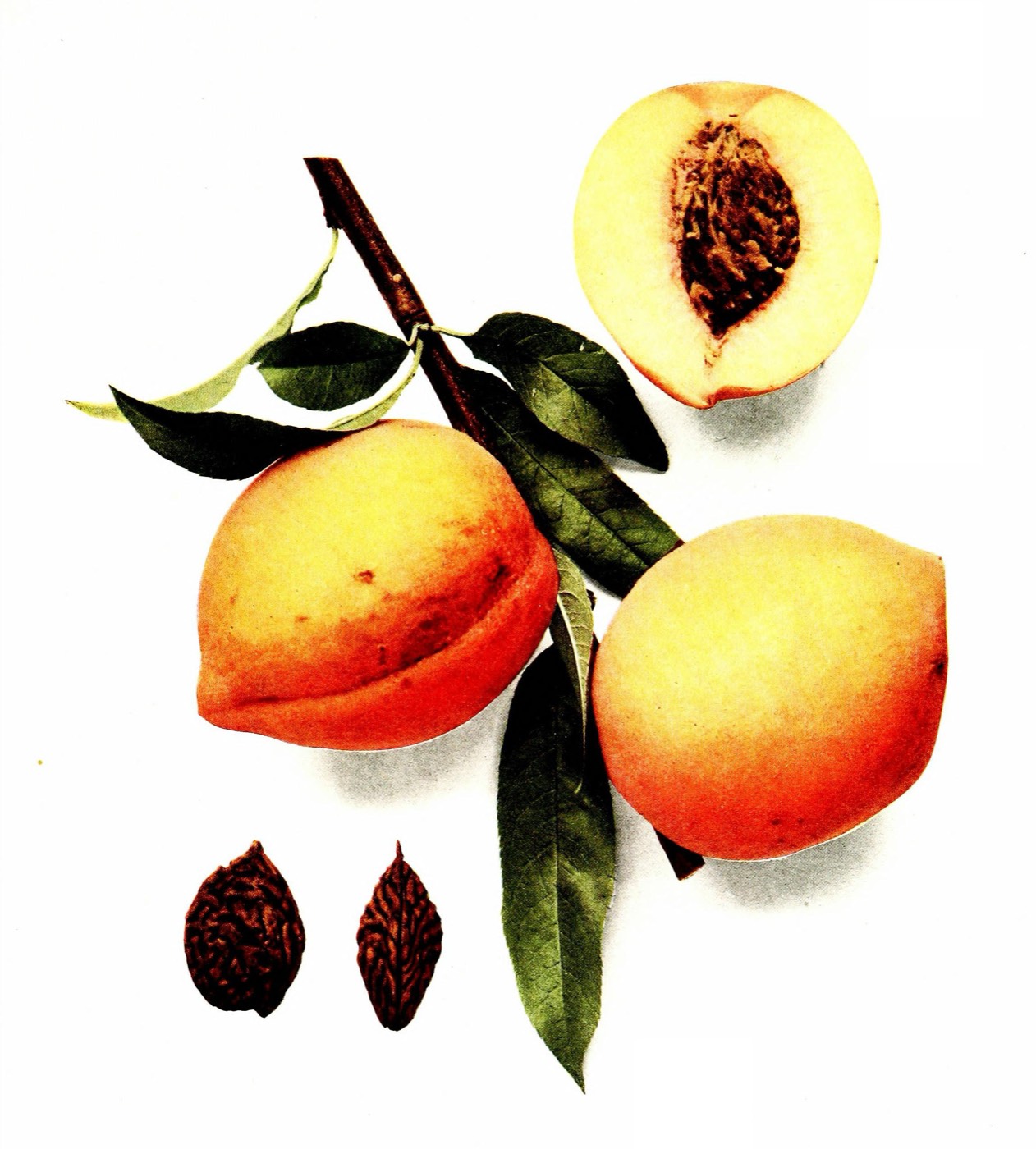
A large, dense-fleshed yellow freestone with a rich, sweet flavor that is outstanding dried. The skin is a plain greenish yellow, so judge it by taste rather than looks. It blooms late to very late and resists peach leaf curl, both useful at mid elevation, and at 600–700 chill hours it is not for Phoenix.
Peaches
One of the finest white-fleshed peaches, a medium to large freestone with dark pink blush, sweet flavor and strong aroma. It ripens about three weeks before Elberta and needs around 800 chill hours, so it suits mid elevation yards and not the low desert. Lovell rootstock give it the cold hardiness mid elevation winters ask for.
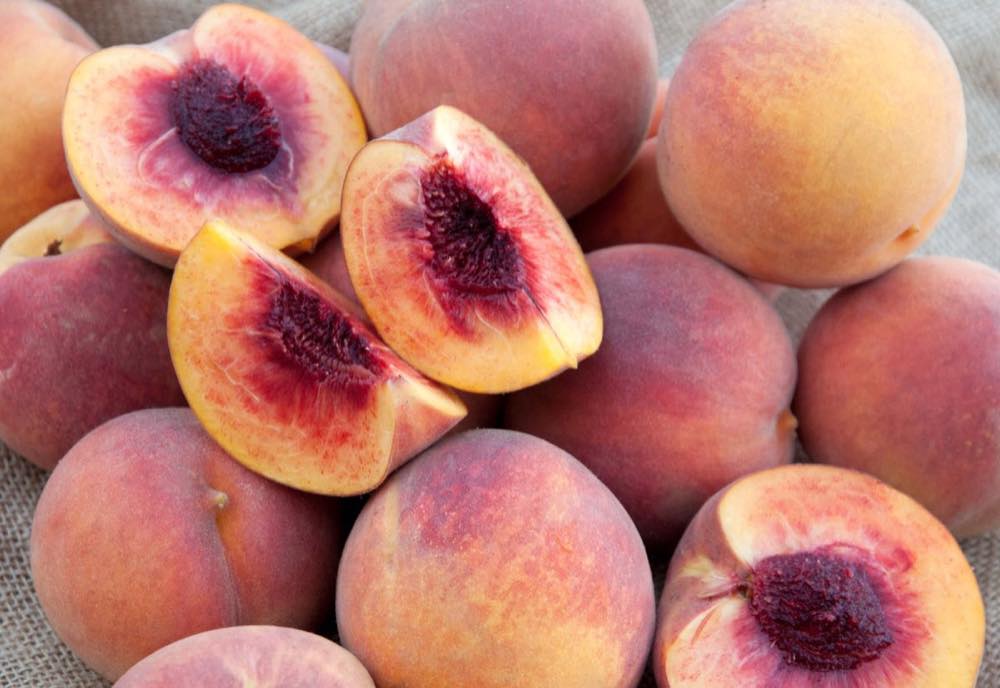
Peaches
A late, medium-sized yellow clingstone, streaked red inside, with a classic midseason peach flavor, firm skin and a heavy crop. It ripens from late September into October, so it only works where fall frost holds off, such as the warmer end of mid elevation like Verde Valley or Sierra Vista. At 750 chill hours it is too high for the low desert.
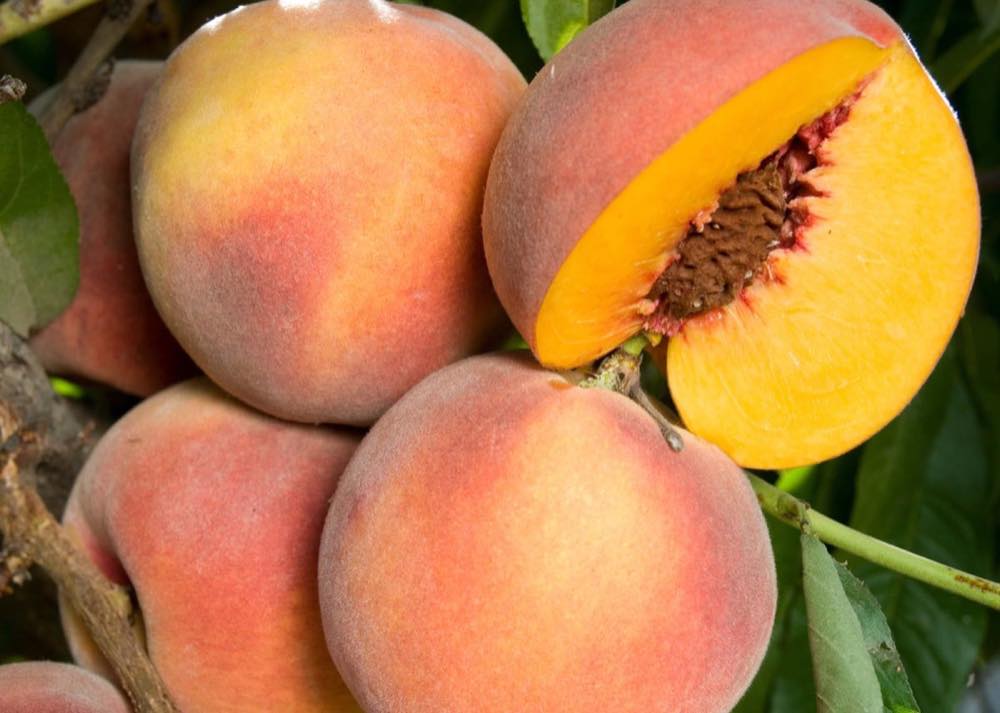
Peaches
A popular fresh-market yellow freestone, large and firm with a rich flavor, and a good choice for a home planting. It needs about 750 chill hours, so it is a mid elevation peach and not for Phoenix. Thin it well for size, and let the fruit ripen on the tree for the best flavor.
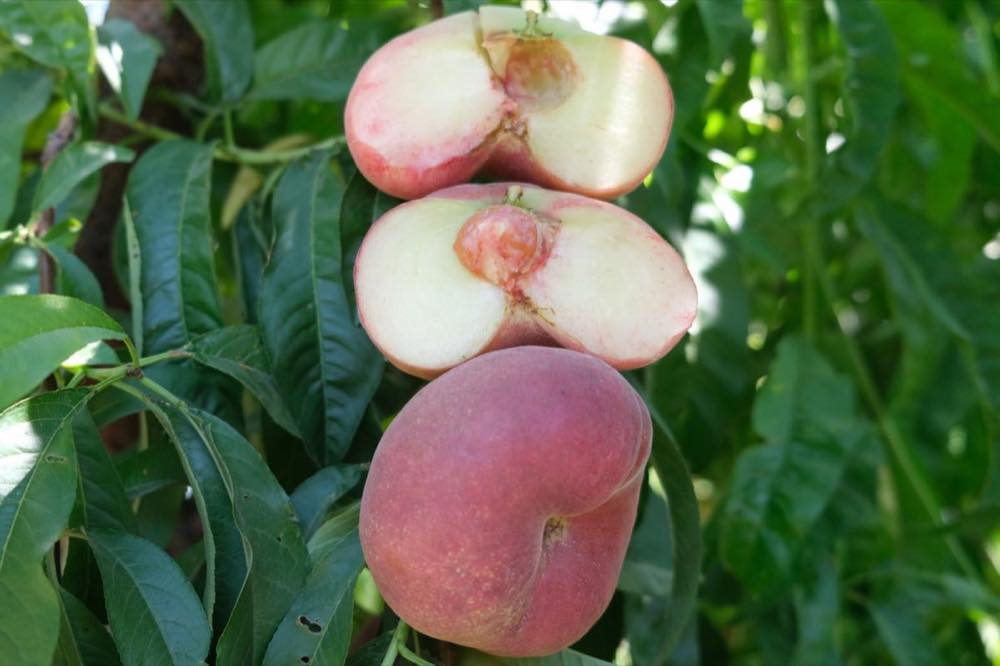
Peaches
A flat, saucer-shaped peach with light pink skin and white and pink flesh that is crisp and sweet. At 400–500 chill hours it suits the warmer end of mid elevation, with early bloom as the main frost risk, and it comes on Nemaguard rootstock only, which are less cold hardy than Lovell. In the low desert the chill is marginal and ripening lands in peak heat.
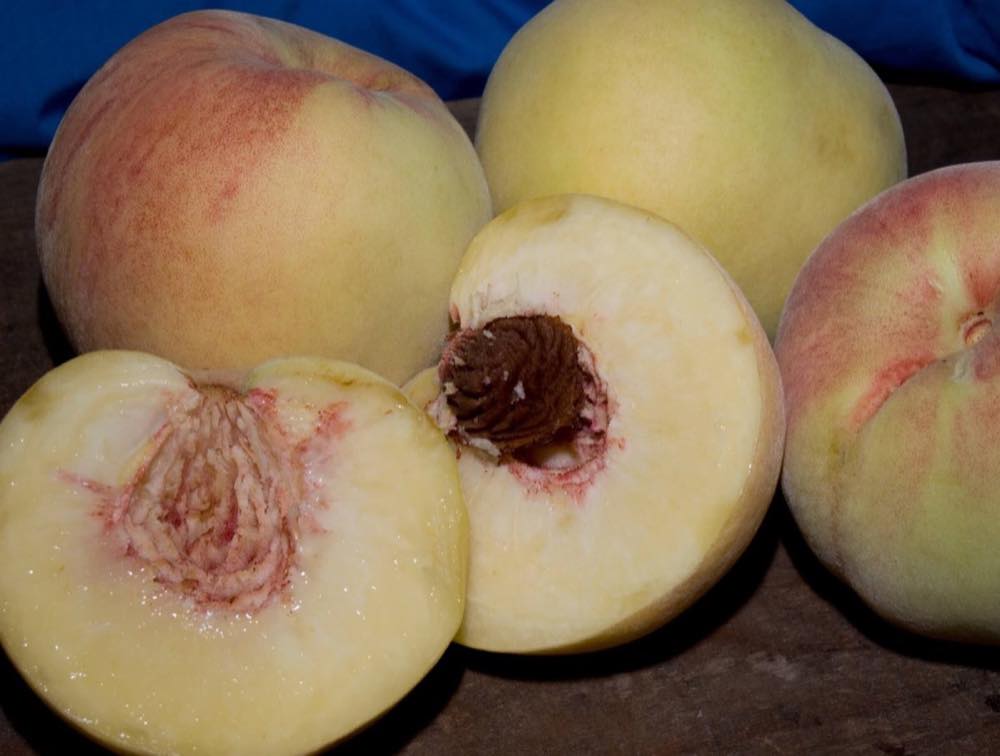
Peaches
One of the hardiest peaches, bred in Iowa and good to about -20°F, with sweet, medium-sized white-fleshed fruit and crimson-blushed skin. It wants around 1,000 chill hours, so it belongs in the mountains and not in Phoenix. A good choice for Flagstaff and Show Low, where winter cold is the main question.
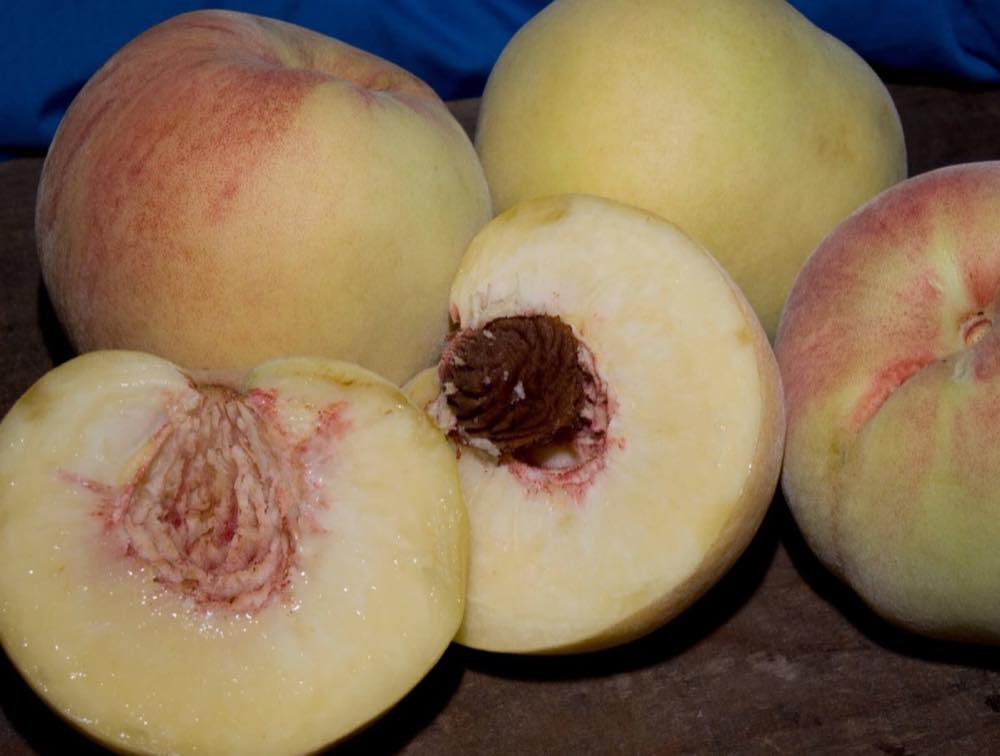
Peaches
A very winter-hardy white peach from Iowa, good to about -20°F, with sweet, medium-sized fruit and crimson-blushed skin. It needs around 1,000 chill hours, so it fits mid elevation and the high country, not the low desert. It is one of the better white peaches for Flagstaff and Show Low.
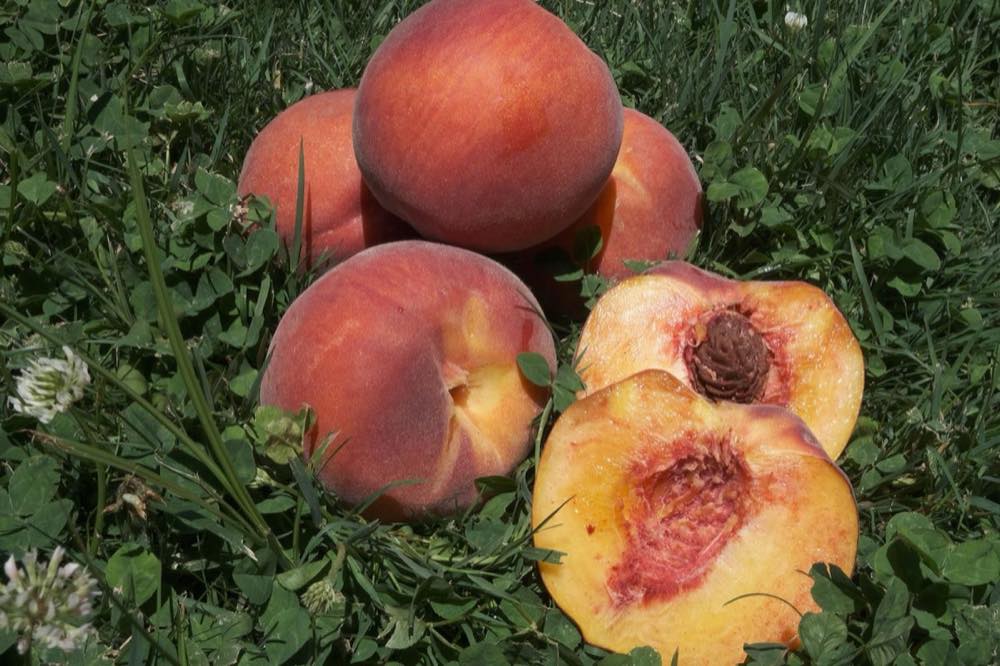
Peaches
A medium to large peach with orange and dark red skin over yellow flesh marbled with red, a sweet, juicy flavor and a hint of cinnamon. It is a dependable cropper that needs 600–800 chill hours, so it fits mid elevation and not Phoenix. Ripening time is not firmly known, so watch the fruit rather than the calendar.
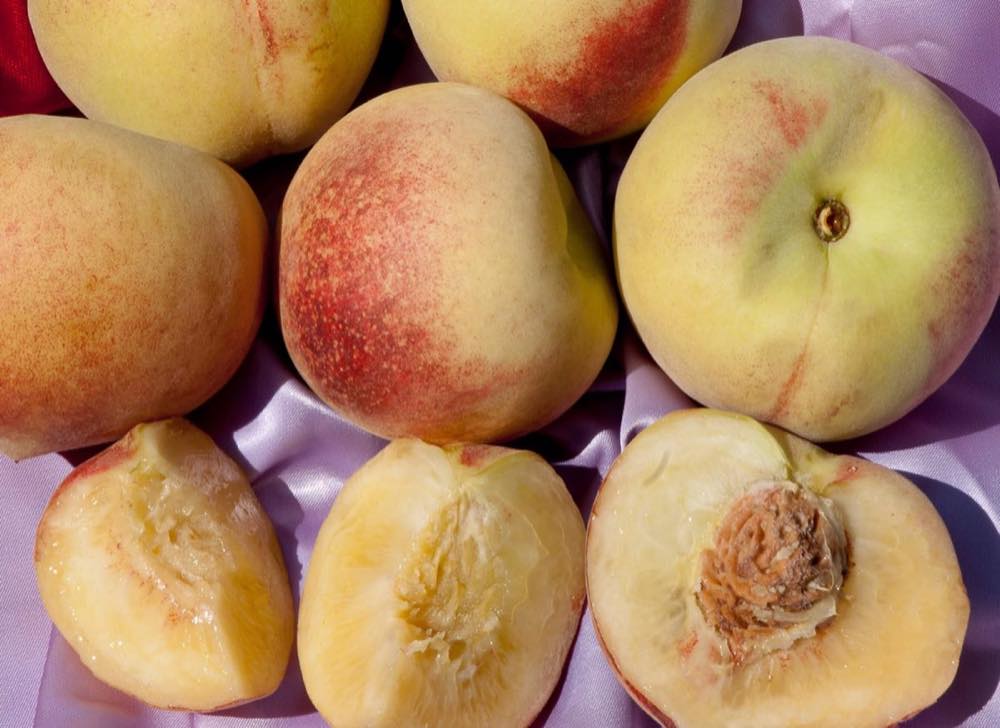
Peaches
A white-fleshed semi-freestone that is sweet and juicy like Babcock, with a bit more tang. It blooms very late, which is the big prize at mid elevation, and it resists peach leaf curl. It needs 700–800 chill hours, so it is not for the low desert.
Peaches
One of the best late-blooming, frost-hardy peaches for cold climates, a medium, full-flavored yellow freestone that ripens about a week after Redhaven. It wants about 900 chill hours and does best from mid elevation up into the high country. A good bet wherever spring frost is the problem.
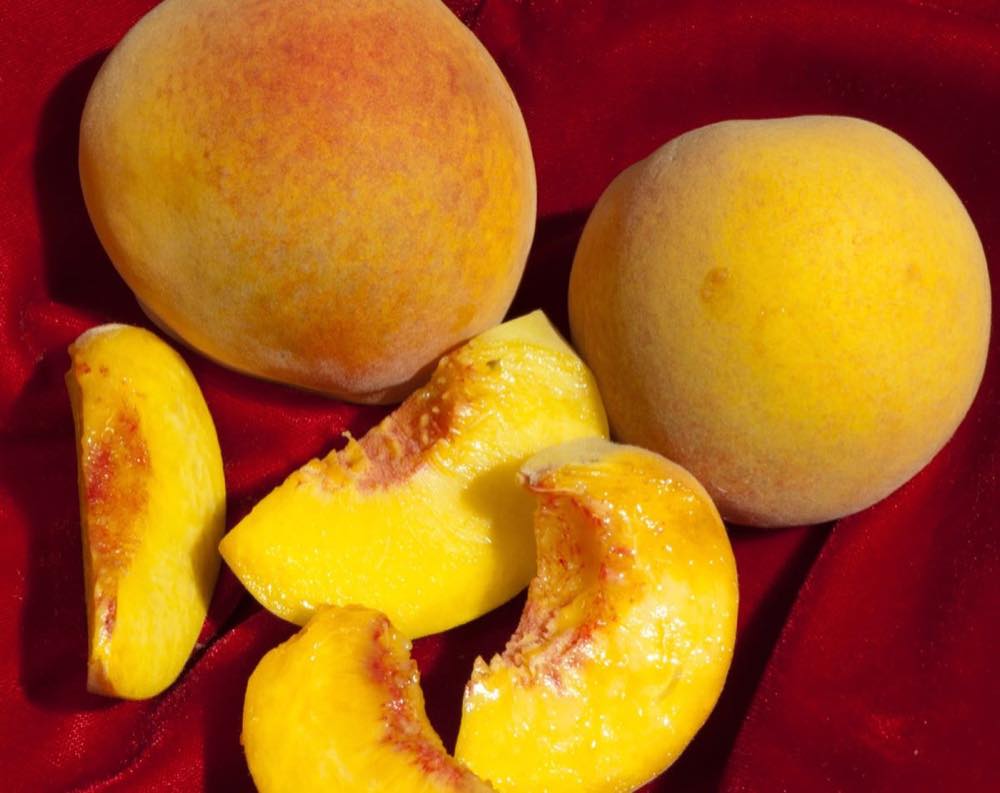
Peaches
Showy double red blossoms in late winter, then large, juicy, firm yellow freestone peaches, so it earns its place as both a landscape and a fruit tree. It needs about 250–300 chill hours and has a long record in the low desert. It blooms too early for mountain frosts, so keep it at Phoenix-type elevations.
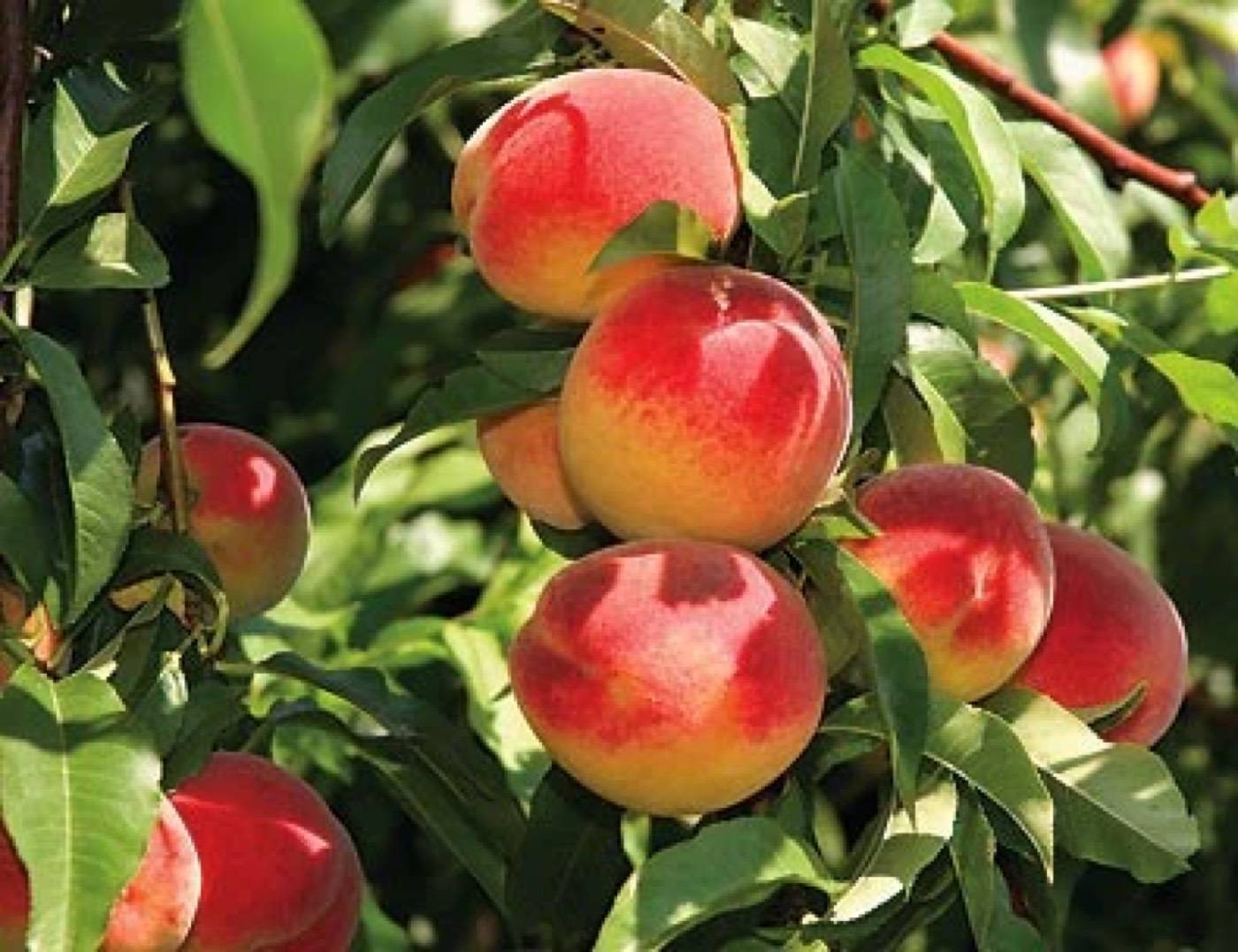
Peaches
One of the most widely planted peaches in the world, a sweet, fine-grained yellow freestone on the University of Arizona's list for backyard orchards at 3,500 to 6,000 feet. It needs about 800 chill hours and heavy thinning for good size. Plant it at mid elevation, and in the high country choose later bloomers like Contender or Reliance.
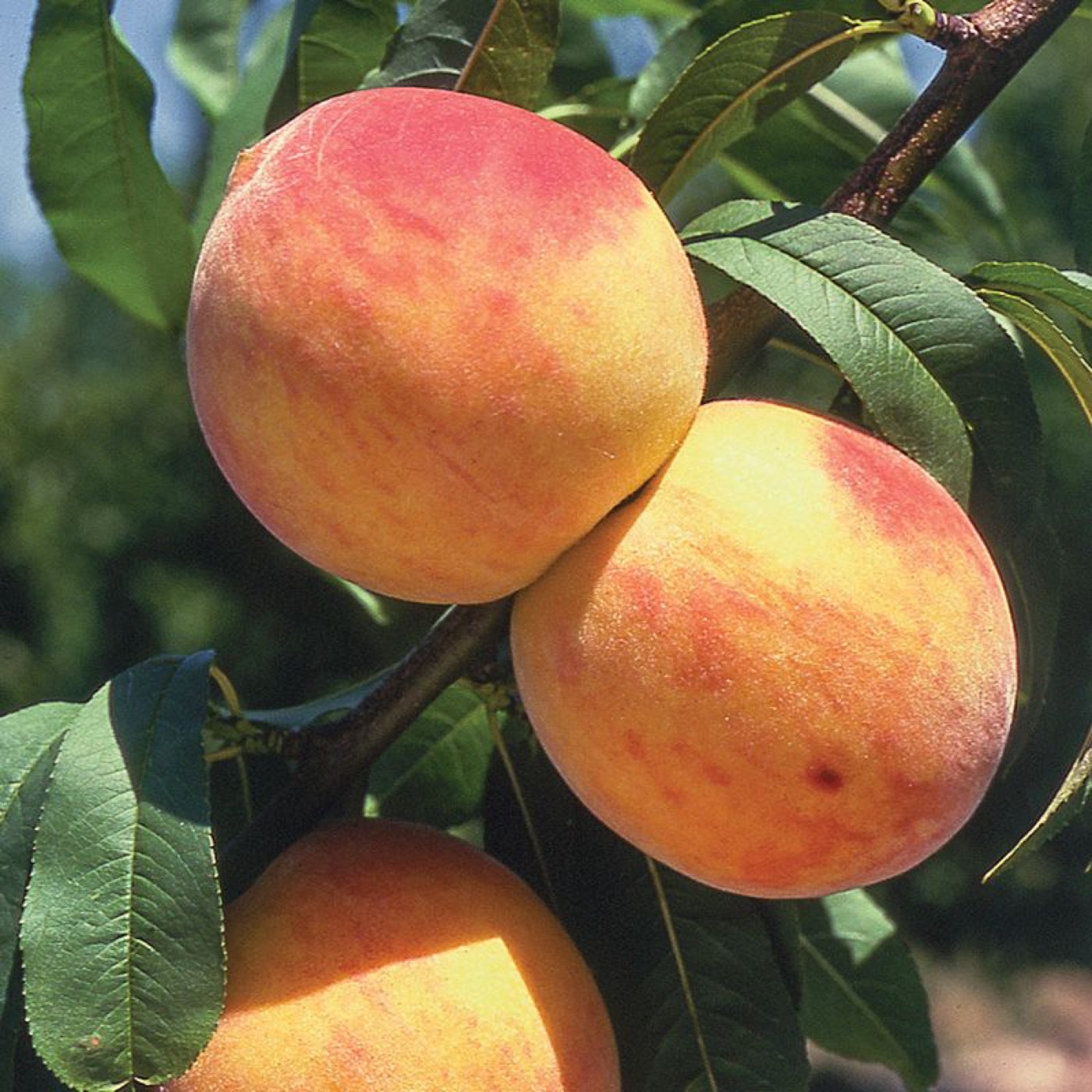
Peaches
A very cold-hardy, late-blooming yellow freestone with sweet, flavorful fruit, and the standard choice where winters and spring frosts are hard. It ripens a few weeks before Elberta, so a short mountain season is enough. At 1,000 chill hours it is right for Flagstaff, Show Low and Prescott, and far too much for the low desert.
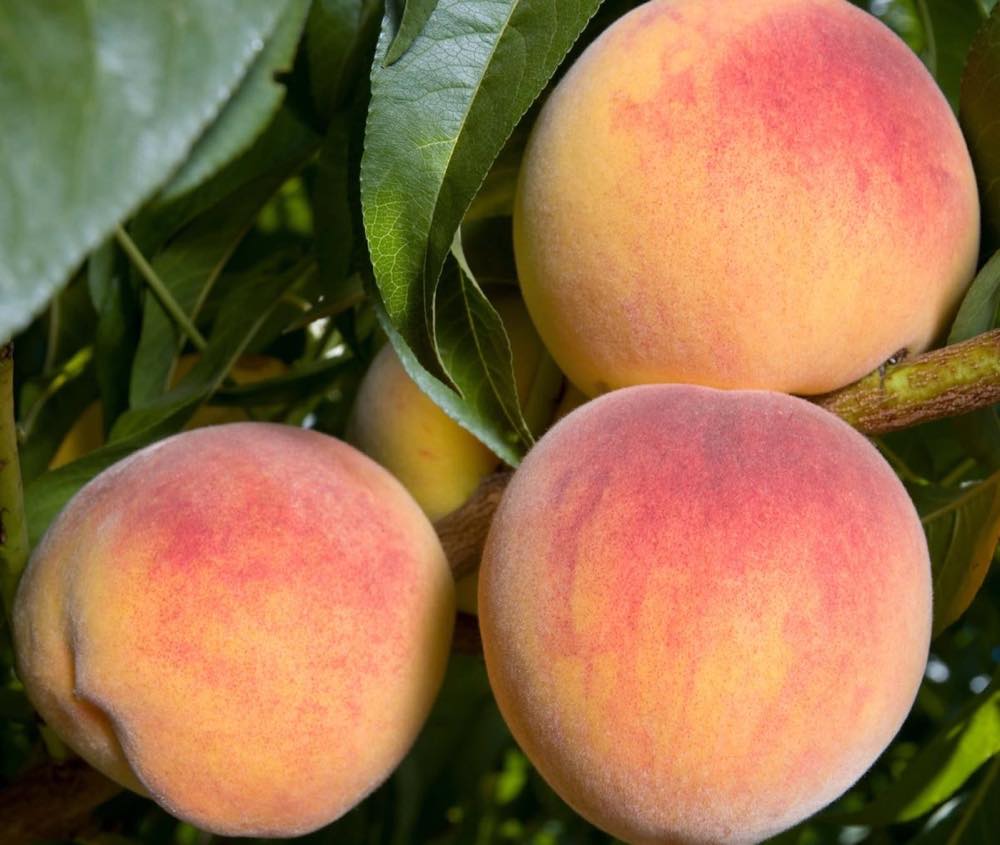
Peaches
A large, red-skinned yellow freestone with sweet, rich flavor on a fairly compact tree, popular for freezing. It is on the University of Arizona's list for backyard orchards at 3,500 to 6,000 feet. At about 800 chill hours it is a mid elevation choice and not for Phoenix.
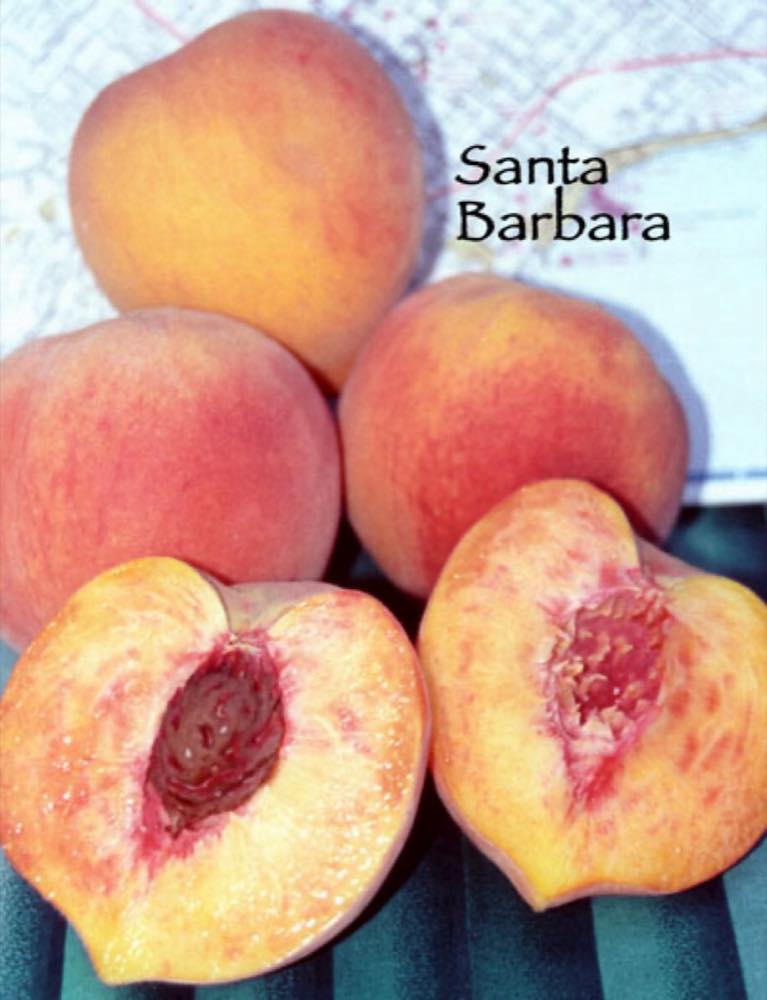
Peaches
A large, red-blushed yellow freestone, a bud sport of the Ventura peach, that does well in mild-winter, hot-summer climates. Its chill need is estimated at about 300 hours, which fits the Phoenix area, and it ripens midseason, around mid to late June. There is little published Arizona data, so treat the chill figure as an estimate.
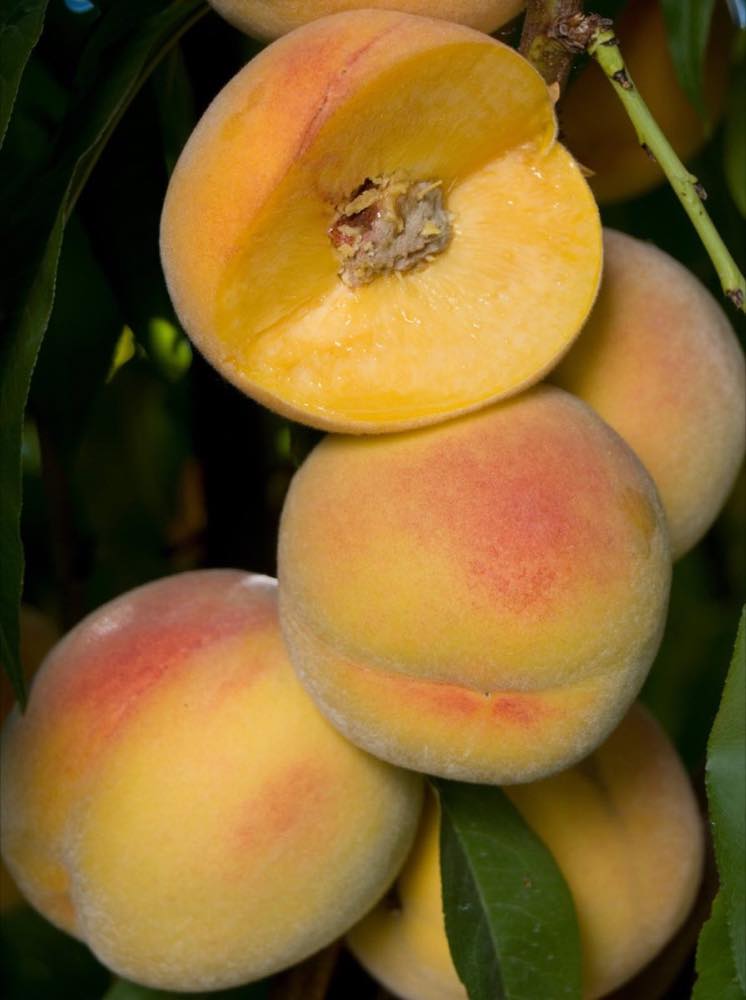
Peaches
A long-time Southern California favorite with big dark pink double blossoms in late winter, followed by large, juicy, sweet yellow freestone fruit. It needs only 250–300 chill hours, so it suits the Phoenix area. Plant it where you can enjoy the flowers, and thin the fruit for size.
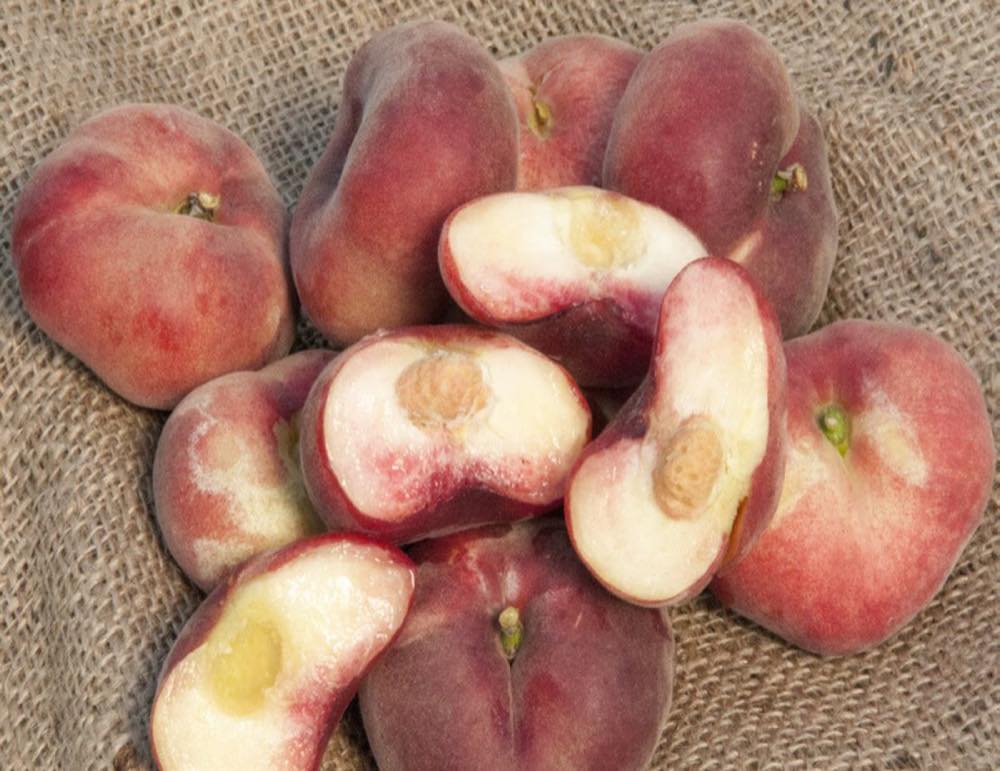
Peaches
A very early, medium-sized flat white peach with red-swirled flesh, and fruit that looks ornamental hanging on the tree. At 400 chill hours it sits at the top of what Phoenix gets, so it does best in normal to cool winters. It ripens in early to mid May, well ahead of summer heat.
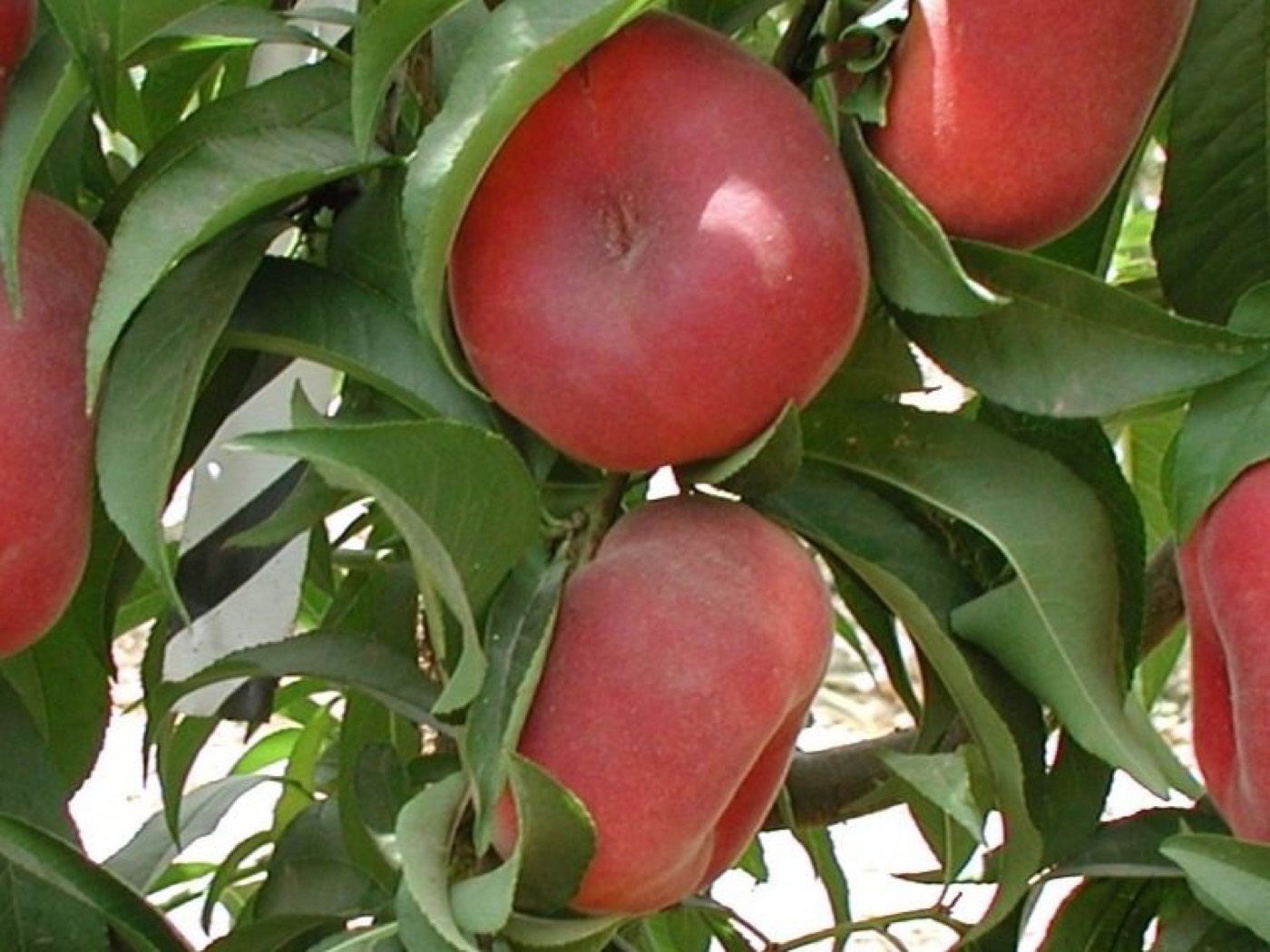
Peaches
A flat, saucer-shaped white peach with red veins running through the flesh and a name for heavy crops and outstanding flavor. Its 400–600 hour range fits mid elevation, where early bloom is the main frost risk, and it comes on Nemaguard rootstock only, which are less cold hardy than Lovell, so favor the warmer end. In the low desert the chill is marginal.
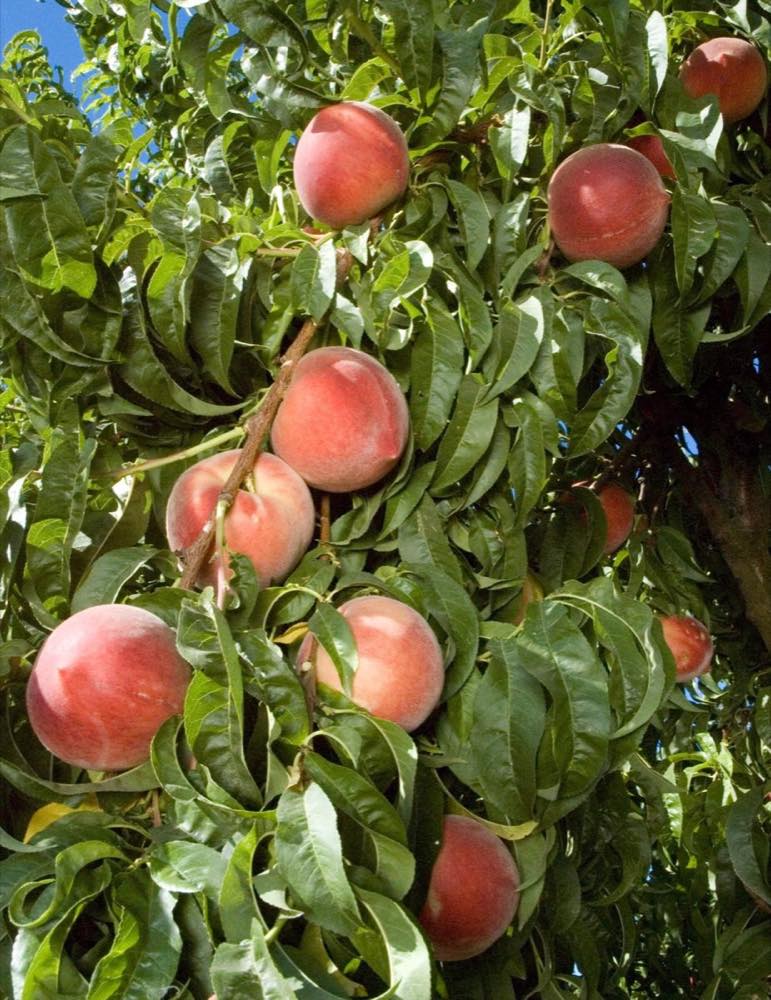
Peaches
A sweet, low-acid white freestone with large, deep red-over-white fruit that has topped taste tests. It needs 700–850 chill hours, so it suits mid elevation and not Phoenix. On Citation rootstock the tree stays smaller, which makes thinning easier, and it ripens early enough for short summers.
Peaches
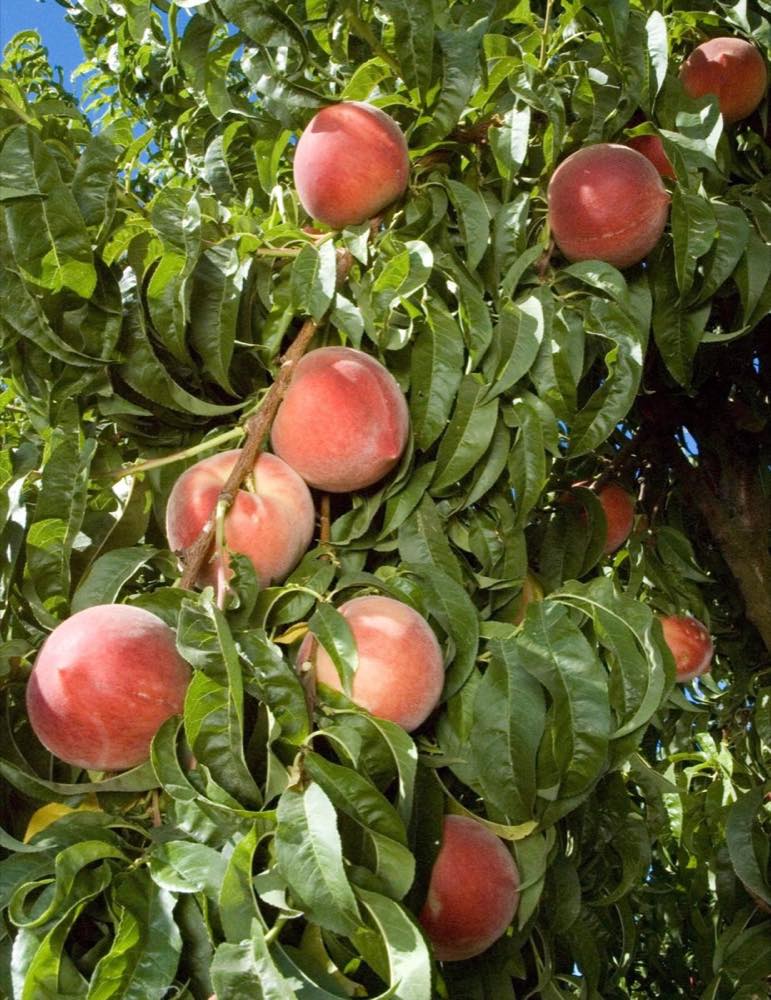
A white freestone that scored highest of all the peaches in a large taste test, with a sweet, low-acid flavor and big fruit that is deep red over white. It needs 700–850 chill hours, so it belongs at mid elevation and is too much for Phoenix. It ripens early in the season, which helps in short summers.
Peaches
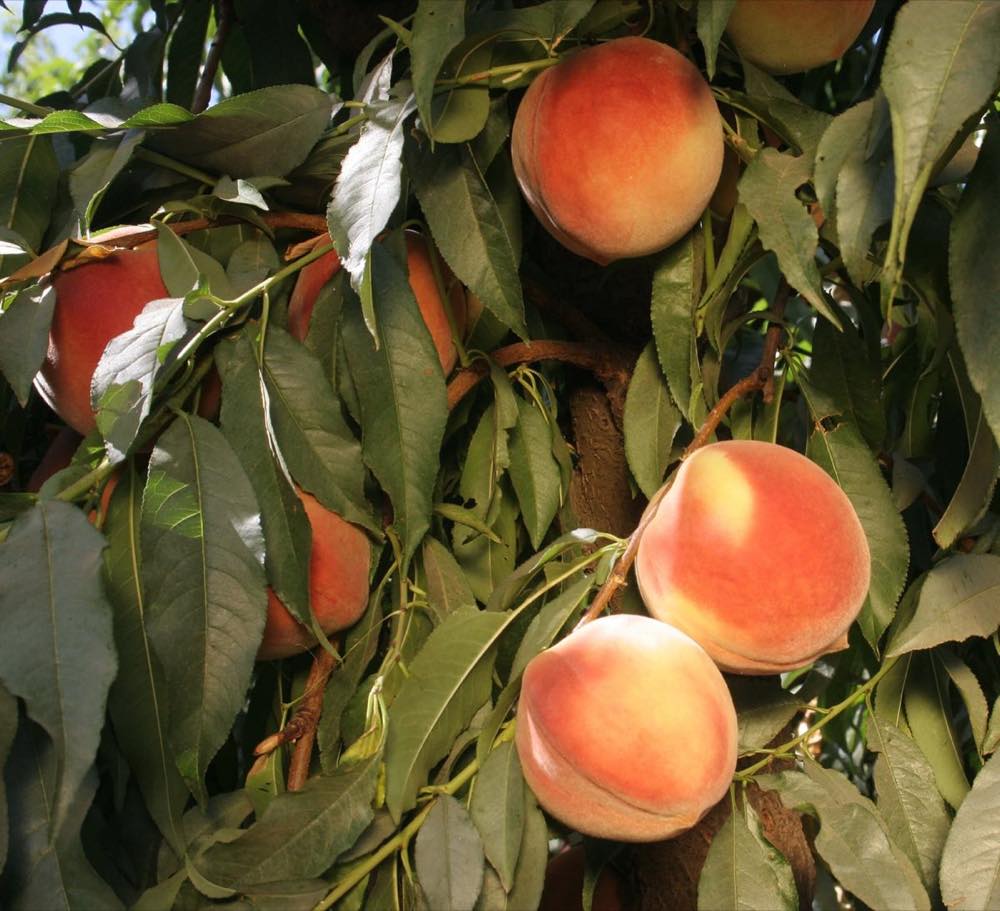
A very large white freestone, three inches or more across, sweet and low in acid, with a deep red blush and good keeping quality. It ripens in late summer. Published chill figures run from 600 to 900 hours, so it fits mid elevation orchards and not the low desert.
Peaches
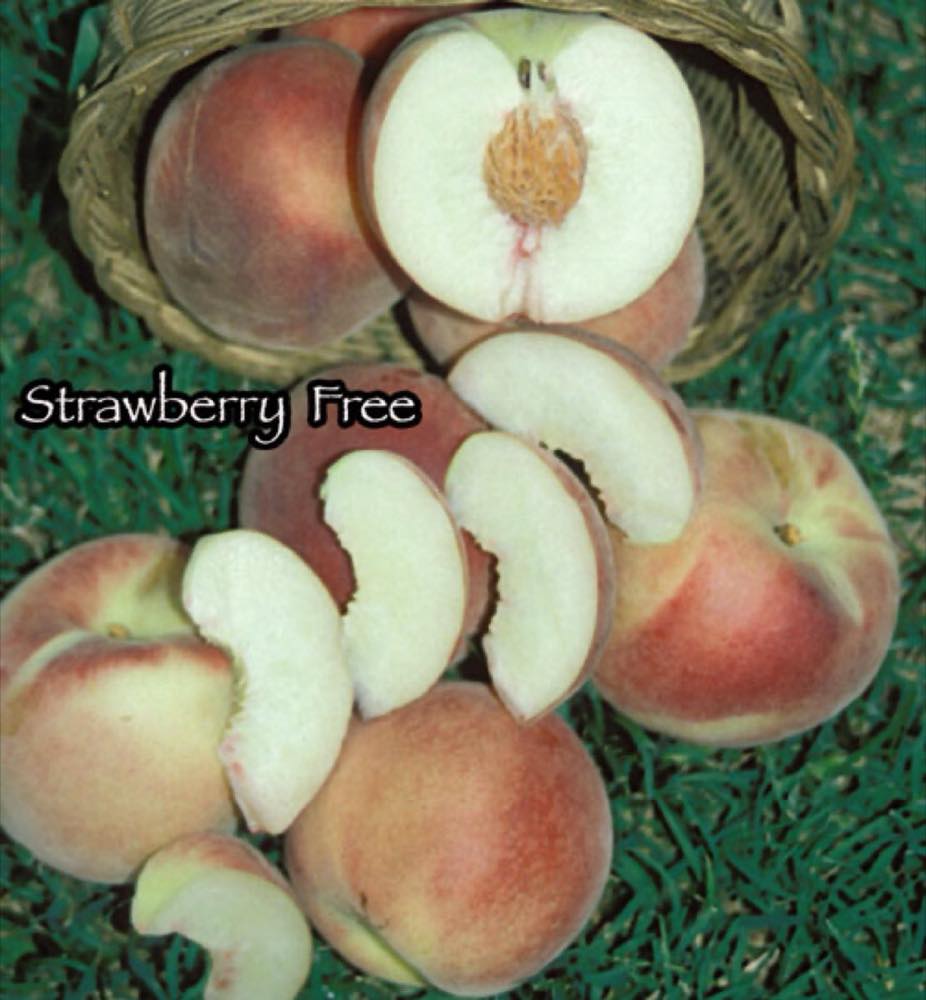
A long-time white freestone favorite in California, very sweet, aromatic and juicy with a delicate flavor. At 400–500 chill hours it suits the warmer end of mid elevation, where a late freeze at bloom is the main risk. In the low desert the chill is marginal, and Babcock or Tropic Snow is the safer white peach there.
Peaches
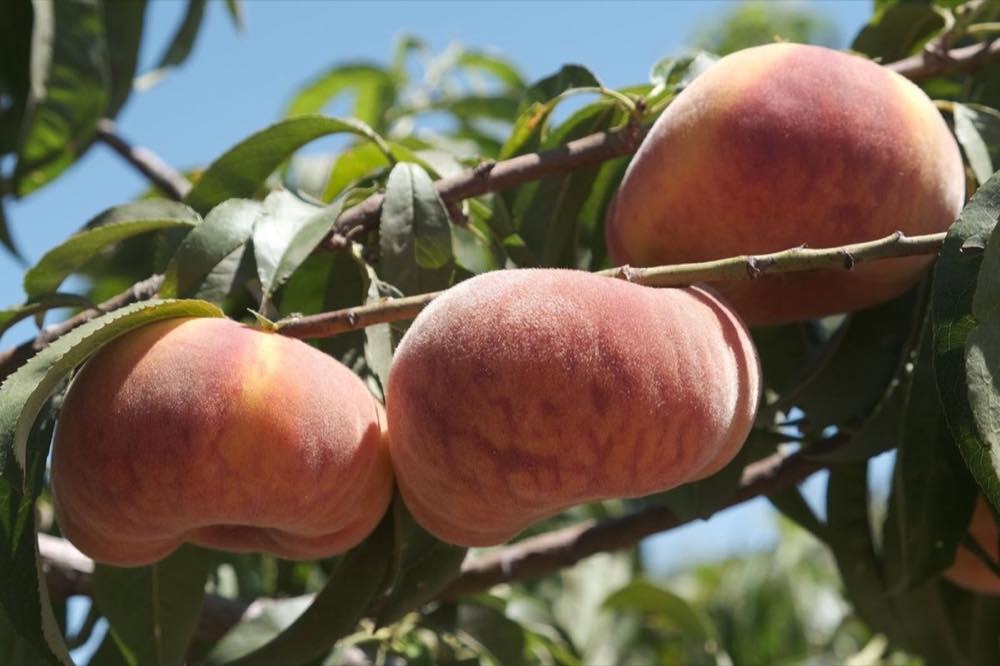
A flat, saucer-shaped peach with orange and yellow skin and reddish stripes running into the yellow flesh, low in acid, sweet and very juicy. Its 400–600 hour range fits mid elevation, with early bloom as the frost risk, and it comes on Nemaguard rootstock only, so favor the warmer end. In the low desert the chill is marginal and ripening lands in peak heat.
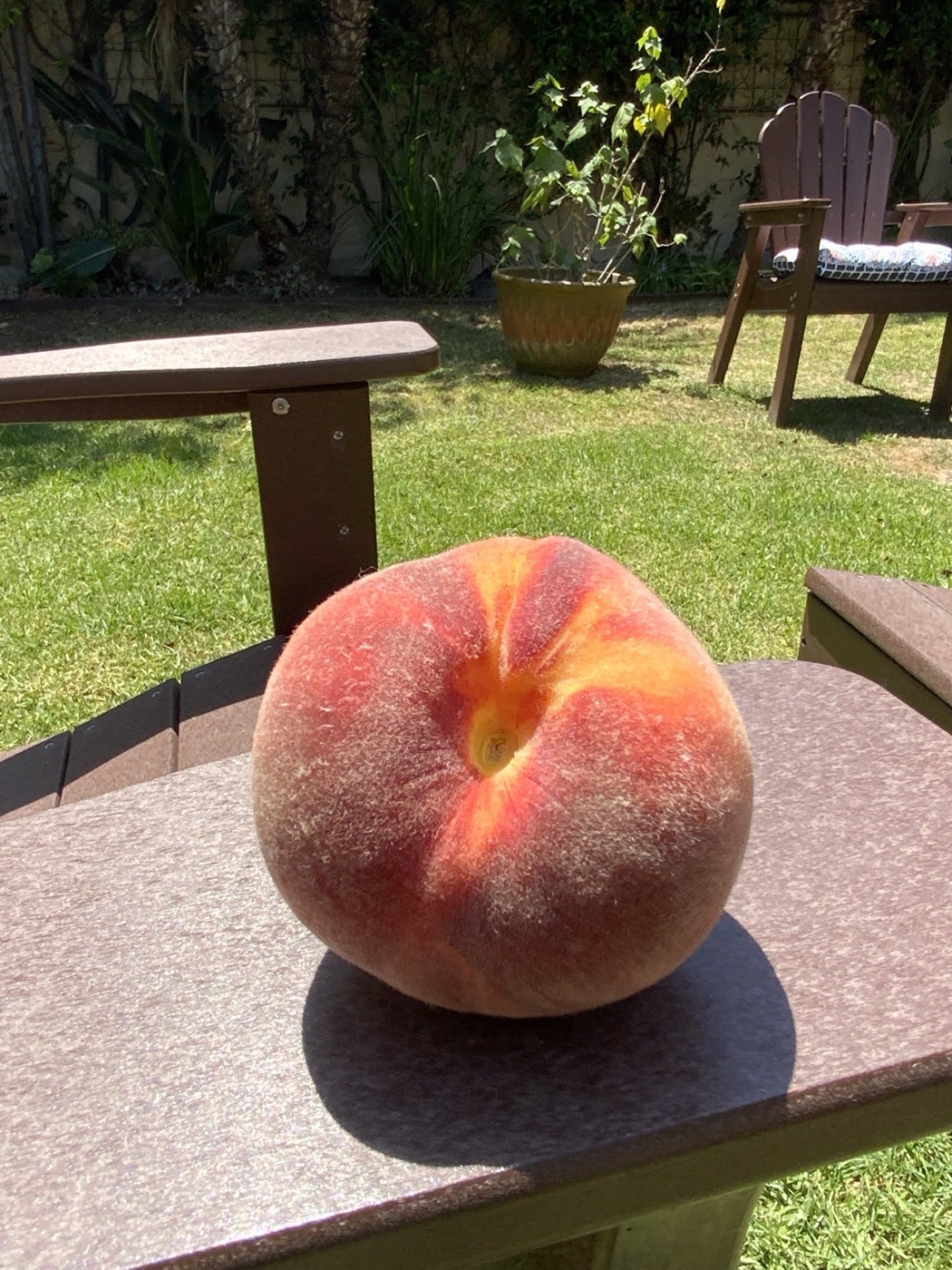
Peaches
A large, very firm yellow freestone with bright red skin and fine flavor, and blossoms that open late in midseason and handle frost better than most. At 500 chill hours it is the lowest-chill peach we suggest at mid elevation, so it suits places like Verde Valley and Sierra Vista. A hard late freeze can still cost the crop in a bad year.
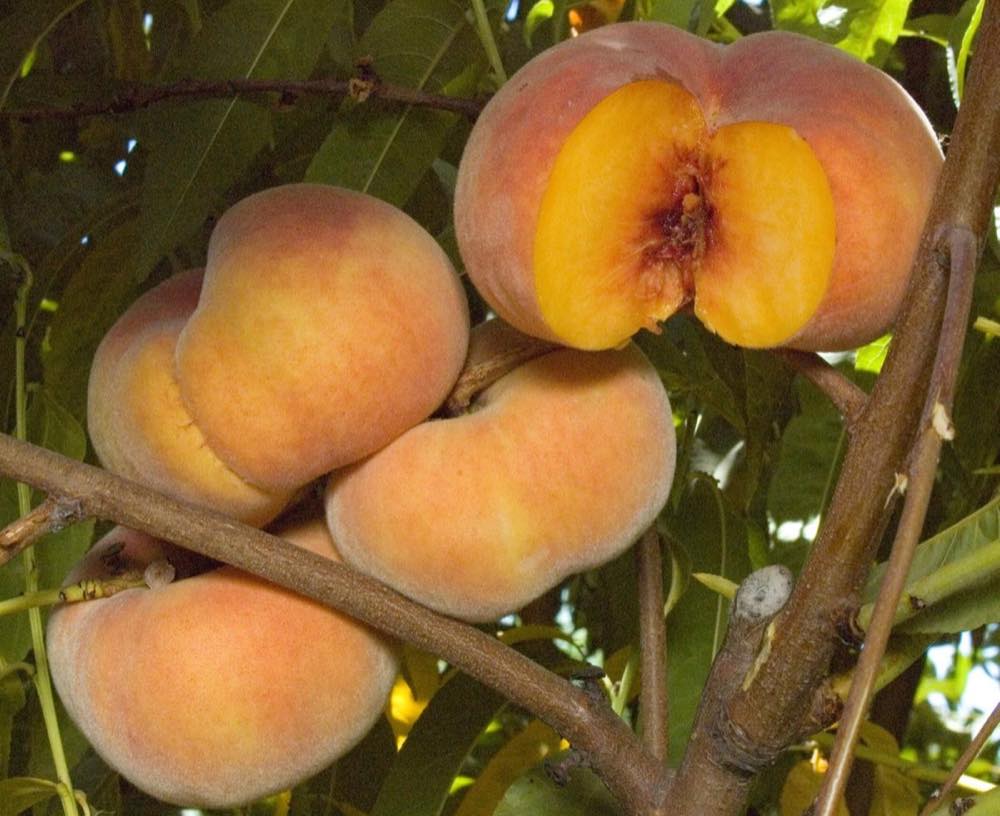
Peaches
A flat, doughnut-shaped yellow peach with classic peach flavor that sets heavy crops of large fruit. It needs 300–400 chill hours, so it fits the Phoenix area, but it ripens late, in the heat of summer. Paint the trunk white and water deeply while the fruit finishes.
Peaches
An early-ripening yellow semi-clingstone bred for central and south Texas, ripening about ten days after Flordaprince there. Its 450-hour rating is more than Phoenix gets in many winters, so it fits best in the cooler corners of the low desert, where it should ripen before the worst heat. Flordaprince or Earligrande are the surer early peaches for Phoenix itself.
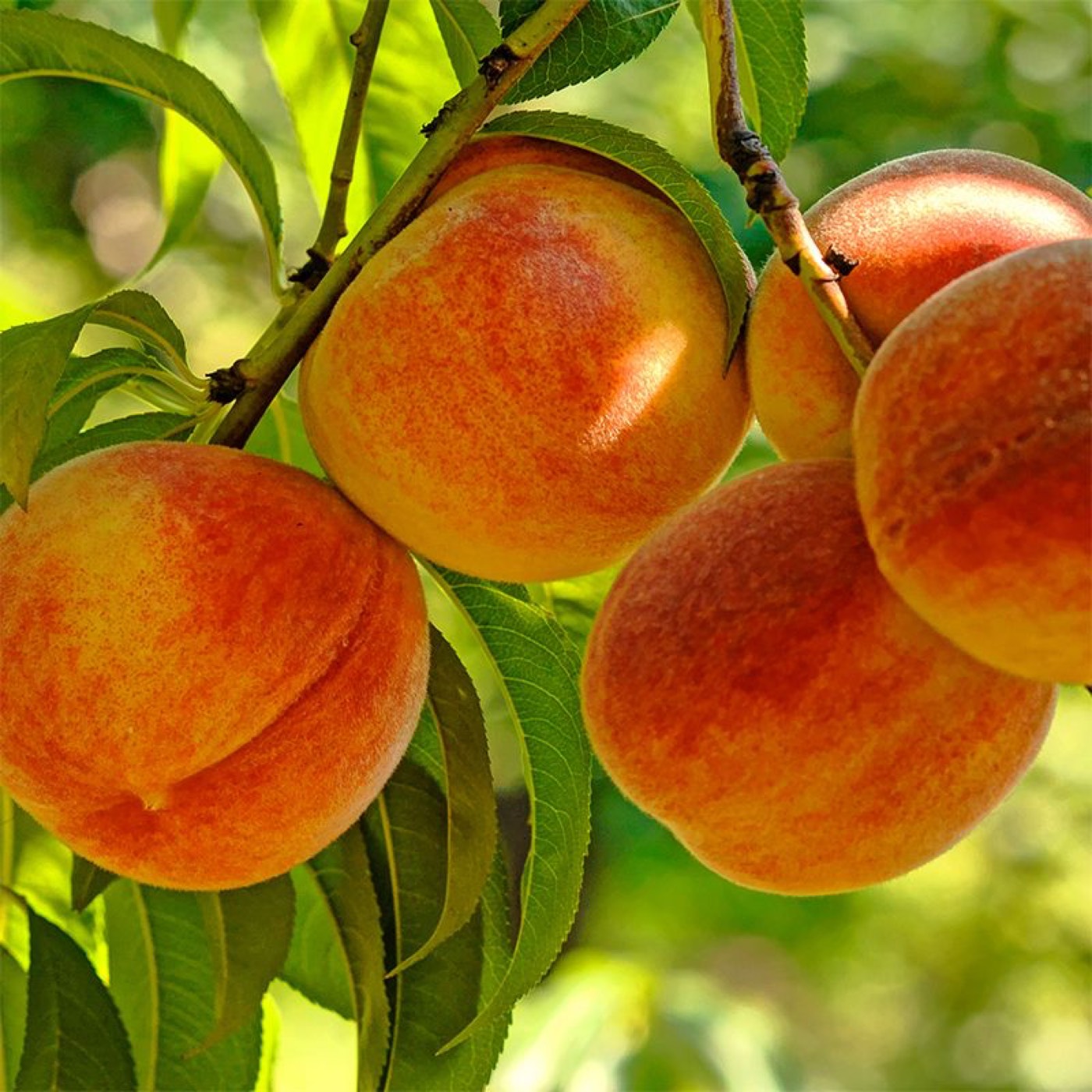
Peaches
A large, red-blushed semi-clingstone on a heavy-bearing tree that ripens about a month before Elberta and needs thinning to protect the branches. At 450 chill hours it suits the warmer end of mid elevation, where early bloom is the frost risk, though it comes on Nemaguard rootstock only, which are less cold hardy than Lovell. In the low desert, 450 hours is marginal.
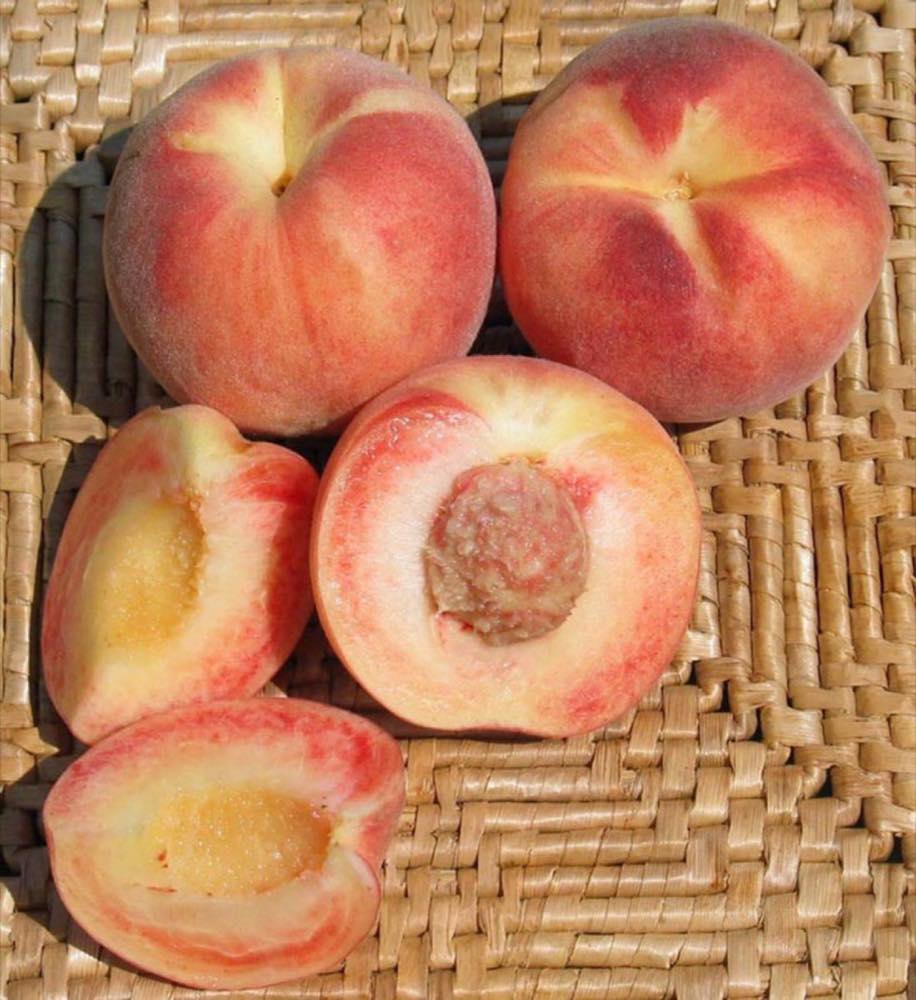
Peaches
A peach and plum hybrid with white flesh, a mild classic white-peach flavor with a plum aftertaste, and fruit you can eat while it is still firm. At 400–500 chill hours it suits mid elevation, where a late freeze on the blossoms is the main risk, and the chill is marginal in the low desert. The nursery does not state its pollination needs, so check before relying on a single tree.
Peaches
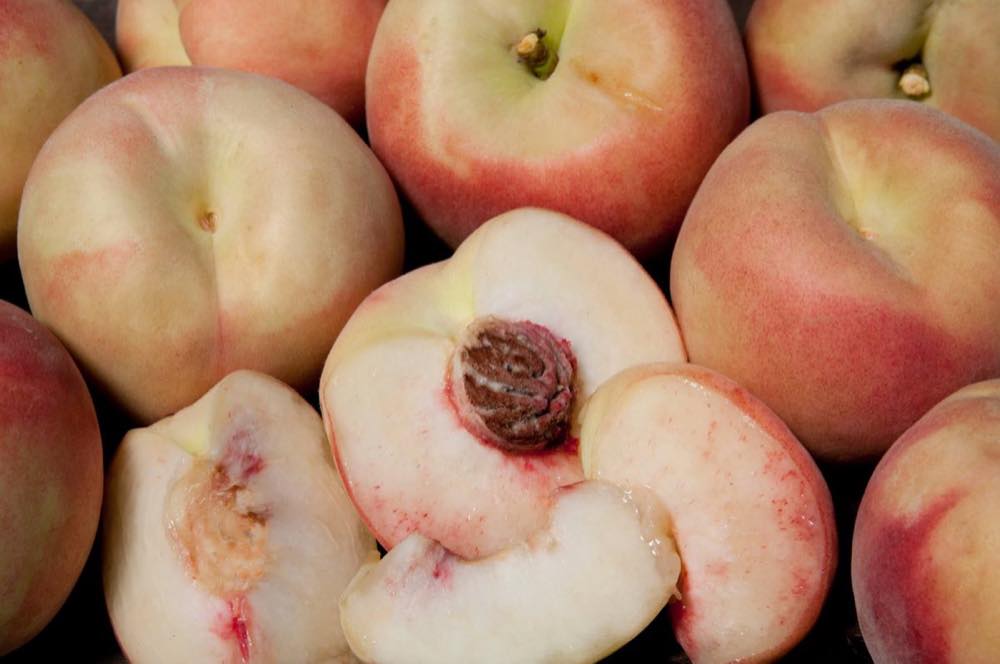
A delicious white freestone for warm winters, with a good balance of sugar and acid. It needs only about 200 chill hours and ripens in early to mid May in the low desert, ahead of the heat. On Citation rootstock the tree stays smaller, which makes thinning and picking easy.
Peaches
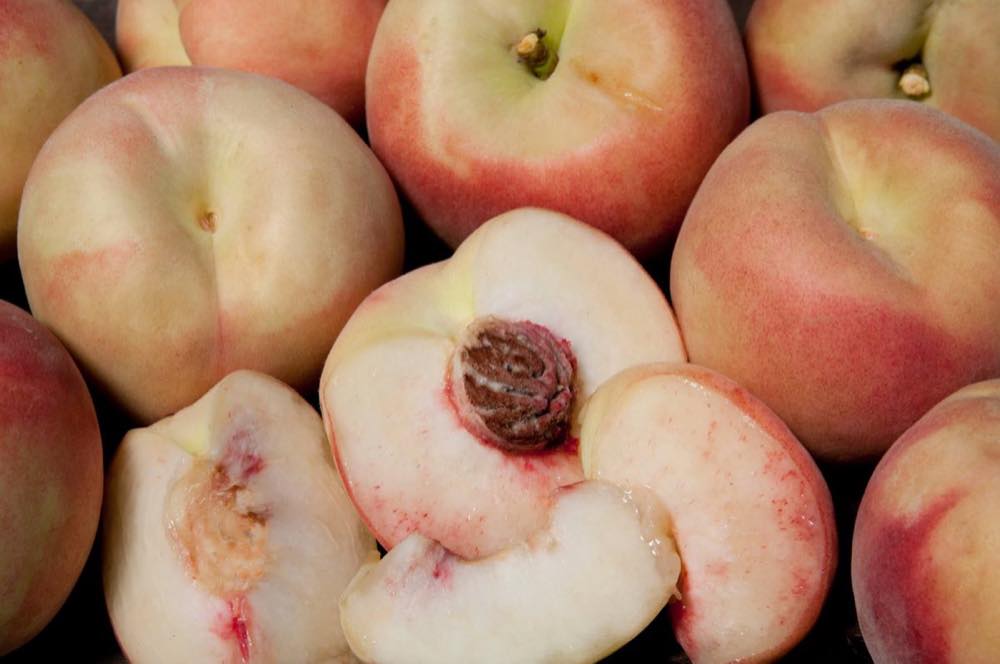
A sweet white freestone with balanced acid and sugar and medium-sized fruit, bred in Florida for warm winters. It needs only about 200 chill hours and ripens in early to mid May in the low desert, a few weeks ahead of Babcock. A dependable white peach for Phoenix with pretty spring blossoms.
Peaches
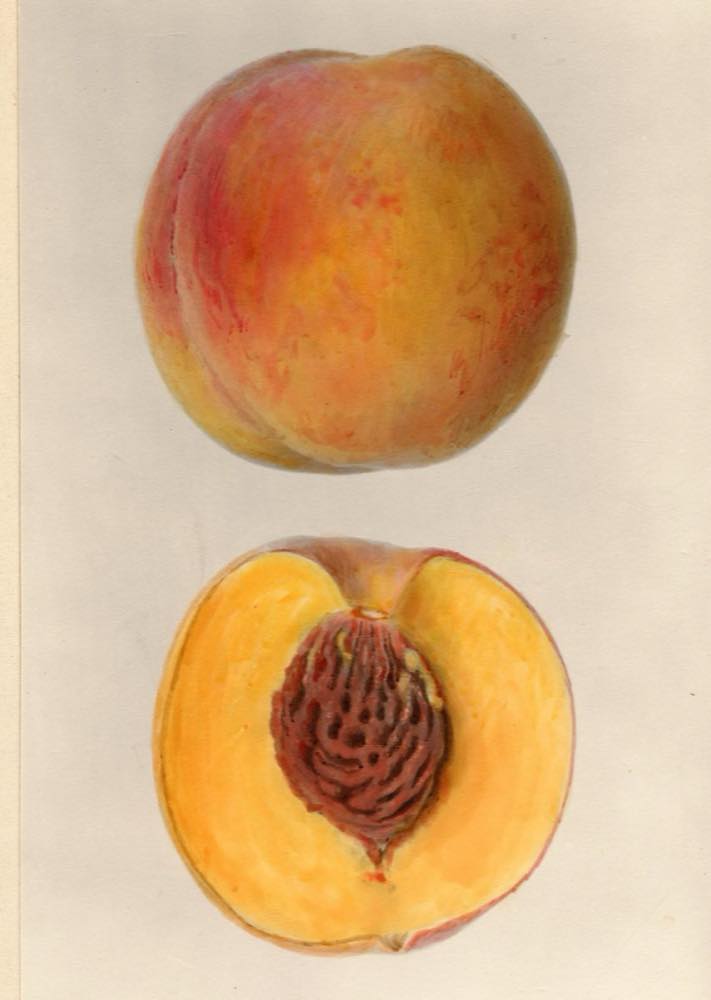
One of the most reliable peaches for cold climates: winter hardy and late blooming, with richly flavored yellow flesh that releases from the pit when fully ripe. It ripens about a week before Elberta. It needs around 900 chill hours, so it fits mid elevation and the high country and not the low desert.
Peaches
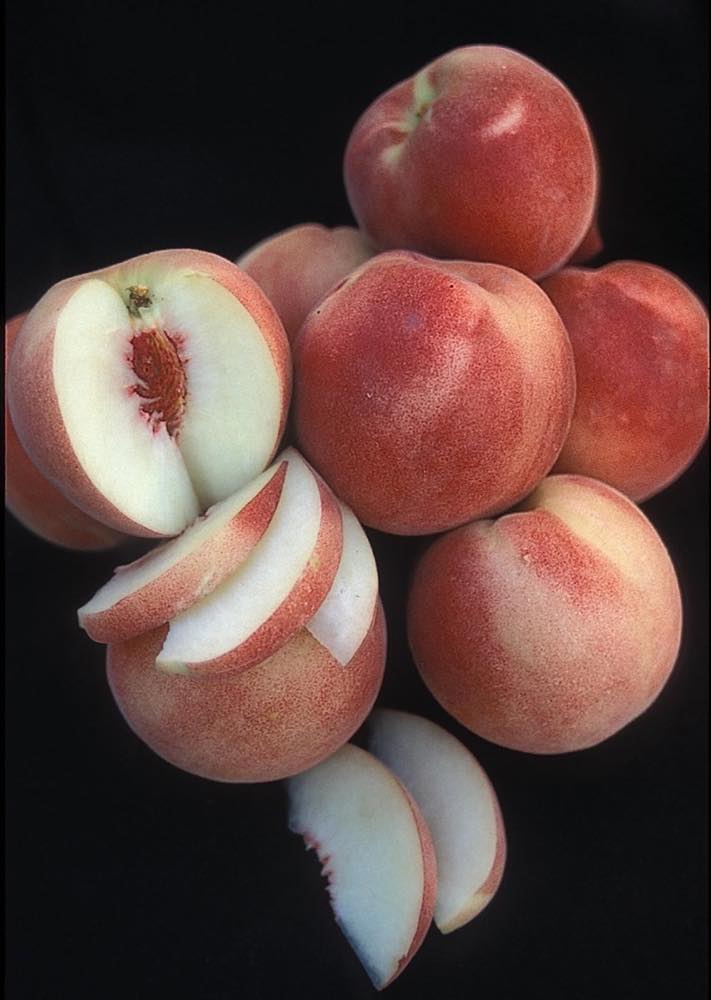
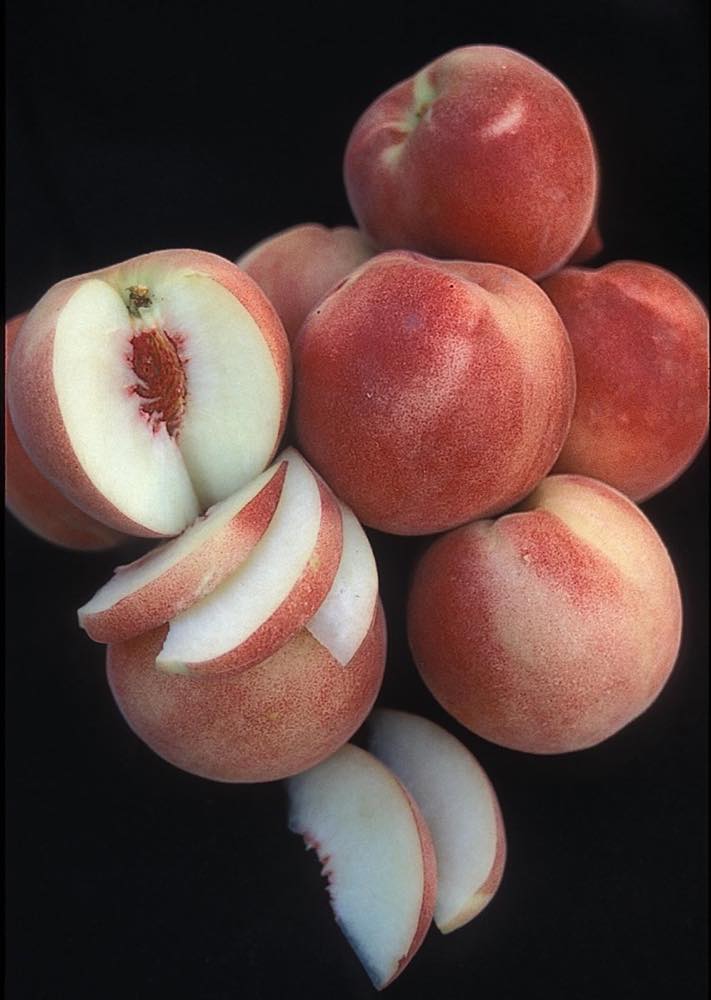
One of the best-tasting white freestones, with low acid, a full rich flavor and large fruit with a light red blush. It tolerates fluctuating spring weather and needs 800–950 chill hours, so it is a mid elevation tree and not for Phoenix. It ripens early in the season, which helps in short summers.
Peaches
A white freestone with low acid, high sugar and a full, rich flavor, and large fruit with a light red blush. At 800–950 chill hours it suits mid elevation orchards and not Phoenix. Lovell rootstock give it the cold hardiness that mid elevation winters ask for.
Asian pears
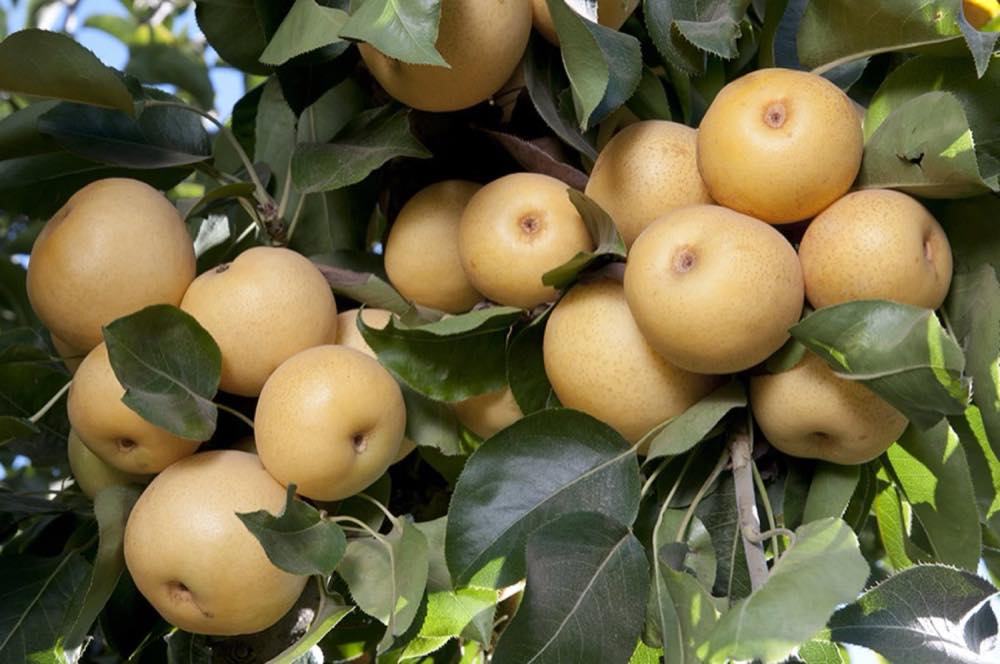
A round, golden Asian pear that is crisp like an apple, with a sweet, mild flavor and heavy crops on a compact tree. At 300–400 chill hours it works in Phoenix as well as at mid elevation, ripening in July in the low desert. It is prone to fire blight in warm, damp springs, so cut out infected shoots promptly.
Asian pears
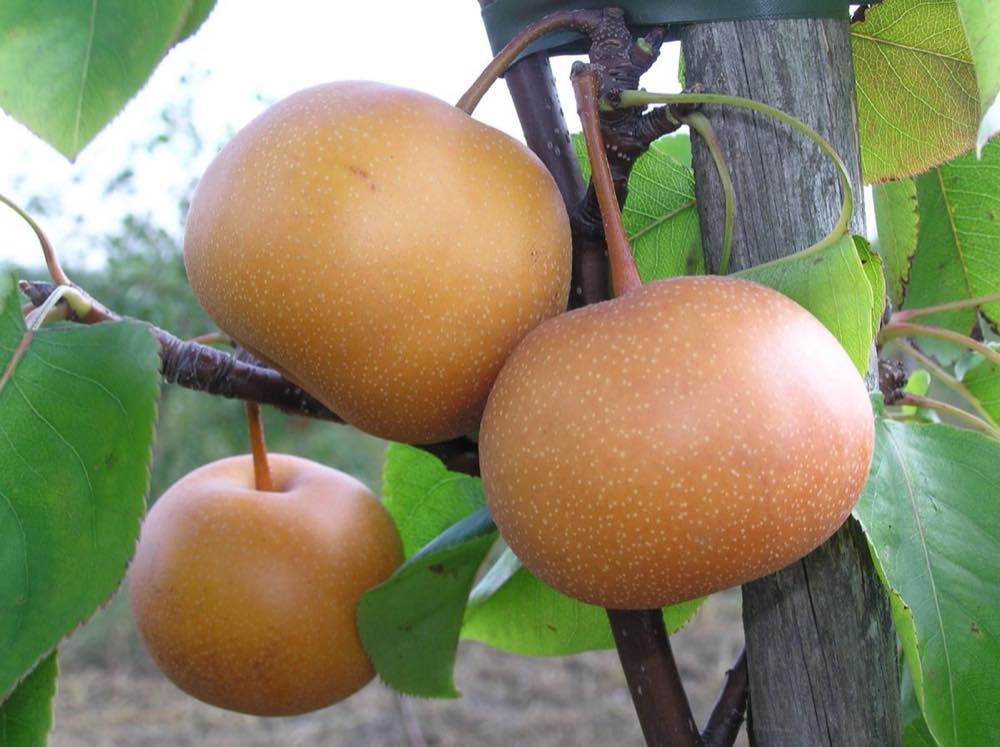
A russeted, golden-brown Asian pear that is crisp when ripe, with a rich flavor and a good reputation for storing. At about 450 chill hours it fits mid elevation, and it is marginal in Phoenix. It needs a second Asian pear nearby, and Hosui or Shinko are the usual partners.
Asian pears
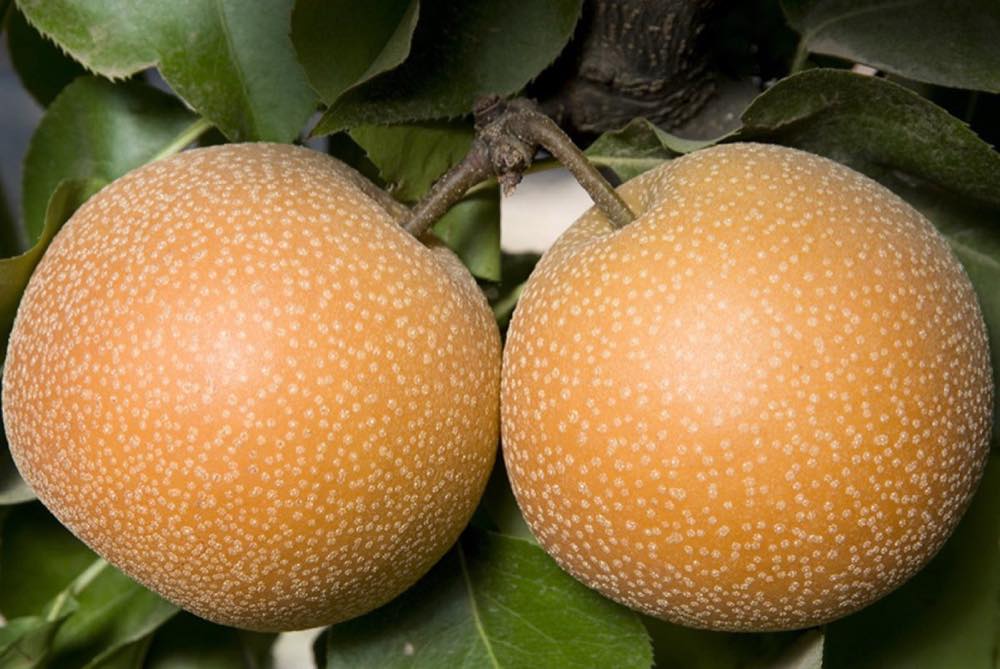
A large, juicy, very sweet Asian pear with bronze-orange russet skin and a crisp, refreshing bite. It needs only 300–400 chill hours, so it does well in Phoenix as well as at mid elevation, though the big fruit can sunburn and it is quite prone to fire blight in warm, wet springs. Plant 20th Century or Shinko nearby for pollination.
Asian pears
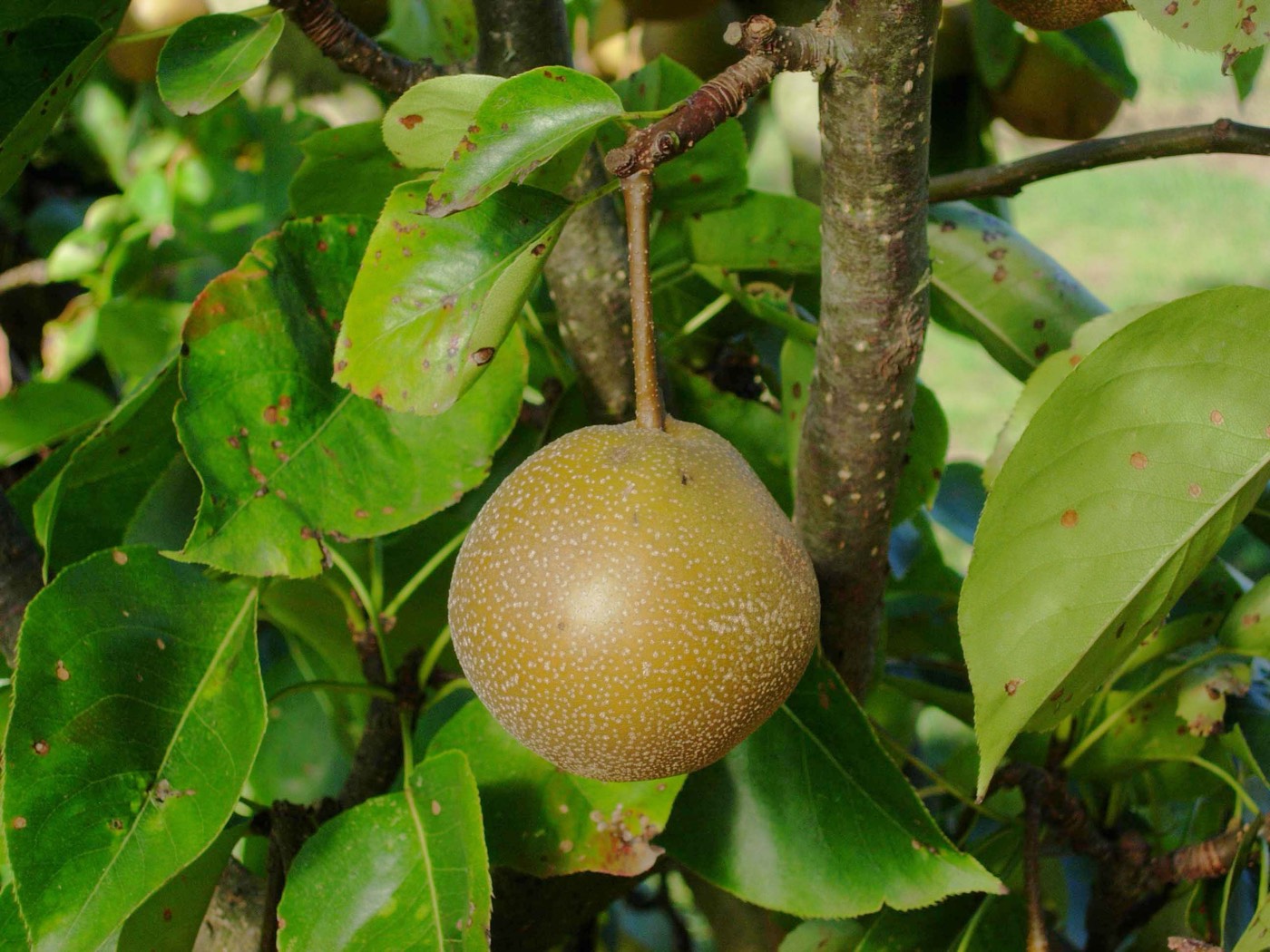
A large to very large, round, thick-skinned pear with tart, juicy white flesh that sweetens as it sits in storage. It ripens late and needs about 500 chill hours, so it fits mid elevation and not Phoenix. Pollination partners are not published, so plant another Asian pear nearby.
Asian pears
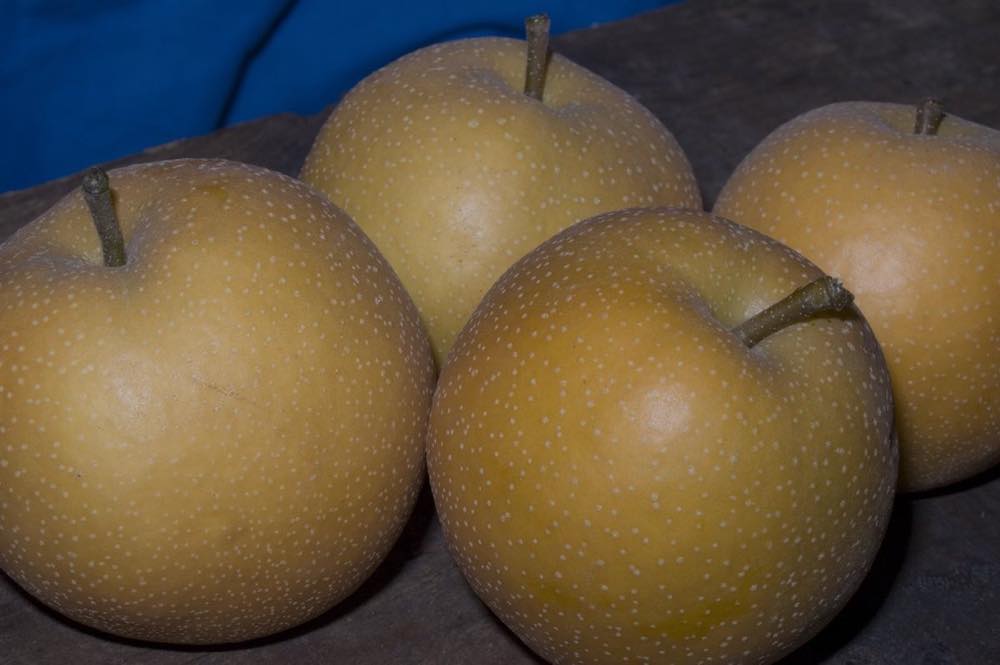
A juicy, sweet, crisp Asian pear with golden-brown russet skin that ripens late, in September. It shows good fire blight resistance, which helps at mid elevation, and at about 450 chill hours it is marginal in Phoenix. Plant Hosui, Chojuro or Bartlett nearby for pollen.
Asian pears
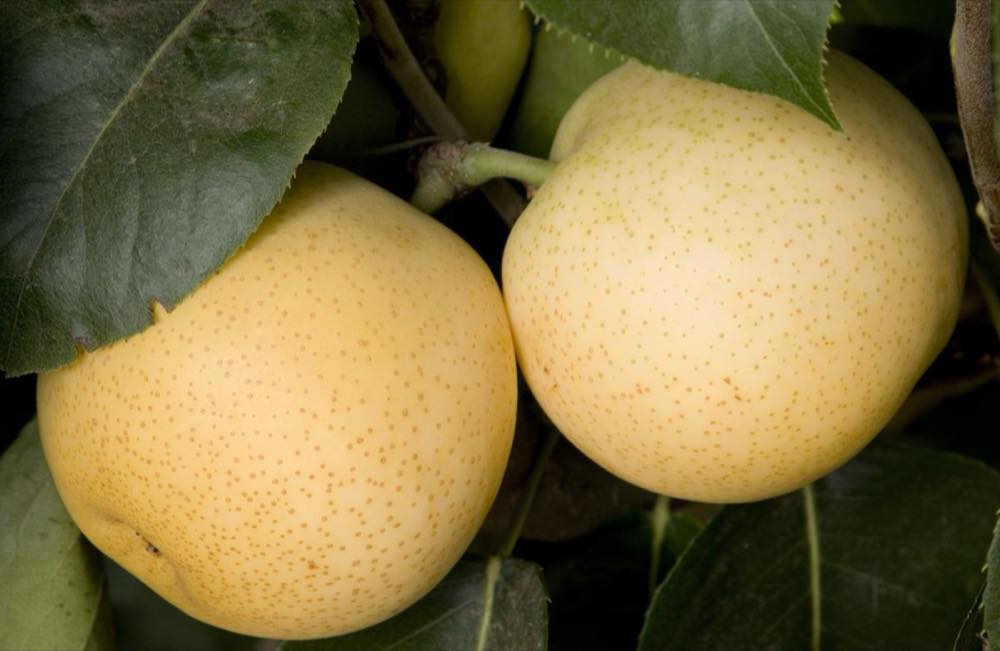
An easy, vigorous Asian pear with bright yellow skin and crisp, sweet, juicy fruit that often bears by the second year. It is a proven low desert fruit that ripens early, around June to early July, ahead of the worst heat, and it also works at mid elevation, where it ripens in August. Thin it hard or the branches may snap.
Asian pears
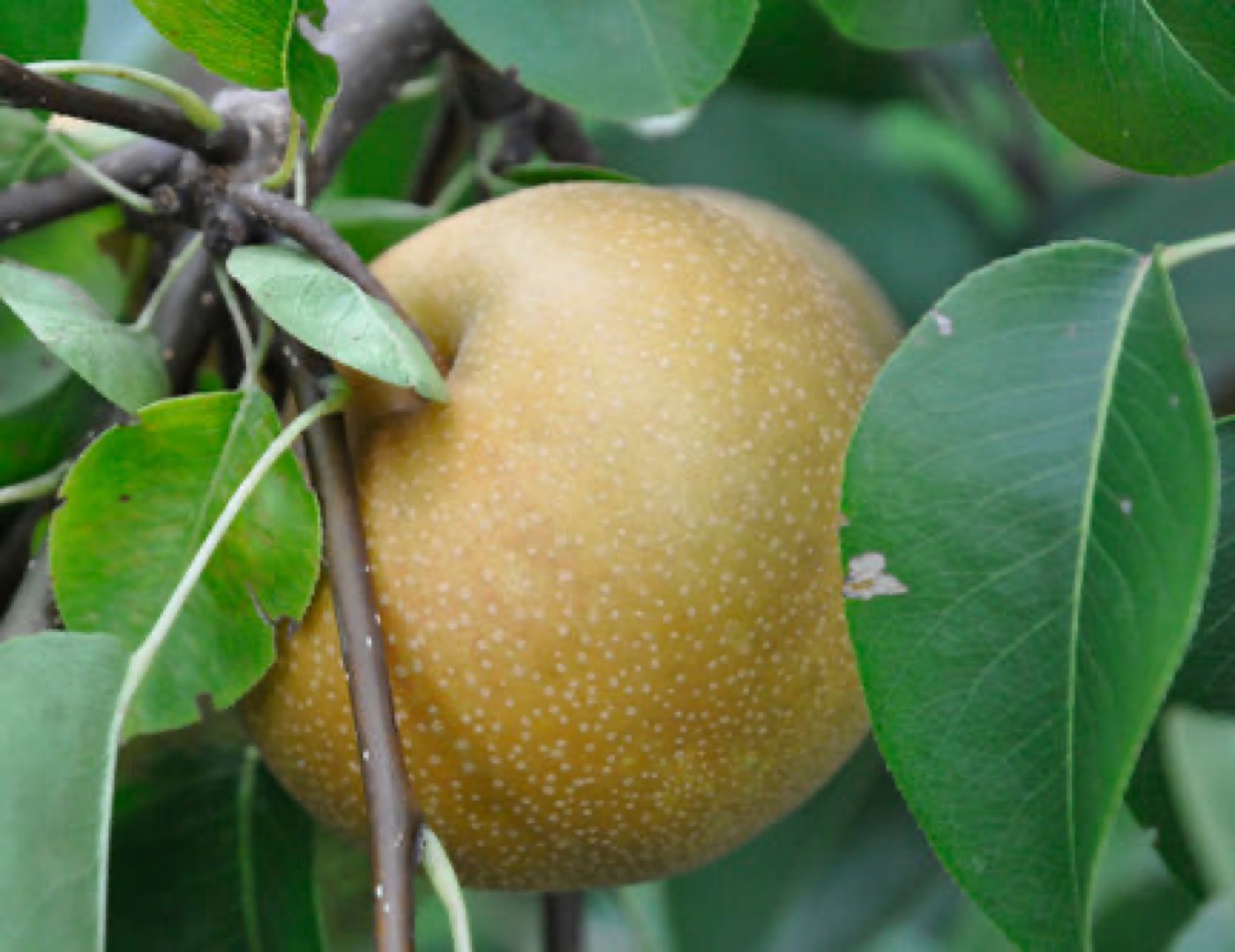
A bell-shaped Asian pear, crisp and slow to brown when cut, with good resistance to fire blight. The chill range is wide, 150–450 hours, so it can work in Phoenix and at mid elevation, and it ripens early and sets fruit on its own. We found little Arizona track record for it.
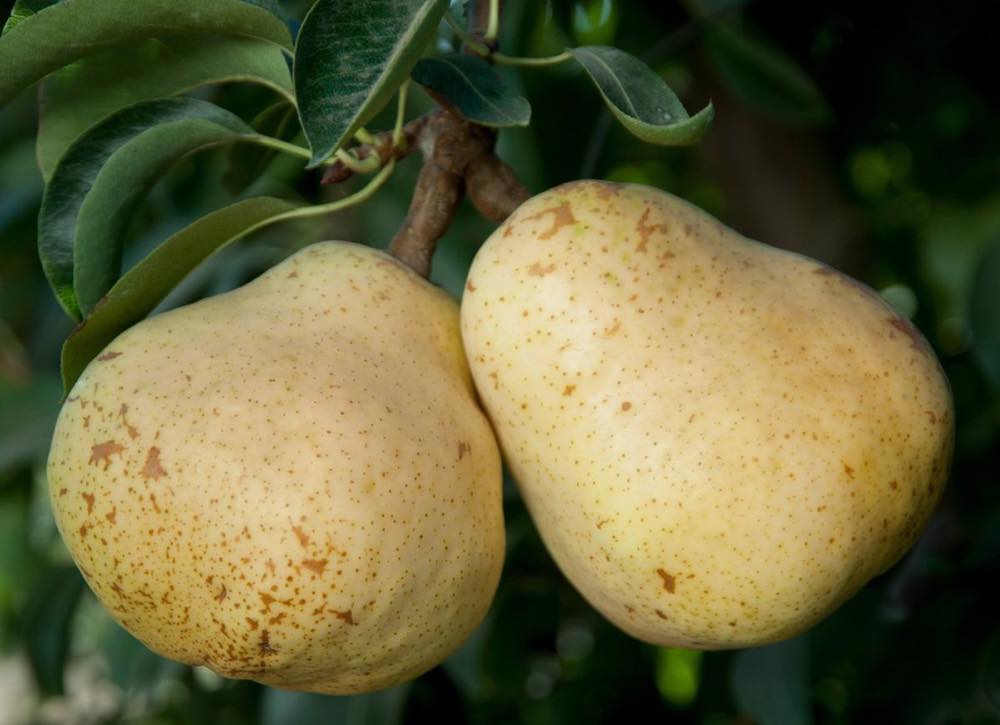
Pears
The classic pear, sweet and juicy, and good in hot summers. It needs 500–600 chill hours, so it suits mid elevation, while Southern Bartlett is the low-chill version for Phoenix. Pear blossoms open early, so frost and fire blight are the two risks, and infected shoots should be pruned out right away.
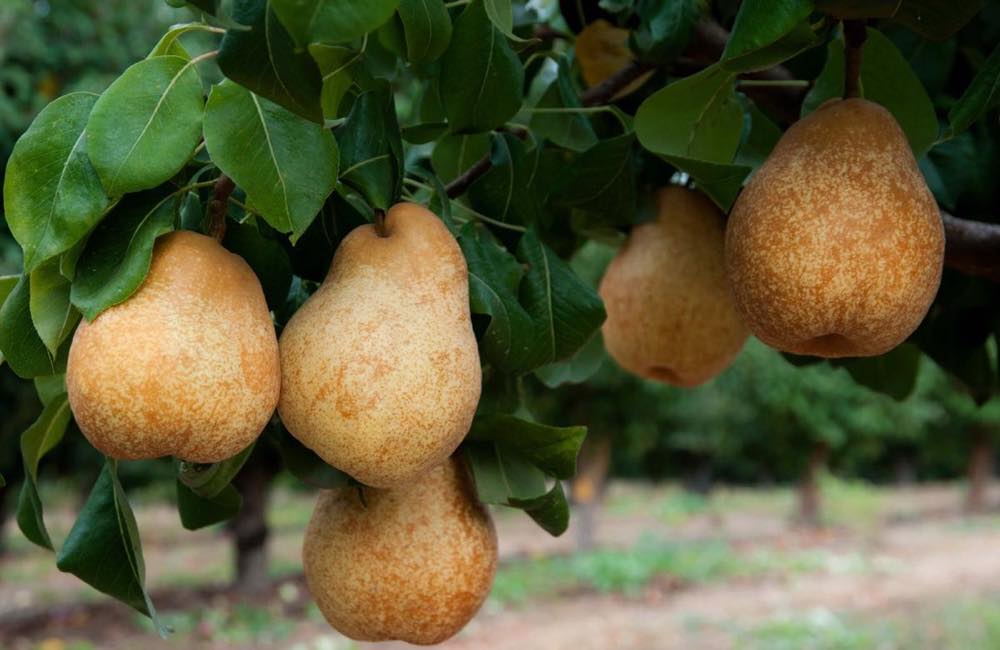
Pears
A yellow and light golden pear with good fire blight resistance, which is a real plus at mid elevation. It ripens one to two weeks after Bartlett and needs about 800 chill hours, so it fits the colder end of mid elevation. Plant Bartlett, Harrow Delight or Warren nearby for pollen.
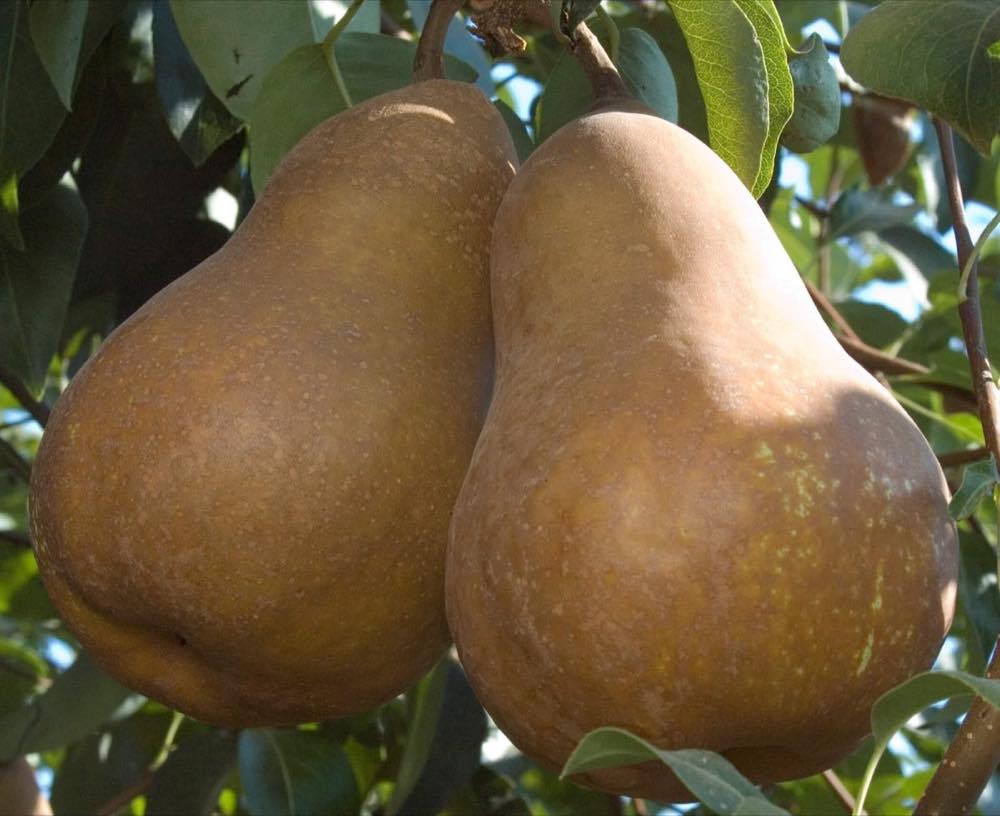
Pears
A long-necked, brown-skinned pear with a firm, rich, spicy flavor, excellent fresh or baked. At 500–600 chill hours it is a mid elevation pear, and it is prone to fire blight in warm, damp springs, so cut out infected shoots right away. Plant Bartlett or D'Anjou nearby for pollen.
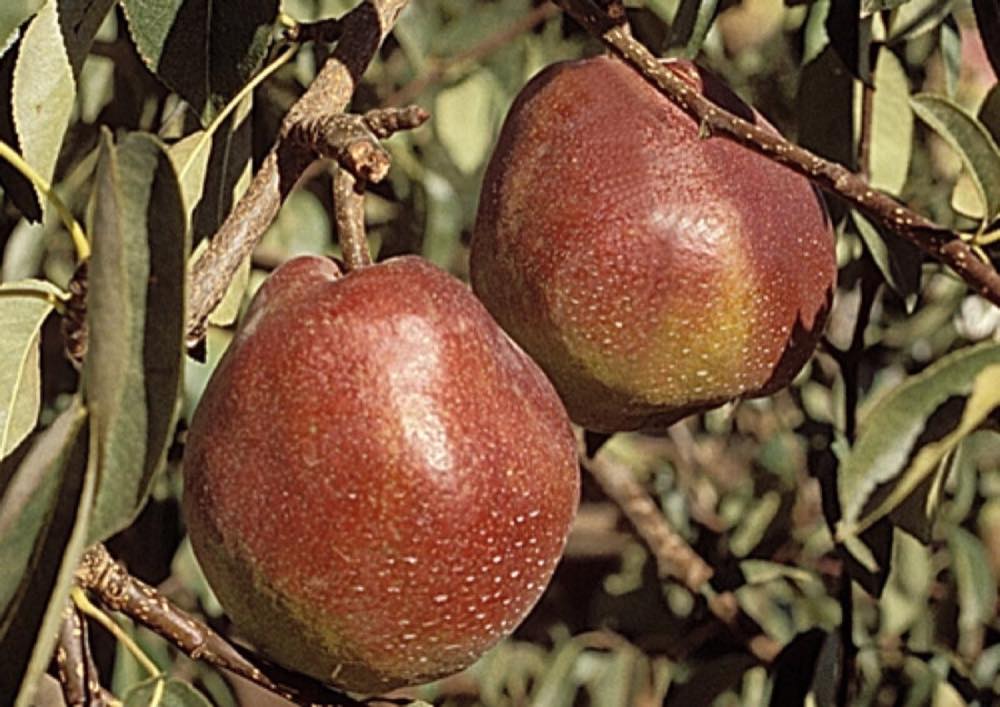
Pears
A cross of Bartlett and Comice bred for hot inland valleys, with yellow-green skin, a red blush and excellent flavor. It needs 500–600 chill hours, so we place it at mid elevation, in spots like the Verde Valley or Sierra Vista. It is productive and sets fruit on its own, so one tree is enough.
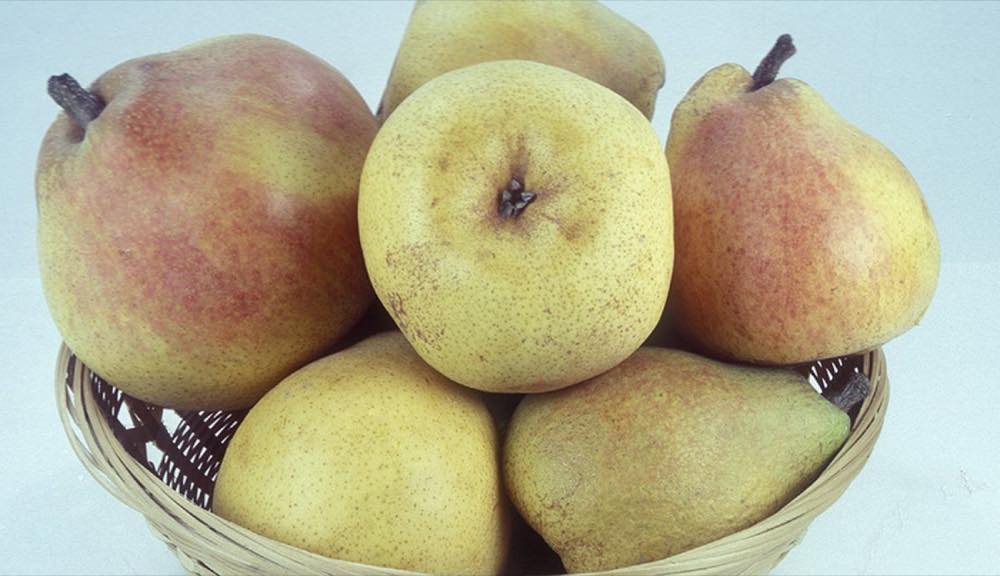
Pears
A sweet, aromatic, fine-textured pear that many people rank as the best for eating fresh, with a short neck and a red blush. It ripens late and needs about 600 chill hours, so it fits mid elevation. Like most European pears it can get fire blight, so prune out infected shoots promptly.
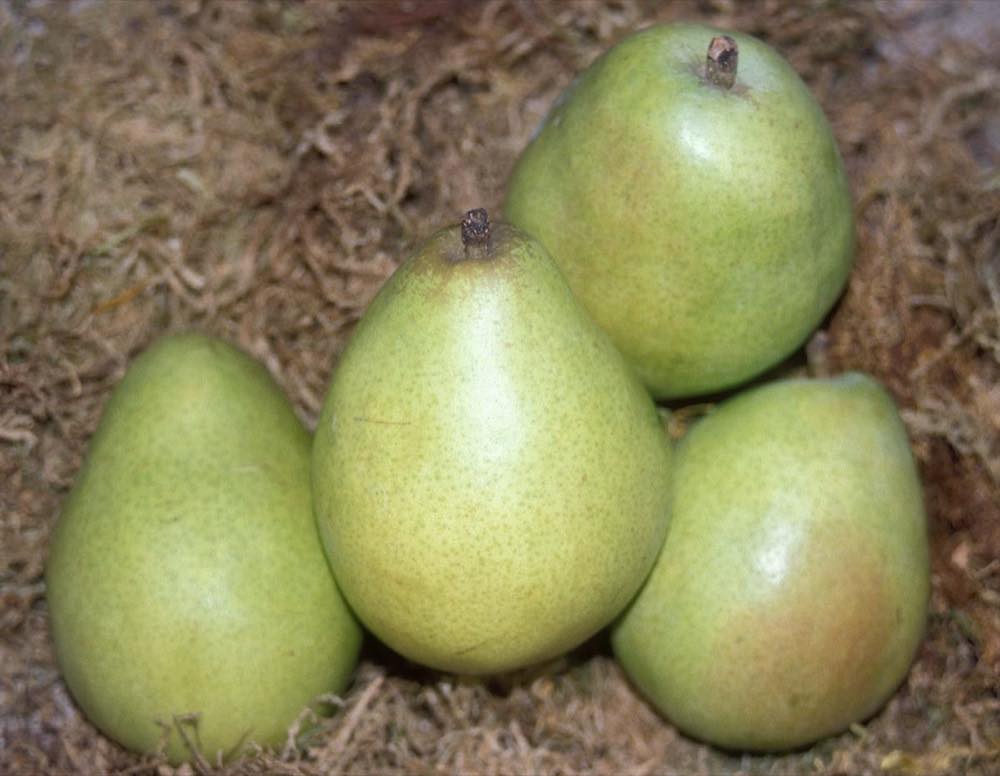
Pears
A large, firm, short-necked pear that keeps a long time, picked hard and ripened off the tree. It needs about 800 chill hours, so it suits the colder end of mid elevation rather than warm valleys. Plant a Bartlett nearby to get a crop.
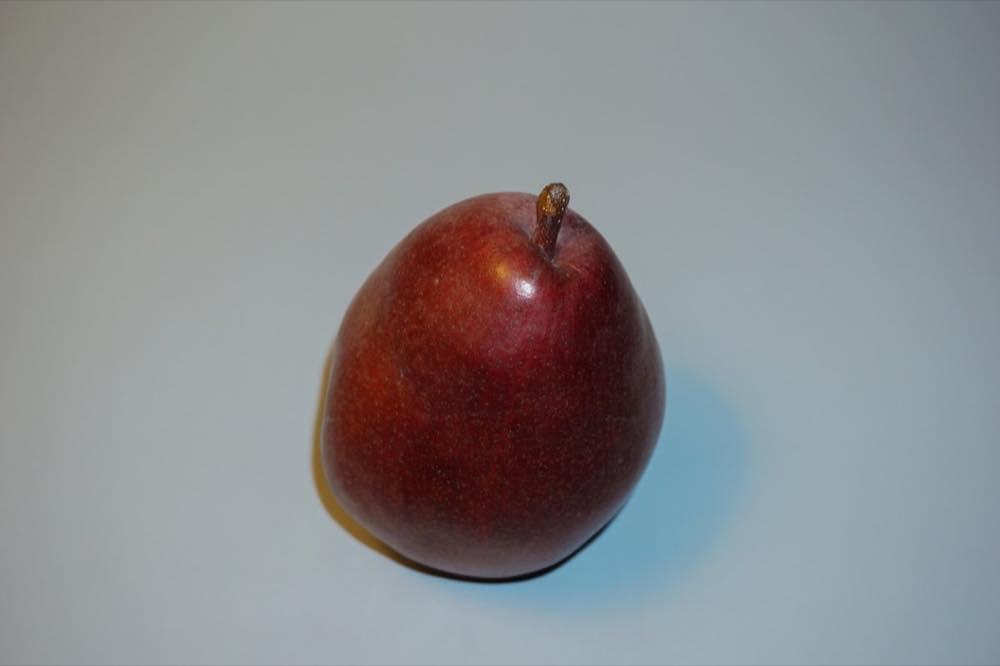
Pears
The same firm, smooth, long-keeping pear as D'Anjou, with full red skin. It needs about 800 chill hours, so it suits the colder end of mid elevation rather than warm valleys. Plant a Bartlett nearby to get a crop.
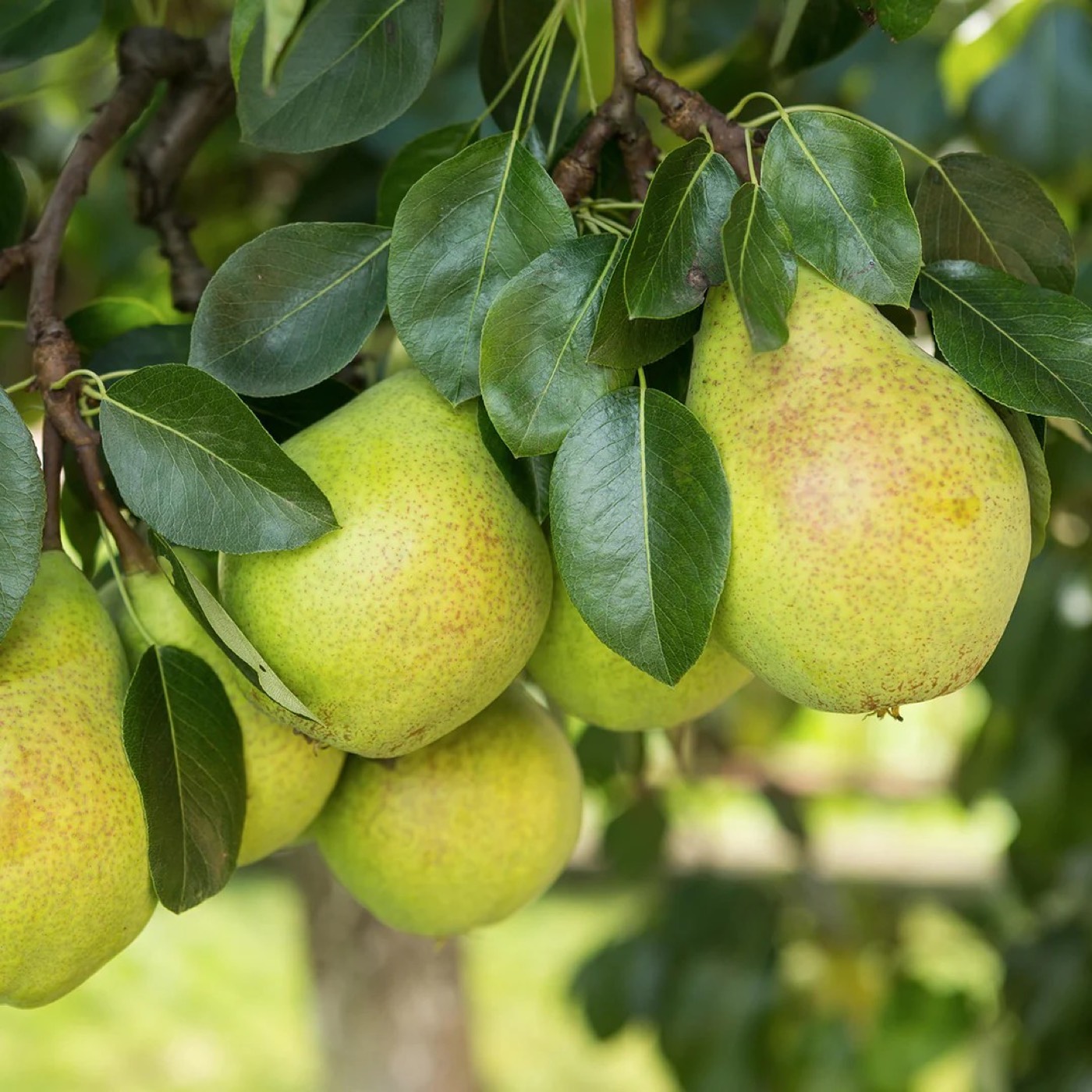
Pears
A low-chill pear from Florida breeding with sweet, smooth, juicy fruit that ripens early, around July in the low desert. It blooms very early, so it is one for Phoenix and Yuma and not for frosty mid elevation yards. Partly self-fruitful, so a second low-chill pear like Kieffer or Hood gives a heavier crop.
Pears
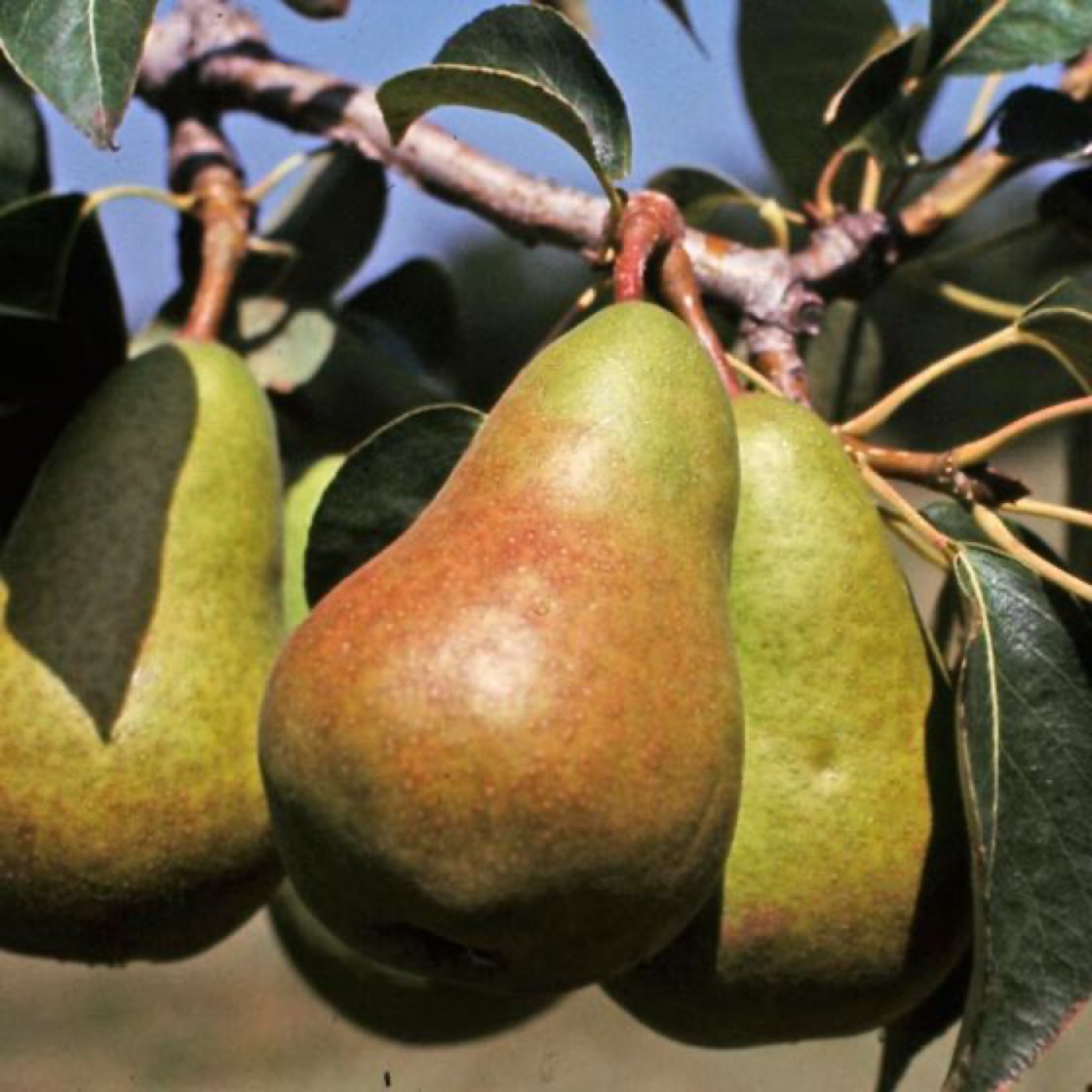
A fire blight resistant pear that tastes like Bartlett, with a red blush, and it ripens about two weeks earlier. It is hardy and needs about 800 chill hours, so it fits mid elevation and is worth a try in the high country, where late frosts can still take the blossoms. Plant Bartlett or Bosc nearby for pollen.
Pears
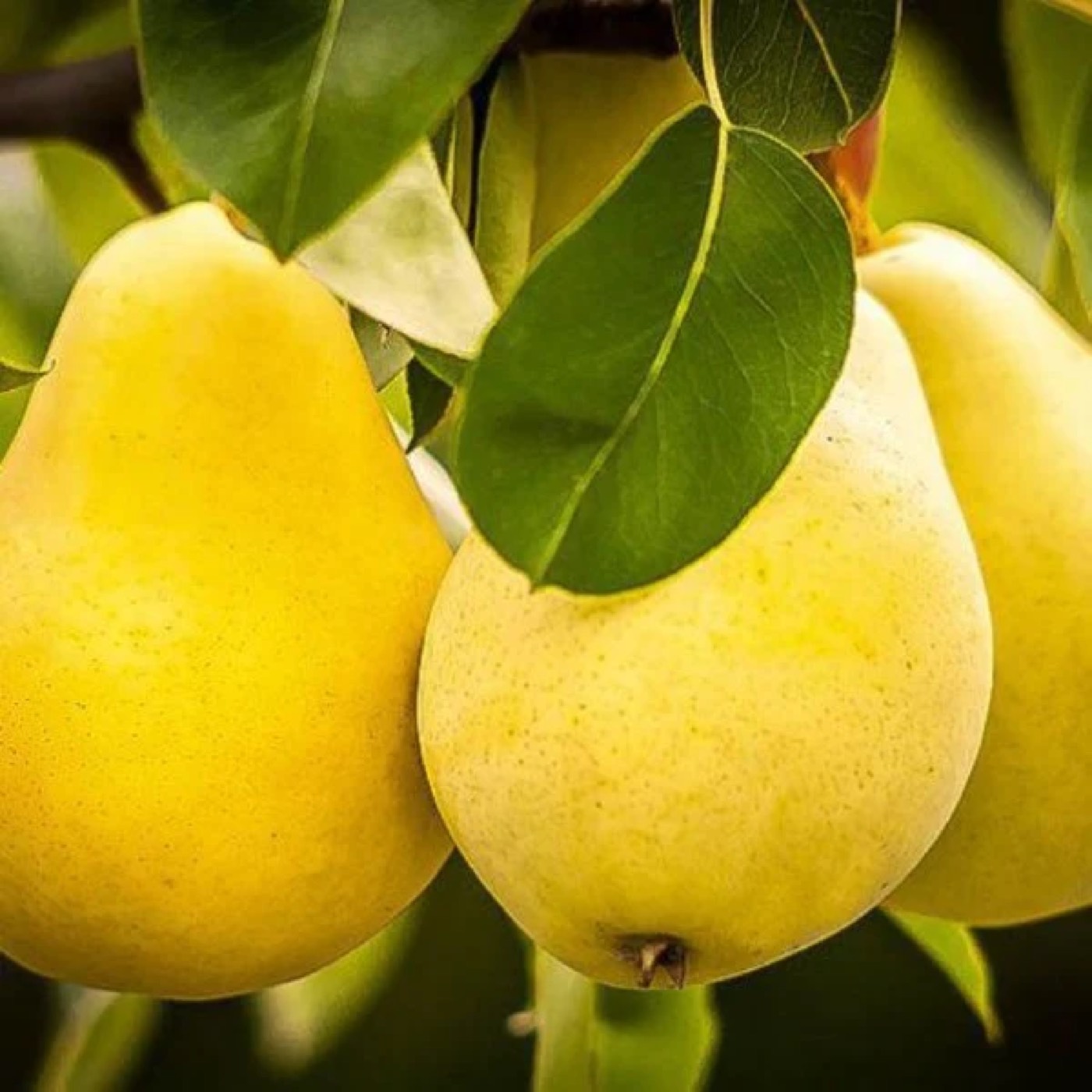
A tough, heat-tolerant pear that bears dependably, with firm, gritty fruit that is best for canning, preserves and baking, not for eating off the tree. It resists fire blight and needs little chill, so it works in Phoenix as well as at mid elevation. It is self-fruitful, though a second pear improves the set.
Pears
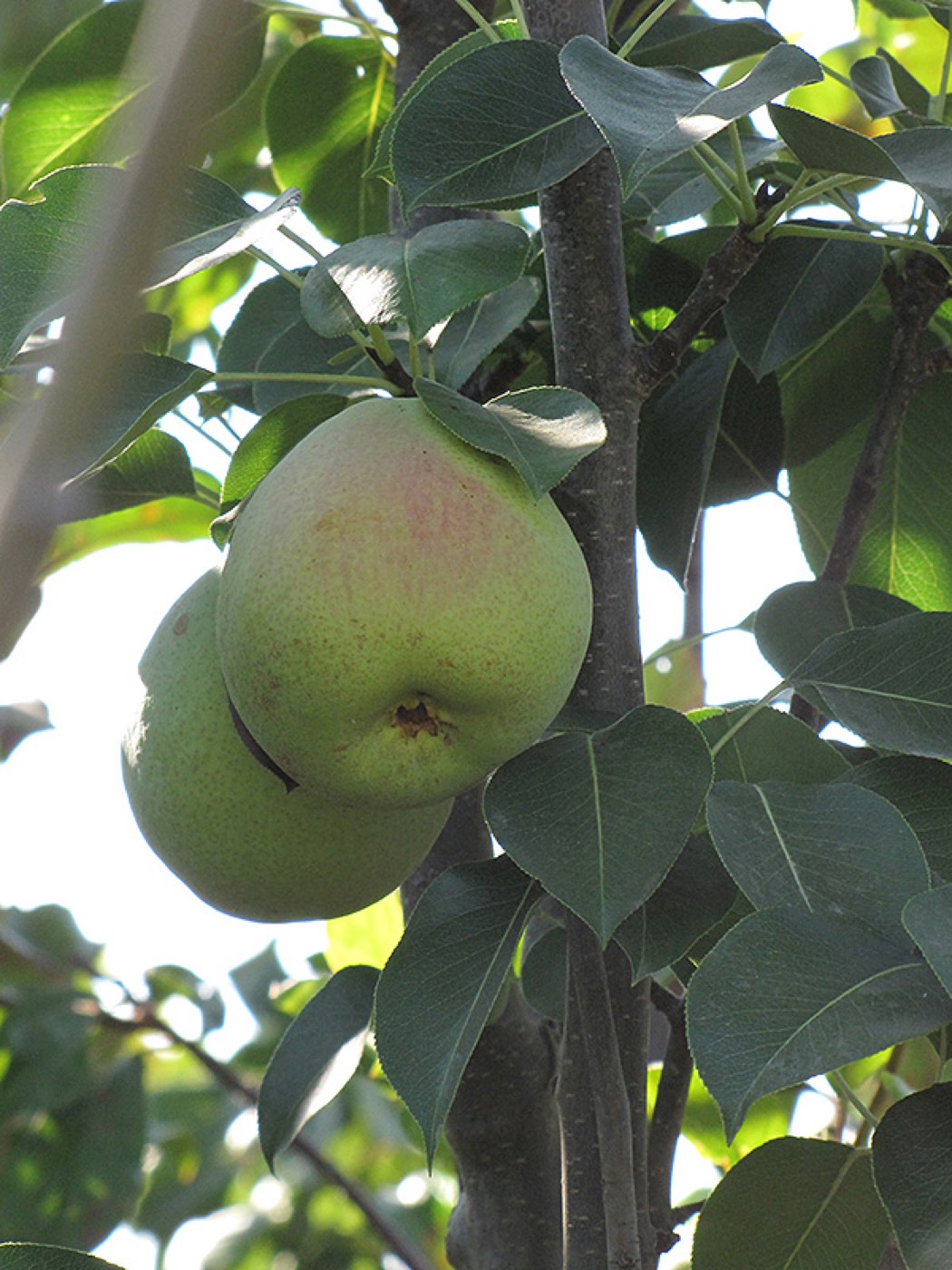
A large, round, yellow-green pear with crisp, sweet flesh, from a vigorous low-chill tree that originally came from Monterrey, Mexico. It needs about 300 chill hours and sets fruit on its own, so it suits the low desert, though it may bloom early, so keep it out of frosty low spots. We found little Arizona track record.
Pears
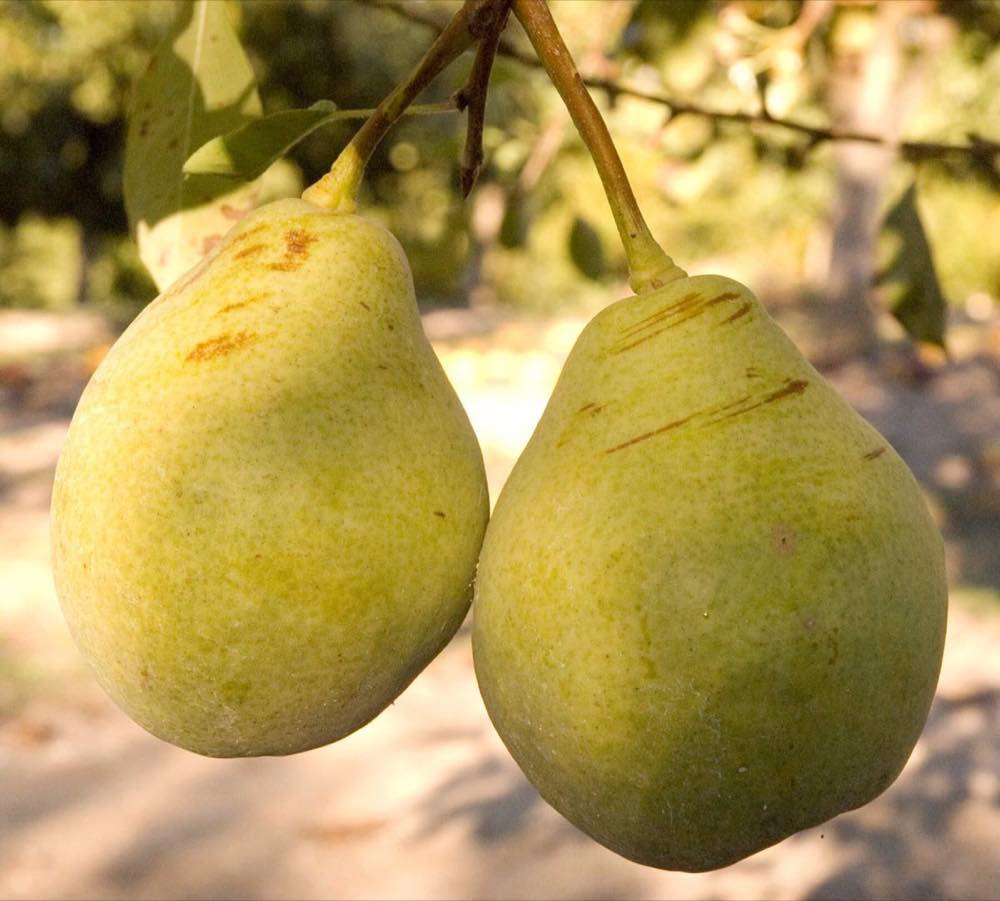
A large, productive, fire blight resistant pear for fresh eating or canning, ripening a bit ahead of Bartlett. At 400–500 chill hours it fits mid elevation, and it is marginal in Phoenix, so do not count on heavy crops there. It needs a second pear, and it is good pollen for others.
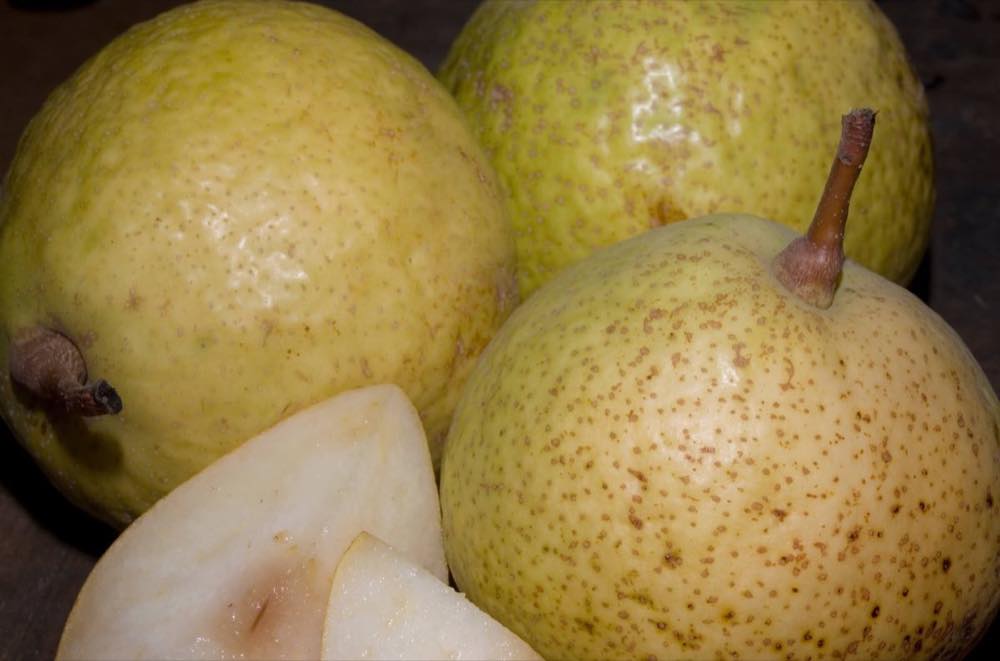
Pears
A big, nearly round pear with shiny yellow skin and a red blush, mild and firm, mostly used for canning and cooking. It resists fire blight and needs about 350 chill hours, so it can work in the low desert and at mid elevation, on a big, vigorous tree. Plant Kieffer or Moonglow nearby for pollen.
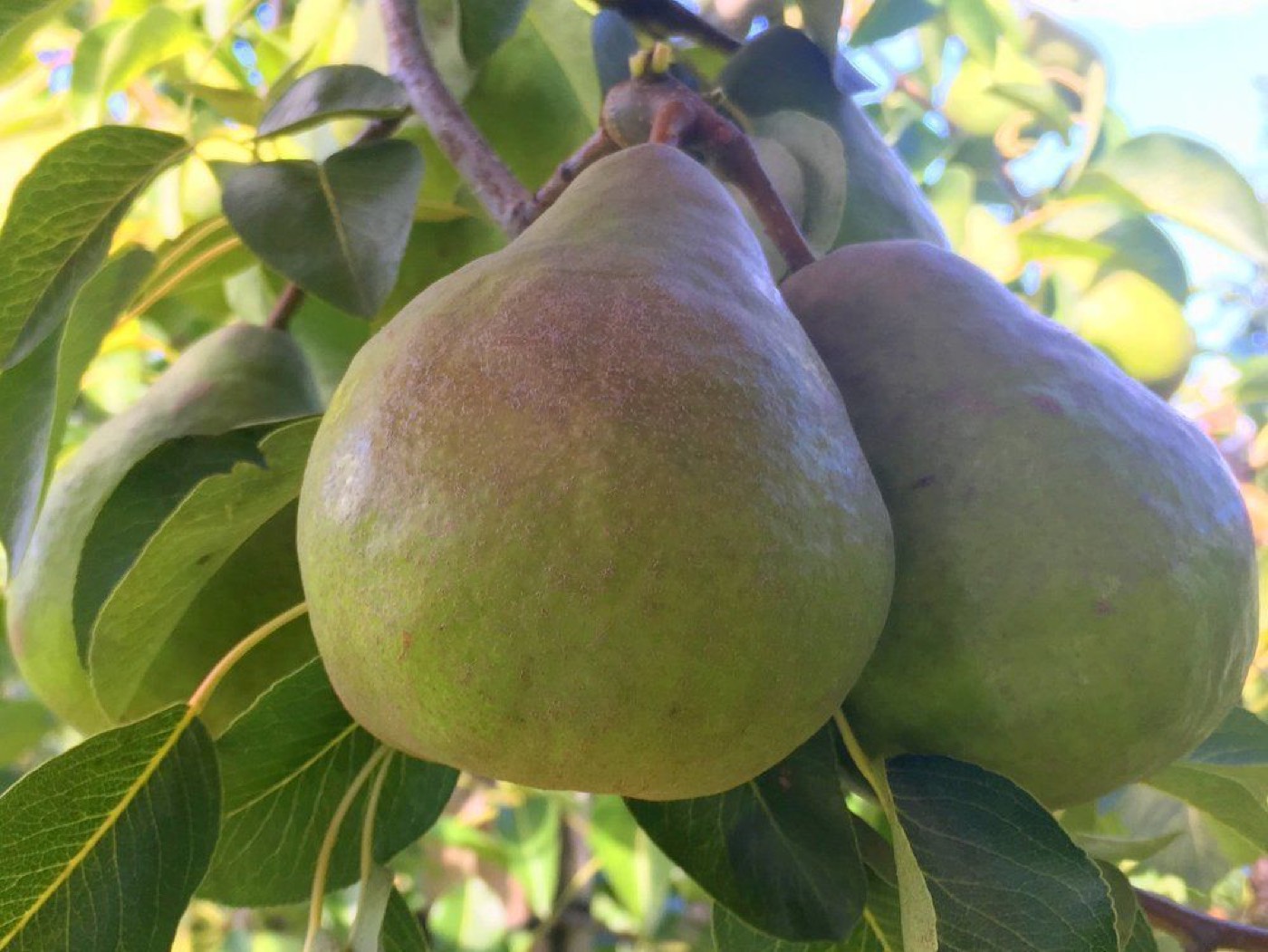
Pears
A late pear with buttery, finely textured flesh and a gentle, slightly tart flavor, and good fire blight resistance. It is not self-fruitful, so plant Bartlett or D'Anjou nearby. No official chill figure is published, but about 600 hours is the usual estimate, so it fits mid elevation.
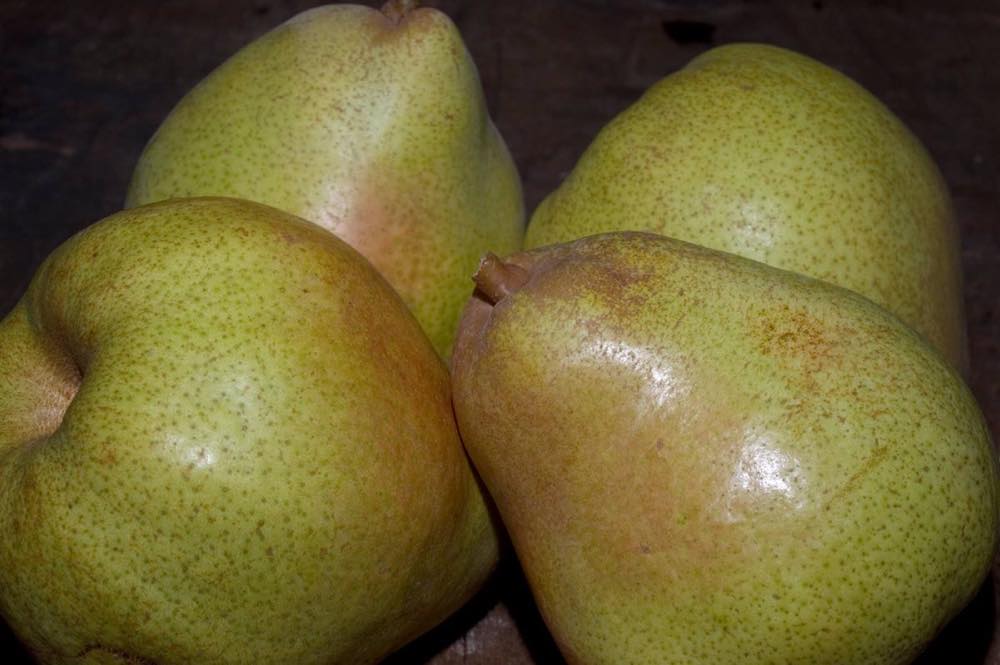
Pears
The little sugar pear: small, russeted, very sweet and spicy, great for snacking and for canning whole. It resists fire blight and needs about 500 chill hours, so it fits mid elevation. It is self-fruitful in the West, and Bosc or D'Anjou help, but Bartlett does not pollinate it.
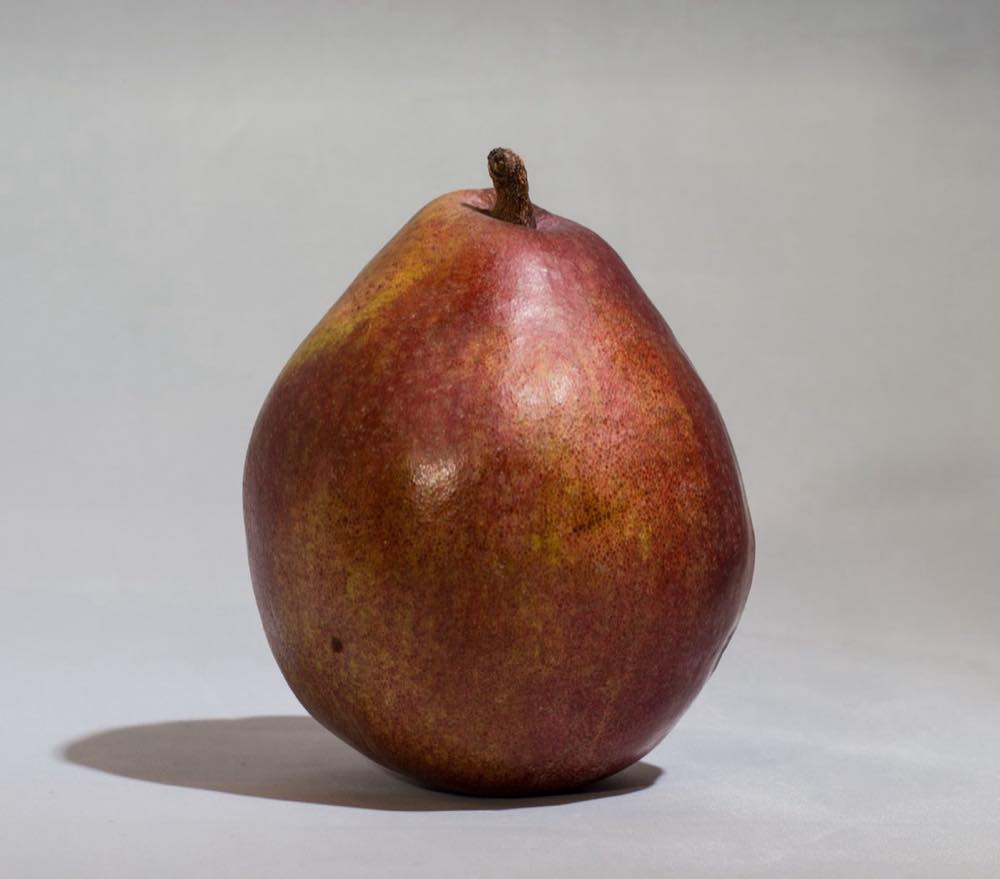
A Bartlett-type pear with bright red skin on a smaller tree, which makes pruning and picking easier. It needs about 700 chill hours, so it suits mid elevation. It is self-fruitful in most western gardens, with better crops when Bosc or D'Anjou are nearby.
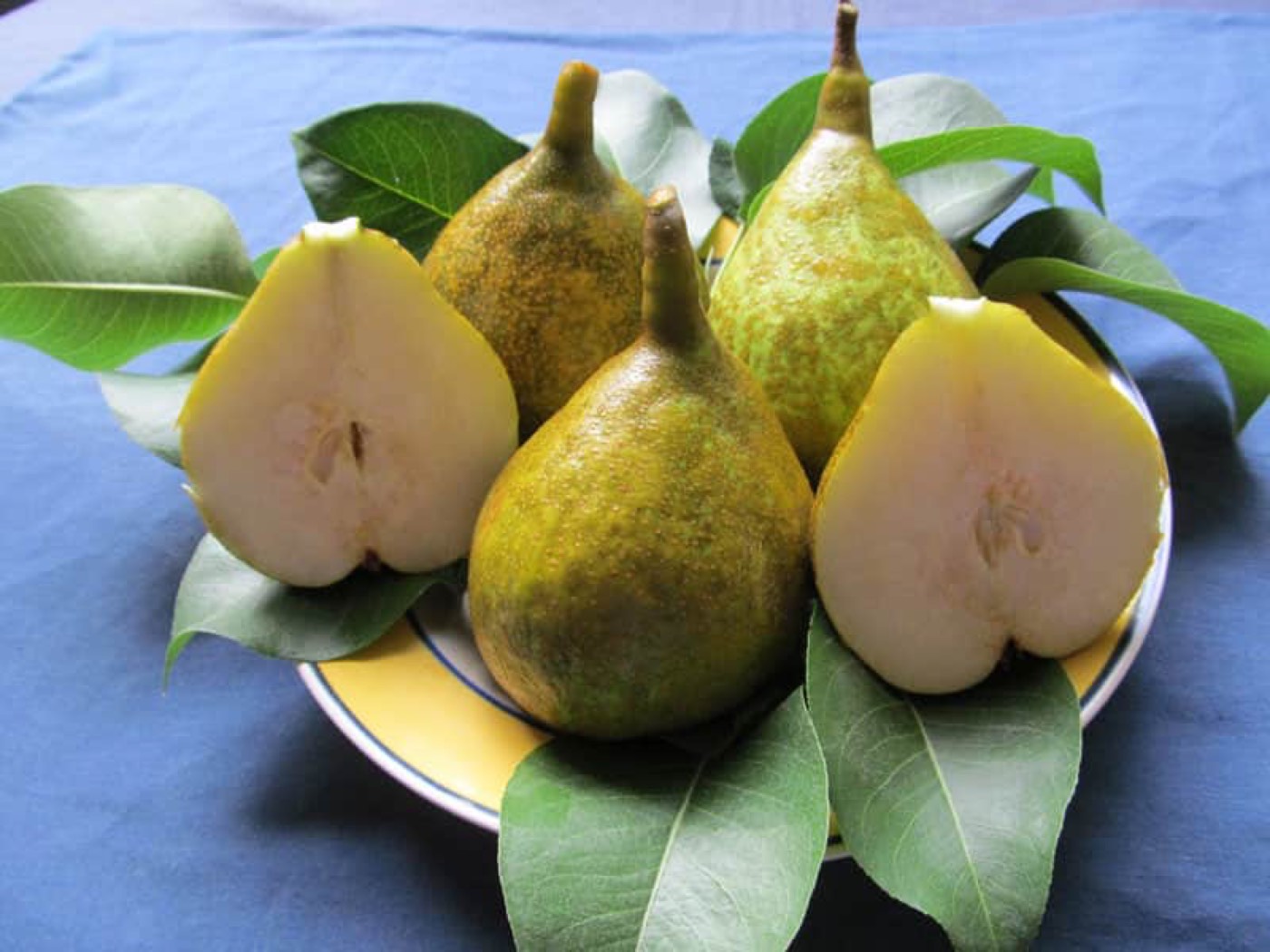
A Bartlett lookalike found on an old Louisiana homestead, with moderate fire blight resistance and a chill need of 400 hours or fewer, so it is the Bartlett-type pear for Phoenix. It is self-fruitful with a spreading shape. Harvest dates are not published, but Bartlett-type fruit usually ripens around July in the low desert.
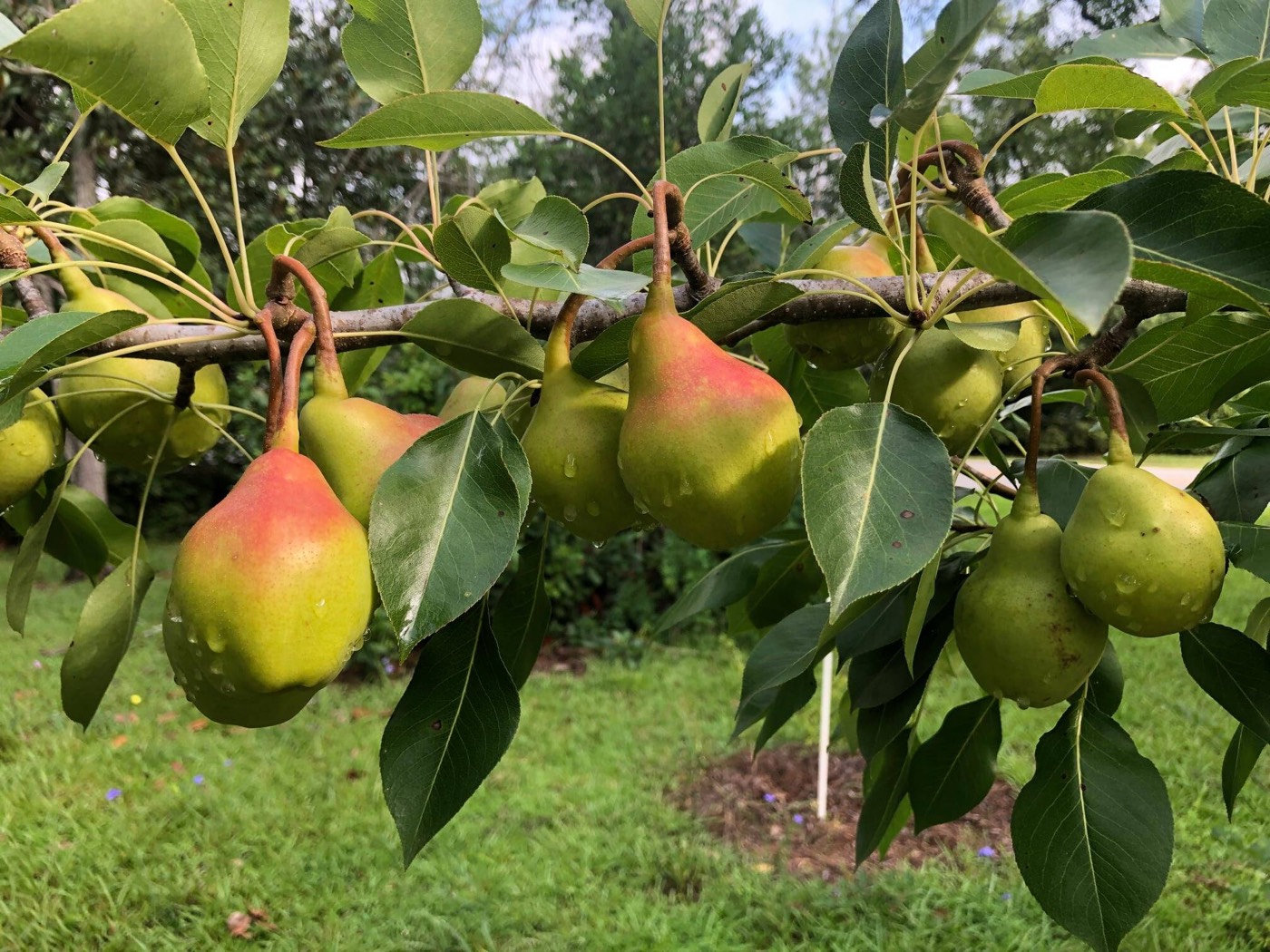
Pears
A traditional pear popular in Houston and other low-chill areas, good for fresh eating or canning, with good fire blight resistance. It needs 400 chill hours or fewer and sets fruit on its own, so it is a low desert choice. Harvest dates are not published, so expect late summer fruit.
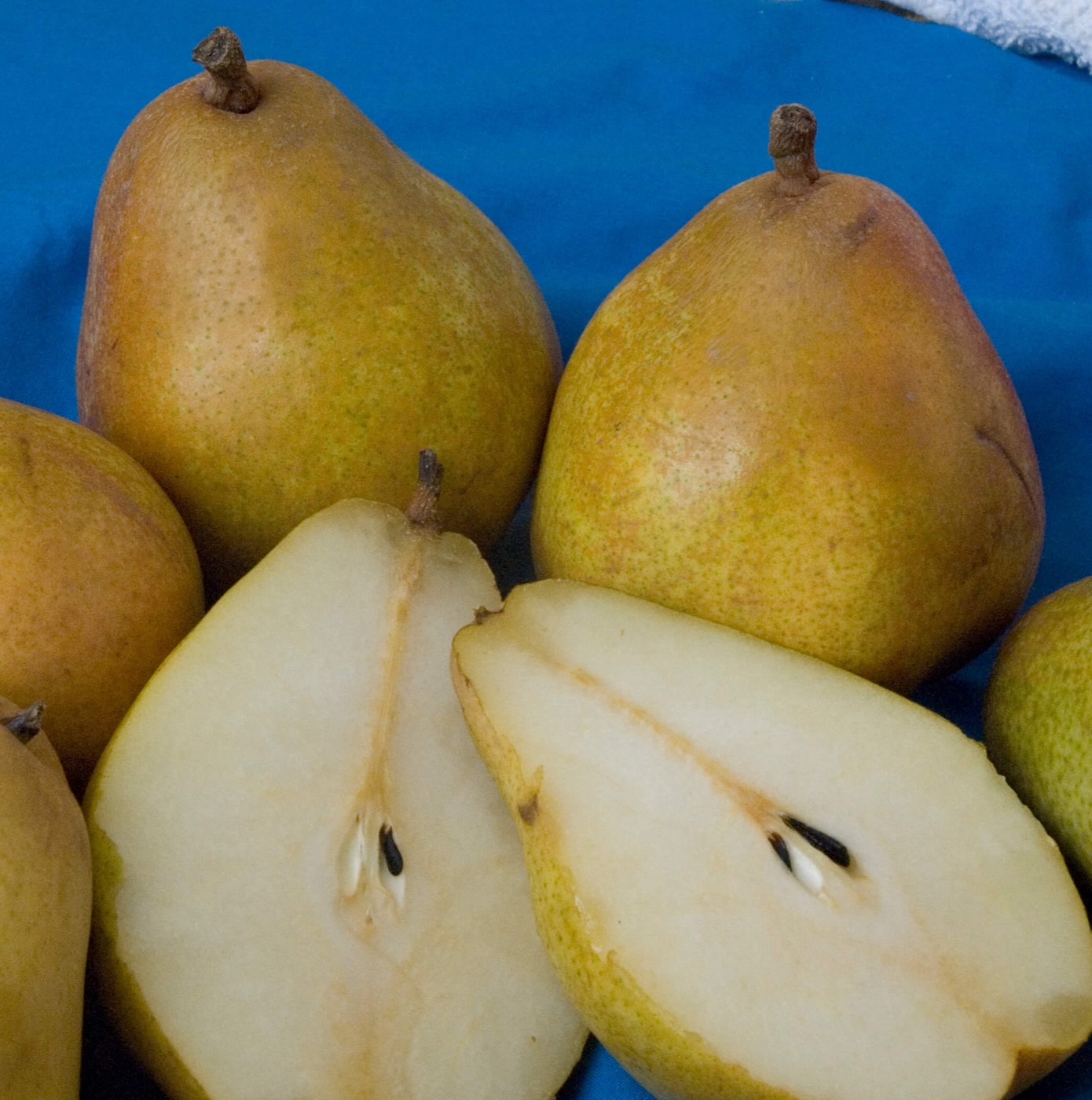
Pears
A smooth, juicy, buttery pear with no grit, long-necked and pale green. It is highly resistant to fire blight, hardy to about -20°F and self-fruitful. At 600 chill hours it fits mid elevation, and it is worth a try in the high country where frost misses the blossoms.
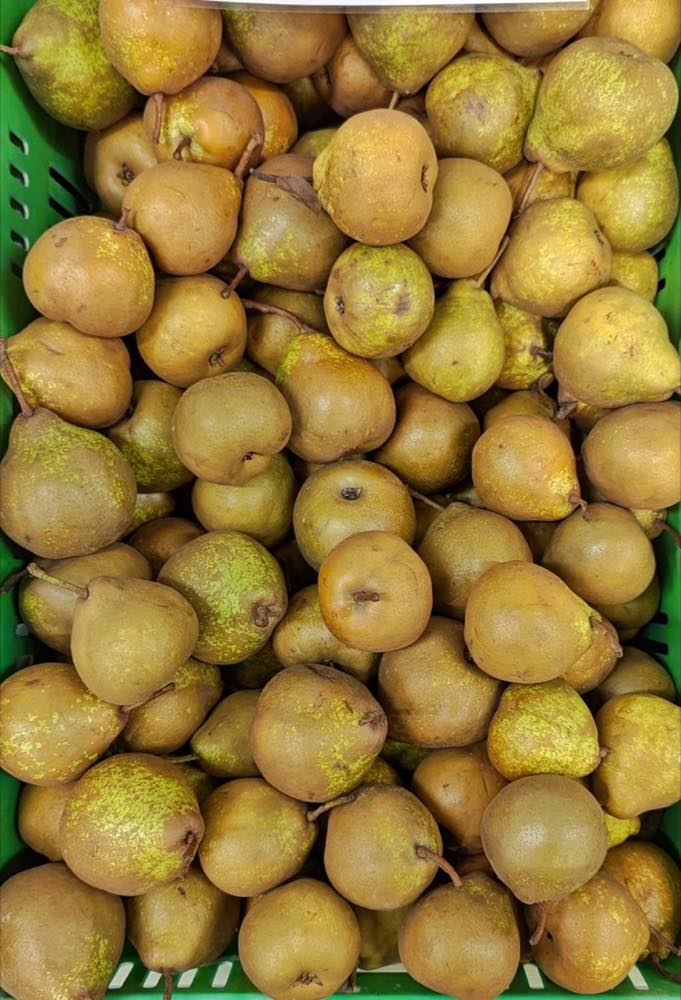
Pears
A small, russeted, sweet and aromatic pear that ripens late and stores for months. It is a smaller tree and a good pollen partner for Bartlett. It needs about 700 chill hours, so it fits mid elevation.
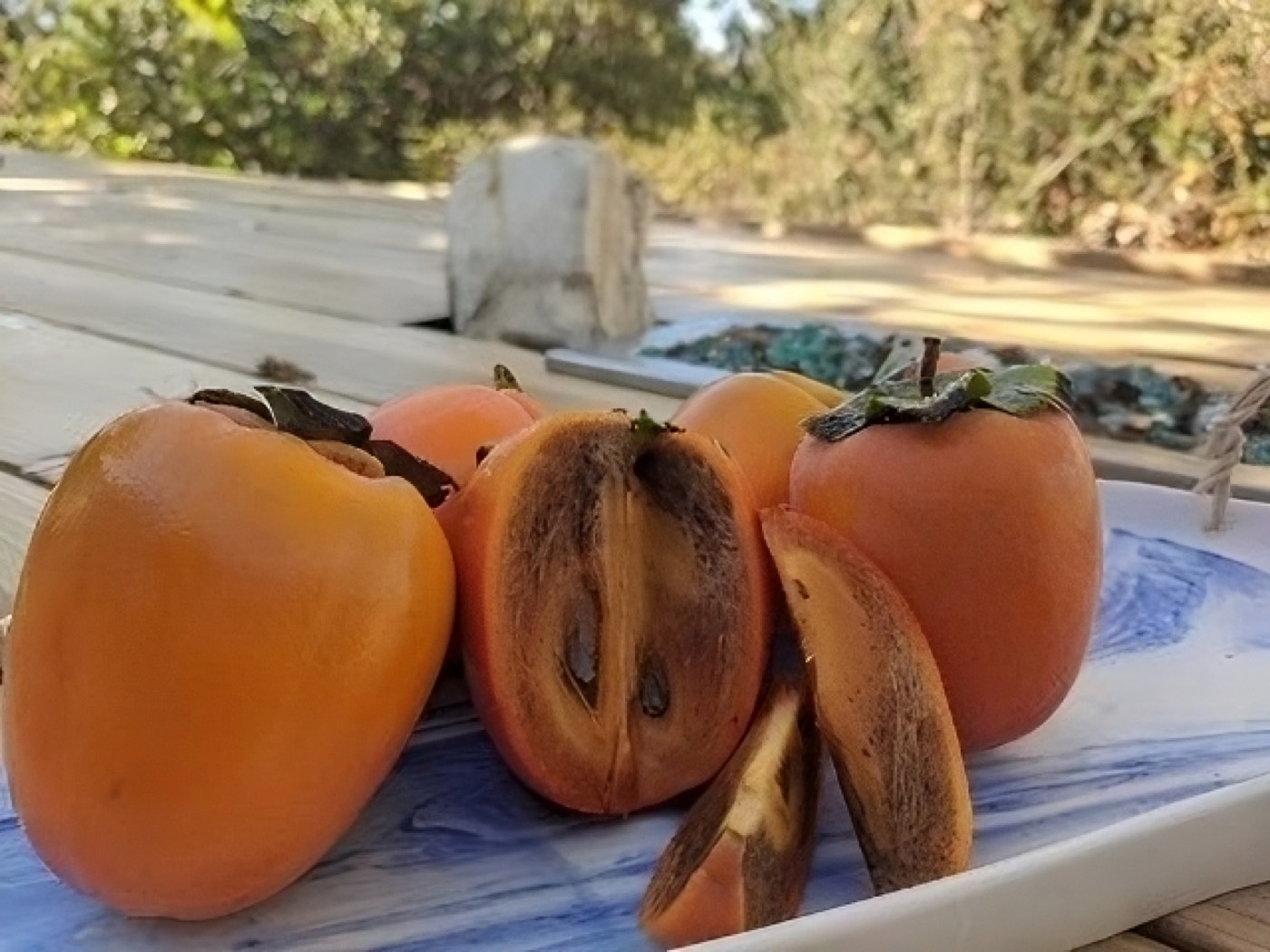
Persimmons
Small to medium oblong red fruit with firm, brown, spicy-sweet flesh, often called the connoisseur's persimmon. It is non-astringent, so you can eat it firm, and it tastes best with seeds, when the flesh turns chocolate brown, so a second persimmon nearby helps. It ripens late, so plant it in the low desert and keep water steady.
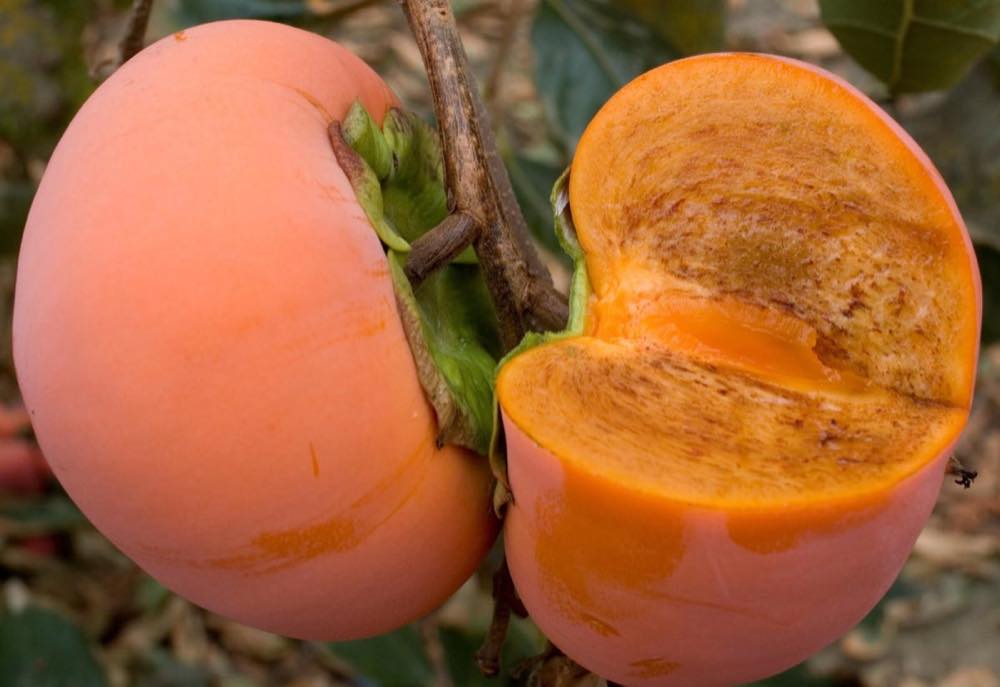
Persimmons
An early, non-astringent persimmon with a spicy cinnamon-pastry flavor, ripening three to four weeks ahead of Fuyu, so you can eat it firm. Unlike most persimmons it needs a second variety nearby to crop, and Chocolate or Gosho are the matches. Early ripening helps it at mid elevation as well as in the low desert.
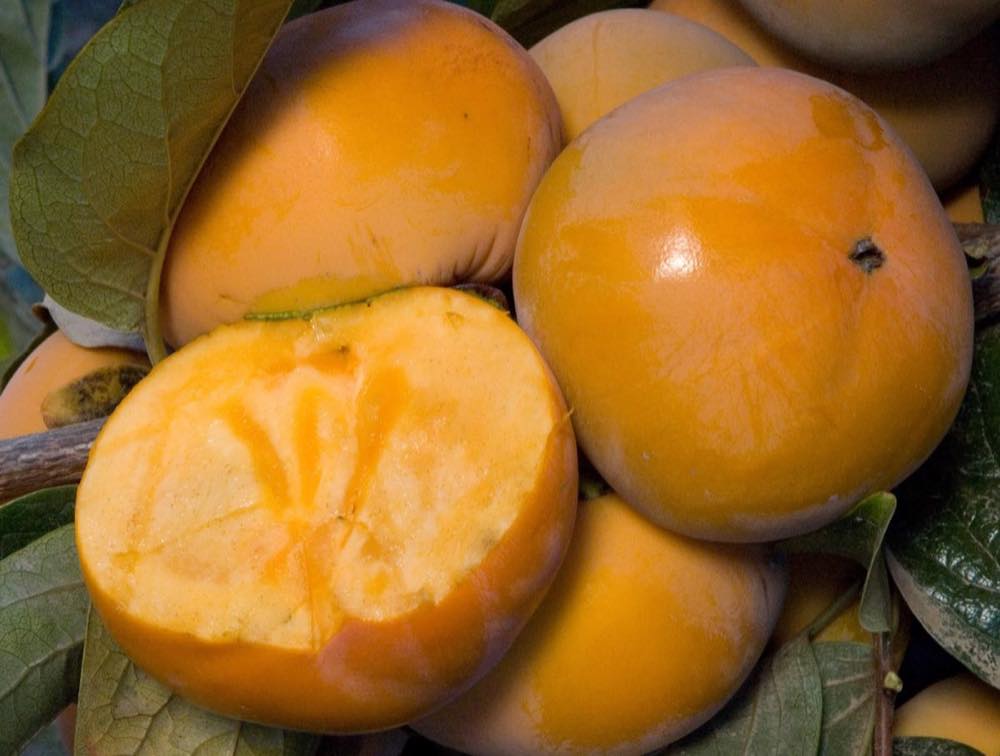
Persimmons
A large, squarish, flattened Fuyu that is non-astringent and crunchy like an apple when ripe, so there is no waiting for it to soften. Easy, self-fruitful and nearly pest-free, it fits the low desert and the milder parts of mid elevation. Steady water and a whitewashed trunk help against sunburn and fruit drop.
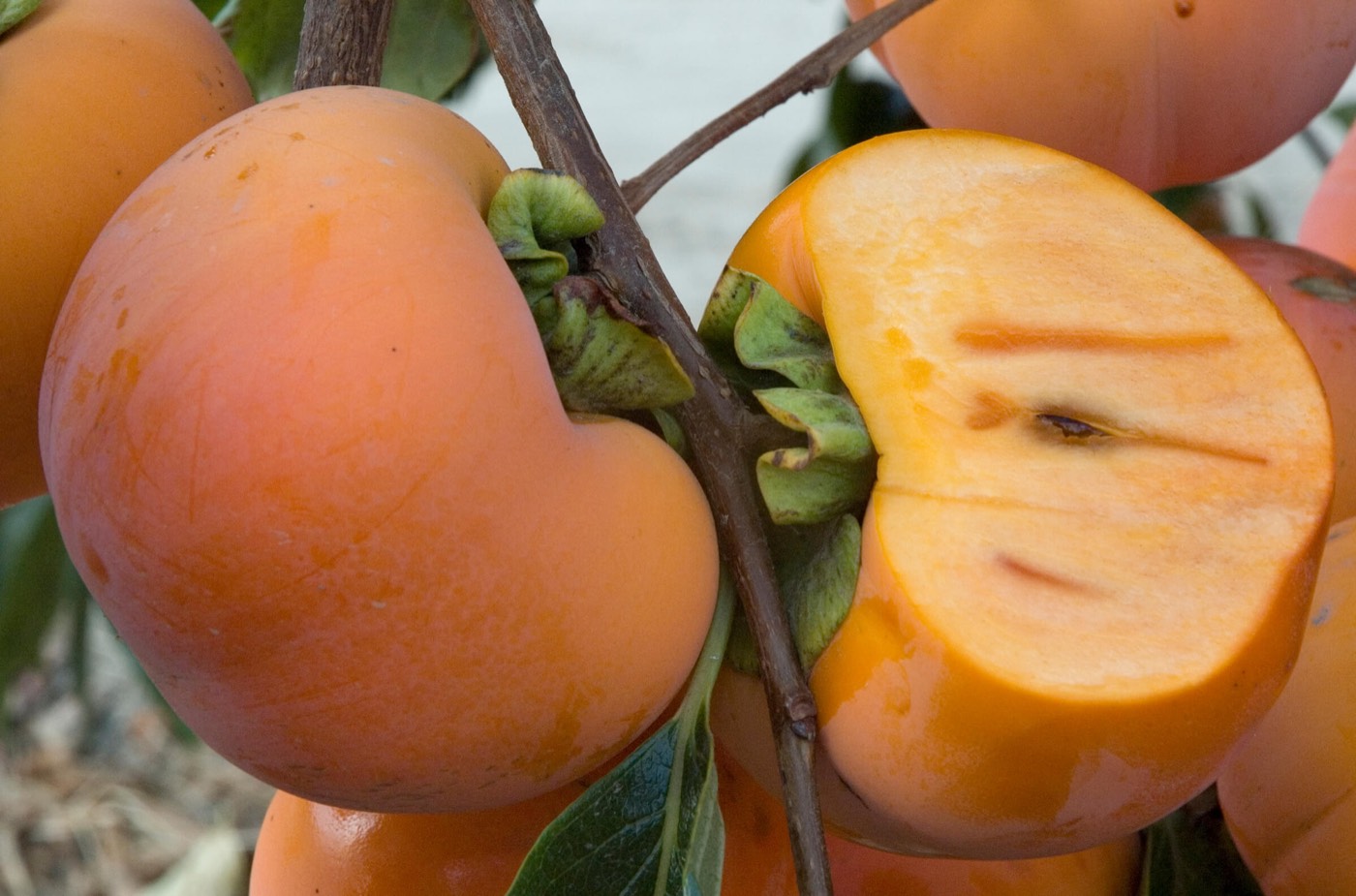
Persimmons
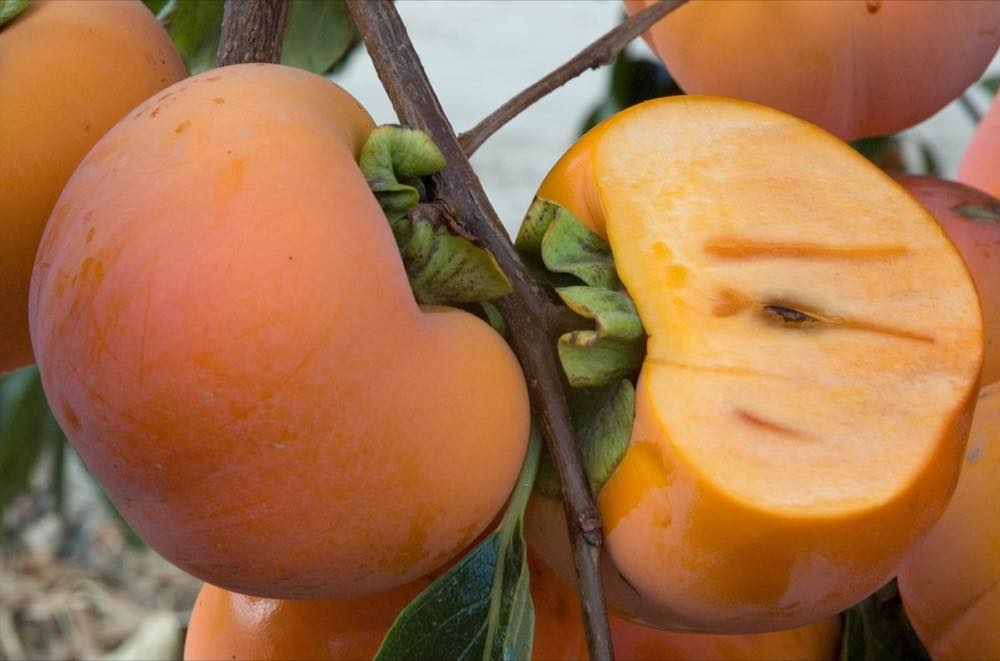
Medium, flat, crunchy fruit you eat firm like an apple, with no astringency. A top pick for first-timers, since it is self-fruitful, nearly pest free and happy in both hot and cool climates, from the low desert to the milder parts of mid elevation. Steady watering helps avoid fruit drop in summer heat.
Persimmons
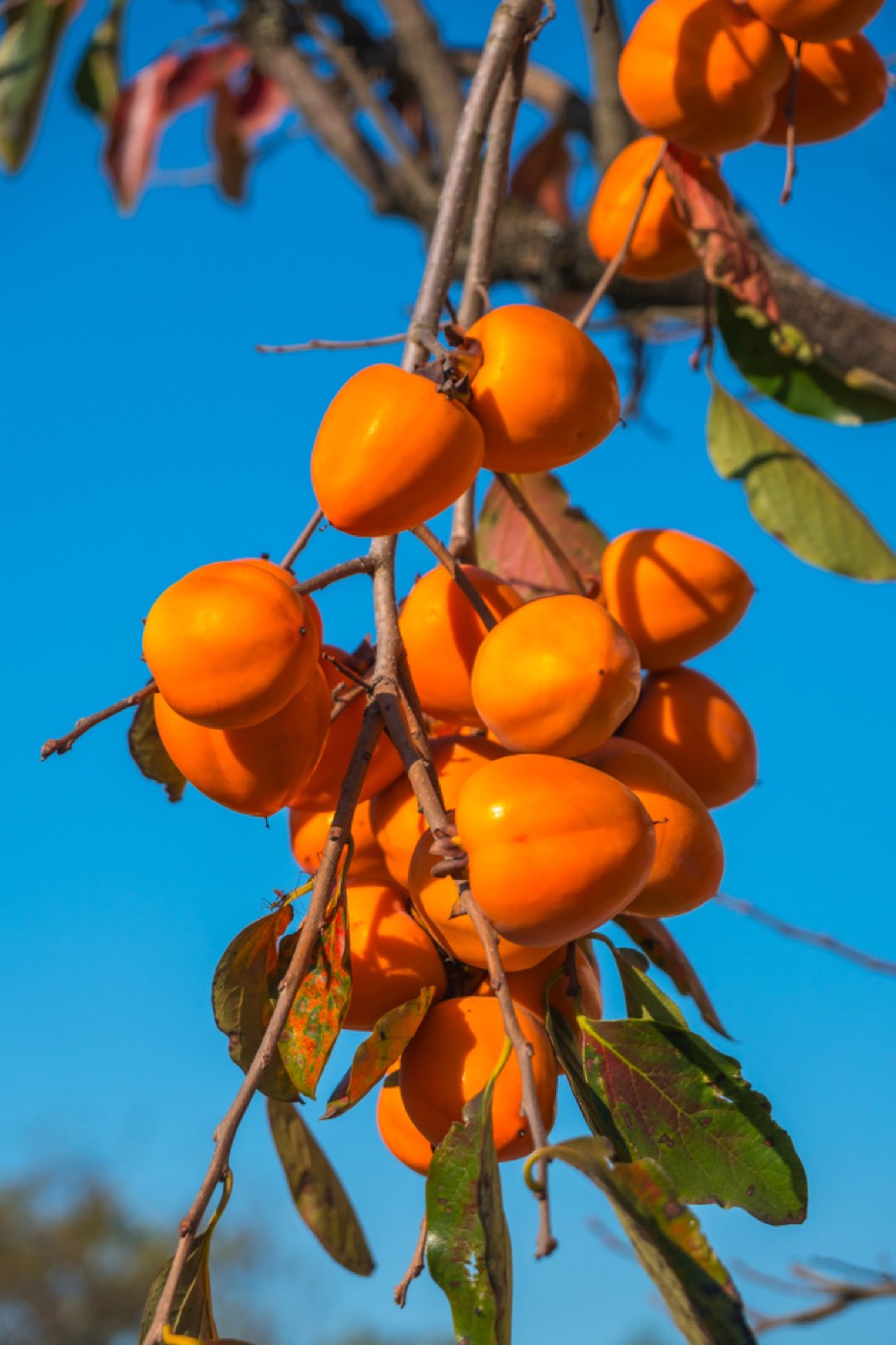
Bigger and rounder than regular Fuyu, still crunchy, sweet and non-astringent when ripe. It ripens a little earlier than Jiro and is easy in both hot and cool climates, so it fits the low desert and milder mid elevation. Thin fruit lightly in heavy years so the big fruit do not break limbs.
Persimmons
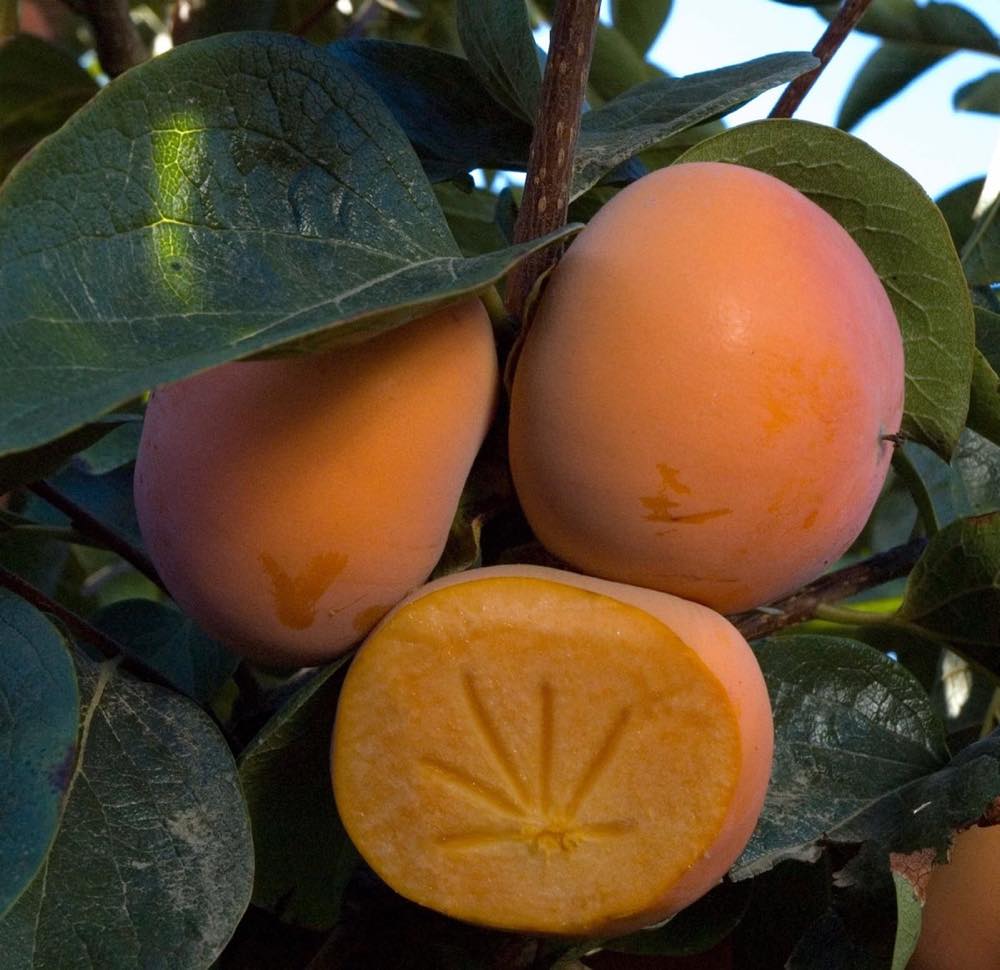
A large, deep orange, acorn-shaped persimmon that is very sweet but astringent until it is completely soft, like jelly. It needs a hot summer to mature, which makes it a natural for the low desert, and it ripens late, so mid elevation is risky. Wait until the fruit is soft, or freeze and thaw it, before eating.
Persimmons
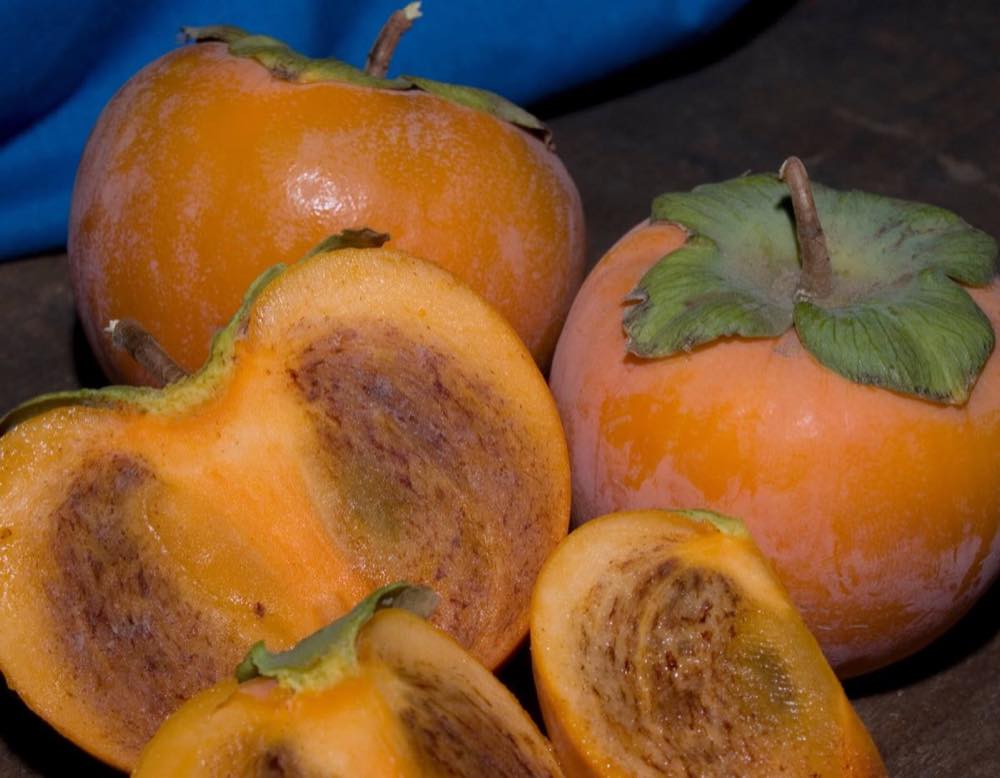
A round, very sweet, non-astringent persimmon that ripens about three weeks before Fuyu, on a smaller tree that is a good backyard pick. Early ripening helps it at mid elevation as well as in the low desert. You can eat it firm, and thinning in heavy years keeps the fruit large.
Persimmons
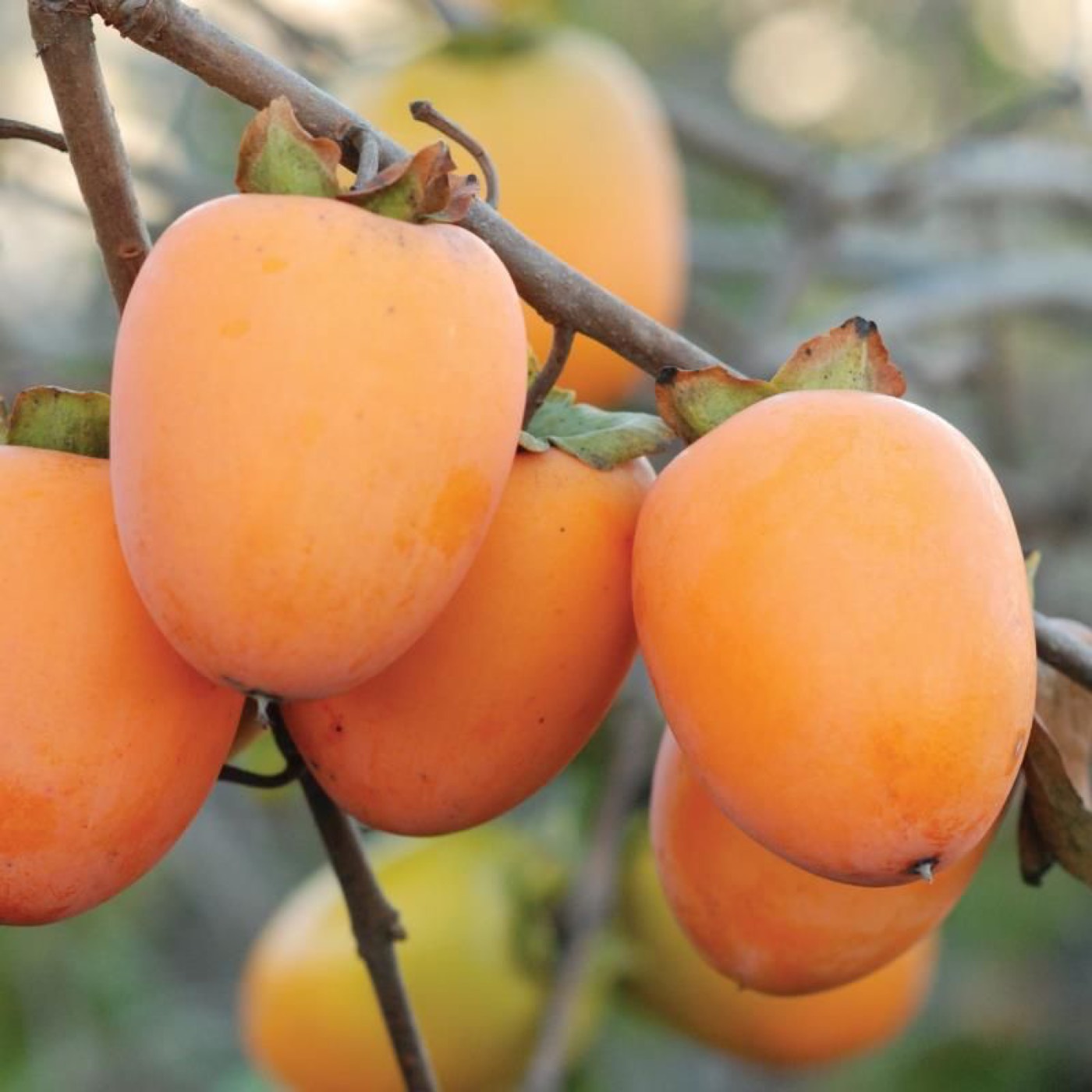
A medium, round, glossy orange-red persimmon with a very sweet, rich flavor. It is non-astringent, and when pollinated by another persimmon the flesh turns dark cinnamon and gets seeds. It ripens by midseason, so it works in the low desert and the milder parts of mid elevation.
Persimmons
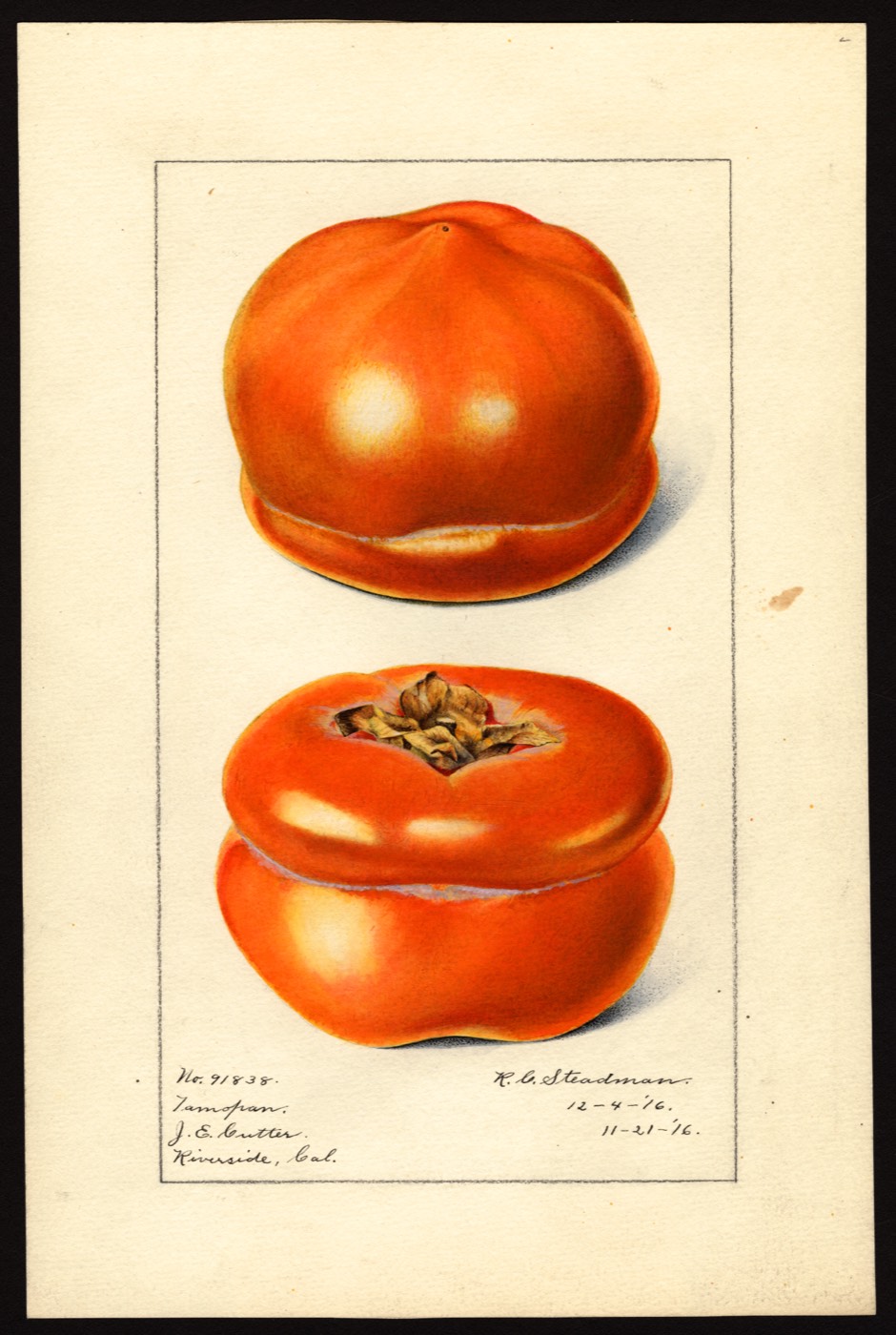
An elongated yellow-orange, astringent persimmon that is very sweet with a renowned flavor once it is soft, and the tree turns red, orange and yellow in fall. It ripens late and wants a long hot summer, so it is a low desert tree. Wait until the fruit is jelly-soft before eating it.
Persimmons
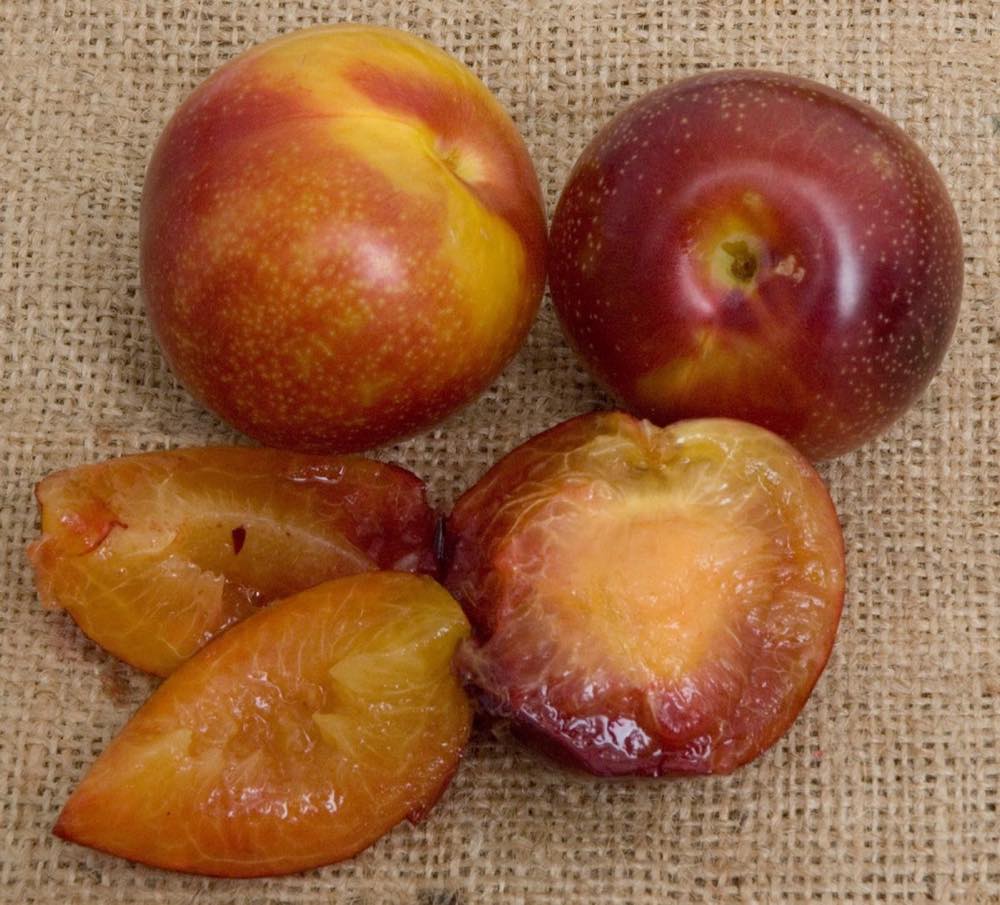
A large, flat persimmon with thick reddish-orange skin and light orange flesh, shaped like a squashed tomato. It is astringent, so wait until it is soft before eating. It ripens late and likes a long hot summer, so it is a low desert tree.
Plums
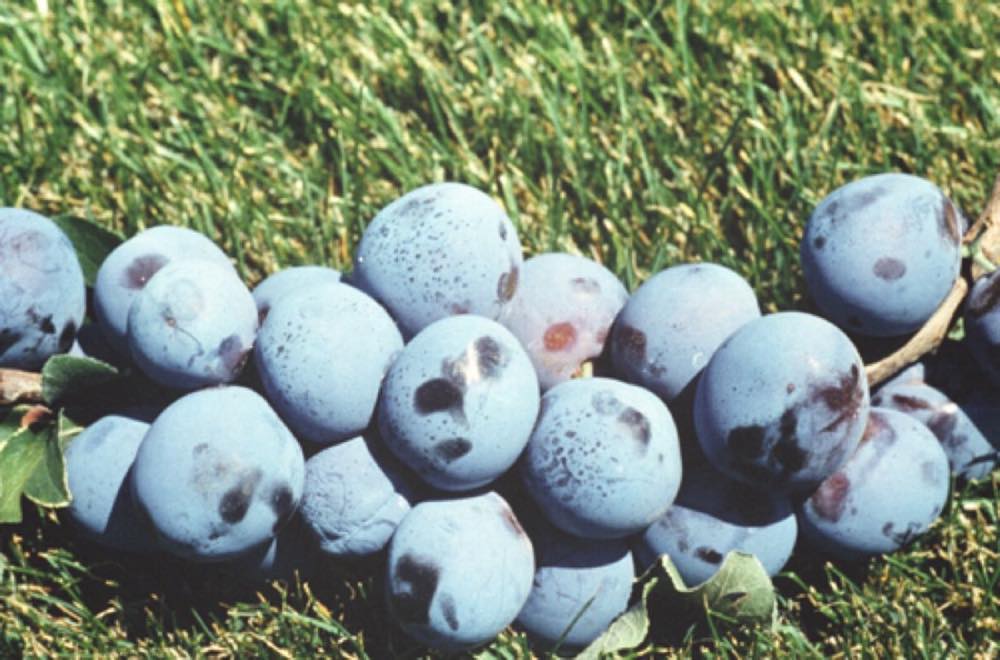
One of the surest plums for the Phoenix area, with sweet, flavorful fruit that is red over yellow with amber flesh. It needs only about 250 hours of chill and ripens before the worst summer heat. It blooms late for a plum, which also helps at mid elevation. It sets fruit alone.
Plums
A very old, rugged damson with small blue-black fruit that is tart, so it is made for jam and jelly more than fresh eating. It blooms very late, takes serious cold and bears heavily, which suits mid elevation. It needs far more winter chill than Phoenix gives.
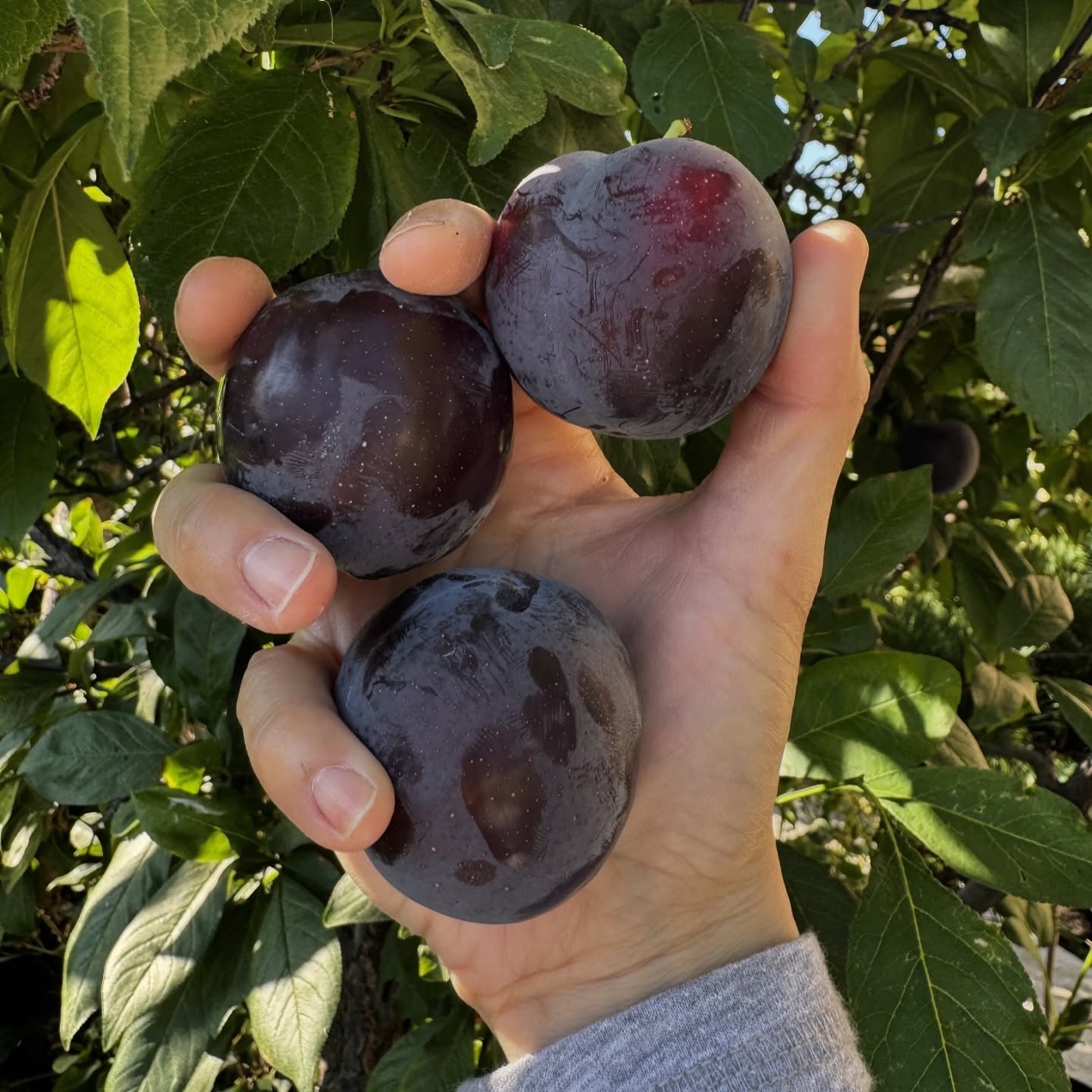
Plums
A maroon plum with deep red flesh and a sweet, mild flavor with almost no tartness. The harvest runs over several weeks, and the narrow, upright tree fits tight spaces. In the low desert the fruit ripens in July heat, so some afternoon shade helps with sunburn. It is also a standard partner for pluots.
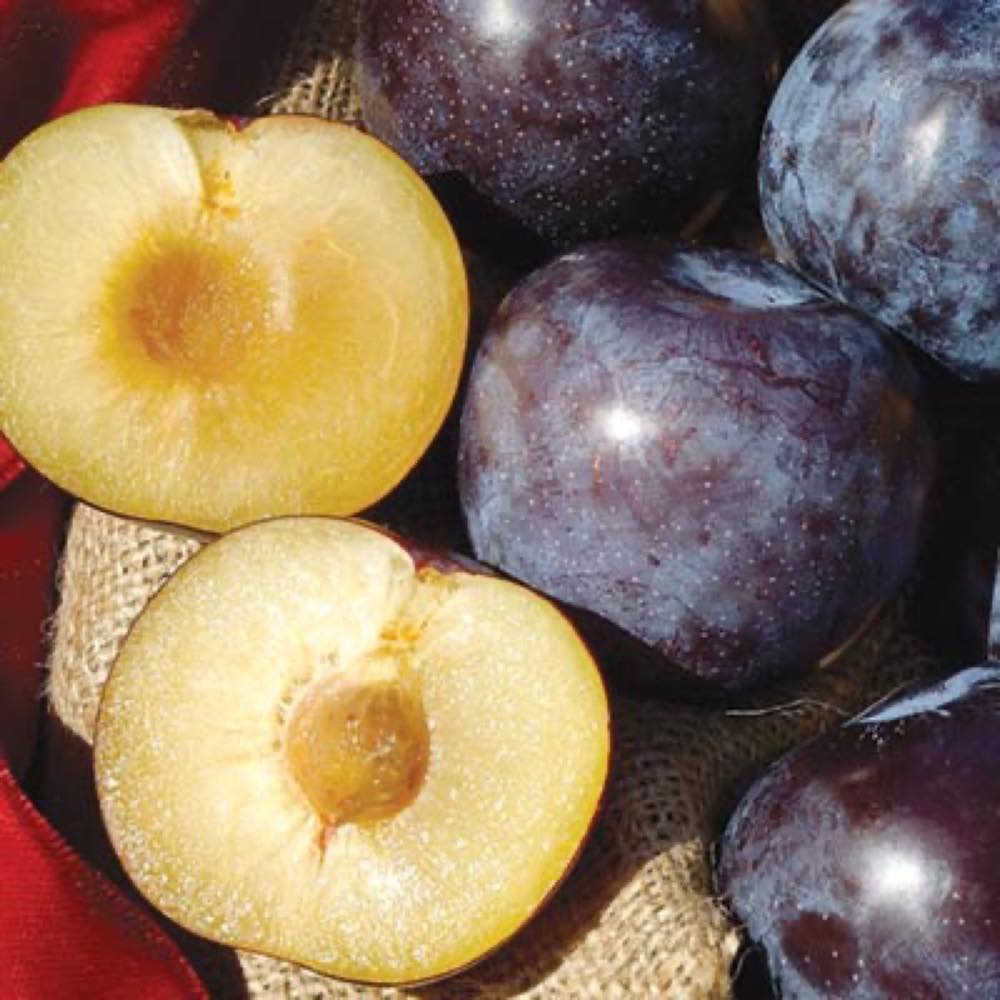
Plums
A large, black-skinned plum that stays firm when ripe, with sweet, juicy flesh and very little tartness at the skin or pit. A favorite for fresh eating that suits the low desert at 300 to 400 hours. It blooms early, so keep it to places where late frost is rare. It ripens in July heat, so watch for sunburn.
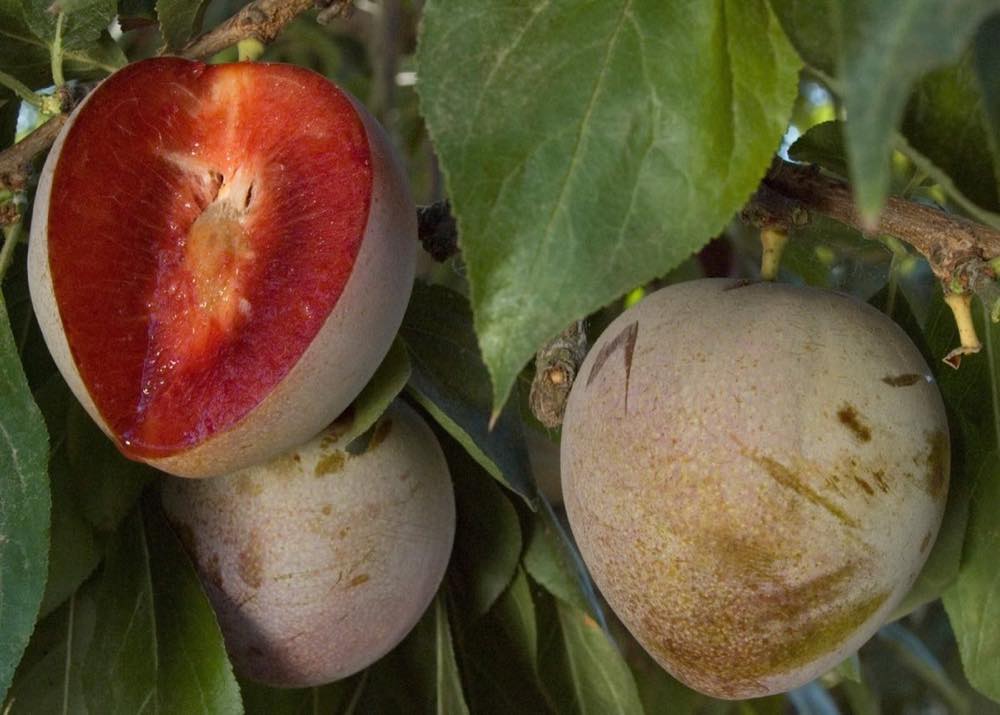
Plums
A big, heart-shaped plum with sweet, juicy, firm red flesh and a rich flavor, a home orchard favorite. It blooms late and ripens late, which suits mid elevation, where it usually dodges spring frost. At up to 500 hours Phoenix is a gamble, so low desert growers do better with Beauty or Santa Rosa. It needs a second plum nearby.
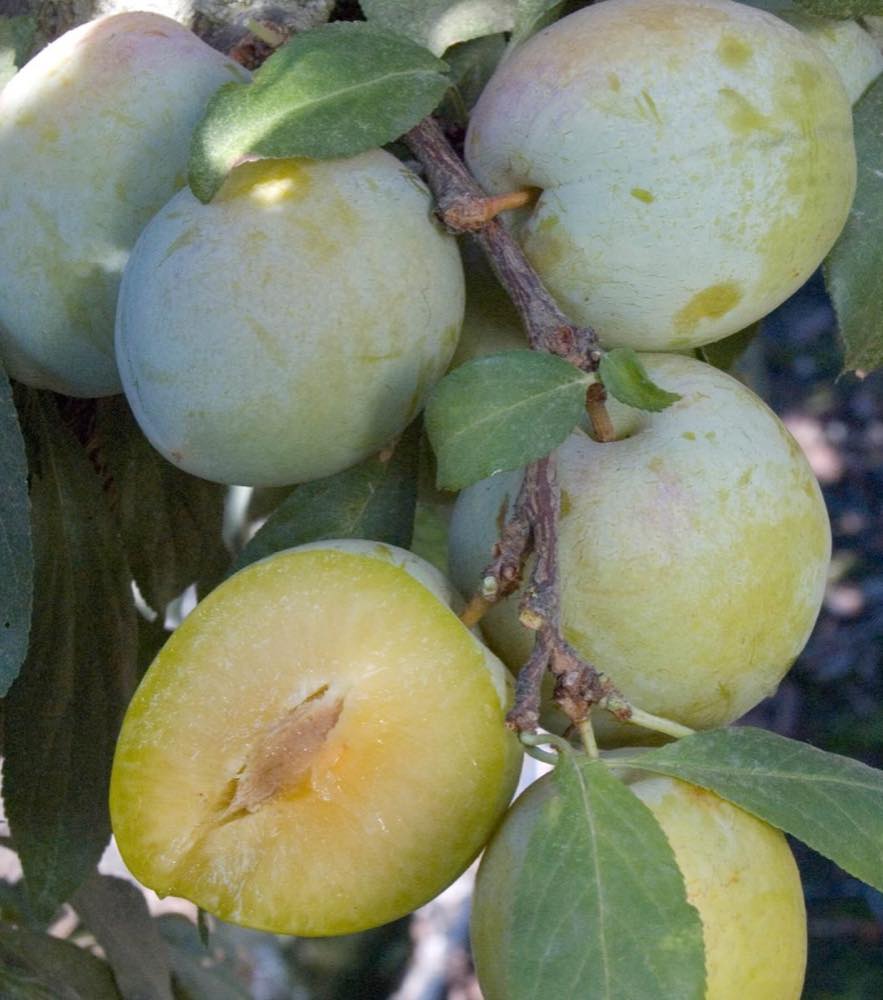
Plums
A light green plum with crisp, crunchy, very sweet flesh, one of the best scorers in nursery taste tests. The ripe fruit hangs on the tree for two months or more, so there is no rush to pick. It needs mid elevation winter chill and a second plum that blooms at the same time. Beauty and Late Santa Rosa both fit.
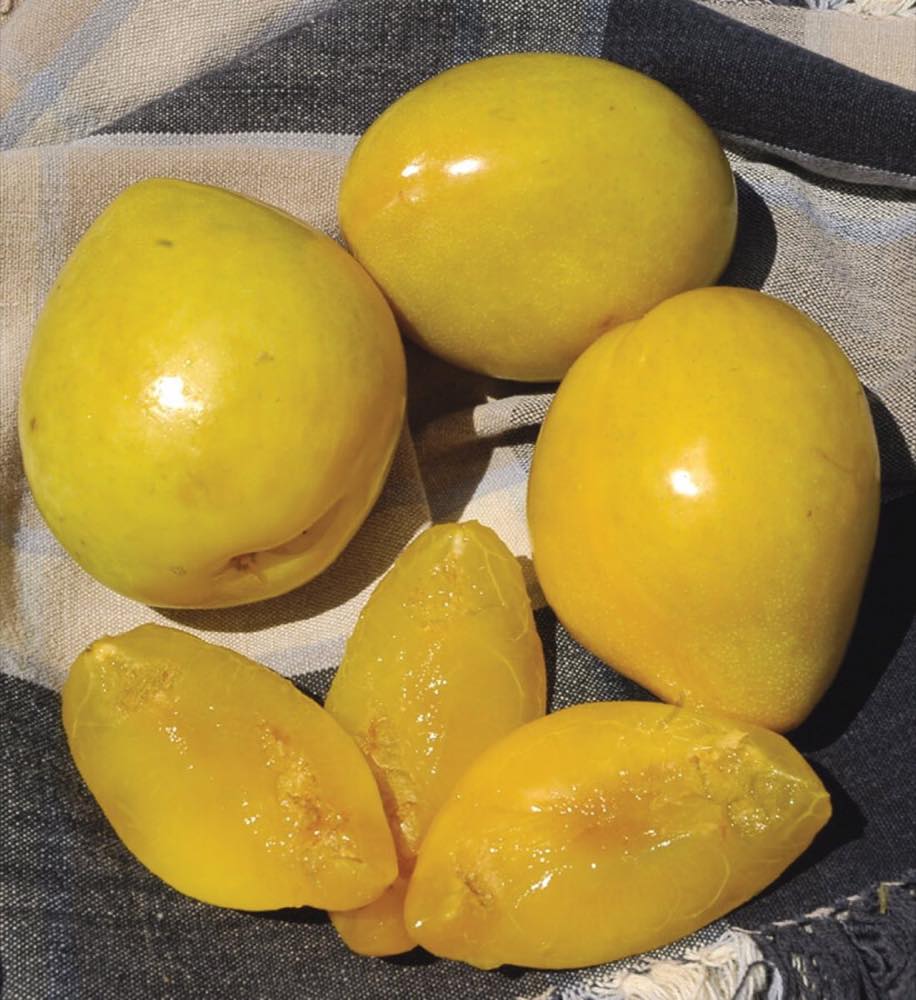
Plums
A big golden-amber plum with firm, sweet flesh and a very small pit. It sets alone at about 400 hours, so it works in the low desert and at mid elevation. It ripens late in the hottest part of the low desert summer, so shade the fruit from afternoon sun and pick on time. Late-midseason bloom helps at mid elevation.
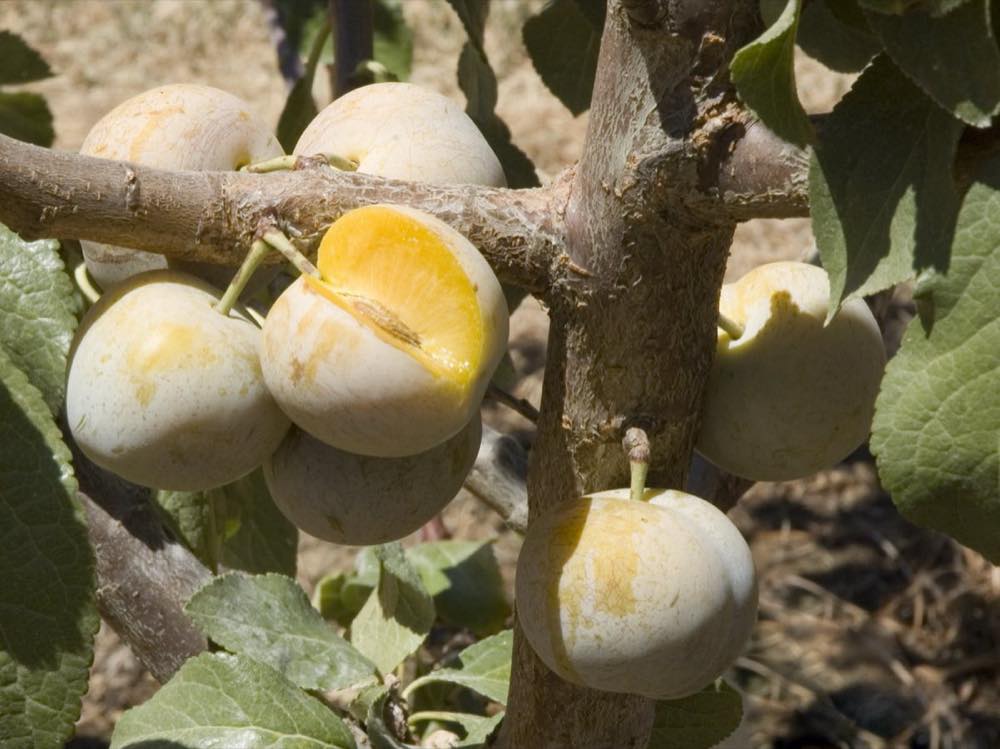
A small to medium European gage plum, rich and very sweet, good fresh and in cooking. It blooms very late, so spring frost rarely catches it at mid elevation, and it copes with milder winters better than the common Green Gage. It still needs more winter cold than the low desert provides.
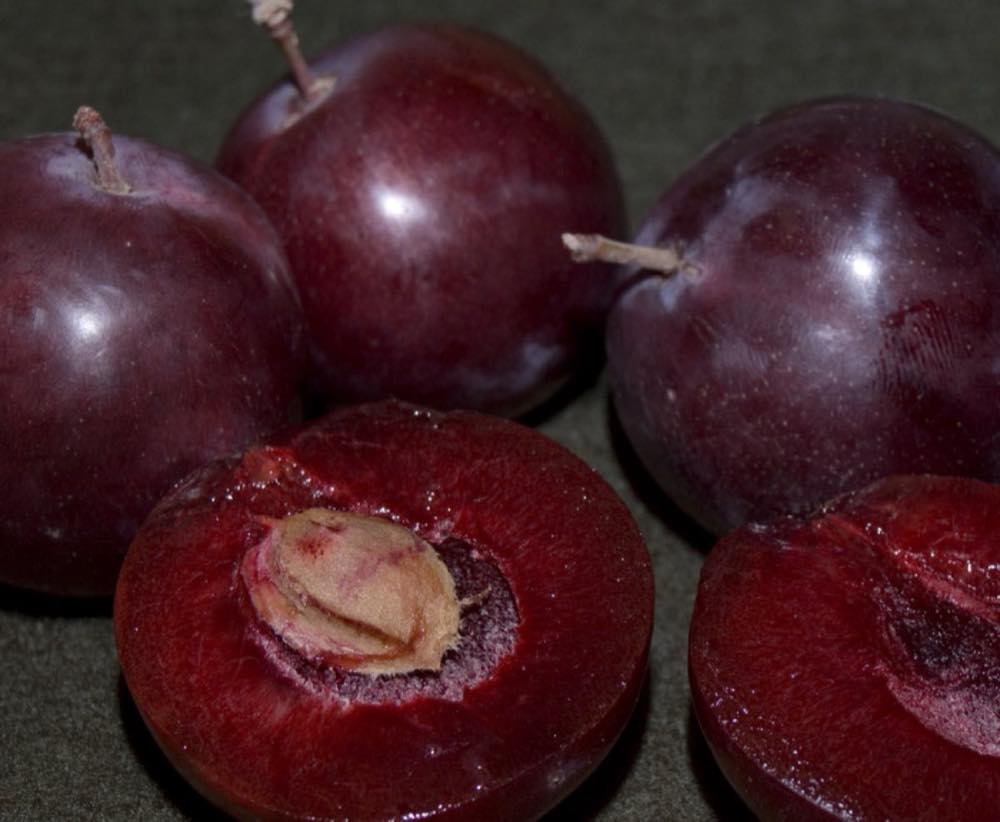
Plums
A red-leafed fruiting ornamental, so it earns its place in the front yard as well as the orchard. The round fruit has blood-red skin and flesh, hangs well, and is good for jelly and canning. It needs 300 to 400 hours and ripens early, which fits the low desert. Early bloom makes it a poor bet where late frost is common.
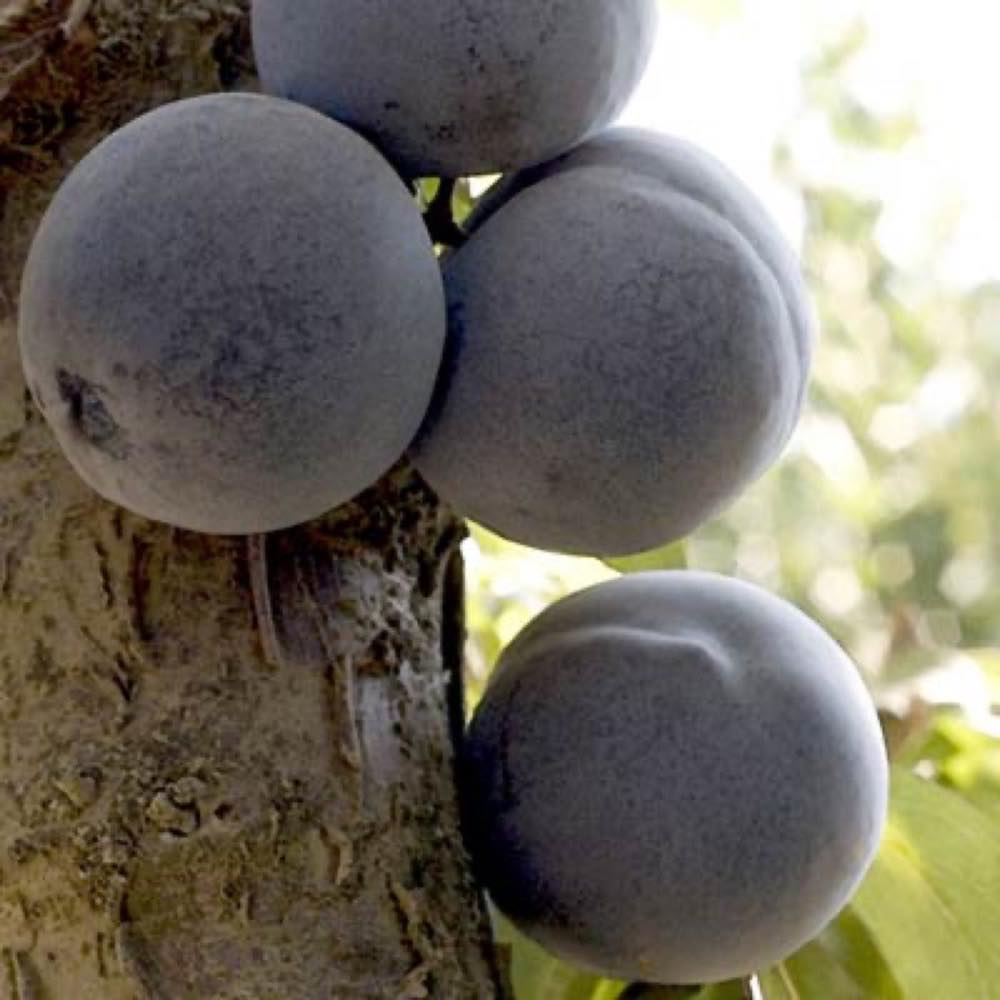
Plums
A dark purple plum that scored very high for flavor, with juicy red and amber flesh and a harvest that stretches over several weeks. At 400 hours it sits at the upper edge for Phoenix and also works at mid elevation. It needs a Japanese plum alongside, and Santa Rosa or Burgundy are easy matches.
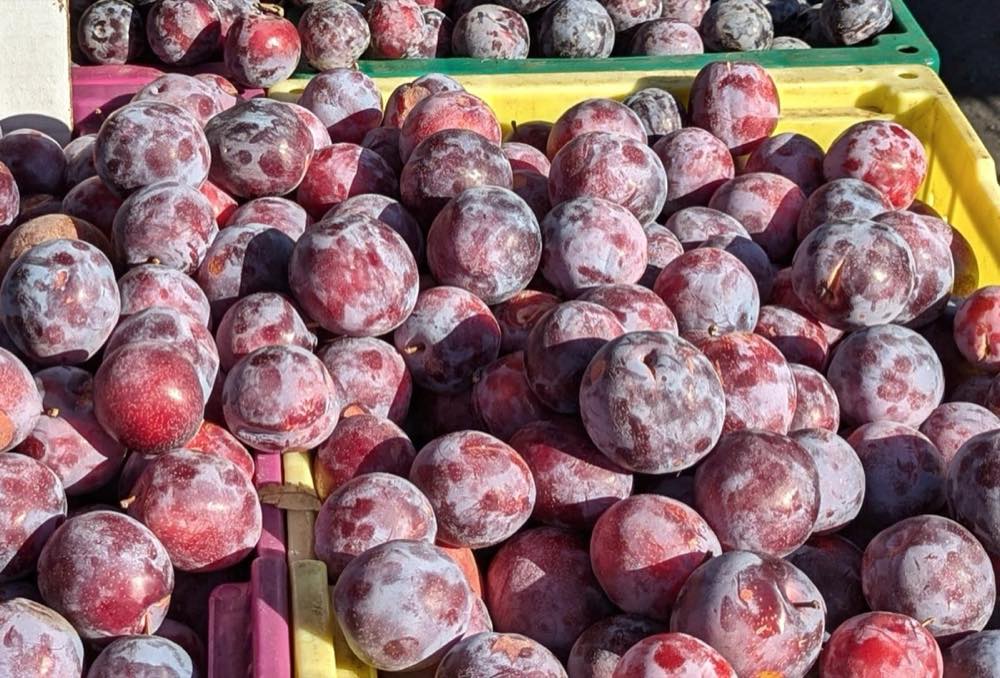
Plums
Like Santa Rosa but ripening about a month later, with reddish-purple skin and tart-sweet, red-streaked amber flesh. It stretches the plum season in the low desert and also works at mid elevation. Let the fruit hang until fully ripe for the richest flavor, and leave some leaf cover for July sun.
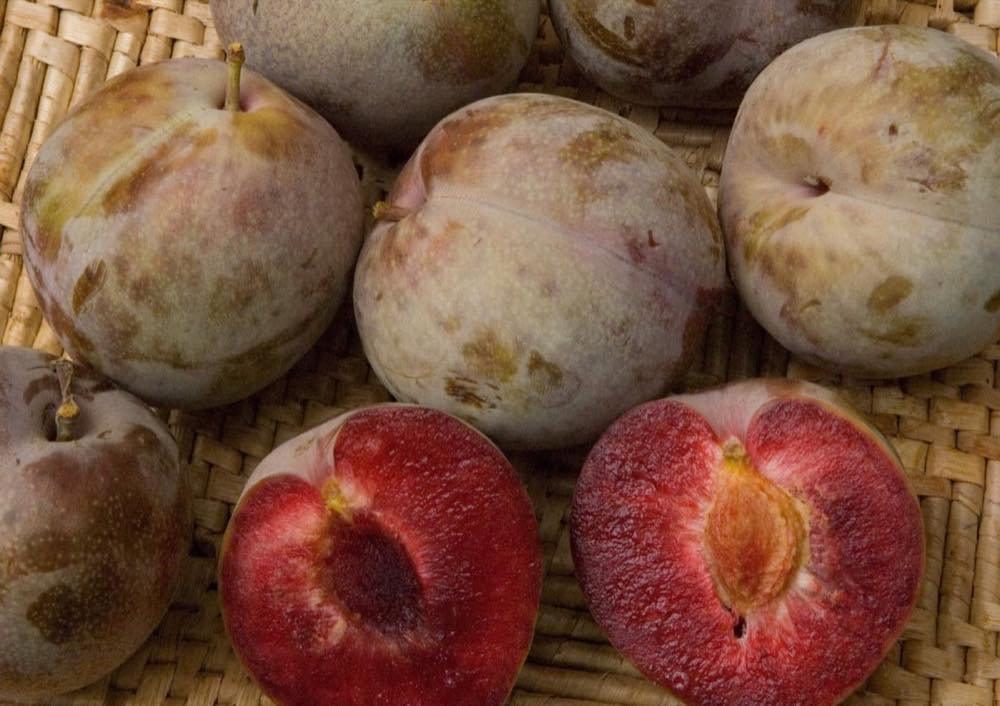
Plums
A large plum with deep red flesh under maroon-over-green skin, sweet and juicy with a small, nearly free pit. At about 250 hours it sits comfortably in the low desert chill range. It needs a second Japanese plum, and Santa Rosa is the easiest partner. Good fresh or cooked.
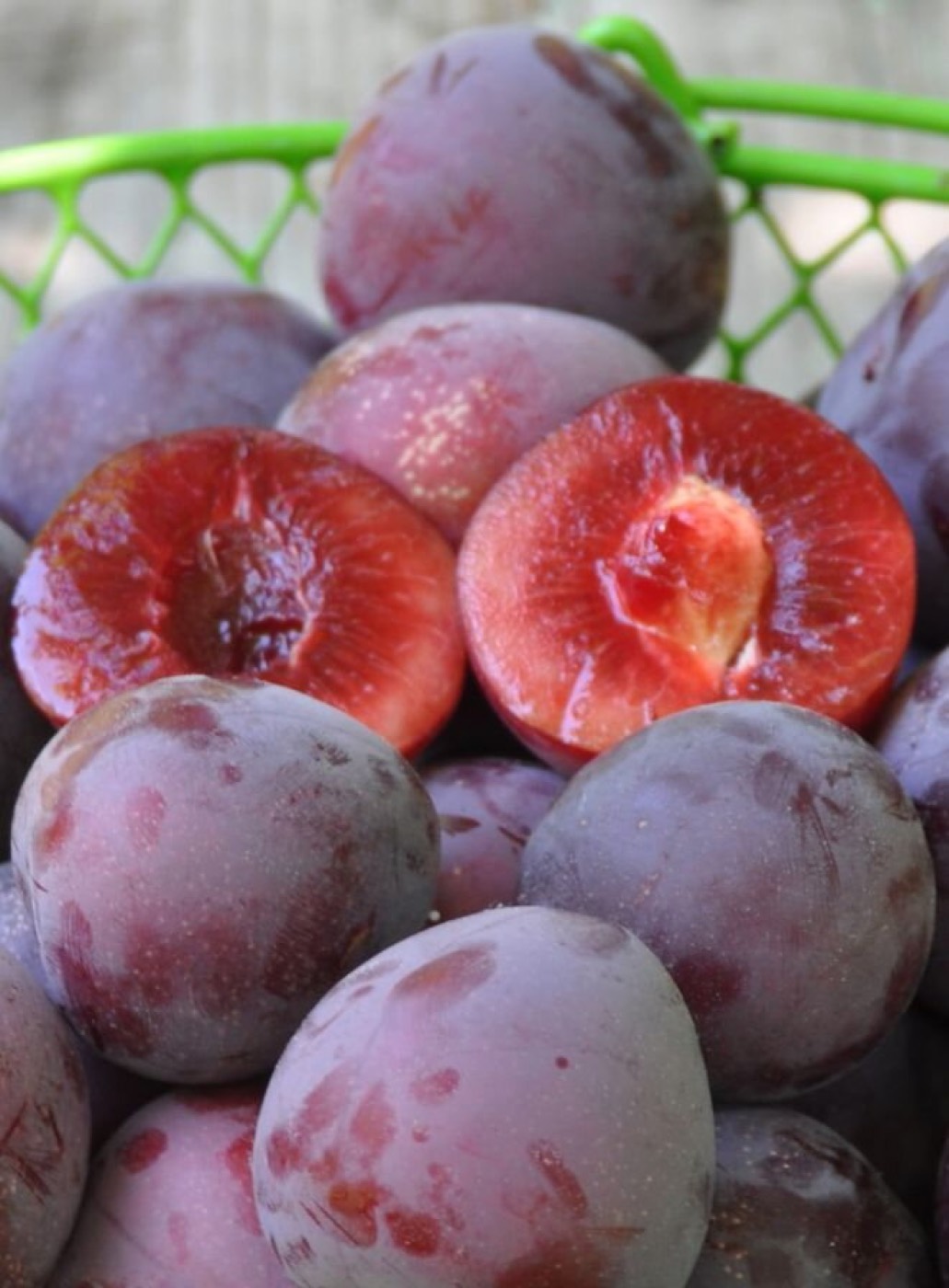
Plums
Often the first plum of the season in the low desert. The fruit is juicy and sweet with red flesh and a mild flavor, and the tree is vigorous, heavy bearing and very cold hardy. It works in the low desert and at mid elevation. Thin the crop so heavy branches do not break.
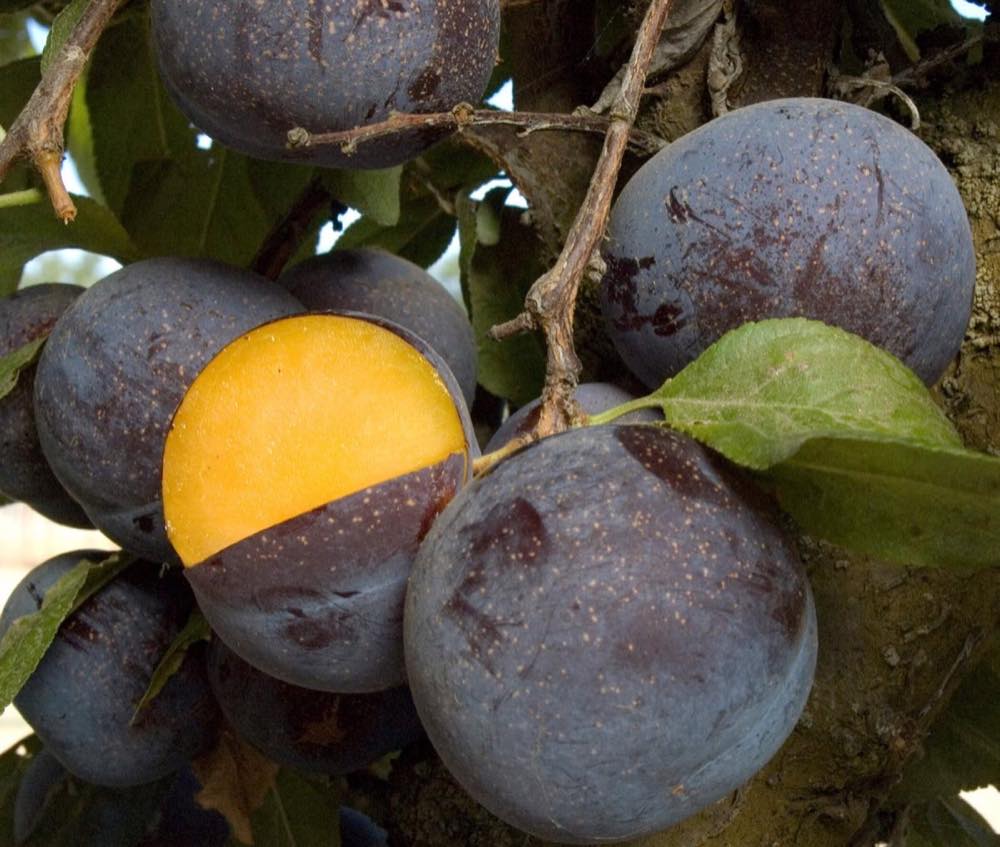
Plums
A large, flattened plum with purplish-black skin and amber flesh, sweet with very little tartness at the skin or pit. At 400 to 500 hours it is marginal in Phoenix, so mid elevation is the safer home. It sets alone and also helps pollinate Laroda, Mariposa and Emerald Beaut.
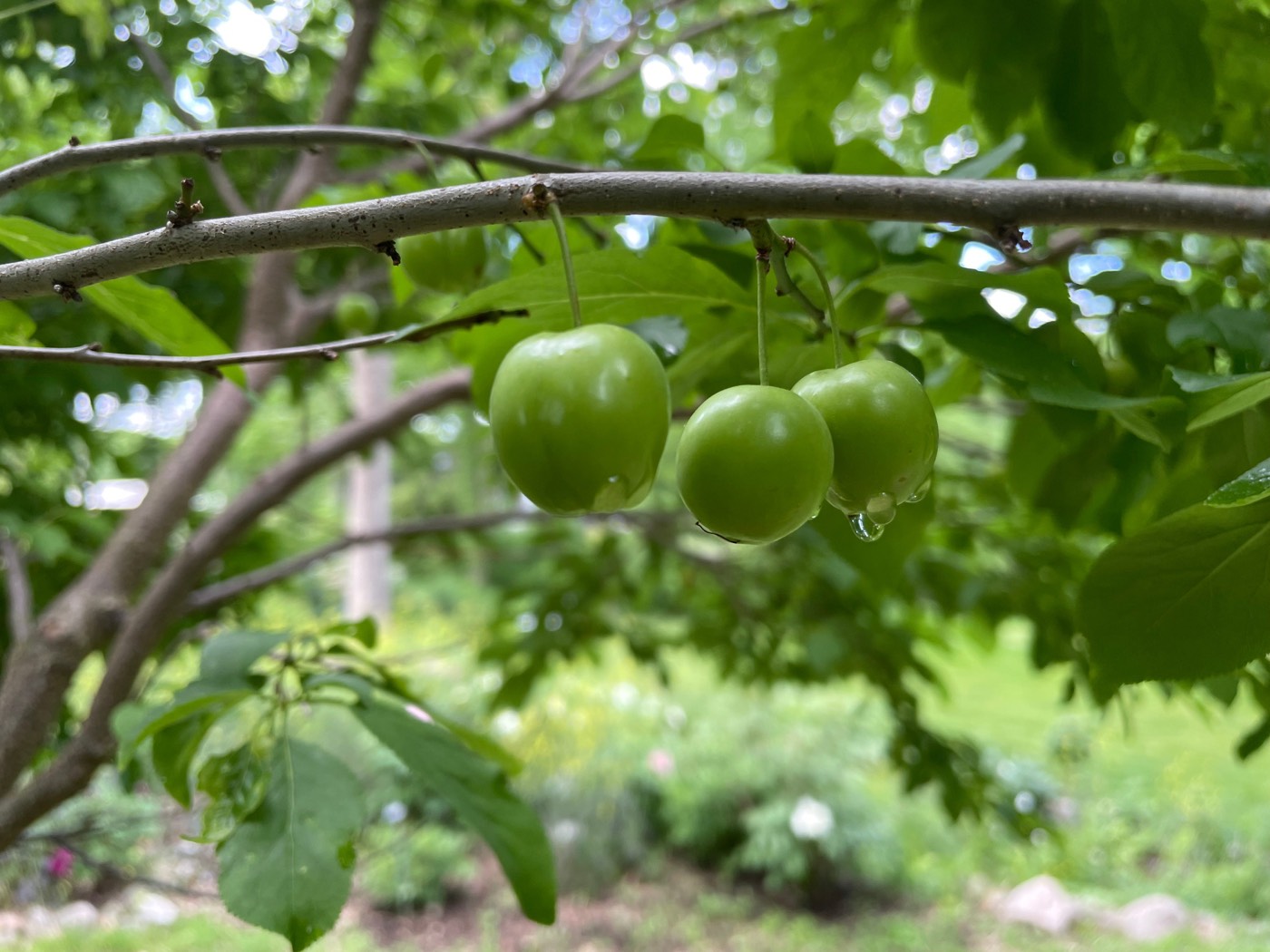
Plums
A small, sour plum with crisp yellow flesh, grown across the Middle East and often eaten green and crunchy with salt. It ripens early. It sets best with another late-blooming plum nearby. Plant it at mid elevation, since 400 to 600 hours is more chill than Phoenix usually gets.
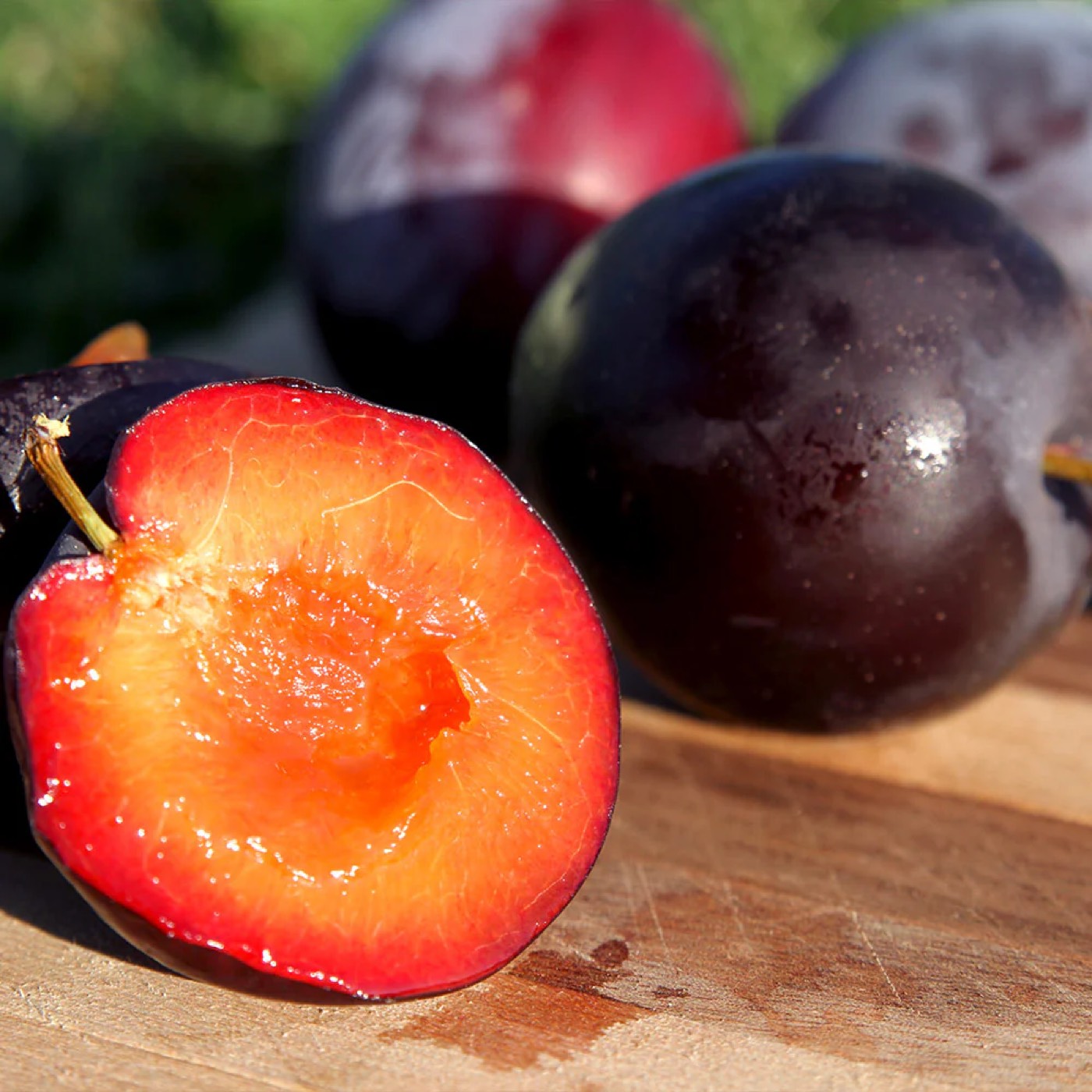
Plums
The plum most Arizonans grow, and for good reason. The fruit is juicy and tangy with reddish-purple skin and amber flesh, and it ripens before the worst low desert heat. It sets alone at about 300 hours and is the partner pluots most often need. It also does well at mid elevation, though late frost can take blossoms in some years.
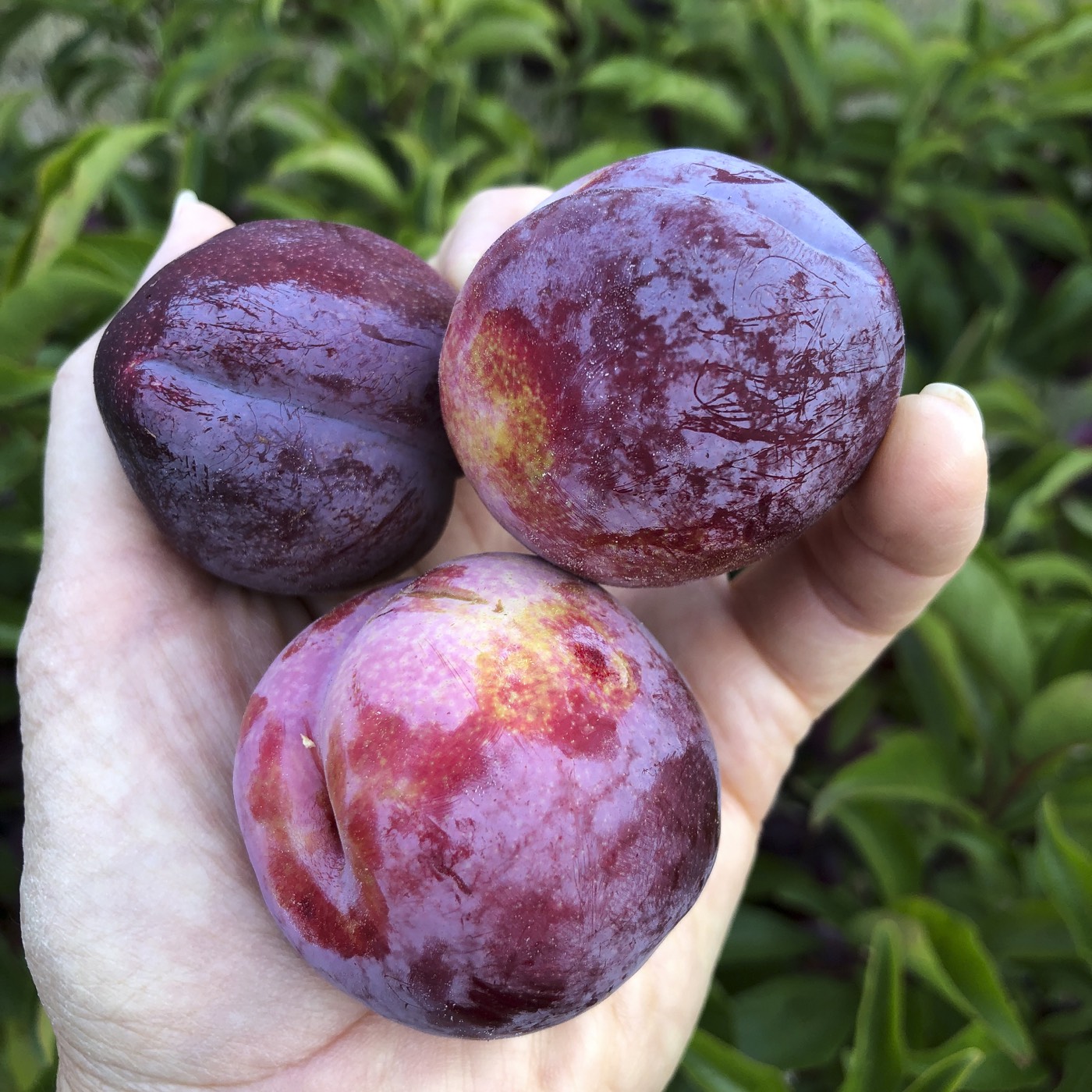
Plums
A long-time California favorite with mottled maroon-over-green skin and dark red, meaty flesh that is sweet and mild, not tart. It makes excellent jam. It needs a Japanese plum such as Santa Rosa or Beauty nearby to set fruit. It works in the low desert at 300 hours and at mid elevation, though low desert fruit ripens in July heat.
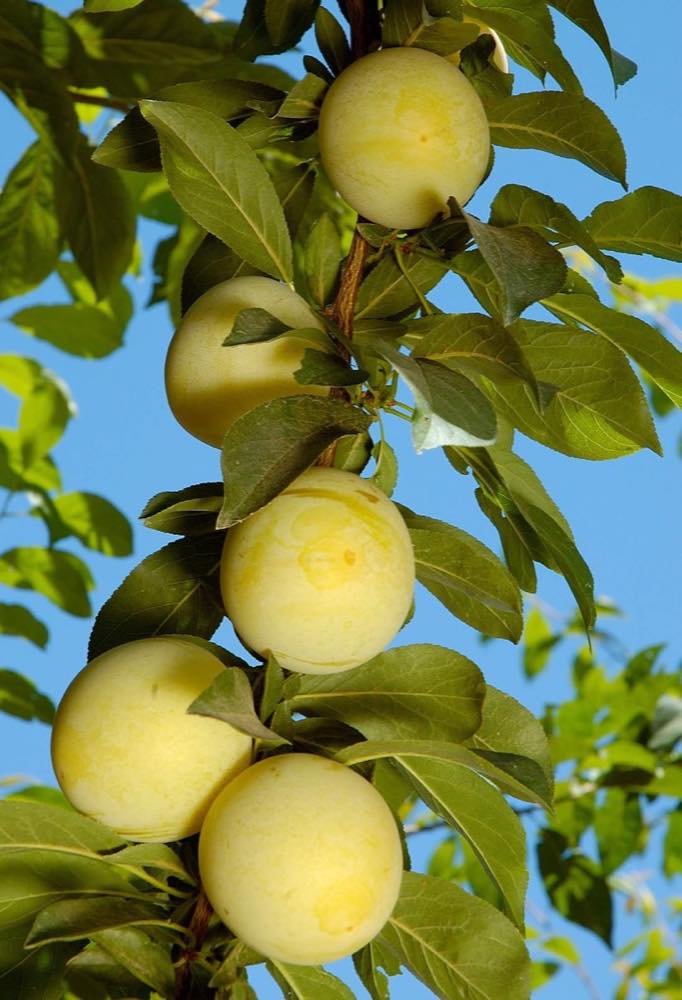
Plums
A medium greenish-yellow plum that is juicy, moderately sweet and mild in flavor. It blooms late and bears reliably in many climates, which suits mid elevation. At 400 to 500 hours it is marginal in Phoenix. It sets fruit alone.
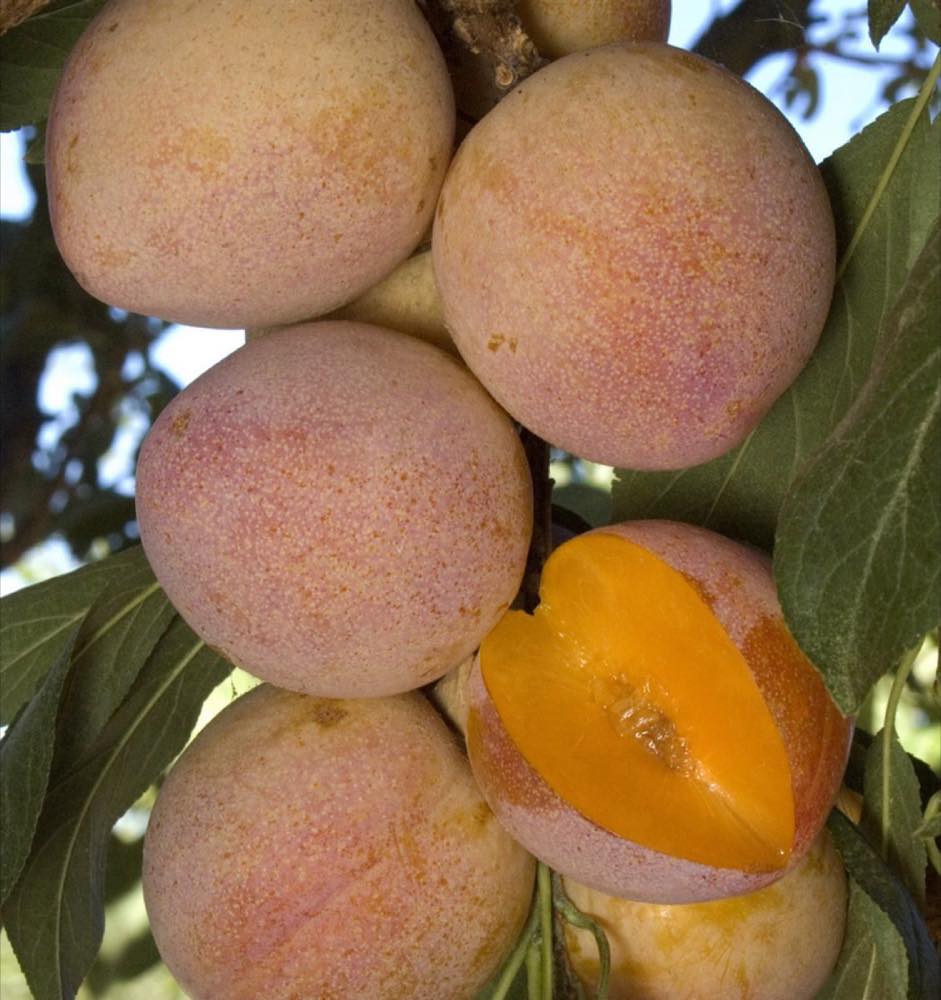
Plums
A Japanese by American hybrid bred for cold country, with very large, firm, meaty red fruit and an early, heavy crop. It blooms late and ripens in late summer. It is a good choice for mid elevation and the lower end of high country, and a Toka plum alongside improves the crop. Phoenix is far too warm.
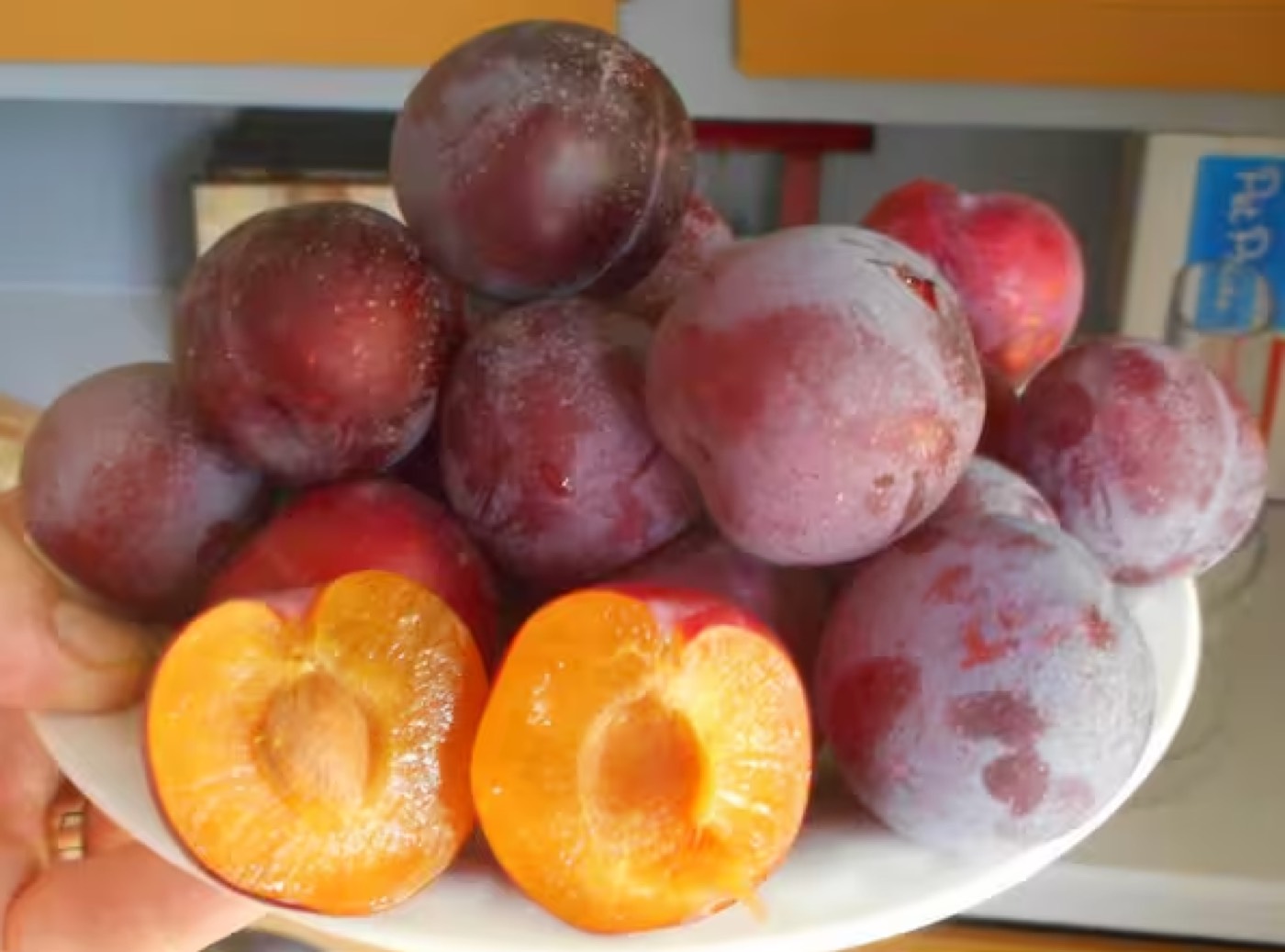
Plums
A hardy South Dakota hybrid with small to medium, cherry-red plums that have firm, tangy yellow flesh. Its real job is pollination: it works as a partner for Japanese, American and hybrid plums. It takes extreme cold, so it suits mid elevation and high country. It needs far more chill than Phoenix gets.
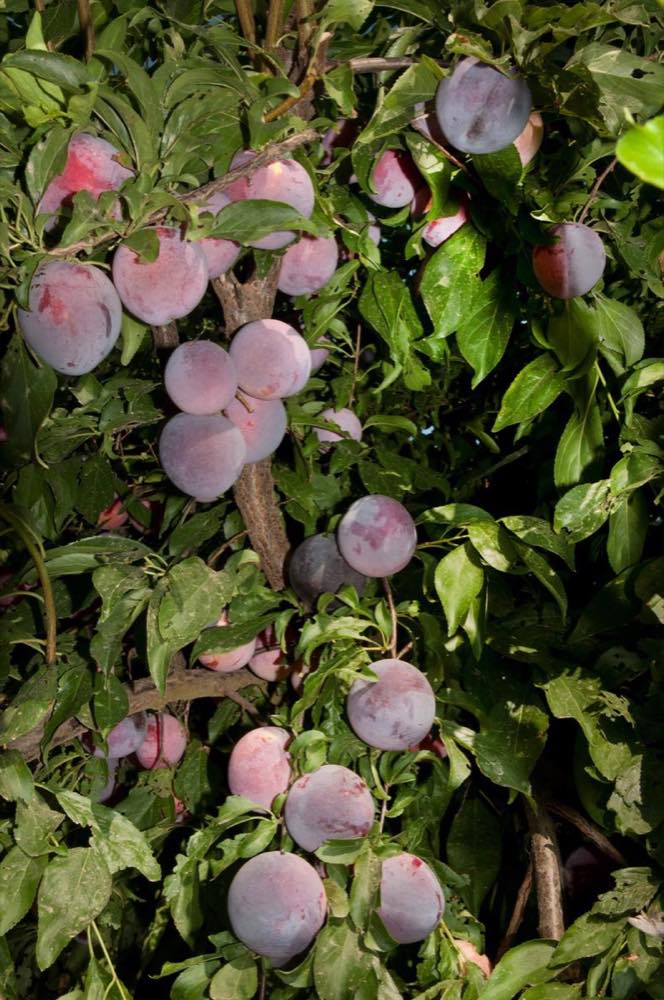
A weeping form of Santa Rosa that stays around 8 to 10 ft, with long limbs that bow toward the ground. The fruit is aromatic and flavorful, and the shape trains easily flat against a wall or fence. It sets alone and fits the low desert at 200 to 400 hours. A good plum for small yards.
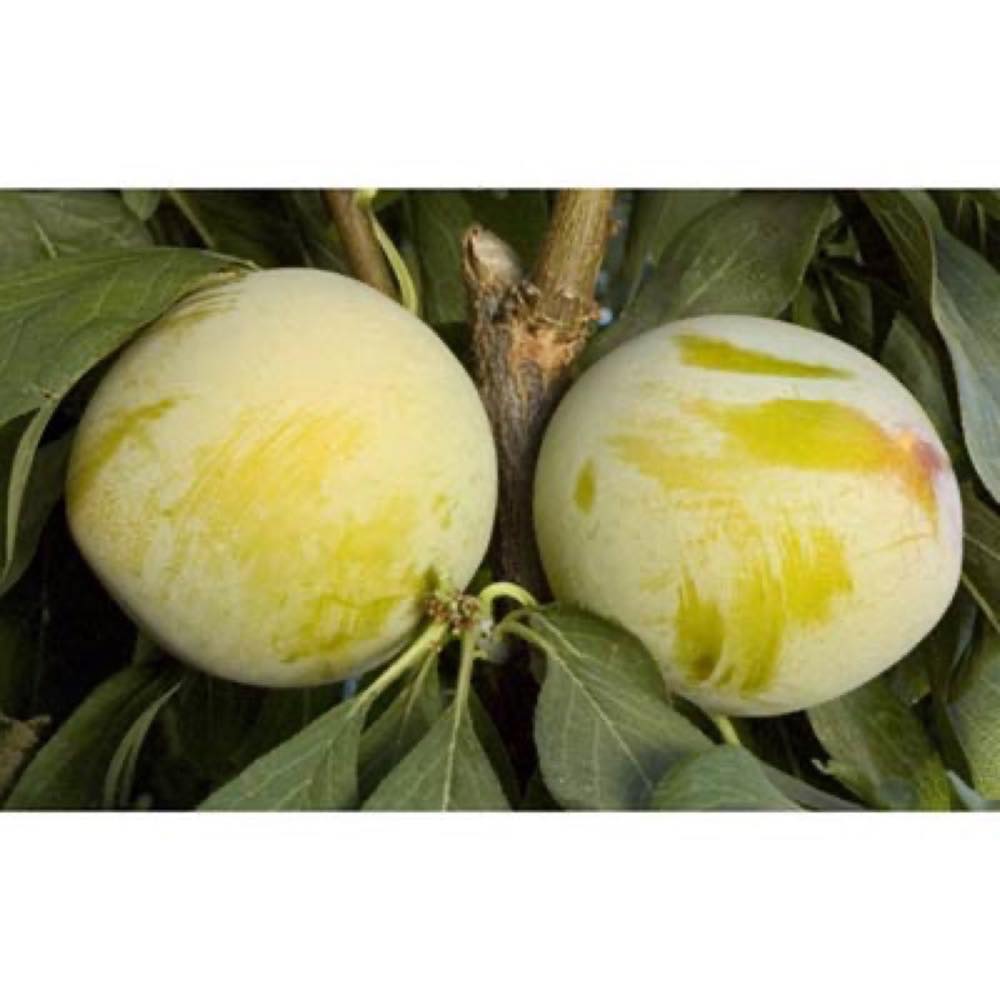
Plums
A large, heart-shaped, greenish-yellow plum with very sweet, translucent flesh and little tartness at the skin or pit. At about 500 hours it is a mid elevation tree and a long shot in Phoenix. It is partly self-fruitful but sets better with Santa Rosa blooming nearby.
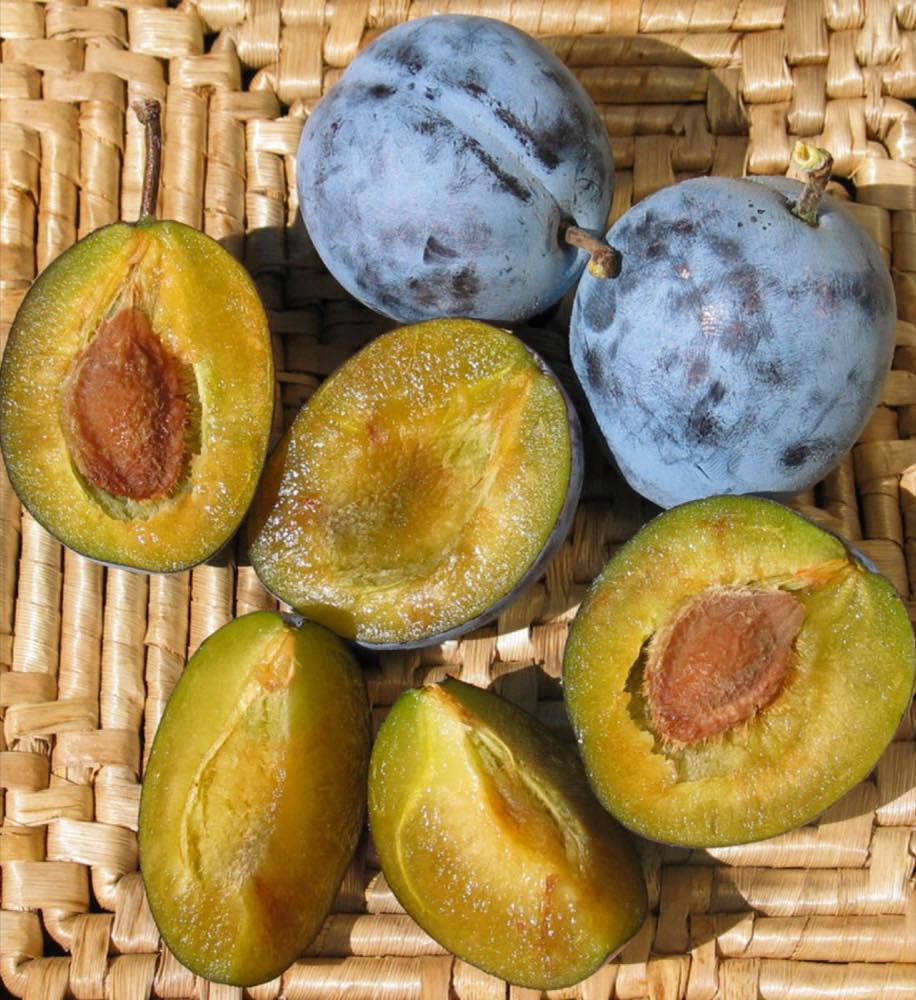
A European prune plum much like Italian but a little sweeter, larger and more productive, ripening one to two weeks earlier. It is a purple freestone, good fresh, dried or canned. It needs about 800 hours, so plant it at mid elevation, where the earlier ripening helps. One tree is enough.
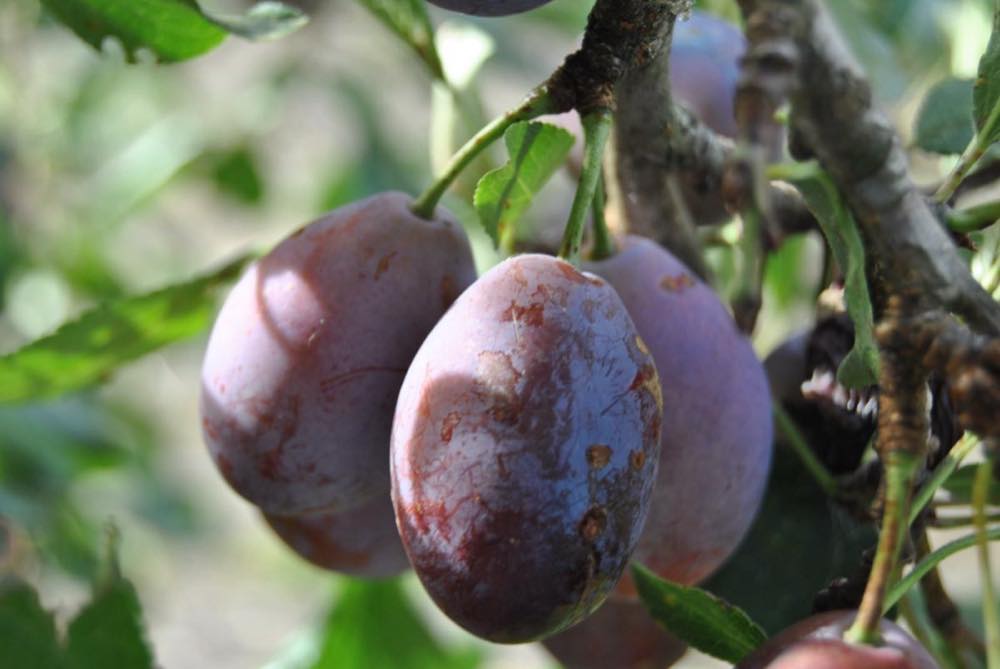
Prunes
The classic California drying prune, with reddish-purple skin and dark amber flesh that is very sweet, good fresh, canned or dried. It blooms very late, which helps dodge spring frost at mid elevation. It needs about 800 hours of winter chill, so it will not do well in Phoenix. One tree is enough.
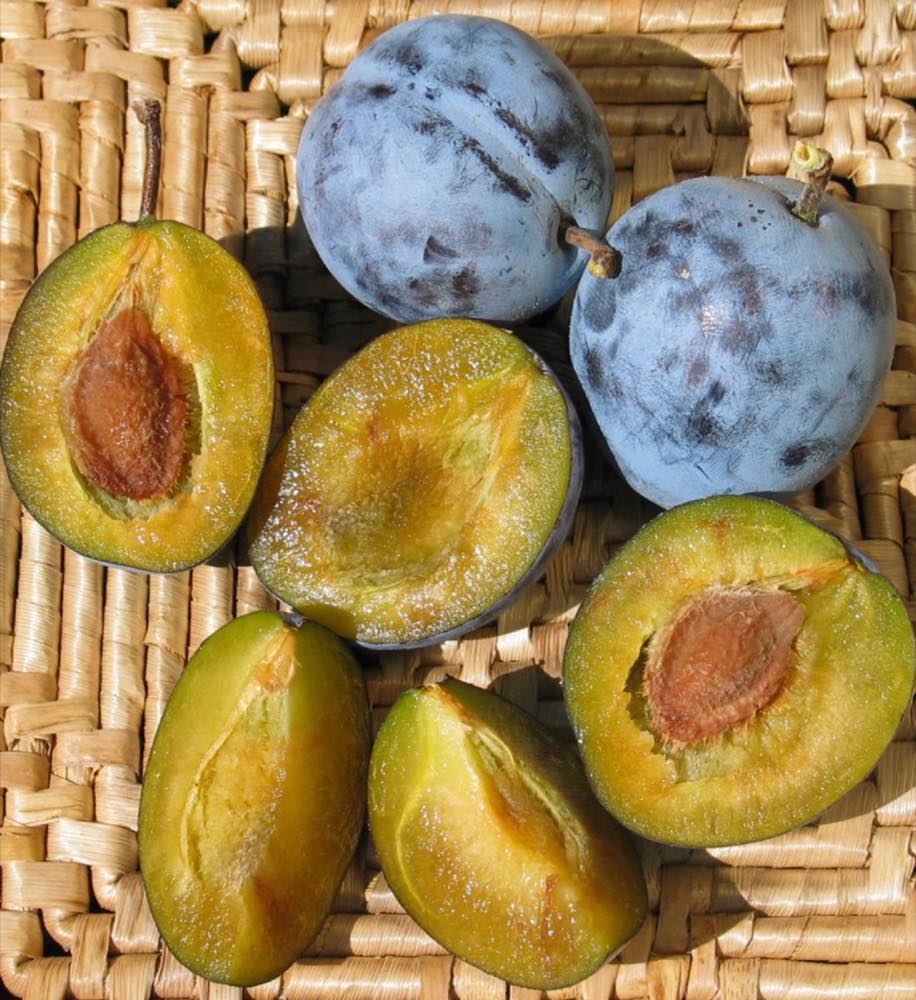
Prunes
A large purple freestone with rich, very sweet flesh, good fresh, canned or dried. The tree is vigorous and cold hardy and blooms very late, which makes it a dependable choice at mid elevation. One tree is enough. It needs about 800 hours, far more than Phoenix gets.
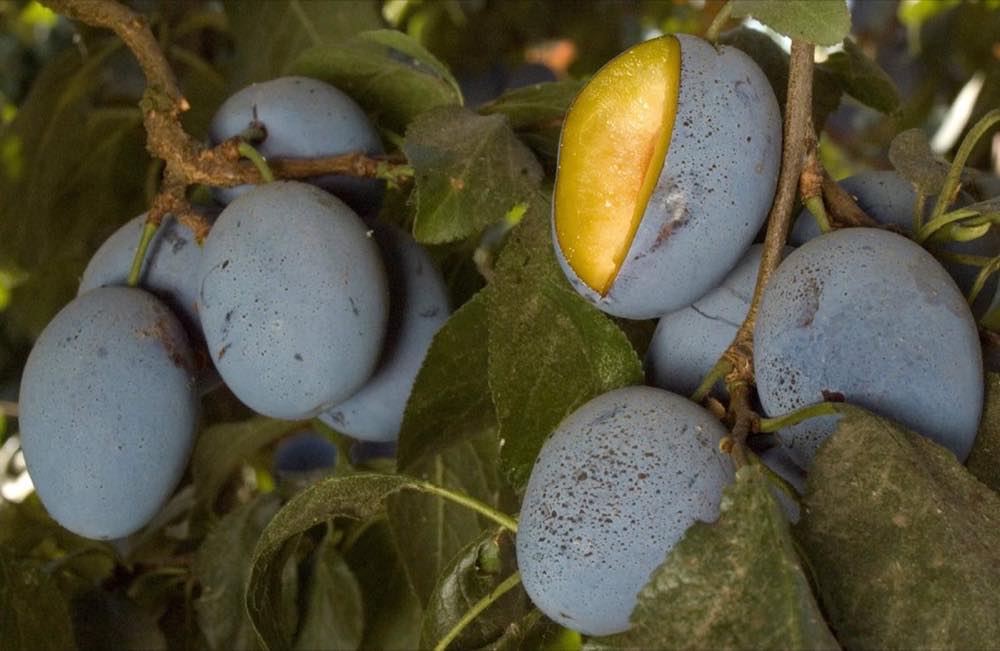
Prunes
A large dark blue prune plum with juicy, sweet, greenish-yellow freestone flesh. It blooms very late and is extremely hardy, which is what spring frost country wants. One tree is enough. It needs about 800 hours of chill, so it fits mid elevation and not Phoenix.
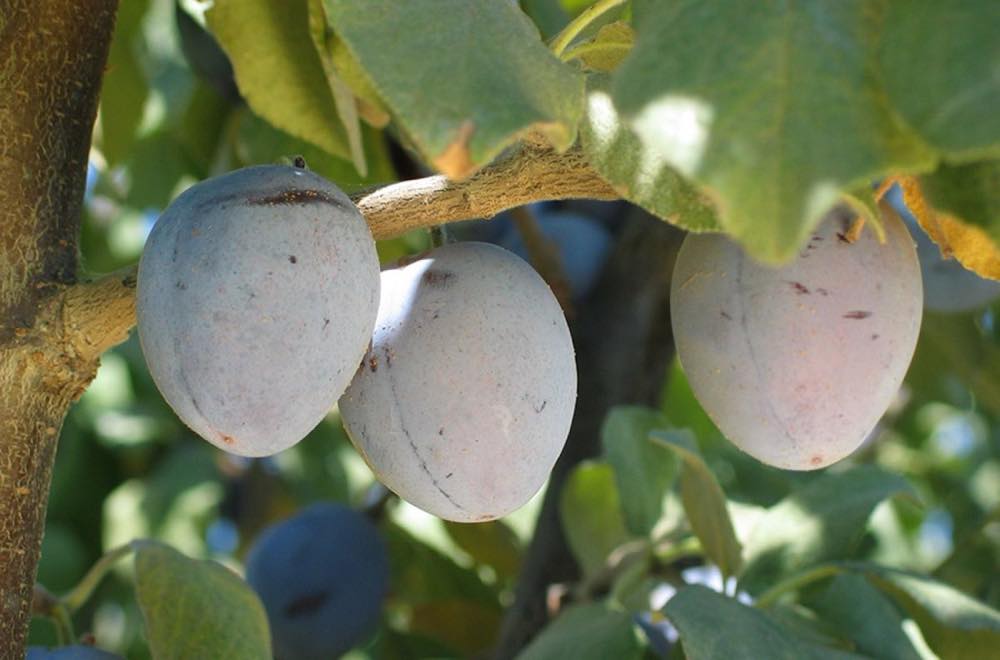
Prunes
A reddish-purple prune with greenish-yellow flesh that is very sweet, for fresh eating and canning. It asks for less winter chill than other European plums, about 550 hours, and blooms very late, so it suits warmer mid elevation sites such as the Verde Valley. Still marginal in Phoenix. One tree is enough.
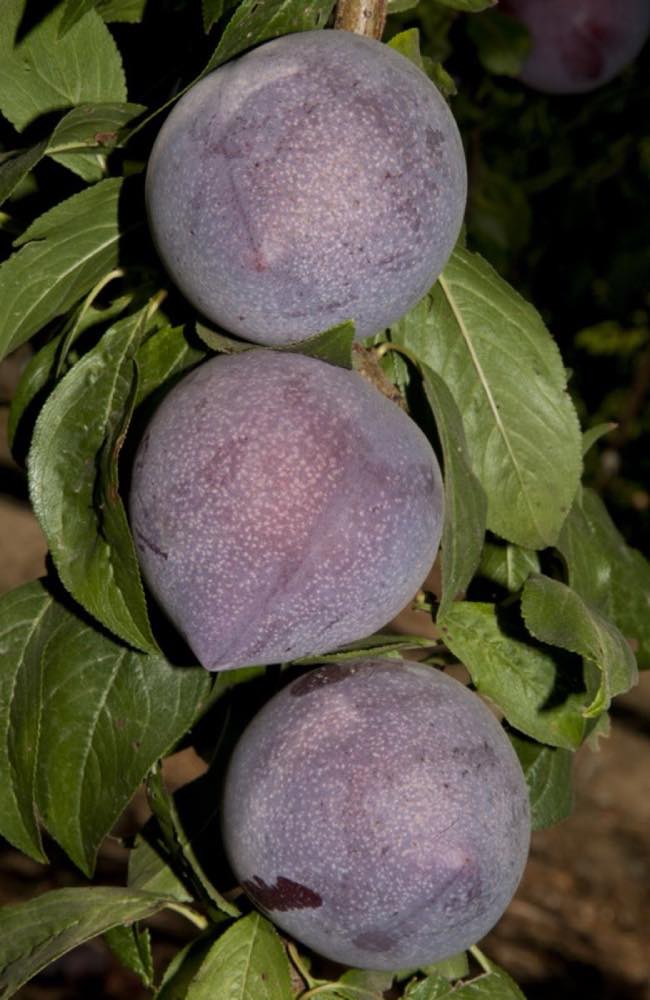
Pluots & interspecifics
A plum and sweet cherry cross with dark speckled red skin, amber and red flesh and a flavor all its own. The fruit hangs well, so the harvest runs long, peaking around mid August. At up to 500 hours it is a mid elevation tree and a gamble in Phoenix. Pair it with Sweet Treat or Burgundy.
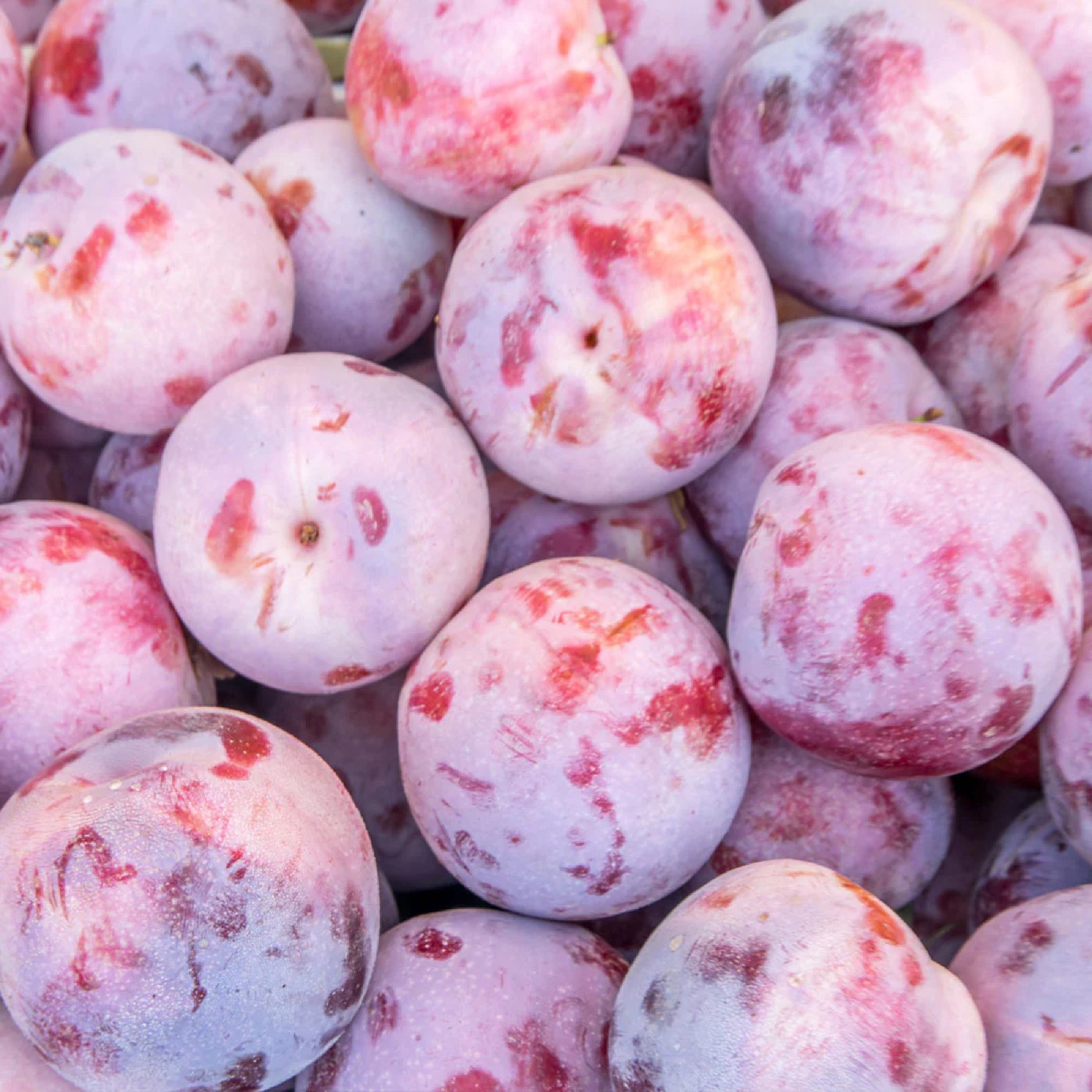
Pluots & interspecifics
A taste-test favorite with creamy white and red freestone flesh and a plum-apricot flavor, on skin that dapples from green-yellow to maroon. It needs a second plum or pluot nearby, such as Santa Rosa or Burgundy. At 400 to 500 hours it is a mid elevation tree and marginal in Phoenix. Thin the crop well.
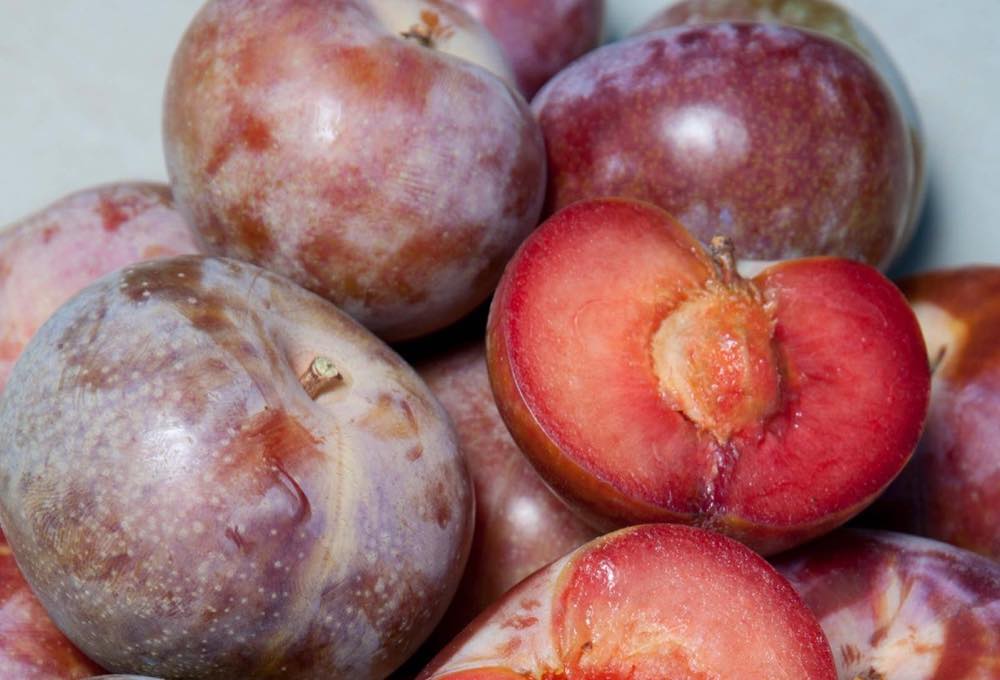
Pluots & interspecifics
A low chill pluot bred from Dapple Dandy and Flavor Supreme, with red-dappled skin and sweet red flesh. At about 300 hours it suits the low desert and ripens ahead of the deepest summer heat. It needs another pluot or a Japanese plum nearby, and Santa Rosa or Burgundy are easy choices. A newer variety, so the local record is short.
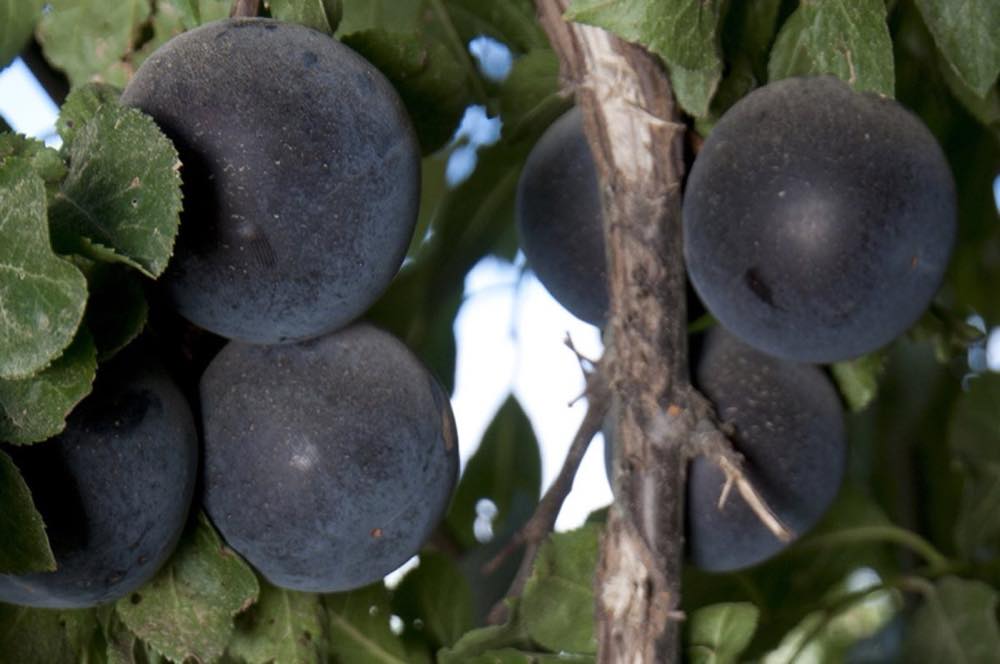
Pluots & interspecifics
A Japanese plum and cherry-plum cross with tangy, clingstone fruit and very heavy crops, even in a hard year. It is a good one for tougher spots. Delight and Sprite pollinate each other, so plant them as a pair. At about 400 hours it works in the low desert and at mid elevation.
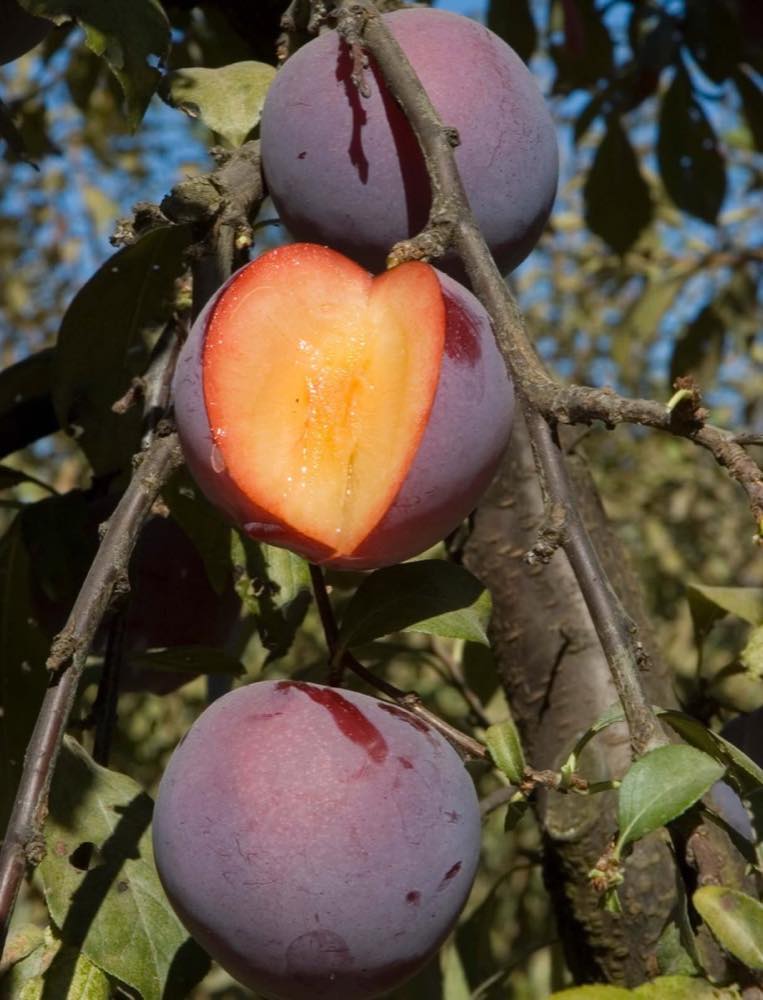
Pluots & interspecifics
A late pluot with purplish-red skin, juicy amber-red flesh and a complex flavor, ripening from mid September and edible into October. The upright tree sets large crops. At 500 hours it is a mid elevation tree, best on a warm, low-frost site since it ripens late. Marginal in Phoenix.
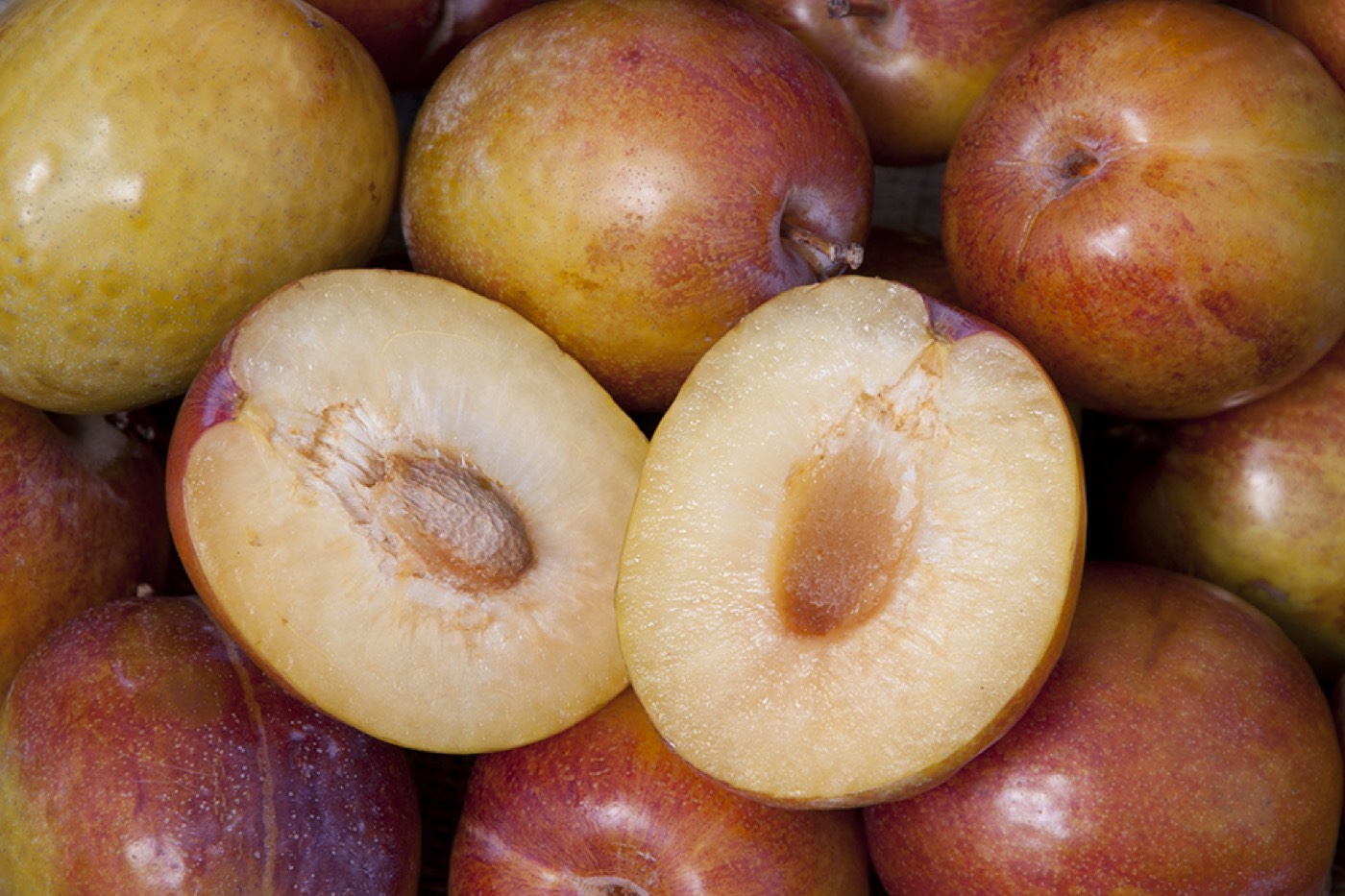
Pluots & interspecifics
Long, green, red-blushed fruit with a crisp texture and a big, punchy flavor, and a taste-test winner. It hangs on the tree for a month or more, so you can pick over several weeks. At 300 to 400 hours it works in the low desert, though it ripens in late summer heat, and it suits mid elevation too. It needs Santa Rosa, Burgundy or another pluot nearby.
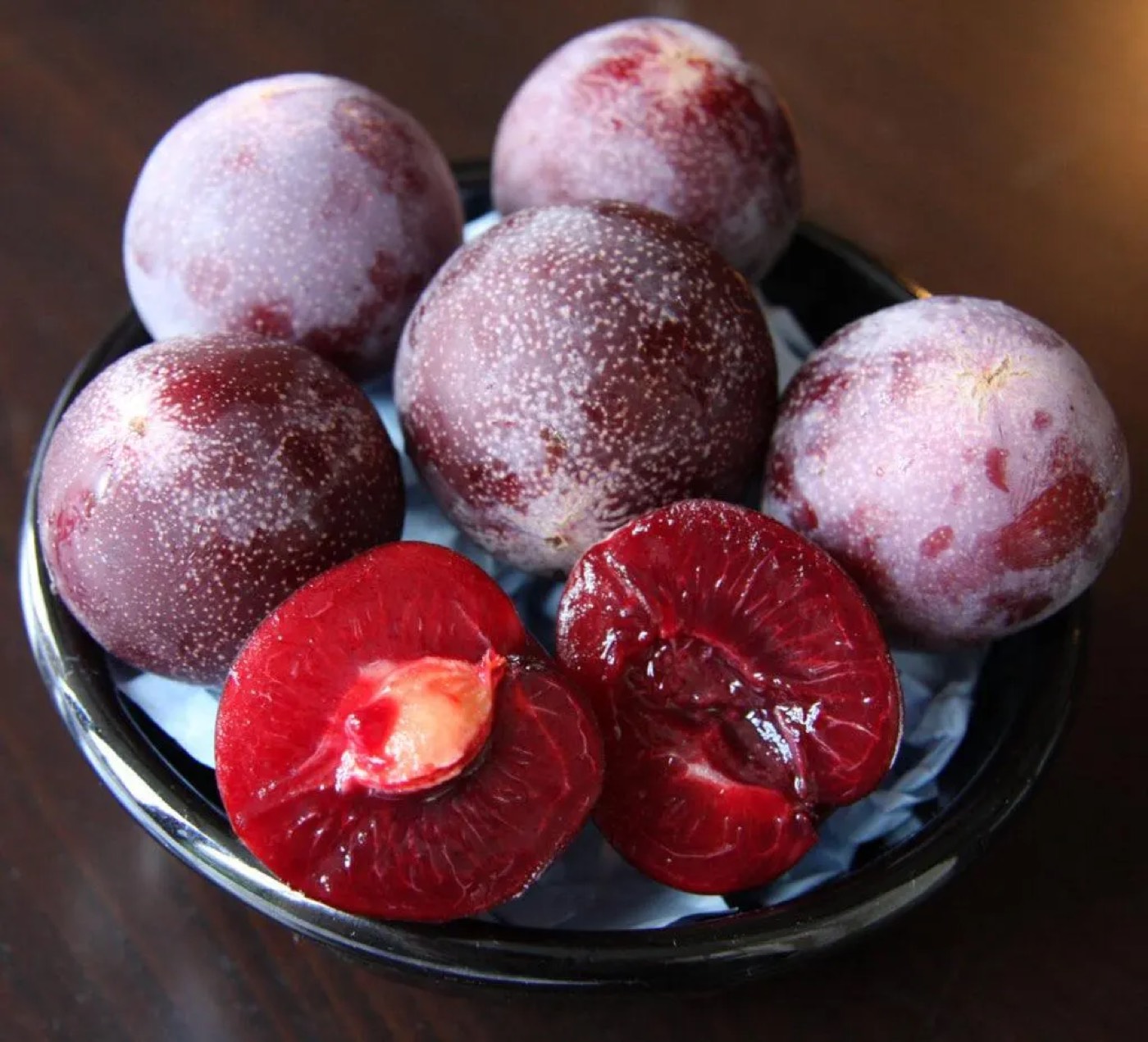
Pluots & interspecifics
The best-known pluot, with reddish-purple skin, crimson flesh and a spicy, sweet flavor on a naturally smaller tree. It will not set fruit without a Japanese plum or another pluot, so plant Santa Rosa or Burgundy alongside. At 400 hours or fewer it works in the low desert, where late summer ripening means watching for sunburn, and it suits mid elevation.
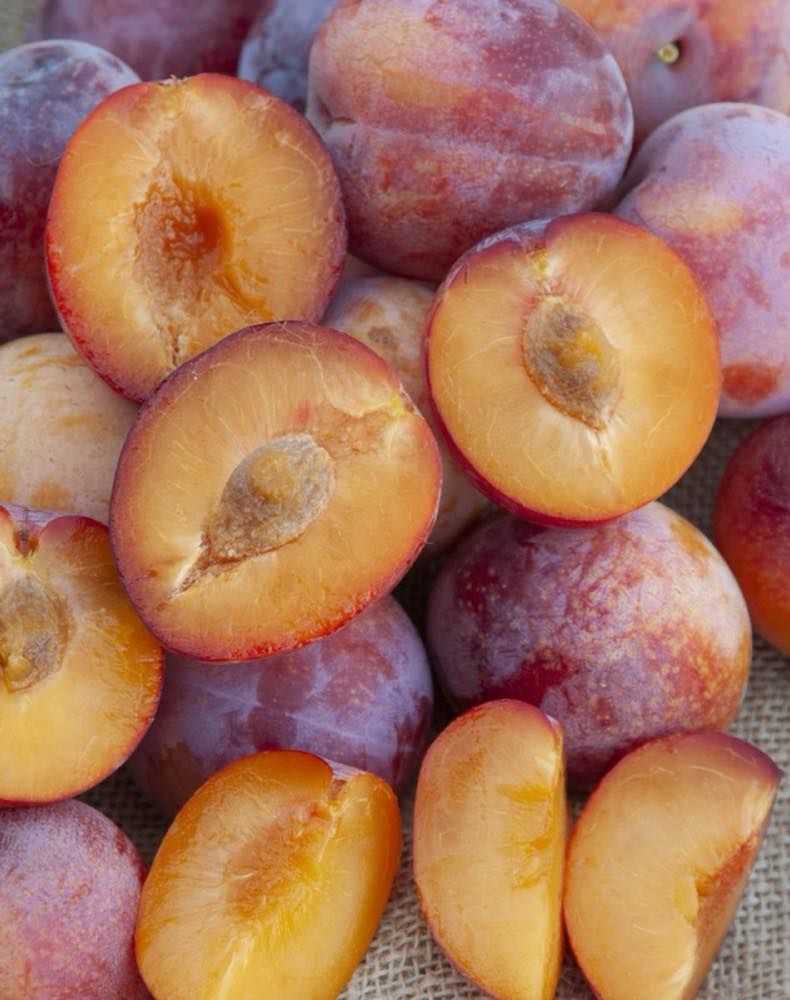
Pluots & interspecifics
A late-ripening pluerry, a plum and cherry cross, with orange skin blushed red, red-orange flesh and an intense flavor. The fruit hangs for weeks into fall. Plant it at mid elevation with a mid to late blooming plum or pluot nearby. In Phoenix, 500 hours is a stretch.
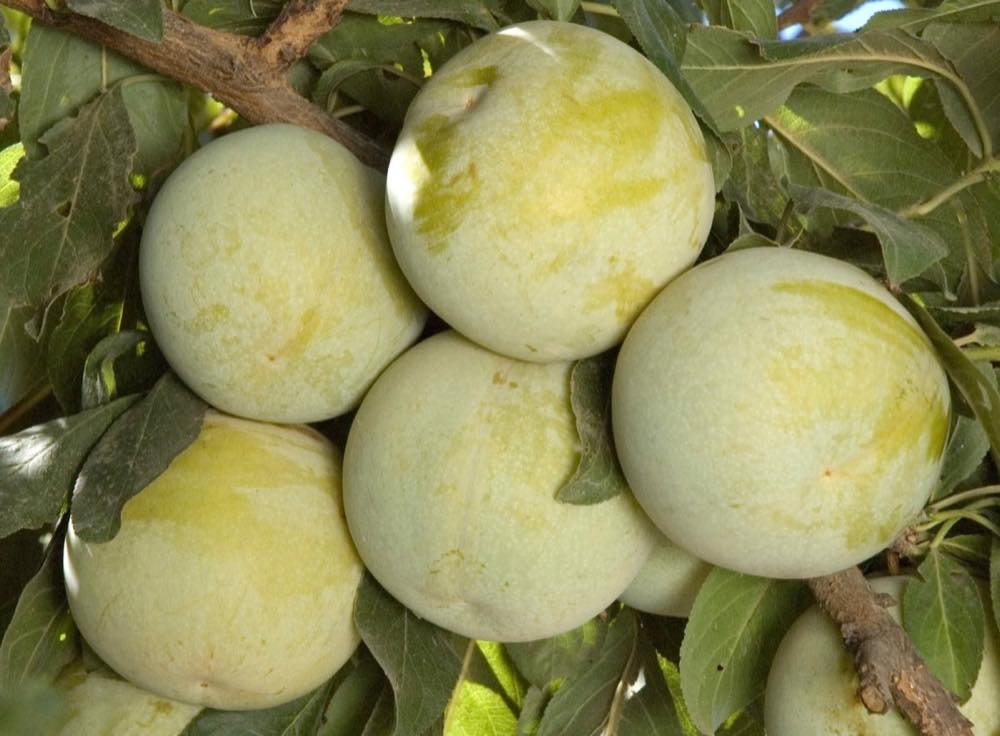
Pluots & interspecifics
A candy-sweet pluot with greenish-yellow skin and amber-orange flesh and a long harvest through the summer. It needs another plum or pluot for pollination, but Flavor King is not a match, so use Burgundy or Dapple Dandy instead. At 400 to 500 hours it is a mid elevation tree and marginal in Phoenix.
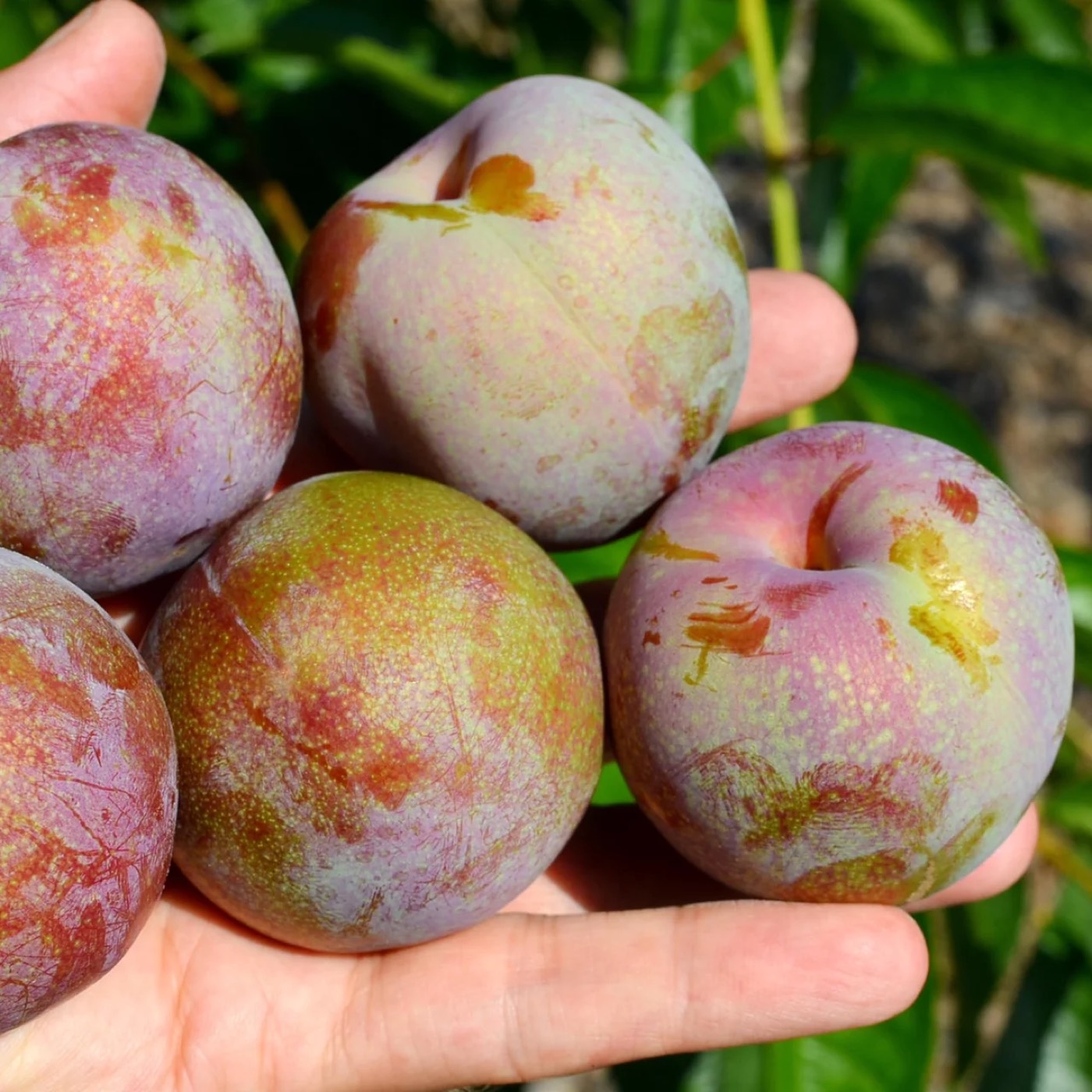
Pluots & interspecifics
A plum-apricot hybrid with sweet, richly flavored, firm red flesh and greenish-maroon mottled skin, ripening about two weeks ahead of Santa Rosa. It needs real winter chill, 700 to 800 hours, so it is a mid elevation tree and not a Phoenix one. Plant Santa Rosa or another pluot alongside it.
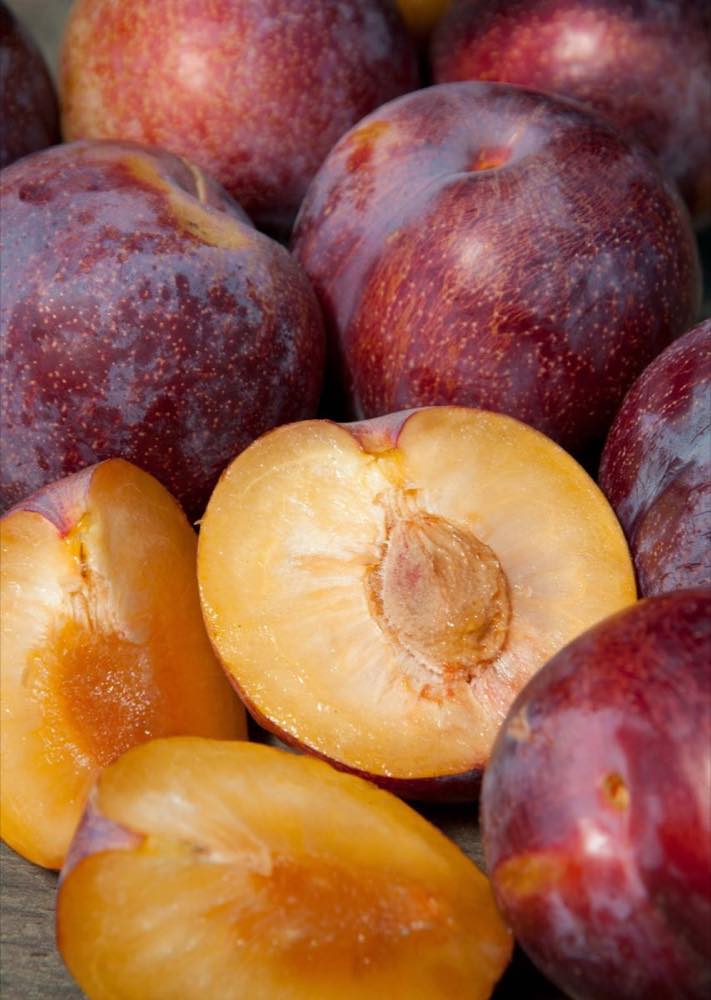
Pluots & interspecifics
A very heavy-bearing pluot with red skin and yellow flesh, balanced between acid and sugar with a plum-apricot flavor. It ripens in mid summer, just ahead of Flavor Queen, and at about 400 hours it works in the low desert and at mid elevation. It also pollinates other plums and pluots, though it still needs a second tree for its own crop.
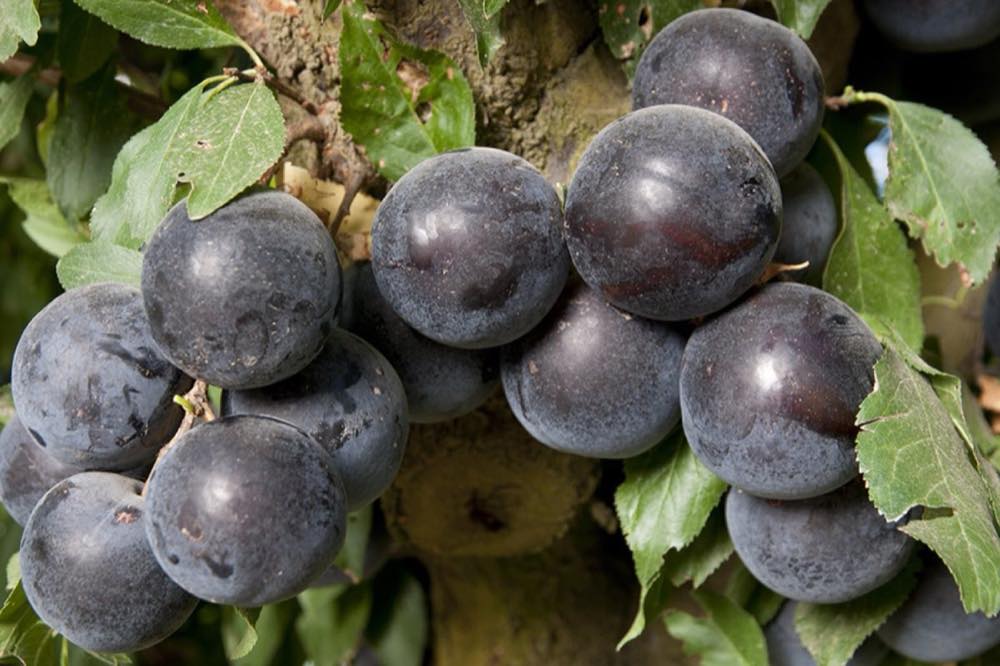
Pluots & interspecifics
A Japanese plum and cherry-plum cross, sweet and freestone with no sourness, and refreshing to eat fresh. The ripe fruit holds on the tree for three or four weeks. Sprite and Delight pollinate each other, so plant them as a pair. At about 400 hours it works in the low desert and at mid elevation.
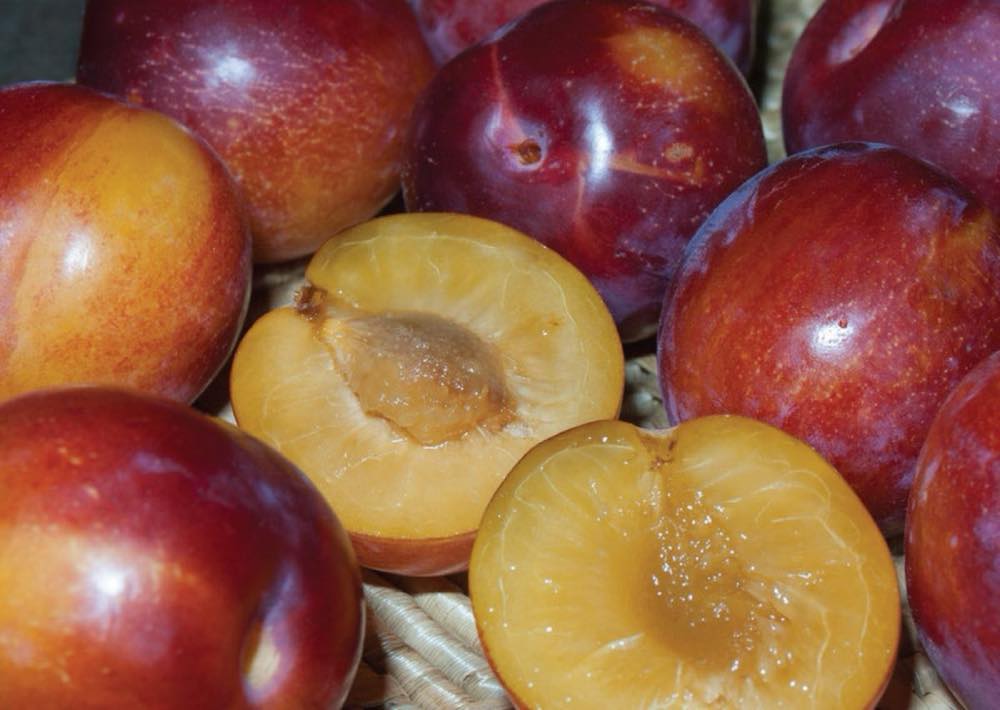
Pluots & interspecifics
An early pluerry, a plum and cherry cross, with red skin and yellow flesh, ready in mid June in a mild climate. It is a newer variety, so there is little Arizona track record. It needs a mid to late blooming plum or pluot nearby, such as Flavor King. Treat it as a mid elevation tree, since 500 hours is a stretch in Phoenix.
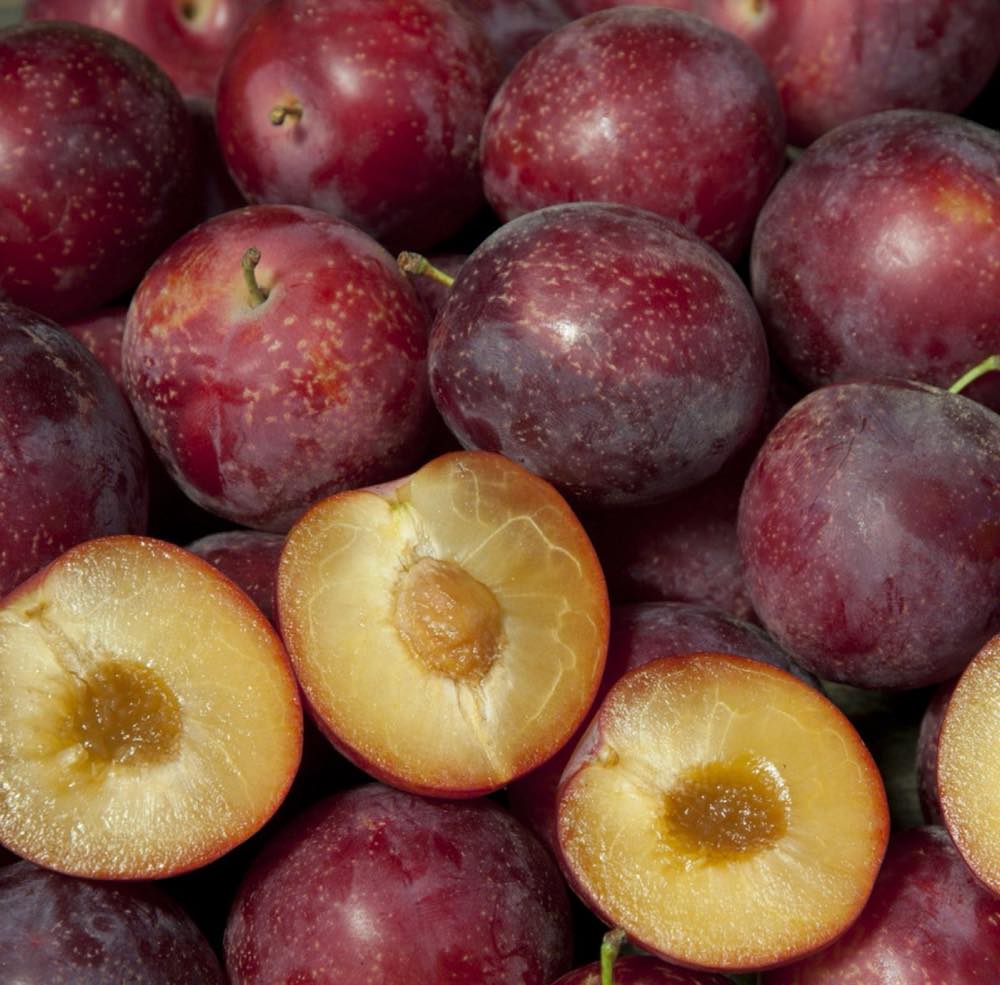
Pluots & interspecifics
A plum and cherry cross that tastes like a sweet cherry with a bright plum snap. The fruit is bigger than a cherry and a little smaller than a plum, and the colorful tree is almost ornamental. At 200 to 300 hours it is one of the best-fitting pluerries for the low desert. The fruit hangs for over a month.
Pluots & interspecifics
A plum and cherry cross that tastes like a sweet cherry with a bright plum snap. The fruit is bigger than a cherry and a little smaller than a plum, and the colorful tree is almost ornamental. At 200 to 300 hours it is one of the best-fitting pluerries for the low desert. The fruit hangs for over a month.
The almond that needs no partner, with soft shells and sweet kernels. It blooms early, so it is a low desert tree: Phoenix winters give enough chill and rarely frost the flowers, while at elevation a late freeze usually takes the crop. It needs a hot summer to fill the nuts, and birds and squirrels will help themselves once the hulls split.
Nuts
A late-blooming almond with plump, hard-shelled nuts, so it dodges more spring frosts than most. It needs about 500 chill hours, which puts it at mid elevation, in warm spots like the Verde Valley and Sierra Vista, rather than Phoenix. It will not set nuts alone, so plant All-In-One or Price nearby, and expect a frost loss in the odd cold year.
Nuts
A small, heavy-bearing almond with nuts much like Nonpareil, a good fit for tight yards. At about 400 chill hours it works in the low desert, though that is the edge for Phoenix. It will not set nuts alone, so plant All-In-One or Mission nearby, and skip it at elevation, where its early bloom is usually frosted.
A big, spreading chestnut with large nuts that peel easily. It needs 400 to 500 chill hours but also acid soil, and most Arizona soil is too alkaline, so use it only where the ground is acidic, such as granite soil around Prescott and Payson, or grow it in a large amended container. It needs a Nevada chestnut nearby for pollination.
Nuts
Nevada is a good nut tree in its own right and the pollen partner for Colossal, since one Nevada serves 8 to 10 Colossal. It needs 400 to 500 chill hours and, like Colossal, it will not tolerate alkaline soil. It only works where soil is acidic, like granite soils around Prescott and Payson, or in a big container with an acid mix.
Nuts
The heavy-bearing home orchard walnut, with light-colored, good-tasting nuts on side buds, so it crops sooner than older types. It needs about 700 chill hours, so it fits mid elevation yards, not the low desert, where chill is short and heat scorches leaves and nuts. It is a big tree that needs deep, regular water.
The late-leafing walnut, so spring frosts that burn other walnuts mostly miss it. It needs 700 to 1,000 chill hours, so it suits frost-prone spots at mid elevation, such as Prescott, Payson and Sierra Vista. The tree is very large and upright, with thin-shelled nuts and light kernels, and it is slow to come into bearing.
A cold-hardy Carpathian-type walnut that bears young and heavy, with large, sweet kernels. It needs about 700 chill hours and shrugs off cold winters, so it suits mid elevation and sets nuts alone. It is a vigorous, large tree that wants deep watering and plenty of room.
Nuts
A walnut bred in New Mexico, with large, well-sealed nuts that resist sunburn, and it blooms late enough to miss most frosts. It needs about 700 chill hours, so it suits mid elevation yards and not Phoenix, and it sets nuts alone. It grows into a big, thirsty tree, so give it room and deep, regular watering.
A walnut with a striking red kernel that stands out at farmers markets, bearing moderate to heavy crops on its side buds. It needs 700 to 1,000 chill hours and leafs out in mid April, so it suits mid elevation yards. It will not set nuts alone, so plant Franquette or Cisco nearby.
Flowering trees
Soft, pale pink single flowers in early spring on an open, graceful tree of about 25 ft. It needs a real winter and cool summers, so it belongs at mid elevation and in the high country, not the low desert. Plant it where late frost will not catch the flowers every year, and give it water through summer.
Flowering trees
Deep red double flowers, among the most intense of any flowering tree, followed by sweet white nectarines in late June. It needs about 500 chill hours, so it suits mid elevation, where late frost can still cost you some bloom. It is marginal in Phoenix, where flowering can be thin after mild winters. Self-fruitful, and plan on a copper spray for leaf curl in winter.
Flowering trees
Double pink, fragrant flowers on bare branches in late winter, with reddish-purple new leaves that turn greenish bronze. Little or no fruit, and a graceful shape to about 25 ft. Purple-leaf plums like this are common in Phoenix yards. Like most plums it is moderately short-lived and borers and iron yellowing can be a problem in alkaline soil.
Flowering trees
Large snow-white double blossoms, among the showiest of the flowering trees, on a fast grower of about 20 ft. It blooms in January and February in the low desert and about a month later at mid elevation. Like any peach it picks up leaf curl and borers, and it usually lives 15 to 20 years. Suits the low desert and mid elevation.
Flowering trees
Bright pink blossoms very early, the kind of branches cut for Chinese New Year in warm-winter California. A fast grower of about 20 ft that opens in January to February in the low desert, a welcome first sign of spring. At mid elevation the early bloom is often caught by frost. Expect to manage borers and leaf curl like any peach.
Flowering trees
Vivid purplish-red double flowers very early, followed by small, sweet peaches. It grows to about 20 ft and blooms in January to February in the low desert. At mid elevation a spring frost can take the flowers, so pick a sheltered spot there. Like any peach it needs care for borers and leaf curl, and it lives about 15 to 20 years.
Flowering trees
A white-flowering peach that opens early, usually January to February in the low desert. It is grown on a rootstock that copes well with light, warm soils and root-knot nematodes. At about 20 ft it suits the low desert and mid elevation, though early bloom at mid elevation can meet frost. Expect the usual peach care for leaf curl and borers.
Flowering trees
Pink buds open to thousands of single white flowers, followed by small fruit the birds enjoy. A spreading tree of about 20 ft. It needs a real winter and cooler summers, so it belongs at mid elevation and in the high country, not the low desert. Fire blight can hit crabapples in wet springs, so prune out any blackened tips.
Flowering trees
Profuse pink flowers on a late-blooming tree that tends to miss the frosts that ruin early almonds. It is a very cold hardy peach-almond hybrid, and it does set nuts with hard shells. It wants a real winter, about 800 chill hours, so it fits mid elevation and the high country, not Phoenix.
Flowering trees
Very large, clear pink double flowers, up to about 2 1/2 inches across, on a vigorous tree of about 20 ft. It blooms late for a flowering peach, which helps avoid frost at mid elevation. It is described as widely adapted, but no chill figure is published, so in Phoenix expect later and lighter bloom than the early peaches. Watch for leaf curl and borers.
Flowering trees
Dark purple leaves that hold their color well through summer, with light pink flowers and little or no fruit. A relatively small tree at about 18 ft by 12 ft, so it fits a smaller yard. Of the purple-leaf plums, it is the one most often recommended for Phoenix. Like most plums it is short-lived and borers and leaf scorch can be a problem.
Flowering trees
The same small purple-leaf plum, but with branches starting low at about 18 inches, for a fuller, bushier look. Dark purple leaves, light pink flowers and little or no fruit. It fits a small yard and does well in the low desert and mid elevation. Like most plums it is short-lived, and borers and summer scorch can be an issue.
Flowering trees
The same small purple-leaf plum, trained with a 5 ft clear trunk so it works over a patio, path or lawn. Dark purple leaves, light pink flowers and little or no fruit, about 18 ft by 12 ft. Does well in the low desert and mid elevation. Like most plums it is short-lived and borers and summer scorch can be an issue.
Flowering trees
Large, double, rosy pink flowers in drooping clusters on an upright tree of about 30 ft, the classic cherry blossom look. It needs real winter cold and cooler summers, so it is a mid elevation and high country tree. In Phoenix it usually flowers poorly and does not live long. Give it summer water and a spot out of strong wind.
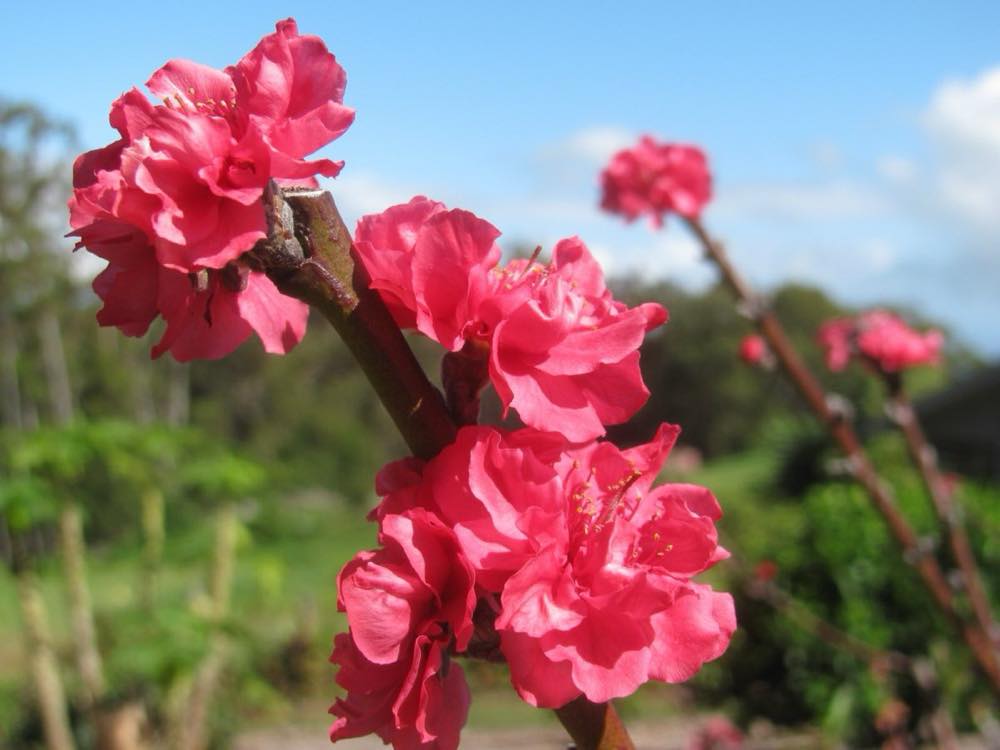
Flowering trees
Deep double red flowers that open late, so they often miss the spring frosts that ruin the early peaches. That makes it a good pick for frost-prone mid elevation yards. About 20 ft tall. Late bloom usually means more chill is needed, so it is unreliable in Phoenix. Expect the usual peach care for leaf curl and borers.
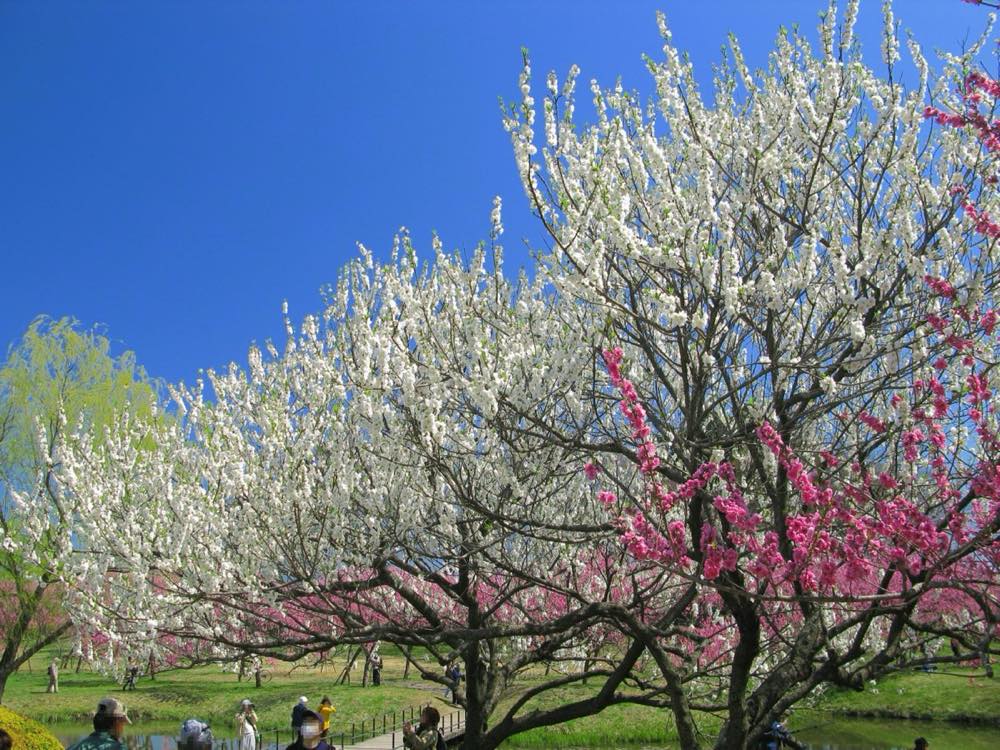
Flowering trees
A white-flowering peach that opens late, after most frost danger has passed, which helps at mid elevation. Late bloom usually means it wants more winter than the early peaches, so it is unreliable in Phoenix. Expect about 20 ft and the usual peach care for leaf curl and borers.
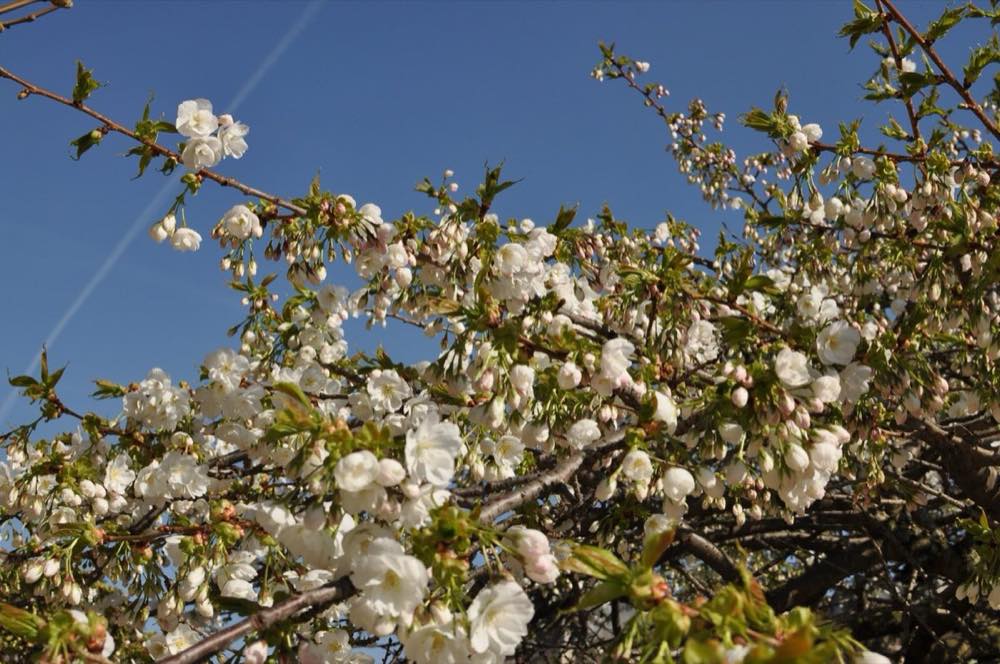
Flowering trees
Semi-double white flowers that age to purplish pink on wide, horizontal branches, to about 20 ft. It makes a lovely patio or lawn tree where winters are cold. It needs real winter, so it suits mid elevation and the high country, not Phoenix. Give it summer water and shelter from late frost.
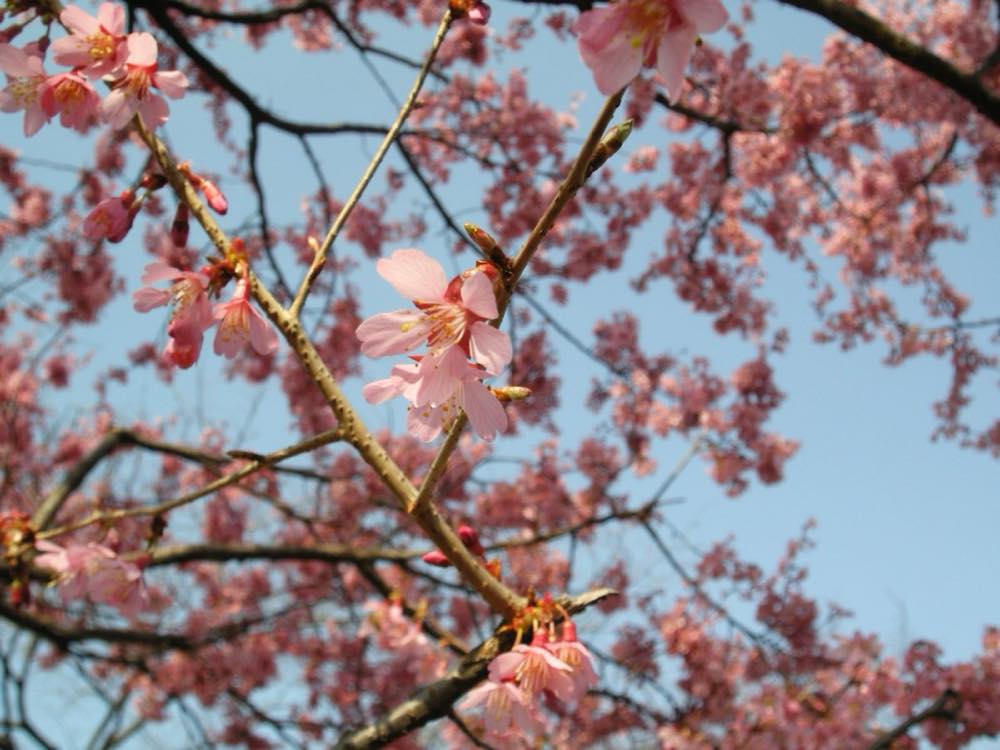
Flowering trees
Masses of pink flowers very early, then yellow, orange and red fall color. It is the most heat and drought tolerant of the flowering cherries and needs less winter chill than most, so it is the one Phoenix gardeners sometimes try. It does best at mid elevation and in the high country, where bloom is reliable. The early flowers can be nipped by frost.
Flowering trees
Deep pink double flowers with a spicy fragrance in the dead of winter, on a long-lived tree of about 20 ft. It is a flowering apricot (ume), so it blooms very early: January to February in the low desert. It suits the low desert and lower mid elevation, but a hard frost can spoil the flowers. Watch for yellow leaves in alkaline soil.
Flowering trees
A showy oddity: double flowers in red, pink, white and striped, often all on the same tree. A fast grower to about 20 ft that blooms in January to February in the low desert. It suits the low desert and mid elevation, though early bloom at mid elevation can meet frost. Colors vary year to year, and like any peach it needs care for leaf curl and borers.
Flowering trees
A round tree of 15–20 ft covered in pink blossoms, sold as suited to mild winters. That makes it one of the few flowering cherries worth trying in the low desert, where most do not get enough cold. It is only moderately cold hardy, so frost can hurt it at higher elevations. Give it afternoon shade in Phoenix.
Flowering trees
Crimson buds open to hot pink single flowers, followed by persistent dark red fruit, on a tree of about 20 by 20 ft. It resists scab, rust and fire blight better than most crabapples. It needs a real winter and cooler summers, so it fits mid elevation and the high country, not the low desert.
Flowering trees
A small plum, 10–12 ft, whose purple leaves hold their color all season, with pale spring blossoms. Believed to be sterile, so there is no fruit to clean up. It is small enough for a tight yard and very cold hardy. Does well in the low desert and mid elevation, and in milder spots in the high country. Shade it from hot afternoon reflection in Phoenix.
Flowering trees
A small purple-leaf plum, 10–12 ft, whose color holds all season. This one is grown with a 3 ft clear trunk, so it makes a tidy small tree over beds or a patio. Believed to be sterile, so there is no fruit drop. Very cold hardy. Does well in the low desert and mid elevation, and in milder high country spots.
Flowering trees
The last flowering cherry to bloom, with abundant double flowers that open pink and age to white, on a spreading tree of about 25 ft. Its late bloom helps avoid frost at mid elevation and in the high country. It needs real winter and cooler summers than Phoenix gives, so it is not a low desert tree.
Flowering trees
A small tree of about 20 ft with masses of dark pink, bell-shaped flowers very early in the year. It needs very little winter chill, so it is the flowering cherry most likely to bloom in the low desert, though summer heat there is a stretch. It is only moderately cold hardy, so cold sites at mid elevation are risky. Give it afternoon shade.
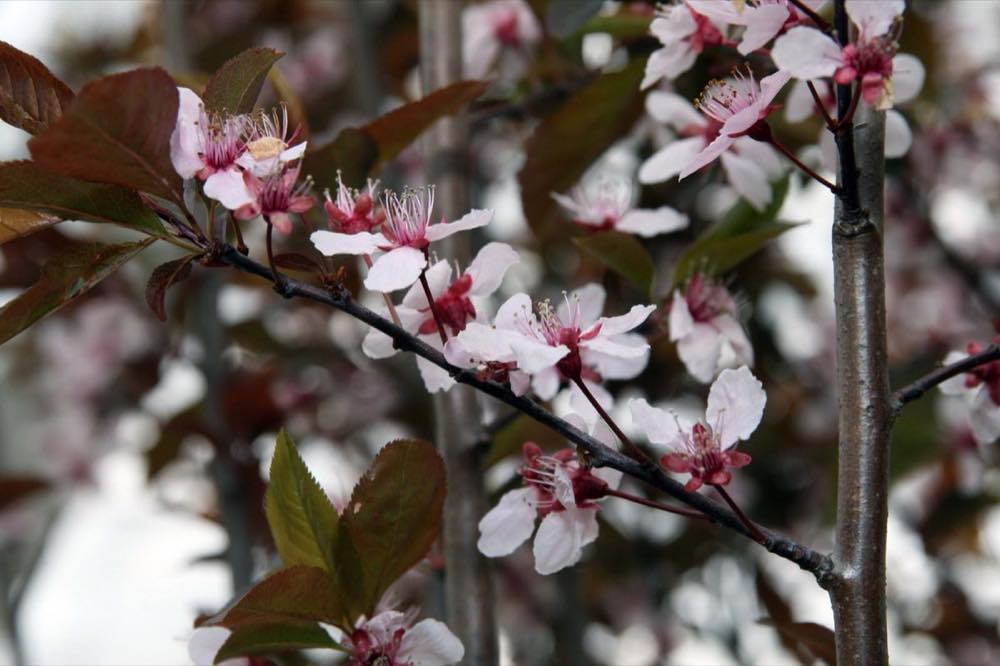
Flowering trees
Light pink to white flowers and deep purple leaves on a rounded tree of about 20 by 20 ft, with small plums that suit jam in some years. Very hardy, and it does well in the low desert and mid elevation. In hard summer heat the leaf color can fade or scorch. Like most plums it is short-lived, and borers and iron yellowing are common.
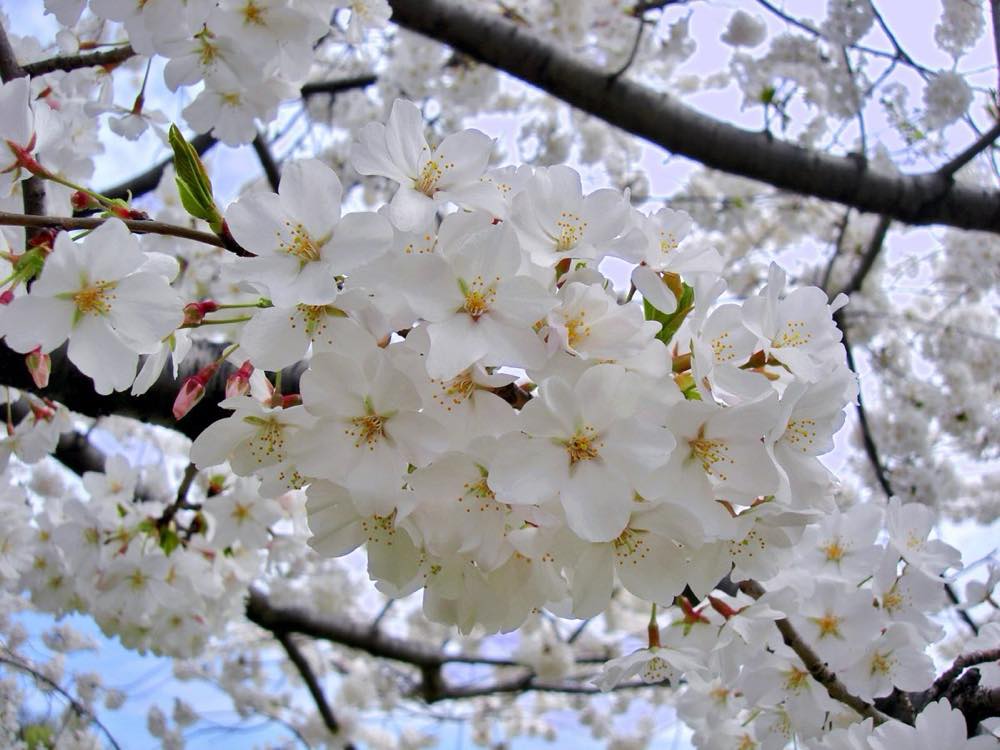
Flowering trees
The famous Washington cherry: fragrant, light pink to white single flowers on a fast, rounded tree that reaches 40 by 30 ft. It needs real winter and cooler summers, so it suits mid elevation and the high country, not the low desert. It is a big tree, so give it space and summer water.
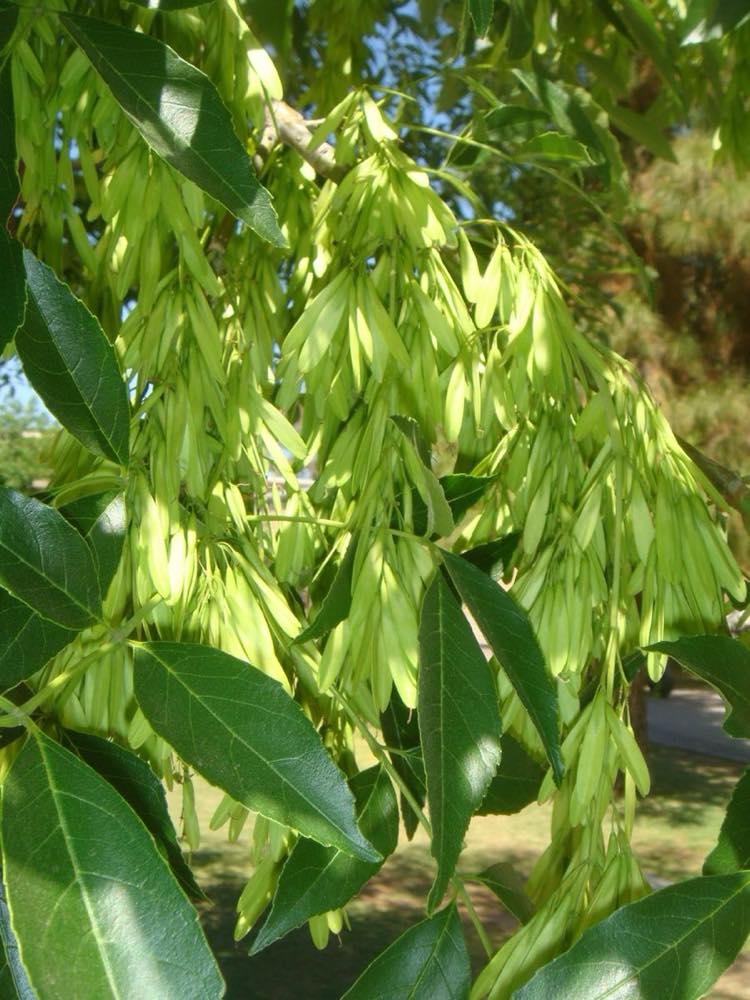
Shade trees
Arizona's native ash: fast growing, drought tolerant and fairly cold hardy, with golden fall color. Grown from seed, so some trees will be seed-dropping females. It is short-lived in most yards (often 20–30 years), prone to borers and limb breakage, and very susceptible to Texas root rot. A seedless selection is usually the better buy. Low desert and mid elevation.
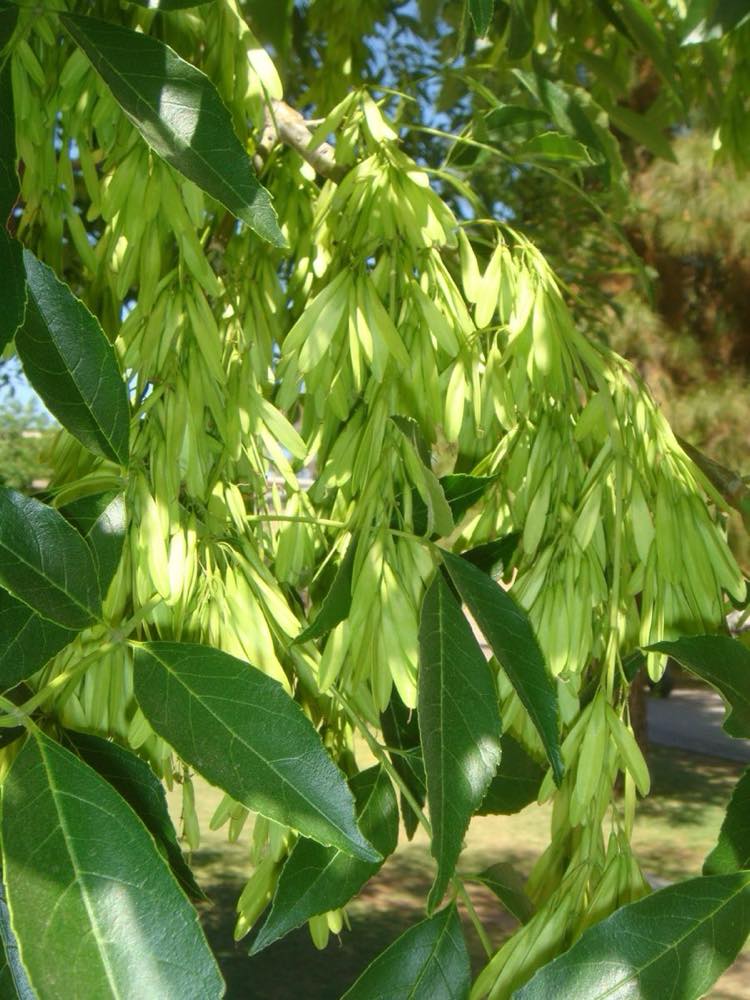
Shade trees
A cold hardy, seedless Arizona ash selected in New Mexico, with bright yellow fall color and a wide 50 by 40 ft canopy. Very cold hardy, so it is a rare ash that also suits the high country, and it works at mid elevation and in the low desert. Like all ash it is vulnerable to borers and Texas root rot, and it is a big tree.
Shade trees
A fast shade tree with a broad canopy and long-lasting yellow fall color, to about 35 by 35 ft. It is a good performer in the desert Southwest and fairly cold hardy. Suits the low desert and mid elevation. Like other ash it can be hit by borers and Texas root rot, so deep, infrequent watering and good drainage help.
Shade trees
A seedless Arizona ash with large dark green leaves and a symmetrical canopy, fast growing and good for hot, dry Southwest summers. It avoids the seed litter of ordinary Arizona ash. Fits the low desert and lower mid elevation. It is still an ash, so borers, limb breakage and Texas root rot are the things to watch.
Shade trees
A seedless hybrid between Texas green ash and Arizona ash, with a rounded canopy and golden fall color. At about 30 by 25 ft it is a more manageable ash than Modesto. A good choice in the low desert and the warmer parts of mid elevation. Like all ash it is open to borers and Texas root rot.
Shade trees
A vigorous, fast Arizona-type ash for hot, dry summers, with spectacular yellow fall color and a 50 by 30 ft canopy. It was planted all over Phoenix and Tucson for decades. It is short-lived in many yards, with limb failure after 15 to 20 years without good pruning. Borers and Texas root rot are the usual killers. Low desert and mid elevation.
Shade trees
A smaller, fast-growing ash that tolerates heat, cold and alkaline soil, with purplish-red fall color (best where nights turn cool) and no seeds. At 25–35 ft it fits a typical yard better than the bigger ashes. Suits the low desert and mid elevation. It can sunscald when young, so wrap or shade the trunk, and watch for borers and Texas root rot.
Shade trees
The evergreen shade ash of the low desert: it stays leafy nearly all year in Phoenix and can reach 60 ft or more, so it needs a lot of room. It is frost tender below about 20°F, which keeps it out of mid elevation and the high country. Expect heavy leaf drop in late winter, big water needs, aggressive roots, and Texas root rot.
Shade trees
The evergreen shade ash of the low desert: it stays leafy nearly all year in Phoenix and can reach 60 ft or more, so it needs a lot of room. It is frost tender below about 20°F, so it is not for the higher elevations. Seed-grown trees can drop messy seed in late summer. Expect heavy leaf drop, big water needs, aggressive roots and Texas root rot.
Shade trees
Light green leaves that shimmer in the slightest breeze, with bright yellow fall color. It is a high country tree, at home around Flagstaff, Show Low and the White Mountains, and only a short-lived guest below about 6,500 ft. It suckers into groves, wants steady moisture and cool roots, and is open to borers and cankers when stressed. Not for Phoenix or the warm mid elevations.
Shade trees
The most popular white-barked birch in the West, with weeping side branches and delicate, lacy foliage. It needs cool summers and steady water, so it fits the high country and the cooler parts of mid elevation, such as Prescott and Payson. Bronze birch borer and heat stress are the common problems, and it is not for the low desert.
Shade trees
A big tree with heart-shaped leaves, showy white flower clusters in late spring and long bean-like pods. It tolerates cold, many soils and some heat, so it suits mid elevation and the high country. In Phoenix the leaves scorch and it struggles. It is messy, with dropping flowers and pods, and the limbs are brittle.
Shade trees
Arizona's own streamside cottonwood: a very fast, huge tree with shimmering leaves and yellow fall color, to 60 ft or more. It only does well with real water, such as a creek, a wash edge or generous irrigation. Low desert and mid elevation. Expect dropped branches and leaf litter, possible cotton in spring, and roots that find pipes and septic lines.
Shade trees
A tough, fast shade tree with small, neat leaves and mottled bark, also called lacebark elm. It handles heat, wind, drought and our alkaline soil well. Suits the low desert and mid elevation. It can be semi-evergreen in the low desert, and the branches can be weak in wind. Elms are very susceptible to Texas root rot, so avoid sites where it has hit before.
Shade trees
A very fast Chinese elm that stays leafy nearly all year in the low desert and is deciduous in colder places. It grows quickly to about 50 ft. Suits the low desert and mid elevation. It sheds a lot of leaves in late winter, the branching can be weak and the root rot risk is high (elms are very susceptible to Texas root rot).
Shade trees
A slow, open tree with light shade, big clusters of yellow flowers in early summer, and papery lantern-like seed pods that stay on in fall. It handles heat and alkaline soil and is fairly cold hardy, so it suits the low desert and mid elevation. It wants regular water. Seedlings pop up around it and the pods make some litter.
Shade trees
A thornless honeylocust with bright yellow new growth that turns lime green, giving a light, airy shade. It is tough and fairly cold hardy, so it does best at mid elevation and in the high country. In the low desert the gold foliage can scorch in summer. Tiny leaves make easy litter, but watch for borers and webworms.
Shade trees
A very fast, thornless honeylocust with light, filtered shade and small leaves that fall in fall and are easy to clean up. It handles heat, wind, drought and alkaline soil, and is fairly cold hardy. It does well in the low desert, at mid elevation and in the high country. Watch for borers and webworms. Light shade lets lawn or underplanting grow beneath it.
Shade trees
A black locust with golden to orange new leaves that turn bright yellow-green, fast growing to about 40 ft. It is tough and cold hardy, so it suits mid elevation and the high country. In the low desert the foliage scorches. The limbs are brittle, thorns are sharp, roots sucker, and borers are common. Seeds and bark are toxic if eaten.
Shade trees
Large clusters of purplish-pink, sweet-pea flowers in spring over a shapely, open tree, with a long bloom. It handles heat, drought and poor soil and is hardy in all three regions. It is fast growing but brittle, so prune for strong structure when young. Borers, suckers and thorns are the trade-offs, and the seed pods make some litter.
Shade trees
A fast, big shade tree with attractive patchy bark, resistant to the anthracnose that hits other sycamores. It handles heat but wants deep, regular water, and the leaves can scorch in hot summers. It suits mid elevation best and does well in the low desert with real irrigation. Very susceptible to Texas root rot. Give it a lot of space.
Shade trees
A red and silver maple hybrid with bright red to orange fall color, fast growth, and better drought tolerance than most maples. Cold hardy. It does well in the high country and cooler parts of mid elevation, such as Prescott and Payson. In alkaline soil it can turn yellow and chlorotic, and in the low desert it scorches. Not for Phoenix.
Shade trees
A red and silver maple hybrid with bright red fall color, even in warmer climates. Cold hardy. It does well in the high country and cooler parts of mid elevation, such as Prescott and Payson, where the soil is not too limey. In alkaline soil it can turn yellow and chlorotic, and in the low desert it scorches. Not for Phoenix.
Shade trees
A narrow, upright red maple that fits tight spots, with yellow to orange fall color, to about 50 ft by 15 ft. Very cold hardy. It needs cool summers and good water, so it suits the high country and the cooler, granite-soil parts of mid elevation such as Prescott and Payson. In limey or alkaline soil the leaves turn yellow and scorch. Not for the low desert.
Shade trees
A red maple with a nearly round canopy, glossy green leaves and a showy red fall color that comes late. About 40 by 35 ft. It suits the high country and the cooler parts of mid elevation with neutral to slightly acidic soil, such as Prescott and Payson. Alkaline soil causes yellow leaves, and the low desert is too hot for it.
Shade trees
An upright, oval red maple with bright red or orange-red fall color, to about 40 ft, and very cold hardy. It suits the high country and the cooler parts of mid elevation with neutral to slightly acidic soil. In limey soil the leaves yellow, and in the low desert it scorches. Needs steady water.
Shade trees
A very fast, large maple with an open form and silver-backed leaves. It is easy to grow in cold climates, so it fits the high country and cooler mid elevation spots with irrigation. The downsides are real: brittle limbs, greedy surface roots, and yellow leaves in alkaline soil. Not for the low desert.
Shade trees
A compact silk tree with ferny leaves, an open umbrella shape and deep pink pompom flowers all summer. It tolerates heat and drought in the low desert, and is hardy enough for mid elevation. It is short-lived, as mimosa wilt and webworms often take it in 15 to 20 years, and the seed pods make some litter.
Shade trees
A drought tolerant, fast, vase-shaped fruitless mulberry that gives dense shade. It does well in the low desert and mid elevation. The downsides are real: heavy allergy-causing pollen from male trees, shallow roots that lift paving, soft wood, and very high Texas root rot risk. Tucson and Pima County restrict planting mulberry.
Shade trees
Fast, dense, cool shade that shrugs off heat and alkaline soil, which is why it is all over Phoenix. The downsides are real: heavy allergy-causing pollen, shallow roots that lift paving, soft wood, and very high Texas root rot risk. Tucson and Pima County restrict planting it. Works in the low desert and mid elevation if you accept those trade-offs.
Shade trees
A massive California native oak with twisting limbs, lobed leaves and checked gray bark, reaching 70 ft or more with equal spread. It is slow but long-lived and needs deep soil and deep water. It has no record in Arizona yards that we could find, so treat it as an experiment. If tried, mid elevation with deep soil is the likeliest fit. Low desert heat and alkaline soil are against it.
Shade trees
A very fast, tall, narrow column used for screens and windbreaks, with yellow fall color. It is very cold hardy but short-lived, often 15 to 25 years, because cankers and borers take it. It suits mid elevation and the high country, where it can be a useful screen. In the low desert it is short-lived and suffers in the heat.
Shade trees
A small, drought tolerant redbud with bright purplish-pink, sweet-pea-shaped flowers on bare branches in spring, then yellow to red fall color. It stays at about 15 ft, so it fits small yards. A western native that tolerates heat and dry summers, so it suits mid elevation and the high country, and the low desert with afternoon shade.
Shade trees
Striking scarlet new leaves that turn maroon and then green, with pink spring flowers, on a moderate grower of about 20 ft. Cold hardy, it does best at mid elevation and in the high country with afternoon shade, which keeps the purple color. In the low desert the leaves scorch and the color turns muddy. Not a Phoenix tree.
Shade trees
Profuse pinkish-purple flowers in spring on a small tree with glossy, scalloped, blue-green leaves. It handles heat and drought better than Eastern redbud, so it suits the low desert and mid elevation. Moderately cold hardy. Give it light afternoon shade in Phoenix. Slow to start but long-lived and tidy.
Shade trees
Spectacular purplish-red flower clusters in early spring, on a tree with glossy, dark green, heat-resistant leaves. It is one of the tougher redbuds for hot summers, so it does well in the low desert with afternoon shade and also at mid elevation and in the high country. Fairly cold hardy. Bloom is February to March in Phoenix.
Shade trees
Rich purple leaves and puffy, smoke-like plumes in early summer, on a tree or large shrub of about 20 ft. It likes cool nights, good drainage and full sun, and is very cold hardy, so it suits mid elevation and the high country. In the low desert the leaves scorch in summer heat. Not for Phoenix.
Shade trees
A California native sycamore trained with low branches, for a fuller, shrubbier shape. Big light green leaves and mottled pale bark. It needs deep, regular water and a lot of space, and does well in the low desert and mid elevation where water is available. Sycamores shed a lot of litter and are susceptible to Texas root rot.
Shade trees
A fast London plane hybrid, with more anthracnose resistance than ordinary sycamores, and good bark. It is cold hardy and handles heat if watered well. It suits mid elevation best, and the low desert with deep, regular irrigation. Needs a lot of space and is susceptible to Texas root rot.
Shade trees
A big, handsome sycamore from Mexico and Texas, with glossy leaves, mottled bark, good heat tolerance and enough cold hardiness for mid elevation. It does well in the low desert and mid elevation with deep, regular water and a lot of space. Sycamores shed a lot of litter and fuzzy leaf hairs, and are susceptible to Texas root rot.
Shade trees
A fast, vase-shaped shade tree with dark green, elm-like leaves and orange-red fall color. Cold hardy and tolerant of heat and wind, it makes a good street tree. It suits the low desert and mid elevation with regular water. In very alkaline soil the leaves can yellow, so watch for iron deficiency. A better-behaved elm substitute.
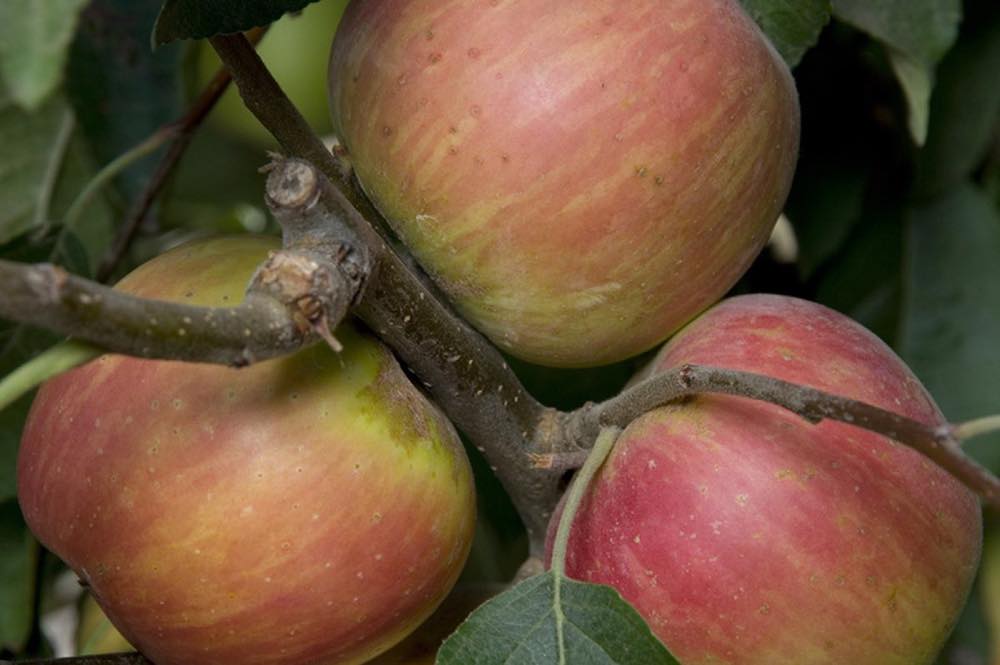
Apples
A very hardy, heavy-bearing apple from Minnesota with red, crisp, mildly tart fruit that keeps for months. It starts bearing young, often in its second year. It is a natural for the high country and the colder end of mid elevation, and at about 1,000 chill hours it will not do well in Phoenix.
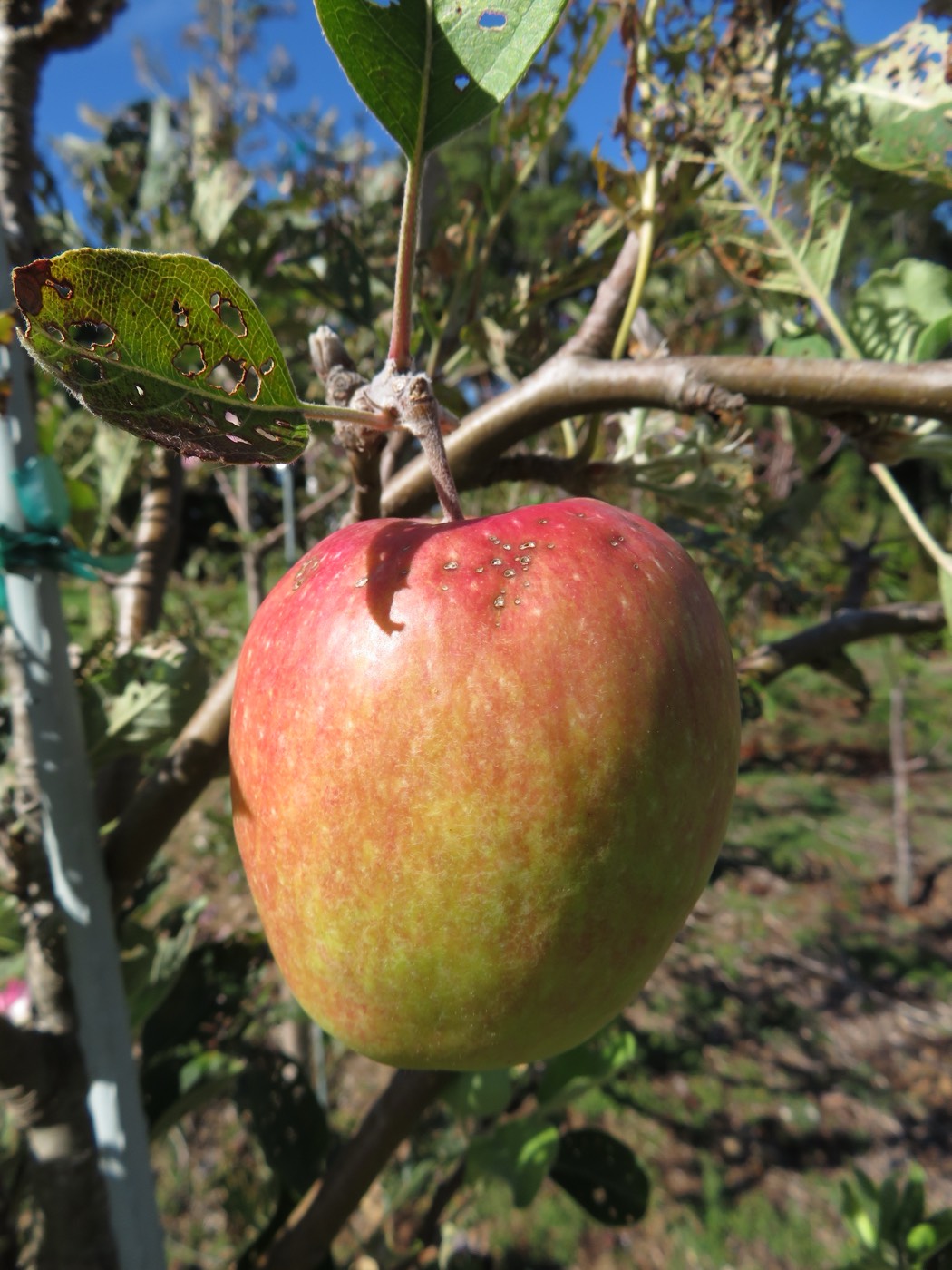
Three low-chill apples on one trained tree: Anna and Dorsett Golden ripen in June, and Fuji follows in the fall. It is built for low desert yards and looks good flat against a wall or fence. Fuji is the marginal one in Phoenix, with softer, paler fruit after warm winters, while the other two are dependable.
Blueberries
The standard northern blueberry: upright and productive, with large, firm berries that rarely crack or drop. It needs real winter chill and cooler summers, so it only suits mid elevation and the high country, and always in a big pot of acidic mix, because local soil and water are alkaline. Not a Phoenix plant.
Blueberries
Large, bright blue berries on a cold-hardy, upright bush that also colors well in fall. It ripens a little before Bluecrop, which helps it finish ahead of the hottest weather. With 800 chill hours it is a mid elevation and high country plant, grown in a large pot of acidic mix with acidified water.
Blueberries
A very late northern blueberry that spreads a heavy crop of medium, light blue, slightly tart berries over four to five weeks, which makes it a good partner for earlier types. Late fruit needs a long season, so it suits mid elevation better than the high country. Always a big pot of acidic mix and acidified water.
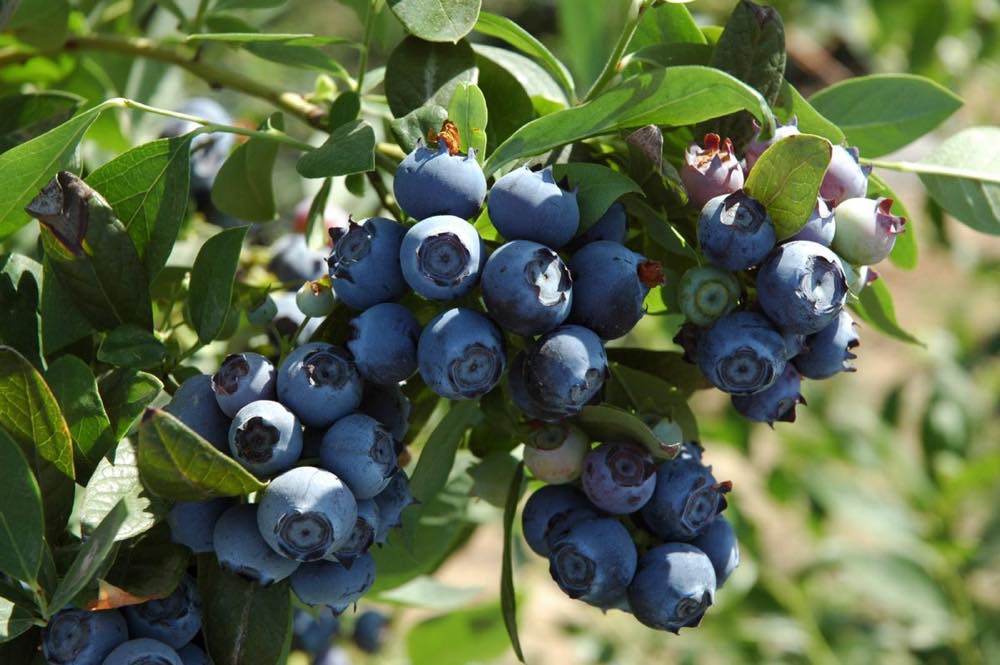
Blueberries
Big, firm, balanced-sweet berries in heavy clusters on one of the most productive southern types. Low chill makes it a fit for the low desert, but like every blueberry here it lives in a pot of acidic mix, gets acidified water and wants afternoon shade. It also suits mid elevation; cover it if frost hits during bloom.
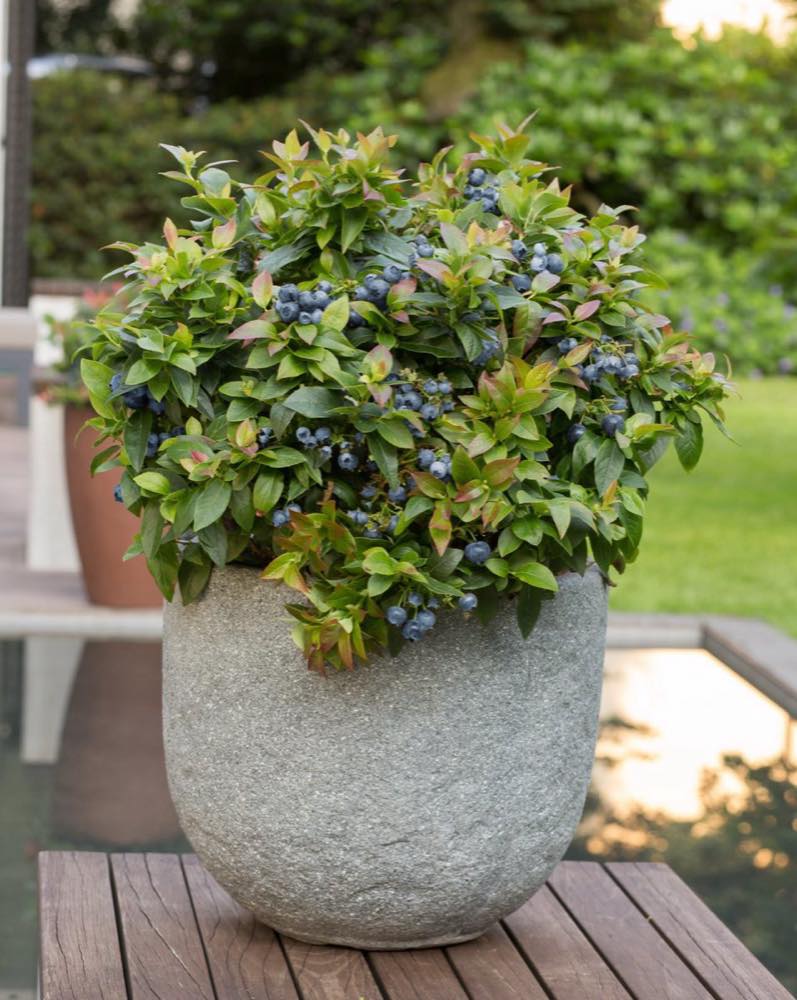
Blueberries
A neat little bush with narrow, elongated leaves and medium to large flavorful berries, bred for pots and a good small-space blueberry at elevation. Up to 600 chill hours is too much for Phoenix, so it belongs at mid elevation and in the high country. Grow it in a pot of acidic mix and water with acidified water.
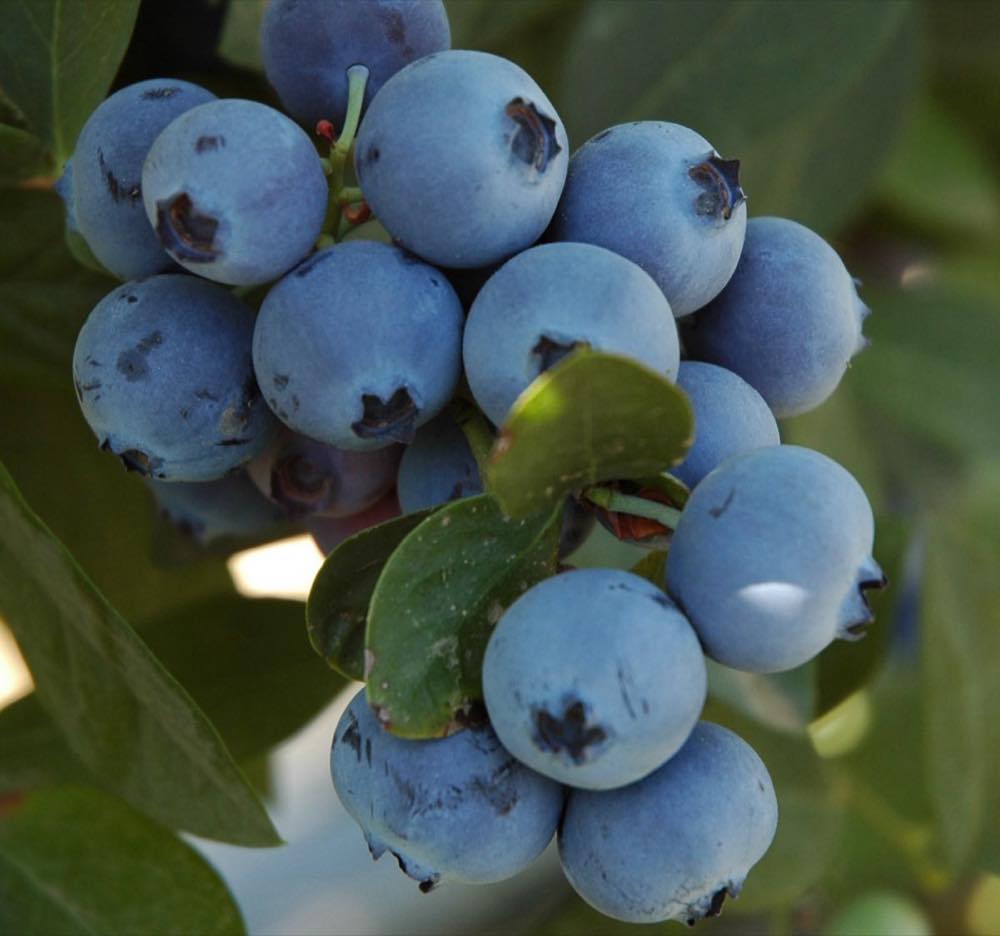
Blueberries
A leading commercial southern type with large, tangy-sweet berries and high yields. It works in low desert pots with acidic mix, acidified water and afternoon shade, and it is fine at mid elevation too. It is vigorous and upright, so give it a big pot and cut out old canes each winter.
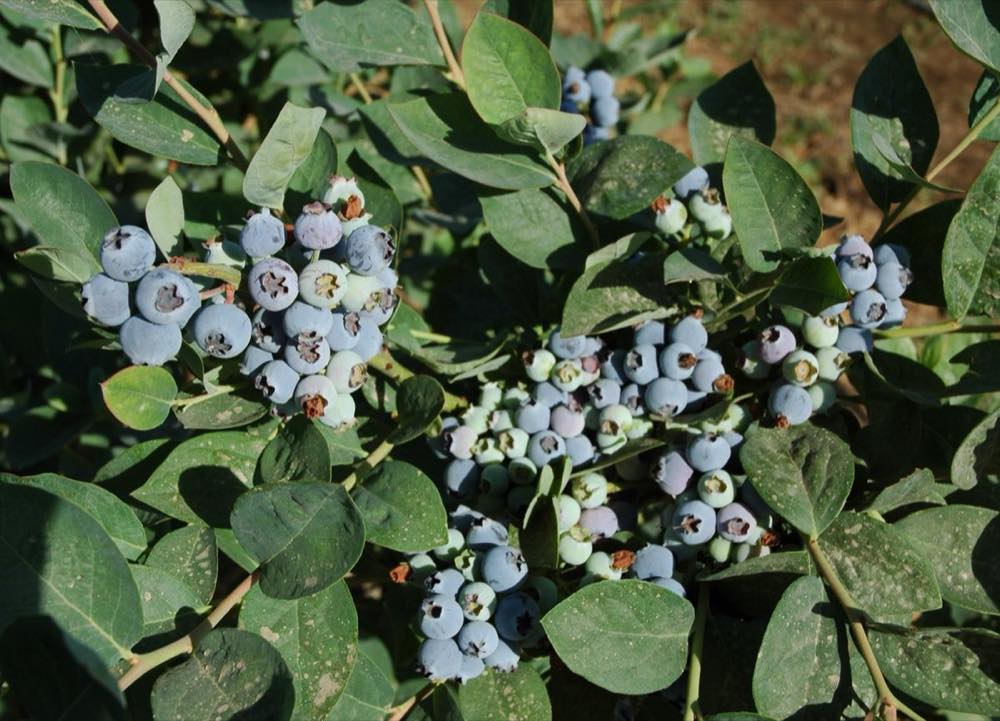
Blueberries
A sweet, firm, upright and compact southern type that carries its berries on the outside of the bush, so they are easy to see and pick. At 400 to 500 chill hours it is on the edge for Phoenix, where light crops are likely in warm winters, so it does best at mid elevation. Always a pot plant, with acidic mix and acidified water.
Blueberries
A vigorous, late northern blueberry with medium to large berries and a rich, sweet flavor that scored well in national trials. It is hardy and productive, but needs 800 chill hours and cooler summers, so it is a mid elevation and high country plant. Grow it in a big pot with acidic mix and acidified water.
Blueberries
An early, vigorous southern blueberry with excellent flavor that is a regular in Phoenix pots, for the low desert and mid elevation. It blooms in late winter, so keep frost cloth handy. Arizona soil and water are alkaline, so it is container only, with an acidic mix, acidified water and afternoon shade in summer.
Blueberries
Early, large, sweet berries on a vigorous upright bush that stands up to heat better than most. Grow it in a big pot of acidic mix with acidified water, and give it afternoon shade in the low desert. It crops best with a second variety close by, and works in the low desert and at mid elevation.
Blueberries
A tiny mounded blueberry grown as much for its peach, pink and orange foliage as for its sweet, medium berries. In Arizona it is a pot plant: use an acidic mix, water with acidified or rain water, and give it afternoon shade in the low desert. Crops are modest, so think of it as an edible ornamental for the low desert and mid elevation.
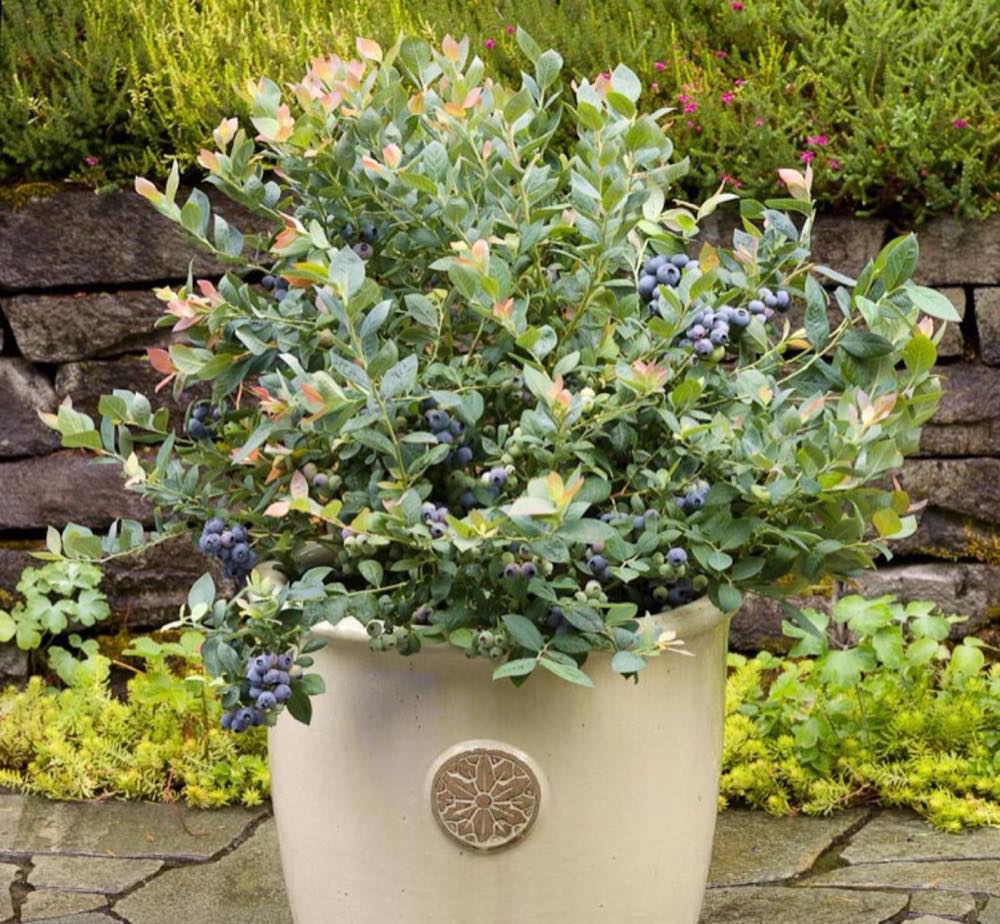
Blueberries
A compact bush with sweet, large berries and pink new growth that turns turquoise in winter, so it earns its spot as an ornamental too. At up to 500 chill hours it is borderline for Phoenix, where crops are likely to be light. It suits mid elevation best, in a pot of acidic mix watered with acidified water.
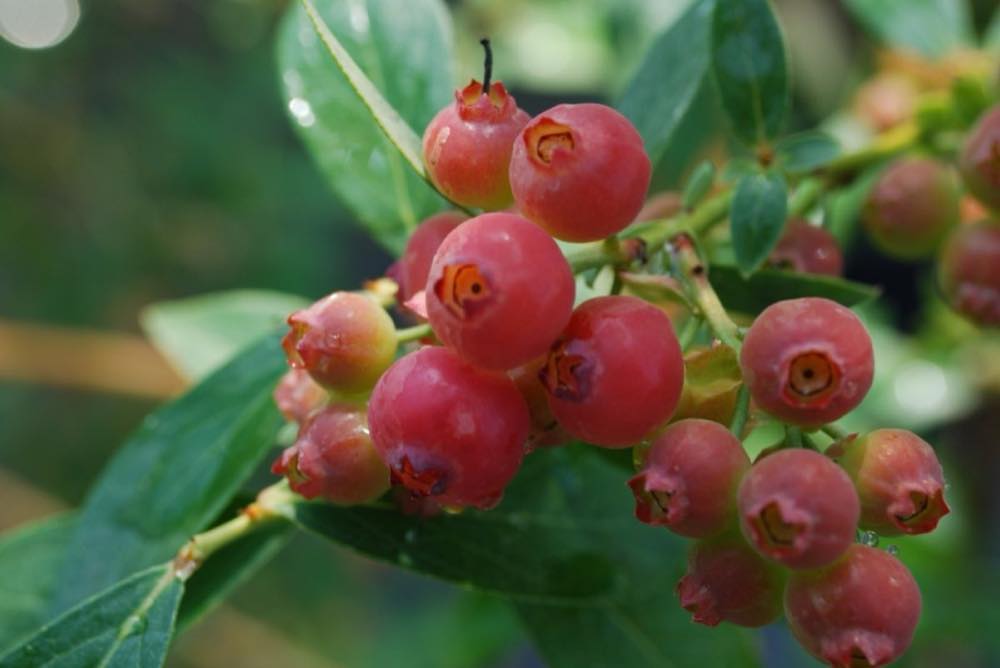
Blueberries
Berries ripen pink inside and out, with a bright, sprightly sweet flavor that bakers love and a nice contrast beside blue types. It is a rabbiteye cross, so it handles heat better than most blueberries. Plant it in a big pot of acidic mix, water with acidified water and give afternoon shade in the low desert.
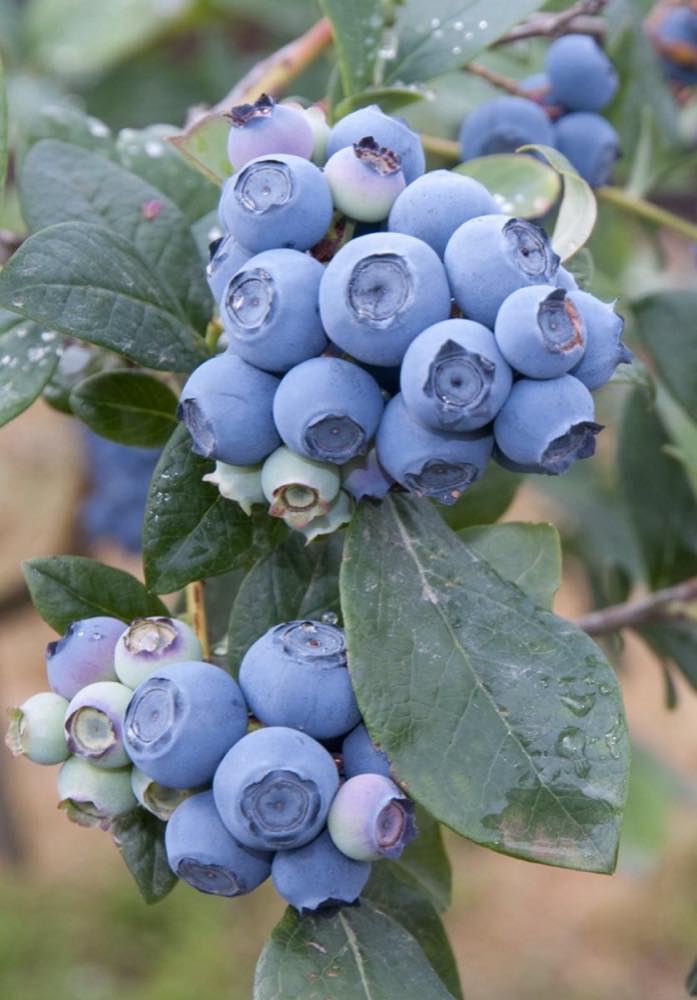
Blueberries
Crunchy texture and good flavor set this southern type apart, and the bush stands up straight with little pruning. Its chill needs sit at the high end for the low desert, so crops there can be light. It does best at mid elevation, in a pot of acidic mix watered with acidified water.
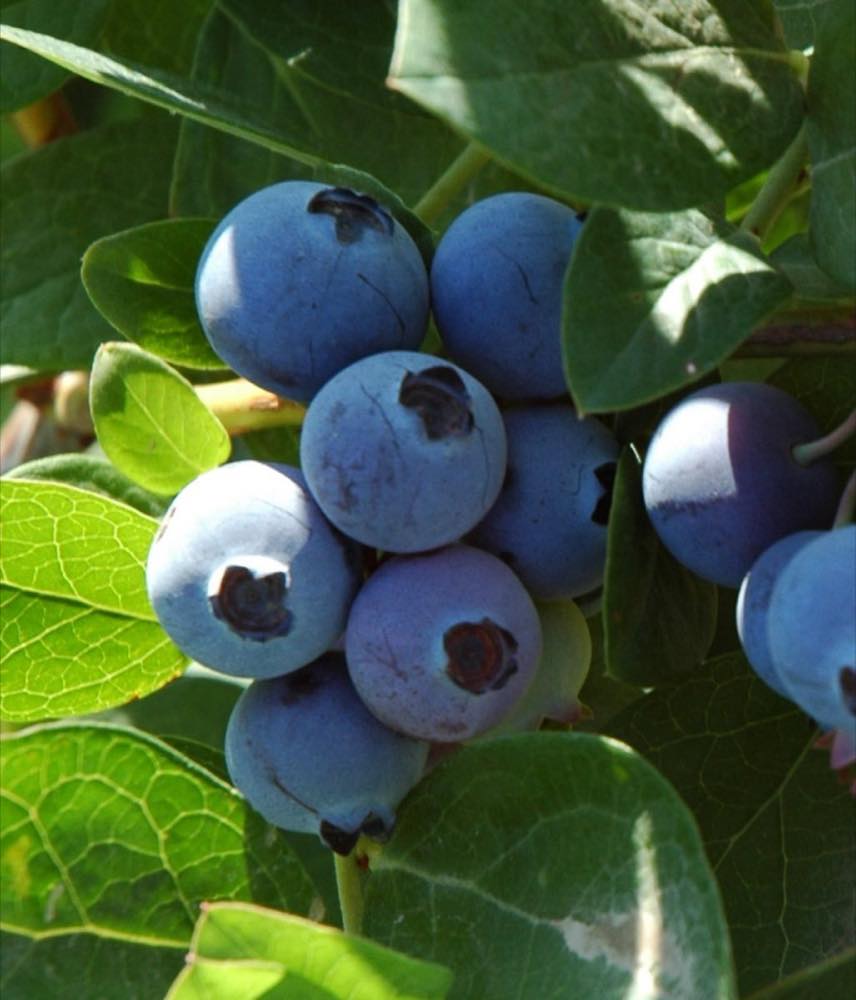
Blueberries
Small, dark, tangy-sweet berries on a nearly evergreen bush that has long been a Phoenix favorite, for the low desert and mid elevation. Blooms start in late winter, so frost cloth is worth having. Plant it in a large pot of acidic mix, water with acidified water and give it afternoon shade.
Blueberries
A compact, near-evergreen bush with hot pink flowers that fade to white, so it looks good in a pot all year. It puts up with a little less acid than most blueberries, which helps in Arizona, but it still needs an acidic mix and acidified water. Give it afternoon shade in the low desert.
Blueberries
A dwarf bush only a foot or two tall, with white spring flowers, firm sweet berries and good fall color, bred from wild lowbush stock. Very cold hardy, so it fits high country and mid elevation patios, but it is not a low desert plant. Plant it in a pot of acidic mix and water with acidified water.
Goji
A sprawling shrub with bright red-orange berries that taste mildly sweet, a little nutty and a little spicy. It shrugs off alkaline soil, drought and hard winters, so it fits every Arizona region. In the low desert flowers stop setting fruit in peak summer heat, so expect a spring crop and a fall crop, with afternoon shade helping.
Cane berries
A pale yellow raspberry about the size of a quarter, very sweet and mild, and it won't stain your fingers. It is everbearing, fruiting on new canes from summer into fall, so the only pruning is cutting canes to the ground in late winter. Low desert heat is too hard on it, so it suits mid elevation and the high country, with afternoon shade at lower sites.
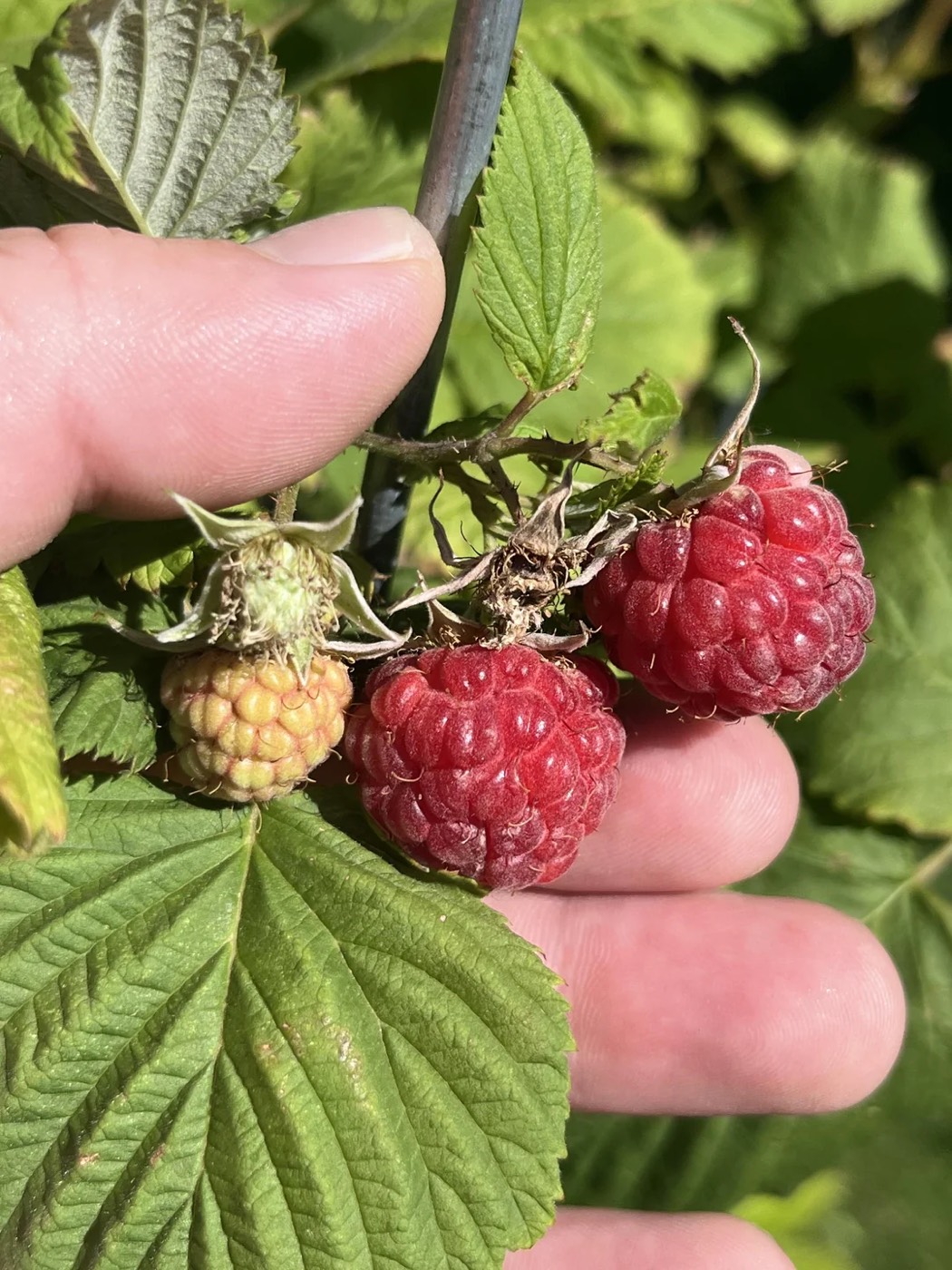
Cane berries
Extra-large red berries up to an inch and a half long on an everbearing cane, with a main crop in early summer and a lighter one in fall. It is the most heat-tolerant raspberry on this list and is sometimes tried in Phoenix, but it needs afternoon shade and steady water there, and fruit can turn bland in heat. Mid elevation is the safer home.
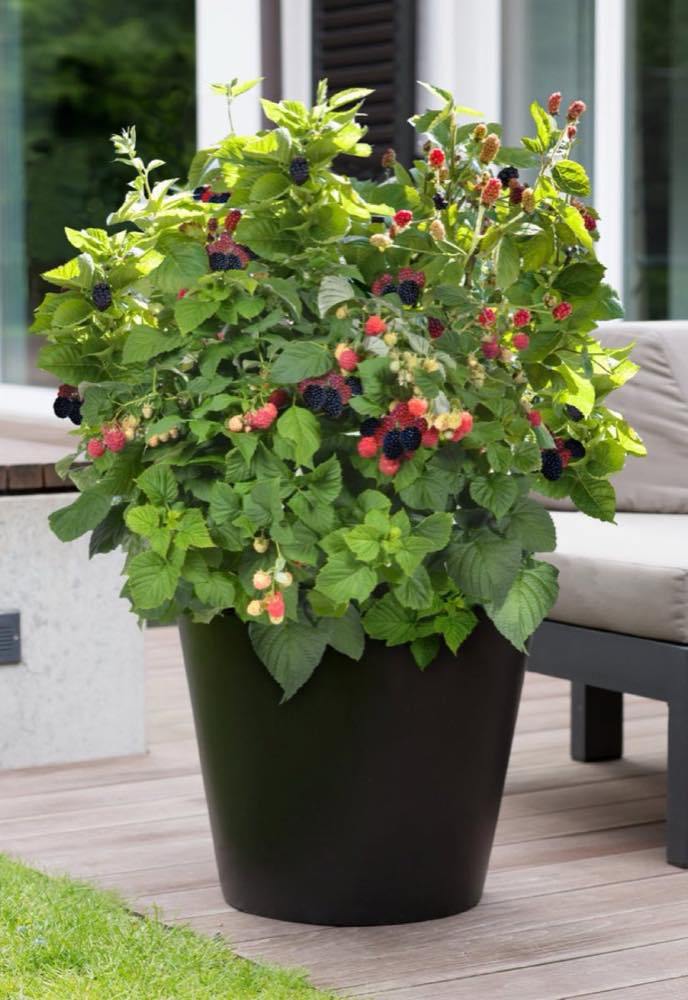
Cane berries
A dwarf, thornless blackberry that grows as a self-supporting bush, so it is easy in a large pot, with large, sweet berries in summer and often a smaller second flush. At 400 chill hours it sits at the upper edge for the low desert, so give it afternoon shade and expect lighter crops there. Mid elevation suits it better.
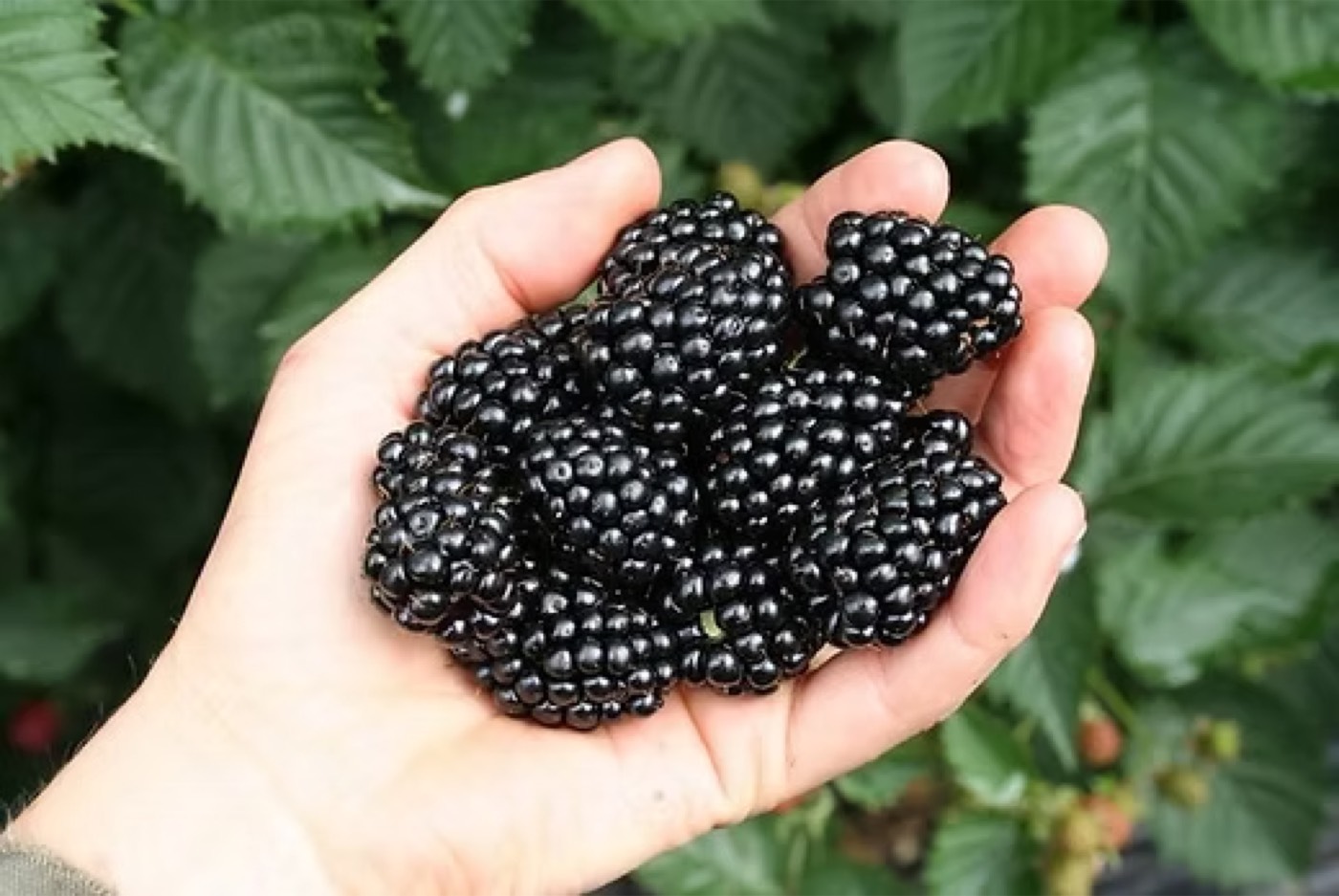
Cane berries
Large, glossy, sweet berries on a thornless, high-yielding vine that hardly suckers, so it stays tidy. It is a dependable blackberry for the low desert, where it ripens in May, and it also does well at mid elevation. Give it afternoon shade to prevent sunburned fruit, and cut out canes after they have fruited.
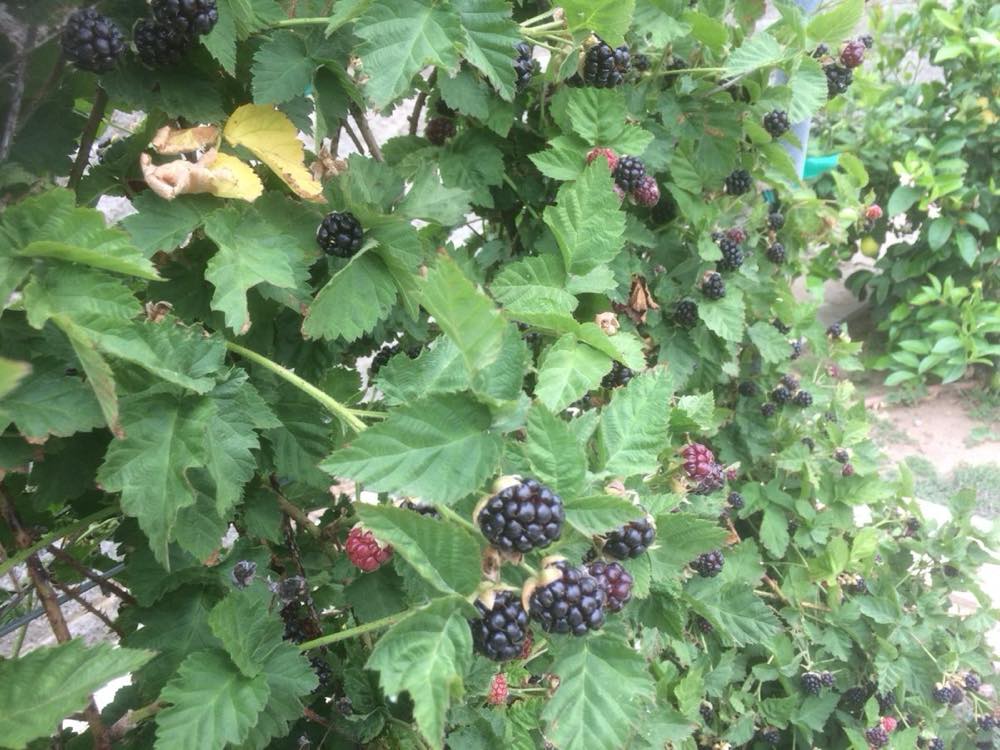
Cane berries
Large, juicy, maroon berries with a sweet-tart flavor, and better yields than the thornless form. The canes are thorny, so wear gloves and keep it off paths; in the low desert it needs afternoon shade and steady water, and at mid elevation it is easier. Berries soften quickly, so pick them ripe and use them the same day.
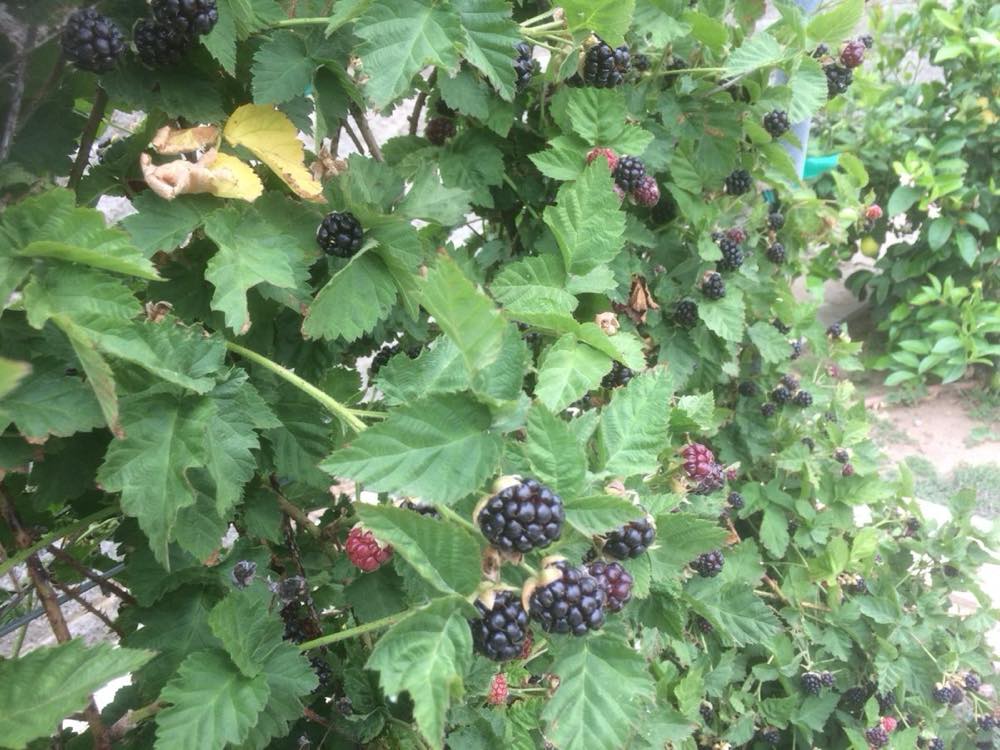
Cane berries
A thornless boysenberry with very large, dark maroon, tangy-sweet fruit that is far easier to pick than the thorny kind, though yield is a bit lower. It sprawls, so give it a trellis. In the low desert it wants afternoon shade and regular water, and at mid elevation it is easier.
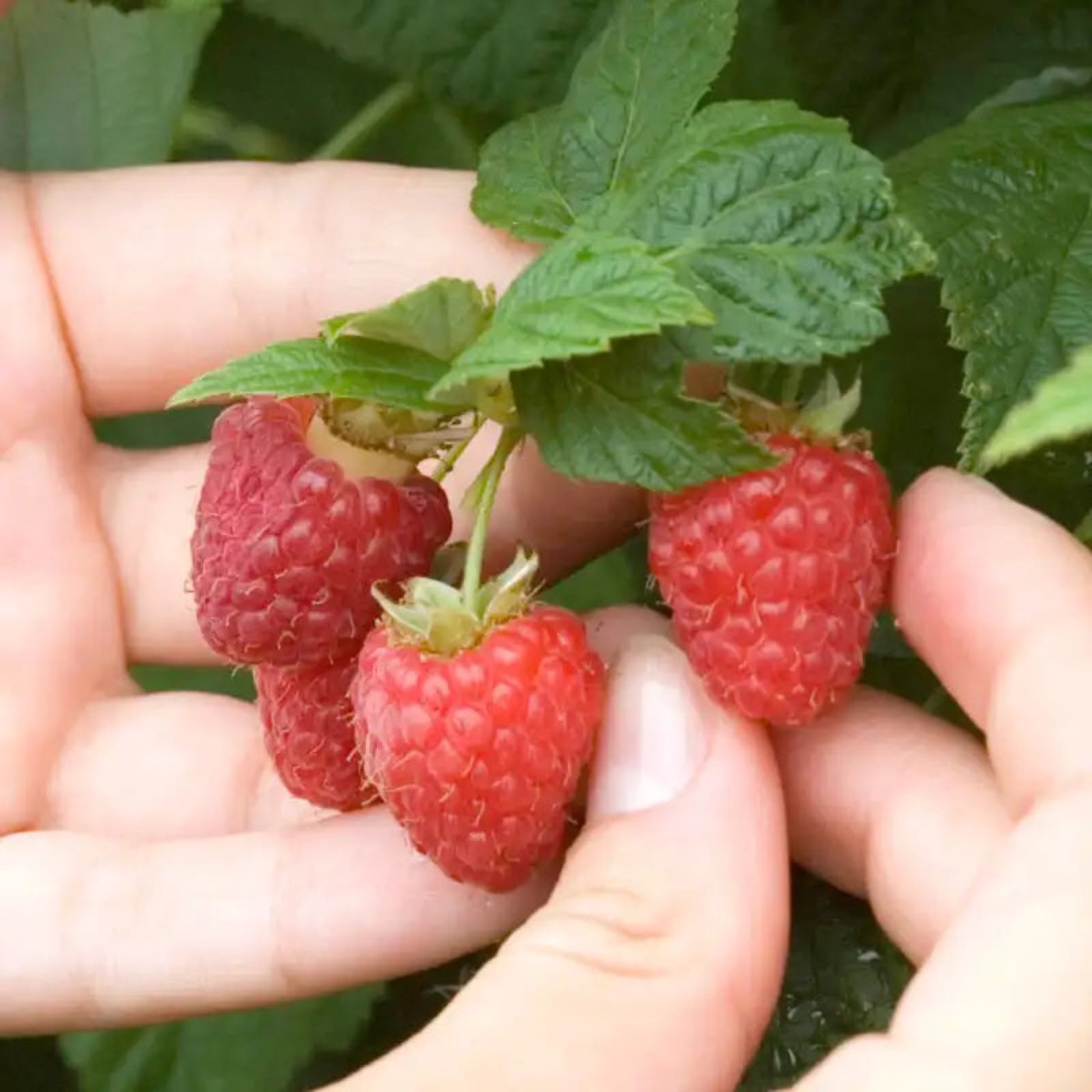
Cane berries
The only thornless red raspberry, with large, firm, juicy berries and some aphid resistance. It is a summer-bearing type that likes cooler summers and real winter, so it belongs at mid elevation and in the high country. It fruits on last year's canes, so cut out the ones that have finished, and give it regular water and a wire to tie to.
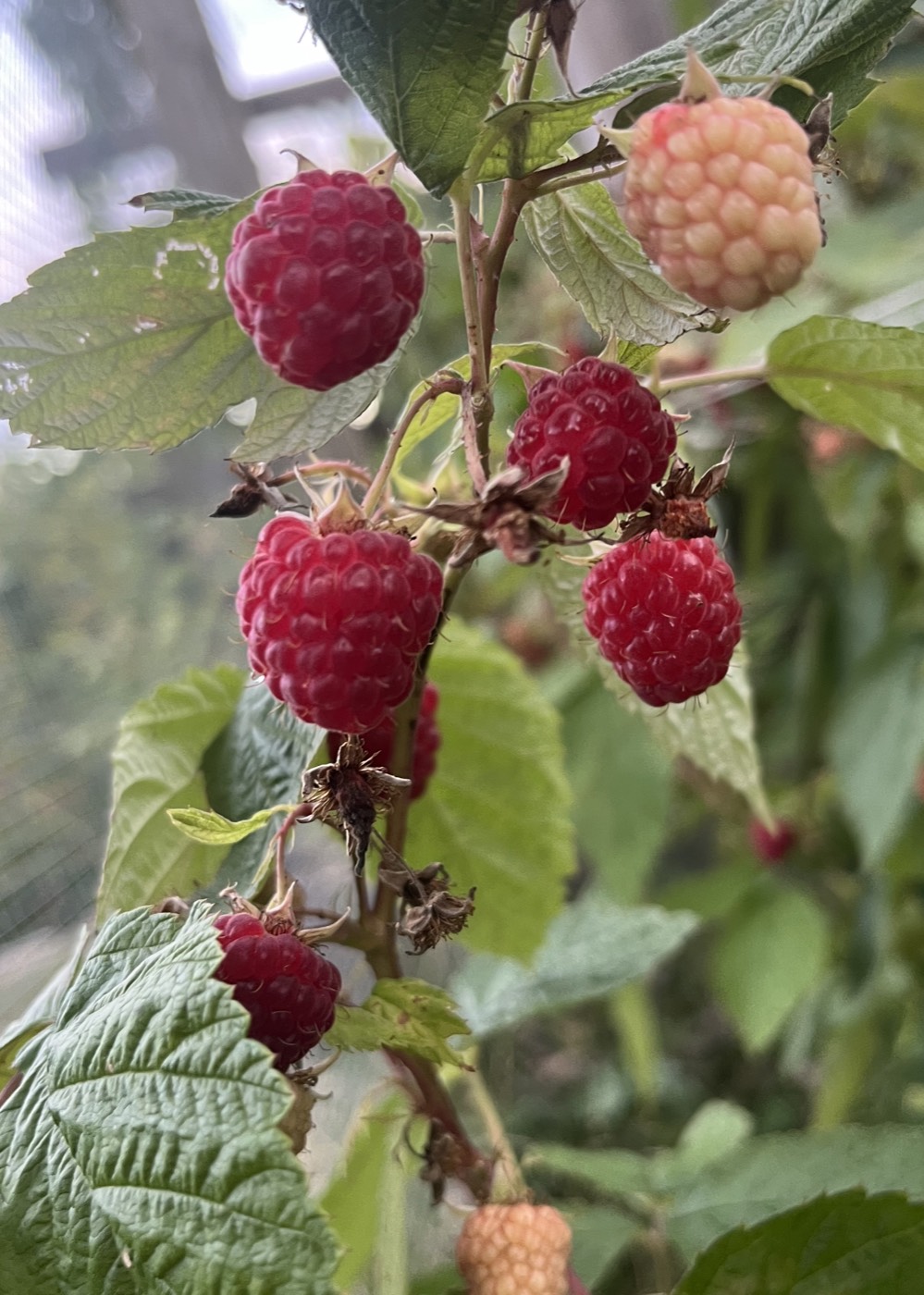
Cane berries
Large berries with a strong raspberry flavor, borne on new canes from summer into fall, and more tolerant of root rot than Heritage, which helps in heavy or wet soil. The afternoon shade it likes suits Arizona. Best at mid elevation and in the high country, since low desert summers are usually too hot for it.
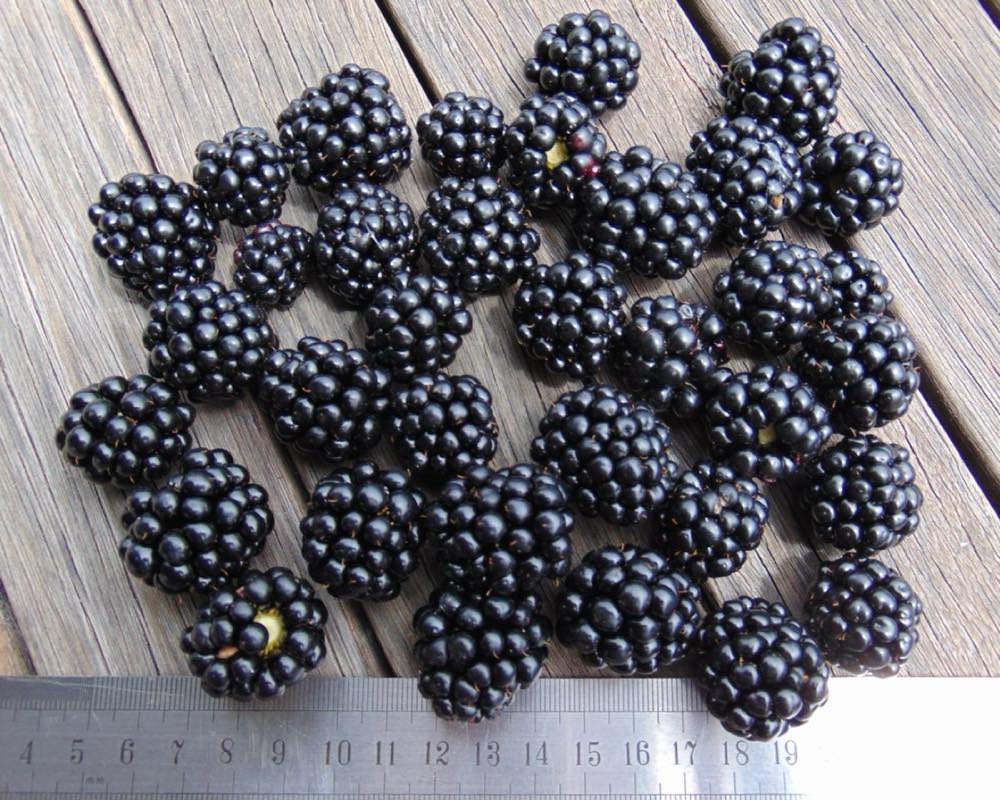
Cane berries
A semi-trailing, thornless blackberry known for cold hardiness, big yields and sweet, mild berries that hold up in summer heat. It needs far more winter chill than the low desert gets, so it is a mid elevation plant. Give it a trellis and thin the canes each winter.
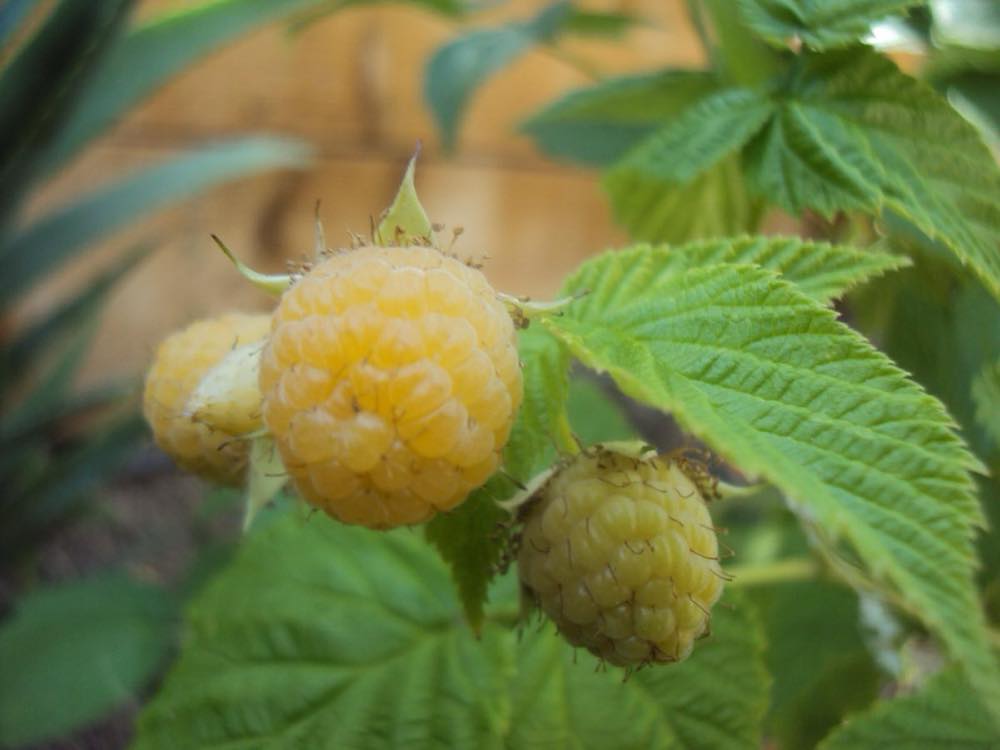
Cane berries
A golden raspberry that is extremely sweet and soft-textured, bearing on new canes from summer into fall, so pick the delicate berries gently. One parent is a wild Korean mountain berry, which gives it good cold hardiness. Best at mid elevation and in the high country, with afternoon shade at lower sites; the low desert is too hot.
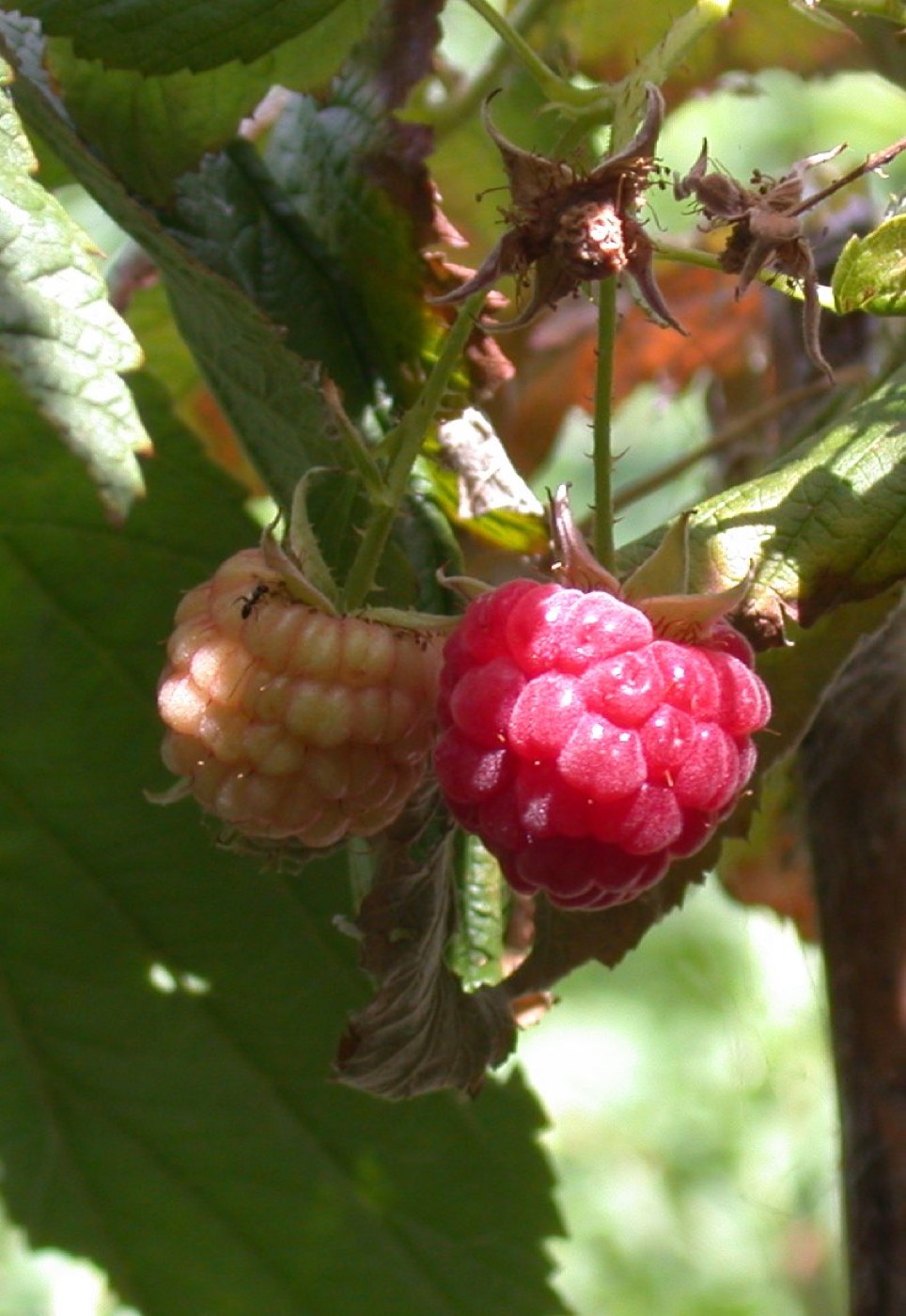
Cane berries
The standard fall raspberry, and the one University of Arizona extension says does well in northern Arizona, with firm, dark red, mild berries. It fruits on new canes, so cutting everything to the ground each late winter is the whole pruning plan. It ripens late, so early frost can cut the crop short in the high country, and low desert heat is too much.
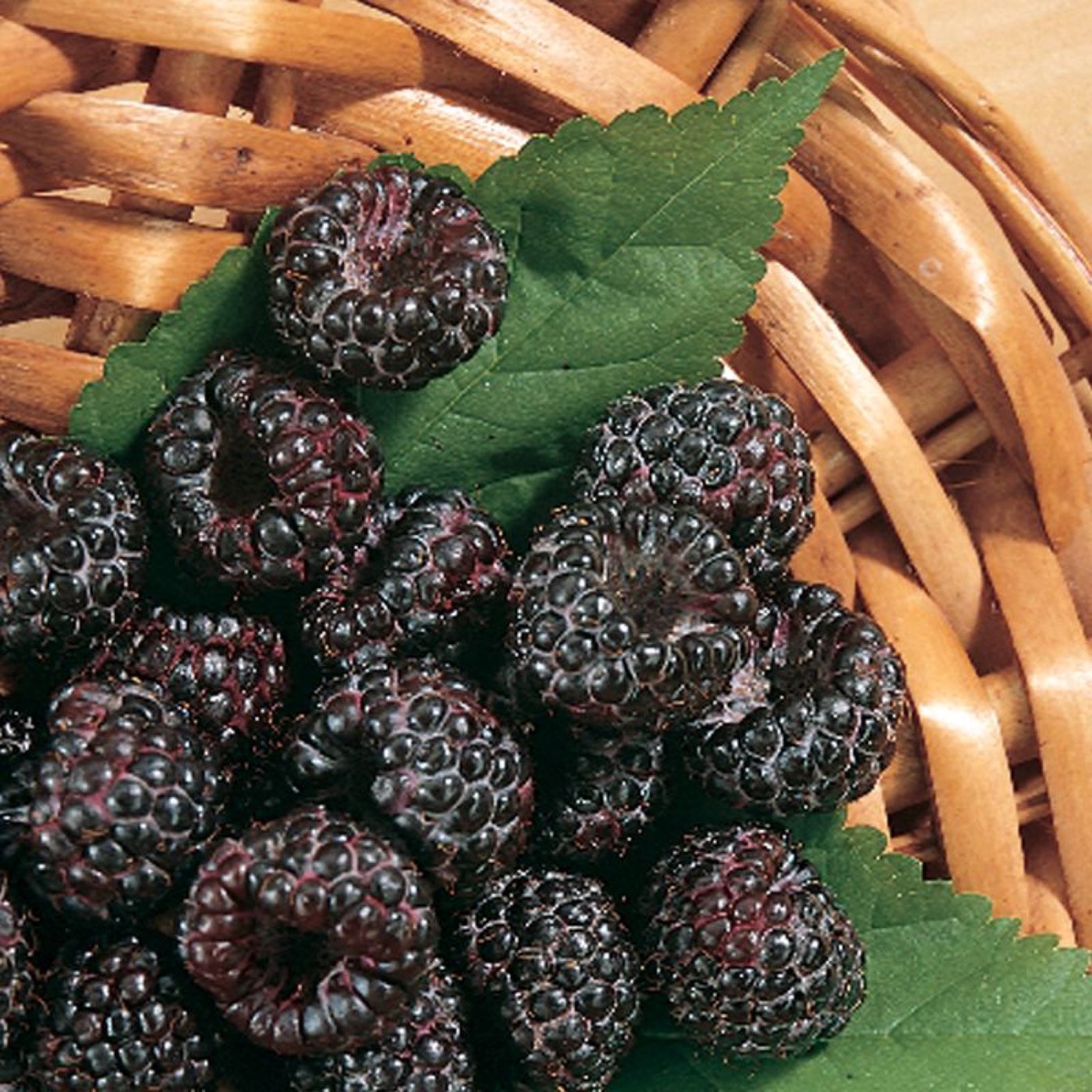
Cane berries
A black raspberry with large, richly flavored fruit for pies, jam and fresh eating, on upright canes that need no support. It is the most disease-resistant black raspberry and handles cold well. Black raspberries also dislike heat more than red ones, so it suits mid elevation and the high country, with afternoon shade at lower sites.
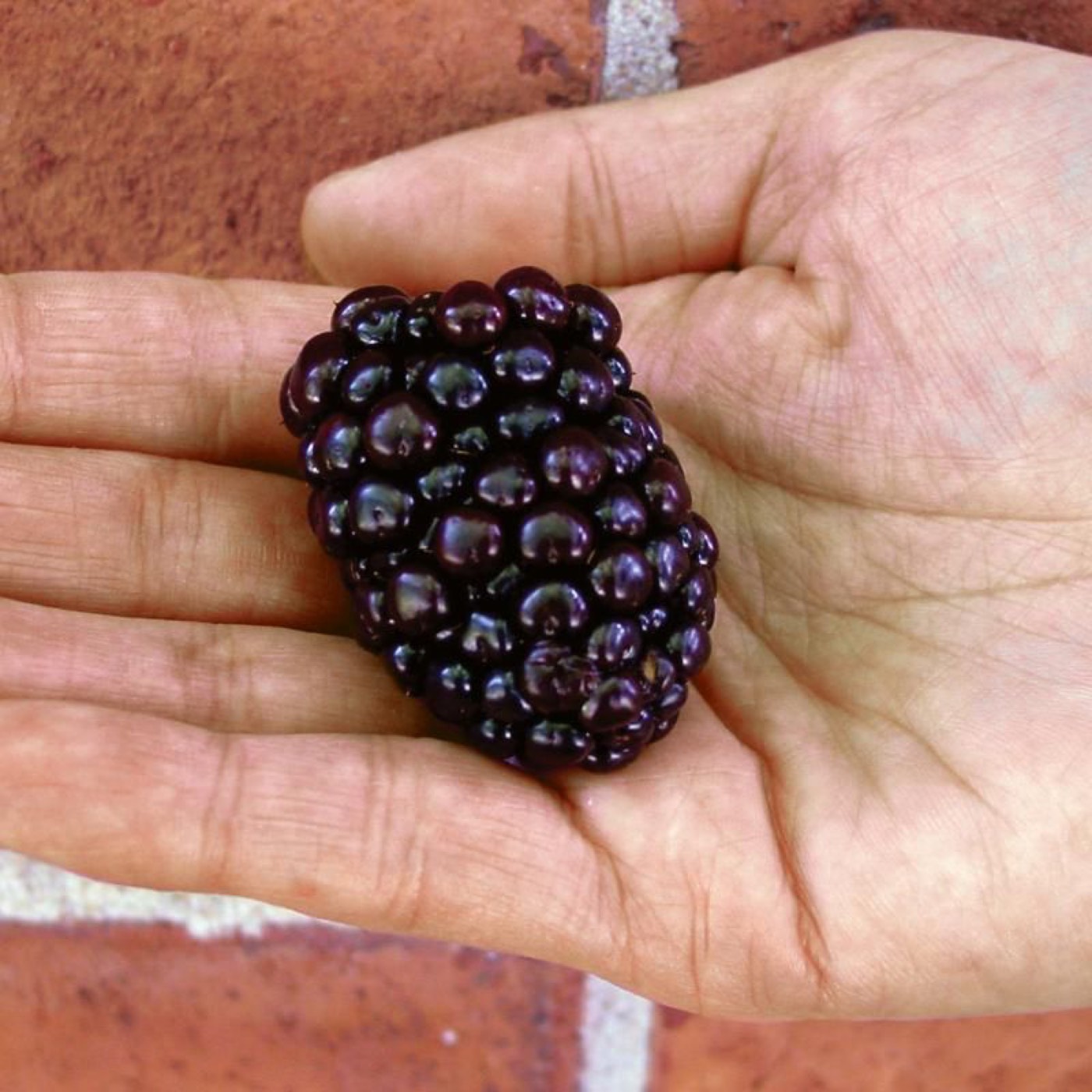
Cane berries
The largest of the Arkansas blackberries, with very large, firm, flavorful berries picked over about six weeks, and very thorny, so choose its spot carefully. Low chill makes it one of the better blackberries for the low desert, where afternoon shade helps prevent sunburn, and it does well at mid elevation. Canes stand up on their own.
Cane berries
Often called the best pie berry: bright, sweet, firm blackberries with a rich flavor, picked over a long season. The long vine-like canes need a trellis, and it wants more winter chill and milder summers than the low desert gives. Plant it at mid elevation, with some afternoon shade where summers are hot, and protect the canes in hard freezes.
Cane berries
An early, thornless, semi-erect blackberry with large, glossy, flavorful berries and very good heat tolerance. It is one of the best choices for the low desert, ripening ahead of the worst heat, and it also does well at mid elevation. Give it a simple wire to lean on and afternoon shade to avoid sunburned fruit.
Cane berries
A thornless, upright blackberry with small, firm, very flavorful berries and the smallest seeds of the thornless types. The canes stand without a trellis. It needs 800 to 900 chill hours, so it suits mid elevation, where Arizona extension suggests it for north central Arizona, but not low desert yards.
Cane berries
A very cold-hardy, early summer raspberry with medium, bright red, firm berries that keep their shape. The hardy canes make it a good first raspberry for the high country; at mid elevation, plant it with afternoon shade. It fruits on last year's canes, so only prune out the ones that have finished, and it is not a low desert plant.
Cane berries
Medium, sweet berries with an old-fashioned wild blackberry flavor on a vigorous trailing vine, which Arizona extension calls an excellent trailing type for north central Arizona. In the low desert it copes with afternoon shade and plenty of water. Give it a trellis and cut out the canes that have fruited.
Cane berries
The first thornless blackberry that also fruits on new canes, so in a good year you get two crops: early summer and again in fall. Large, good-tasting fruit on upright canes that may need a stake. The fall crop stalls in very hot summers, so it suits mid elevation, while the low desert mostly gets only the spring crop.
Cane berries
A dwarf, thornless raspberry bush bred for pots, with sweet midsummer berries on self-supporting canes. Up to 500 chill hours is marginal for Phoenix and summer heat is hard on raspberries, so it fits mid elevation and the high country best. In the low desert, treat it as an experiment in a shaded pot.
Cane berries
An old heirloom blackberry with creamy white to pale fruit that tastes like a full-flavored blackberry. The canes are thorny and trailing, so give it a trellis, and plant it at mid elevation with afternoon shade because pale berries can scald in strong sun. Expect a modest crop and an interesting curiosity.
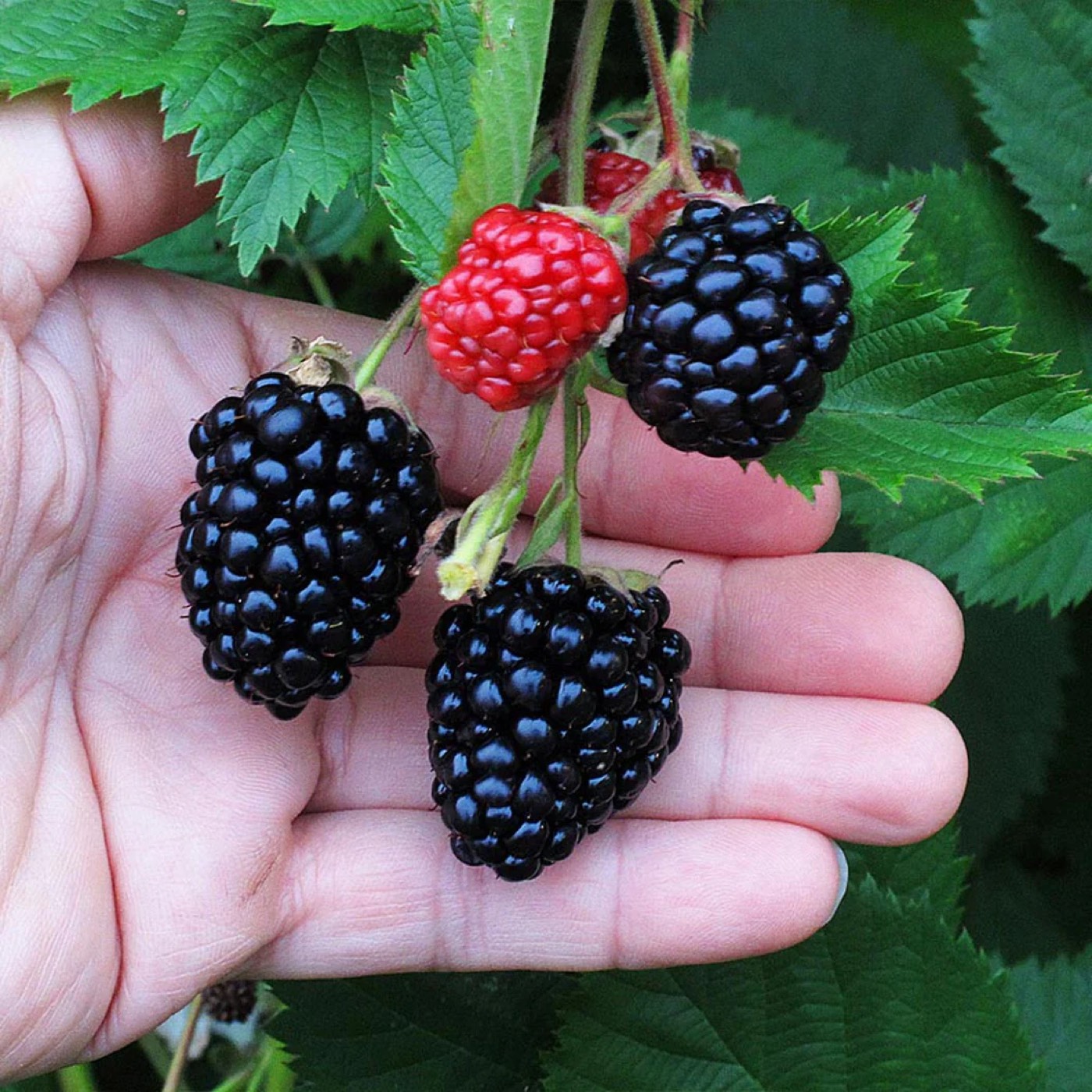
Cane berries
Large, firm, flavorful berries on a thornless, semi-trailing vine named for its flavor, productivity and vigor. It tolerates heat well, which makes it a sound pick for low desert yards and mid elevation. Afternoon shade helps prevent sunburned fruit, and the long canes need a trellis.
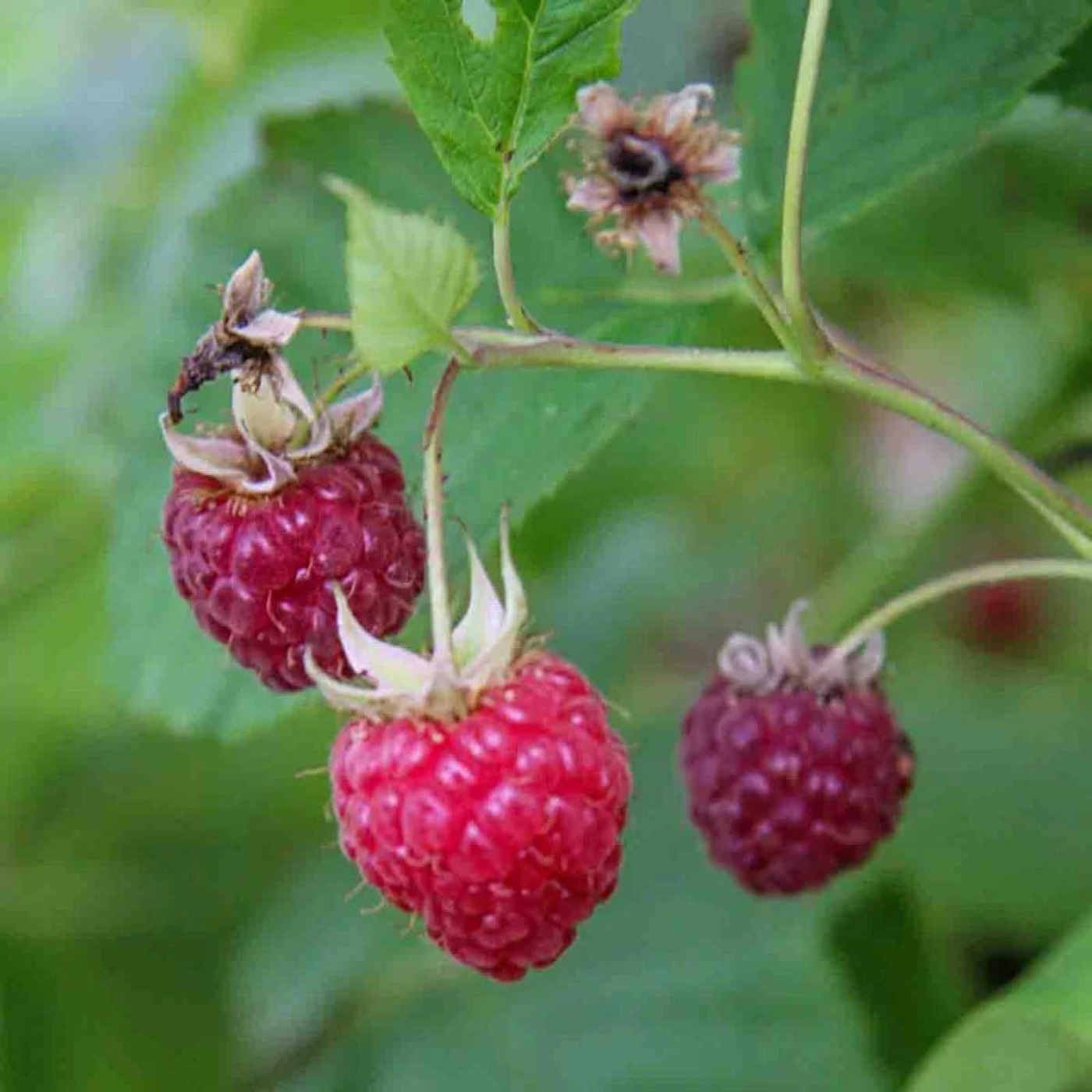
Cane berries
Large, long, firm, deep red berries with a slightly tart flavor and a long history in the West. It fruits on last year's canes, so cut out old ones after harvest, and it needs very good drainage since it is prone to root rot. Best at mid elevation with afternoon shade; low desert is too hot and the high country is borderline.
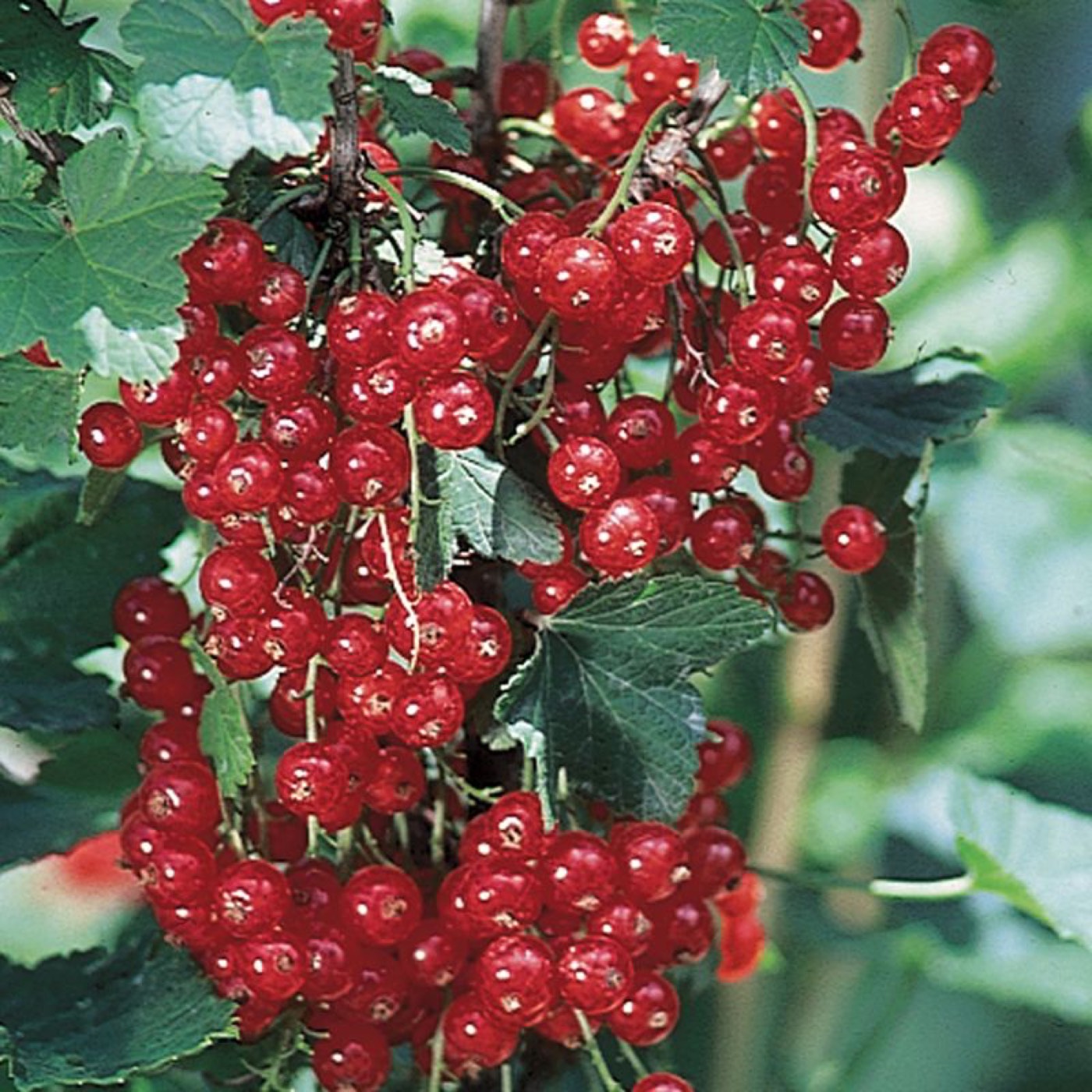
Currants & gooseberries
A tart-sweet red currant that hangs in long loose clusters, very productive and winter hardy, and rated by many as the best red currant. Arizona extension lists it for the state's mid elevations, and Arizona is a low-risk area for pine blister rust. It needs cool summers, so it is a mid elevation and high country plant, with afternoon shade at lower sites.
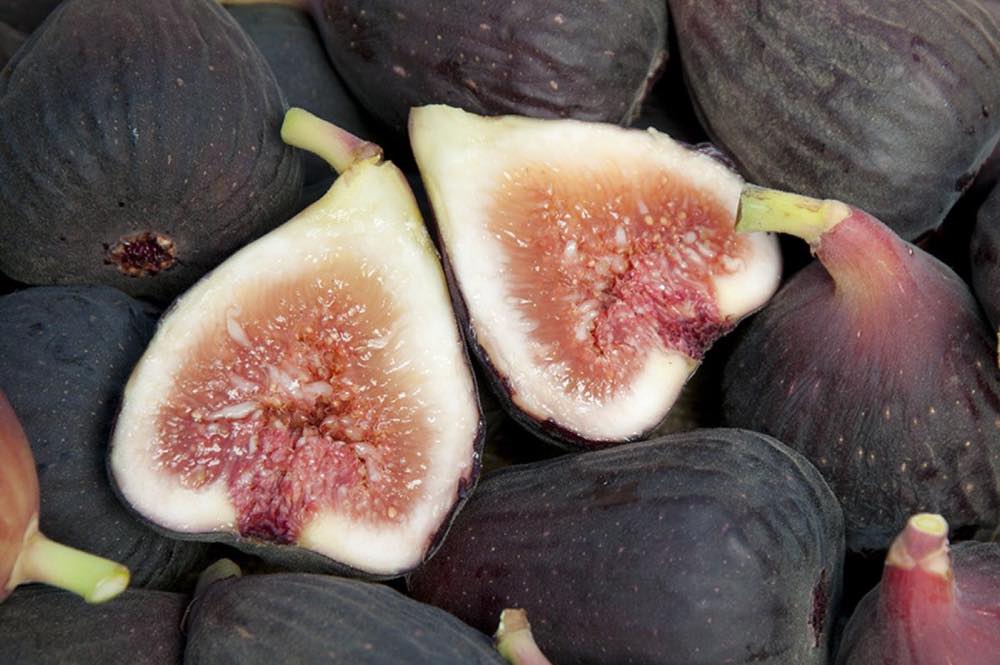
Figs
A large, juicy fig with sweet strawberry-red flesh on a tree that stays naturally compact, so it suits a small yard or a big pot. It loves low desert heat and needs no pollination. Prune after harvest, and wrap or mulch young trees when nights fall below about 27°F.
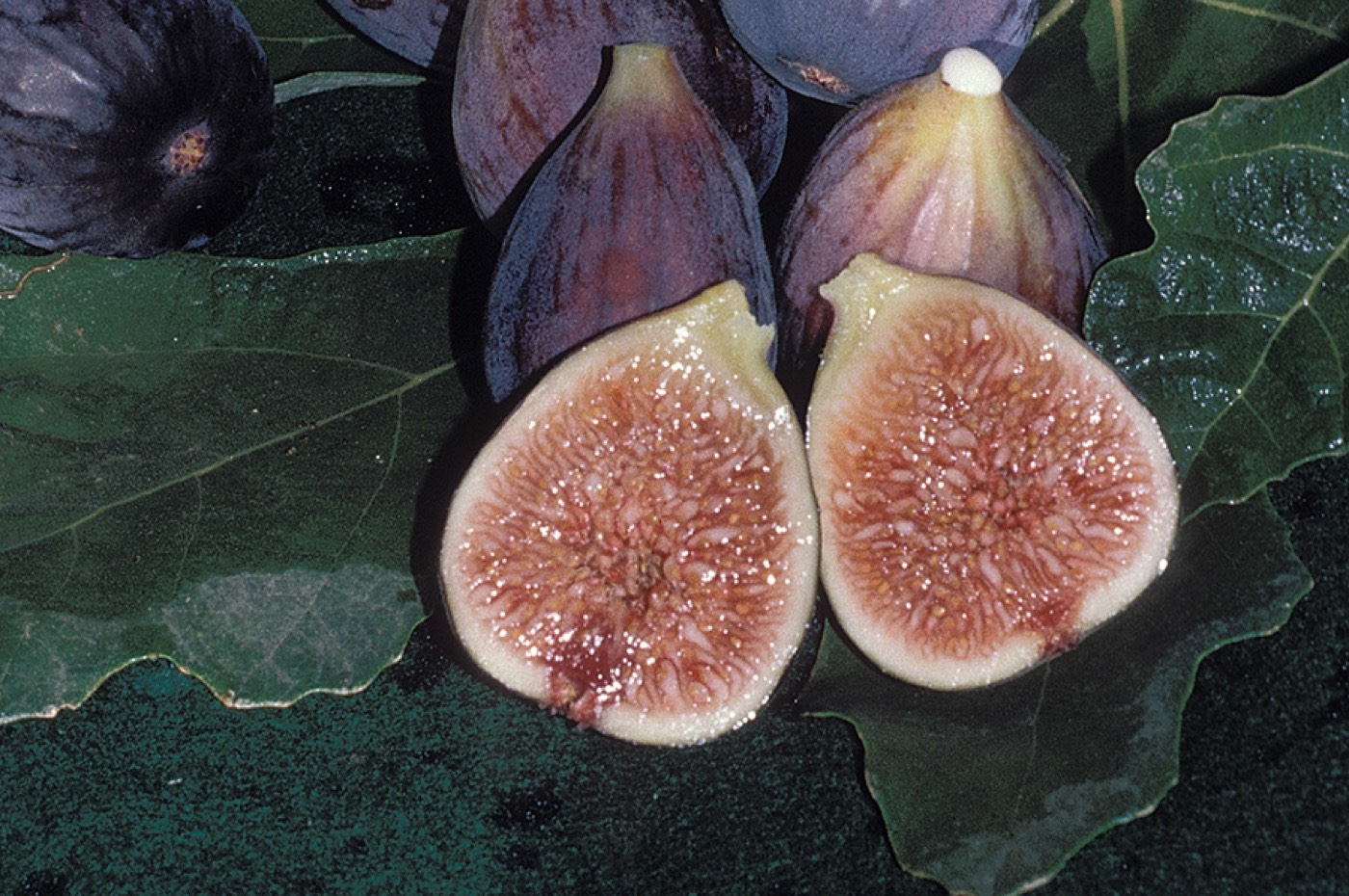
The classic dark fig, with purple-black skin, pink flesh and a rich flavor, and one of the two the University of Arizona recommends for the low desert. It gives a lighter early crop in June and a heavier one in late summer, and it dries and preserves better than most. Established trees want to stay above about 15°F, so this is a low desert fig.
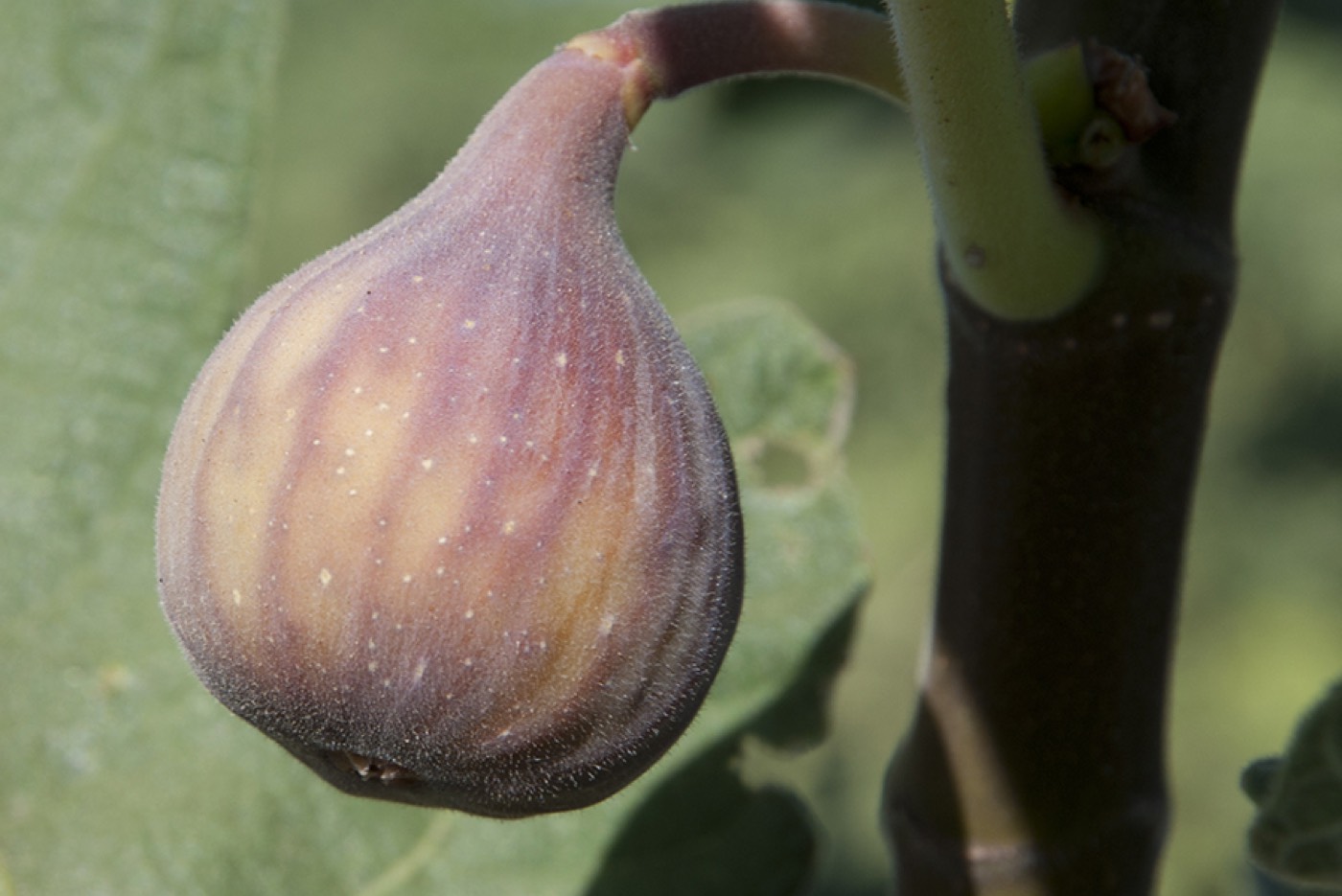
Figs
A large brown-purple fig with pink flesh and a sweet, mild flavor that is best eaten fresh. With Mission it is the University of Arizona's pick for the low desert, giving a lighter early crop in June and a bigger one in late summer. Protect young trees from frost below about 27°F.
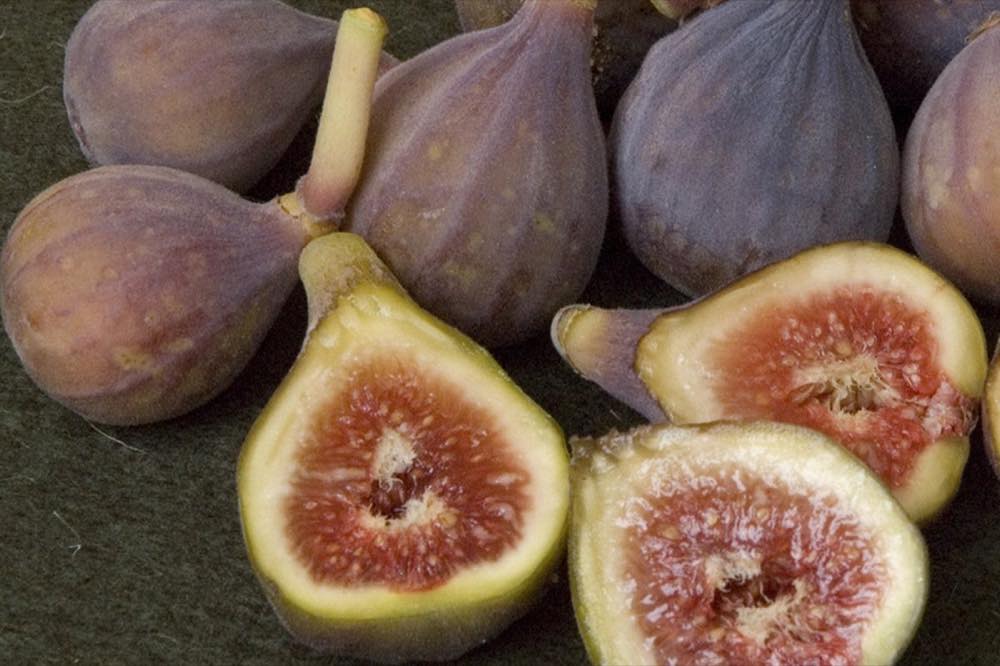
Figs
Small to medium purple-brown figs with pink flesh and a very sweet taste, ripening in two crops, one in early summer and one from late summer. The tight eye helps keep out beetles and monsoon moisture, which is a real plus in the low desert. It takes pruning to any shape and is widely adapted.
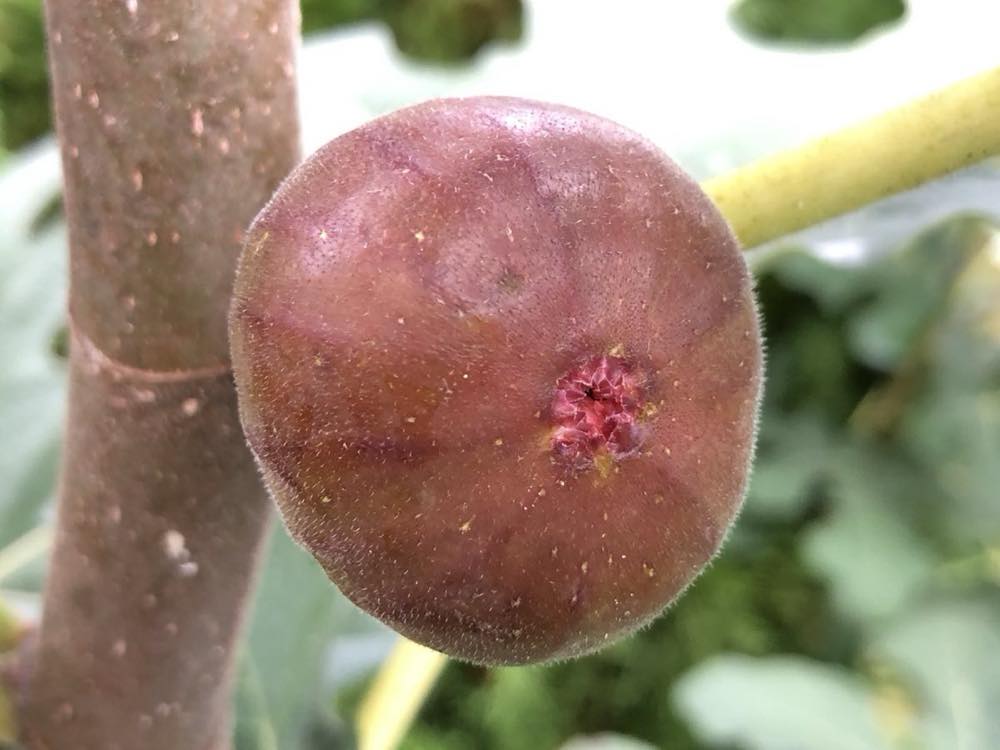
The cold-tough fig. Its mahogany-purple fruit sets on new growth, so if a freeze kills the top it regrows from the base and still crops, which makes it the fig to try in Prescott, Payson and the Verde Valley as well as the low desert. Fruit comes late with little or no early crop, so a cool year can beat it to the first frost.
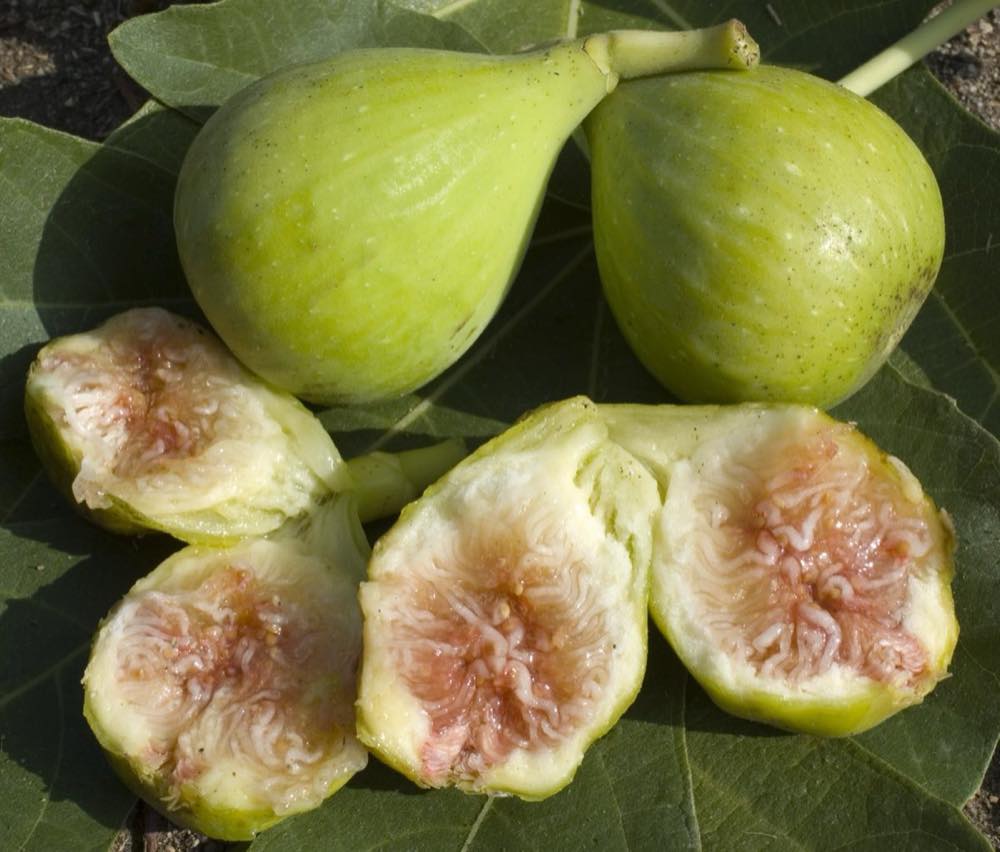
Figs
Light green-yellow skin and pink flesh, a little less sweet than Kadota but good at resisting spoilage, so it works fresh or dried. The tight eye keeps beetles and monsoon moisture out, and the University of Arizona lists it as a heat-tolerant choice. A long-lived, vigorous low desert fig that crops in coastal and inland places alike.
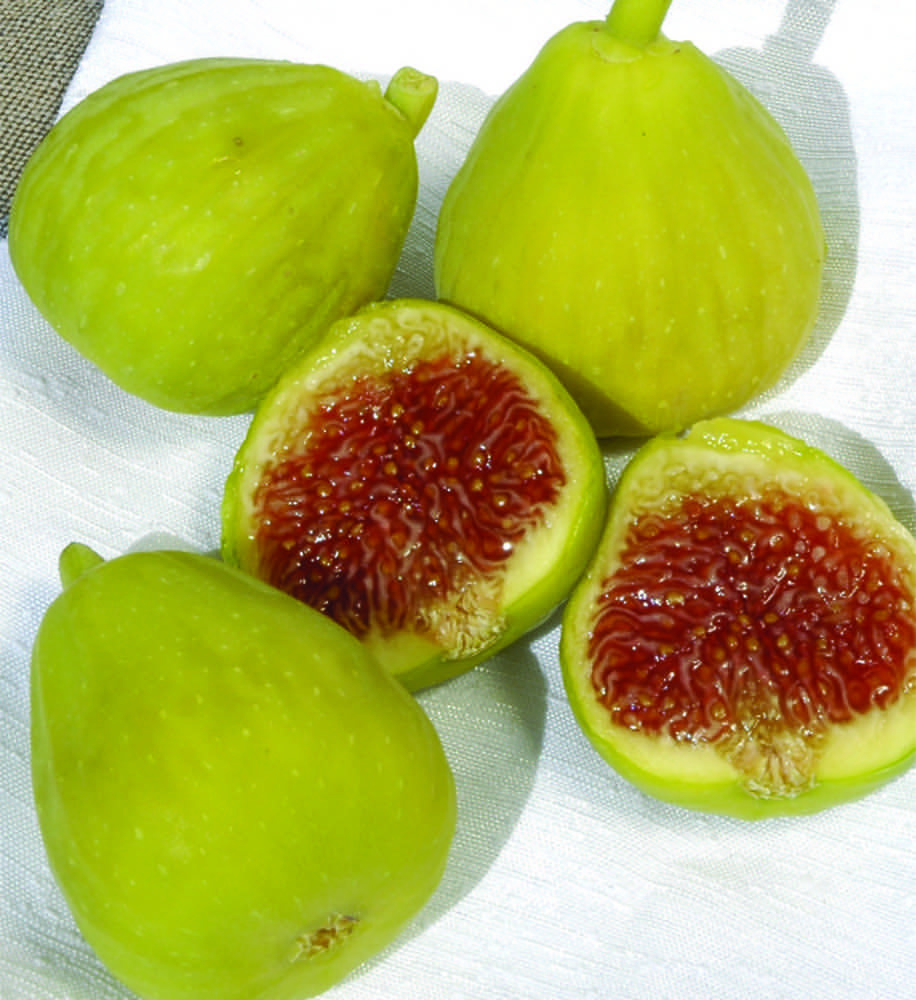
Figs
Light green skin, strawberry pulp and rich flavor, and the one to pick for a big early (breba) crop. The later crop is lighter in hot places, and heavy winter pruning cuts off the early fruit, so prune lightly after harvest. Hardier than most figs, so it fits mid elevation sites too, though a hard freeze can take that early crop.
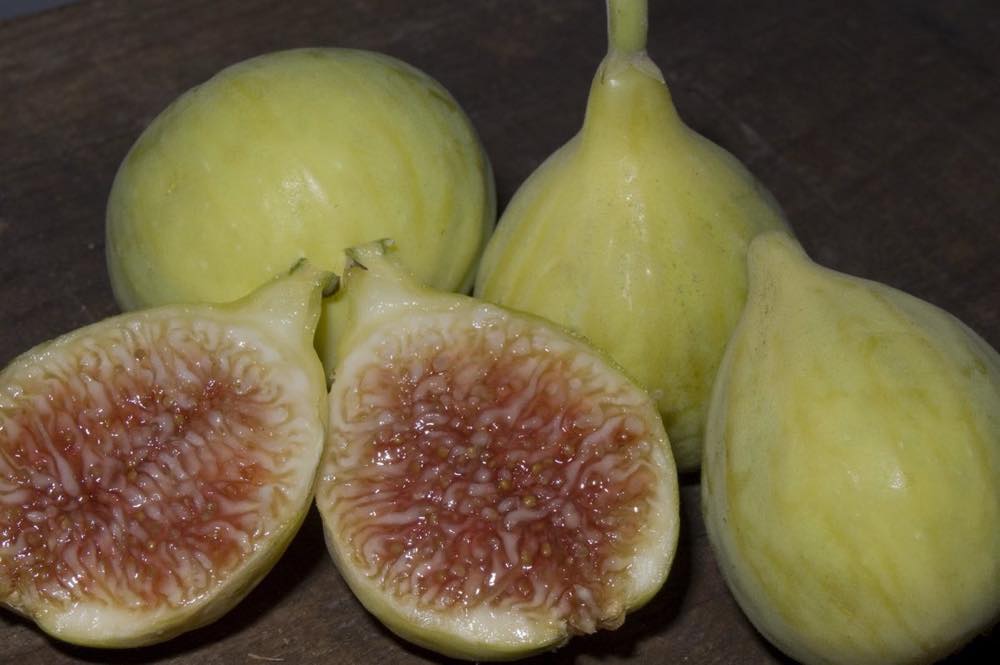
Figs
Medium yellow fruit with amber pulp and a sweet, rich flavor, bred to resist splitting even when watering or weather is uneven. A good all-purpose fig for fresh eating or drying, and a dependable low desert tree that crops in the heat. Wrap young trees if nights drop below about 27°F.
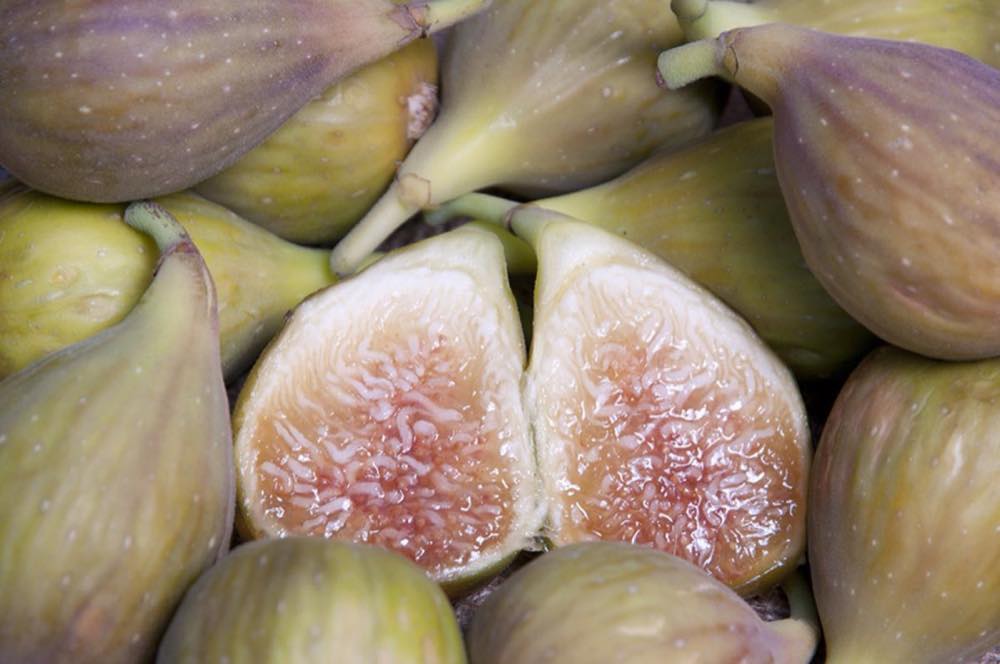
Figs
A medium, long-necked fig with violet stripes, white-amber flesh and light strawberry pulp, with a rich flavor. It resists splitting and crops heavily, which helps when summer watering and monsoon moisture swing. A good low desert fig for fresh eating.
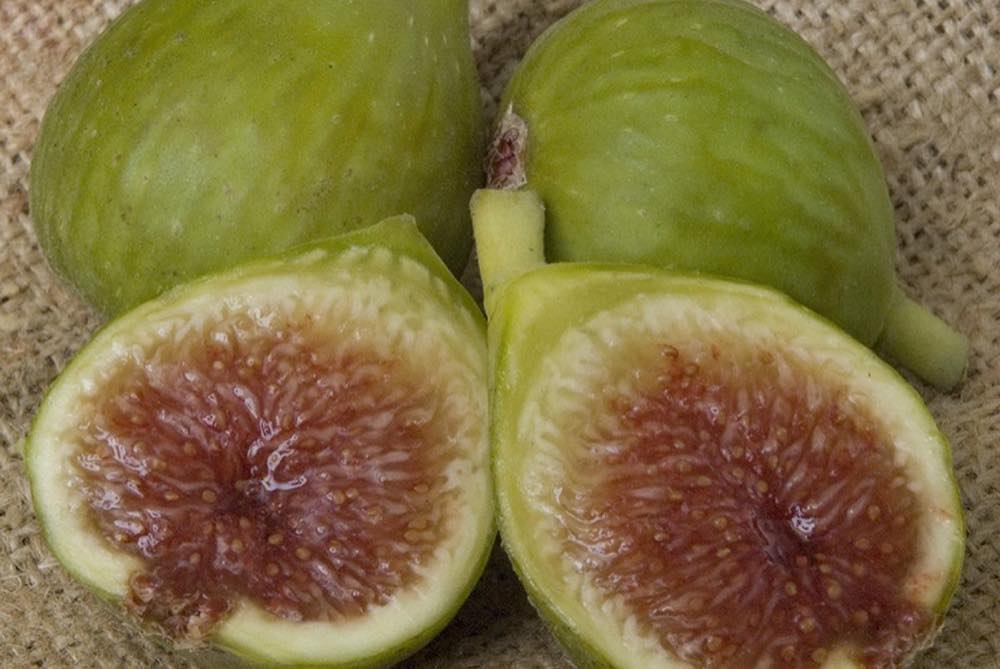
Figs
Small to medium green-yellow figs, also called Verte, with strawberry-red pulp and fine flavor. It is a natural semi-dwarf with a tight eye, both the early crop and the summer crop are heavy, and birds tend to ignore the green fruit. A good fig for small low desert yards and big containers.
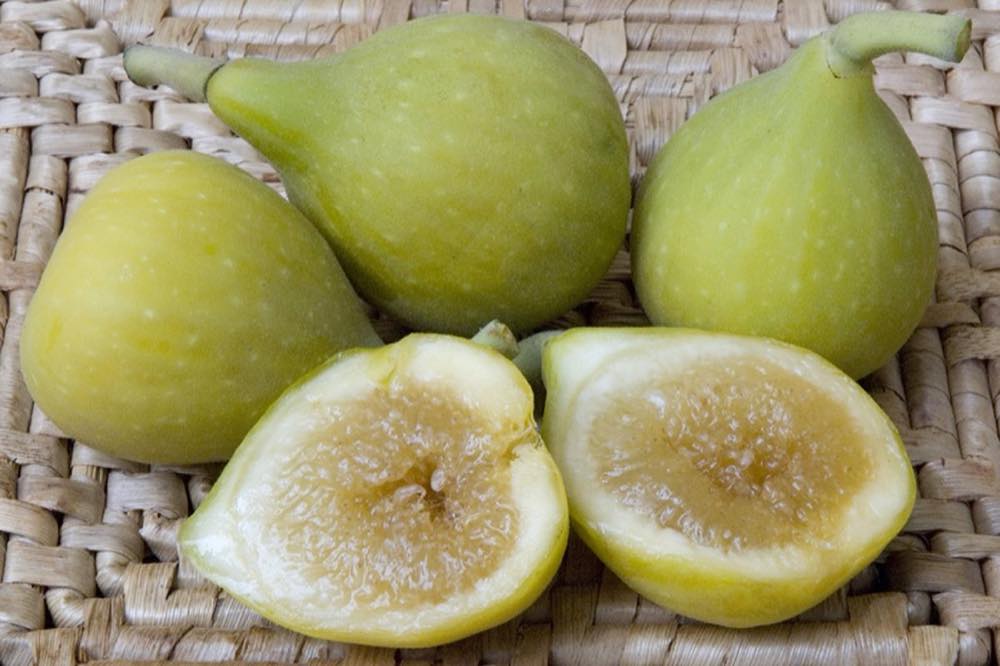
A large, sweet, light green-yellow Kadota-type fig with practically no seeds, so it eats smooth. It wants real summer heat to ripen, which the low desert supplies, and the harvest stretches over several weeks. Good fresh or dried, and it takes pruning well.
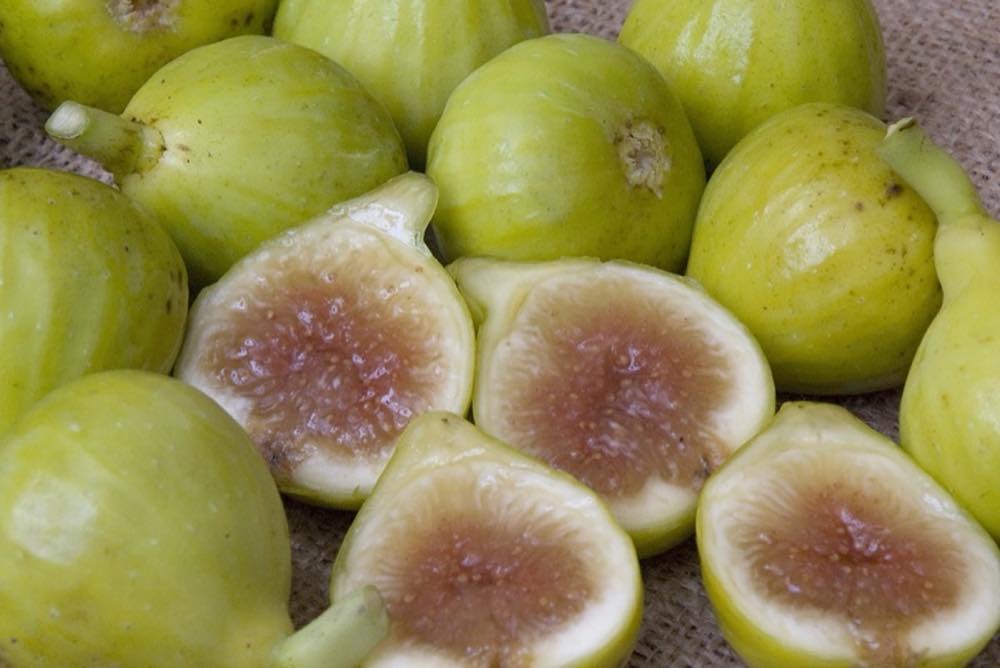
Figs
Large, light green-yellow figs with amber flesh and a very sweet taste, long a desert favorite and one the University of Arizona lists for the low desert. It needs hot weather to ripen properly and the tight eye guards against beetles and monsoon moisture. Good fresh, dried or canned, on a long-lived, vigorous tree.
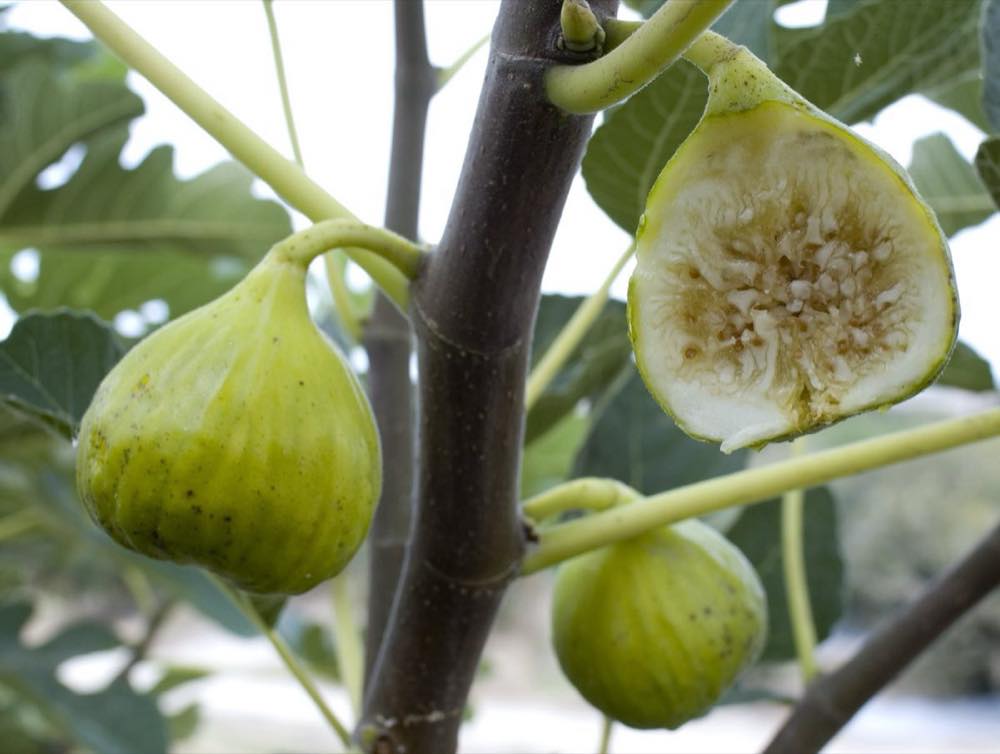
Figs
Greenish-yellow figs with sweet honey-amber pulp, also sold as Italian Honey. It gives a good early crop and a good late summer crop on a compact tree that suits containers and small spaces. Frost hardy once established, so it is a reliable low desert pick.
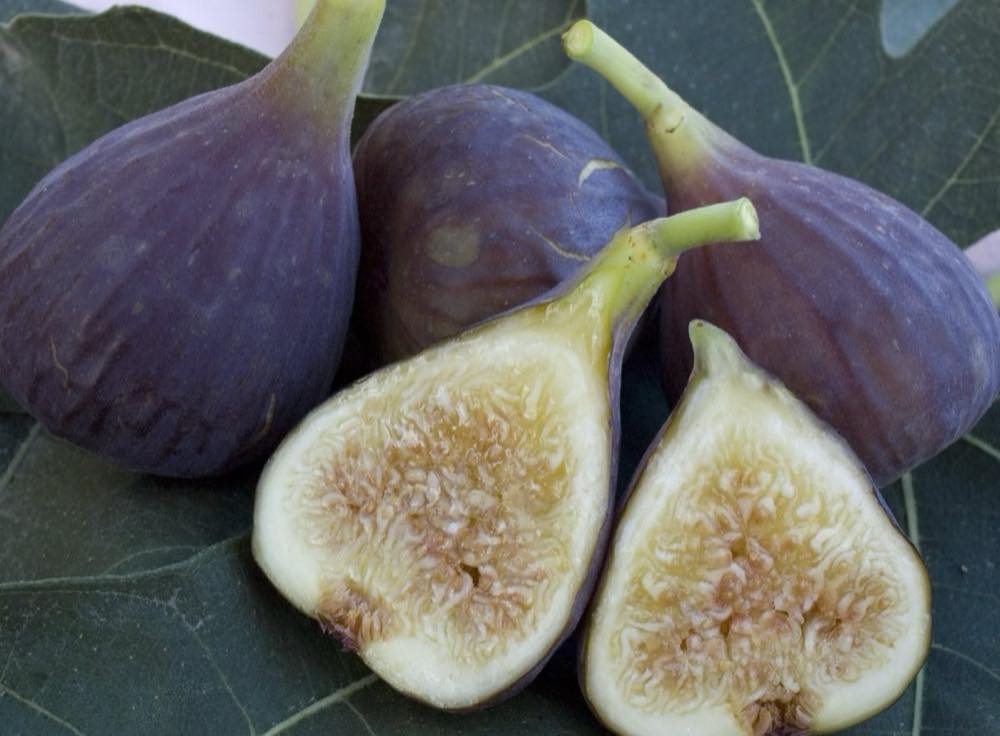
A large fig with purplish-brown skin, amber pulp and a pleasing flavor, a favorite in cool coastal gardens that also does well inland. In the low desert it crops reliably in summer heat and takes pruning to any size. Wrap young trees if nights fall below about 27°F.
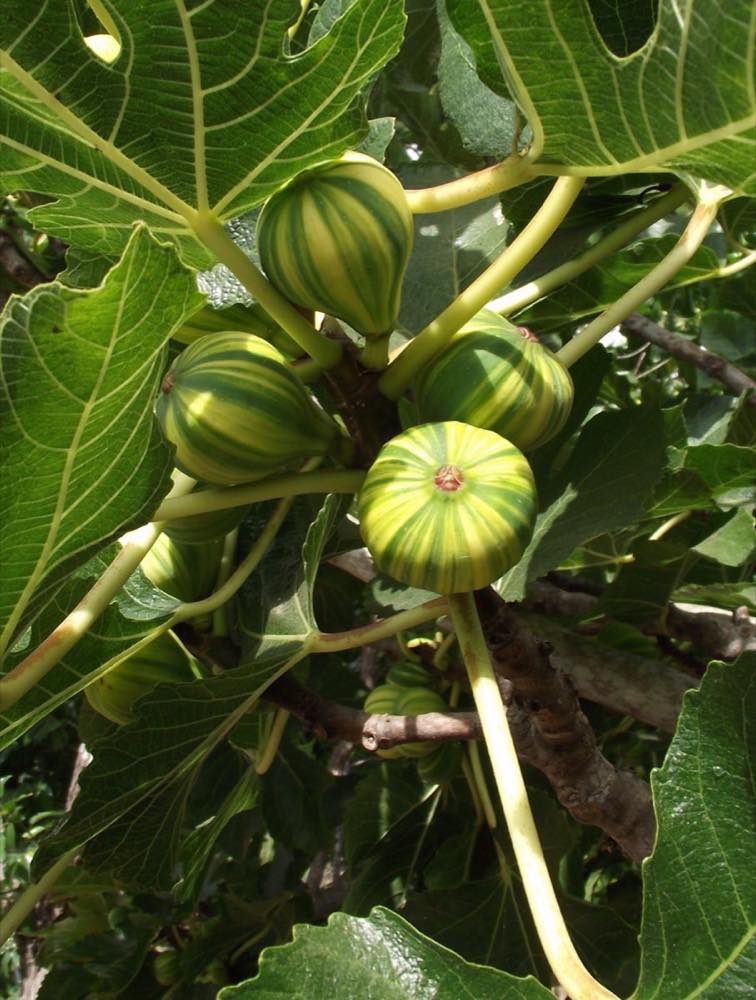
A small to medium green fig with yellow tiger stripes and blood-red strawberry pulp, striking cut open. It needs a long warm season and ripens late, which the low desert gives it easily. Good for fresh eating and jam, and a showpiece for an edible landscape.
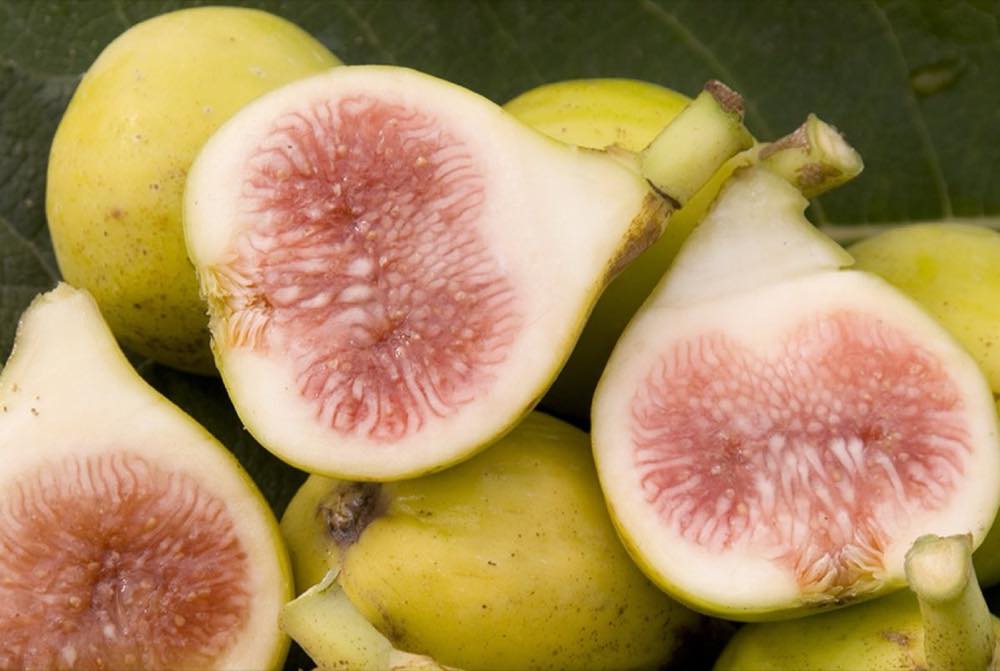
Shiny greenish-yellow figs with very sweet, dark amber flesh, which many growers rank among the best for eating fresh. It handles cold better than most figs, so it is one to try in a warm, sunny, sheltered spot at mid elevation as well as in the low desert. Expect mostly one main crop rather than an early breba crop.
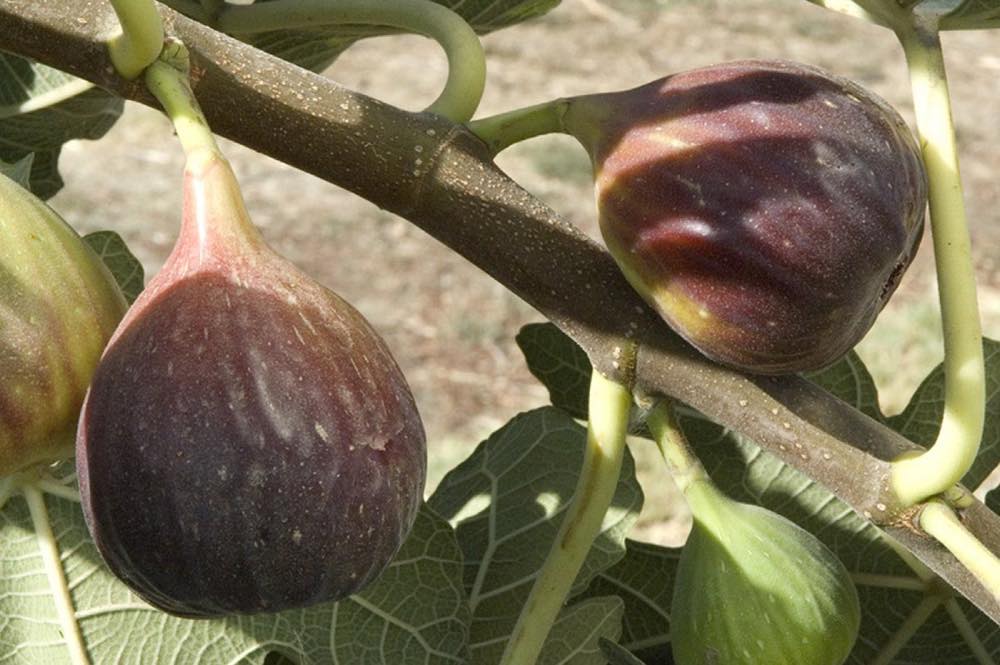
An extra-large purple fig with very sweet amber flesh and an everbearing habit, so fruit keeps coming through the warm season. Hardier than most figs, so it is worth trying at mid elevation in a warm spot as well as in the low desert. Wrap young trees against hard frost.
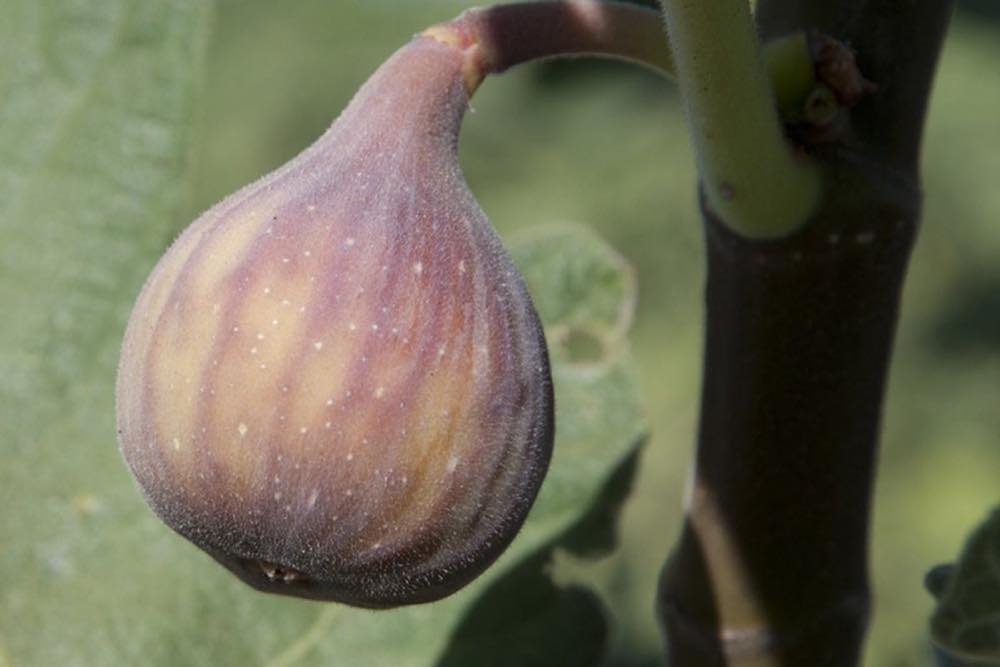
Medium to very large mahogany-purple figs with bright amber pulp and excellent flavor, good fresh, dried or in preserves. It gives a decent early crop and then a heavy summer crop that runs to frost. If a freeze kills it back it resprouts from the base and still fruits, so it suits mid elevation as well as the low desert.
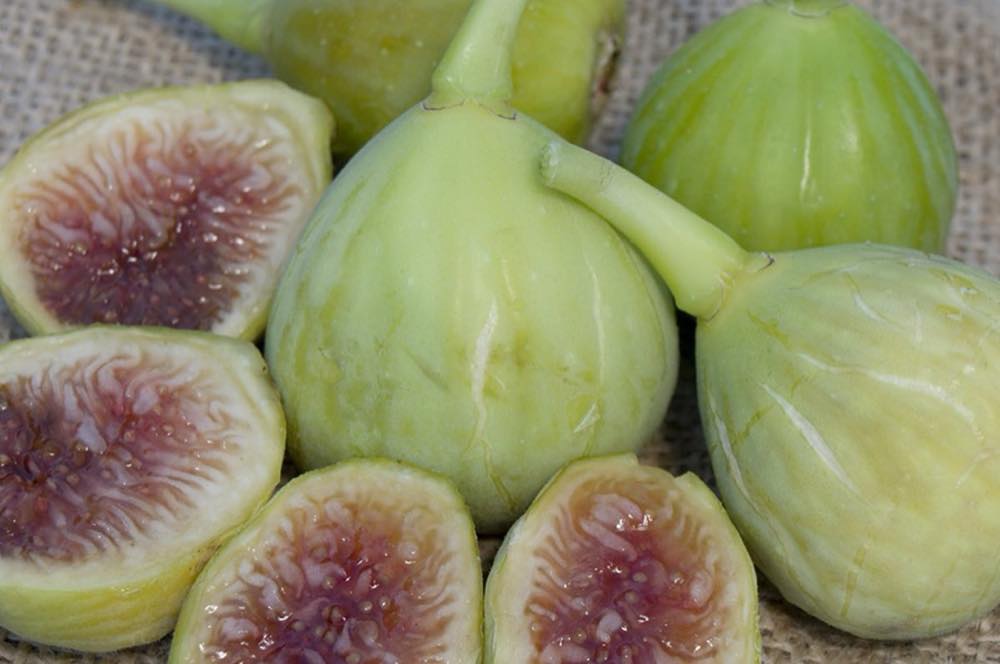
Figs
An old greenish-yellow fig with amber flesh and a distinctive flavor, a favorite in cool coastal gardens that also does well inland. In low desert sun the pale skin can scald in peak summer, so a spot with afternoon shade helps. Self-fruitful, and it takes pruning to any shape.
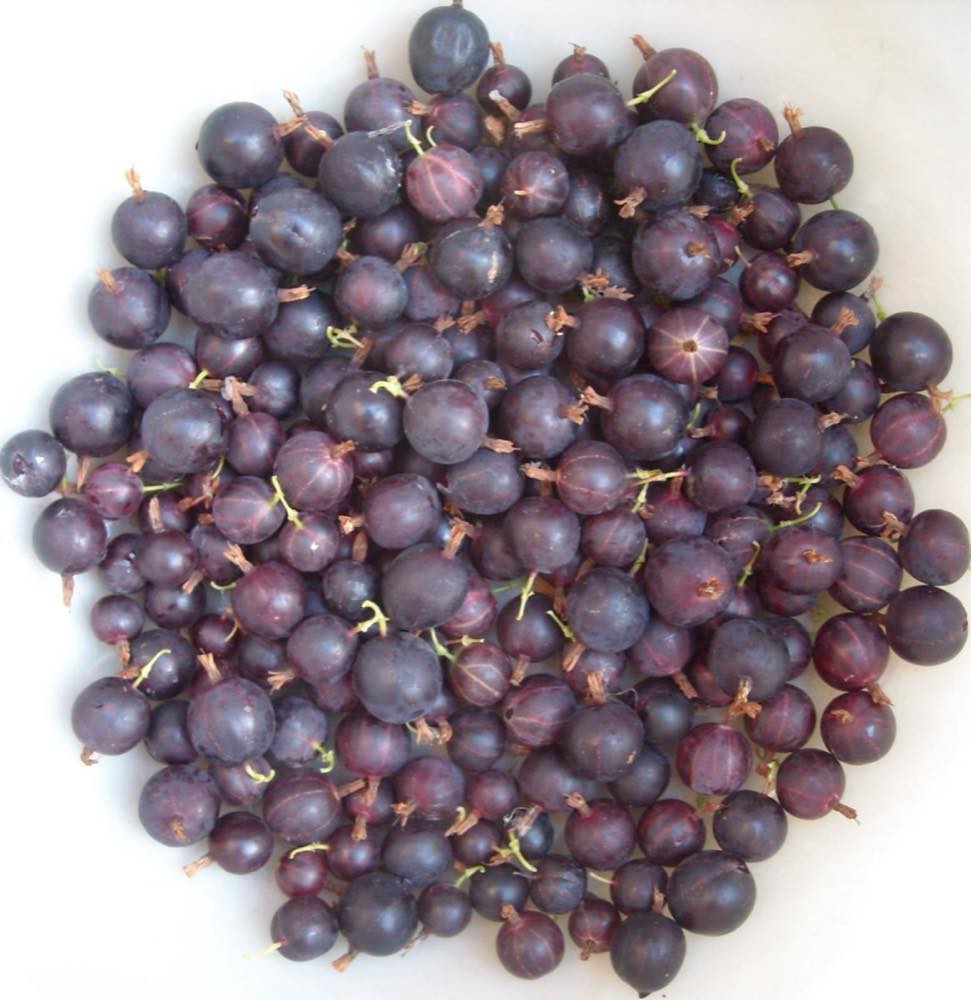
Currants & gooseberries
A gooseberry you can eat off the bush: large, sweet, deep purple berries that look like blueberries when fully ripe, on a bush that resists mildew and winter cold. Gooseberries are native to Arizona's mountains and want cool summers, so plant it at mid elevation or in the high country with afternoon shade, and wear gloves for the thorns. Not a low desert plant.
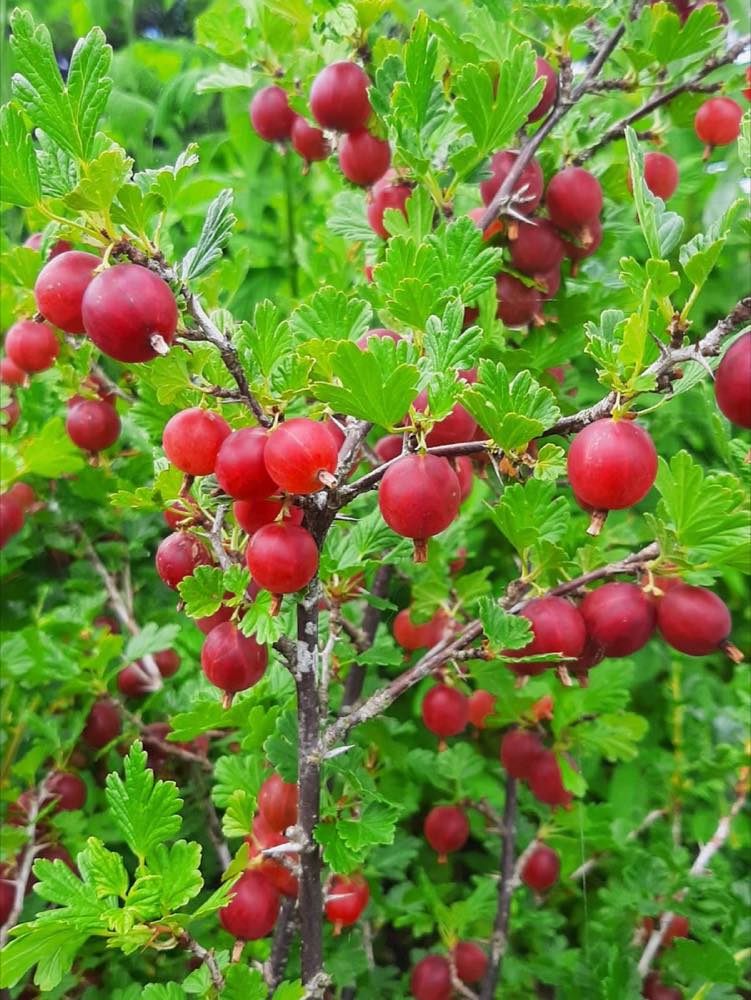
Currants & gooseberries
A medium red gooseberry with a slightly tangy skin and very sweet flesh, on an upright bush that resists mildew. Of the Ribes here it is the one rated for warmer winters, but summer heat is still the limit, so grow it at mid elevation or in the high country, out of the afternoon sun. Wear gloves, since the stems are thorny.
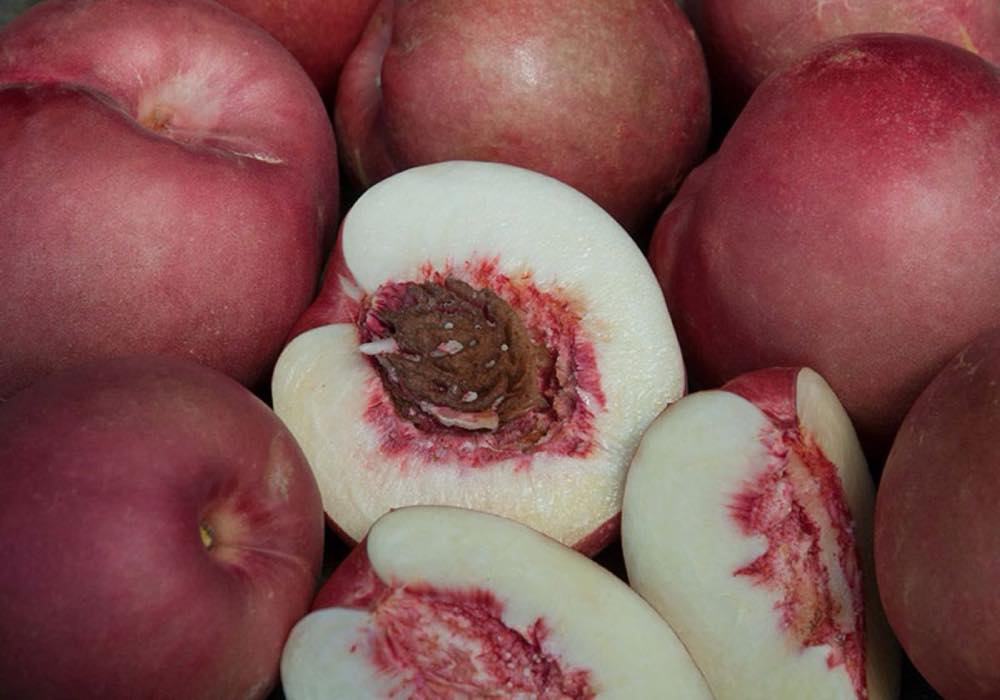
Nectarines
A nectarine and plum cross with white flesh, dark maroon fruit that turns pale pink when ripe, and a flavor that shows both parents. It needs just 200 to 300 chill hours and ripens late June to mid July in the low desert. The purple-pink spring flowers and red young leaves make it a pretty tree too. Self-fruitful and very productive.
Kiwi
The first self-fertile fuzzy kiwi, so one vine is enough, with egg-shaped fruit that has fuzzy brown skin and green flesh. The best bet in Arizona is a sheltered mid elevation spot with afternoon shade and steady water. In the low desert, heat, wind and alkaline soil scorch the leaves and yellow the vine, so expect a struggle.
The male partner for Vincent. It bears no fruit of its own, but one vine pollinates up to eight females. Plant it with Vincent where the pair can have afternoon shade, shelter from wind and acid-amended soil, which means mid elevation more than the low desert.
A well-regarded fuzzy-skinned kiwi bred for low chill, with sweet fruit, but it needs a male Tomuri vine nearby to crop. It fits the milder parts of mid elevation with shade, shelter and acid-amended soil. In the low desert, heat, wind and alkaline soil scorch leaves and yellow the vine, so give it afternoon shade and expect a struggle.
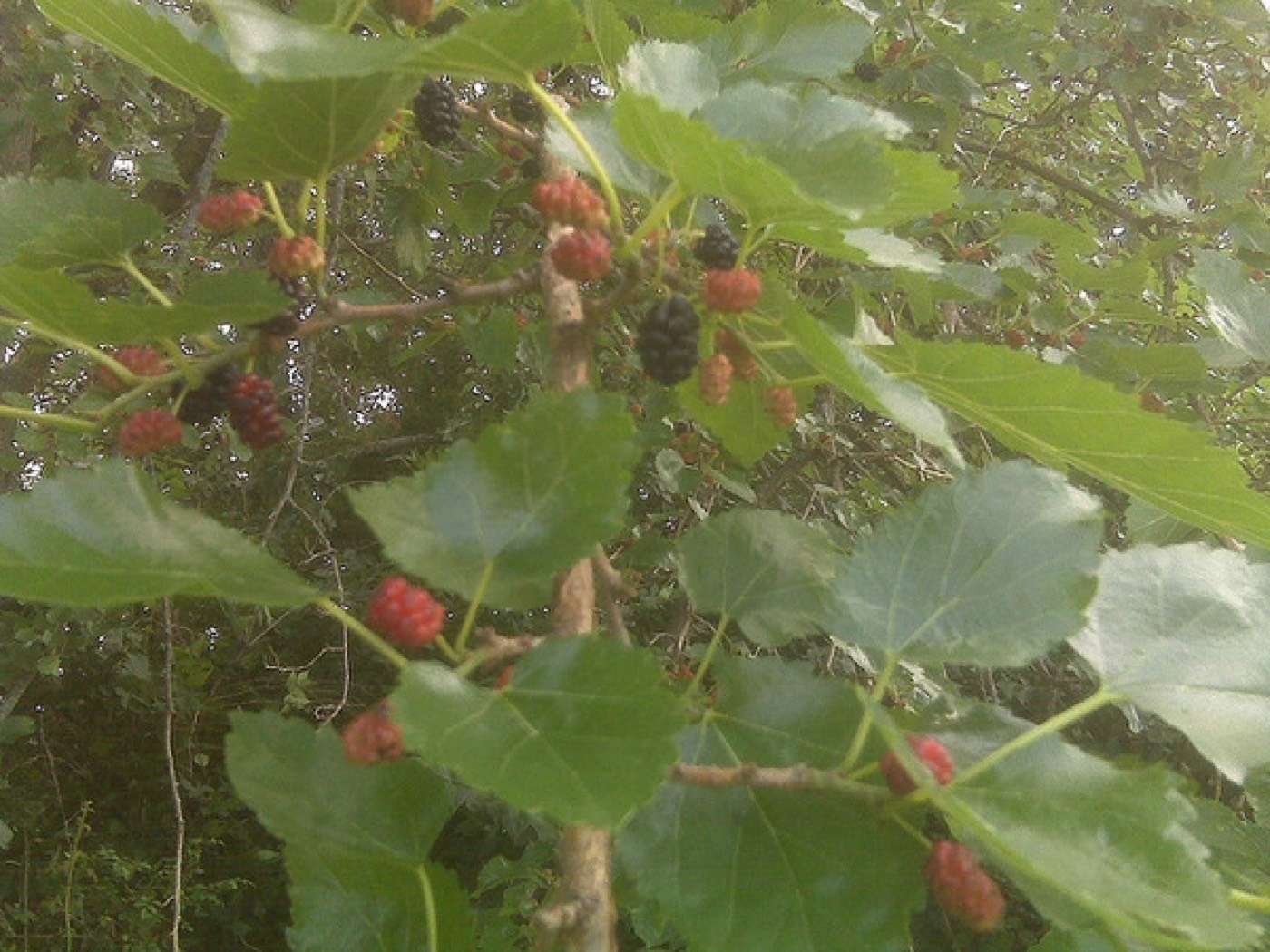
Mulberries
The hardy mulberry, with sweet, mild, very small-seeded black fruit that keeps coming through the summer, and young trees fruit quickly. Hardy to well below zero, it also suits mid elevation and high country, where it blooms late and escapes most spring frosts, as well as the low desert. Fruit stains and birds love it, so plant it away from walkways.
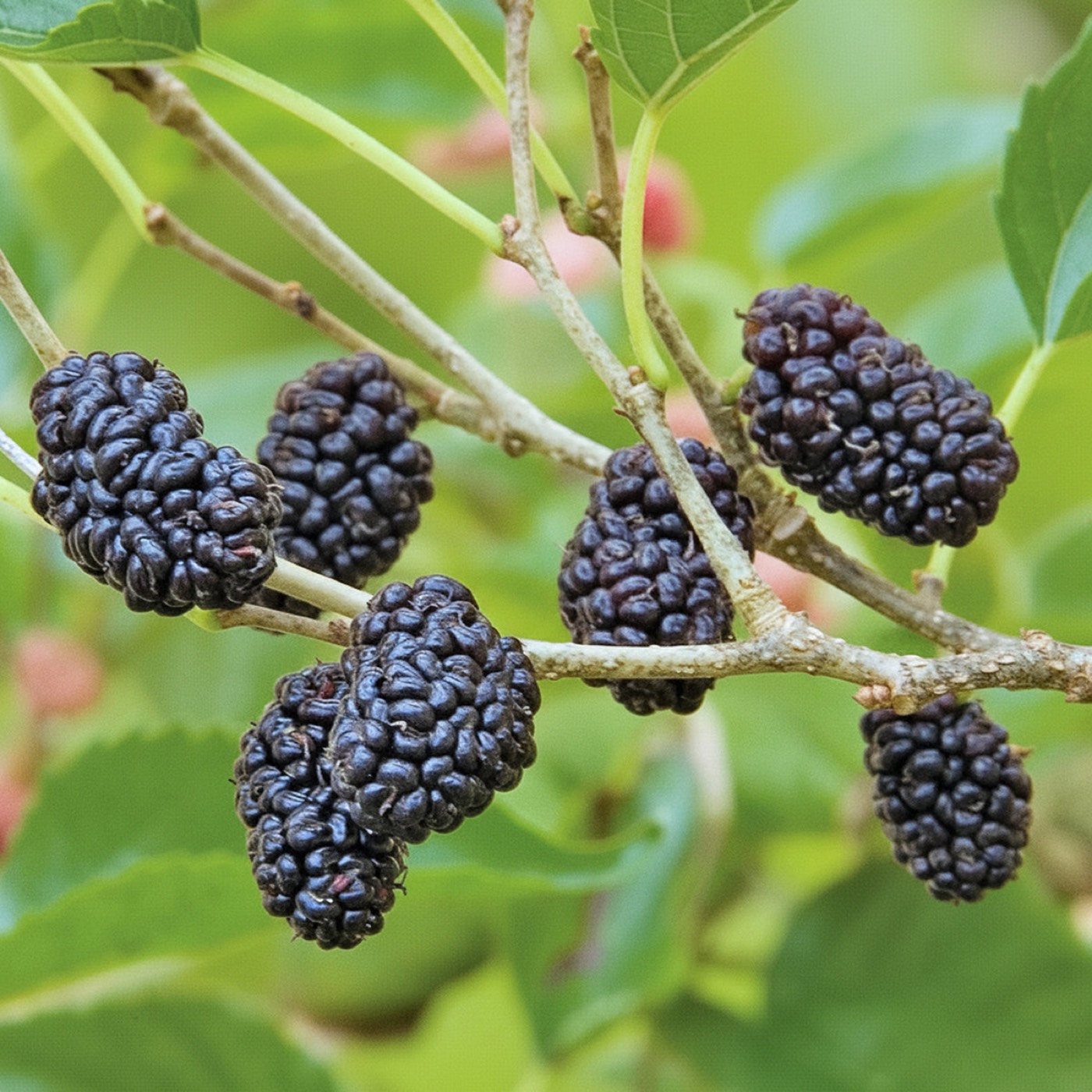
Mulberries
A bush-form mulberry that keeps making sweet blackberry-like fruit through spring and early summer, and stays small enough for a big pot or a tight yard. Light pruning keeps it compact. It does well in the low desert and in mid elevation, but the juice stains, so pick over a tarp and not over concrete.
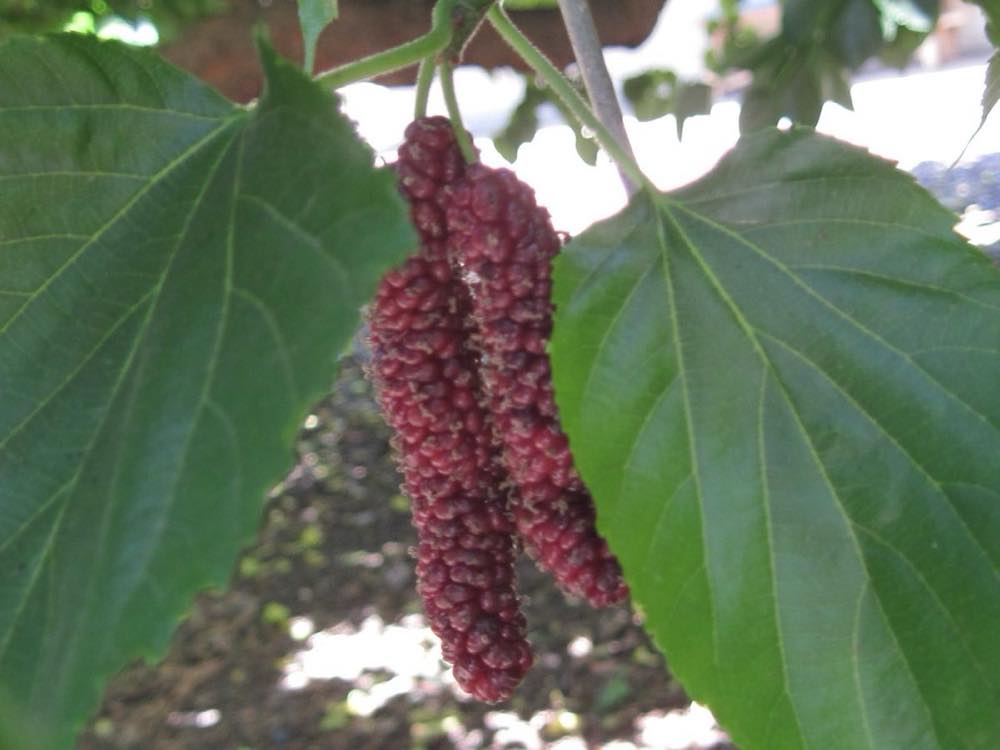
Mulberries
Another listing of the Pakistan mulberry, here as a potted tree: long, firm, sweet red-to-black fruit that does not stain like most mulberries. It is a big, vigorous, heat-loving tree that suits the low desert. Summer pruning keeps it to a size you can pick from.
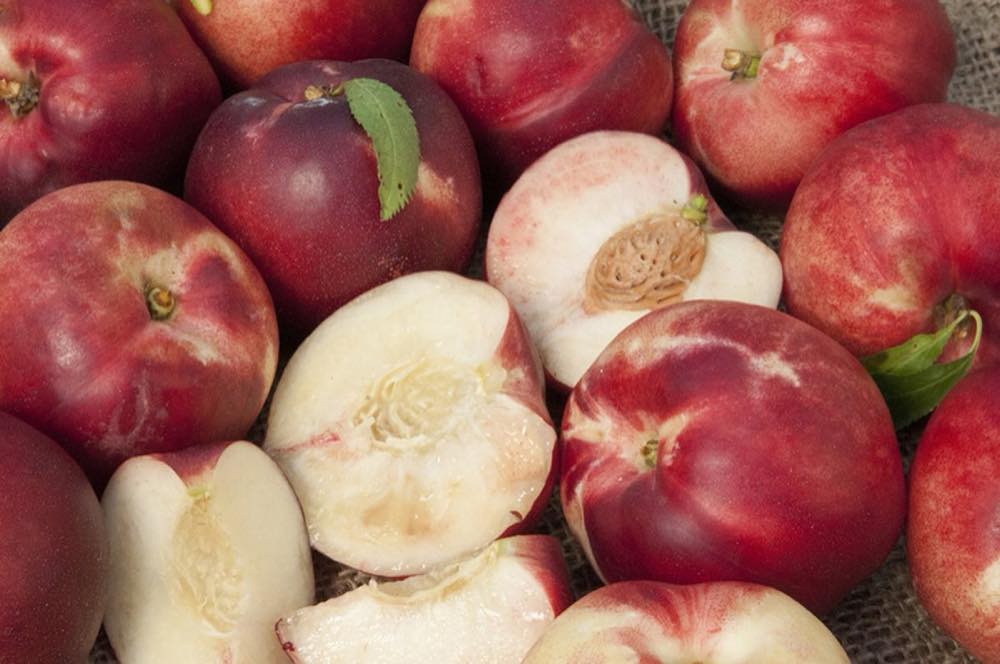
Nectarines
The first of the genetic-dwarf white nectarines, a small self-fruitful tree for a patio pot or tight yard. It stays small enough to throw a frost cloth over, which matters at mid elevation, where winters will give it the chill it wants. Fruit comes early, in early to mid June. Thrips can scar the skin in dry springs.
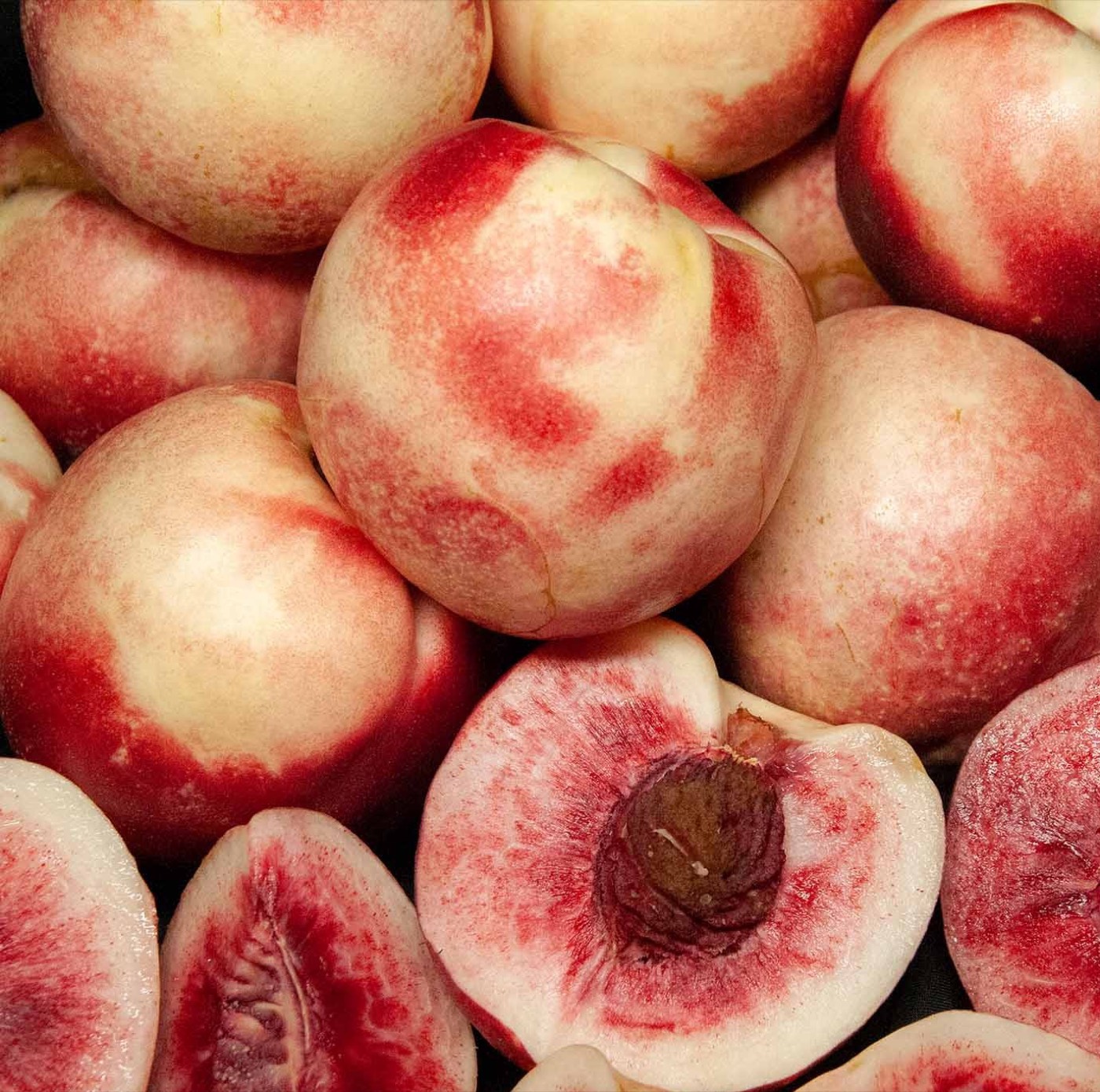
Nectarines
A naturally small white nectarine tree, only 5 to 6 feet tall, with medium freestone fruit that balances sweetness and acid well. At up to 500 chill hours it blooms early, but the tree is small enough to cover on frost nights, so it suits mid elevation yards and big containers. Fruit comes mid to late August.
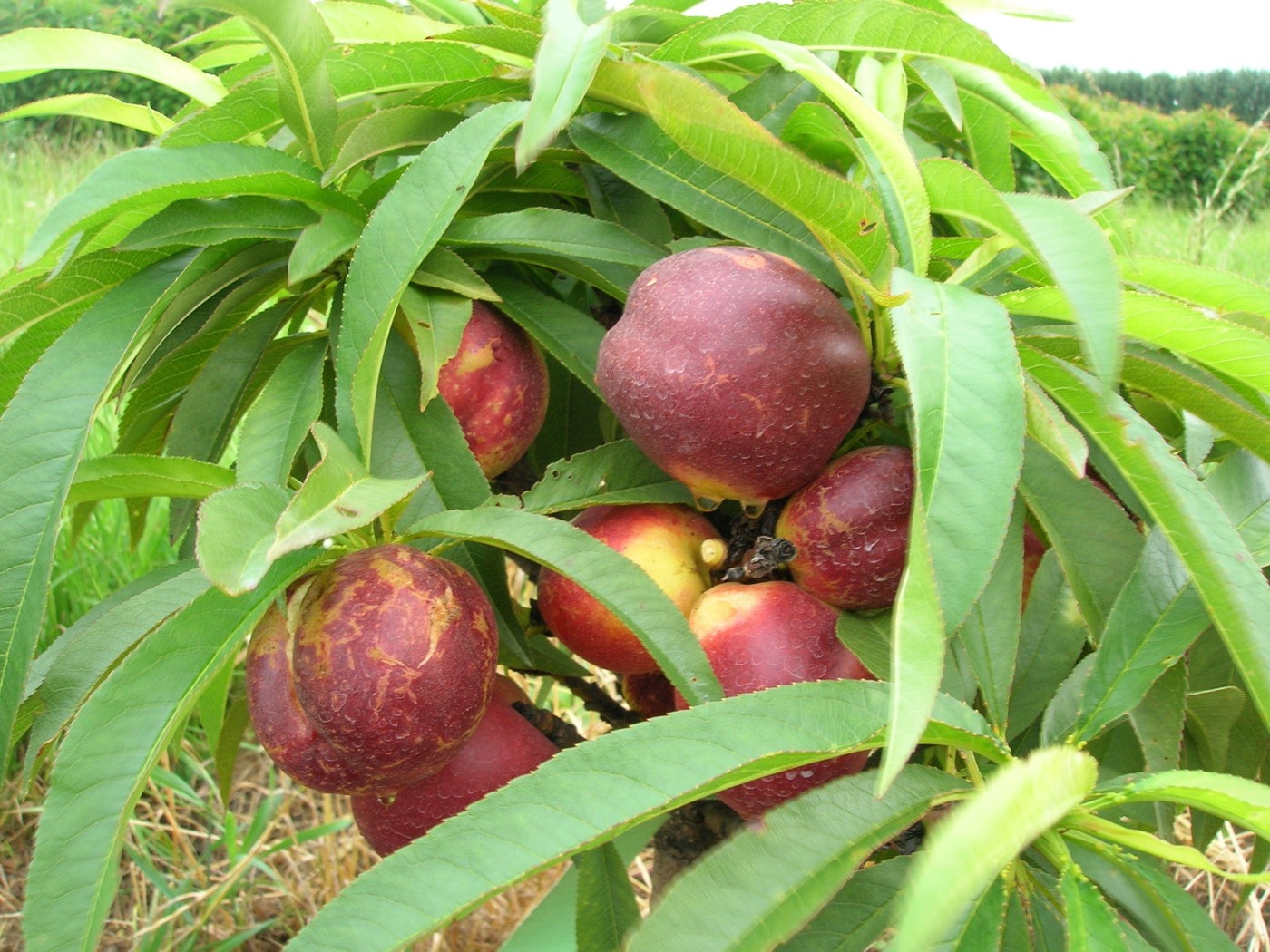
Nectarines
A genetic-dwarf nectarine only 5 to 6 feet tall with large, sweet, refreshing yellow freestone fruit. It is rated at up to 500 chill hours and the small tree is easy to cover on frost nights, so it suits mid elevation yards and big containers. Ripens mid August to early September. Self-fruitful. Thrips can scar the skin in dry springs.
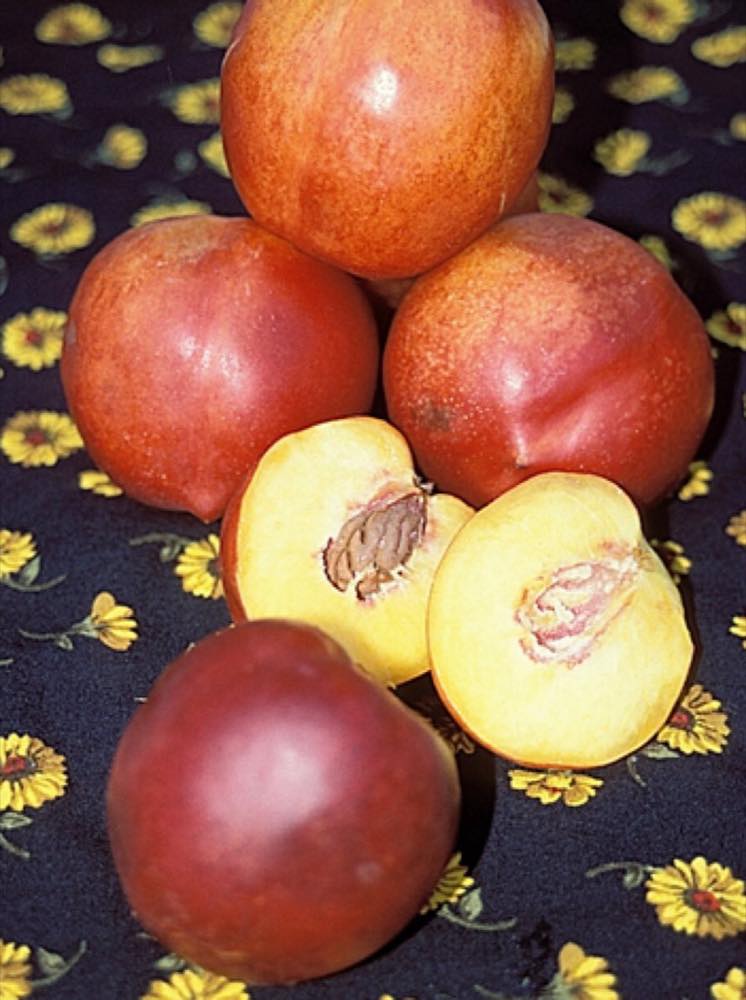
Nectarines
A miniature yellow freestone nectarine, 5 to 6 feet tall, with sweet, rich fruit. It needs 400 chill hours or fewer, so it works in Phoenix, ripening mid to late June. Unlike most nectarines it needs another peach or nectarine nearby to set fruit. Good in a large pot, and thrips can scar the skin in dry springs.
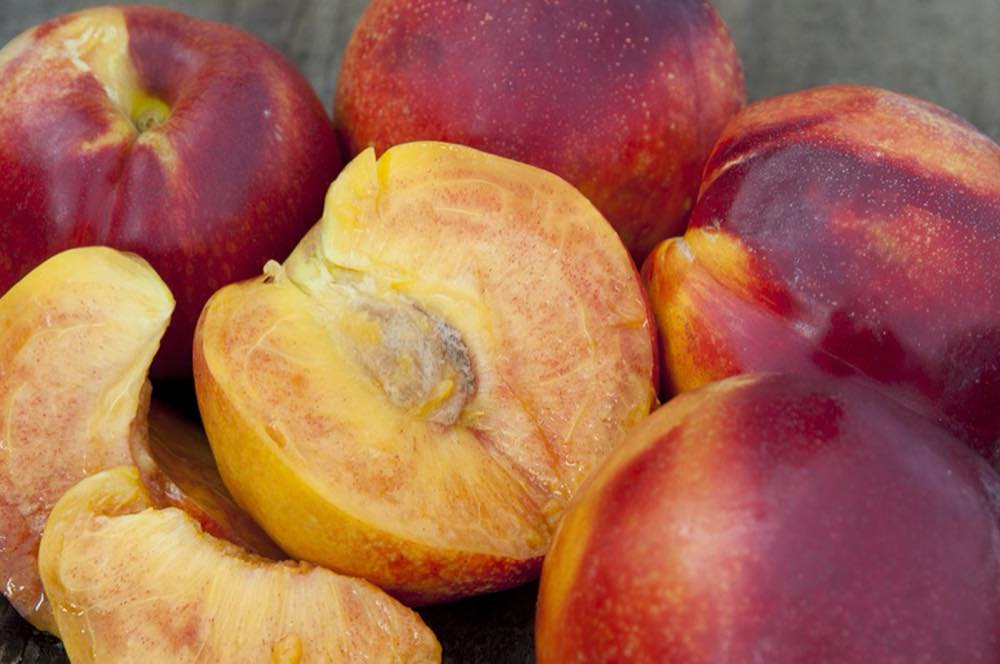
Nectarines
A miniature nectarine that stays around 6 feet, with sweet, very flavorful yellow freestone fruit and bright red skin. It needs 400 chill hours or fewer, so it does well in Phoenix, ripening early to mid June. Self-fruitful and a good size for a pot. Thin the fruit so branches do not bend, and watch for thrips scarring.
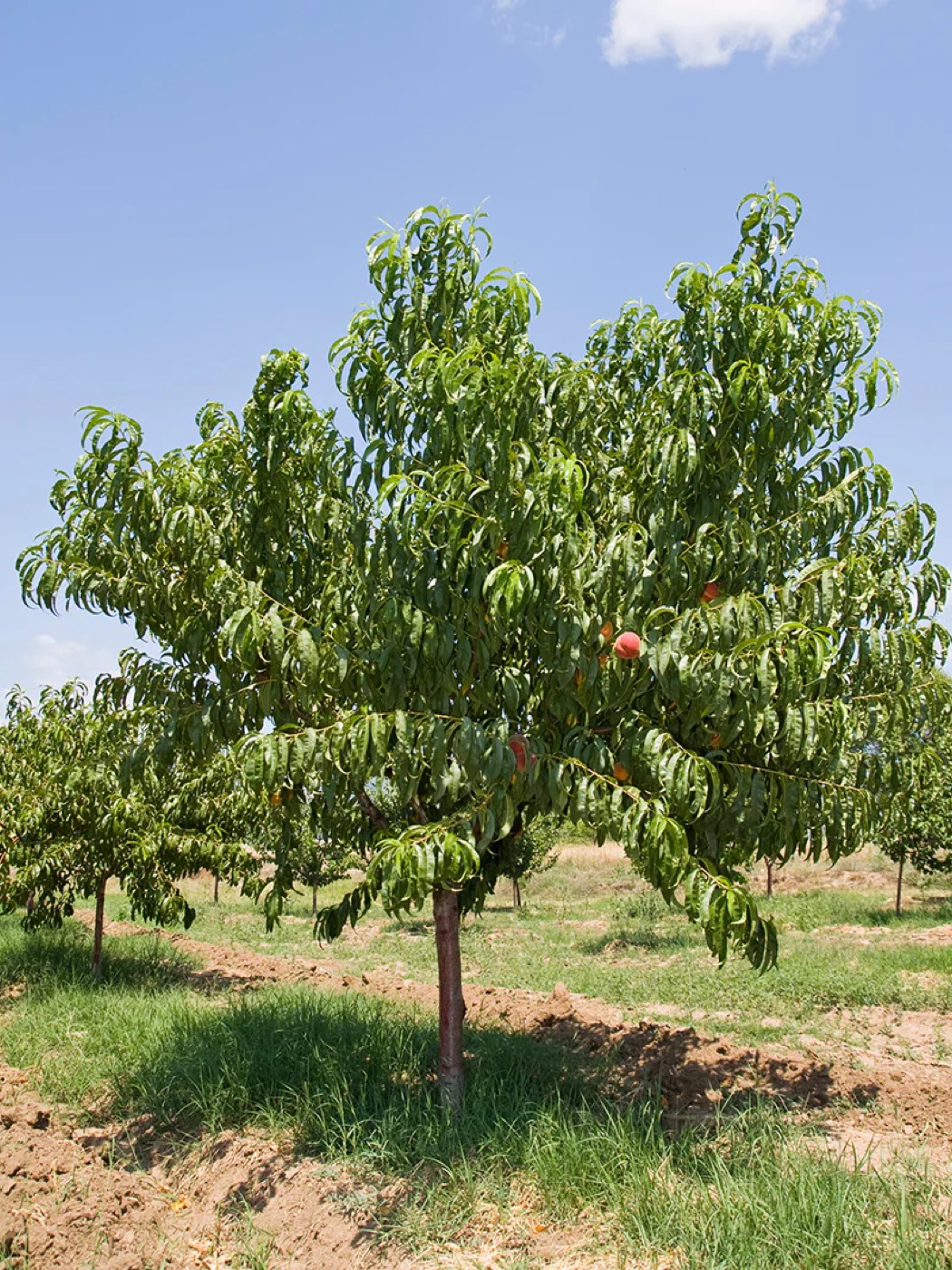
Nectarines
A miniature yellow freestone nectarine that grows at least 6 feet tall, with large fruit and a true tangy nectarine flavor. At 450 to 500 chill hours it is marginal in Phoenix, and at mid elevation the small tree is easy to cover on frost nights. Ripens mid to late June in the low desert, July at mid elevation. Self-fruitful.
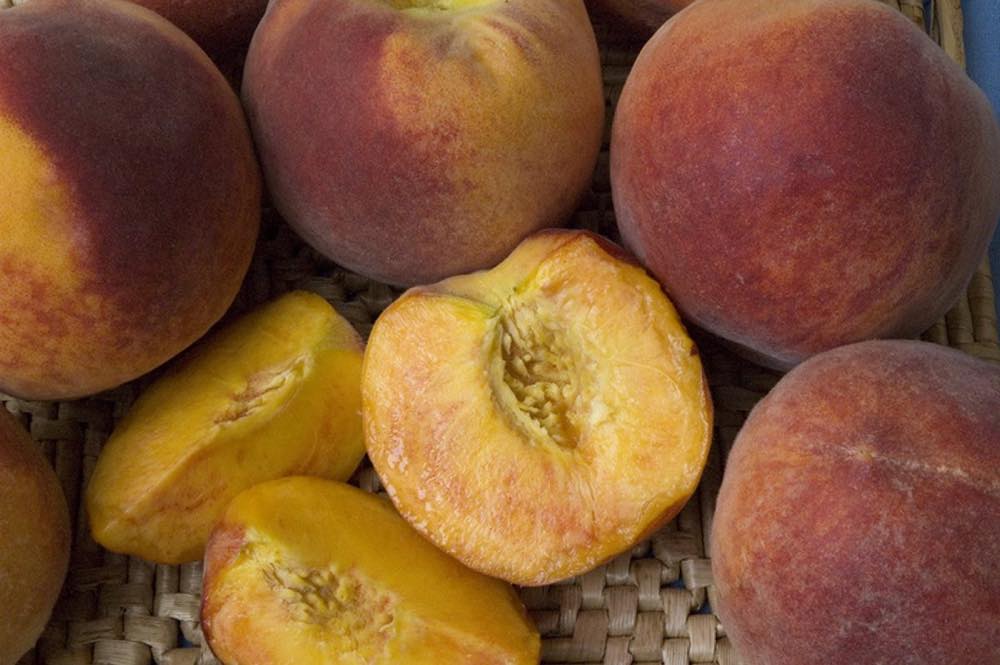
Peaches
A genetic dwarf peach that stays about 5 to 6 feet tall yet carries full-size, sweet, mild yellow freestone fruit. It needs 250 chill hours or less and ripens in May, ahead of the worst heat, so it suits Phoenix patios and small yards. It grows well in a large pot, and it still needs fruit thinning to keep branches from bowing.
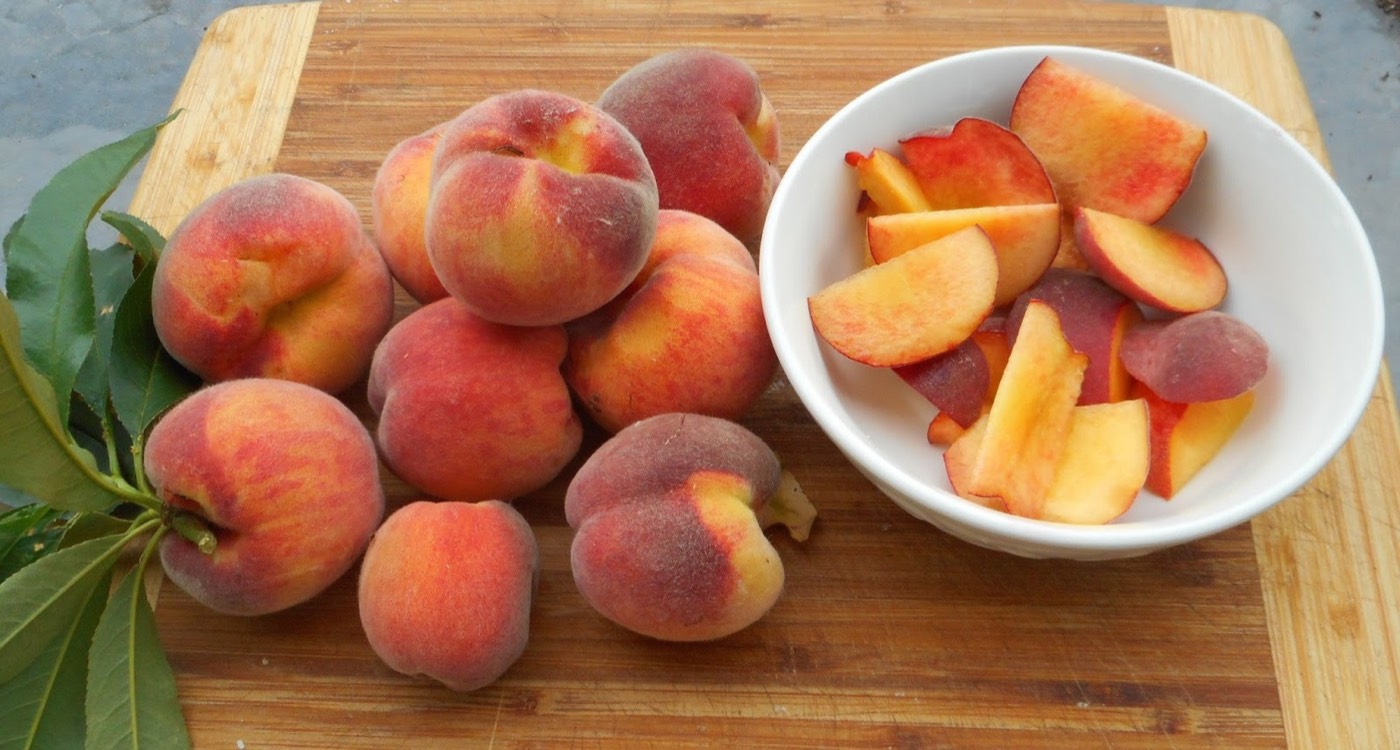
Peaches
A genetic dwarf peach, about 5 to 6 feet tall, that bears richly flavored yellow freestone fruit of good size. Its 400-hour ceiling is the top of what Phoenix gets, so place it where winter nights cool off well. It grows happily in a large pot.
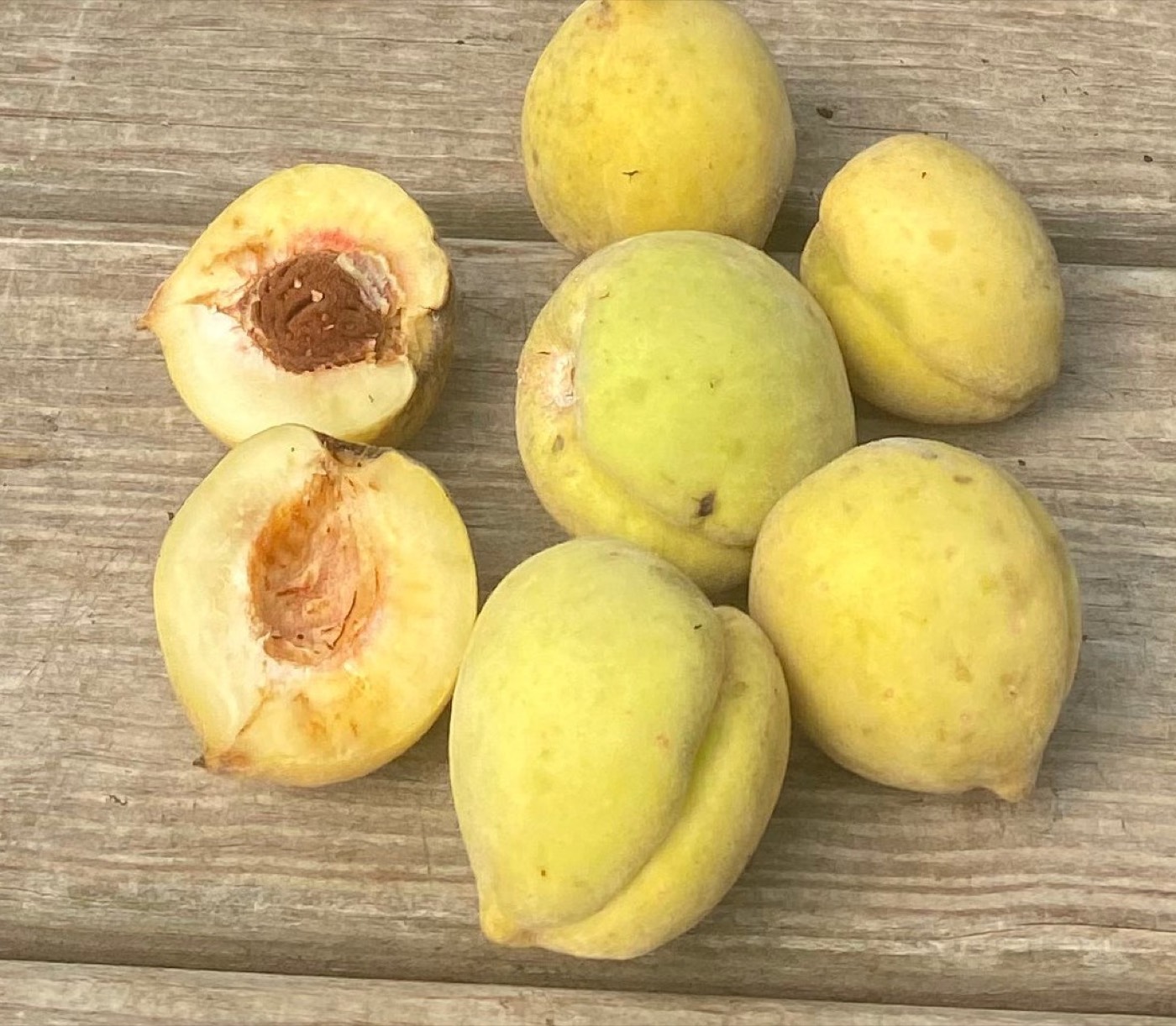
Peaches
A genetic dwarf white peach with small to medium fruit, white skin lightly blushed red and sweet white flesh. At 500 hours or less it gets enough chill at mid elevation, and growing it in a pot lets you wheel it into shelter on frost nights at bloom. In the low desert that chill figure is marginal, and a dwarf rated 400 or under, such as Snow Babe, is the surer bet there.
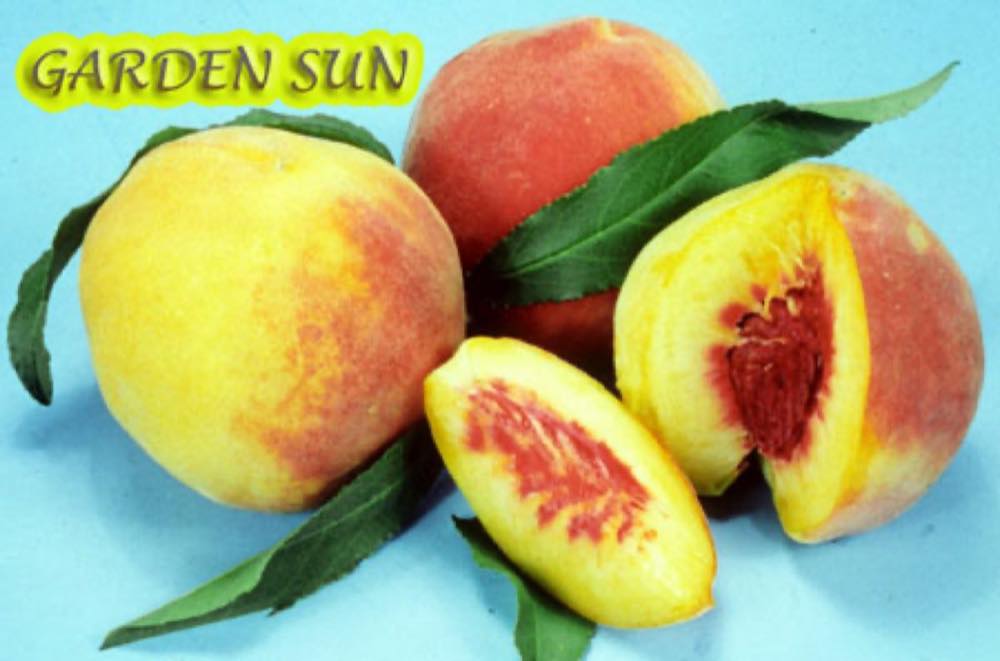
Peaches
A genetic dwarf with sweet, mild, low-acid yellow freestone fruit that ripens a week after Elberta. At 500 hours or less it gets enough chill at mid elevation, and a pot lets you move it under cover on frost nights during bloom. In the low desert that chill is marginal, so Eldorado or Pix Zee are the safer dwarfs there.
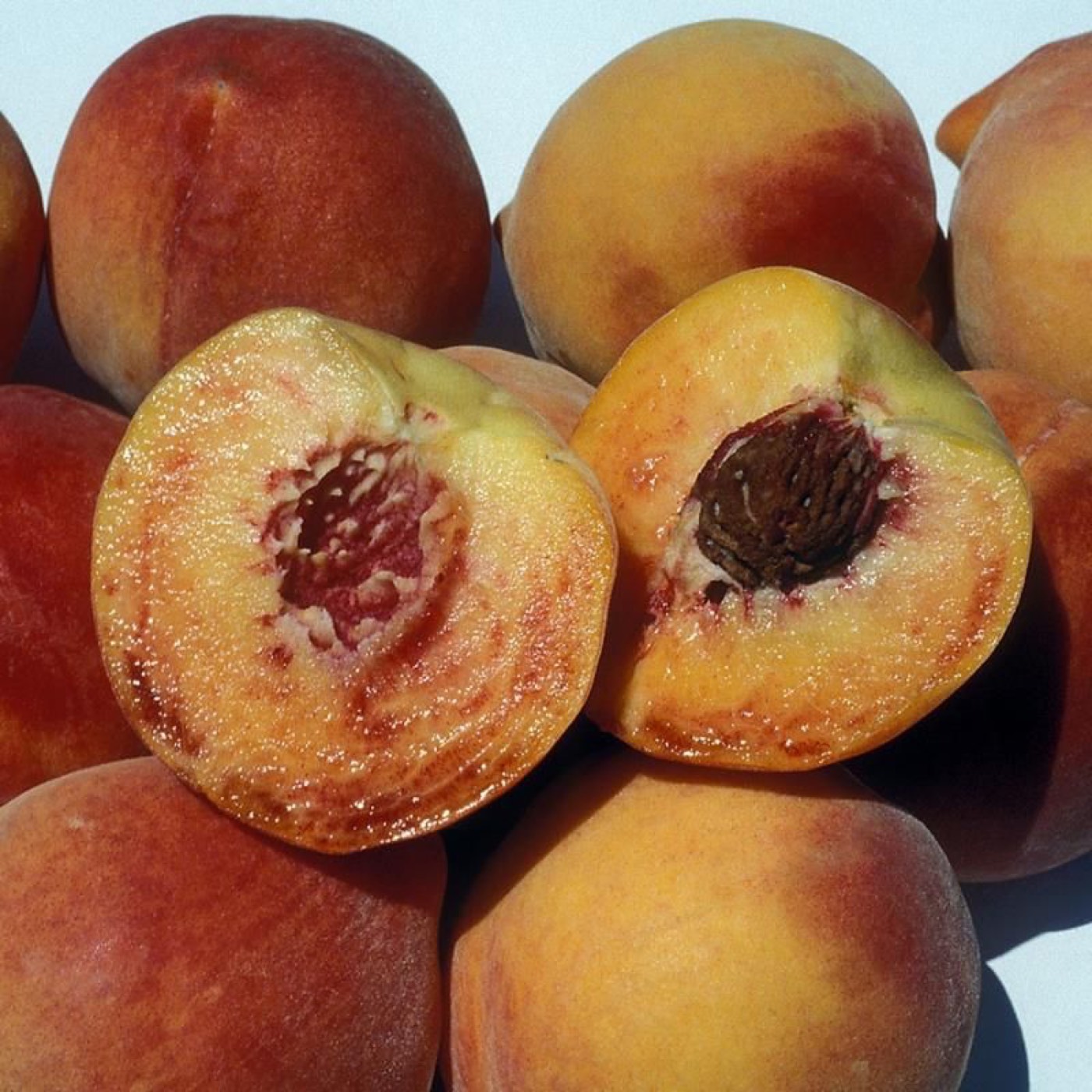
Peaches
A heavy-bearing genetic dwarf only about 5 feet tall, with sweet yellow freestone fruit and a rich peach flavor. It needs 400 chill hours or less, so it can crop in a normal Phoenix winter, and it works well in a pot. It is only partly self-fruitful, so plant a second peach nearby if you want steady crops.
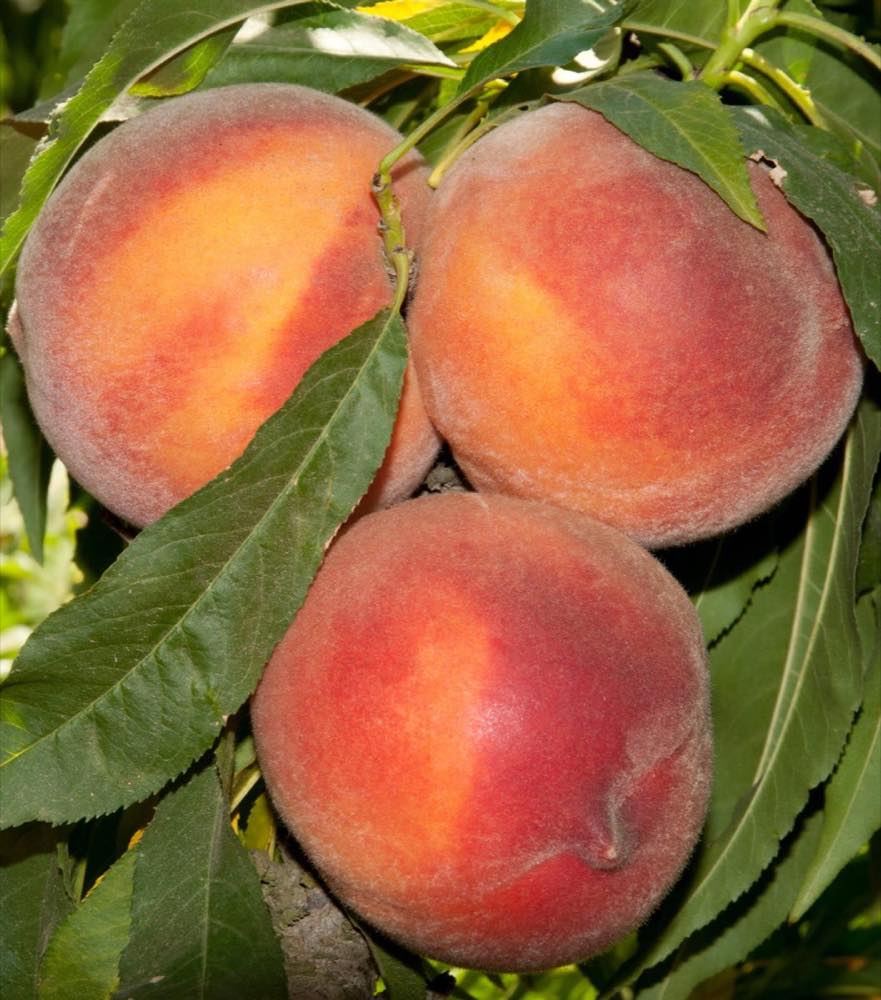
Peaches
A genetic dwarf peach, about 5 to 6 feet tall, with large, firm yellow freestone fruit that ripens in June elsewhere and a few weeks earlier in the low desert. It needs 400 chill hours or less, so it can crop in a normal Phoenix winter. It does well in a big pot.
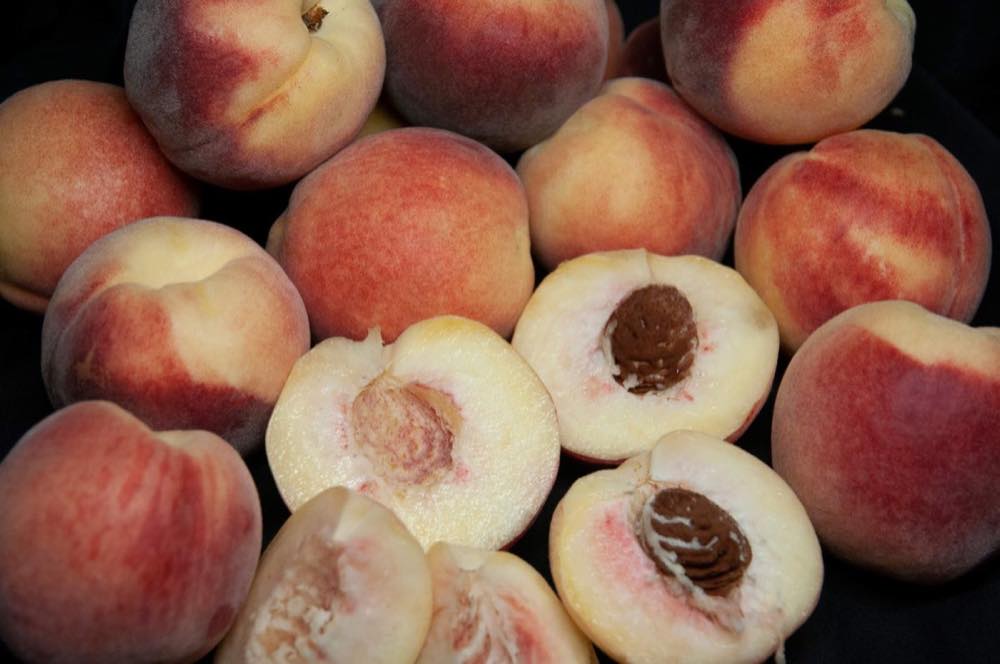
Peaches
A genetic dwarf with medium-sized, sweet white freestone fruit on a tree that stays about 5 to 6 feet. It needs 400 chill hours or less and ripens in mid to late June in the low desert, a bit later than the May varieties. A good pick for a large pot in a Phoenix yard.
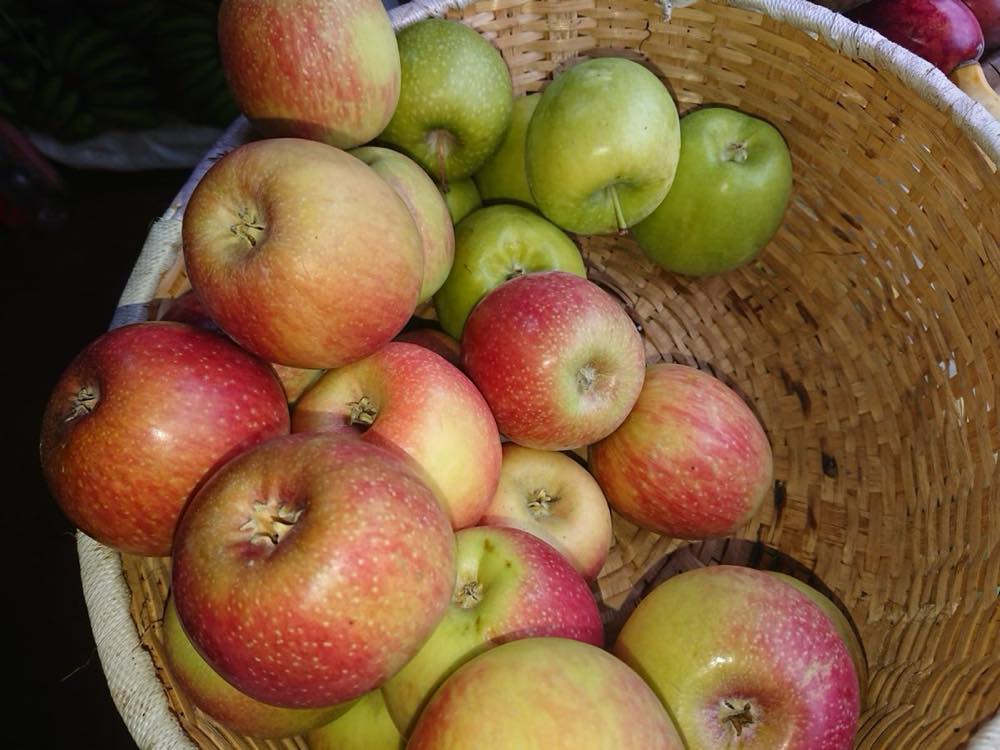
Anna, Fuji, Dorsett Golden and Gordon give sweet apples from June into the fall in the low desert. Fuji and Gordon want about 400 chill hours, so they crop best in the cooler parts of the valley. Thin hard, and keep the weakest limb facing south or west so the stronger ones do not shade it out. This one carries two of the four.
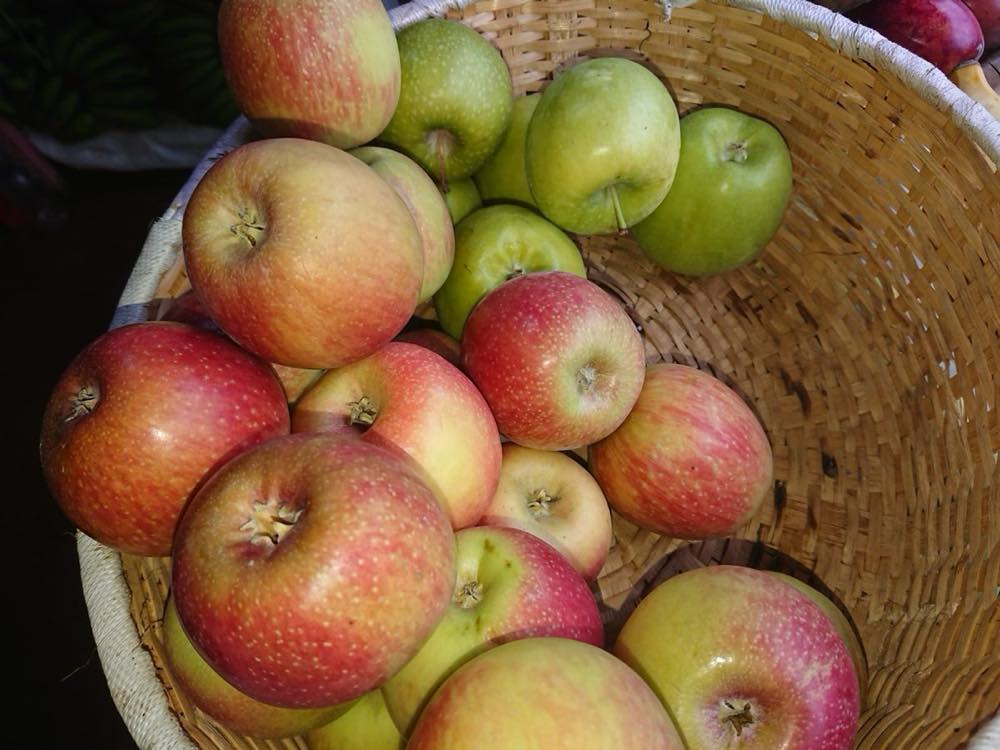
Anna, Fuji, Dorsett Golden and Gordon give sweet apples from June into the fall in the low desert. Fuji and Gordon want about 400 chill hours, so they crop best in the cooler parts of the valley. Thin hard, and keep the weakest limb facing south or west so the stronger ones do not shade it out. This one carries three of the four.
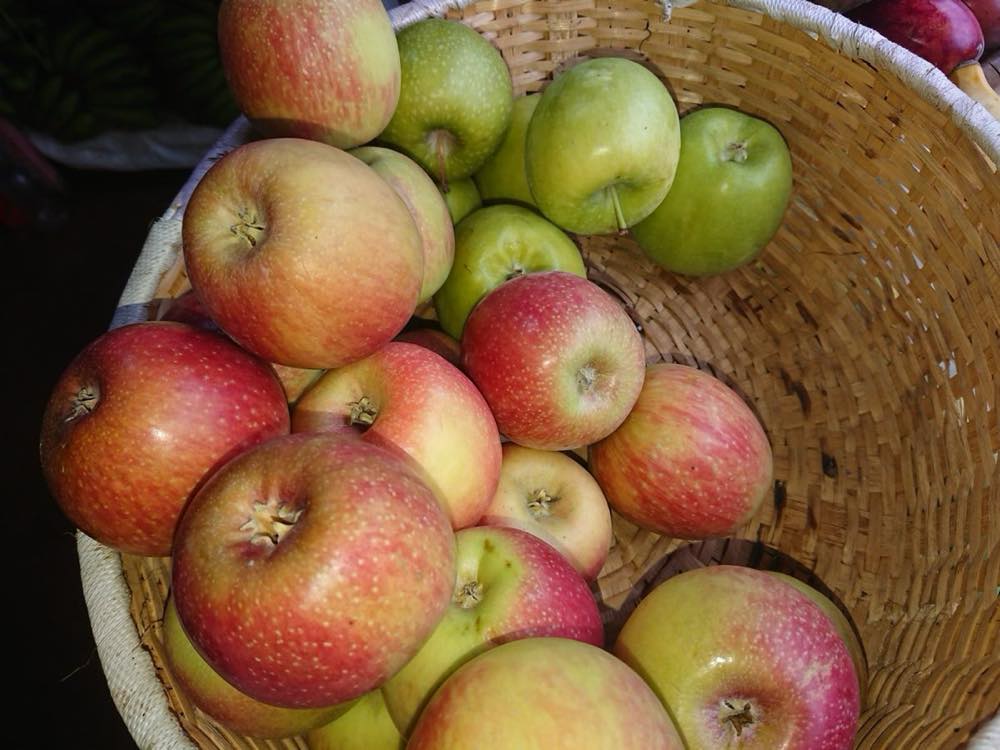
Anna, Fuji, Dorsett Golden and Gordon give sweet apples from June into the fall in the low desert. Fuji and Gordon want about 400 chill hours, so they crop best in the cooler parts of the valley. Thin hard, and keep the weakest limb facing south or west so the stronger ones do not shade it out.
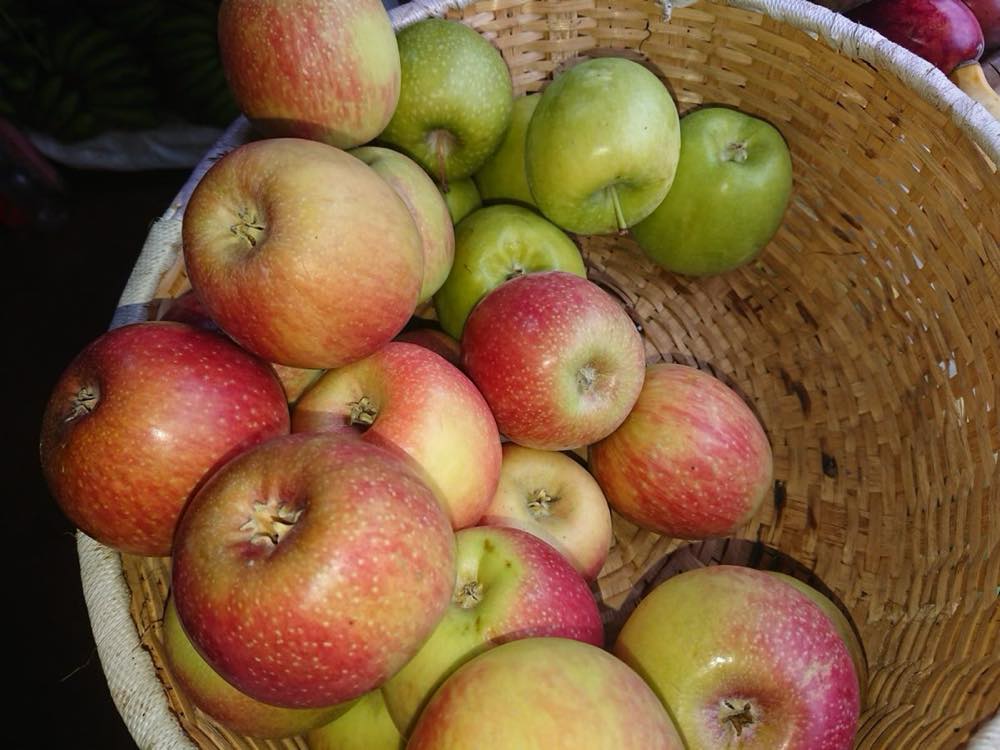
Anna, Dorsett Golden and Einshemer on one tree make up the lowest-chill apple mix going. It crops reliably in Phoenix, Yuma and lower Tucson, with sweet fruit from early June before the worst heat. These leaf out early, so thin the crop to protect the branches and prune the strongest limb back so it does not shade the rest.
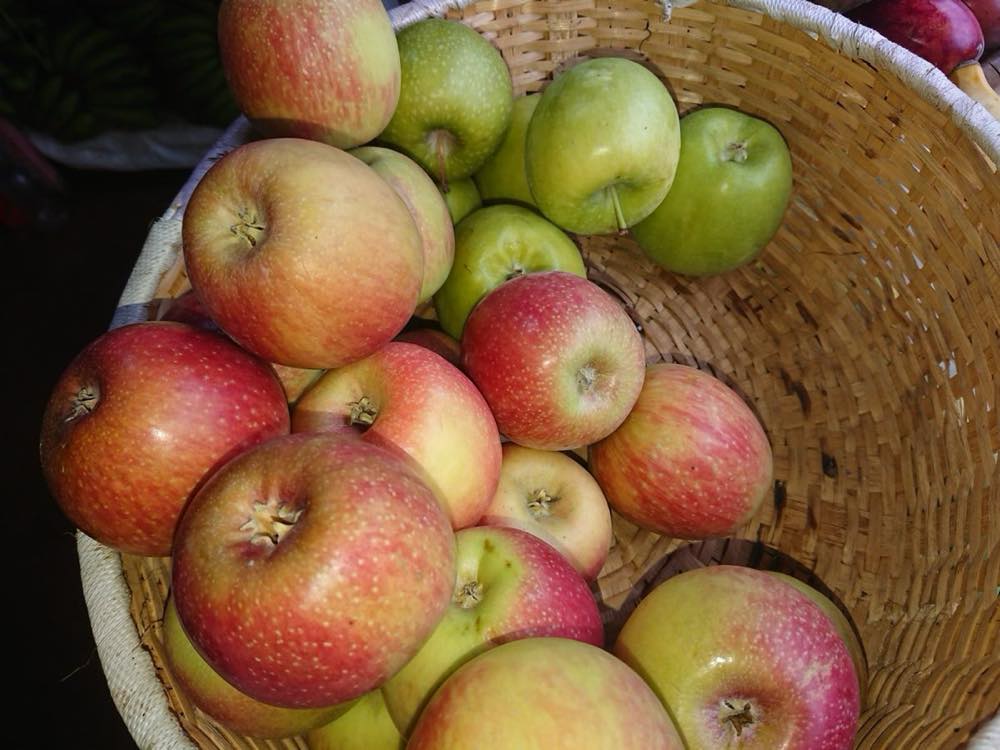
Multi-grafted
Crisp, sweet apples in a Fuji, Gala, Mutsu and Jonagold mix, with Gala ripening first in early fall and the rest following into October. It fits mid elevation yards like Prescott, Payson and Sierra Vista, where winters give plenty of chill. Mutsu and Jonagold lean on Fuji or Gala for pollen, and the strongest limb takes over unless you cut it back each summer. This one carries two of the four.
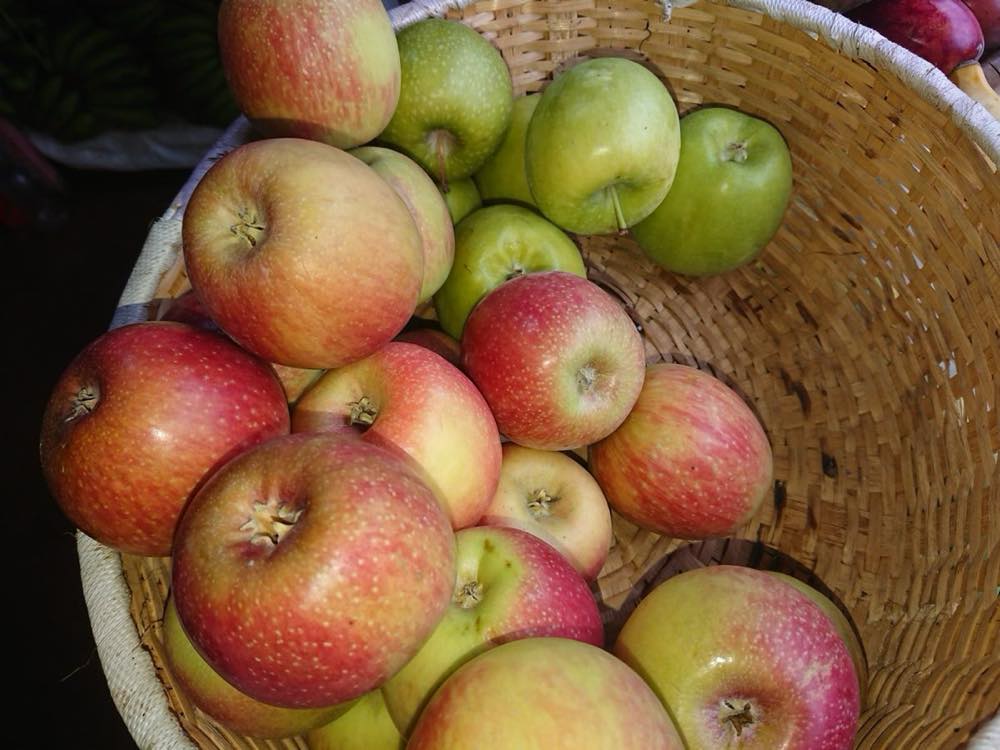
Multi-grafted
Crisp, sweet apples in a Fuji, Gala, Mutsu and Jonagold mix, with Gala ripening first in early fall and the rest following into October. It fits mid elevation yards like Prescott, Payson and Sierra Vista, where winters give plenty of chill. Mutsu and Jonagold lean on Fuji or Gala for pollen, and the strongest limb takes over unless you cut it back each summer. This one carries three of the four.
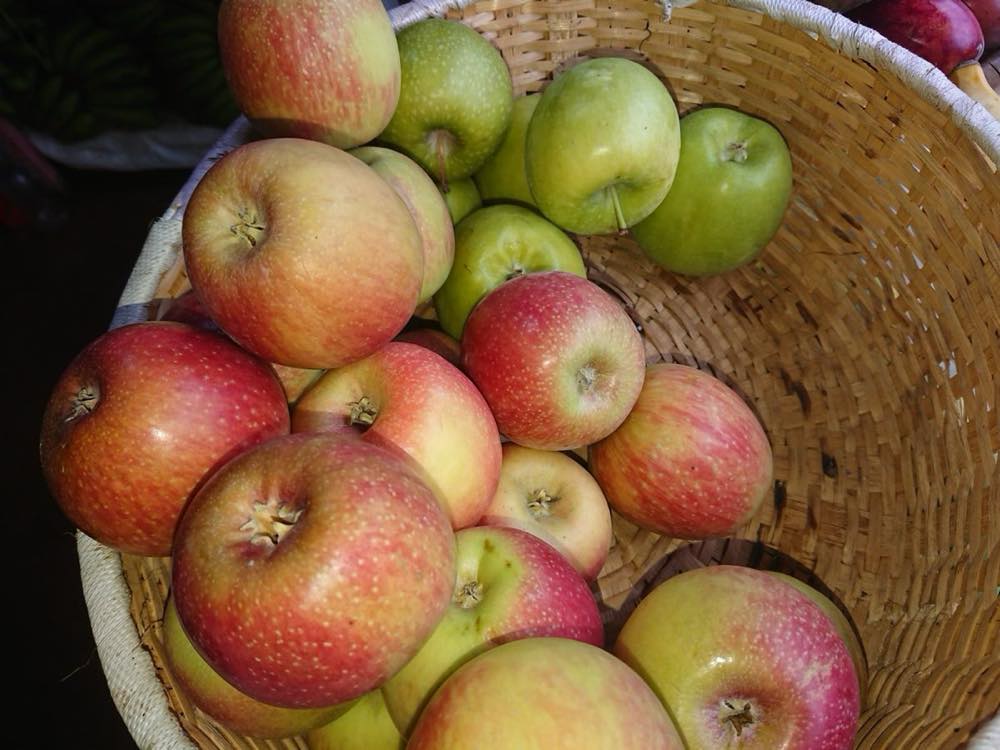
Multi-grafted
Crisp, sweet apples in a Fuji, Gala, Mutsu and Jonagold mix, with Gala ripening first in early fall and the rest following into October. It fits mid elevation yards like Prescott, Payson and Sierra Vista, where winters give plenty of chill. Mutsu and Jonagold lean on Fuji or Gala for pollen, and the strongest limb takes over unless you cut it back each summer.
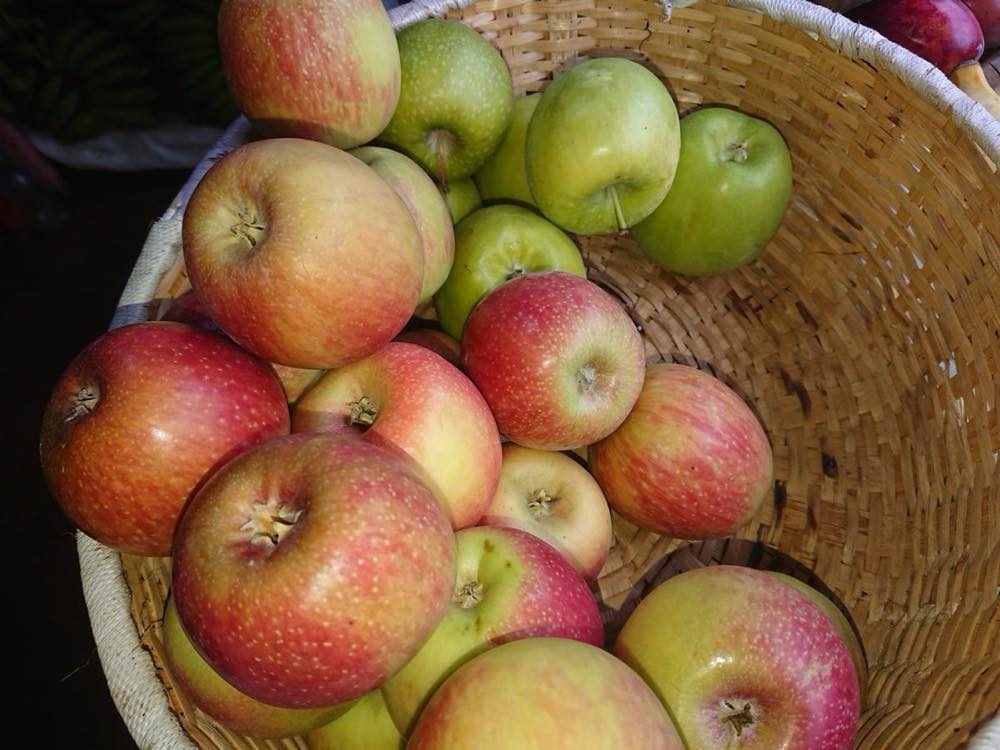
A Gala, Fuji, Golden Delicious and Granny Smith mix that gives crisp apples from September into November. It suits mid elevation yards, though Granny Smith wants a long warm season and may not finish before frost at the cold edge of the range. Keep the weakest limb facing south or west, and prune the strongest back each summer. This one carries two of the four.
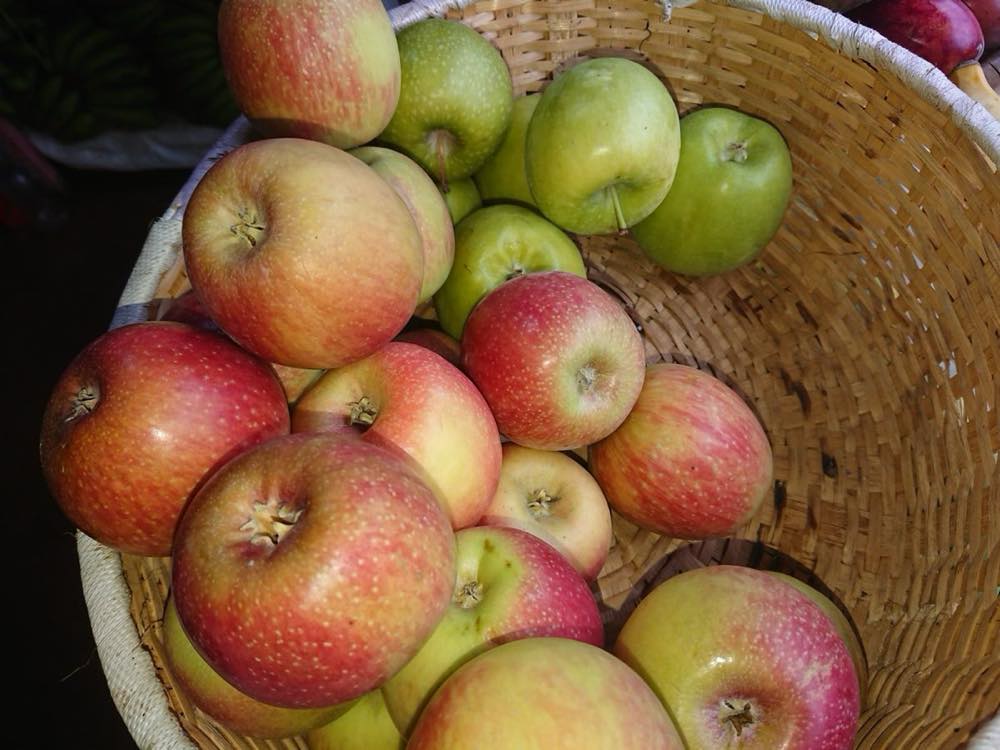
A Gala, Fuji, Golden Delicious and Granny Smith mix that gives crisp apples from September into November. It suits mid elevation yards, though Granny Smith wants a long warm season and may not finish before frost at the cold edge of the range. Keep the weakest limb facing south or west, and prune the strongest back each summer. This one carries three of the four.
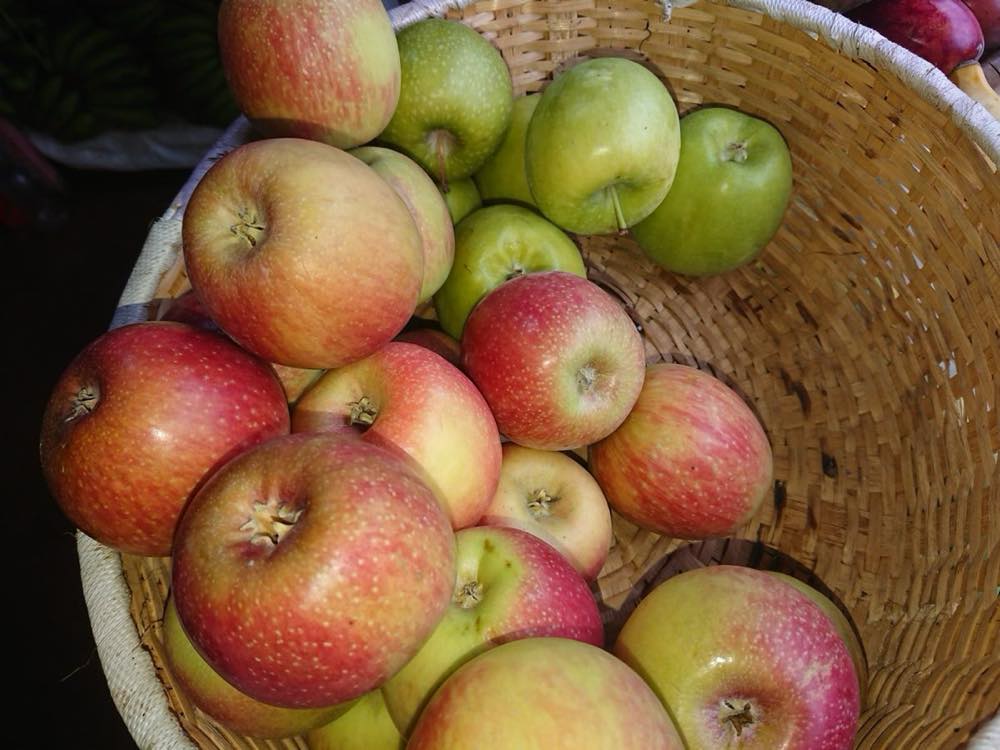
A Gala, Fuji, Golden Delicious and Granny Smith mix that gives crisp apples from September into November. It suits mid elevation yards, though Granny Smith wants a long warm season and may not finish before frost at the cold edge of the range. Keep the weakest limb facing south or west, and prune the strongest back each summer.
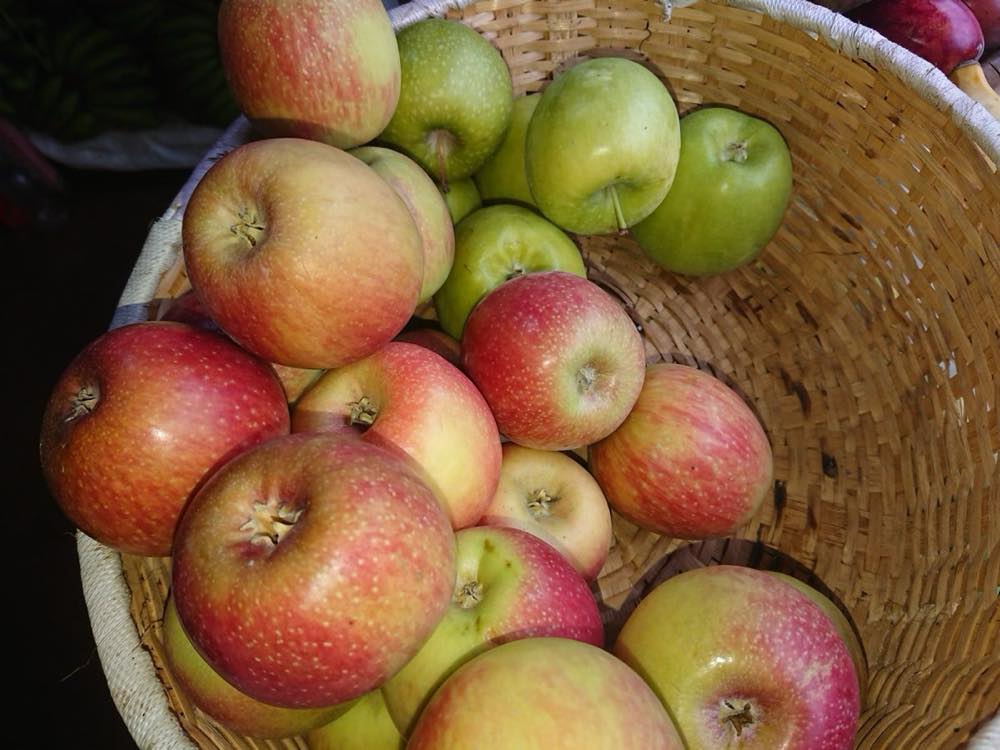
A classic Gala, Fuji, Golden Delicious and Red Delicious mix, ripening from late summer into October. It belongs at mid elevation, where winter chill is generous, and the varieties share pollen freely. Cut back whichever limb races ahead, and put the weakest one on the south or west side so it gets the most sun. This one carries two of the four.
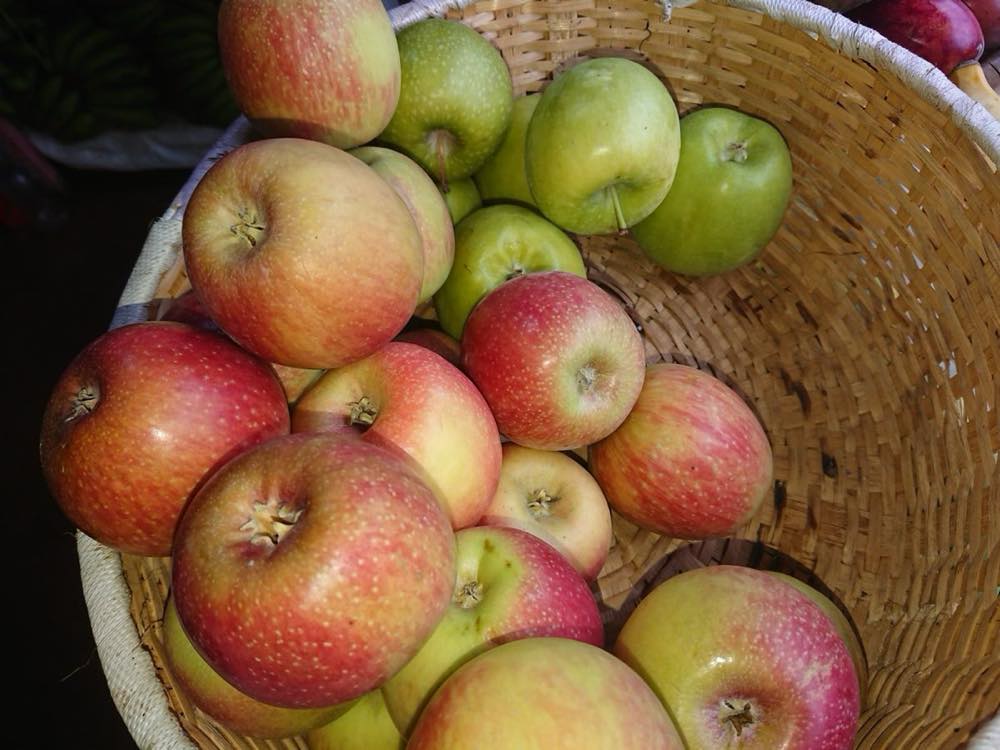
A classic Gala, Fuji, Golden Delicious and Red Delicious mix, ripening from late summer into October. It belongs at mid elevation, where winter chill is generous, and the varieties share pollen freely. Cut back whichever limb races ahead, and put the weakest one on the south or west side so it gets the most sun. This one carries three of the four.
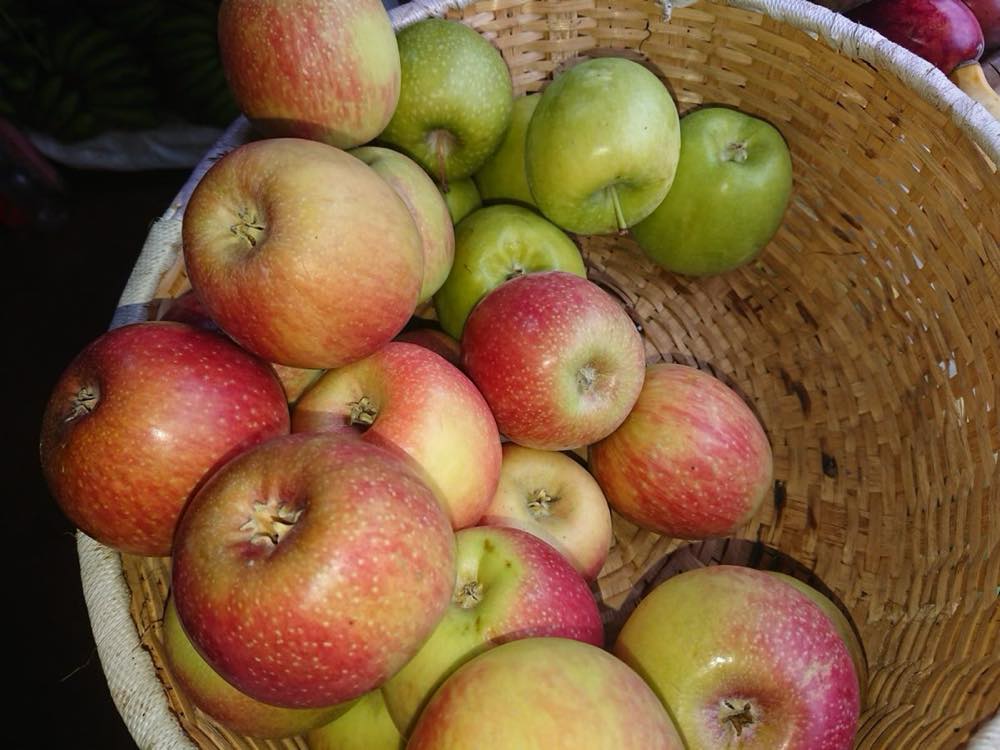
A classic Gala, Fuji, Golden Delicious and Red Delicious mix, ripening from late summer into October. It belongs at mid elevation, where winter chill is generous, and the varieties share pollen freely. Cut back whichever limb races ahead, and put the weakest one on the south or west side so it gets the most sun.
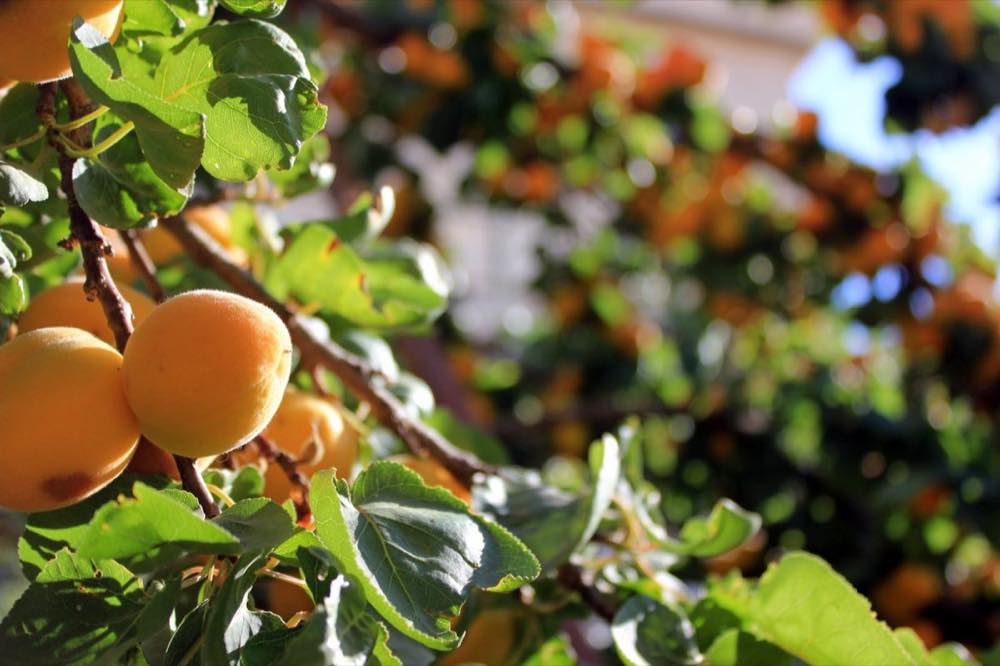
Early apricots from a mix of Katy, Flavor Delight (an apricot-plum cross), Blenheim, Tomcot and Royal Rosa. Most need 400 or fewer chill hours, so it suits the low desert, with fruit in May before the worst heat. Blooms open early, so throw frost cloth over the tree on cold nights. This one carries two of the five.
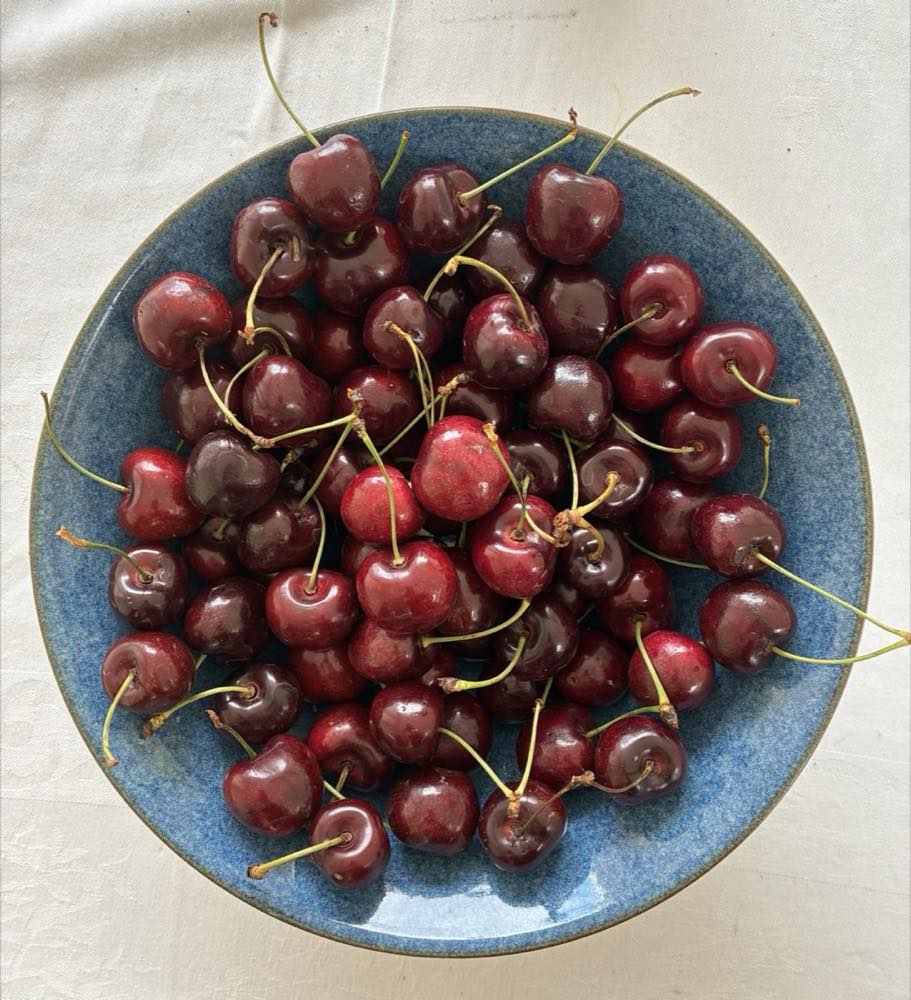
Sweet, dark cherries from a Black Tartarian, Bing, Lapins and Van mix, ripening over a few weeks for a long harvest. Cherries want cold winters, so this is a mid elevation tree, and a late frost during bloom will take the crop in some years. Lapins sets fruit alone and is the steadiest limb; net the tree against birds. This one carries two of the four.
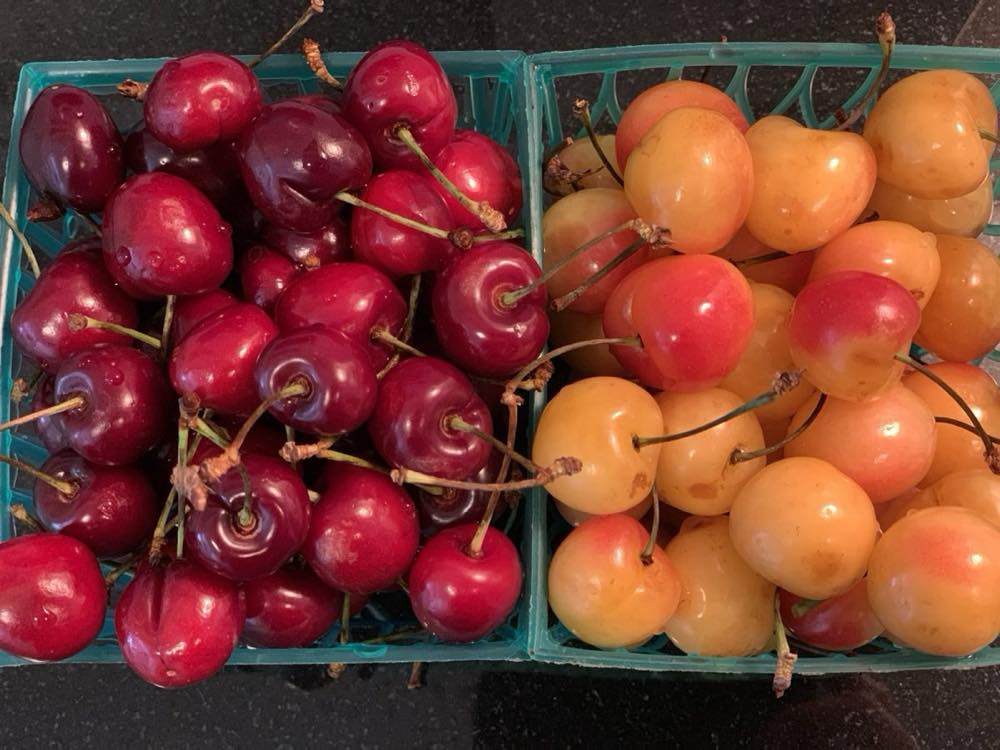
Rainier, Bing, Utah Giant and Van make a long season of sweet cherries from one tree. Utah Giant needs about 800 chill hours, so this mix sits at the colder end of mid elevation, in places like Prescott and Payson. A late frost during bloom costs the crop in some years, and the strongest limb takes over unless you prune it back. This one carries two of the four.
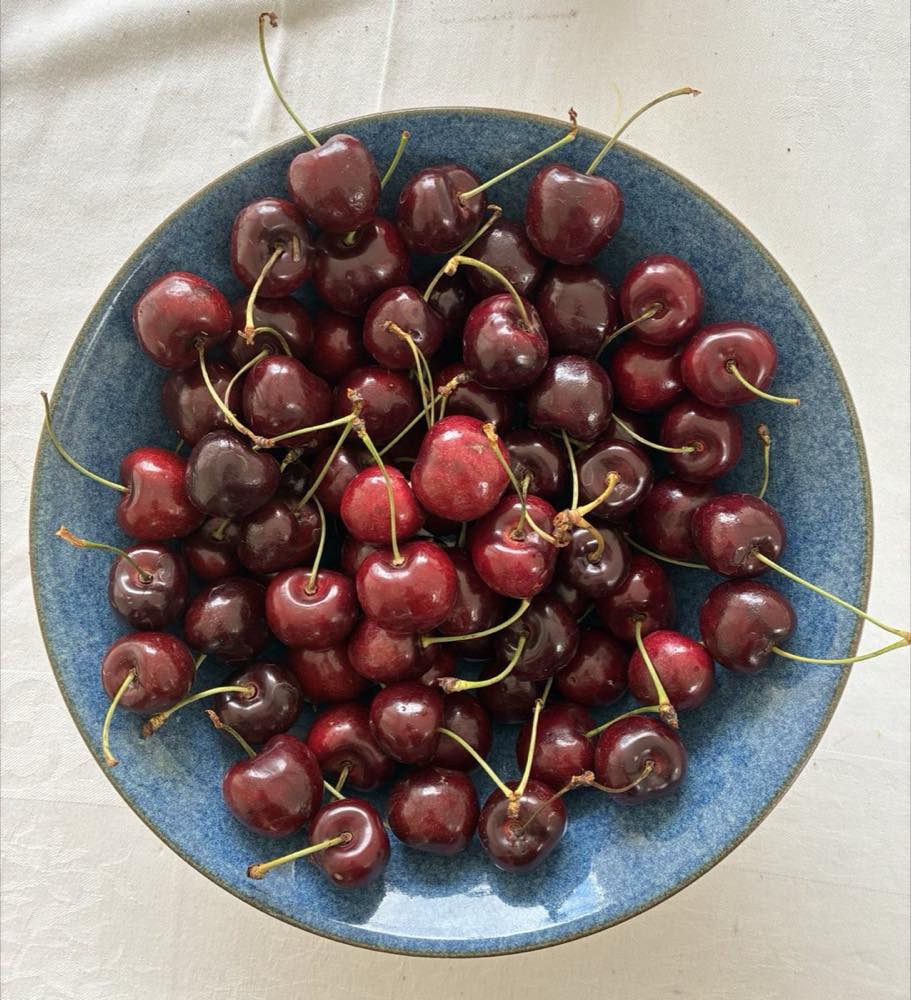
Sweet, dark cherries from a Black Tartarian, Bing, Lapins and Van mix, ripening over a few weeks for a long harvest. Cherries want cold winters, so this is a mid elevation tree, and a late frost during bloom will take the crop in some years. Lapins sets fruit alone and is the steadiest limb; net the tree against birds. This one carries three of the four.
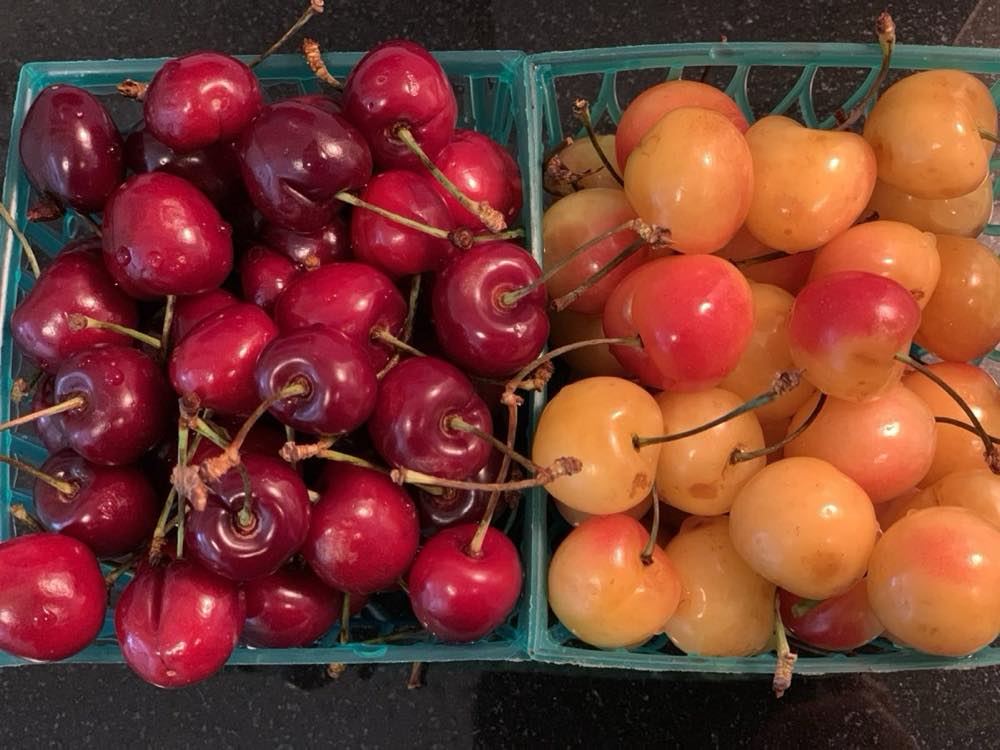
Rainier, Bing, Utah Giant and Van make a long season of sweet cherries from one tree. Utah Giant needs about 800 chill hours, so this mix sits at the colder end of mid elevation, in places like Prescott and Payson. A late frost during bloom costs the crop in some years, and the strongest limb takes over unless you prune it back. This one carries three of the four.
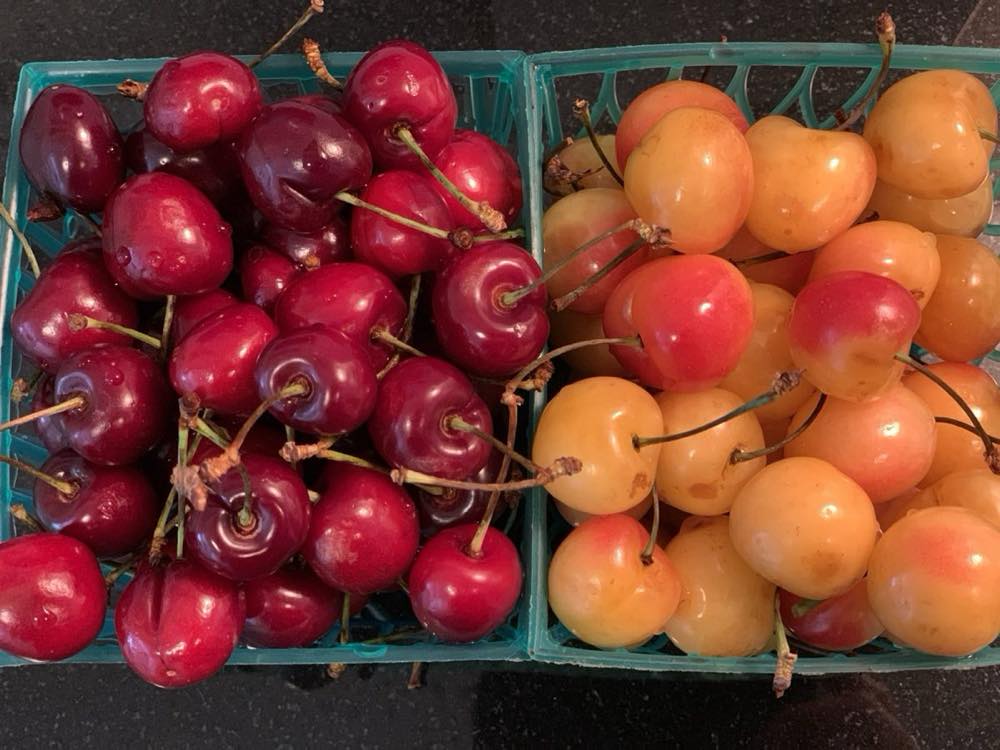
Multi-grafted
Rainier, Bing, Utah Giant and Van make a long season of sweet cherries from one tree. Utah Giant needs about 800 chill hours, so this mix sits at the colder end of mid elevation, in places like Prescott and Payson. A late frost during bloom costs the crop in some years, and the strongest limb takes over unless you prune it back.
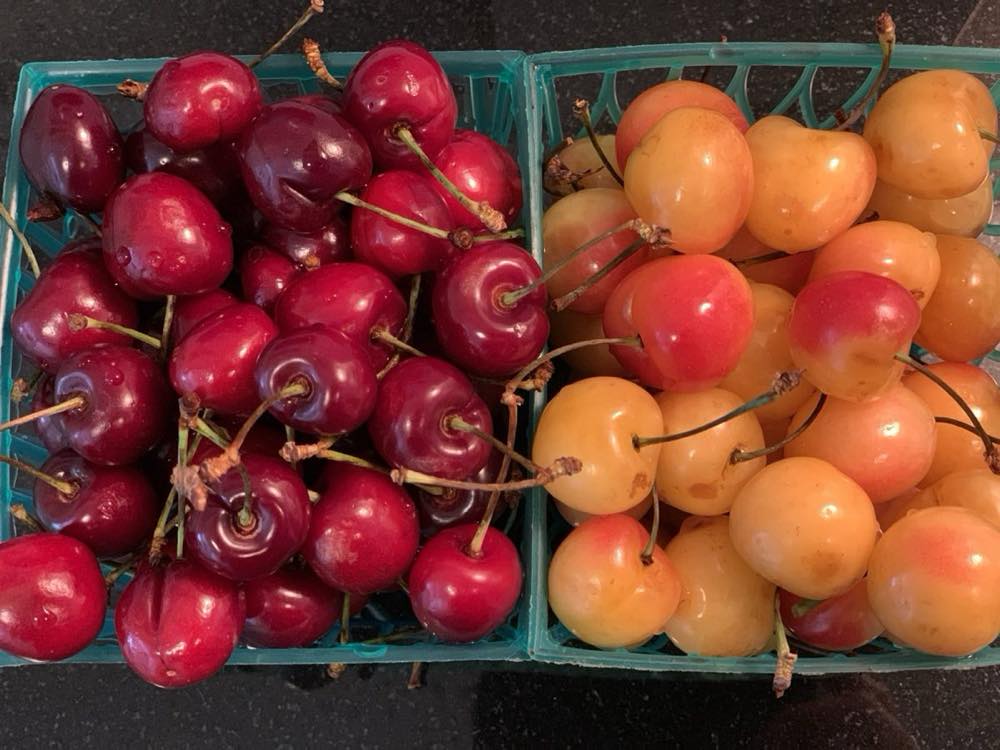
Multi-grafted
Yellow-blush Rainier, dark Bing and Van and early-setting Lapins make a long cherry season from a single hole. It belongs at mid elevation, where winters give the chill, but a late frost during bloom costs the crop in some years. Rainier bruises easily and attracts birds, so net the tree. This one carries two of the four.
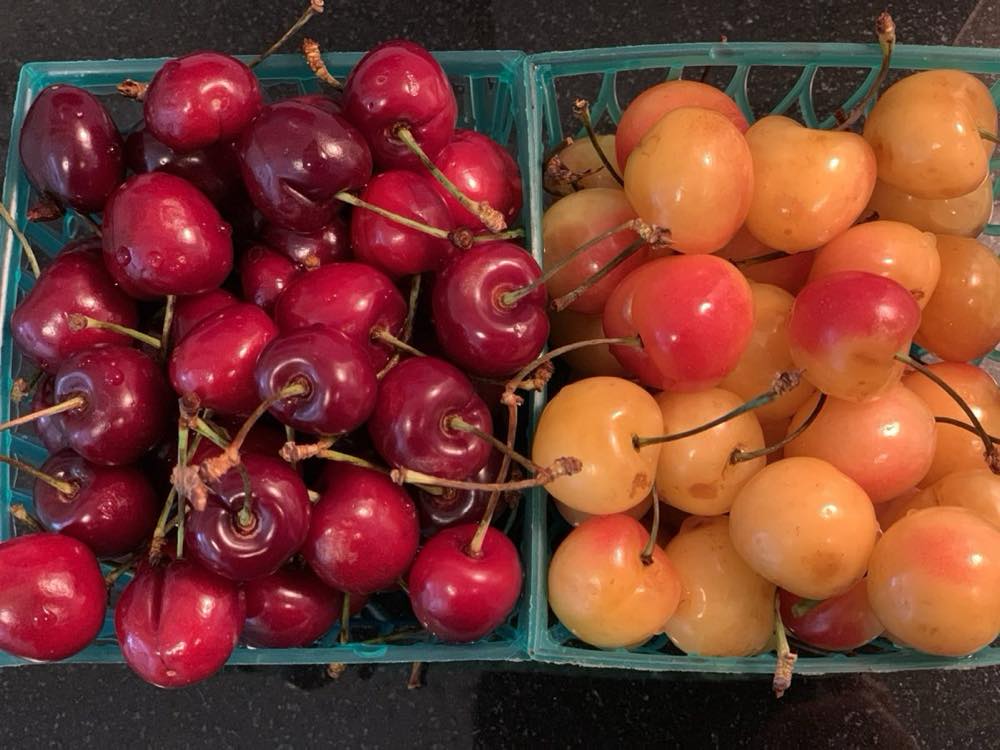
Multi-grafted
Yellow-blush Rainier, dark Bing and Van and early-setting Lapins make a long cherry season from a single hole. It belongs at mid elevation, where winters give the chill, but a late frost during bloom costs the crop in some years. Rainier bruises easily and attracts birds, so net the tree. This one carries three of the four.
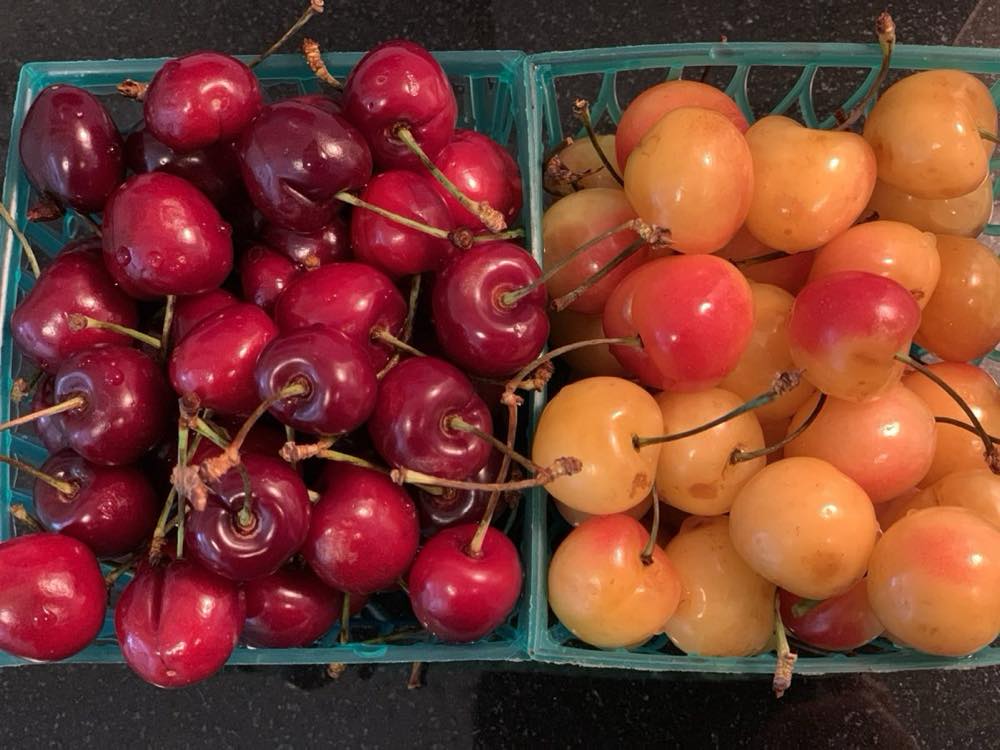
Multi-grafted
Yellow-blush Rainier, dark Bing and Van and early-setting Lapins make a long cherry season from a single hole. It belongs at mid elevation, where winters give the chill, but a late frost during bloom costs the crop in some years. Rainier bruises easily and attracts birds, so net the tree.
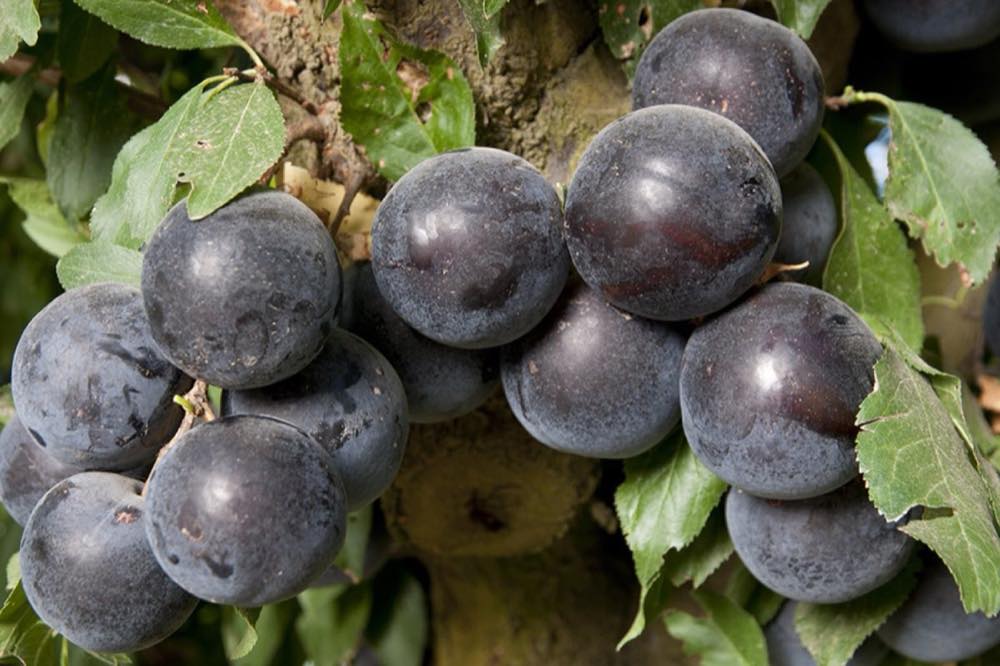
Multi-grafted
Sprite is sweet and freestone, Delight is tangy and clingstone, and each pollinates the other, so a single tree sets fruit alone. At about 400 chill hours it sits at the edge in Phoenix but is comfortable at mid elevation. The fruit hangs on for weeks, which stretches the harvest.
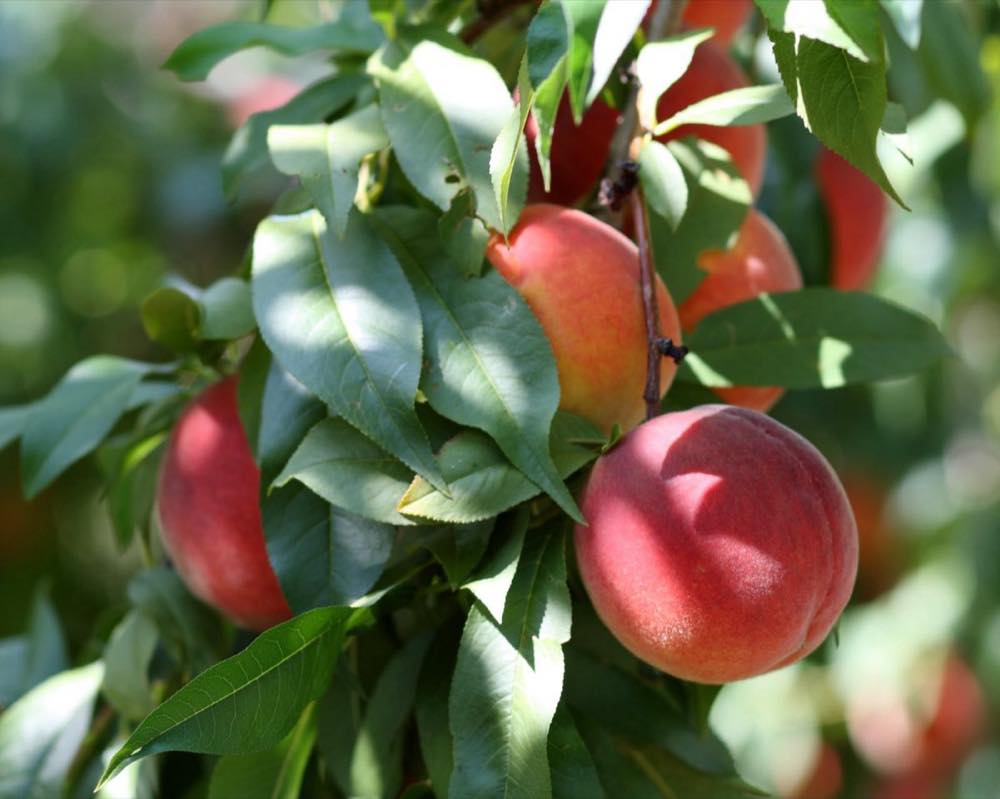
Multi-grafted
Classic cold-climate freestone peaches sharing one trunk, ripening from July into August. They need 700 to 900 chill hours, so this belongs at mid elevation in places like Prescott, Payson and Sierra Vista, not in Phoenix. A late frost can still take the blossom, and the strongest limb takes over unless you prune it back. This one carries two of the five.
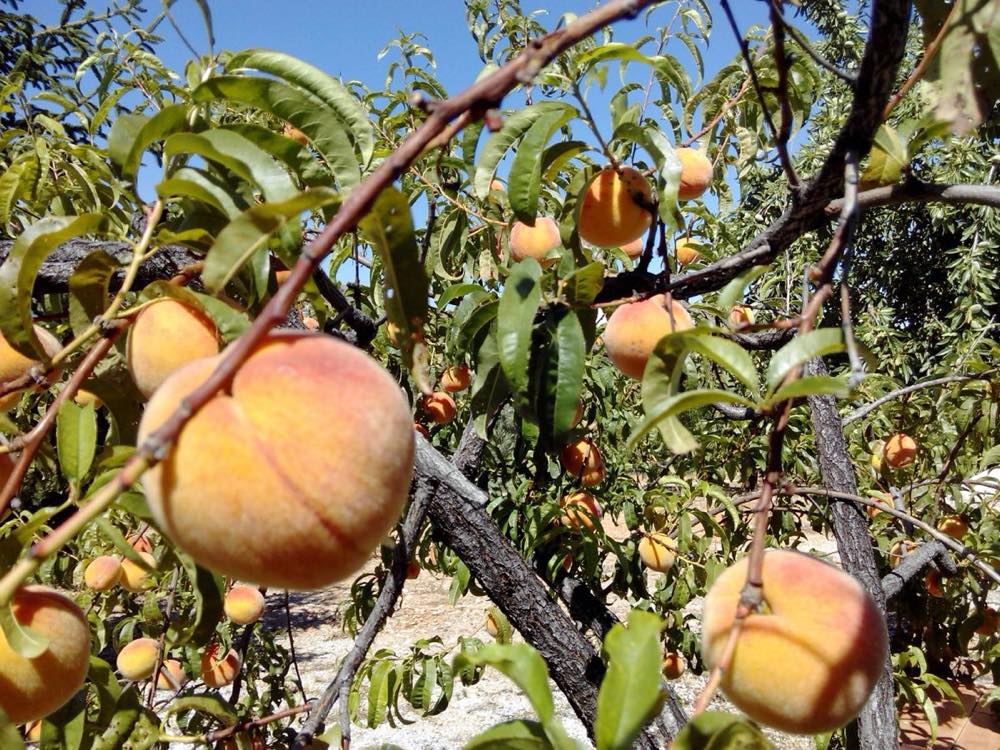
Multi-grafted
A run of warm-winter peaches that ripen from May into summer in the low desert, with May Pride and Eva's Pride first and August Pride last. Most need only 100 to 300 chill hours, but June Pride wants about 500 and may set lightly in Phoenix, so thin early and prune the strongest limb back. This one carries two of the five.
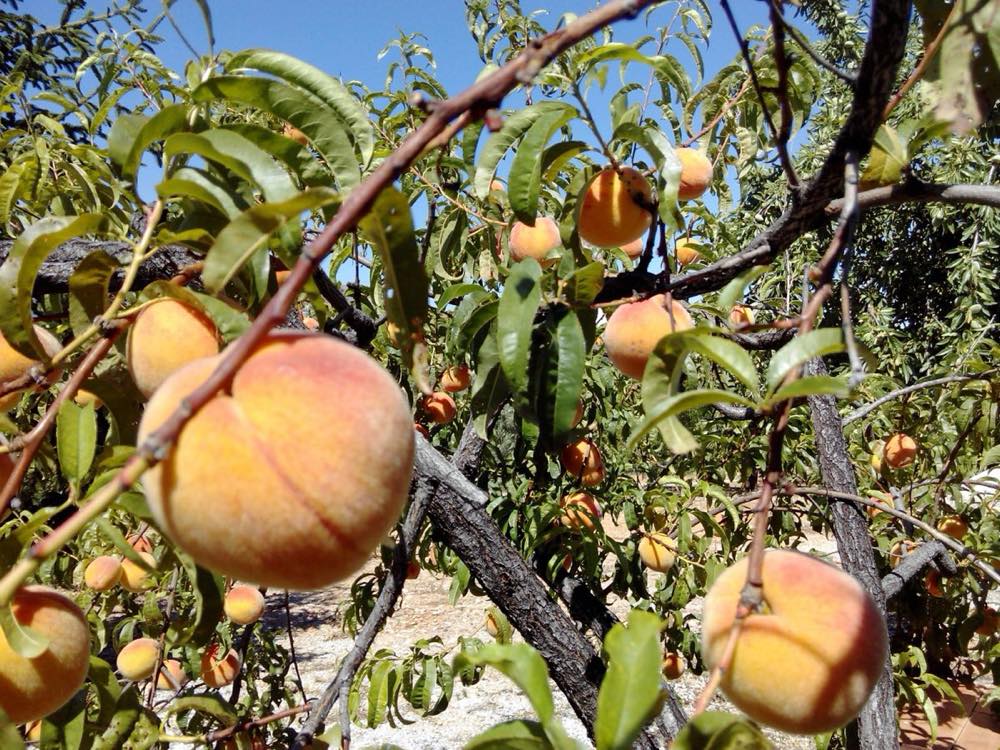
A mix of white Strawberry Free and Babcock with yellow Gold Dust, July Elberta and Scarlet Robe, spreading ripening from late June into August. Most need 400 to 550 chill hours and Babcock wants a milder winter, so it suits the warmer side of mid elevation (Sedona, Willcox, Sierra Vista) better than Phoenix. Late frost can catch early blooms, and a winter copper spray helps against leaf curl. This one carries two of the five.
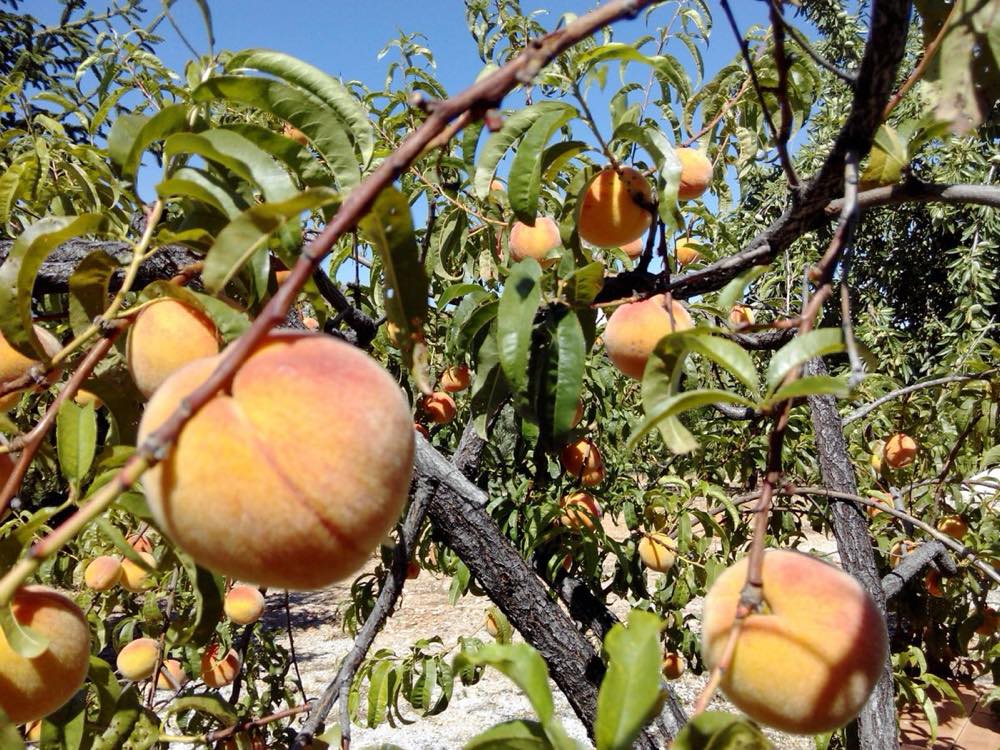
Multi-grafted
A mix of white Strawberry Free and Babcock with yellow Gold Dust, July Elberta and Scarlet Robe, spreading ripening from late June into August. Most need 400 to 550 chill hours and Babcock wants a milder winter, so it suits the warmer side of mid elevation (Sedona, Willcox, Sierra Vista) better than Phoenix. Late frost can catch early blooms, and a winter copper spray helps against leaf curl. This one carries three of the five.
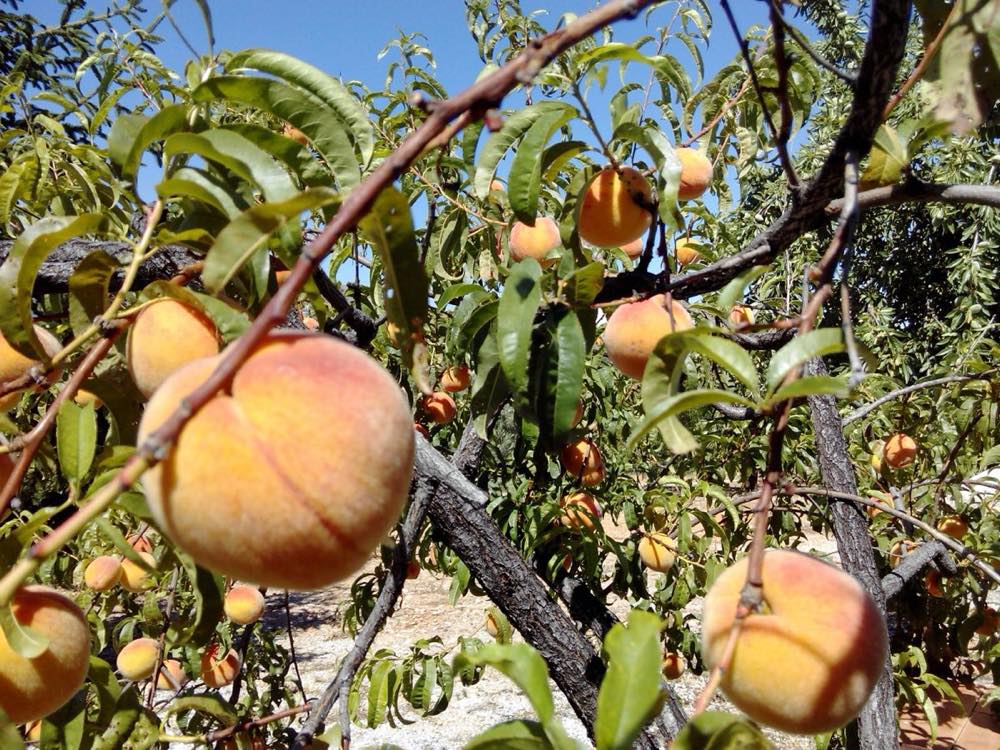
A mix of white Strawberry Free and Babcock with yellow Gold Dust, July Elberta and Scarlet Robe, spreading ripening from late June into August. Most need 400 to 550 chill hours and Babcock wants a milder winter, so it suits the warmer side of mid elevation (Sedona, Willcox, Sierra Vista) better than Phoenix. Late frost can catch early blooms, and a winter copper spray helps against leaf curl. This one carries four of the five.
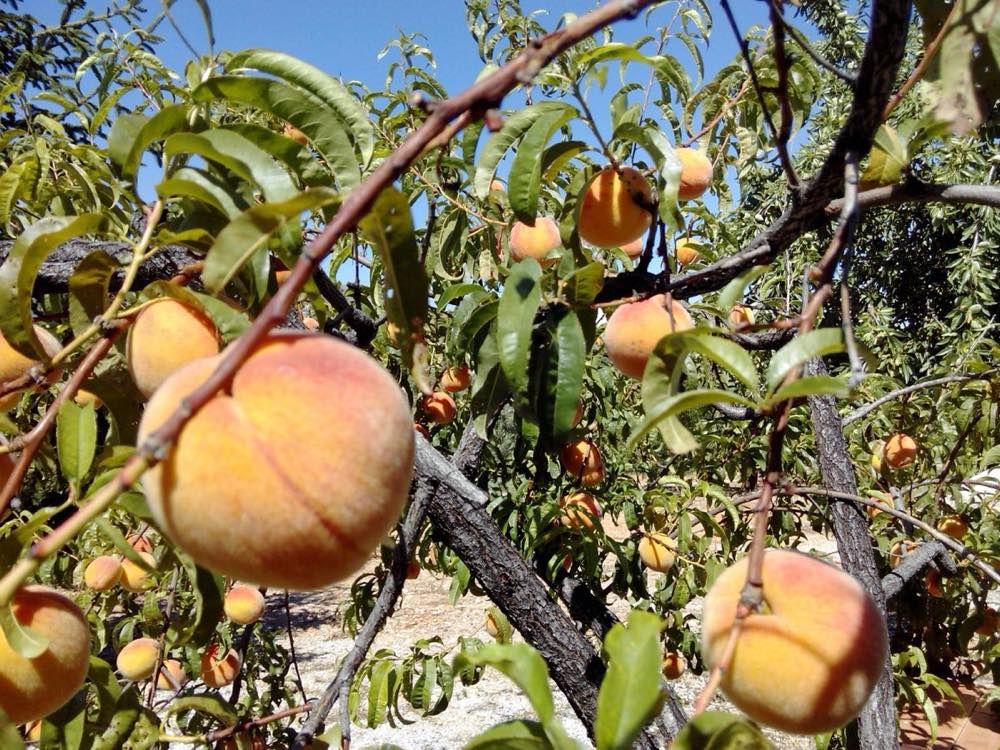
Peaches chosen to shrug off leaf curl, the fungus that puckers new growth in cool, wet springs, which is a real issue around Prescott and Payson. They need 600 to 800 chill hours, so this is a mid elevation tree. Prune the strongest limb back each summer, and keep the weakest facing south or west. This one carries two of the four.
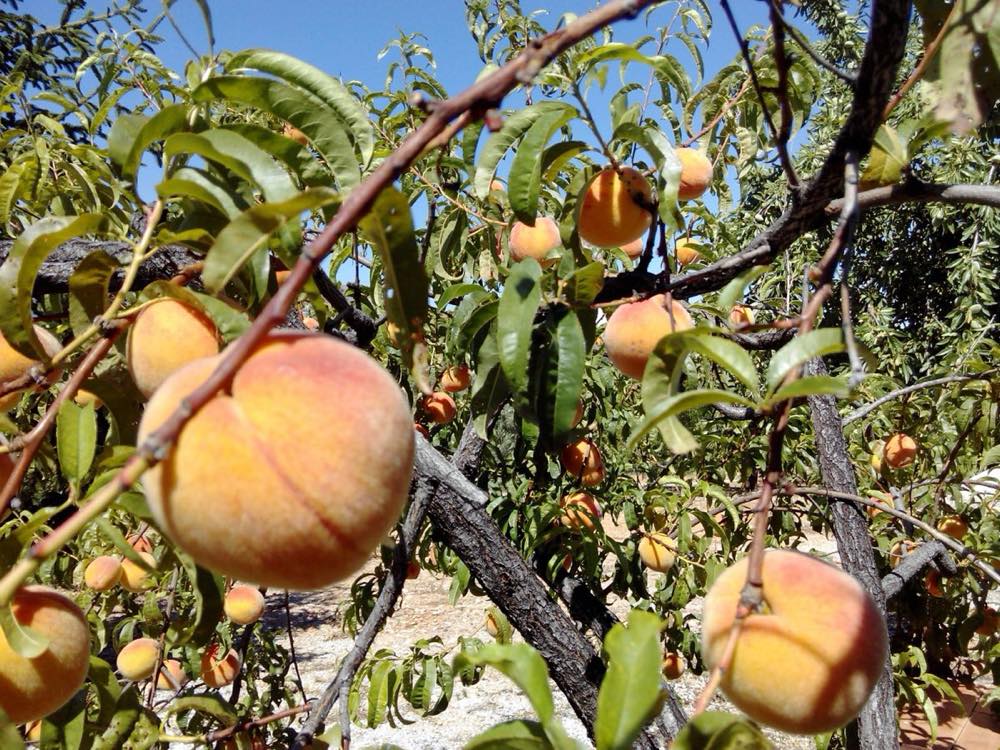
Multi-grafted
Peaches ripening from late April through June, ahead of the worst heat in Phoenix, Yuma and lower Tucson. They need only 100 to 250 chill hours, and Mid-Pride is a favorite yellow freestone for Phoenix. Thin the fruit early and often, and put the weakest limb on the south or west side so it is not shaded out. This one carries two of the five.
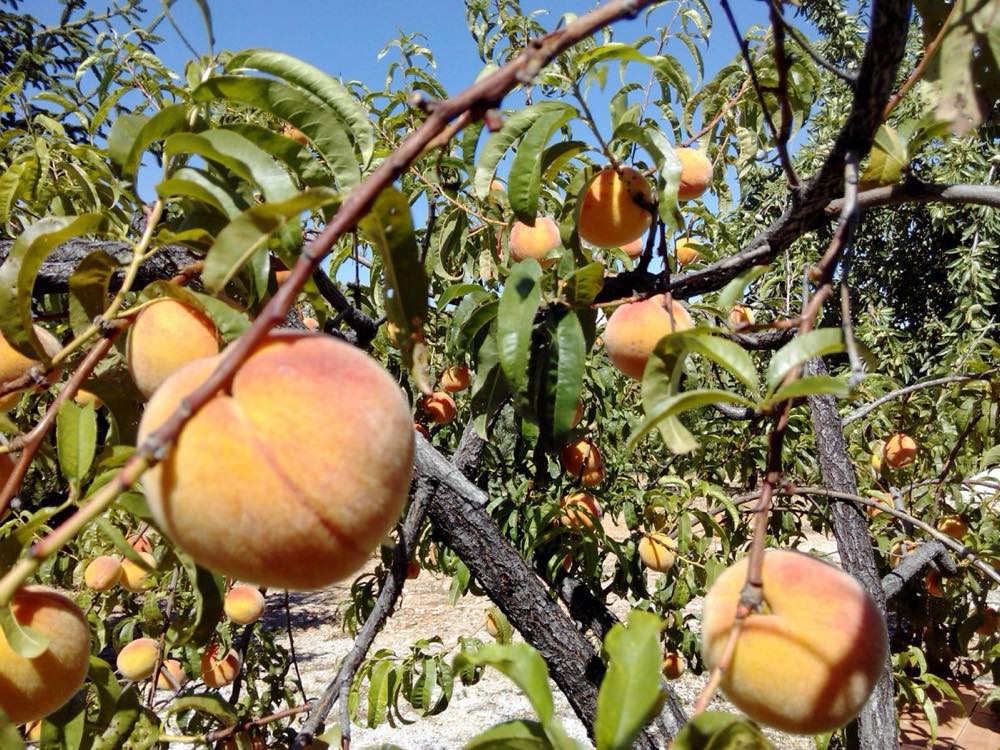
Multi-grafted
Peaches ripening from late April through June, ahead of the worst heat in Phoenix, Yuma and lower Tucson. They need only 100 to 250 chill hours, and Mid-Pride is a favorite yellow freestone for Phoenix. Thin the fruit early and often, and put the weakest limb on the south or west side so it is not shaded out. This one carries four of the five.
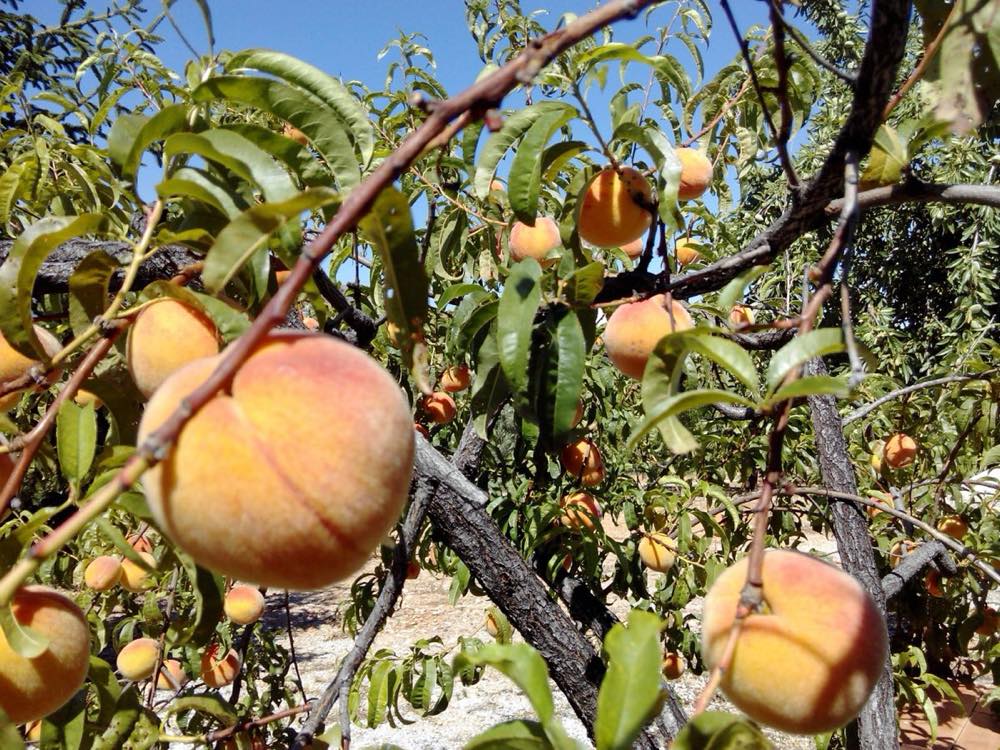
Peaches ripening from late April through June, ahead of the worst heat in Phoenix, Yuma and lower Tucson. They need only 100 to 250 chill hours, and Mid-Pride is a favorite yellow freestone for Phoenix. Thin the fruit early and often, and put the weakest limb on the south or west side so it is not shaded out.
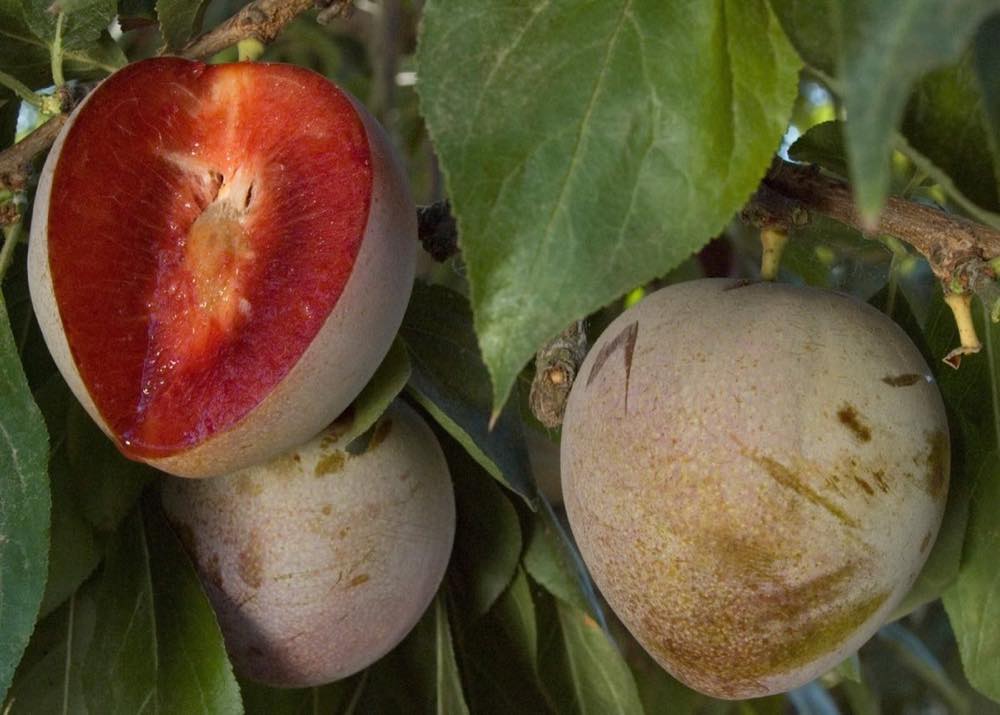
Japanese plums ripening from June through September, a few weeks earlier in the low desert. They need 250 to 500 chill hours, so it works at mid elevation and in cooler low-desert spots, though Nubiana and Elephant Heart are borderline in Phoenix. Prune the strongest limb back each summer. This one carries two of the five.
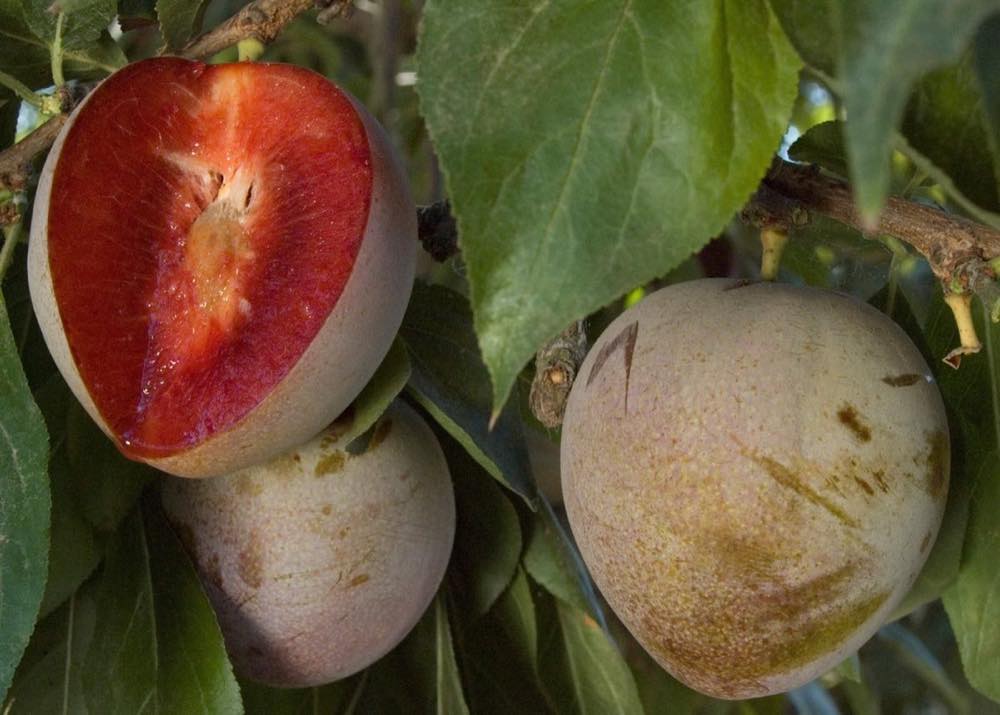
Japanese plums ripening from June through September, a few weeks earlier in the low desert. They need 250 to 500 chill hours, so it works at mid elevation and in cooler low-desert spots, though Nubiana and Elephant Heart are borderline in Phoenix. Prune the strongest limb back each summer.
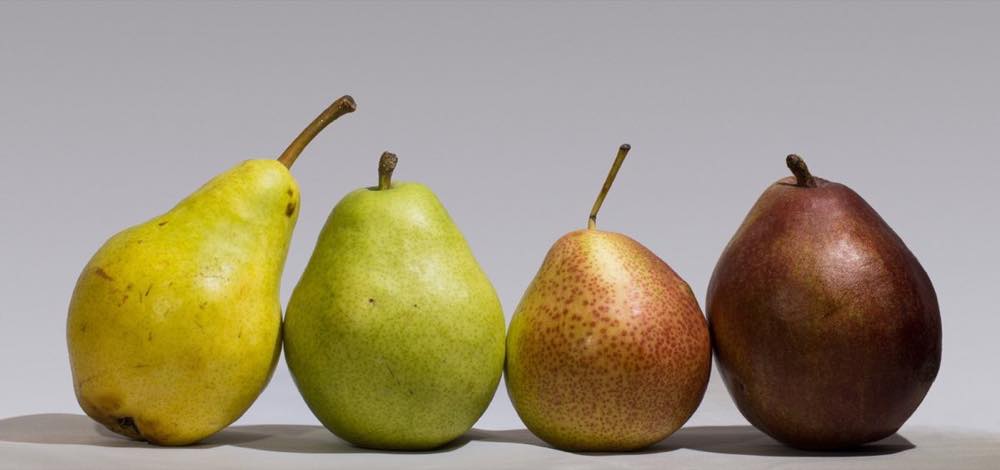
Multi-grafted
Comice, D'Anjou, Bartlett and Bosc, the four classic European pears, share the trunk. They need 500 to 800 chill hours and belong at mid elevation. Pick pears hard and let them soften indoors, and watch for fire blight in warm, damp springs. Prune back the strongest limb so one variety does not shade the rest. This one carries two of the four.
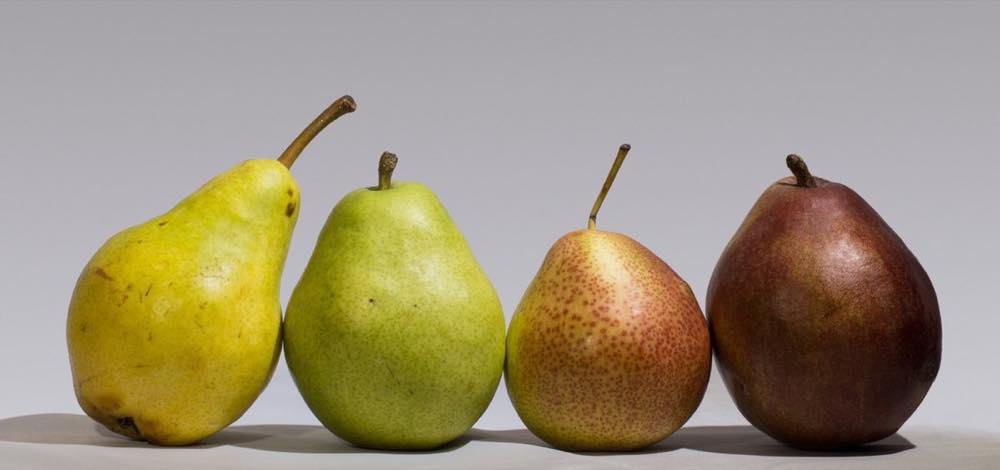
Pears chosen for resisting fire blight, the bacterial disease that blackens shoots in warm, damp springs. They need 200 to 800 chill hours, so this fits mid elevation, and Kieffer is the easy-going limb that copes with the least cold. Pick pears hard and let them ripen indoors. This one carries two of the four.
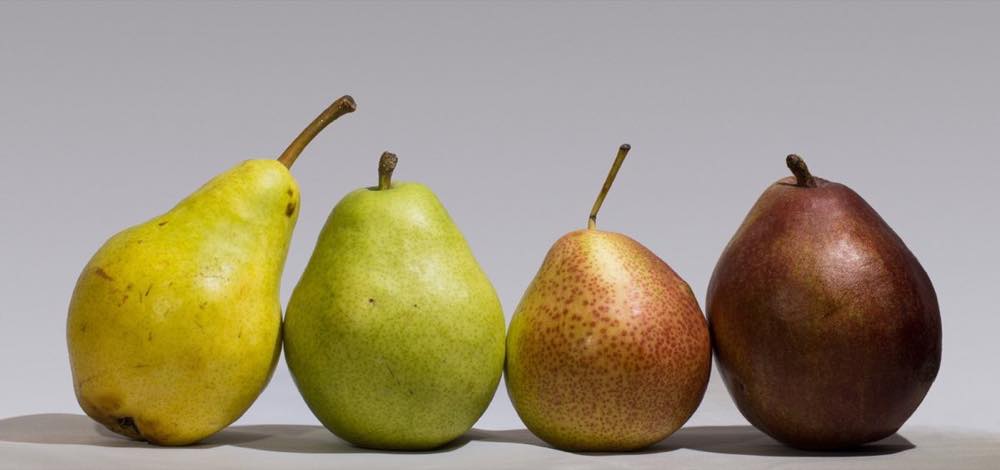
Comice, D'Anjou, Bartlett and Bosc, the four classic European pears, share the trunk. They need 500 to 800 chill hours and belong at mid elevation. Pick pears hard and let them soften indoors, and watch for fire blight in warm, damp springs. Prune back the strongest limb so one variety does not shade the rest. This one carries three of the four.
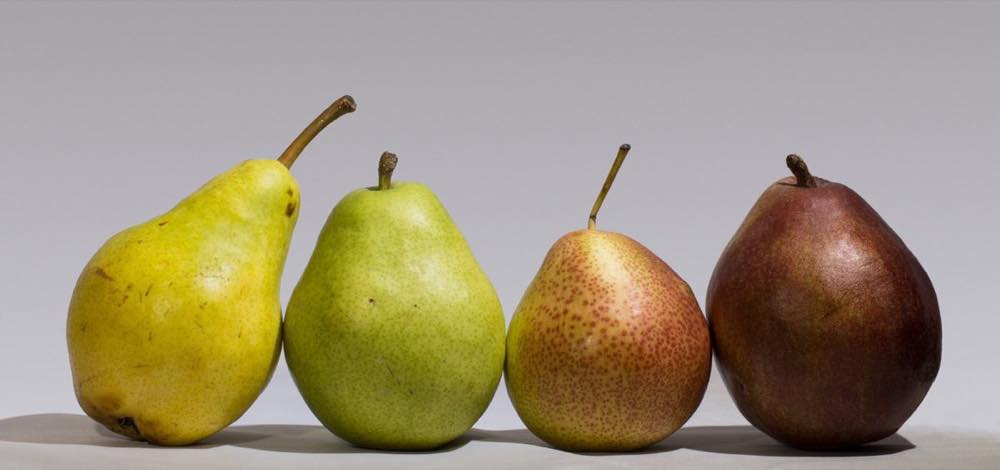
Multi-grafted
Pears chosen for resisting fire blight, the bacterial disease that blackens shoots in warm, damp springs. They need 200 to 800 chill hours, so this fits mid elevation, and Kieffer is the easy-going limb that copes with the least cold. Pick pears hard and let them ripen indoors. This one carries three of the four.
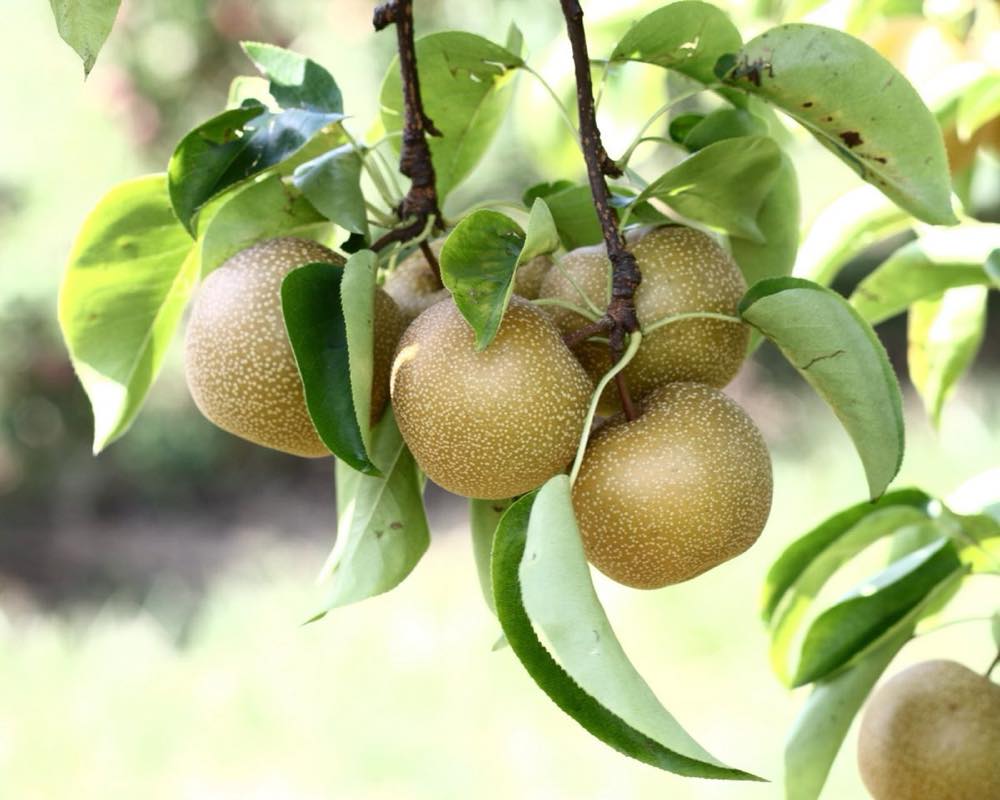
Crisp, juicy pears that eat like an apple, with Hosui the favorite for flavor. The low chill means it works in the low desert and at mid elevation, though early blooms can be nipped by frost at higher sites. Thin to one pear per cluster, and watch for fire blight in warm, damp springs. This one carries two of the four.
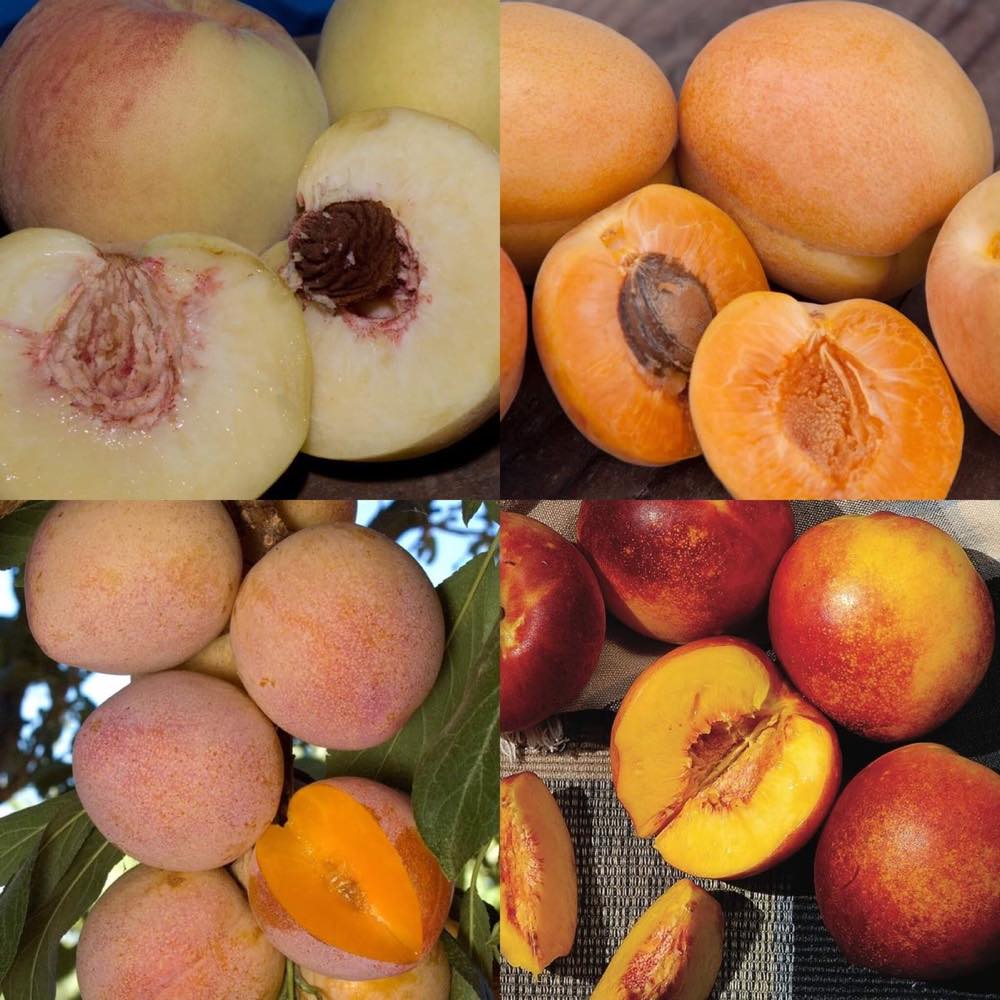
Peach, nectarine, apricot and plum varieties picked for cold winters, sharing one trunk. They need 700 to 1,000 chill hours, so it belongs at mid elevation in places like Prescott, Payson and Sierra Vista, not in Phoenix. Harcot apricot blooms later than most, which helps in frosty springs, and the strongest limb should be pruned back each summer. This one carries two of the five.
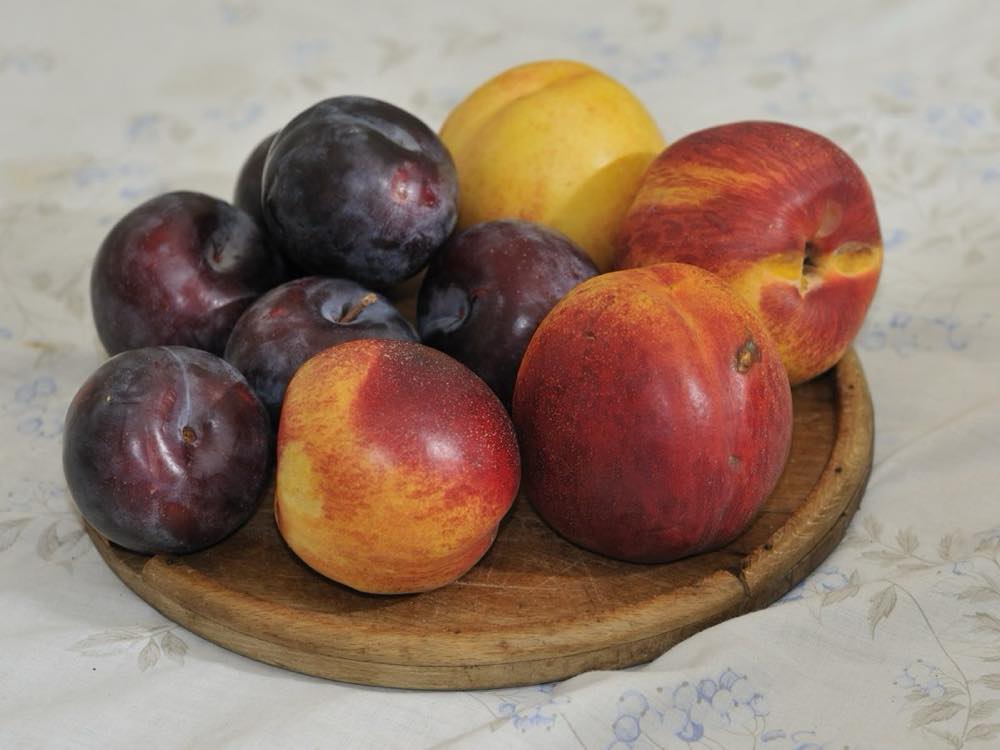
Multi-grafted
Peach, nectarine, plum and apricot varieties sharing one trunk, ripening from late June into August. It suits mid elevation yards with 400 to 700 chill hours, and Independence nectarine is the one asking for the most. The apricot and peach bloom early, so a late frost can cost a year, and the strongest limb takes over unless pruned back. This one carries two of the five.
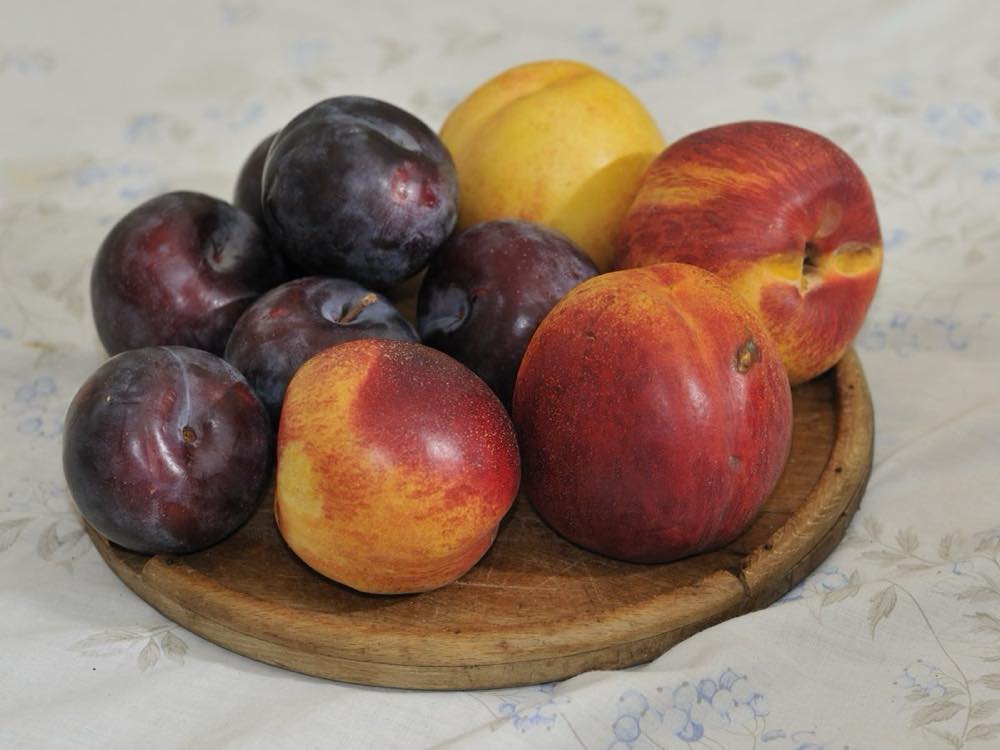
Peach, nectarine, plum and apricot varieties sharing one trunk, ripening from June into August. At 250 to 500 chill hours it is a stretch in Phoenix, since July Elberta and Fantasia ask for the most, but it works in cooler low-desert pockets and at mid elevation. Nemaguard rootstock resist the root-knot nematodes common in desert soil. This one carries two of the five.
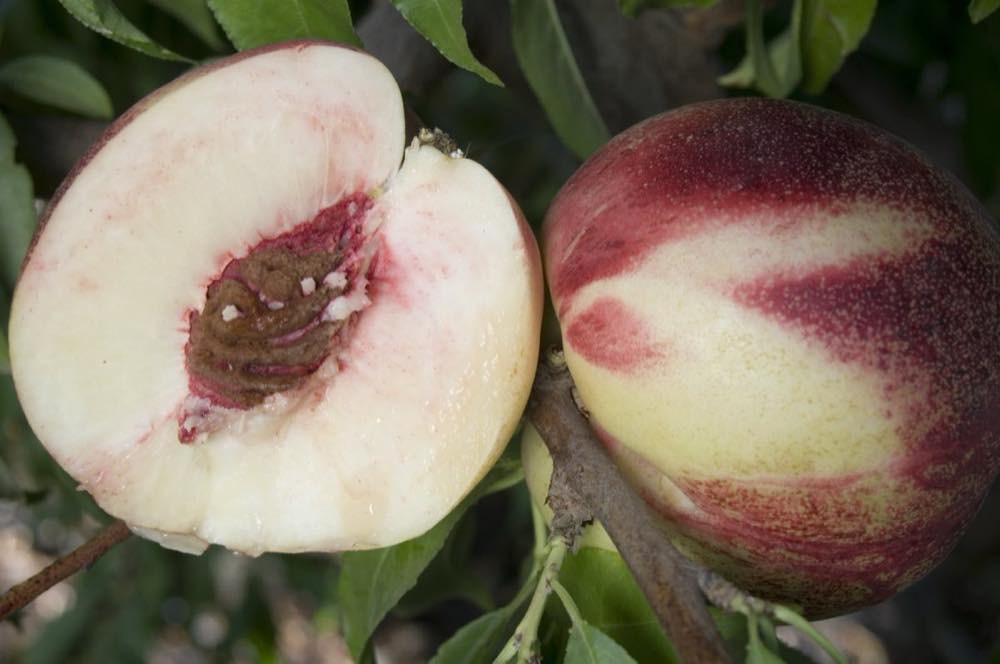
Multi-grafted
White-fleshed peaches and nectarines sharing one trunk, sweet and low in acid, ripening from mid July into August. Most need 600 to 800 chill hours, with Babcock at only 250, and Babcock wants a milder winter, so it fits the warmer side of mid elevation. Early blooms can be nipped by a late frost, so keep cloth handy, and prune the strongest limb back each summer. This one carries two of the five.
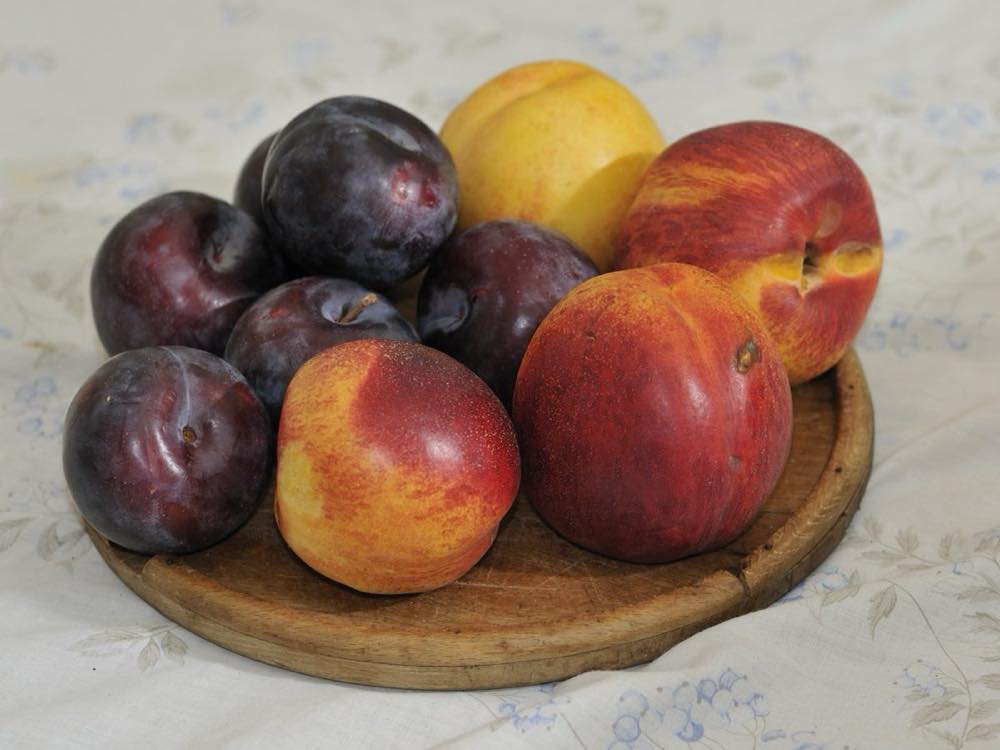
Multi-grafted
Peach, nectarine, plum and apricot varieties sharing one trunk, ripening from June into August. At 250 to 500 chill hours it is a stretch in Phoenix, since July Elberta and Fantasia ask for the most, but it works in cooler low-desert pockets and at mid elevation. Nemaguard rootstock resist the root-knot nematodes common in desert soil. This one carries three of the five.
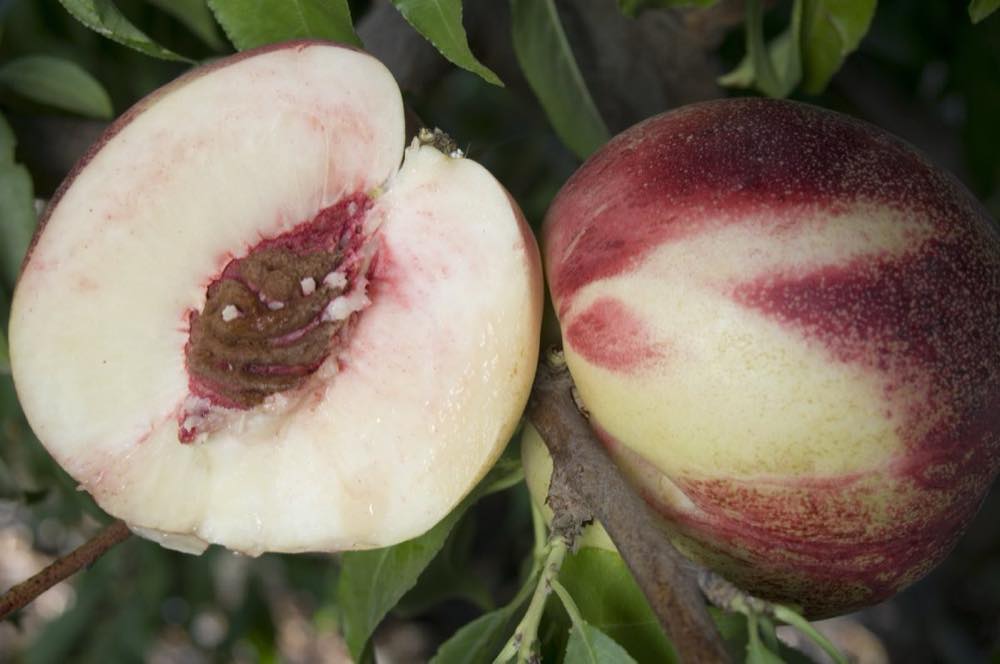
Multi-grafted
White-fleshed peaches and nectarines sharing one trunk, sweet and low in acid, ripening from mid July into August. Most need 600 to 800 chill hours, with Babcock at only 250, and Babcock wants a milder winter, so it fits the warmer side of mid elevation. Early blooms can be nipped by a late frost, so keep cloth handy, and prune the strongest limb back each summer. This one carries three of the five.
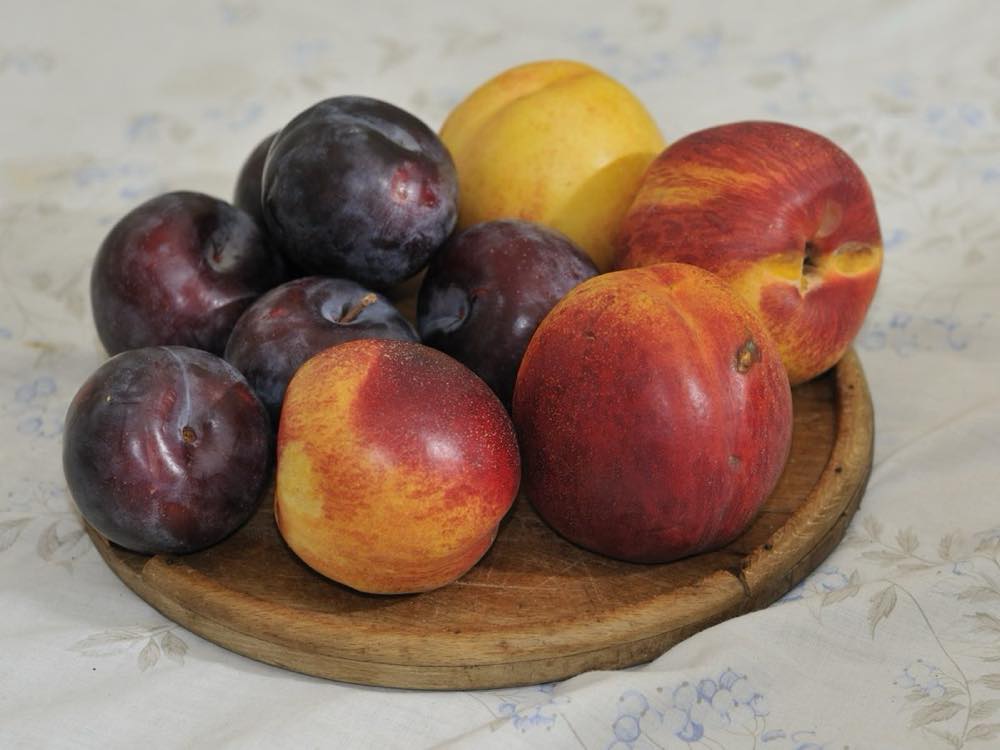
Multi-grafted
Peach, nectarine, plum and apricot varieties sharing one trunk, ripening from late June into August. It suits mid elevation yards with 400 to 700 chill hours, and Independence nectarine is the one asking for the most. The apricot and peach bloom early, so a late frost can cost a year, and the strongest limb takes over unless pruned back. This one carries four of the five.
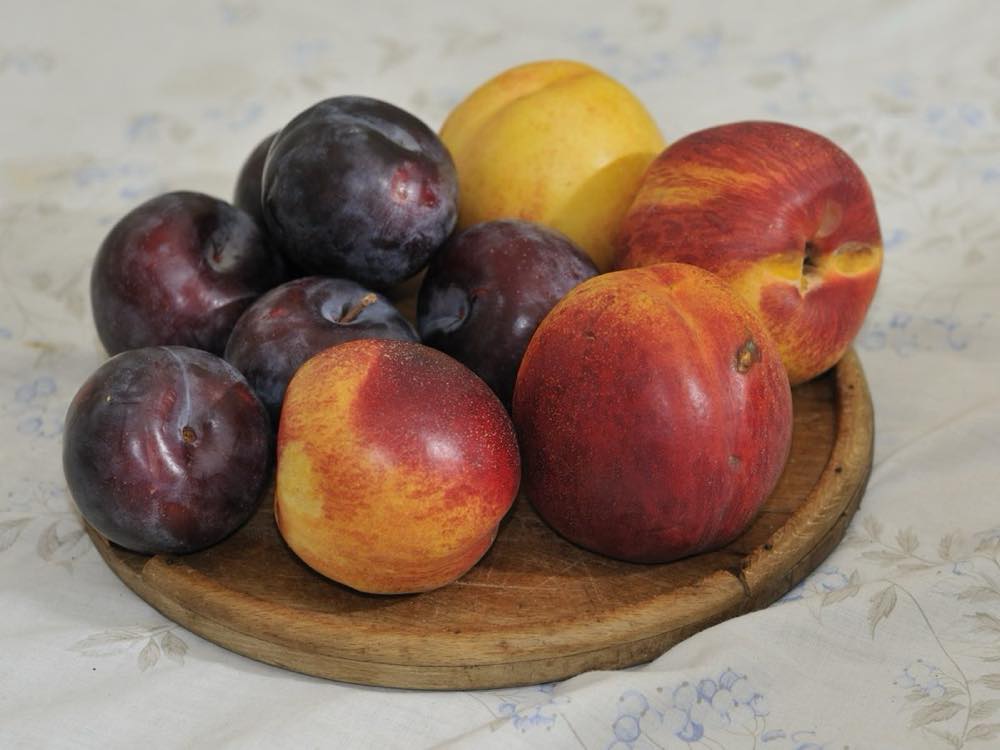
Multi-grafted
Peach, nectarine, plum and apricot varieties sharing one trunk, ripening from late June into August. It suits mid elevation yards with 400 to 700 chill hours, and Independence nectarine is the one asking for the most. The apricot and peach bloom early, so a late frost can cost a year, and the strongest limb takes over unless pruned back.
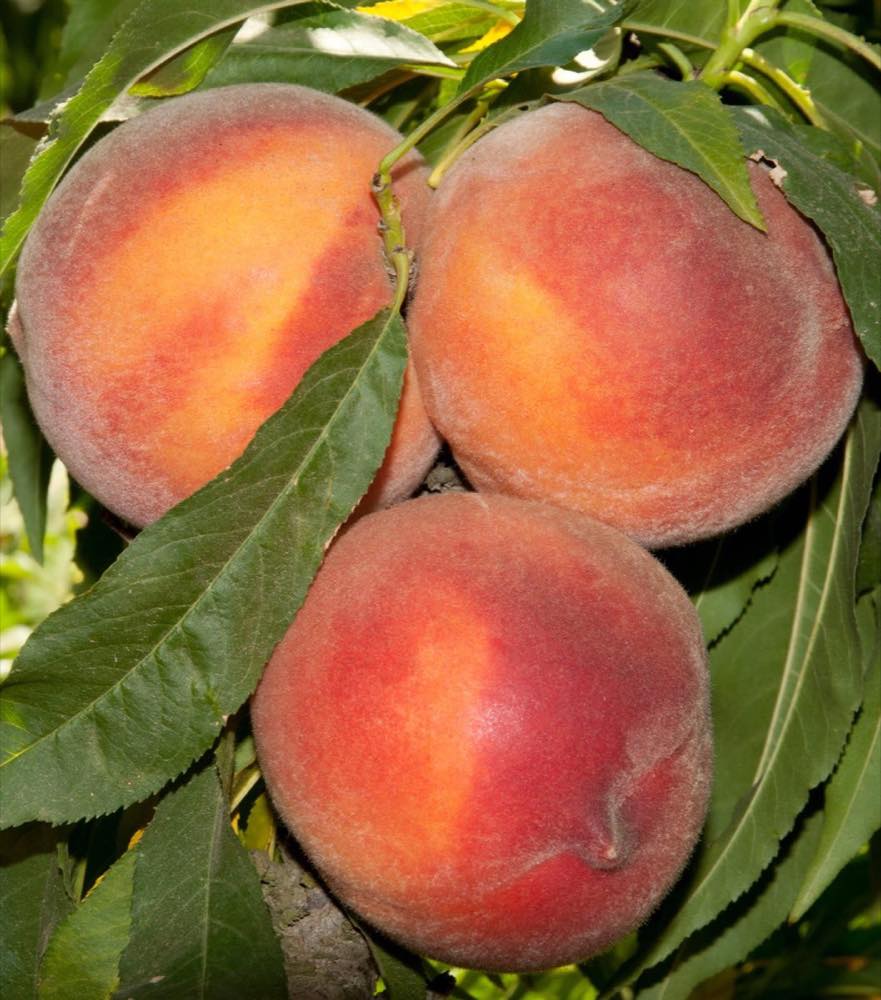
A genetic dwarf nectarine and peach on one small tree, about 5 to 6 feet tall and well suited to patios and containers. Both need 400 chill hours or less, so it does well across the low desert, ripening in late May and June. Thin the fruit hard, because a dwarf will overbear and snap.
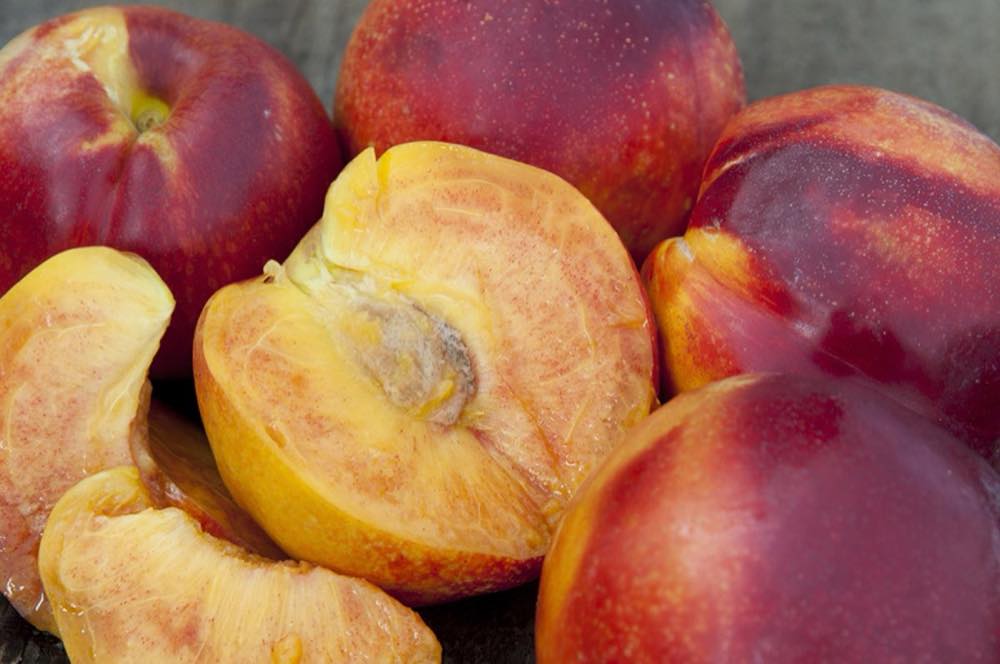
A genetic dwarf nectarine and peach on one small tree, about 5 to 6 feet tall and happy in a big pot or a tight yard. Both need 400 chill hours or less, so it does well across the low desert, with fruit in late May and June. Thin the fruit hard, because a dwarf will overbear and snap.
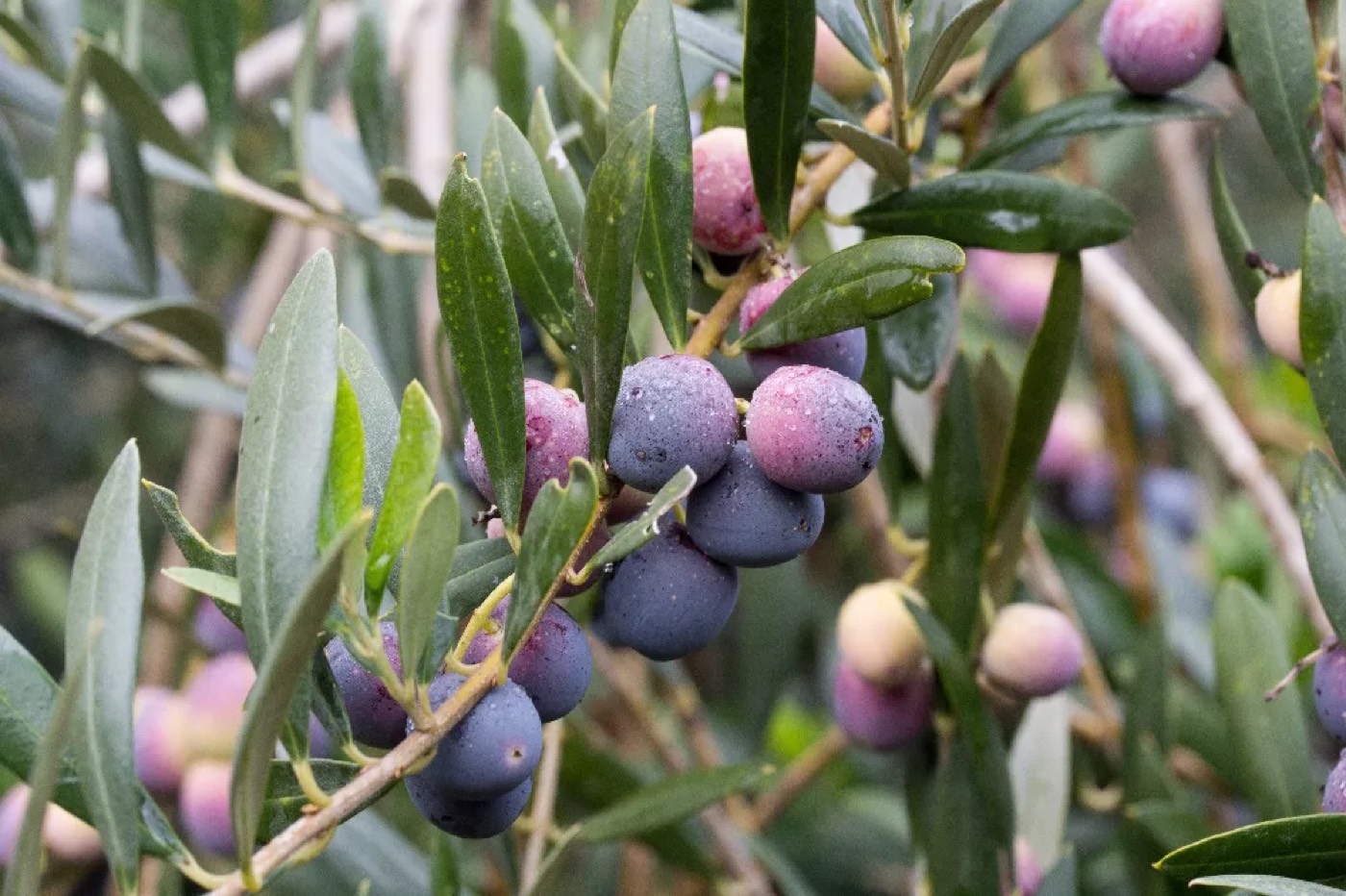
Olives
Small, mild, fruity olives with very little bitterness and a high oil content, from a compact tree that is moderately frost hardy. Self-fruitful but heavier with Arbosana nearby. Best in the low desert, where damage starts around the mid teens, and check city pollen rules first.
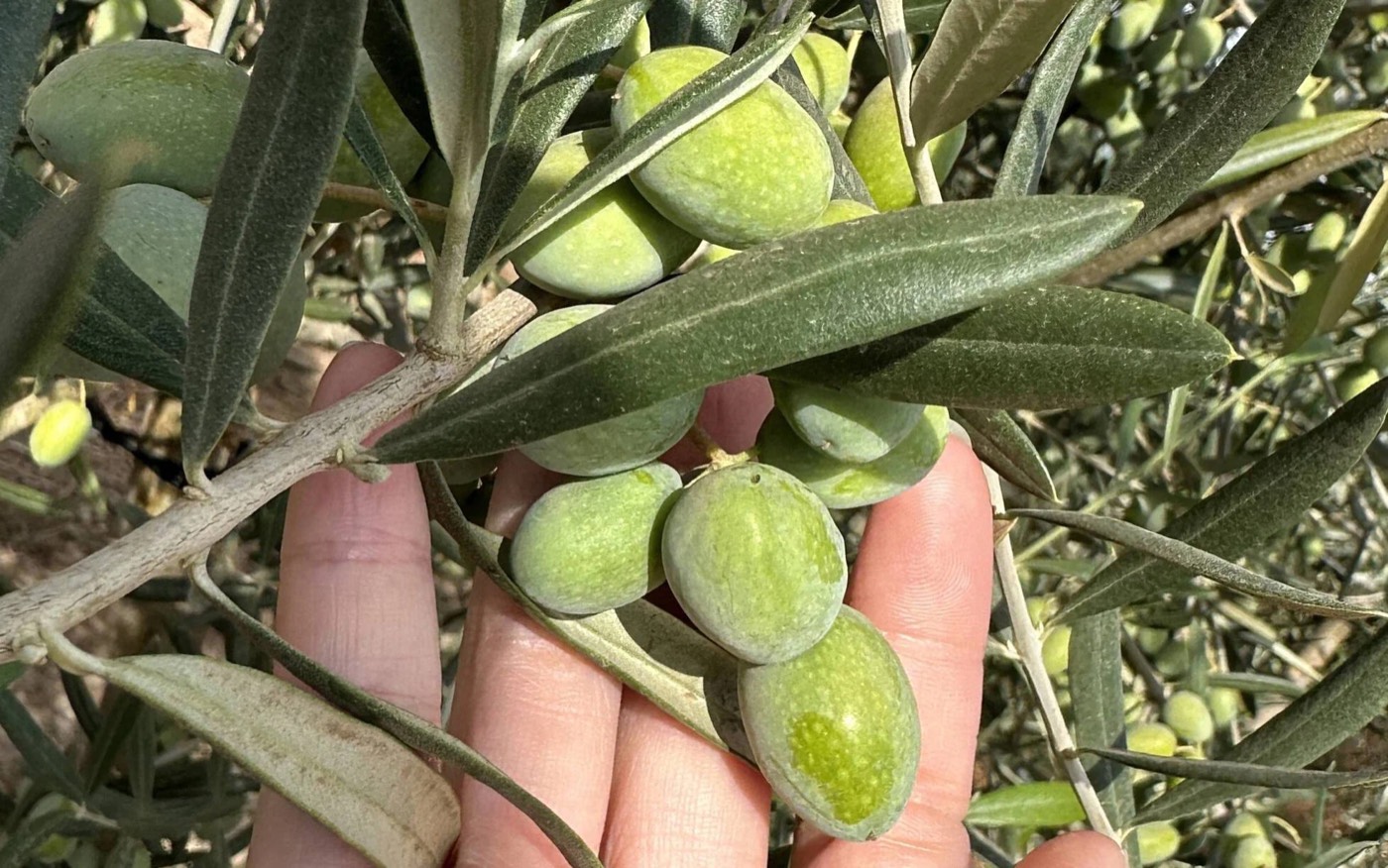
Olives
A dwarf olive with big crops of small olives, rich in premium oil with a more robust, balanced flavor than Arbequina. It ripens about three weeks after Arbequina and is less cold hardy, so keep it in the low desert and out of frost pockets. Pair it with Arbequina for heavier crops and check city pollen rules first.
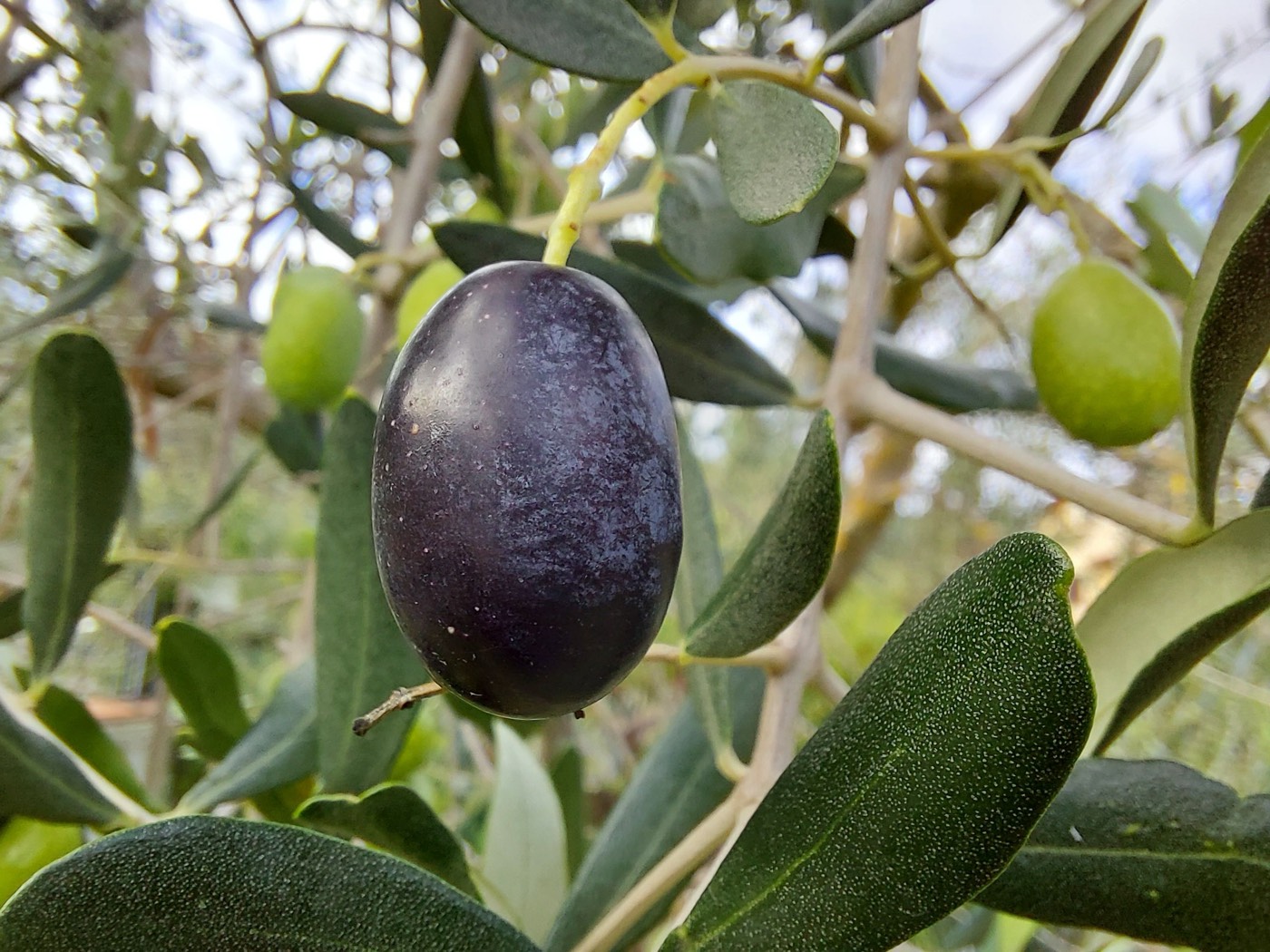
Olives
One of the great Tuscan oil olives, with a balanced fruity, bitter and peppery flavor, on a vigorous upright tree that ripens late, around November. It crops well in the low desert and is self-fruitful, though heavier with Pendolino or Leccino nearby. Check city pollen rules first.
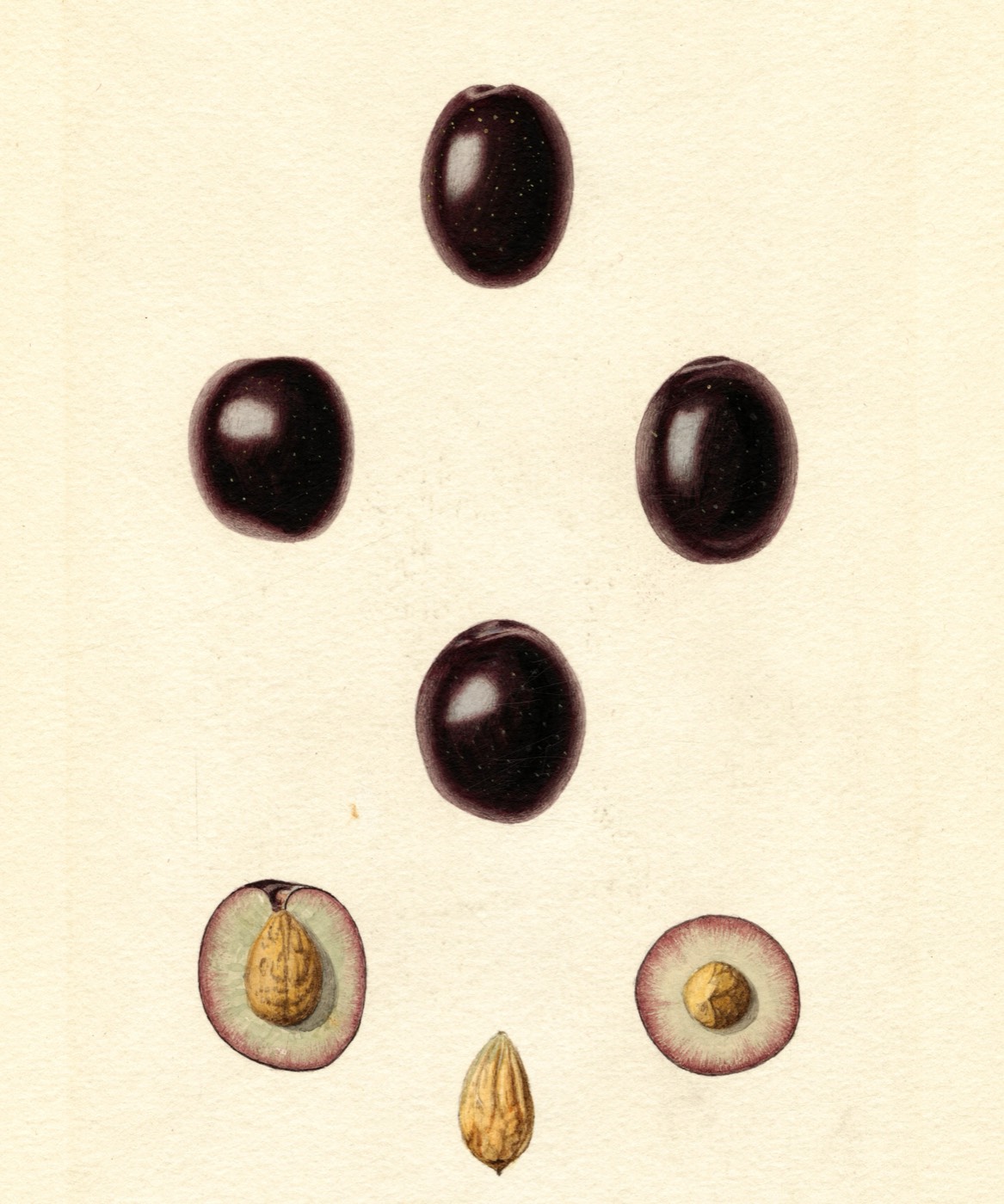
Olives
The classic table olive, large and good cured green or black, though like any olive it is bitter until cured. It ripens earliest of the group, giving time to cure before the holidays. A low desert tree with only moderate cold hardiness, so check city pollen rules first.
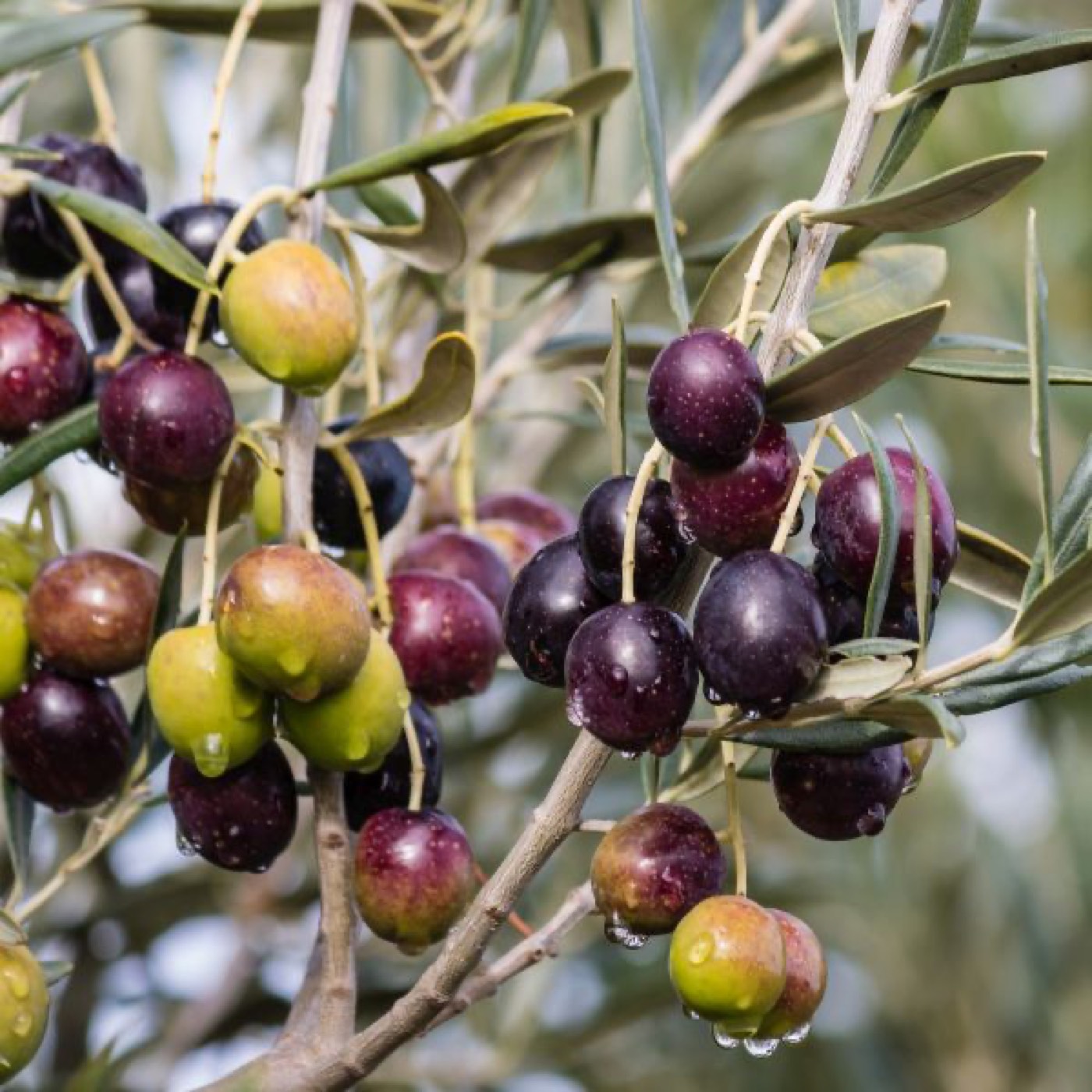
Olives
The all-round home garden olive, good for curing or for oil, and hardier in the cold than most. It grows into a big, handsome evergreen that works as an edible landscape tree, but damage still comes in the teens, so it stays a low desert tree. Check city pollen rules first.
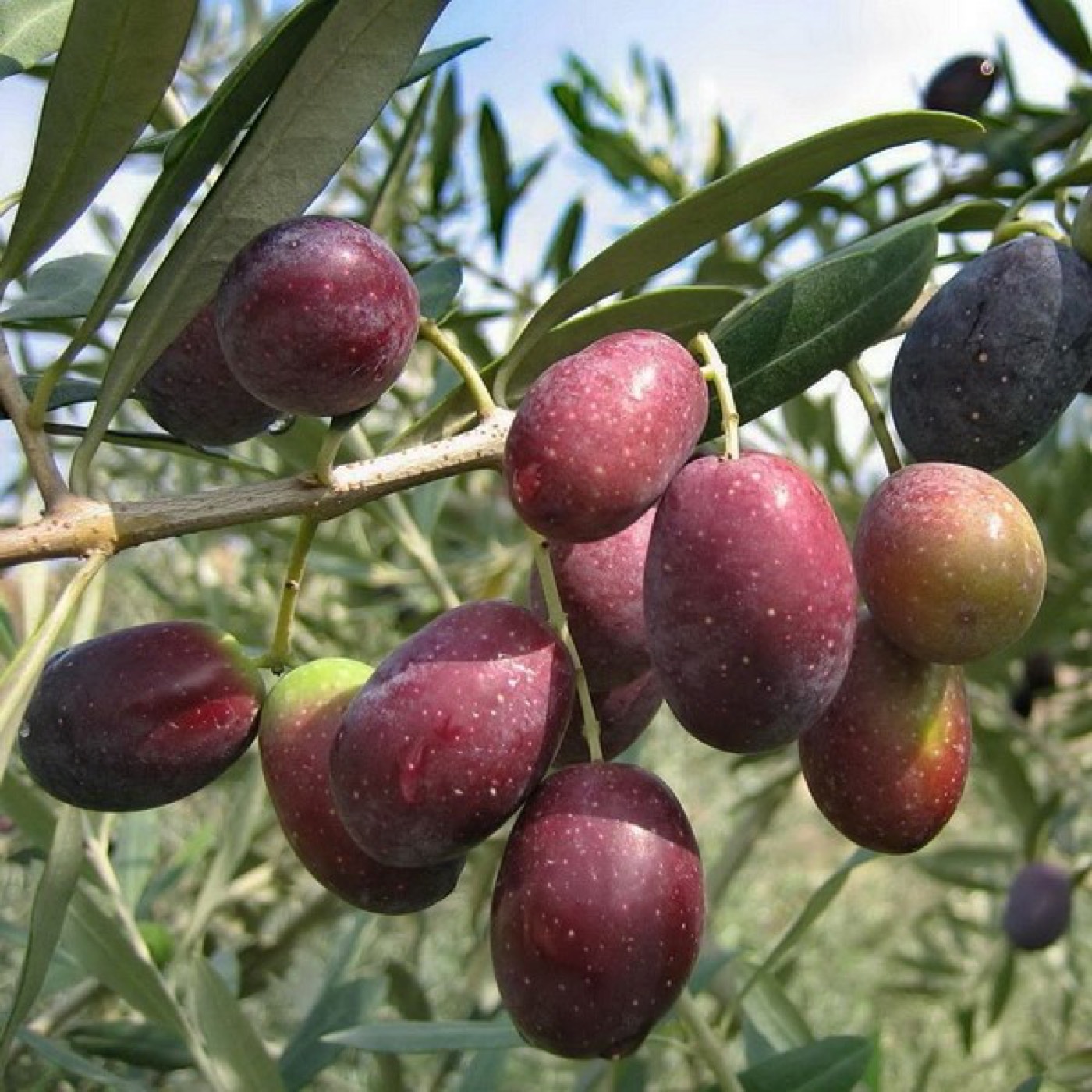
Olives
In Tuscany this is the olive planted to pollinate others, with small fruit and a mild oil, but it also makes a dense, weeping landscape tree with good cold hardiness. It cannot set fruit on its own, so it needs a partner such as Frantoio. Low desert tree; check city pollen rules first.
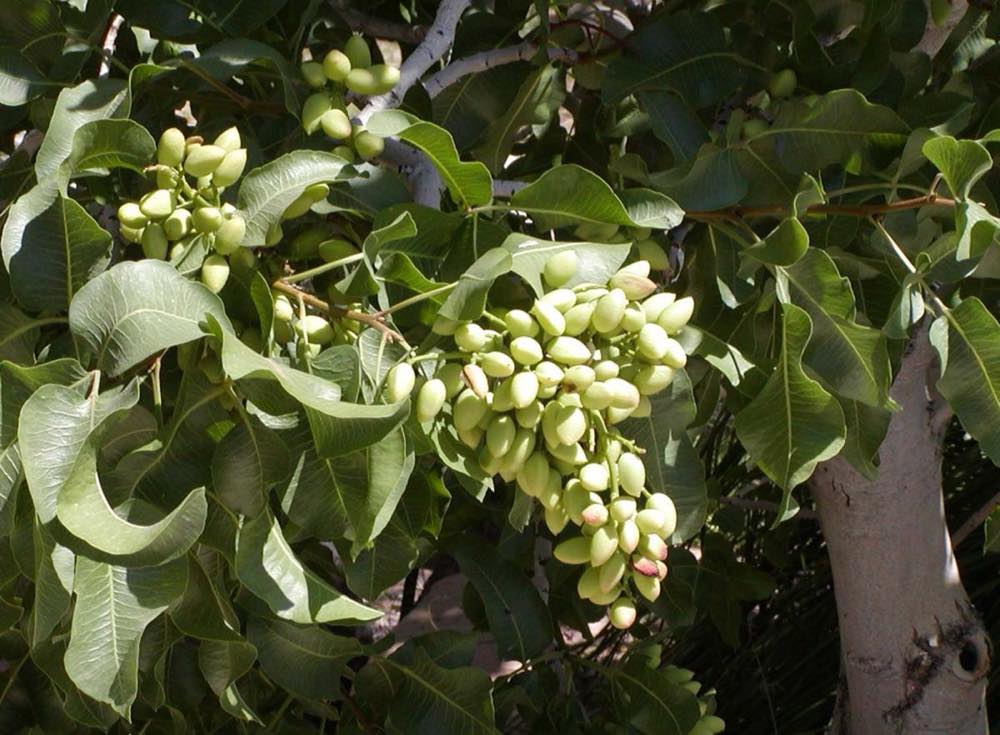
Nuts
The female pistachio that bears the nuts, and it thrives on long hot summers, dry air and alkaline, salty soil. It needs about 800 chill hours, so it fits warm mid elevation valleys; the low desert only suits colder pockets with enough winter chill. It needs a Peters male nearby, takes years to start bearing, and should go in from the pot without disturbing the roots.
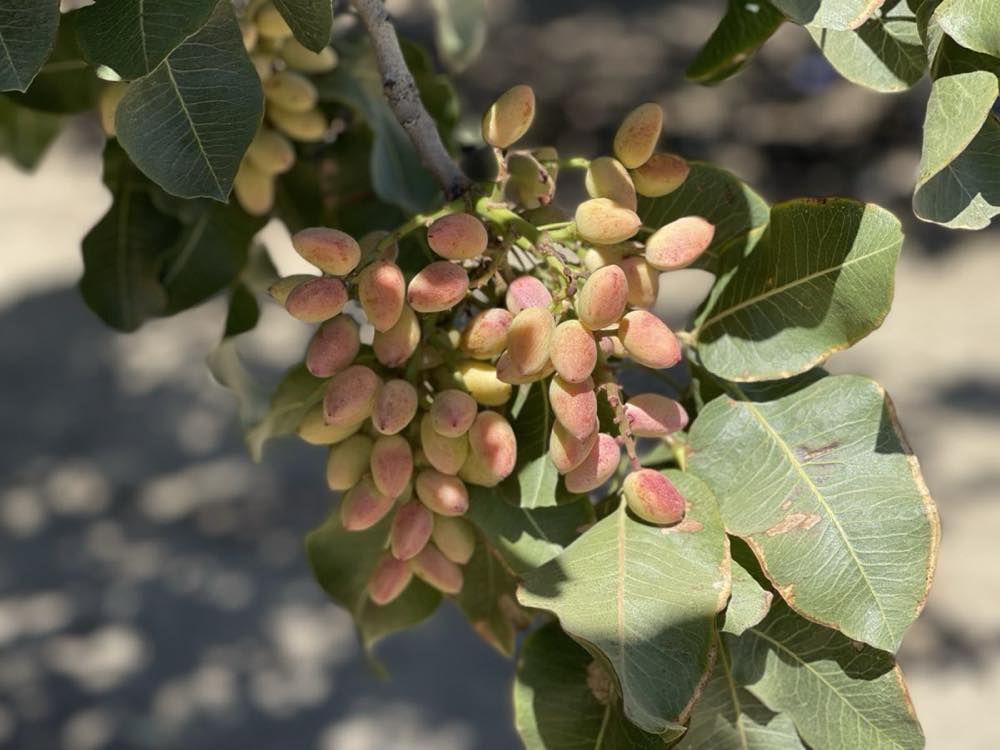
Nuts
The male pistachio: it makes pollen and no nuts, and one tree can serve up to eleven Kerman. Plant it close to your Kerman, because the pollen travels on the wind. It needs about 800 chill hours and loves summer heat, so it fits warm mid elevation valleys, and it should go in from the pot without disturbing the roots.
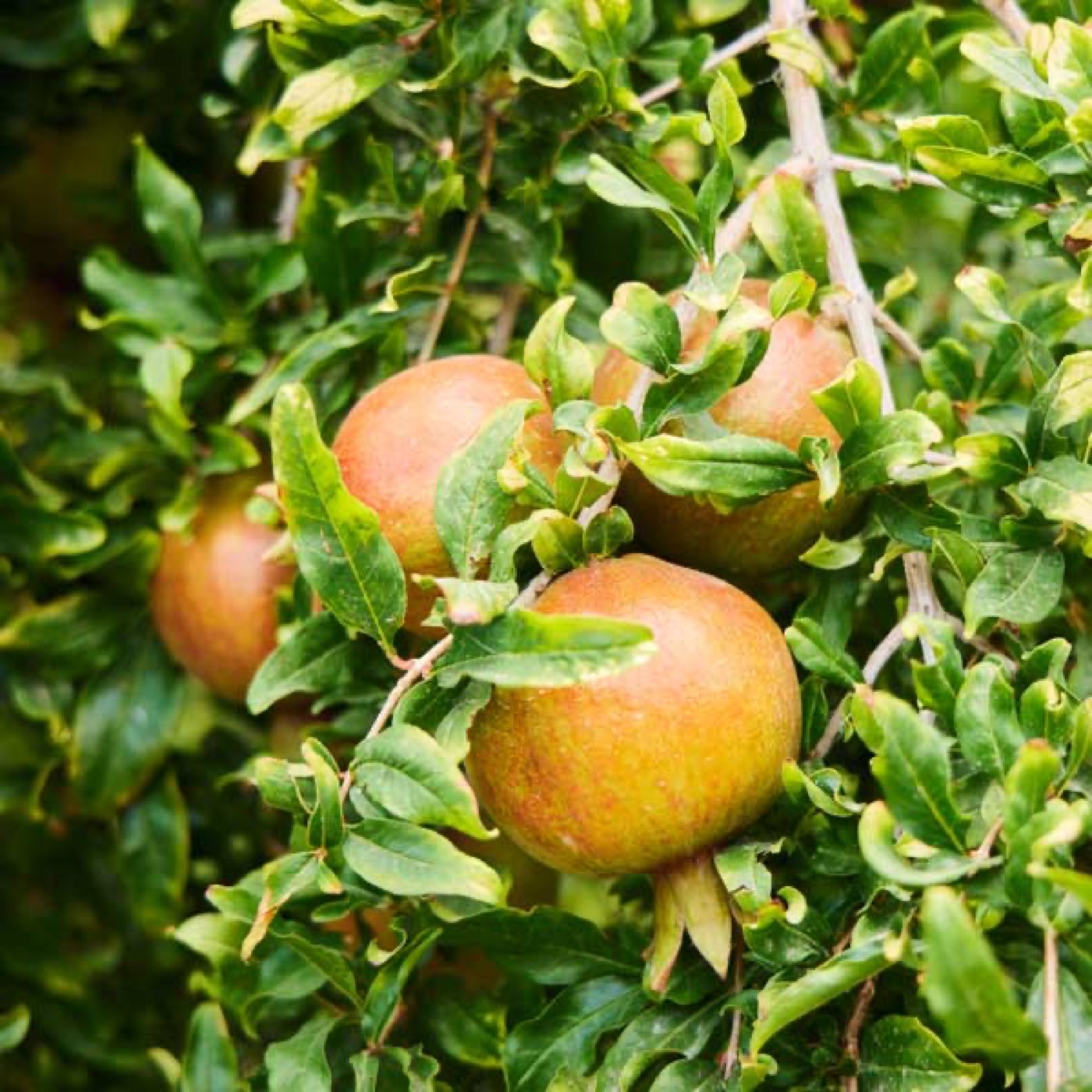
Pomegranates
Bred in Beaver Dam, Arizona, with red to pink skin, pink-to-light red arils, soft edible seeds and a sweet, refreshing flavor. The fruit can hang for weeks without splitting, and the plant takes temperatures below zero, which makes it the pomegranate for mid elevation as well as the low desert. Ripening still needs a warm fall.
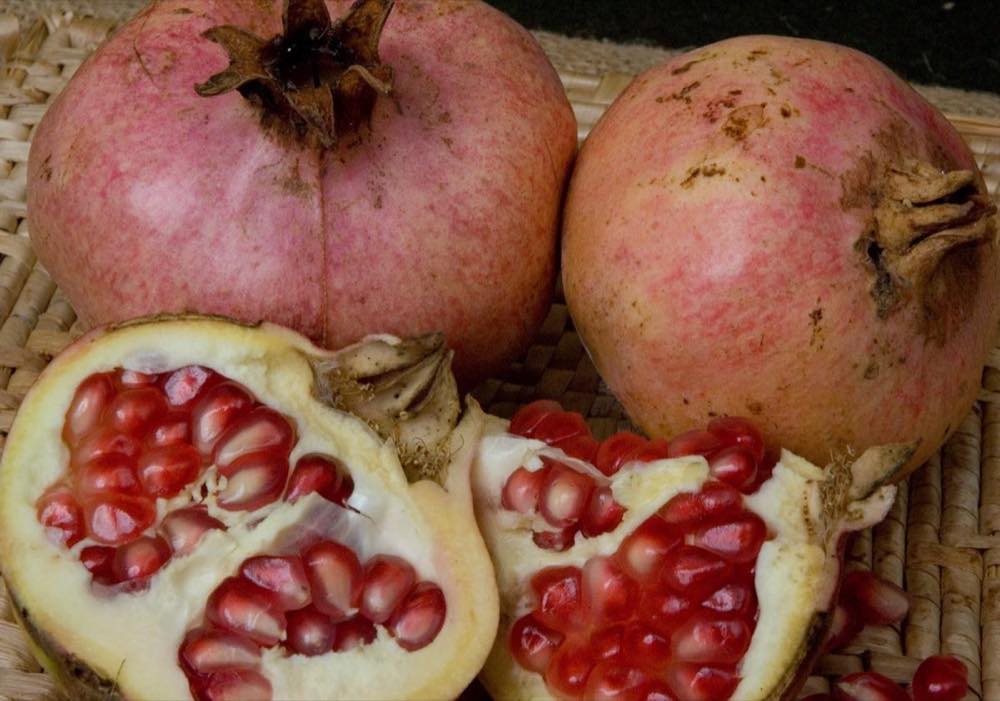
Pomegranates
Medium to large fruit with pale pink skin and purple, sweet-tart juice, close to Wonderful in flavor. It is long-lived and fine in inland or coastal climates. Like all pomegranates, damage starts around 12 to 15°F, so it is a low desert plant, and steady watering helps avoid splits.
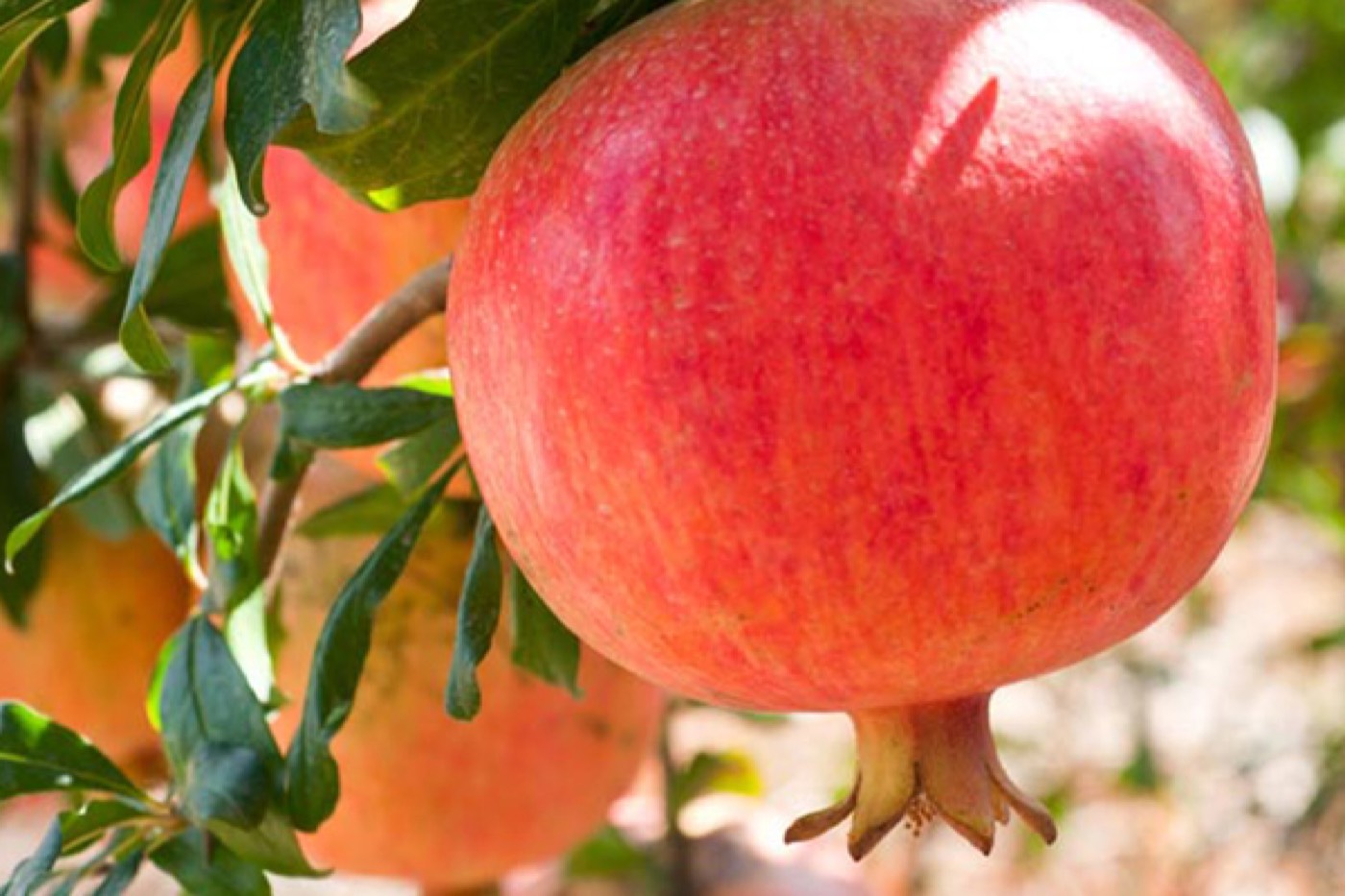
Pomegranates
A large, bold red pomegranate with soft, small seeds you hardly notice and a sweet, punchy flavor, and one of the best-tasting in the University of California's collection. A good pick if you hate crunching seeds. Low desert plant that is hurt around 12 to 15°F, and steady watering helps avoid splits.
Pomegranates
A medium pomegranate with cranberry-red skin, light to deep red arils, small seeds and a mild acidity, rated very good for flavor. A University of California release, it is a good one for people who find Wonderful too tart. Low desert plant that is hurt around 12 to 15°F.
Pomegranates
A pomegranate with a light orange rind, dark red arils and very soft edible seeds, with a sweet-tart balance and a citrus, orange-juice note. The name means dessert, and it is firm-textured at maturity. A low desert plant that suffers around 12 to 15°F, so protect young plants.
Pomegranates
A Wonderful-type pomegranate that ripens about two weeks ahead of the standard, with the same tangy, deep red fruit and firm seeds. A long-time low desert favorite that is hurt around 12 to 15°F, and even watering helps avoid splits.
Pomegranates
A large pomegranate with bright red skin and deep red arils, with a flavor described as cherry-slurpy and rated very good. A University of California release. A low desert plant that gets hurt around 12 to 15°F, and even watering helps avoid splitting.
Pomegranates
A very sweet, almost seedless pomegranate with red skin and clear juice that will not stain, so it suits snacking and kids. Low acid means a mild flavor rather than a tangy one, and even immature fruit tastes sweet. A low desert shrub, hurt around 12 to 15°F, that can be trained as a tree or an espalier.
Pomegranates
A bud sport of Wonderful that is darker and less tart, and it ripens about a month earlier, which suits the low desert's long summers. Seeds are Wonderful-like and firm, and it grows in any soil. A low desert plant, hurt around 12 to 15°F, and even watering helps avoid splits.
Pomegranates
A medium pomegranate with a light pink-red skin and ruby arils with an intense flavor and no sharp acidity. It has a slightly spreading habit and stays at any height with summer pruning. A low desert plant, hurt around 12 to 15°F, with fruit in October.
Pomegranates
A large red pomegranate that is sweet with a hint of acidity and very small edible seeds, and some growers call it the best-tasting of all. The upright plant sets a heavy crop reliably and stays at any height with summer pruning. A low desert plant, and fruit ripens in September and October.
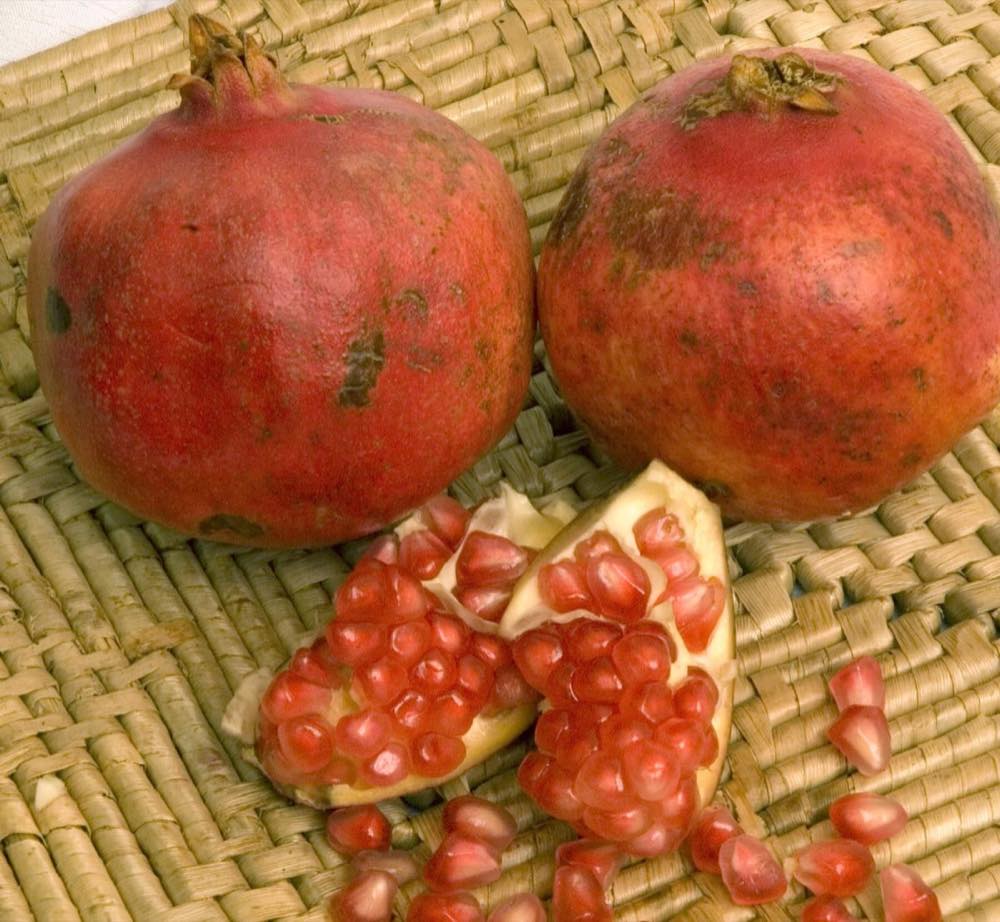
Pomegranates
A medium to large pink-to-dark-red pomegranate with light-pink edible seeds and a light, refreshing juice that does not stain, with a fruit-punch sweetness. The plant grows vigorously as a shrub or tree and can be held at any height. A low desert plant, hurt around 12 to 15°F.
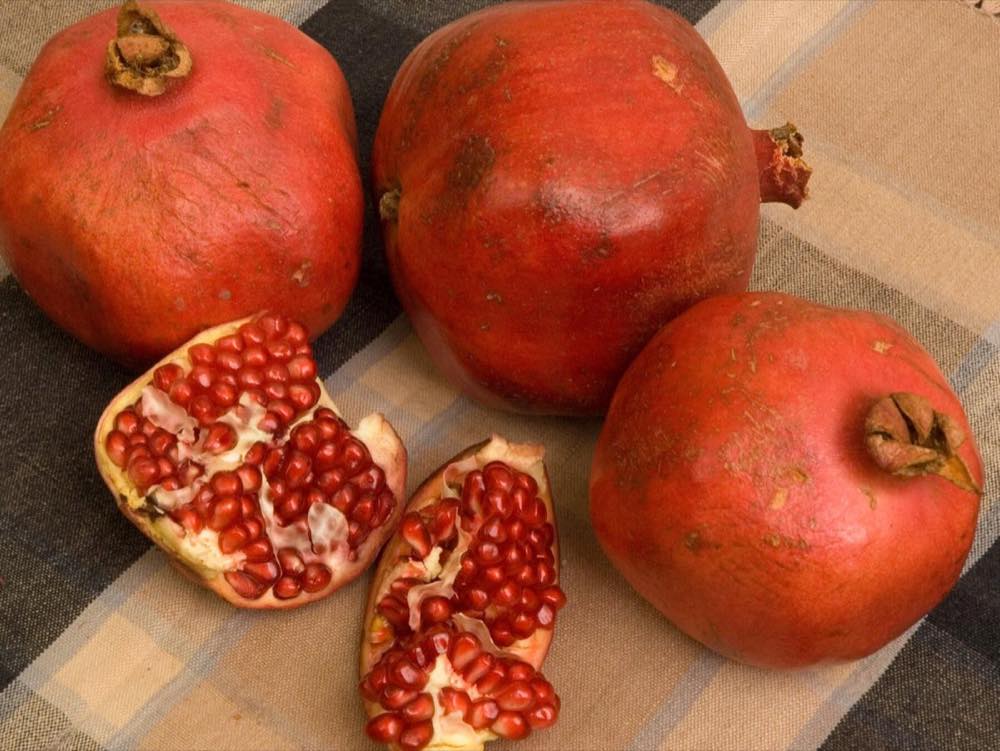
Pomegranates
A medium to large, brilliant red pomegranate with a good sugar and acid balance and a sweet berry flavor. The seeds are large and firm yet edible, so this one is for people who like some crunch. A naturally semi-dwarf, slightly spreading plant for the low desert, hurt around 12 to 15°F.
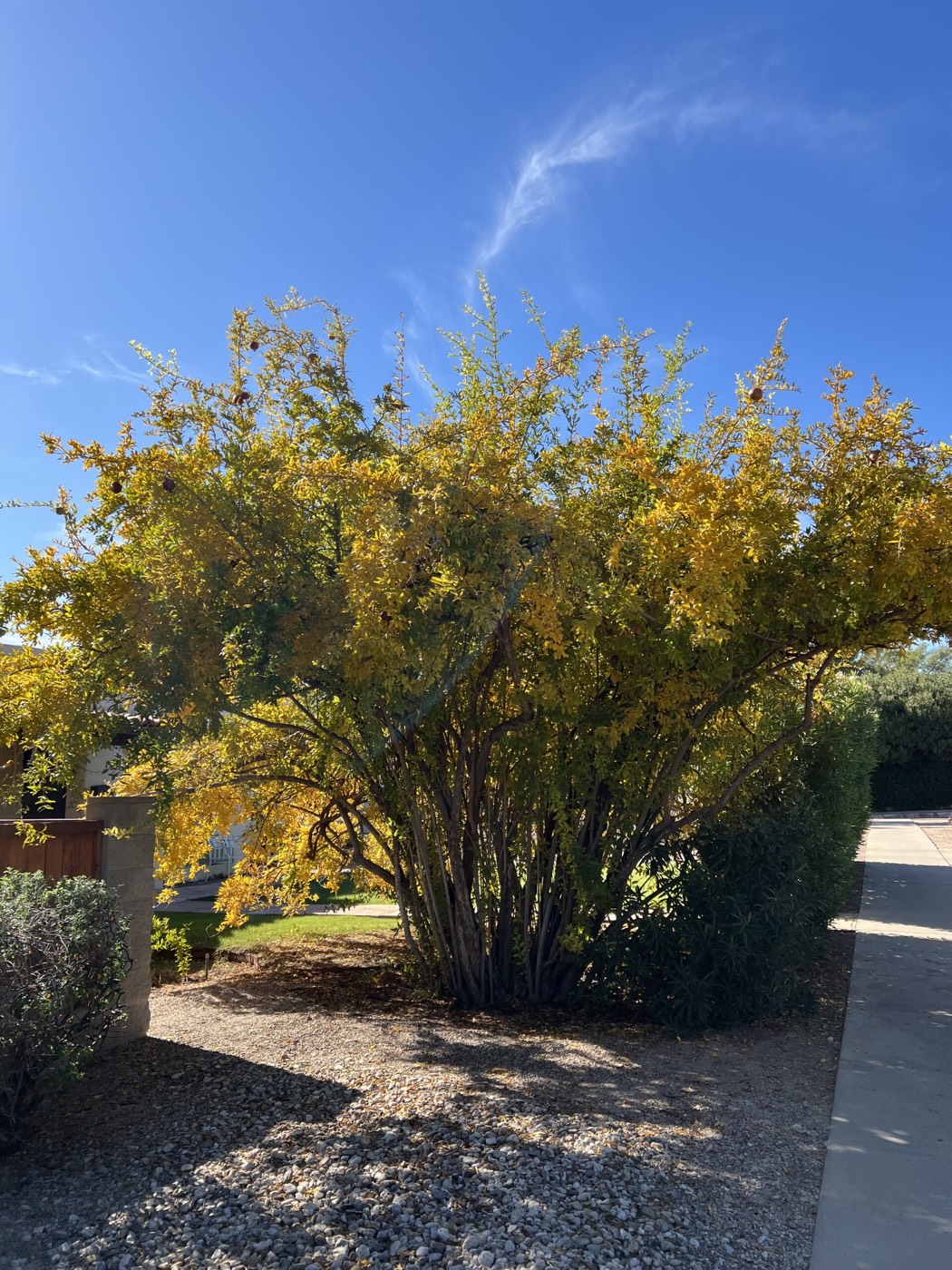
Pomegranates
A sweeter, more widely adapted pomegranate than Wonderful, on a small glossy-leafed tree with showy orange-red blossoms in late spring that suits pots and espalier. Unsplit ripe fruit stores two months or more in a cool, dry place. A low desert plant, hurt around 12 to 15°F.
Pomegranates
The standard pomegranate, a large purple-red fruit with a deep, tangy flavor and firm seeds, and the most common one in the low desert. It is sold both as a multi-stem bush and as a single-trunk tree form. It does best in hot inland climates and grows in almost any soil, but it is hurt around 12 to 15°F and irregular watering splits the fruit.
Grapes
Large, crisp, sweet, purplish-black seedless grapes that need a bit less summer heat than Thompson, so they ripen well in more places, and they are good fresh or dried as raisins. Arizona extension lists it among the grapes adapted below 4,500 feet. Thin the clusters so berries size up, and shade the fruit from the hottest afternoon sun in the low desert.
Grapes
An old heirloom seedless grape in the Concord family, with blueberry-like flavor and good keeping quality for jam, raisins and fresh eating. It colors up in August and tastes best left to hang through hot autumn weather, which helps it at mid elevation. It has a thin Arizona track record, so treat it as a trial, on a sturdy trellis.
Grapes
A small-berried, vigorous, upright wine grape, and one of the reds that does well in Arizona's wine country in the Verde Valley, Willcox and Sonoita, where it likes the heat and cool nights. Plan on a wire trellis and a few years before the first real crop. In the low desert, heat and Pierce's disease make it a poor bet.
Grapes
An early, red, seedless grape from the Himrod line with a sweet American flavor and very strong winter hardiness. It ripens early enough for short seasons, so it is the pick of this group for the colder end of the state, best at mid elevation up to the lower high country. Low desert heat is not its home.
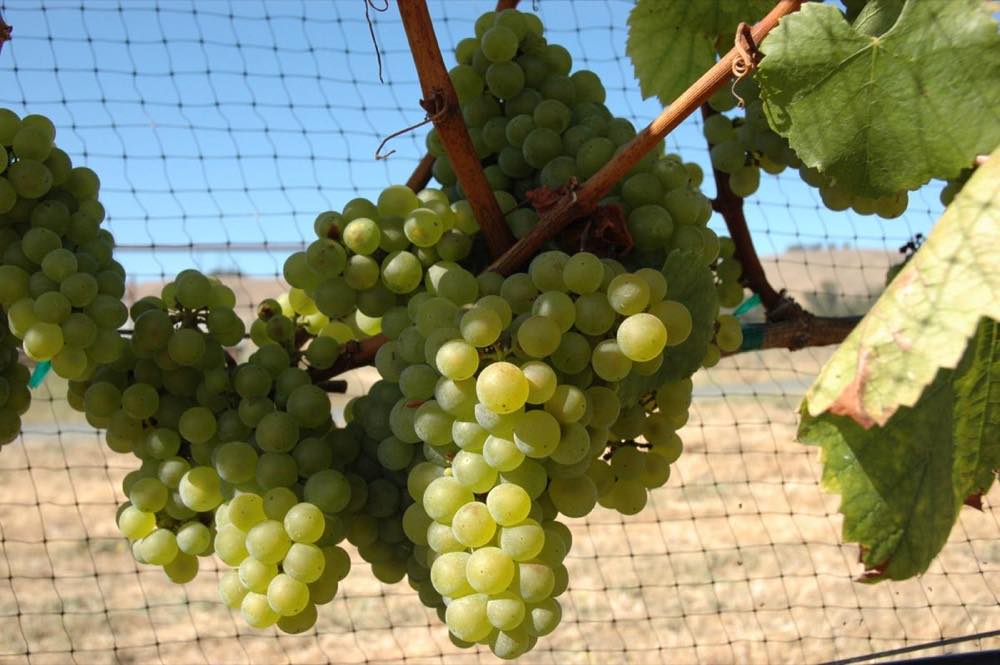
Grapes
A small, round-berried white wine grape grown in Arizona's wine regions. It buds out early, so late spring frost is the main hazard at Willcox and Sonoita, and heat ripens it fast in the Verde Valley. It needs a wire trellis and spur pruning, and it suits mid elevation only, since the low desert is too hot.
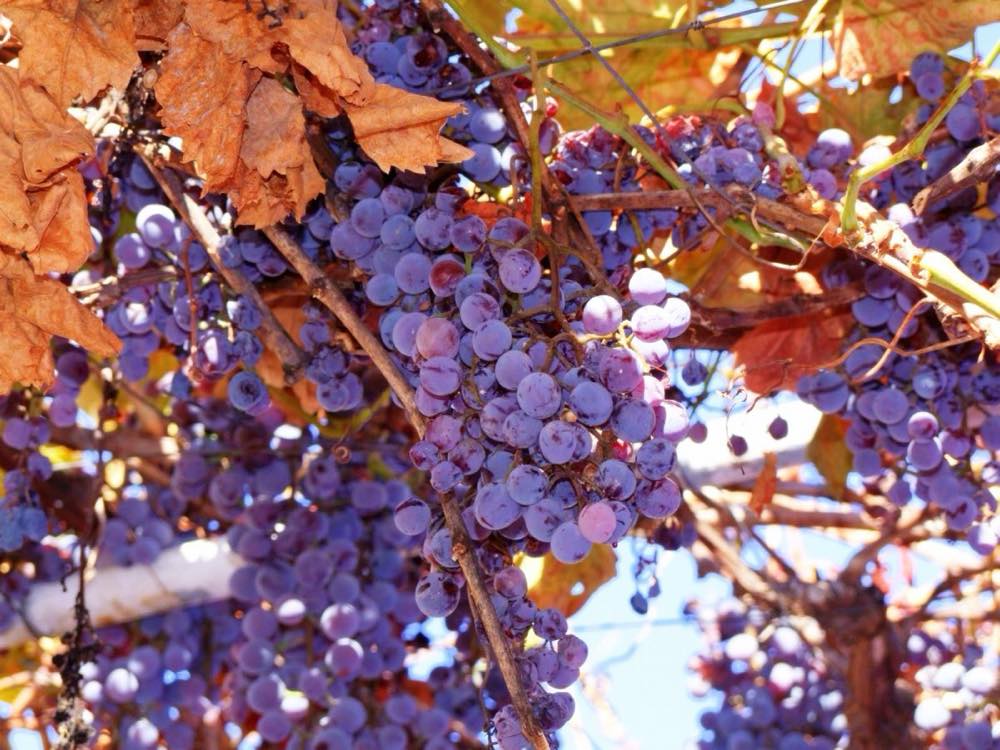
Grapes
The classic purple American grape for juice, jelly and fresh eating, with thick slip skins, seeds and a bold flavor. It is very cold hardy and, per Arizona extension, best above 4,500 feet, because in low desert heat the vines struggle and the fruit loses flavor. Give it space and a strong trellis.
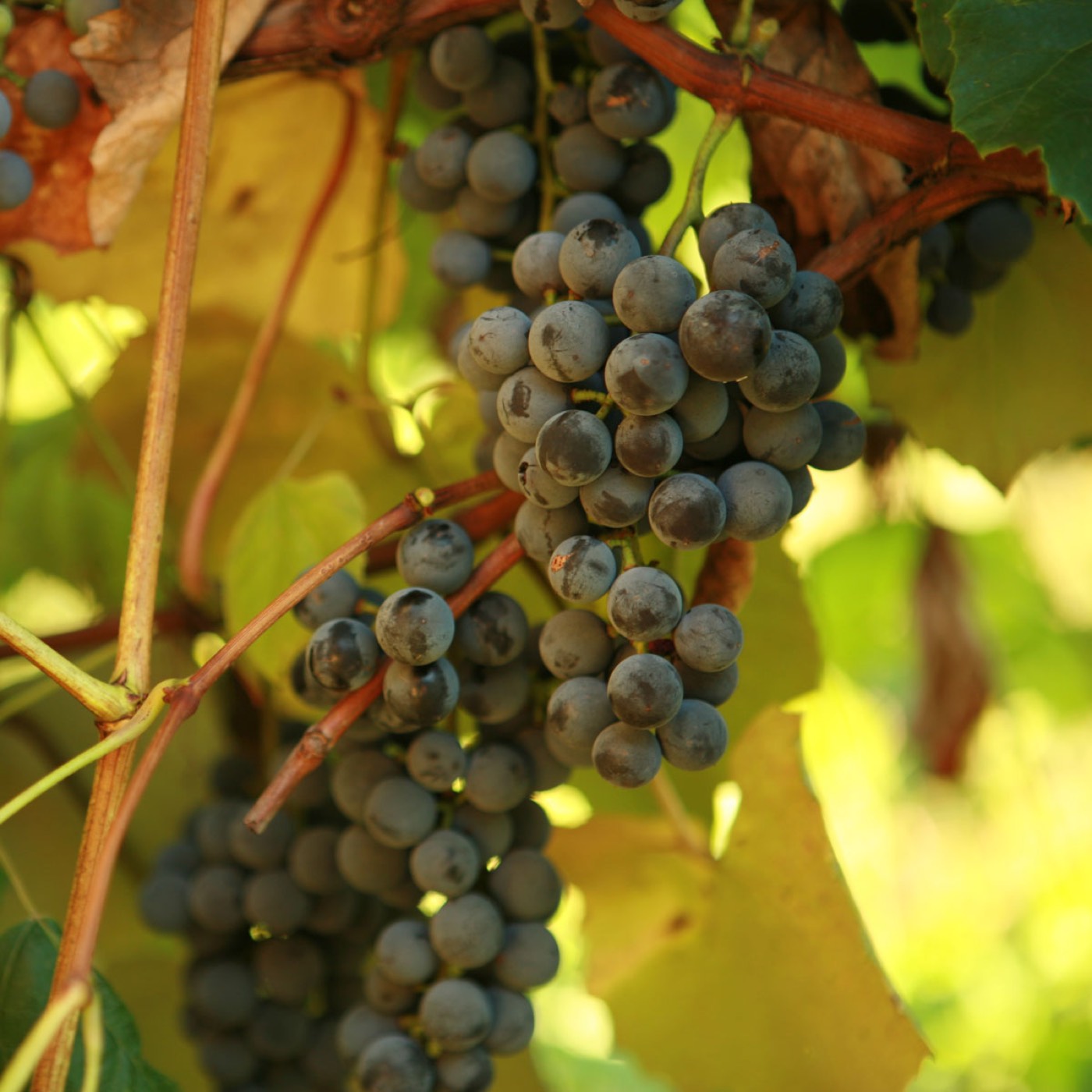
Grapes
A seedless relative of Concord with smaller berries, the same bold grape flavor and a sturdy, cold-hardy vine, good fresh, for juice and for jelly without the seeds. It likes cooler summers than the table grapes, so it suits mid elevation rather than the low desert. Thin clusters and use a strong trellis.
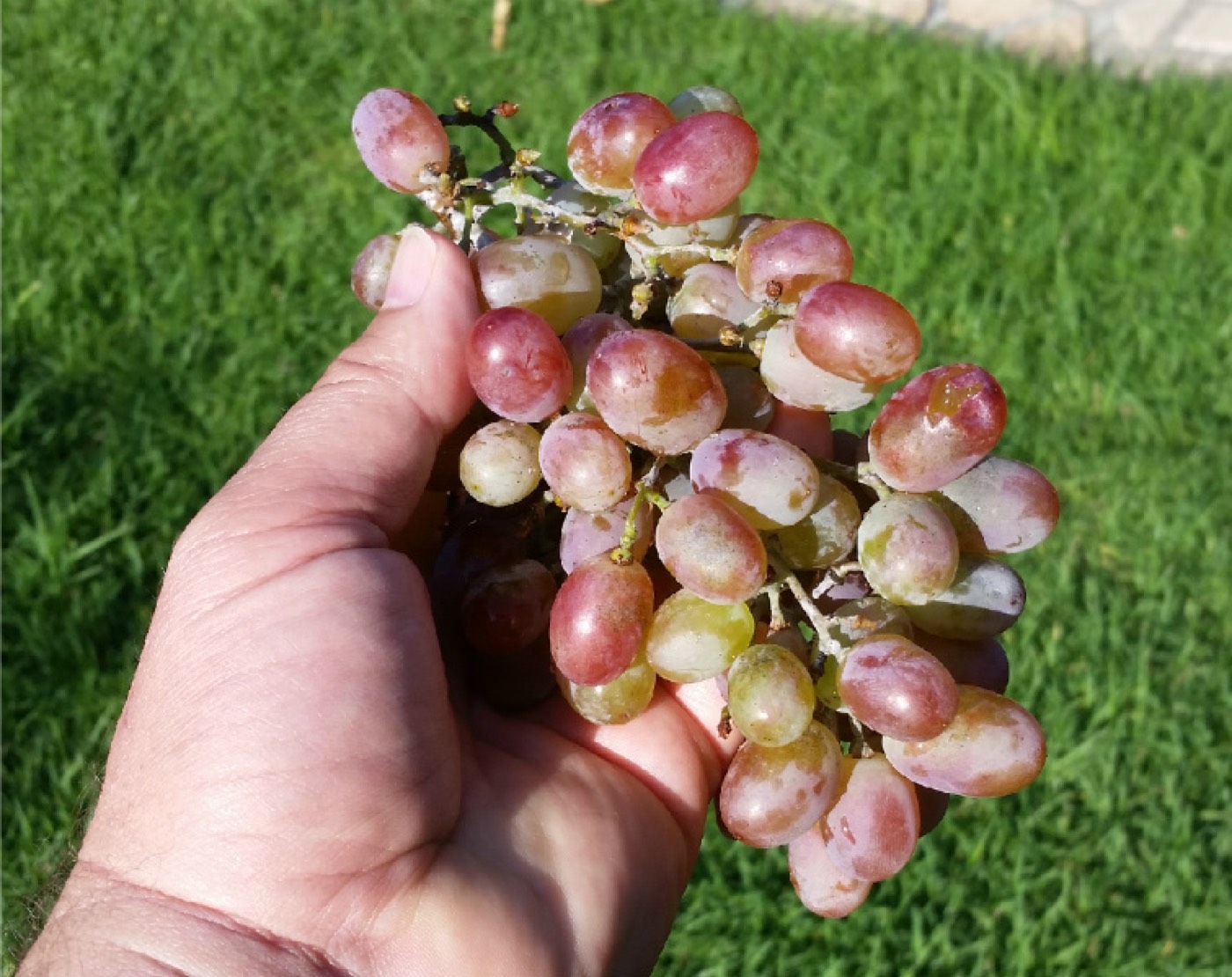
Grapes
A late-season red seedless grape with medium, firm, sweet berries that hang well into fall. It needs a long stretch of heat to color up, which the low desert delivers, and some leaf cover over the clusters will prevent sunburn. Cane prune on a wire trellis, and buy clean vines because Pierce's disease is a low desert risk.
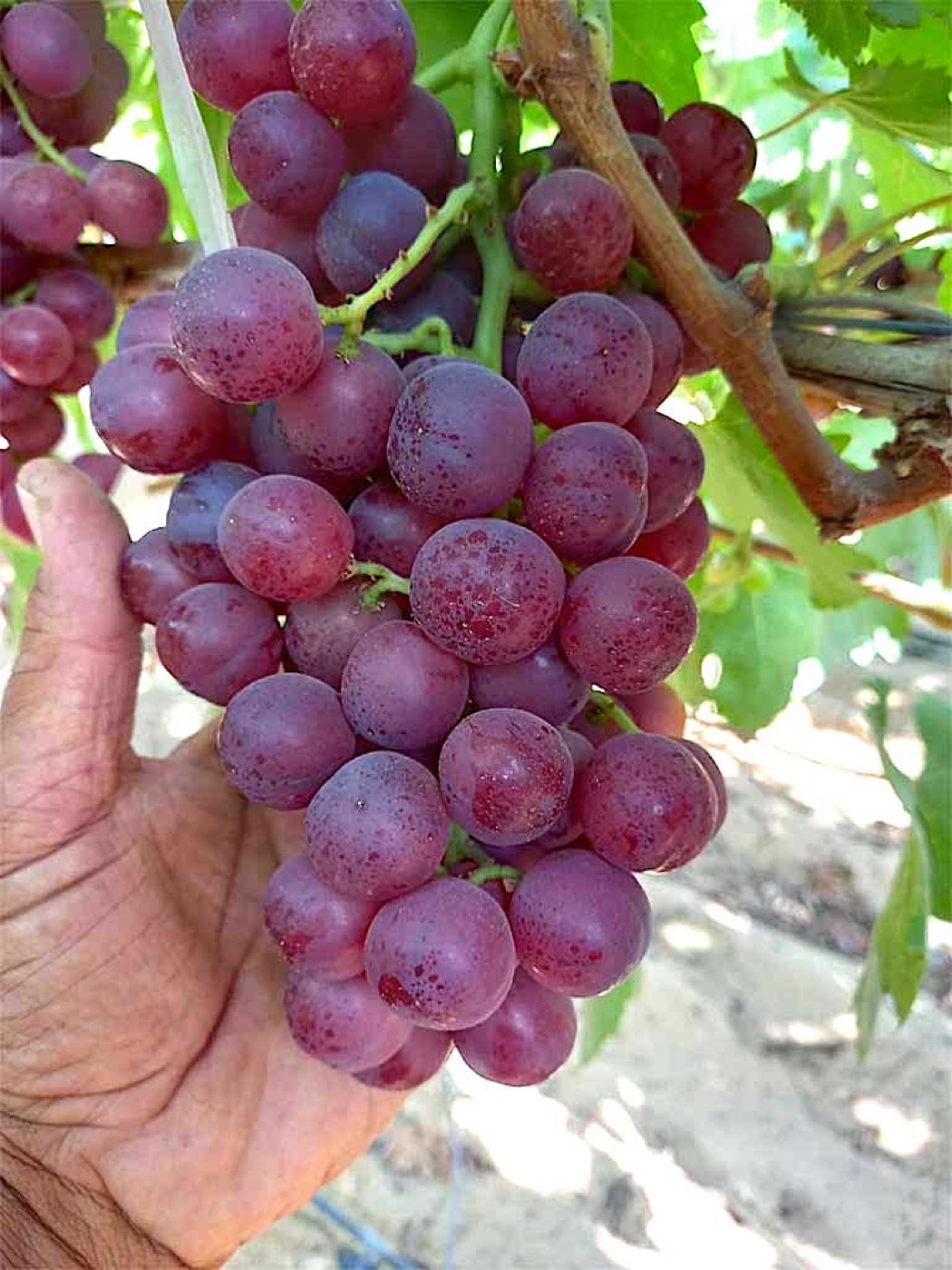
Grapes
Crisp, sweet, light red seedless grapes with great flavor, and a staple of low desert yards. It needs hot summers to color up, which suits Phoenix, and it ripens before Thompson. Thin clusters so the berries size up, cane or spur prune, and buy clean vines because Pierce's disease is the main long-term risk in warm low desert areas.
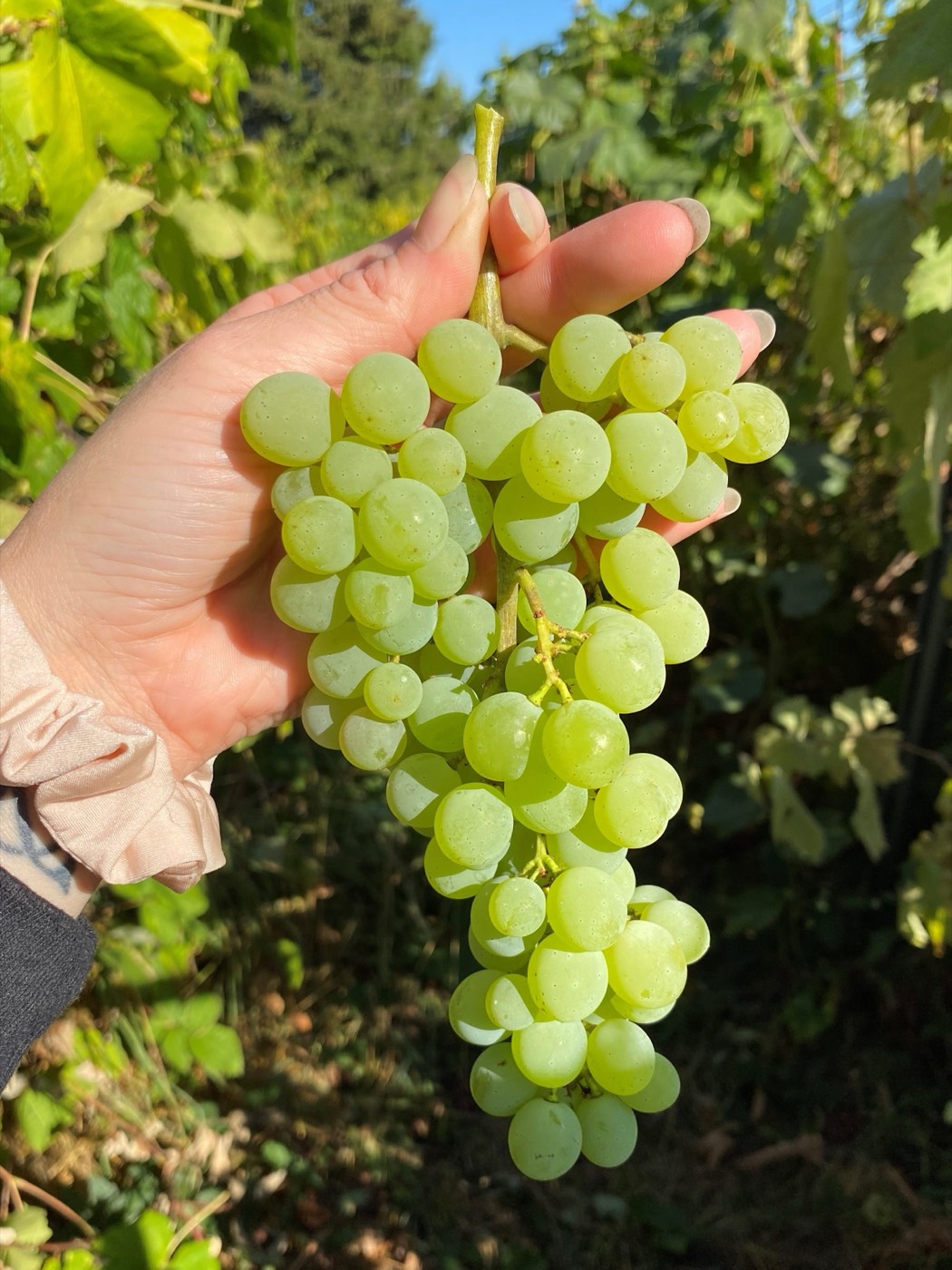
An early, pale green seedless grape, a Thompson cross with sweet, crisp berries and better cold tolerance than Thompson. It needs less heat to ripen, which makes it a good fit for mid elevation, though it is less proven in the low desert. Cane prune on a wire trellis and thin clusters for larger berries.
Grapes
An old table grape with long, finger-shaped, light green berries, thick skins and a tart-sweet flavor. It has seeds and ripens late, so it likes long hot summers and fits the low desert. Cane or spur prune on a sturdy trellis, and leave some leaf cover to avoid sunburn on the exposed clusters.
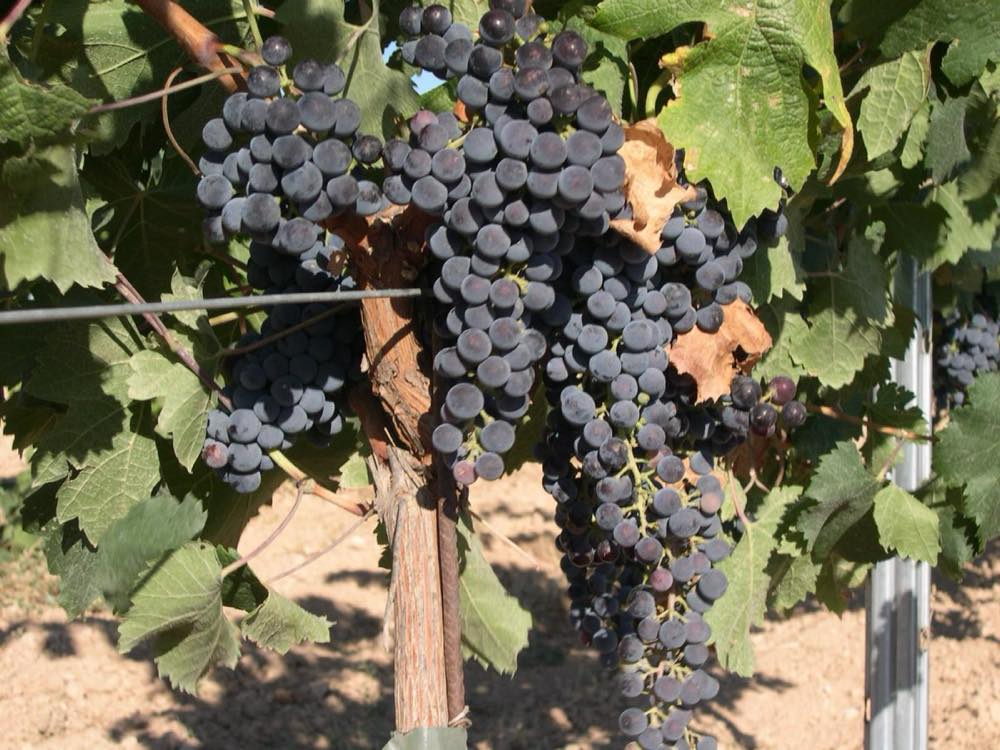
Grapes
A black wine grape grown in Arizona's wine regions, making soft, fruity red wines. It buds early and sets tight clusters, so frost and rot are the watch points at Sonoita and Willcox, while heat is easier in the Verde Valley. It needs a wire trellis and spur pruning, and it suits mid elevation only.
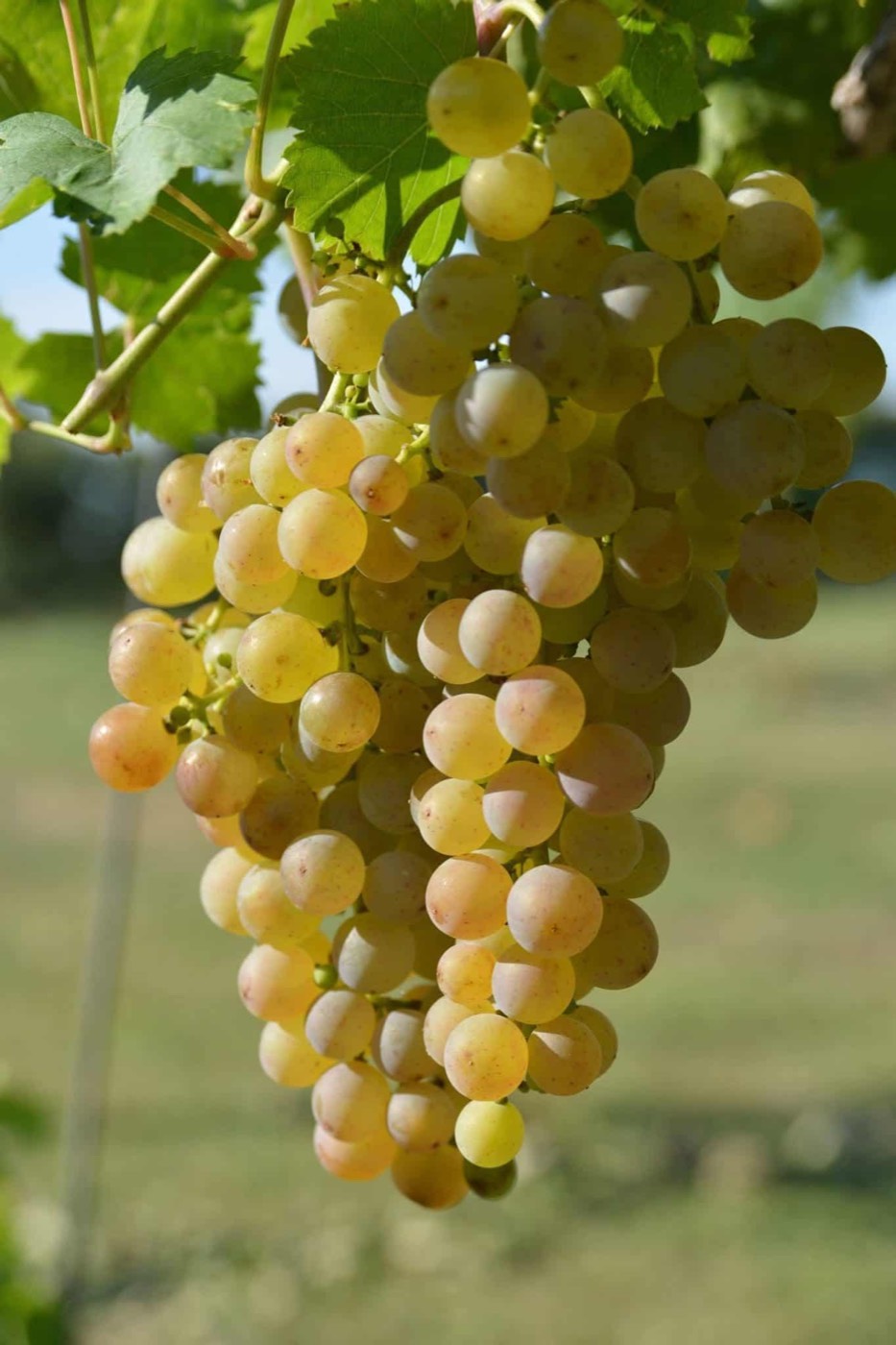
Grapes
Large, egg-shaped, pale golden berries with true muscat flavor and aroma, and a few seeds. Arizona extension lists Golden Muscat among the grapes adapted below 4,500 feet, so it suits the low desert and lower mid elevation. Spur prune it on a strong trellis, and net the fruit against birds.
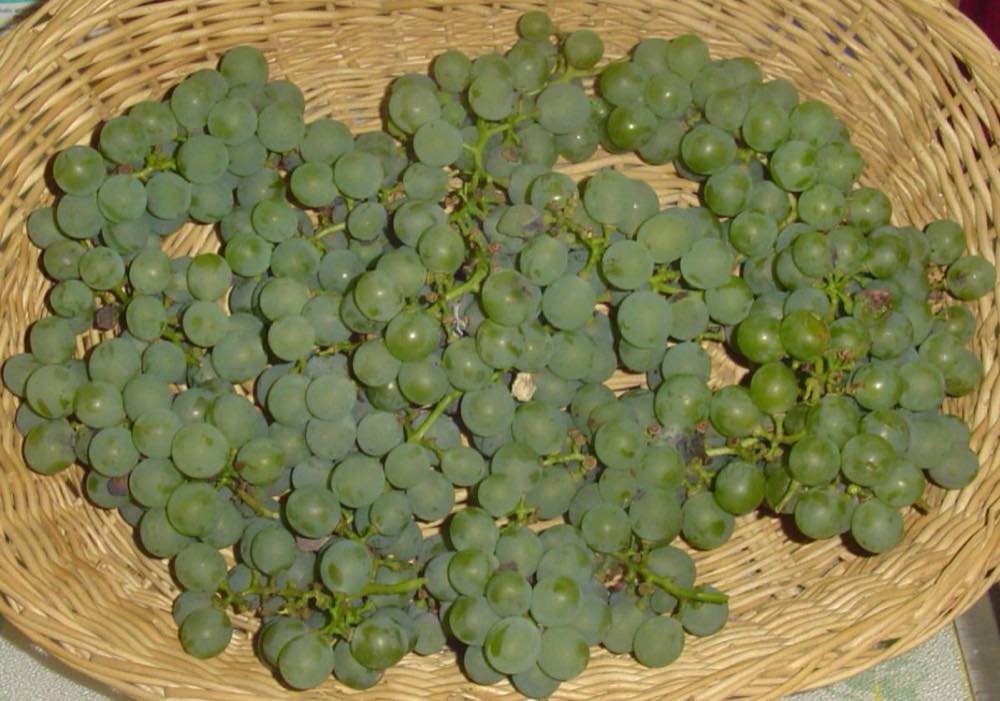
Grapes
A pale green American grape with juicy, sweet berries, a little tart at the center, and a classic Concord-family flavor. It is moderately vigorous and hardy to about 0°F, so it suits mid elevation, not the high country, and Arizona extension lists it for above 4,500 feet. It has a few seeds and needs a trellis.
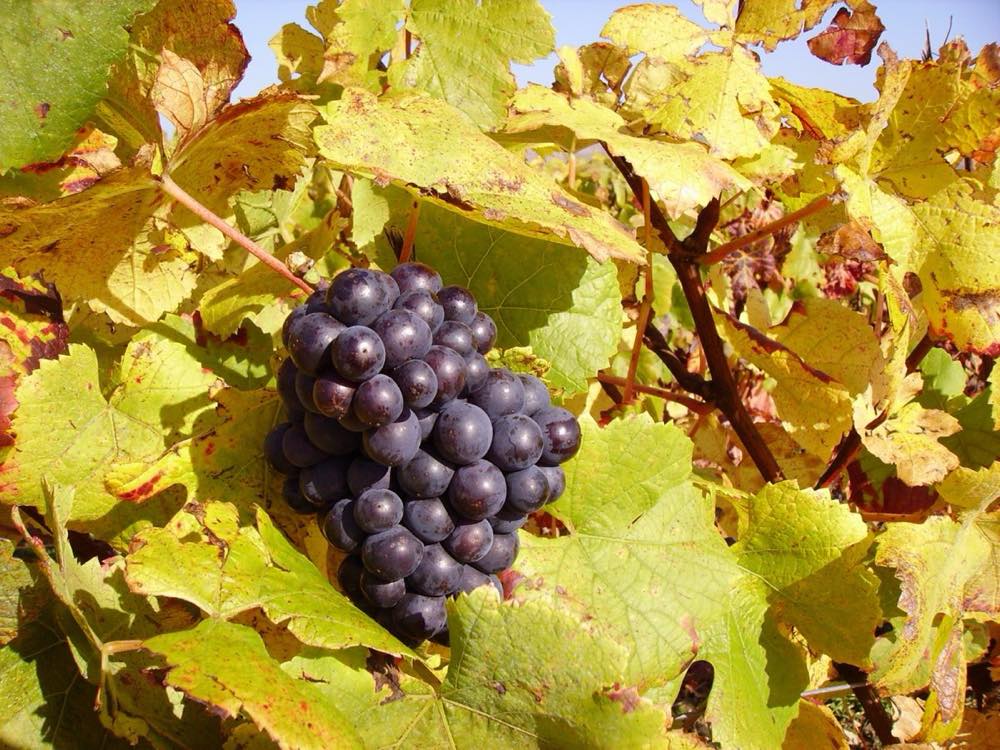
Grapes
A famous, thin-skinned red wine grape that wants a long, cool season, which makes it the hardest of the wine grapes here to grow well in Arizona. In heat it ripens fast and loses acidity, and early bud break invites spring frost. Your best chance is the coolest mid elevation sites such as Sonoita, so treat it as a trial and expect uneven crops.
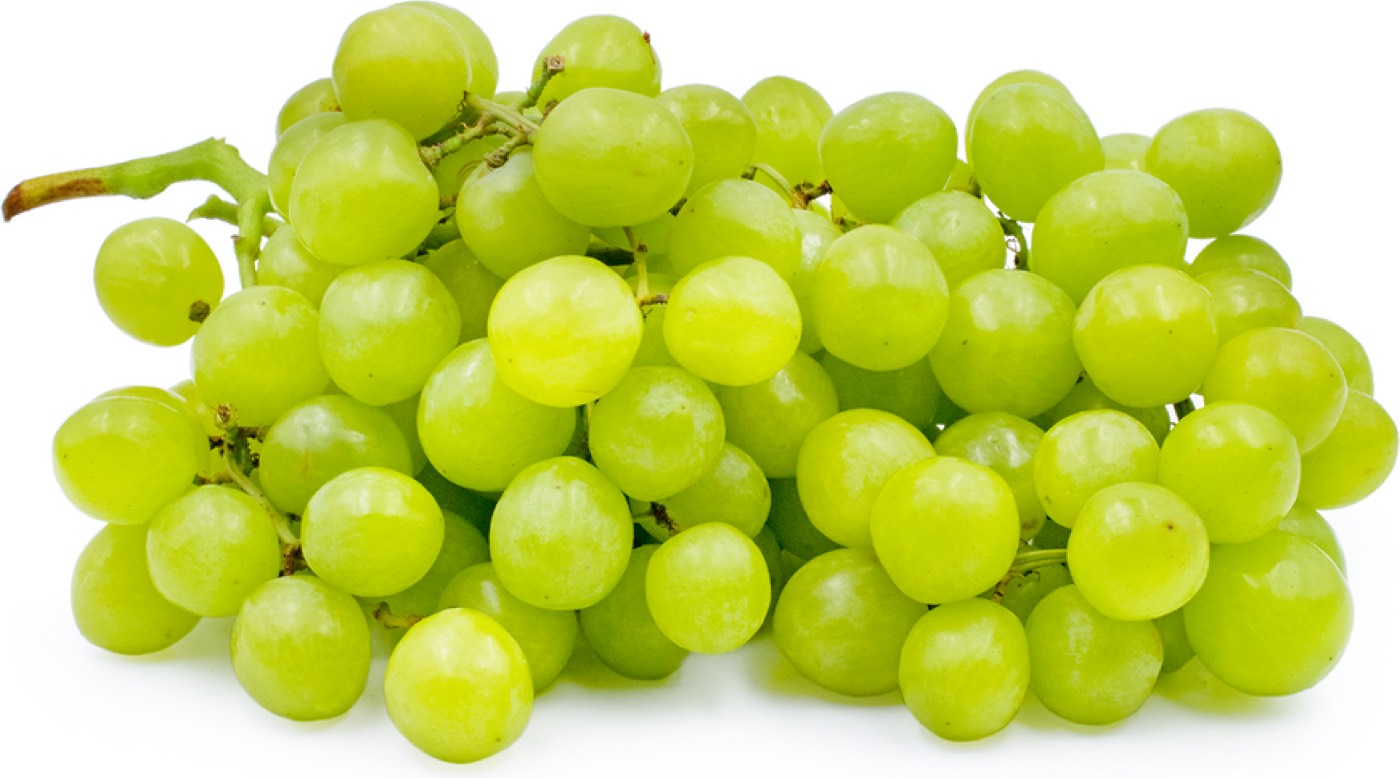
Grapes
A greenish-white seedless grape with large, firm berries, a mild muscat flavor and big semi-compact clusters, often called an improved Thompson. It suits the low desert and lower mid elevation, ripening before the worst heat. Thin clusters for bigger berries and cane prune on a wire trellis.
Grapes
Huge, firm, seeded red berries on large clusters, a favorite of grape lovers. It wants long, hot summers, so it fits the low desert. Flowers can set unevenly, so plant it near another grape, thin the clusters hard for the big berries, cane prune, and keep some leaf cover because hot sun scorches exposed berries.
Grapes
Dark red, sweet, crisp seedless grapes in large clusters, ripening after Thompson and needing a little less summer heat. Arizona extension lists Ruby among the grapes tested for the low desert, and others place it in the Verde Valley. Thin the clusters for best berries, and buy clean vines, since Pierce's disease is a long-term risk in the warmest areas.
Grapes
A black seedless table grape with sweet, medium berries and a late-summer harvest. It handles colder nights than Thompson, so it should suit both the low desert and lower mid elevation. Cane prune and thin clusters; it has little Arizona track record, so treat it as promising rather than proven.
Grapes
A dark red wine grape that copes with heat better than most and a reliable choice for Arizona's Verde Valley, Willcox and Sonoita vineyards. It is vigorous and wants a sturdy trellis, spur pruning and a few years before a real crop. In the low desert, heat and Pierce's disease limit it.
Grapes
The grape most Arizonans know: pale green, seedless, sweet and firm, good fresh or dried. It wants a lot of heat, so it loves the low desert and lower mid elevation. Thin clusters or flowers so berries size up, cane prune, and buy clean vines because Pierce's disease is the main long-term risk in warm low desert areas.
Shade trees
A seedless Arizona ash with large dark green leaves and a symmetrical canopy, fast growing and good for hot, dry Southwest summers. It avoids the seed litter of ordinary Arizona ash. Fits the low desert and lower mid elevation. It is still an ash, so borers, limb breakage and Texas root rot are the things to watch.
Shade trees
Three or more white stems from the base, with weeping side branches, delicate leaves and white bark. It needs cool summers and steady water, so it fits the high country and the cooler parts of mid elevation, such as Prescott and Payson. In hotter sites bronze birch borers and heat stress take a toll. Not for the low desert.
Shade trees
A two-stemmed form of European white birch, with white bark, weeping side branches and delicate leaves. It needs cool summers and steady water, so it suits the high country and the cooler parts of mid elevation, such as Prescott and Payson. Bronze birch borer and heat stress are the common problems. Not for the low desert.
Shade trees
A very fast Chinese elm that stays leafy nearly all year in the low desert and is deciduous in colder places. It grows quickly to about 50 ft. Suits the low desert and mid elevation. It sheds a lot of leaves in late winter, the branching can be weak and the root rot risk is high (elms are very susceptible to Texas root rot).
Shade trees
Large clusters of purplish-pink, sweet-pea flowers in spring over a shapely, open tree, with a long bloom. It handles heat, drought and poor soil and is hardy in all three regions. It is fast growing but brittle, so prune for strong structure when young. Borers, suckers and thorns are the trade-offs, and the seed pods make some litter.
Shade trees
A fast, wide, umbrella-shaped tree with ferny leaves and fluffy pink pompom flowers all summer. It tolerates heat, drought and desert conditions but does best with ample water. Fairly cold hardy, so it suits the low desert and mid elevation. It is short-lived, as mimosa wilt and webworms often take it in 15 to 20 years, and the seed pods make litter.
Shade trees
A two-trunked form of silk tree: a fast, wide, umbrella-shaped tree with ferny leaves and fluffy pink pompom flowers all summer. It tolerates heat and drought but does best with ample water. Fairly cold hardy, so it suits the low desert and mid elevation. It is short-lived, as mimosa wilt and webworms often take it in 15 to 20 years.
Shade trees
A male Chinese pistache with no messy berries and brilliant orange to red fall color. It handles heat, drought and alkaline soil and is one of the better low desert shade trees, with few pest or disease problems. Slow to start, then steady. Suits the low desert and the warmer parts of mid elevation. Prune young for a strong shape.
Shade trees
A classic redbud with bright green heart-shaped leaves and purplish-pink flowers along the bare branches in spring. Very cold hardy. It does best at mid elevation and in the high country, where bloom is reliable. In Phoenix the leaves scorch in afternoon sun, so Texas or Mexican redbuds are better there. Plant it in light afternoon shade where it is hot.
Shade trees
A multi-trunked redbud with bright green heart-shaped leaves and purplish-pink flowers along bare branches in spring. Very cold hardy. It does best at mid elevation and in the high country, where bloom is reliable. In Phoenix the leaves scorch in afternoon sun, so Texas or Mexican redbuds are better there. Plant in light afternoon shade where it is hot.
Shade trees
Deep purple leaves and hazy, smoke-like plumes in early summer, on a two-stemmed form of about 20 ft. It likes cool nights and is very cold hardy, so it suits mid elevation and the high country. In the low desert the leaves scorch and burn in summer heat. Needs good drainage. Not for Phoenix.
Shade trees
A multi-trunked California native sycamore with big, light green leaves and mottled pale bark. It needs deep, regular water and a lot of space. It does well in the low desert and mid elevation where water is available, such as a low spot, a large lot or creek edge. Sycamores are very susceptible to Texas root rot, drop lots of leaf litter and are prone to anthracnose in wet springs.
Shade trees
A two-trunked California native sycamore with big light green leaves and mottled pale bark. It needs deep, regular water and a lot of space, and does well in the low desert and mid elevation where water is available. Sycamores shed a lot of litter and are susceptible to Texas root rot.
Flowering shrubs
Double blue flowers, a color that is hard to find in lilacs, with the usual strong fragrance. It takes two to three years to reach full bloom and grows 10–15 ft. It needs a cold winter, so it suits mid elevation and the high country and will not flower well in Phoenix. Powdery mildew can dust the leaves in late summer but is mostly cosmetic.
Flowering shrubs
Full double purple flowers that look like little pompons, on a vigorous deciduous vine. Bloom comes as the leaves open, and can be lighter after very mild winters in the low desert. It likes full sun and less summer water once established. It needs a strong support and regular pruning. Suits the low desert and mid elevation.
Flowering shrubs
Long, cascading clusters in pale lavender to pink on a vigorous Japanese-type wisteria, blooming March to April in the low desert. It is a long-lived, heavy climber that needs a strong arbor or wall wires and a hard prune twice a year. It handles our heat well, though alkaline soil can yellow the leaves. Fits the low desert and mid elevation.
Flowering shrubs
Long, drooping purple flower clusters on a fast, tough vine, usually in March in the low desert. It handles heat and alkaline soil better than most flowering vines, though yellow leaves may need an iron feed. It is heavy and strong, so give it a solid arbor or wall wires and prune twice a year. Fits the low desert and mid elevation.
Flowering shrubs
Very fragrant white flowers that open all at once as the leaves come out, in shorter, chunkier clusters than most wisteria, with nicer foliage too. Like all wisteria it is a heavy climber that needs a strong support, regular pruning, and a spot where it cannot swallow gutters or fences. Suits the low desert and mid elevation.
Flowering shrubs
Double flowers in dark purplish red with the classic lilac scent, on a shrub of 10–15 ft that reaches full bloom in two to three years. Lilacs need a real winter to flower well, so this is a mid elevation and high country plant, such as Prescott, Payson and Flagstaff. In Phoenix it will grow but bloom poorly or not at all.
Flowering shrubs
The old-fashioned lilac, with big fragrant clusters in pink to purplish blue. It can reach 20 ft and spreads by suckers, so give it room. It likes full sun and slightly alkaline soil, with light shade in the hottest spots. It needs a cold winter, so it does well at mid elevation and in the high country but will not bloom in Phoenix.
Flowering shrubs
A powerfully fragrant lilac whose flowers open vivid red and soften to purple. At 8–10 ft it works as a border or hedge. Like all lilacs it needs real winter cold to bloom, so plant it at mid elevation or in the high country, not in Phoenix. It likes full sun and tolerates our slightly alkaline soils.
Flowering shrubs
Double pink flowers with a rich scent, on a shrub of 10–15 ft that is at full flower in two to three years. It blooms best after cold winters, so it belongs at mid elevation and in the high country, such as Prescott and Flagstaff. In Phoenix it will leaf out but flower little. Prune right after bloom and thin old stems.
Flowering shrubs
Single flowers in reddish purple to deep purple on a 10–15 ft shrub, with the classic lilac scent. Full bloom arrives in two to three years. It does best after cold winters, so it suits mid elevation and the high country and is not a Phoenix plant. Plant it in full sun, and prune right after the flowers fade.
Flowering shrubs
Single dark red flowers with a crisp white edge on every petal, which makes it stand out among lilacs. It grows 10–15 ft and takes two to three years to reach full bloom. It needs a real winter, so plant it at mid elevation or in the high country, not in the low desert. Full sun and good drainage suit it best.
Flowering shrubs
Extremely long clusters of light violet-blue flowers, up to about 3 ft, on a vigorous Japanese wisteria that is known for flowering young. Bloom is usually March to April in the low desert. A heavy climber, so give it a strong arbor or wall wires and prune twice a year. Fits the low desert and mid elevation.
Shade trees
A Chinese redbud with an open, shrubby form of 10–12 ft, glossy bright green leaves and big clusters of deep purple-pink flowers along the bare branches. It copes with drier conditions than Eastern redbud and likes part shade in hot summers. Suits the low desert with afternoon shade and mid elevation, and it flowers at a young age.
DIY, professional support, or both
Use the app to choose your trees yourself, then bring Permascaping in for the parts where professional review makes the biggest difference.
Match rootstock, mature size, pollination, chill, shade, irrigation, and harvest timing to the actual property.
Choose pickup, request delivery, or add professional planting after the grower confirms the tree.
Build irrigation, pruning, protection, and seasonal care into one connected property plan.
Program FAQ
Choose your trees in the planner or the program pages, add them to your preorder, and pay at checkout. We place one wholesale order with the grower after preorders close on December 1st, and your trees arrive in January or February.
Now. Preorders are open until December 1st. You pay in full at checkout, and your card stays on file for any difference such as freight or a substituted size.
Preorders close December 1st. We place one wholesale order with the grower after that, so trees cannot be added once it closes.
Trees will arrive in January or February. The exact date is still to be determined and will be shared with customers as soon as the grower confirms it.
Final prices will be published with the confirmed inventory. Pickup or delivery, planting, and stewardship will be shown clearly before checkout.
Yes. Typical delivery is $15 within 15 minutes of our headquarters, $25 within 25 minutes, $35 within 35 minutes, or $45 within 45 minutes. Professional planting is typically $75 per bare-root tree or $25 per potted plant; the app confirms the exact service price before payment.
Yes, until the grower order is placed after December 1st. Contact us to add or remove trees; after that, the order is locked because the trees are committed with the grower.
Yes. Every product includes an Arizona growing guide, and you can request property-specific selection, design review, delivery, planting, and ongoing stewardship from within Permascaping.
We guarantee a healthy live tree at handoff. Broader establishment or replacement support is tied to professional planting and stewardship because irrigation, planting depth, heat, animals, and aftercare all affect survival.
Preorders close Dec 1st
Every variety, size and price is live in the planner and on the program pages.
Browse & preorder trees