
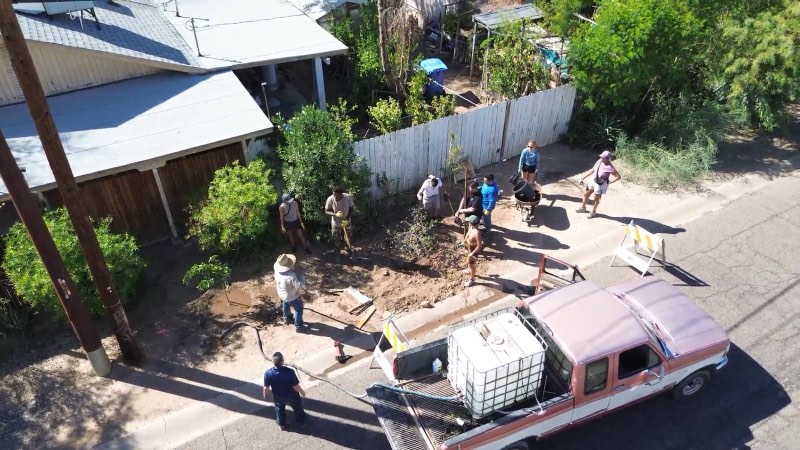
Start here: Permascaping 101
What permaculture is, how the free planners fit together, and where to begin on your own yard. Everything here runs on a satellite photo of your lot, and none of it needs an account.
What permaculture is
The idea has been around since 1929: plant fruiting trees and crops the way nature arranges them, so the watershed stabilizes and the soil heals. Care of the earth turns out to be care of the people on it.
Permaculture is a way of designing a place so that it works the way a healthy ecosystem does: it catches its own water, builds its own soil, feeds the people and the wildlife in it, and needs less from you every year instead of more. It began as a method for farms. It applies just as well to a quarter-acre lot in Phoenix, and in a dry climate the payoff is bigger, because water and shade are the two things a desert yard is short of and the two things permaculture is best at.
David Holmgren set the method down as twelve principles. Here they are in the words we use on a Phoenix lot.
- Observe and interactWatch how water, sun and wind already move across your lot before you change anything.
- Catch and store energyRain held in the soil and in tanks, shade grown from trees, food put up for later.
- Obtain a yieldEvery part of the design pays back something you can eat, use or measure.
- Apply self-regulation and accept feedbackThe yard tells you what is working. Adjust instead of forcing it.
- Use and value renewable resourcesSun, rain, mulch, and the insects and animals that do work for free.
- Produce no wasteKitchen scraps become compost, greywater waters trees, prunings become mulch.
- Design from patterns to detailsGet the big shapes right first: water, shade, paths. Then the plant list.
- Integrate rather than segregateA basin, a tree and a bench in one spot do more than three separate features.
- Use small and slow solutionsOne basin and three trees this year beat a full tear-out you cannot keep up with.
- Use and value diversityMany species in layers means no single pest, freeze or heat wave takes the whole yard.
- Use edges and value the marginalThe fence line, the driveway edge and the shady north side are often the most productive spots.
- Creatively use and respond to changeA monsoon, a freeze or a neighbor's new wall changes the plan. The plan is built to change.
Care of the Earth = Care of the People
Our seven
Twelve principles are a lot to hold while you are standing in a hot yard with a shovel. We boil them down to seven verbs, in order.
- observeLook before you dig: where the sun lands, where the water runs, where the heat collects.
- designWater first, then plants, then the lines that feed them.
- buildBasins, gutters, planting, irrigation. One piece at a time, in the right order.
- stewardMulch, prune, water and watch. The first two summers decide everything.
- harvestFruit, shade, rain and a cooler yard. The returns show up fast here.
- iterateMove what struggles, add what thrives, adjust the plan every season.
- regenerateSoil that holds water, a canopy that cools the block, a yard that feeds people.
Permaculture belongs in our landscapes.
Not on a farm somewhere else. In the front yard, in the back yard, along the street, on the roof that sheds the rain.
Learn howHow the free tools fit together
Six steps, in the order the yard needs them. Each one is a free planner on a map of your property, and each one feeds the next.

Observe your sun and shade
Open the microclimate analyzer on your roof. It shows sun and shade on your lot by hour and by season, so you know which spots get morning sun and afternoon shade before you plant anything.
Plan the water
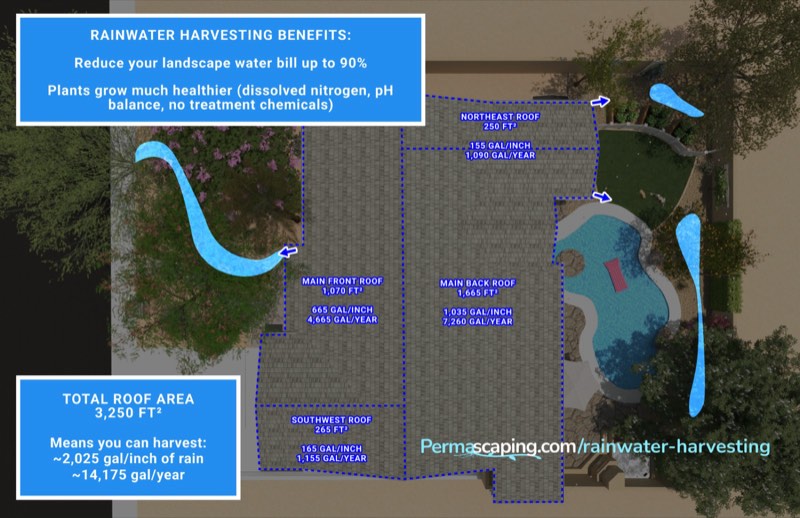
The watershed planner measures your roof and yard, tells you how many gallons a storm sends off it, and lets you draw the basins, gutters and tanks that catch it. Water comes before plants because it decides where plants can live.
Plan the plants
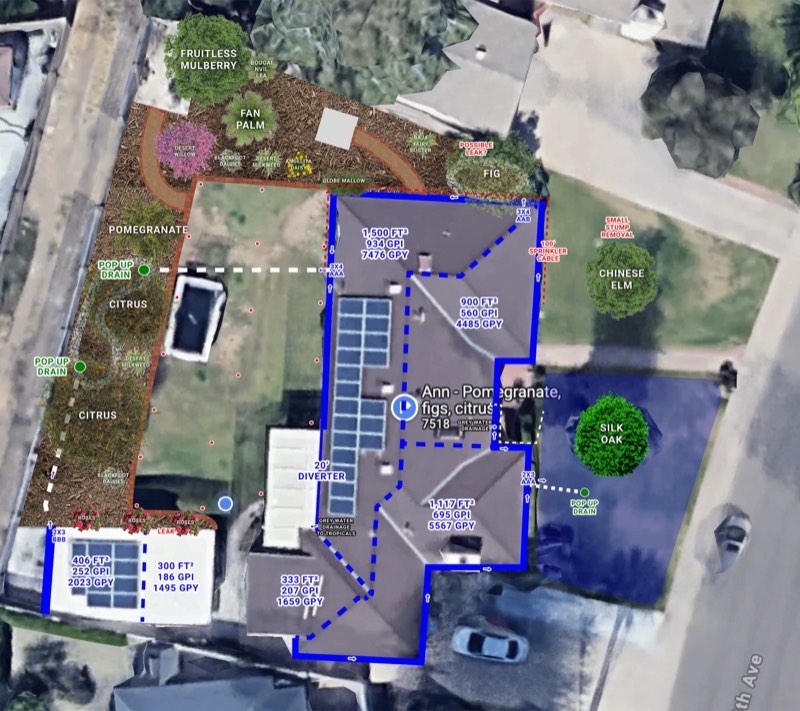
In the planting planner you place trees and plants on a satellite photo of your yard at the size they will be, in seven layers, from the Arizona catalog and this year's wholesale trees.
Plan the irrigation
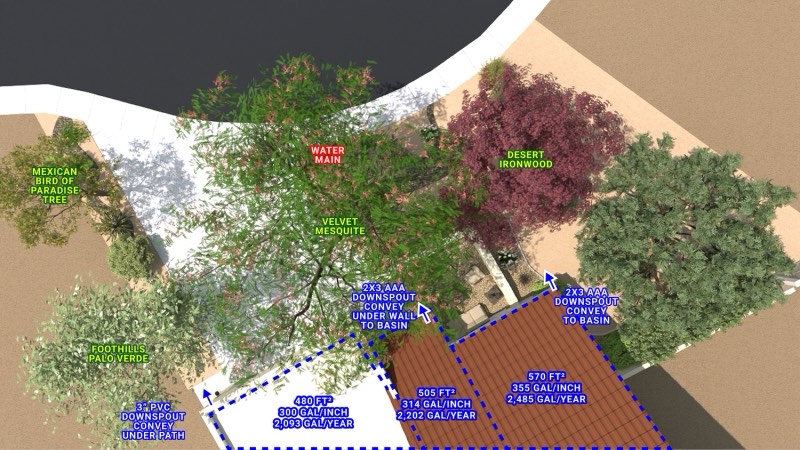
The irrigation and greywater planner reads your planting plan and suggests the zones, then counts the feet of pipe, trench and wire so you can buy the parts once.

Removals and materials
The hard and softscapes planner measures the lawn, gravel or concrete coming out and the mulch and soil going in, by the square foot and the cubic yard.
Build, then steward
Do it yourself with the plan in hand, hire a crew for the heavy parts, or hand the whole thing to us. Either way the plan is yours, and it keeps updating as the yard grows in.
Who we are
Permascaping is Homegrown Foods, a 501(c)(3) earned-income charity based in Phoenix. Like Goodwill or Habitat for Humanity, we charge fair market prices for design and installation and have no owners or shareholders taking a profit. The free tools, the volunteer planting days and the wholesale tree program are what the revenue is for.
- 501(c)(3) charityHomegrown Foods, doing business as Permascaping
- Freeto use every planner, with or without an account
- Sonoran Deserthome base, with design across Arizona and beyond
- No ownersearned income, grants and donations fund the work, and nobody takes a profit
Go deeper
Two of the ideas people ask about most, each on its own page.
- The seven layers of a food forestWhat each layer does, how they stack from canopy to roots, and which plants fill each one in the low desert.Read about the layers →
- The zones of permacultureZones 0 to 5 placed on a typical Phoenix lot, and how the idea carries past your fence to the block and the neighborhood.Read about the zones →
Get involved
Four ways in, whichever fits where you are.
Free education
Workshops, guides and content on permaculture and why it should be your best friend.Read the guides →Wholesale group orders
Save on fruit trees, homegrown food and more. The basics should not cost a fortune.See this year's trees →Community events
Volunteer to help build the Phoenix Food Forest, our capstone project blanketing the entire Valley.Find an event →Home services
Design, rainwater harvesting, removals, tree care and planting for your own yard, done by people who practice this.See the services →
Questions
Do I need an account to use the tools?
No. Every planner opens on your address without an account, and your work is kept in the browser. A free account saves it to your property so it follows you to every device and feeds your tree order and any estimate.
I am not in Phoenix. Do the tools still work?
Yes. The planners work on any address with satellite imagery, and the rainfall figures come from the records for your spot. The plant catalog and the wholesale trees are chosen for Arizona's low and mid elevations, so outside a desert climate use them as a method, not a plant list.
What is permaculture, in one sentence?
Designing a yard the way a healthy ecosystem works, so the water, soil, plants and people in it take care of each other with less and less input from you.
Who is behind this?
Permascaping is the trade name of Homegrown Foods, a 501(c)(3) earned-income charity in Phoenix. We charge fair prices for design and installation, and the free tools, the community events and the wholesale tree program are the mission.
What should I do first?
Type your address into the microclimate analyzer and look at where the afternoon shade falls in July. Nearly every other decision follows from that.
Request a consultation
Rather have it designed or done for you? Tell us about the property.