

Green stormwater infrastructure for desert yards
Instead of rushing water off roofs, driveways and streets into storm drains, you guide it into the ground where it lands.
A yard built to catch it stays cooler, greener and needs a lot less from the hose!
Why green stormwater infrastructure is critical in the desert
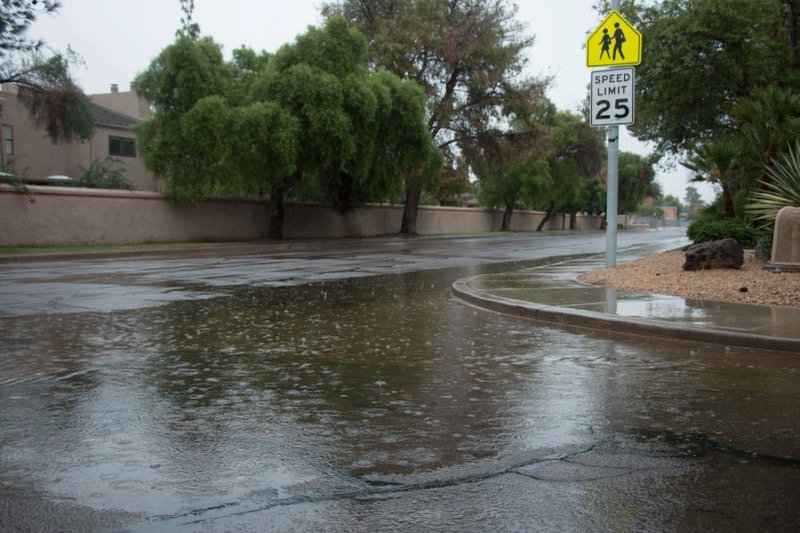
Monsoons dump it all at once An inch of rain on a 2,000 square foot roof is about 1,200 gallons. In heavy rain events, it can rain that much really fast, and most yards let nearly all of it run into the street. Shade and cooler streets Trees watered by rain grow bigger and faster. Their shade cools sidewalks, walls and roofs, and that's one of the best tools we have against the urban heat island effect. Cleaner water, less flooding Water that soaks in near where it lands doesn't pile up downstream. Soil and roots also filter the oil, dust and litter that rain picks up on the way.
The five steps to building a storm-proof GSI system
Watch the water Next time it rains, go out and see where water actually goes. (If you already have video, great!)
Note the downspouts, the low spots, where it leaves the yard and where it puddles. That map is your plan.Slow it down Fast water erodes and carries soil away. Heavy rock linings, living plants, check dams and mulch slow it down so it can soak in instead of stripe away land. Spread it out Send water across the yard with gentle swales and shallow grading, so more ground gets a drink and no one spot floods. Sink it in Shallow basins (rain gardens) hold water long enough to soak in. They are essentially turning a small amount of rain across wide surfaces into a much deeper amount of rain, concentrated in a specific area. Plant and mulch it Plants are what make it all work long-term. Roots open up the soil, mulch keeps it from crusting, and shade keeps the water from evaporating. Start with native, fast-growing species, and add more each season til there’s nowhere left to plant!
Permascaping’s green stormwater infrastructure toolkit
Curb cuts An opening cut in the curb so water running down the gutter flows into a planted basin behind it instead of the storm drain. Where: Along the street, upslope of the basin, where gutter flow actually runs in a storm. Rules of thumb: At least 2 feet wide so it doesn't clog. Saw-cut the curb, and slope the floor down into the yard with at least a 2-inch drop. Put a sediment trap or rock pad right inside so the edge doesn't wash out. In the right-of-way it needs the city's okay. Sediment traps A small pad right where water enters a basin. Street grit, leaves and trash drop out there instead of clogging the basin. Where: Just inside every curb cut and at the end of any pipe or channel that carries water from paving. Rules of thumb: A flat concrete pad with a low lip is easiest to clean; a rock bottom is hard to shovel out. Clean it at least twice a year and after any storm over half an inch. Rain gardens (basins) A shallow, mulched dip that holds water for a few hours while it soaks in. The heart of any GSI plan. Where: Wherever water already flows or can be sent: below downspouts, along driveways, at the low side of the yard. Several small basins work better than one big one. Keep them at least 10 feet from your foundation. Rules of thumb: About 9 to 12 inches of water, plus 3 more inches of rim. Sides no steeper than 3 to 1. Standing water should be gone within 36 hours. Keep plants out of the spot where water pours in, and skip the filter fabric. 
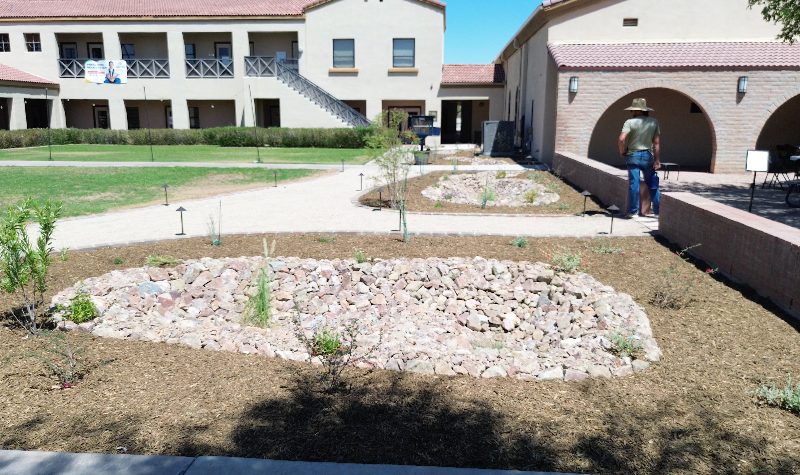
A mulched basin with a tree on its rim: the water soaks in right at the roots. Swales A long, gentle channel, usually planted and mulched, that moves water across the yard and lets it soak in along the way. Where: Along a slope or a wall, to carry water from where it lands to where you want it. Rules of thumb: Keep the grade gentle so water creeps rather than rushes, with sides no steeper than 3 to 1. Add check dams on longer runs. 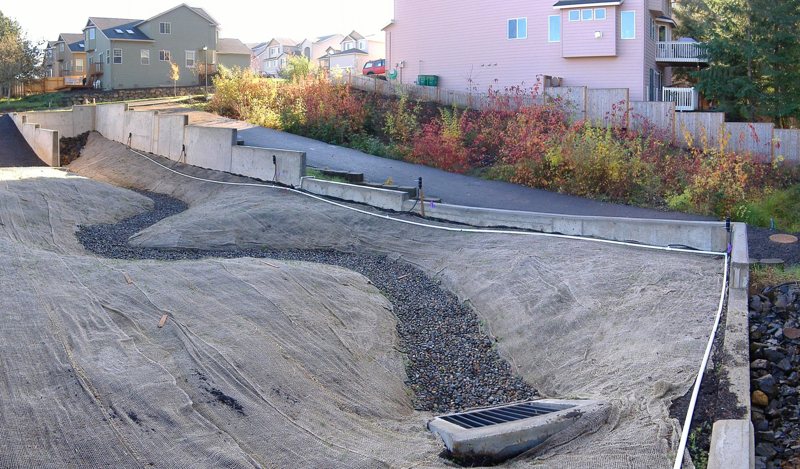
A planted swale carrying runoff along a parking lot. Photo: Wikimedia Commons, public domain. Check dams Low lines of rock set across a swale or a slope. Each one makes a small pool that slows water and drops its silt. Where: In swales and washes, every so often down the slope. Rules of thumb: Angular rock at least 3 inches across, no taller than 2 feet. Make the middle about 4 inches lower so water spills over the center, not around the ends. Space them so the bottom of each dam is level with the top of the next one down. Rock aprons and splash pads A pad of rock where water lands hard: under a downspout, at a curb cut or where a pipe empties. Where: At every point water drops or speeds up. Rules of thumb: Use rock big enough that a storm won't move it, and set it into the soil, not on top. Overflow spillways A low, rock-lined notch in a basin's rim where water leaves once the basin is full. Where: On the downhill side of every basin, pointed at the next basin or a safe place, never at a wall or a neighbor. Rules of thumb: Line it with rock so it doesn't erode, and set it at least 3 inches below any nearby sidewalk or patio. Plan where the overflow goes before you dig. Sidewalk scuppers A short covered channel under a sidewalk (sometimes called a curb core) that carries water from the street side to a basin on the other side. Where: Where a sidewalk sits between the street and the spot that can hold water. Rules of thumb: Work in the public right-of-way, so it needs a permit and a contractor who has done them. Permeable paving Pavers, pervious concrete or gravel laid over a stone base so water soaks through instead of running off. Where: Patios, paths, parking pads and driveways. Rules of thumb: Use at least 6 inches of clean crushed stone underneath and keep the slope gentle. Never put decomposed granite on or next to it, since the fines clog the gaps. Sweep it twice a year. 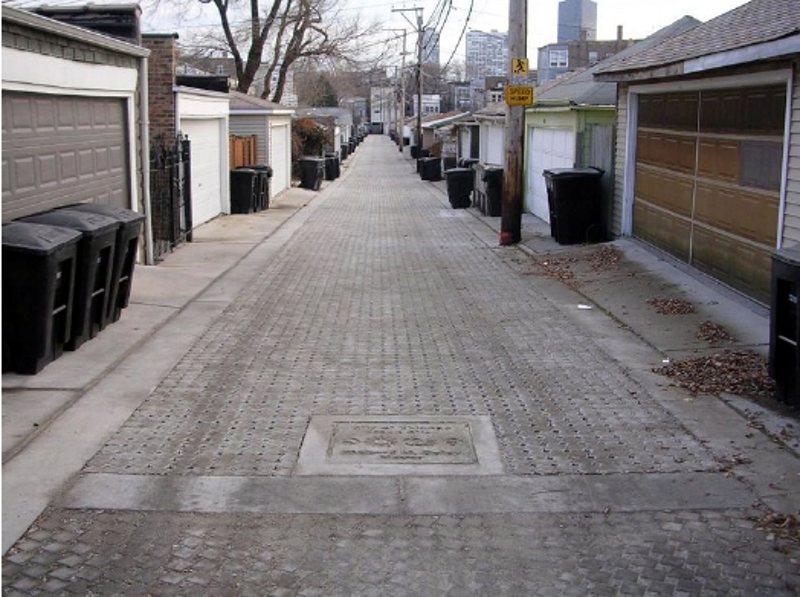
Permeable pavers in an alley soak up rain instead of shedding it. Photo: U.S. EPA, public domain. Dry wells A gravel-filled pit that lets water soak deeper into the ground where the surface soil is too tight or there's no room for a basin. Where: Where water collects and can't drain, after you've tried a basin. Rules of thumb: Put a sediment trap ahead of it so it doesn't clog. In Arizona, dry wells have to be registered with ADEQ, so check the rules before you dig one. Rain tanks A tank that stores roof water to use between storms, then overflows into a basin when it's full. Where: Under a downspout, on a level, solid base, close to what it will water. Rules of thumb: Screen the inlet, cover it against mosquitoes and light, and send the overflow to a basin. Size it in our planner from your roof and what you water. Mulch and plants The living part that makes everything else work: roots open the soil and mulch keeps it soft, shaded and soaking. Where: In and around every basin and swale. Rules of thumb: About 3 inches of wood mulch where plants need water, rock where water runs fast. Keep mulch away from tree trunks, and let fallen leaves stay as free mulch.
Sizing rules of thumb
Plants for wet and dry
The rim: trees and big shrubs The rim stays driest, but roots reach right into the wet zone. That's the spot for velvet mesquite, blue palo verde, ironwood, desert willow and fruit trees. The upper sides: tough shrubs Above the water line, the sides get wet often and dry fast. Brittlebush, jojoba, Texas ranger, salvias and penstemon handle both. Let them grow to their natural shape instead of shearing them. The bottom: plants that can take a soak Below the water line, the bottom floods in storms and bakes in between. Deer grass, pink muhly, chuparosa, desert hackberry and quail bush can take it, or just a thick layer of mulch.
Street-side work and permits
Common mistakes
Myth Deeper basins hold more, so deeper is better. Actually Shallow, wide basins soak water in faster and don't hold it long enough for mosquitoes. A foot of water at most, spread over more ground, beats a deep hole. Myth Put the basin right next to the house so the downspout drains straight in. Actually Water against a foundation can cause cracking and settling. Run the downspout out to a basin at least 10 feet from the house. Myth Rock looks clean, so line the whole basin with it. Actually Rock heats up and holds no water. Use it where water lands hard or moves across the landscape, and wood mulch where you want plants to thrive. Myth More basins means more problems with mosquitoes. Actually A basin that drains within a day and a half can't breed mosquitoes, which need several days. Standing water for days means the basin's too deep or the soil's sealed. Myth It's a one-time project. Actually Clear sediment traps after big storms, top up mulch once a year and keep inlets open. A few minutes after each storm keeps it all working.
Questions
Do I need a permit for a basin in my own yard?
How big should my basin be?
Will water near my house cause damage?
What about mosquitoes?
Can I do this myself?
Where should I start?
Where to go next
Plan it on your yard Draw your roofs and gutters on a satellite map and see how many gallons each basin and tank catches. Open the watershed planner →Rainwater harvesting, installed Basins, swales, curb cuts and tanks designed and built for your yard. See rainwater harvesting →Gutters that feed the yard Seamless gutters with downspouts placed to send water where your plants are. See gutters →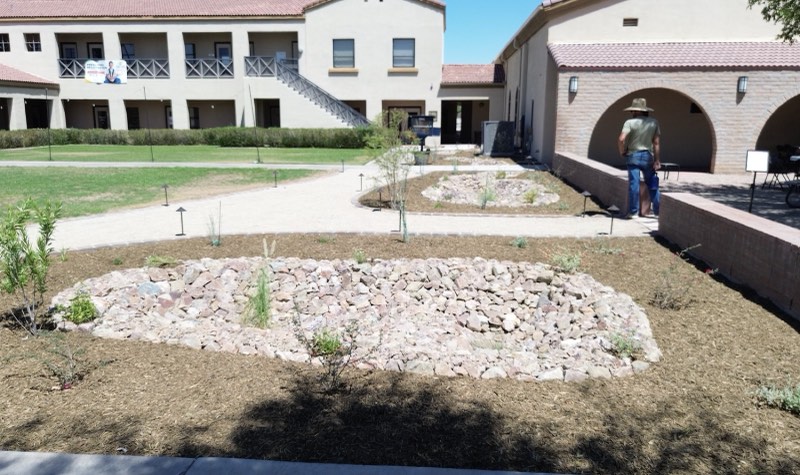
A design for the whole yard Water, shade, food and soil planned together, with a site visit and a 3D model of your yard. See landscape design →
