
Native & adapted
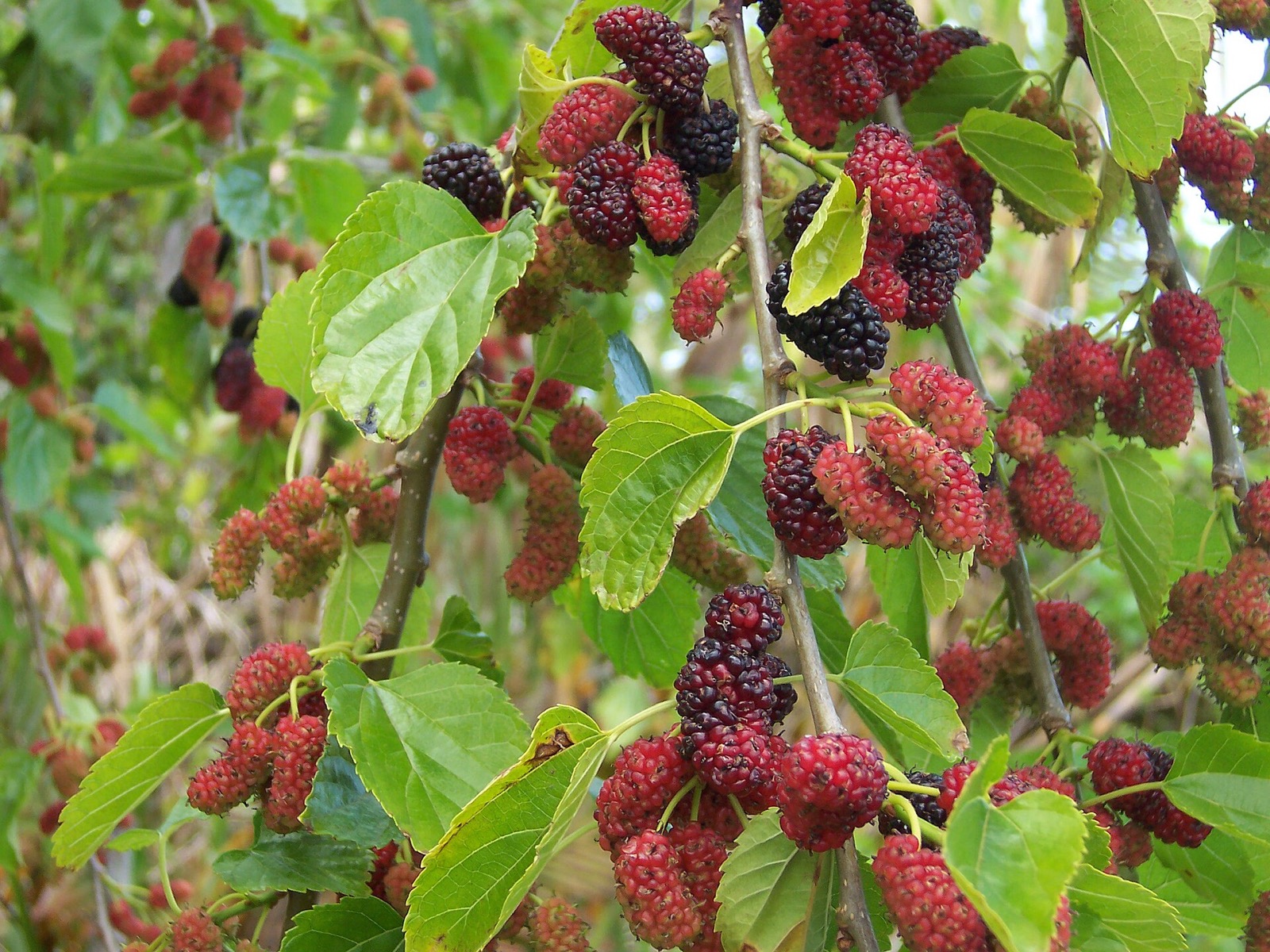
Mulberry
These conditions determine whether it will thrive.
White mulberry is hardy to USDA zone 4, so cold is never a worry here. It leafs out early, and a rare late frost can brown the first flush of flowers and young fruit.
Leaves and wood: damaged below -20°FOne of the old Phoenix shade trees, it takes full west sun without complaint. Fruit ripens in spring before the worst heat, so sunburn isn't a real issue.
Will Mulberry grow at your Arizona property?
Use the whole site—not only the hardiness zone. Confirm mature width, reflected heat, seasonal shade, drainage, irrigation reach, and cold-air pockets before planting.
Cultivars & selections
Pakistan
Morus macroura ‘Pakistan’Produces dark red-to-black fruit that may reach several inches long. Vigorous and excellent in heat, but fruit stains hardscape.
Persian
Morus nigra selectionsDeeply flavored, dark fruit on a slower-growing tree. True M. nigra can be difficult to source, so verify the nursery’s identity.
Shangri-La
Morus alba ‘Shangri-La’Early-bearing, vigorous selection with large leaves and fruit; allow substantial canopy room.
Illinois Everbearing
Morus alba × rubra ‘Illinois Everbearing’Excellent-flavored dark fruit over a long season; more broadly useful in cooler and high-desert locations than Pakistan.
How to help Mulberry thrive
- 1
Confirm the plant’s mature spread and underground conflicts before digging.
- 2
Place the root flare at finished grade and keep mulch away from the trunk.
- 3
Establish a wide, deep root zone instead of irrigating only at the trunk.
- 4
Observe seasonal growth, heat stress, and wildlife use before making major pruning changes.