Permascaping, by Homegrown Foods

How to grow healthy living soil in the desert
Three rules: keep it quiet, keep it covered, keep it planted. Do them and your yard holds water, feeds your plants and stops blowing away.

10-minute read Β· By JΓ©rΓ©my Chevallier Β· Updated October 2026

Dirt and soil aren't the same thing. Dirt is what's left when the life is gone. Soil is alive.

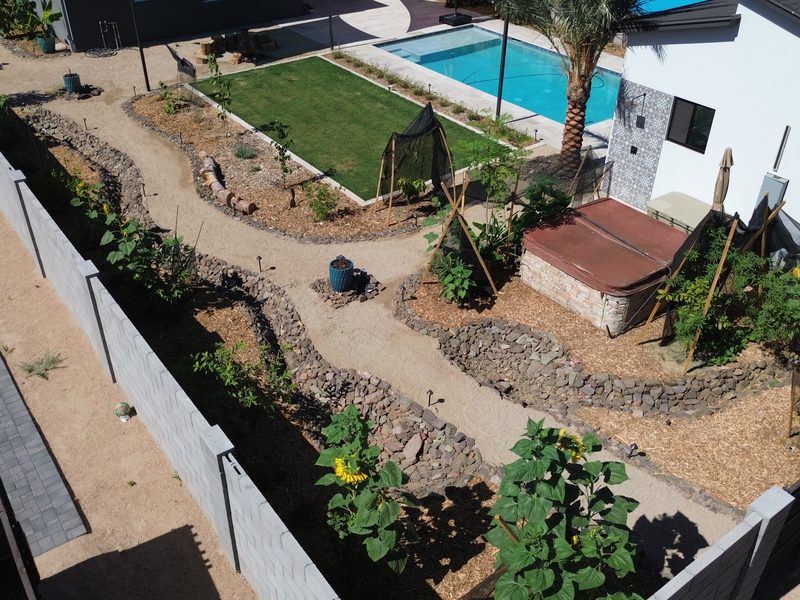
Most Phoenix yards are dirt. Scraped, packed down, covered in rock and baked. That's why they need so much water, and why so much of it ends up in a haboob.

The good news: you can bring it back, and it doesn't take long to start. These three rules come from farmer Jesse Frost's The Living Soil Handbook. They work just as well in a yard as on a farm. (I first wrote about them here.)

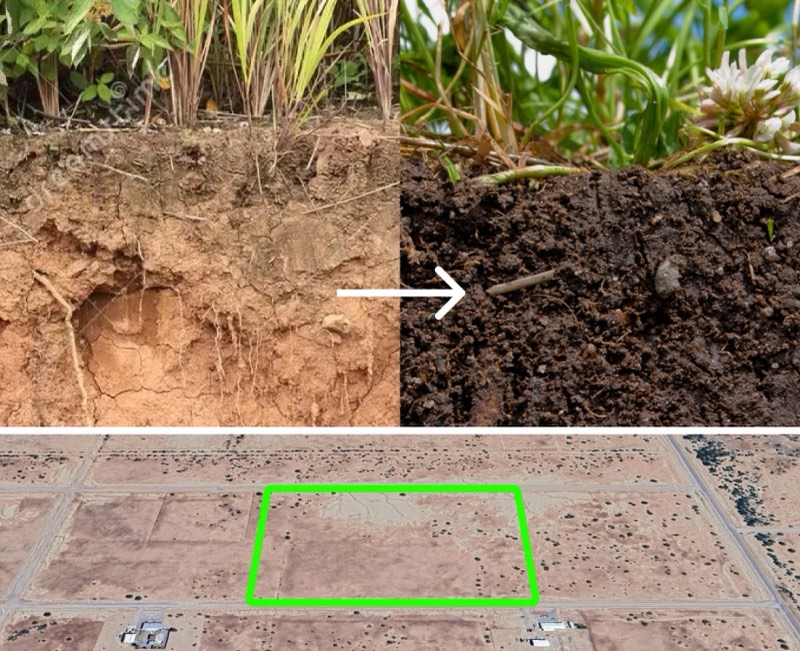
Same ground, before and after: dead, packed dirt on the left, living soil on the right.

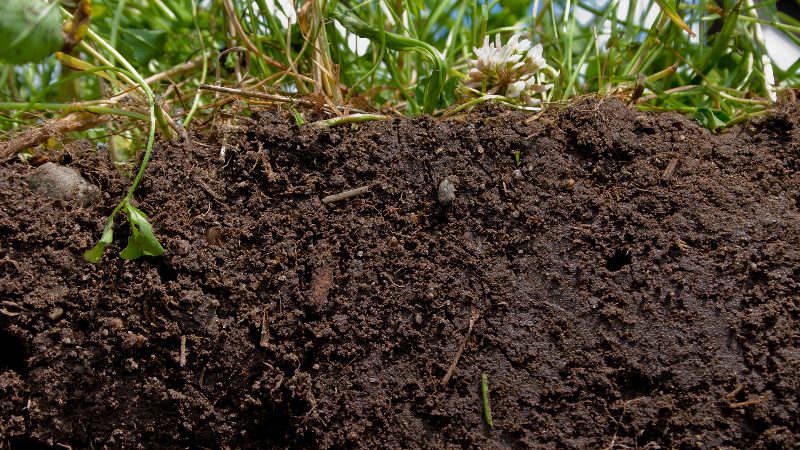
Thumbnail for the Blog & guides card and link previews. Click the photo to replace it; until then the main photo is used.

The three rules

Everything else in this guide is just these three, done in a desert yard.

  • Keep it quiet

    Dig, till and scrape as little as you can.

  • Keep it covered

    Organic mulch on every bit of bare ground.

  • Keep it planted

    Living roots in the ground all year long.

1. Keep it quiet

Soil is a web of bacteria, fungi, bugs and roots, all working together. Every time you till or scrape it, you tear that web apart and it has to start over.

Every person who has ever lived came from the top 15 inches of soil on Earth. It's worth treating gently.

Bare, broken-up dirt is also what turns into dust. If we want fewer haboobs in Phoenix, we have to stop tearing up the ground.

In your yard

  • Taking out lawn? Cut it out at the roots or smother it. Don't till it in.
  • Taking out gravel? Rake the rock off. Don't scrape the soil under it.
  • Planting? Dig only the hole you need, and leave the rest alone.
  • Walking around? Stick to paths. Packed-down soil can't breathe or soak up water.
A haboob rolling into Phoenix: loose, bare dirt on the move.

A joke worth remembering

Some scientists tell God they don't need him anymore. They can make life too. They grab a handful of soil and shape it into a baby, and it blinks up at them. "Very impressive," God says. "But first, get your own soil."

Paraphrased from Sadhguru, founder of the Save Soil movement

2. Keep it covered

Bare soil in the Phoenix sun gets hot enough to cook the life in it, and it dries out in hours. A cover keeps it cool and damp, so the life underneath keeps working.

Wood chips are the best cover for most yards. Leaves, straw and compost work too.

Rock counts as mulch on paper. In the desert it's a weak one: it soaks up heat and feeds nothing.

"But the desert doesn't have mulch!" Look under any mesquite, palo verde or desert willow. The desert mulches itself with its own fallen leaves. Where there's leaf drop, there's mulch.

How to cover it

  • Go thick. 3 to 4 inches of wood chips over the whole root zone.
  • Leave a gap. Keep mulch a few inches off trunks and stems.
  • Top it up. Add more once a year as it breaks down into soil.
  • Keep your leaves. They're free mulch. Rake them under your plants instead of bagging them.
A desert willow in a wash, mulching its own roots with its leaves. Photo Β© Tree of Life Nursery.

3. Keep it planted

Plants feed the soil. They turn sunlight into sugars and trade them to tiny life underground for minerals, water and protection from disease.

No living roots, no trade. The soil life goes hungry, and the soil slowly turns back into dirt.

Water should leave your yard through a plant, not by drying off bare ground. Plants breathe water out into the air, and that helps bring more rain. The more plants a place has, the more it rains.

How to keep it planted

  • Plant in layers. Trees, shrubs and groundcovers, so something's always growing.
  • Fill the gaps with natives. Desert marigold and globe mallow cover ground fast on very little water.
  • Use plants that feed the soil. Mesquite and fava beans pull nitrogen from the air into the ground, where their neighbors can use it.
  • Don't leave beds empty. Between crops, sow a cover crop like fava beans in winter, or microclover for a living groundcover.
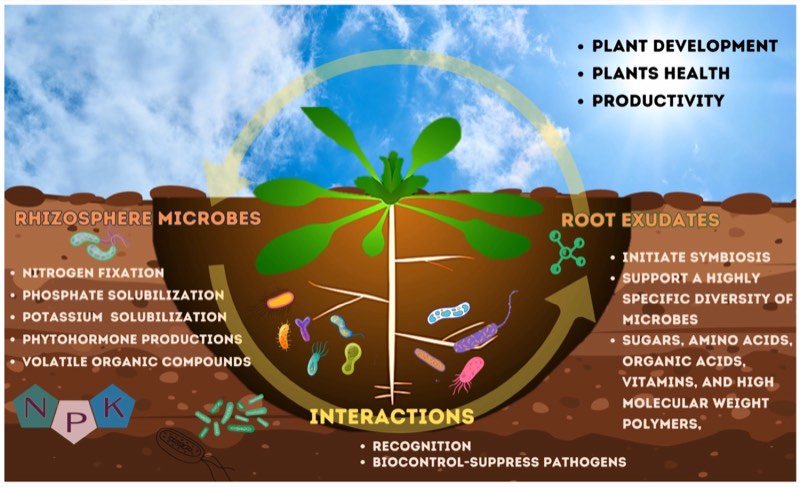
The trade at the roots: plants give sugars, microbes give back minerals and water. Image Β© Wannaporn Thepbandit & Dusit Athinuwat, MDPI.
Water leaving through a plant (transpiration) instead of off bare ground (evaporation). Image: USGS Water Science School.

What not to do

Each of these feels like yard care. Each one sets your soil back.

  • Till or rototill your beds.
  • Leave soil bare between plantings.
  • Use rock where you want things to grow.
  • Blow away or bag your leaves.
  • Spray weed killers that hit the soil life too.
  • Pile synthetic fertilizer on dead dirt.

Start this week

You don't need to do it all at once. Here's the order we'd go in.

  1. Stop scraping and blowing. Let fallen leaves stay put.
  2. Cover every bare patch with 3 to 4 inches of wood chips. (We deliver.)
  3. Pull rock back from anywhere you want things to grow.
  4. Plant something in every empty bed, even if it's just a cover crop.
  5. Water deep and less often, under the mulch.
  6. Feed it slowly: compost on top, and a monthly fertilizing plan if your trees need help.
  7. Want it done for you? See soil revitalization.

Questions

Can't I just add compost?

Compost helps, especially spread on top. But without cover and living roots, the life it brings has nothing to eat and nowhere cool to live.

Is rock mulch bad?

Not bad, just weak. It holds heat and feeds nothing. Use it on paths and leave the planting areas to wood chips.

Where do I get wood chips?

Tree trimming companies often give them away. We also deliver wood chips and compost by the yard.

Will wood chips bring termites?

Termites already live in Phoenix soil. Chips don't bring them, but keep mulch about a foot away from your house's foundation.

How long until my soil gets better?

You'll see more worms and darker, softer soil under mulch within a season or two. Deep topsoil takes years, but it starts the day you stop digging and start covering.

Do I need to dig to plant?

Only the hole itself. Our fruit tree planting guide shows how.

Keep it quiet. Keep it covered. Keep it planted.

Questions about your soil? Press Help on any page and it comes straight to me.