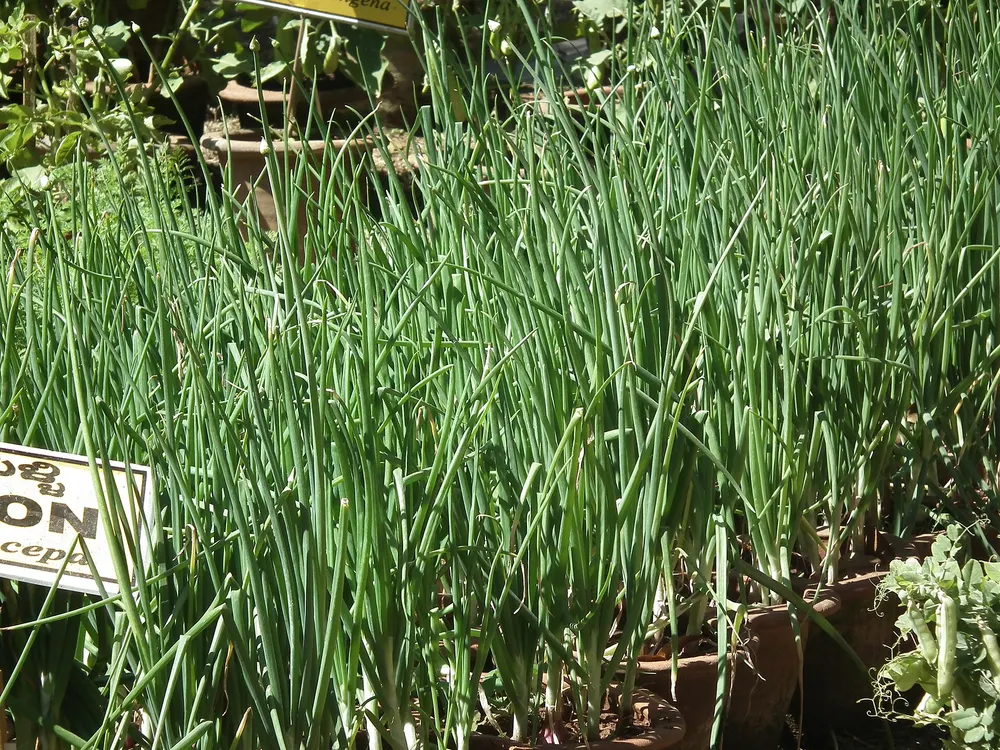
Also known as Onion · Yellow onion · Red onion · White onion
Choose short-day or suitable intermediate-day onions for the low desert; long-day northern varieties often fail to bulb properly.
EdibleCool-season crop
Growing spaceVegetable bedClimate fitUrban core · USDA 9b–10a · Valley suburbs · USDA 9a–9b · Desert outskirts · USDA 8b–9bCrop familyAmaryllidaceae (allium)Life cycleAnnual cropPhoenix planting windowSow short-day varieties October–November; plant sets/transplants December–January.How to plantDirect sow seed or use short-day transplants/sets; variety day length is decisive.Plant spacing4–6 inFrostTolerates light frost once established; cover during a hard freeze.Time to harvestAbout 4–5 months from sets; 7–8 months from seed in the Maricopa calendarSuccessionOne main cool-season crop; stagger varieties rather than late sowings.Special categoriesEDIBLETypical harvestBulbs mature in spring as tops fall over.
Before you plant
These conditions determine whether it will thrive.
Cold hardinessCover in a hard freeze below 28°F
Frost tolerant. Tops may burn in the upper 20s but plants recover.
Leaves and wood: damaged below 28°FHeat toleranceShade from late-afternoon sun
Bulbing is set by day length and they finish as heat builds. Tops fall over and bulbs are ready around May in Phoenix.