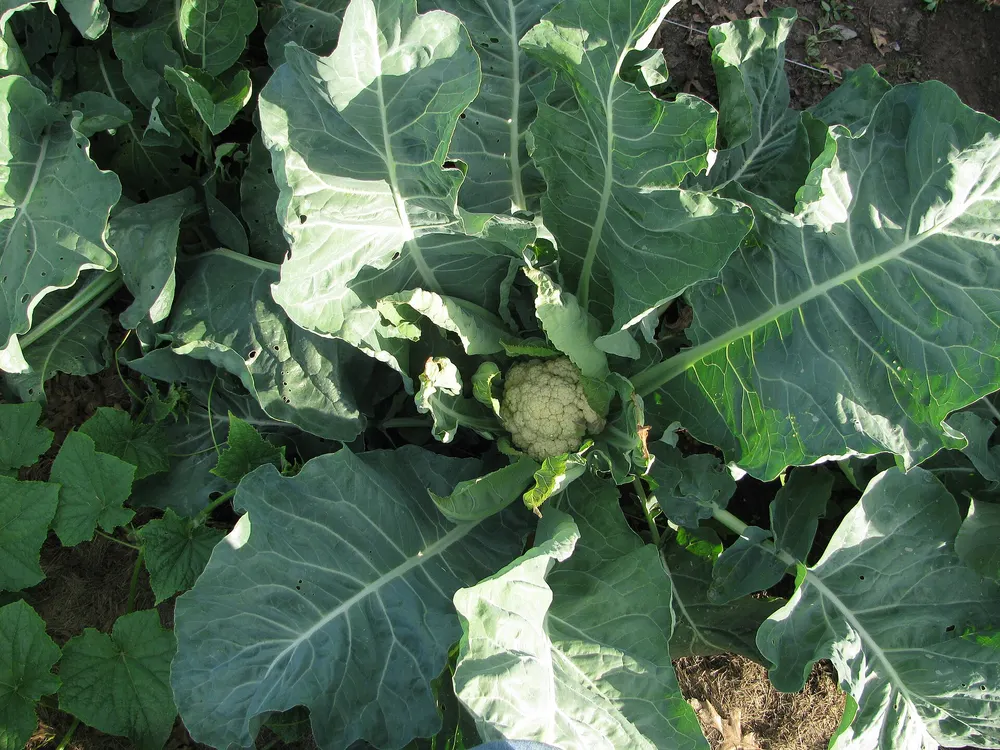
Steady moisture and mild weather help form compact curds. Heat or frost stress can interrupt head quality; blanch white varieties if needed.
EdibleCool-season crop
Growing spaceVegetable bedClimate fitUrban core · USDA 9b–10a · Valley suburbs · USDA 9a–9b · Desert outskirts · USDA 8b–9bCrop familyBrassicaceae (mustard)Life cycleAnnual cropPhoenix planting windowStart seed in August–September; transplant September–January, best in fall.How to plantStart in trays and transplant into cooled beds; direct sowing is possible in early fall.Plant spacing18–24 inFrostTolerates light frost once established; cover during a hard freeze.Time to harvestAbout 90–100 days from transplants; 120–130 from seedSuccessionStagger fall transplants by 2–3 weeks.Special categoriesEDIBLETypical harvestCut firm heads in winter before curds loosen.
Before you plant
These conditions determine whether it will thrive.
Cold hardinessCover in a hard freeze below 28°F
Plants take light frost, but the curd is easily damaged. Cover heading plants when a frost is forecast.
Leaves and wood: damaged below 28°FHeat toleranceNeeds afternoon shade
Fussy about heat. Warm days make curds loose, fuzzy or discolored, so plant by January and harvest by March in Phoenix.