
Native & adapted
Pomegranate
These conditions determine whether it will thrive.
Most varieties are hardy to about 10 to 12°F, far below anything Phoenix sees. It's most tender right at spring bud break, but it flowers on new growth after our frost season, so the crop is rarely at risk.
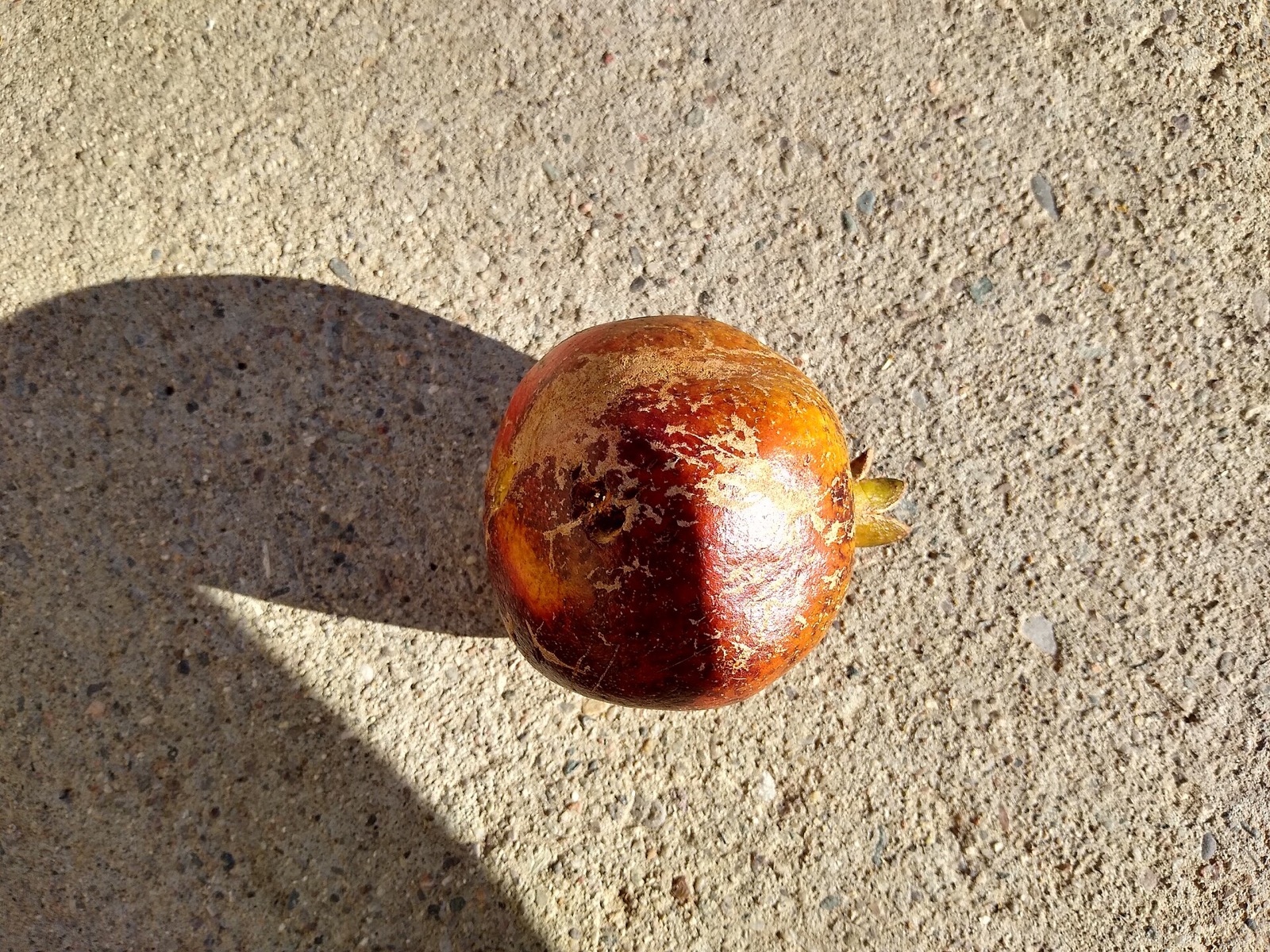
Leaves and wood: damaged below 12°FCompletely at home in Phoenix heat and full west sun. The fruit can sunburn on the exposed side and splits if watering swings from dry to soaked, so keep irrigation steady in late summer.
Will Pomegranate grow at your Arizona property?
Use the whole site—not only the hardiness zone. Confirm mature width, reflected heat, seasonal shade, drainage, irrigation reach, and cold-air pockets before planting.
Cultivars & selections
Wonderful
Punica granatum ‘Wonderful’The commercial standard: productive, richly flavored, and tart-sweet, with hard seeds and a mid-to-late fall harvest.
Eversweet
Punica granatum ‘Eversweet’Low-acid fruit with relatively soft seeds. A good choice for people who find Wonderful too tart.
Parfianka
Punica granatum ‘Parfianka’Red fruit with excellent sweet-tart balance, often ranked highly for fresh eating.
Angel Red
Punica granatum ‘Angel Red’Bright-red arils and an earlier season can spread harvest ahead of Wonderful.
How to help Pomegranate thrive
- 1
Confirm the plant’s mature spread and underground conflicts before digging.
- 2
Place the root flare at finished grade and keep mulch away from the trunk.
- 3
Establish a wide, deep root zone instead of irrigating only at the trunk.
- 4
Observe seasonal growth, heat stress, and wildlife use before making major pruning changes.