Permascaping, by Homegrown Foods
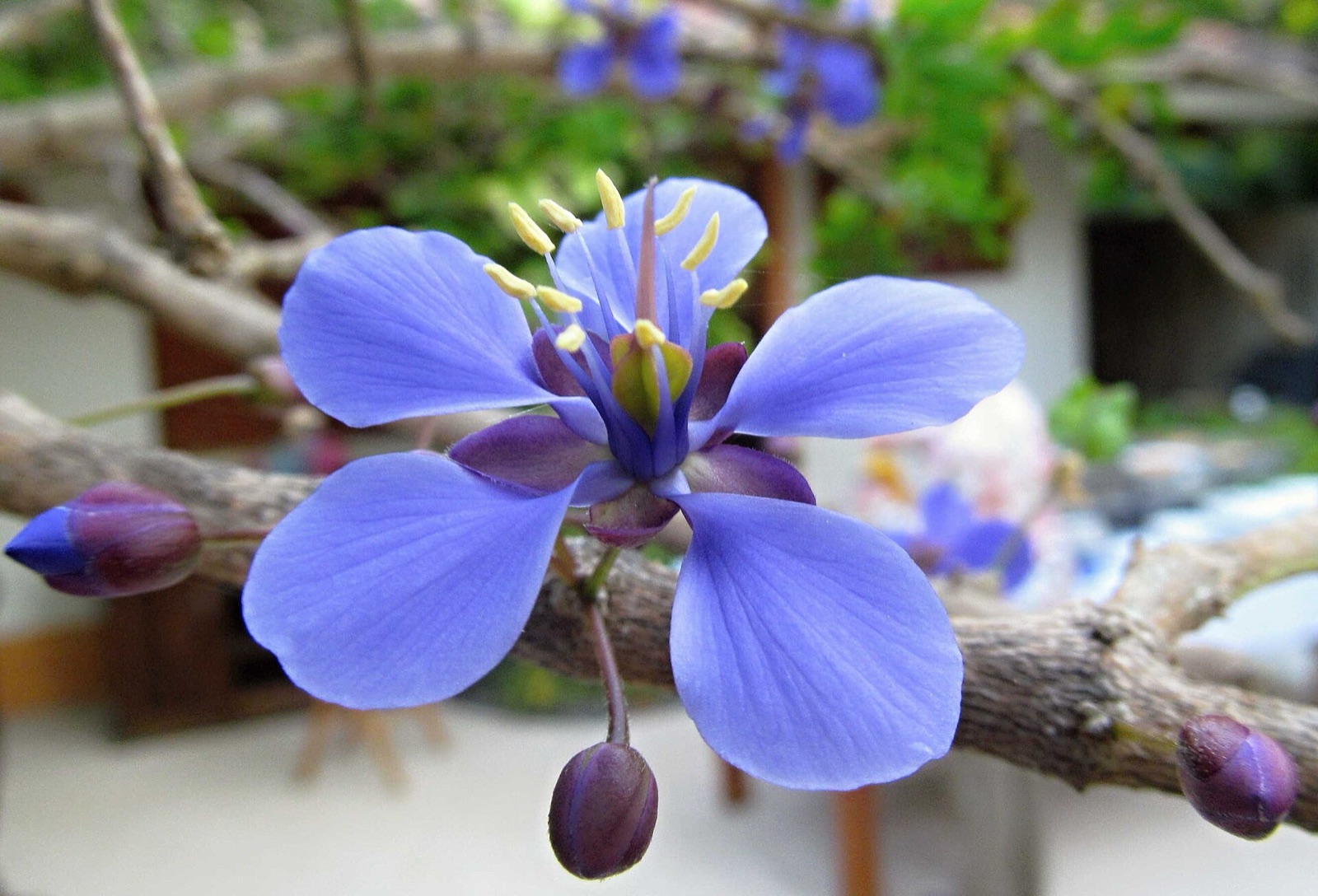
A single violet-blue Sonoran guayacán flower with yellow anthers on a gnarled gray branch

Native & adapted

Sonoran guayacán

Guaiacum coulteri

Also known as Guayacán · Guayacan · Sonoran guayacan · Guayacan tree · Guaiacum · Pockwood

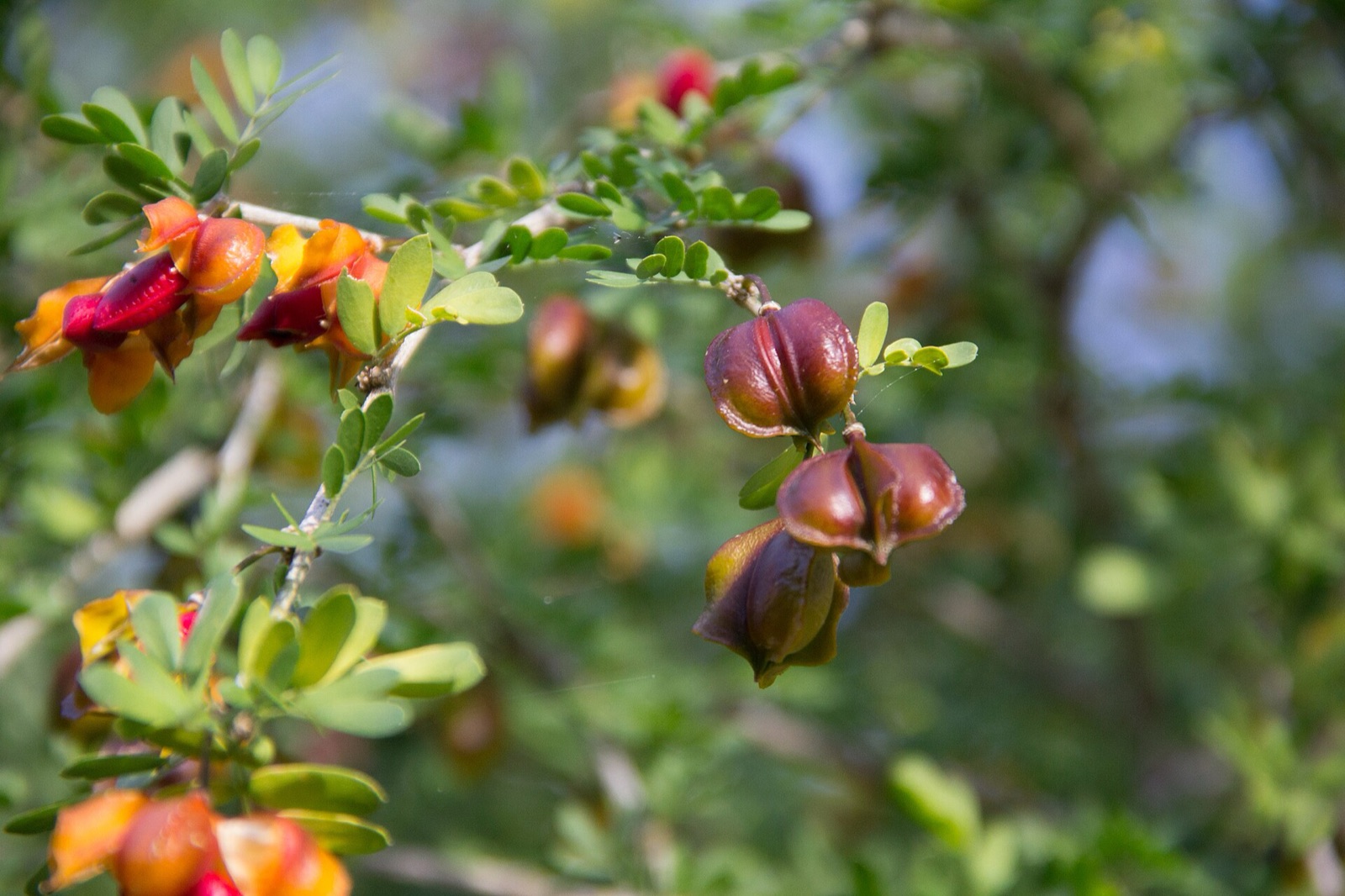
A slow, sculptural little evergreen from the southern Sonoran Desert with some of the truest blue flowers of any desert tree. It blooms in waves through the heat, then sets orange pods that split open on bright red seeds.

Sonoran nativePollinatorEvergreenLow waterFloweringThornlessSlow growing
Landscape layersLower canopy · Understory
Mature sizeAbout 10 ft tall and wide here, over many years; taller in its home range
Climate fitUrban core · USDA 9b–10a · Valley suburbs · USDA 9a–9b
Plant spacing8–10 ft apart; 5 ft from walls
FrostTender when young. Leaves and twigs burn in the low 20s°F, and an established plant grows back.
Special categoriesSONORAN DESERT NATIVE · POLLINATOR ATTRACTING
Hardiness guidanceUSDA 9b–11; hardy to about 20–25°F
Winter chillNone
Typical harvestNot a food plant.

Before you plant

These conditions determine whether it will thrive.

Soil chemistry

Fast-draining soil. It comes from gravelly plains, so rocky and alkaline ground suits it. Avoid spots that stay wet.

Required microclimatePlacement is part of the growing system.

The warmest spot you have: a south or west wall, a courtyard, or near paving. Keep it out of low pockets where cold air settles.

Right plant, right place

Will Sonoran guayacán grow at your Arizona property?

It grows wild on the gravelly plains of the southern Sonoran Desert and in the thornscrub beyond it, where winters are milder than in the Valley. It's a cousin of creosote and of lignum vitae, with some of the hardest, heaviest wood there is. The whole genus is protected in international trade, so buy a nursery-grown plant. It's hard to find because it grows so slowly.

Best regional fit: Urban core · USDA 9b–10a, Valley suburbs · USDA 9a–9b.

The fruit

Guayacán branches with orange and maroon seed pods, some split open on red seeds
The pods ripen from maroon to orange in fall, then split open on red seeds. Photo: José Eugenio Gómez Rodríguez, CC BY-SA 4.0

Light

Sun exposure

Full sun, including reflected heat off a wall. It grows in part shade too, with fewer flowers.

Water

Irrigation

Low. Once established, a deep soak every 2 to 3 weeks in summer and once a month or less in winter. Summer water brings on more flowers.

Fruit set

Pollination

Bees work the flowers from April through September.

Harvest

How to use it

Not edible. The red seeds are for the birds.

Planting & stewardship

How to help Sonoran guayacán thrive

  1. 1

    Start with the biggest plant you can afford. It may only add a few inches a year.

  2. 2

    Water deeply and let the soil dry in between.

  3. 3

    Cover young plants on freezing nights for the first few winters.

  4. 4

    Leave its twisting shape alone. Only prune to lift the canopy or take out frost damage, in late spring.

  5. 5

    Don't worry if it drops leaves in a long dry spell. They come back with water.