Permascaping, by Homegrown Foods
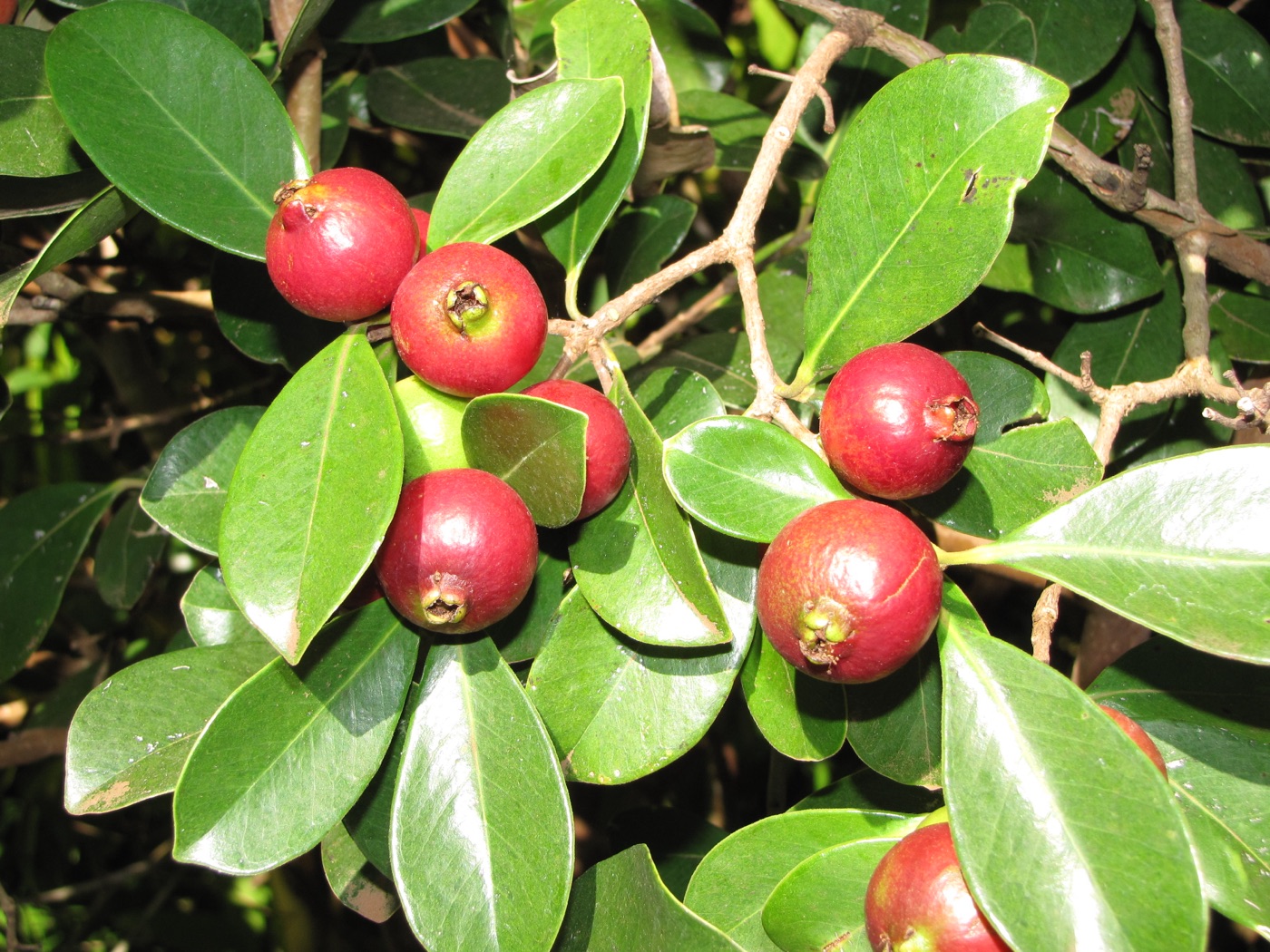
Ripe red strawberry guavas among glossy dark green leaves

Native & adapted

Strawberry guava

Psidium cattleyanum

Also known as Cattley guava · Cherry guava · Lemon guava · Red cattley guava · Chinese guava · Araçá · Psidium cattleianum · Psidium littorale

A glossy evergreen shrub with small red fruit that tastes a little like strawberry. In Phoenix it makes a great hedge or privacy screen that also feeds you, and it handles frost better than common guava.

EdibleFruitingEvergreenHedgeScreenContainer friendly
Landscape layersHedging · Lower canopy
Mature size6–15 ft tall and wide as a shrub, up to about 25 ft as an unpruned tree; easy to hold at 6–10 ft as a hedge
Climate fitUrban core · USDA 9b–10a · Valley suburbs · USDA 9a–9b · Desert outskirts · USDA 8b–9b
Plant spacing4–6 ft apart for a hedge or screen; 10–12 ft from other trees as a single specimen
FrostHardier than common guava. Established red-fruited plants handle brief dips to about 22–25°F with little damage; the yellow lemon guava form is a little more tender.
Special categoriesEDIBLE
Hardiness guidanceUSDA 9b–11; established plants take brief dips to about 22–25°F
Winter chillNone
Typical harvestMostly late summer through early winter. Pick when the skin is fully red and gives slightly.

Before you plant

These conditions determine whether it will thrive.

Soil chemistry

Handles poor, rocky and limestone soils better than most fruit, so Phoenix's alkaline ground is workable. Add compost and use chelated iron if new leaves yellow between the veins.

Required microclimatePlacement is part of the growing system.

East side of a house or wall, or along a property line that gets some afternoon shade. Young plants want a spot sheltered from the hardest frosts.

Right plant, right place

Will Strawberry guava grow at your Arizona property?

A great fruiting hedge or privacy screen for Phoenix. Kept as a tall hedge or a row of narrow columns, it looks a lot like the ficus hedges common here, but without ficus's aggressive roots that lift paving and break pipes, and it bears fruit. Use it to block neighbors and street views and soften road noise. It can self-seed and has become invasive in wet tropical places like Hawaii and Florida; that is not a concern in our dry desert.

Best regional fit: Urban core · USDA 9b–10a, Valley suburbs · USDA 9a–9b, Desert outskirts · USDA 8b–9b.

In Valley yards

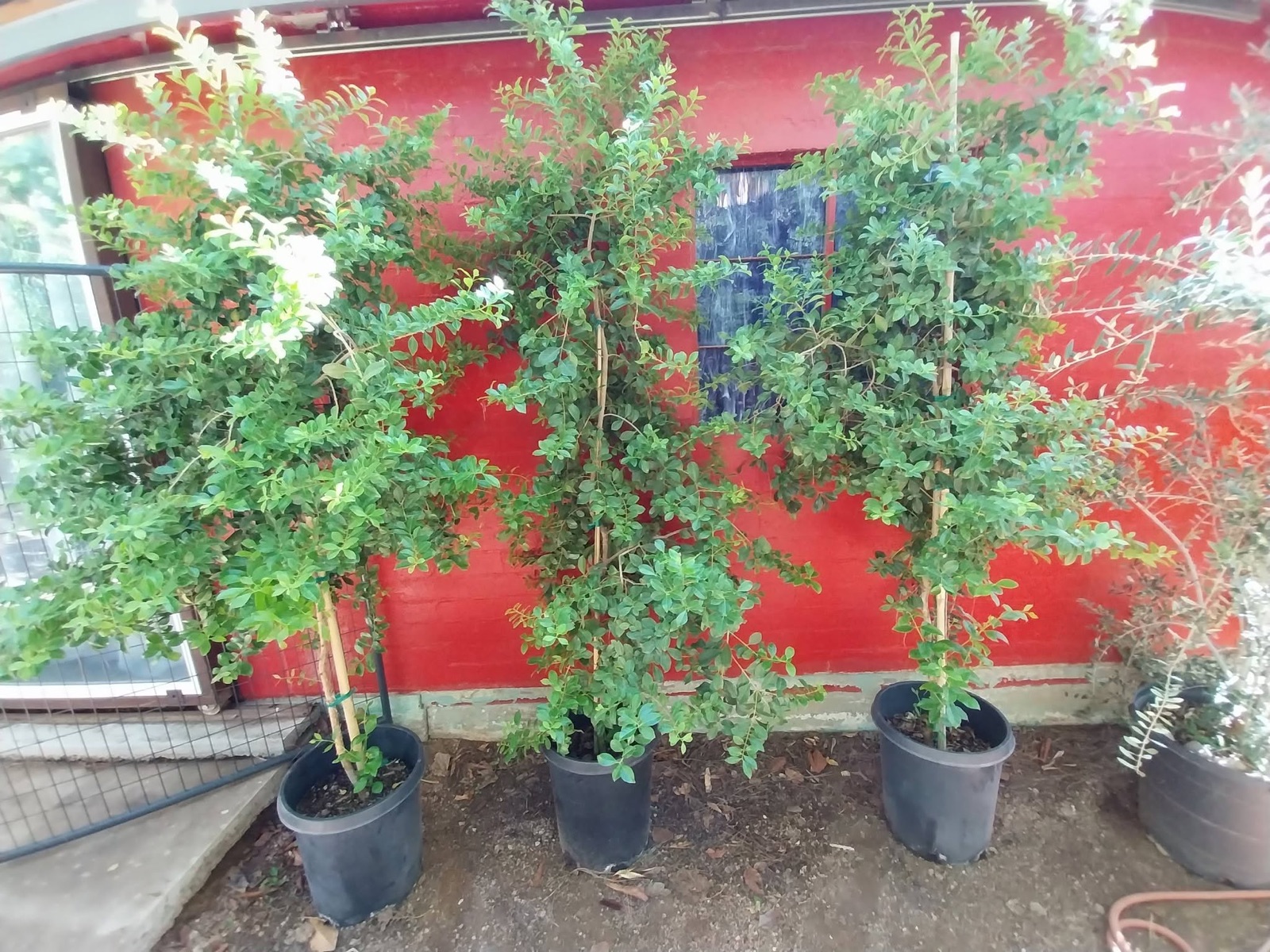
Three strawberry guavas in pots, each trained up a stake into a narrow column
Strawberry guavas grown as narrow columns, ready to plant in a row as a hedge. Photo: Jay Barringer, Arizona Fruit Trees
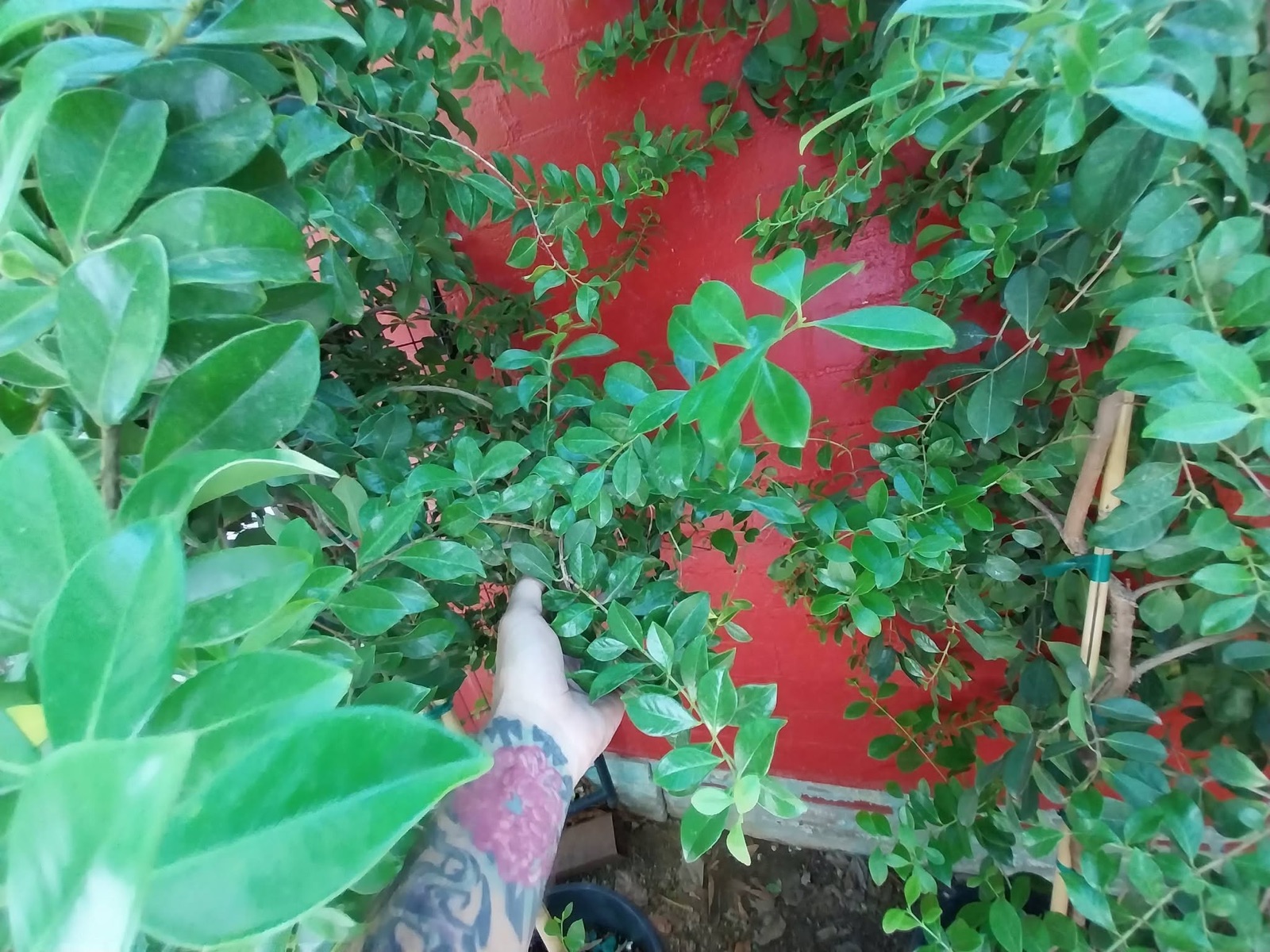
A hand holding a strawberry guava branch with small, glossy green leaves
Up close, the small glossy leaves look a lot like ficus. Photo: Jay Barringer, Arizona Fruit Trees
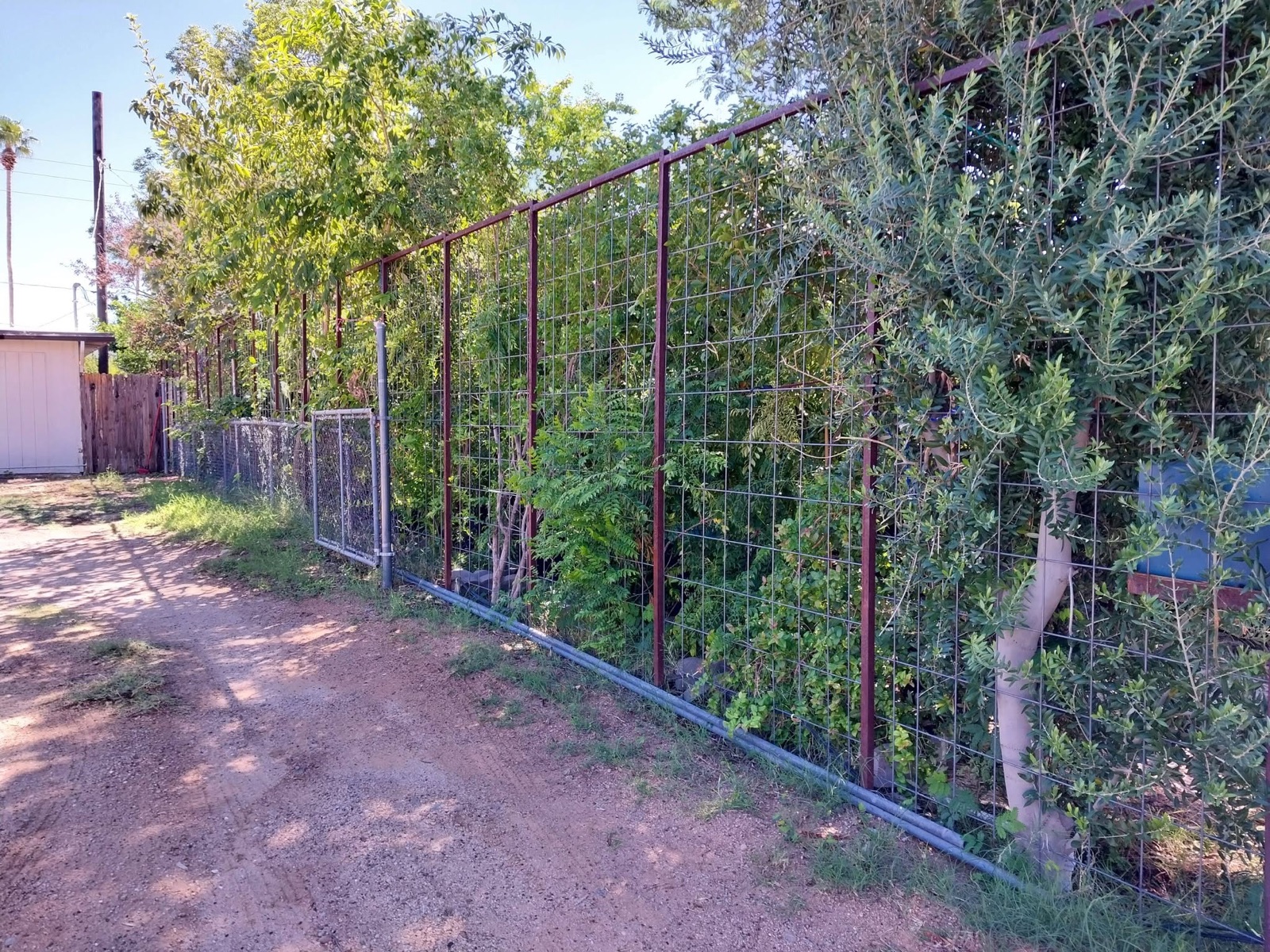
A long wire fence along a dirt side yard, filled in with fruit trees
A side yard fence filled in with more than 30 fruit trees. Photo: Jay Barringer, Arizona Fruit Trees

Light

Sun exposure

Full sun to part shade. In Phoenix, afternoon shade from June through September keeps the leaves from scorching, especially for the first few summers.

Water

Irrigation

Moderate. Deep water once or twice a week in summer and every two to three weeks in winter. The roots are shallow, so keep a thick layer of mulch over them.

Fruit set

Pollination

Self-fertile. One plant fruits on its own.

Harvest

How to use it

Eaten fresh off the plant, skin and all, or cooked into jelly, jam, paste and juice. Sweet-tart and a little spicy, with hard seeds.

Planting & stewardship

How to help Strawberry guava thrive

  1. 1

    For a hedge or screen, plant 4 to 6 ft apart and shear it to shape; it takes shearing well and can be held as a tall hedge or narrow columns.

  2. 2

    Do the main shaping cut right after harvest, since a heavy spring cut removes the flowers and next crop.

  3. 3

    Shade young plants from afternoon sun and cover them on frost nights for the first couple of winters.

  4. 4

    Feed lightly from spring to late summer, and pick up dropped fruit so it does not draw fruit flies.