
Permascaping, by Homegrown Foods
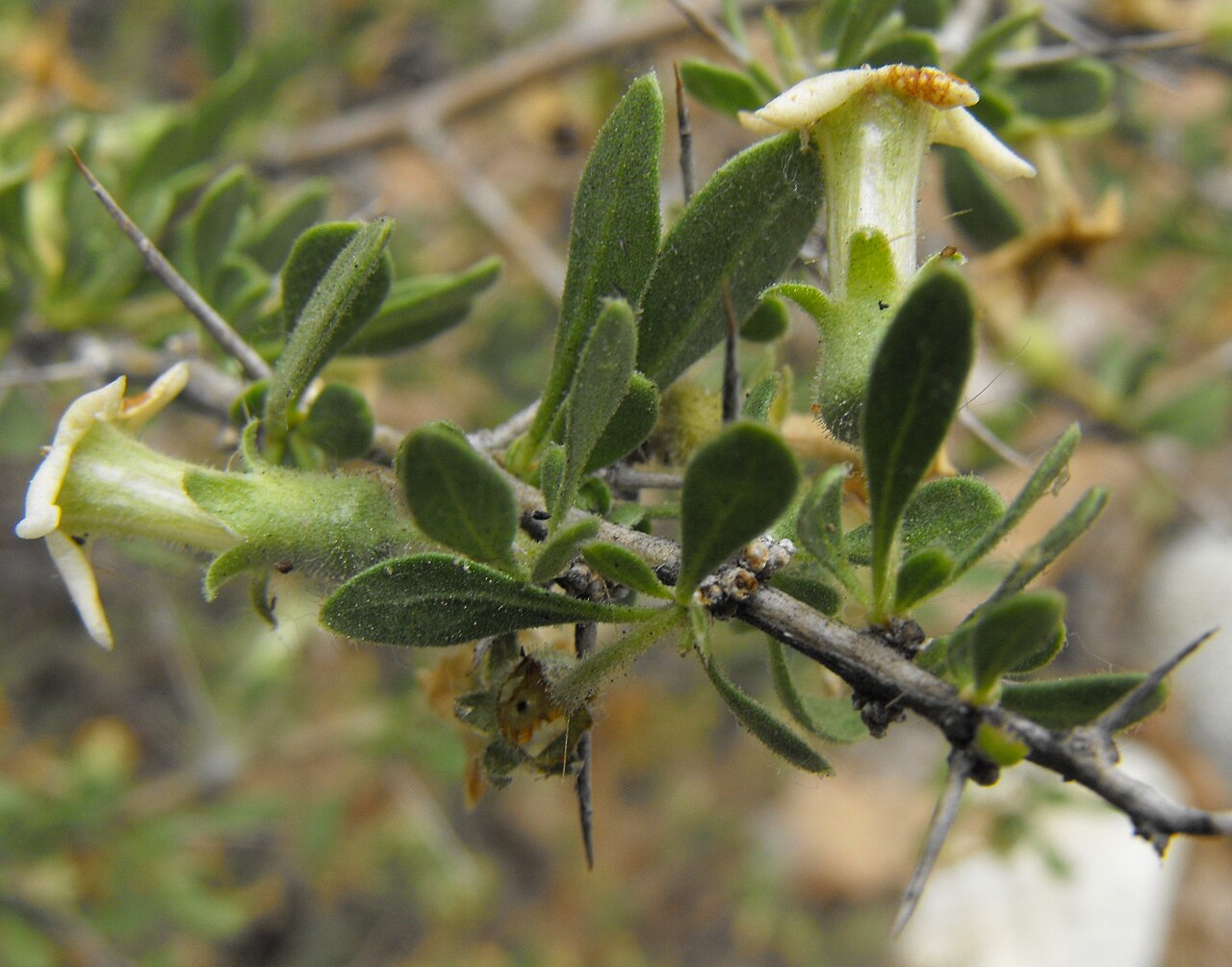
Fremont wolfberry branch with pale tubular flowers and small gray-green leaves

Native & adapted

Wolfberry

Lycium fremontii, L. andersonii and kin

Also known as Desert wolfberry · Fremont wolfberry · Anderson thornbush · Desert thorn · Native goji · Lycium

Tough, thorny Sonoran Desert shrub with small tubular flowers in late winter and bright red, goji-like berries in spring that people, quail and songbirds all eat.

Sonoran nativeEdible berryBird habitatPollinatorVery low water
Landscape layersUnderstory · Hedging
Mature sizeAbout 4–8 ft tall and wide; Anderson thornbush stays nearer 3–6 ft
Climate fitUrban core · USDA 9b–10a · Valley suburbs · USDA 9a–9b · Desert outskirts · USDA 8b–9b
Special categoriesSONORAN DESERT NATIVE · POLLINATOR ATTRACTING · EDIBLE
Hardiness guidanceBest in USDA zones 8b–11; handles low-desert frost and summer heat without protection.
Typical harvestSmall red berries ripen in spring, mostly March to May, after the late-winter flowers. Some years bring a second, smaller crop after summer rains.

Right plant, right place

Will Wolfberry grow at your Arizona property?

Its short, sharp thorns make it a good living barrier along fences, property edges and basin rims, and a safe nesting thicket for birds. Keep it back from paths and play areas.

Best regional fit: Urban core · USDA 9b–10a, Valley suburbs · USDA 9a–9b, Desert outskirts · USDA 8b–9b.

Light

Sun exposure

Full sun, including reflected heat. It leafs out most fully in open, sunny spots.

Water

Irrigation

Very low once established. It drops its leaves in hot, dry spells and leafs out again after rain; a deep soak every 3–4 weeks in summer keeps it greener and fruiting more.

Harvest

How to use it

The juicy, tangy-sweet berries are edible fresh or dried, much like a small goji, and have long been gathered as food in the Sonoran Desert. Pick early, because birds find them fast.

Planting & stewardship

How to help Wolfberry thrive

  1. 1

    Water deeply every week or two through the first summer, then stretch the time between soakings.

  2. 2

    Expect it to look bare in the hottest, driest weeks. That's normal summer rest, not a dying plant.

  3. 3

    Prune lightly after the spring berries to shape it or keep it off a path; avoid shearing it into a box.

  4. 4

    Wear gloves and long sleeves when pruning or picking around the thorns.