
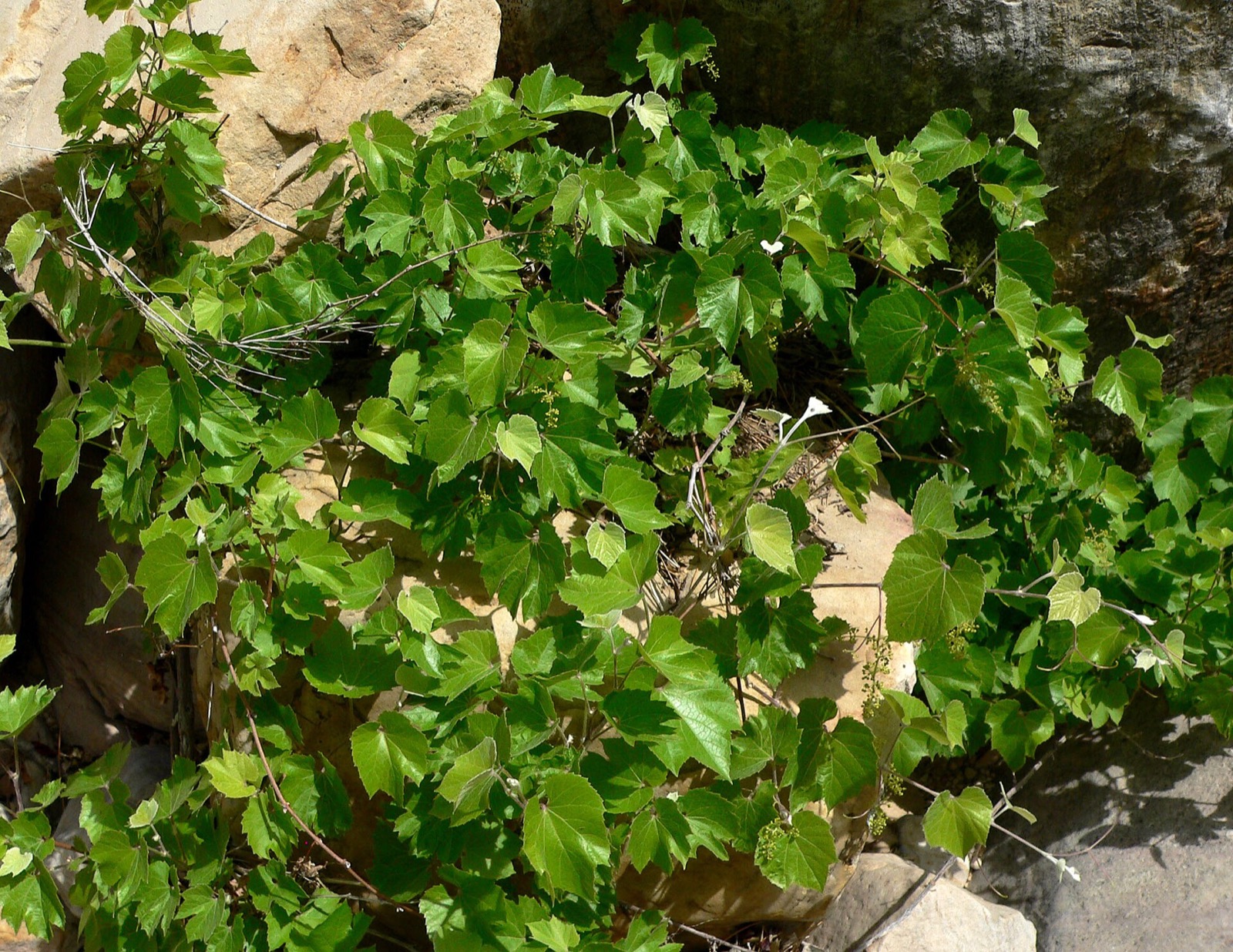
Native & adapted
Arizona grape
These conditions determine whether it will thrive.
The vine is hardy to at least 10°F, so it needs no cover. New shoots and flower clusters can be killed below about 31°F (general grape figure), so a late frost after spring leaf-out can cost that year's fruit.
Leaves and wood: damaged below 10°F · Blossoms and fruit: below 31°FTakes full sun to light shade, but keep it off hot south and west walls. It does best climbing into sun with its roots shaded and steady water, like its canyon home.
Will Arizona grape grow at your Arizona property?
Use the whole site—not only the hardiness zone. Confirm mature width, reflected heat, seasonal shade, drainage, irrigation reach, and cold-air pockets before planting.
How to help Arizona grape thrive
- 1
Confirm the plant’s mature spread and underground conflicts before digging.
- 2
Place the root flare at finished grade and keep mulch away from the trunk.
- 3
Establish a wide, deep root zone instead of irrigating only at the trunk.
- 4
Observe seasonal growth, heat stress, and wildlife use before making major pruning changes.