
Permascaping, by Homegrown Foods
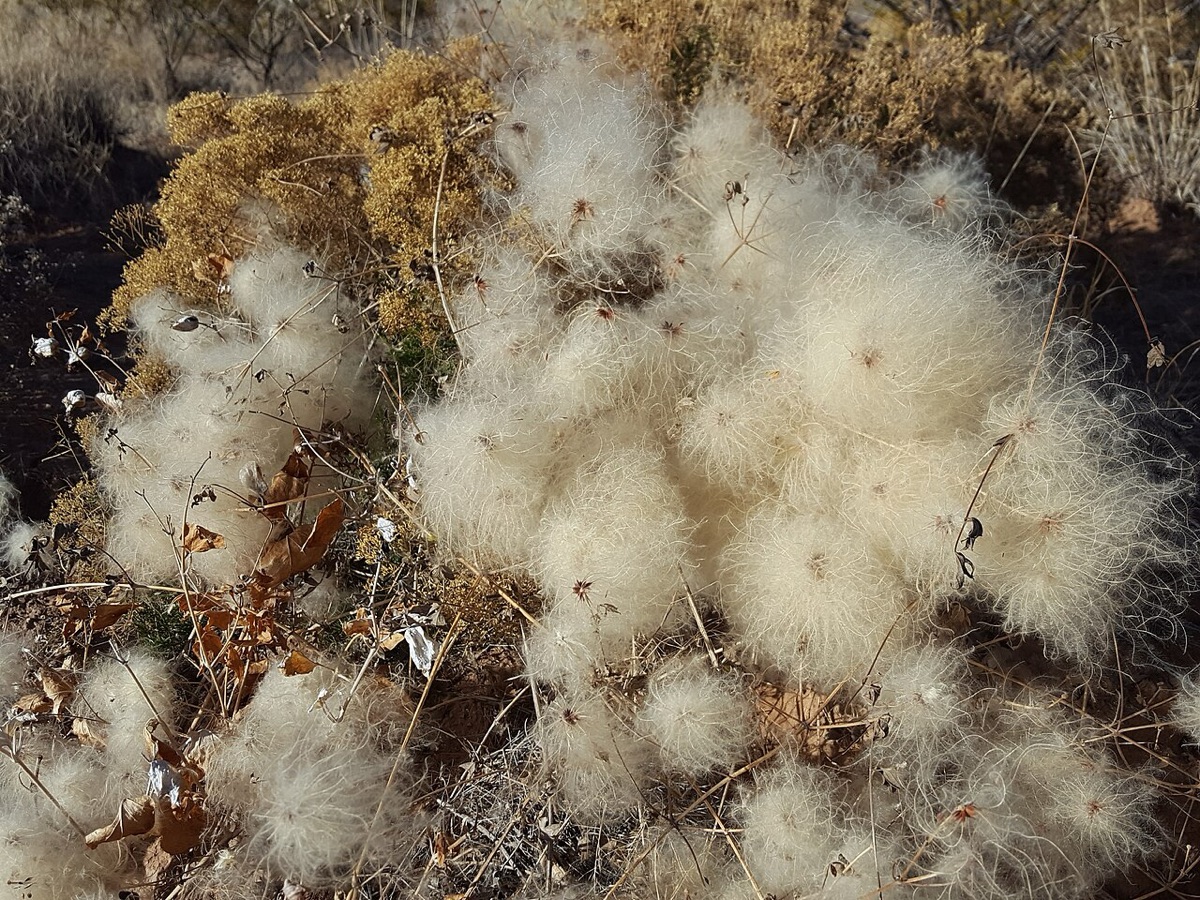
Fluffy silver seed plumes on Drummond's clematis

Native & adapted

Drummond’s clematis

Clematis drummondii

Also known as Texas virgin's bower · Old man's beard · Virgin's bower · Barba de chivato · Drummond's clematis

A native desert clematis that scrambles over fences and shrubs, with small white flowers spring through fall and big fluffy silver seed plumes after.

Arizona nativeWinter deciduousButterfly hostLow water
Landscape layersClimbing
Mature size10–20 ft. long with support
Climate fitUrban core · USDA 9b–10a · Valley suburbs · USDA 9a–9b · Desert outskirts · USDA 8b–9b · High desert · USDA 6a–8b
Hardiness guidanceRoots hardy to at least 10°F; drops its leaves in winter across Arizona

Before you plant

These conditions determine whether it will thrive.

Cold hardinessHardy here

Drops its leaves for winter, and the roots take at least 10°F. Hardy anywhere in the Valley. No cover needed.

Heat toleranceShade from late-afternoon sun

It grows wild in low desert washes, so it handles Phoenix heat. It looks best with shade from late-afternoon sun and its roots kept cool under mulch or a shrub.

Sources: desertmuseum.org, ecorestore.arizona.edu

Right plant, right place

Will Drummond’s clematis grow at your Arizona property?

It's native right here, in washes from the low desert up into the oaks. It climbs by wrapping its leaf stems around things, so give it a wire fence, a trellis or a sturdy shrub. Plants are male or female, and only females make the seed plumes, so plant a few if you want the fluff. Don't eat any part of it.

Best regional fit: Urban core · USDA 9b–10a, Valley suburbs · USDA 9a–9b, Desert outskirts · USDA 8b–9b, High desert · USDA 6a–8b.

Light

Sun exposure

Full sun to part shade. In Phoenix it looks best with shade from late-afternoon sun, like the edge of a mesquite canopy.

Water

Irrigation

Low to moderate once it's settled in. It grows wild in Valley washes, so a deep soak every week or two in summer is plenty. Water much less in winter while it's bare.

Planting & stewardship

How to help Drummond’s clematis thrive

  1. 1

    Plant it at the base of a fence, trellis or shrub it can wrap around, and mulch the roots.

  2. 2

    Water deeply through the first summer, then stretch the time between waterings.

  3. 3

    It goes bare in winter. Cut out dead stems in late winter before new growth starts.

  4. 4

    Prune as needed to keep it in bounds, and pull extra seedlings if it volunteers where you don't want it.