
Permascaping, by Homegrown Foods
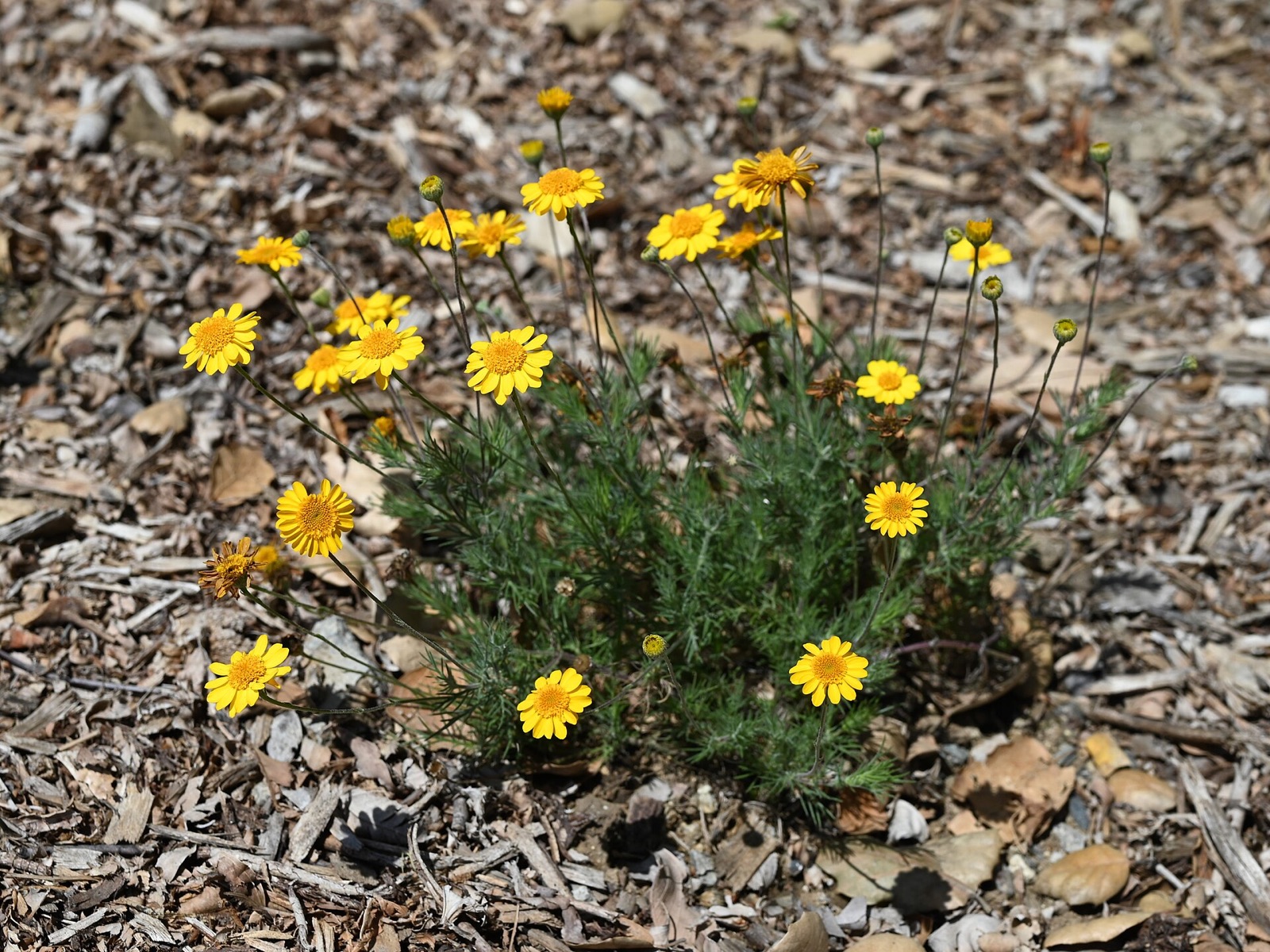
Yellow flowers over fine green dyssodia foliage

Native & adapted

Dyssodia

Thymophylla pentachaeta

Also known as Dogweed Β· Fiveneedle pricklyleaf Β· Dyssodia pentachaeta

A tiny, aromatic desert perennial that makes bright yellow daisies through warm weather and fits naturally between rocks and larger natives.

Sonoran nativePollinatorVery low waterLong blooming
Landscape layersGround cover
Mature size4–12 in. tall Γ— 1–2 ft. wide
Climate fitUrban core Β· USDA 9b–10a Β· Valley suburbs Β· USDA 9a–9b Β· Desert outskirts Β· USDA 8b–9b
Special categoriesSONORAN DESERT NATIVE Β· POLLINATOR ATTRACTING
Hardiness guidanceWarm-desert perennial; hard frost can reduce top growth

Before you plant

These conditions determine whether it will thrive.

Cold hardinessHardy here

Hardy to about 5Β°F. Hard frost may trim back the tops, but no protection is needed.

Leaves and wood: damaged below 5Β°F
Heat toleranceShade from late-afternoon sun

Full sun is best. It looks stressed in peak summer but doesn't die out, and a little part shade softens that.

Sources: amwua.org, asu.edu

Right plant, right place

Will Dyssodia grow at your Arizona property?

Use in small drifts at the front of native beds, beside boulders, or between stepping stones that do not receive heavy traffic.

Best regional fit: Urban core Β· USDA 9b–10a, Valley suburbs Β· USDA 9a–9b, Desert outskirts Β· USDA 8b–9b.

Light

Sun exposure

Full sun to filtered shade.

Water

Irrigation

Very low after establishment, with occasional deep water extending bloom.

Planting & stewardship

How to help Dyssodia thrive

  1. 1

    Plant several together so their fine texture reads at landscape scale.

  2. 2

    Do not overwater or bury the crown beneath heavy mulch.

  3. 3

    Trim lightly after flowering if stems become loose.

  4. 4

    Let seedlings remain where a naturalistic flowering carpet is desired.