
Permascaping, by Homegrown Foods
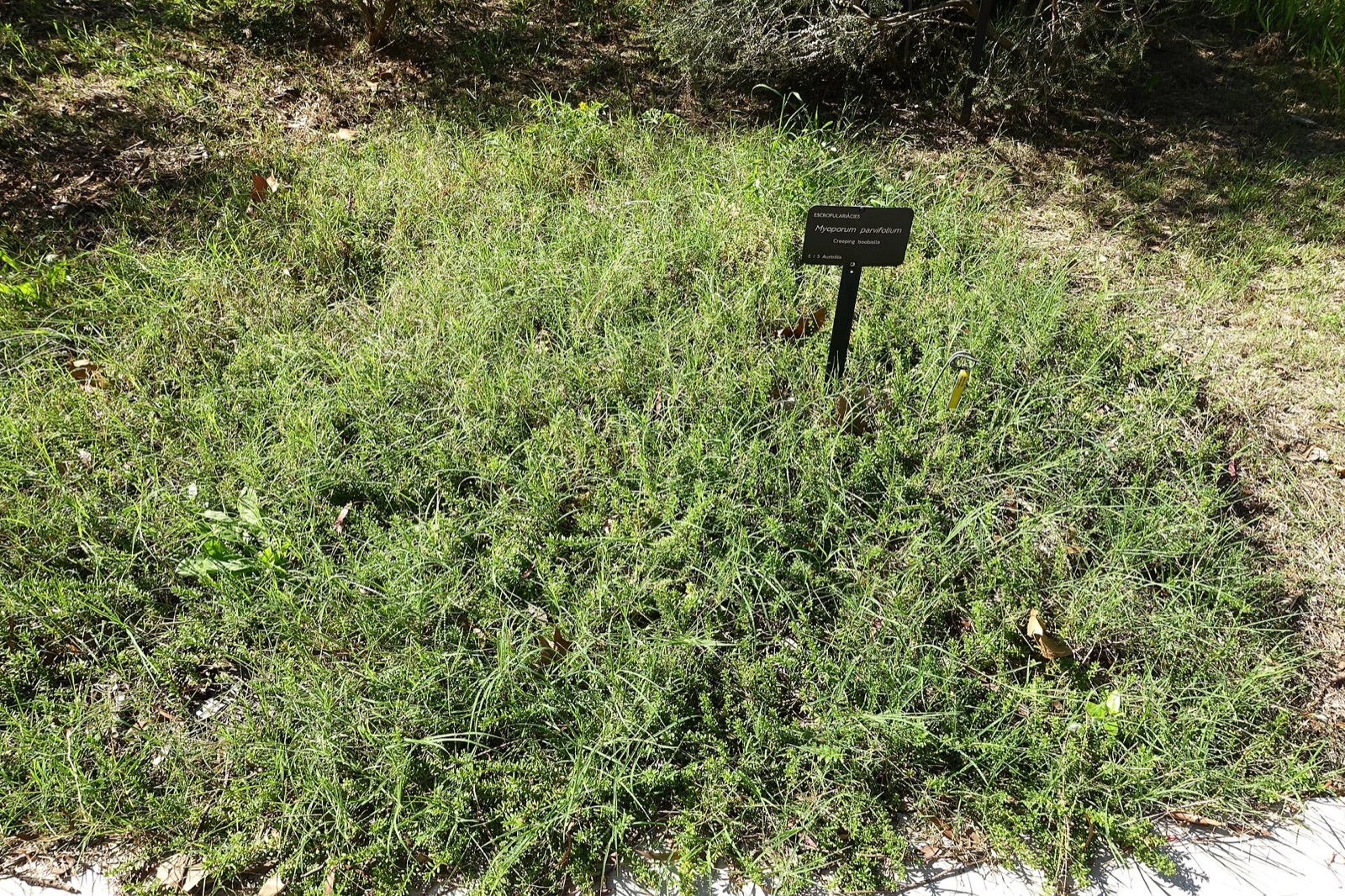
White flowers and fine green foliage on prostrate myoporum

Native & adapted

Prostrate myoporum

Myoporum parvifolium

Also known as Creeping myoporum · Myoporum

A very low Australian groundcover that makes a dense green carpet across hot banks, broad beds, and difficult slopes.

EvergreenFast spreadingHeat tolerantLow water
Landscape layersGround cover
Mature size3–8 in. tall × 6–12 ft. wide
Climate fitUrban core · USDA 9b–10a · Valley suburbs · USDA 9a–9b · Desert outskirts · USDA 8b–9b
Hardiness guidanceGenerally hardy to about 20°F once established; colder pockets can damage foliage

Before you plant

These conditions determine whether it will thrive.

Cold hardinessCover in a hard freeze below 20°F

Rated hardy to about 20°F, and some sources put damage closer to 23°F. Fine most winters, but cover it in cold pockets when a hard freeze is forecast.

Leaves and wood: damaged below 20°F
Heat toleranceShade from late-afternoon sun

Handles Phoenix heat to about 115°F in full or part sun. It is not truly low-water here, so in hot west exposures it needs regular deep watering or it browns out.

Sources: amwua.org, asu.edu

Right plant, right place

Will Prostrate myoporum grow at your Arizona property?

Use where a broad, fast carpet is genuinely wanted. Keep it away from small planting pockets, paths, and slower perennials it could overrun. Leaves and fruit should not be eaten.

Best regional fit: Urban core · USDA 9b–10a, Valley suburbs · USDA 9a–9b, Desert outskirts · USDA 8b–9b.

Light

Sun exposure

Full sun to light shade. It handles reflected heat once established, but its spread is looser in deep shade.

Water

Irrigation

Low after establishment. Deep, separated irrigation is safer than constantly wet soil; improve drainage where clay stays saturated.

Planting & stewardship

How to help Prostrate myoporum thrive

  1. 1

    Space plants for their mature spread instead of packing them tightly for instant coverage.

  2. 2

    Water deeply through the first warm season, then lengthen the interval between irrigations.

  3. 3

    Shear or edge selectively after growth flushes; avoid creating a thick woody shell with constant clipping.

  4. 4

    Do not place where pets, livestock, or children may be tempted to ingest plant parts.