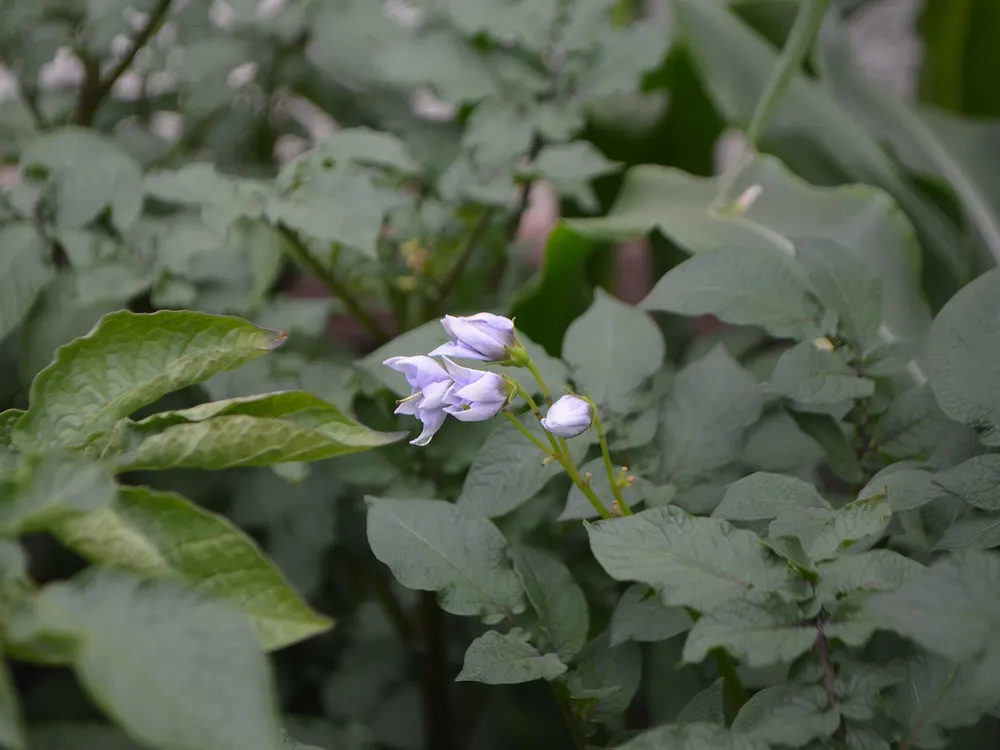
Also known as Irish potato · White potato · Potatoes
This is a late-winter planting for spring harvest, not a crop to leave through Phoenix summer. Use certified seed potatoes and hill developing tubers away from light.
EdibleCool-season crop
Growing spaceVegetable bedClimate fitUrban core · USDA 9b–10a · Valley suburbs · USDA 9a–9b · Desert outskirts · USDA 8b–9bCrop familySolanaceae (nightshade)Life cycleAnnual cropPhoenix planting windowJanuary–early March for the spring crop; cover shoots if frost threatens.How to plantPlant certified disease-free seed-potato pieces, not true seed.Plant spacing10–12 in, with room to hill soil around stemsFrostFoliage is frost-sensitive; cover shoots on freezing nights.Time to harvestAbout 90–120 daysSuccessionUsually one late-winter planting.Special categoriesEDIBLETypical harvestSpring new or mature tubers before sustained heat.
Before you plant
These conditions determine whether it will thrive.
Cold hardinessCover on every frost night
The tops can't take frost and get dead, crinkled leaves at freezing. Cover sprouted plants on any frosty night.
Leaves and wood: damaged below 32°FHeat toleranceShade from late-afternoon sun
Plant January to mid-March. Plants decline as heat builds in May, so dig before June when tops die back.
This is a late-winter planting for spring harvest, not a crop to leave through Phoenix summer. Use certified seed potatoes and hill developing tubers away from light.
Best regional fit: Urban core · USDA 9b–10a, Valley suburbs · USDA 9a–9b, Desert outskirts · USDA 8b–9b.
Light
Sun exposure
Full winter sun; give leafy crops afternoon protection during warm fall and spring weather.
Water
Irrigation
Keep the vegetable root zone evenly moist with regular irrigation; adjust to rain, soil, and temperature rather than using a fixed summer schedule.
Planting & stewardship
How to help Potato thrive
1
Prepare a fertile, well-drained bed and keep seed or transplants evenly moist through establishment.
2
Thin to the final spacing; crowding reduces harvest quality.
3
Watch for aphids and caterpillars and protect sensitive growth from a hard freeze.
4
Harvest before sustained spring heat causes bolting or poor quality.