
Permascaping, by Homegrown Foods
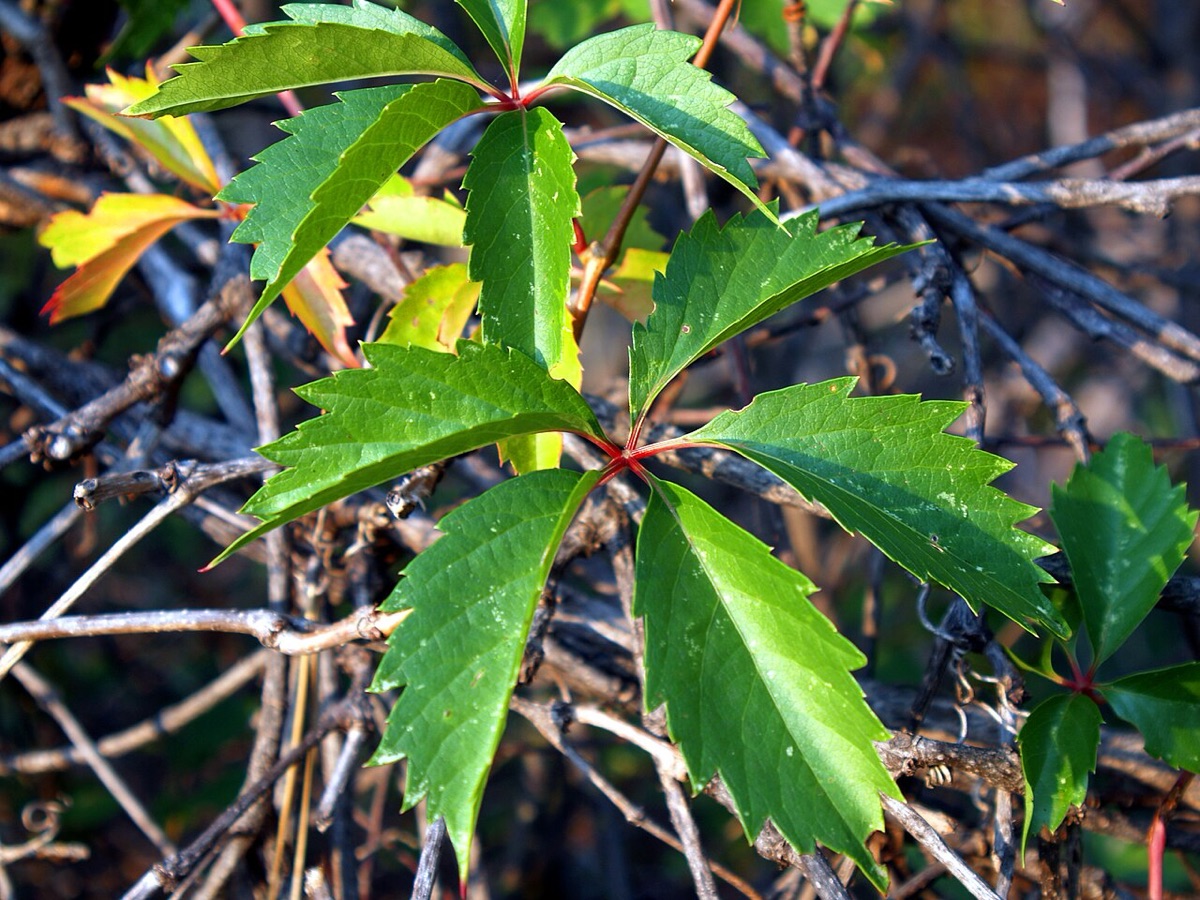
Five-leaflet leaves of thicket creeper

Native & adapted

Thicket creeper

Parthenocissus vitacea

Also known as Parthenocissus inserta · Woodbine · False Virginia creeper · Hiedra creeper

A native cousin of Virginia creeper that covers a fence or arbor with five-leaf foliage, turns red in fall and drops its leaves for winter.

Southwest nativeWinter deciduousFall colorBird habitat
Landscape layersClimbing
Mature size15–30 ft. long with support
Climate fitUrban core · USDA 9b–10a · Valley suburbs · USDA 9a–9b · Desert outskirts · USDA 8b–9b · High desert · USDA 6a–8b
Hardiness guidanceVery cold hardy, to at least 10°F; drops its leaves in winter

Before you plant

These conditions determine whether it will thrive.

Cold hardinessHardy here

Very hardy, to at least 10°F, and leafless in winter anyway. No protection needed.

Heat toleranceNeeds afternoon shade

Leaves scorch in reflected heat. Give it afternoon shade or an east exposure, never a west wall, and more water than the desert plants around it.

Sources: desertmuseum.org, wildflower.org

Right plant, right place

Will Thicket creeper grow at your Arizona property?

Unlike Virginia creeper, it mostly lacks sticky pads, so it scrambles over fences and shrubs instead of gluing itself to walls. That makes it easier on stucco, but it needs wire or a trellis to climb. The blue-black berries feed birds but aren't safe for people, and the leaves can irritate sensitive skin.

Best regional fit: Urban core · USDA 9b–10a, Valley suburbs · USDA 9a–9b, Desert outskirts · USDA 8b–9b, High desert · USDA 6a–8b.

Light

Sun exposure

Morning sun to light shade. In the Phoenix low desert it needs afternoon shade. Keep it off west and south walls.

Water

Irrigation

Moderate. It's a canyon and creek-side plant, so in Phoenix give it regular deep water all summer.

Planting & stewardship

How to help Thicket creeper thrive

  1. 1

    Put up a fence, wire or trellis first, on an east or north side if you can.

  2. 2

    Mulch the roots and water deeply through summer. Leaves scorch fast in reflected heat.

  3. 3

    Prune in winter while it's bare, and redirect new stems during the growing season.

  4. 4

    Wear gloves when you work on it if your skin is sensitive.