
Permascaping, by Homegrown Foods
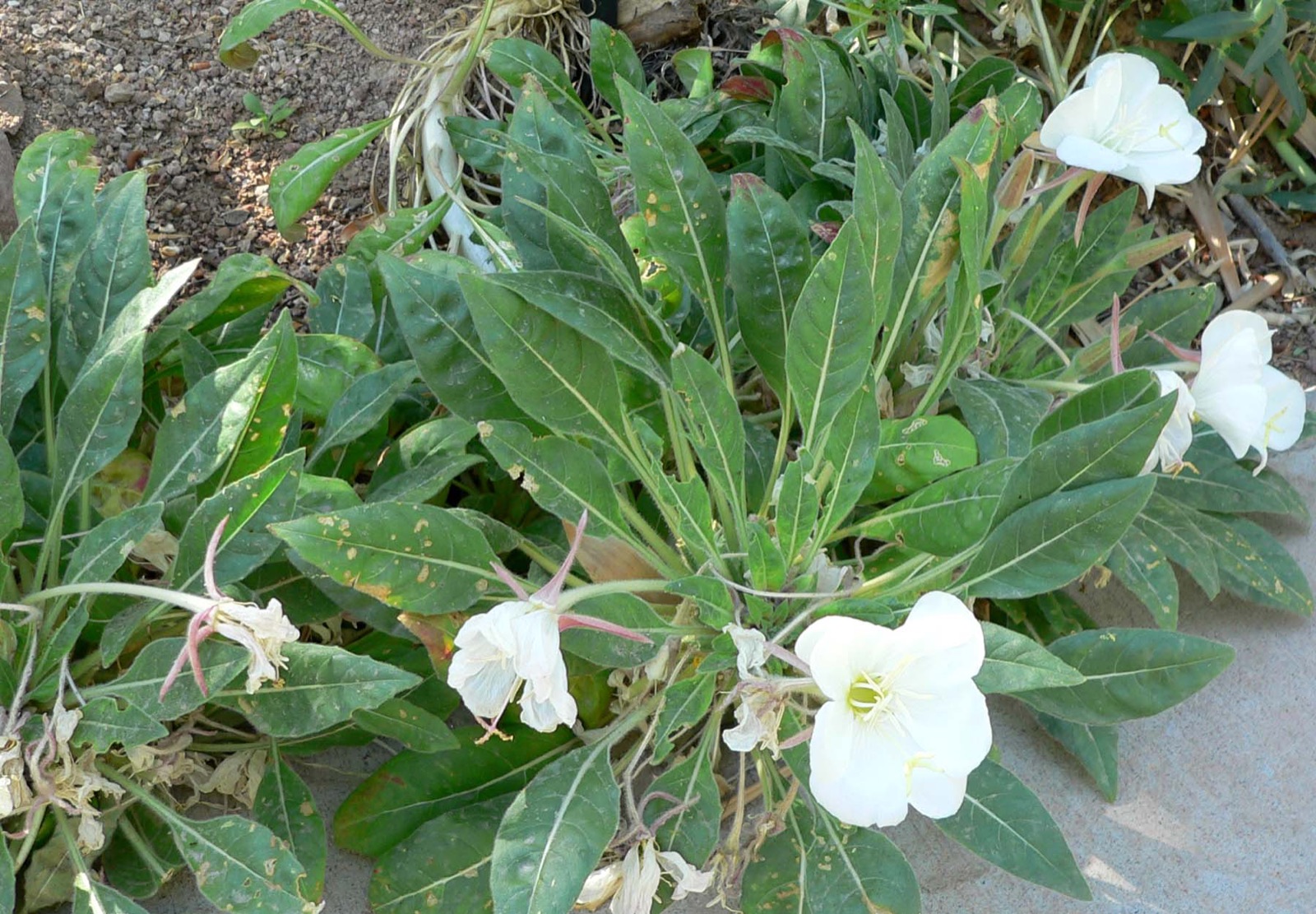
Large white flowers on tufted evening primrose

Native & adapted

Tufted evening primrose

Oenothera caespitosa

Also known as White evening primrose · Desert evening primrose

A low native rosette with large white evening flowers that fade pink, bringing fragrance and moth activity to dry gardens.

Southwest nativeNight pollinatorFragrant flowersLow water
Landscape layersGround cover
Mature size4–10 in. tall × 1–2 ft. wide
Climate fitValley suburbs · USDA 9a–9b · Desert outskirts · USDA 8b–9b · High desert · USDA 6a–8b
Special categoriesPOLLINATOR ATTRACTING
Hardiness guidanceBroadly cold-hardy; summer persistence varies by elevation and microclimate

Before you plant

These conditions determine whether it will thrive.

Cold hardinessHardy here

Hardy to about 10°F. No frost protection needed in Phoenix.

Leaves and wood: damaged below 10°F
Heat toleranceShade from late-afternoon sun

Grows in full or part sun, but in the low desert it holds up better with afternoon shade. Skip hot reflected west walls.

Sources: amwua.org

Right plant, right place

Will Tufted evening primrose grow at your Arizona property?

Place where evening flowers can be enjoyed and where the low rosette will not be buried by aggressive neighbors. Drainage is essential during summer heat.

Best regional fit: Valley suburbs · USDA 9a–9b, Desert outskirts · USDA 8b–9b, High desert · USDA 6a–8b.

Light

Sun exposure

Full sun at elevation; morning sun or light afternoon shade in the hottest low-desert sites.

Water

Irrigation

Low. Water deeply and sparingly after establishment, increasing only enough to support active growth.

Planting & stewardship

How to help Tufted evening primrose thrive

  1. 1

    Plant into gravelly, well-drained soil with the crown at grade.

  2. 2

    Avoid frequent summer irrigation when the plant slows or goes dormant.

  3. 3

    Leave selected seed capsules to support natural renewal.

  4. 4

    Mark dormant plants so the crown is not disturbed during seasonal cleanup.