
Permascaping, by Homegrown Foods
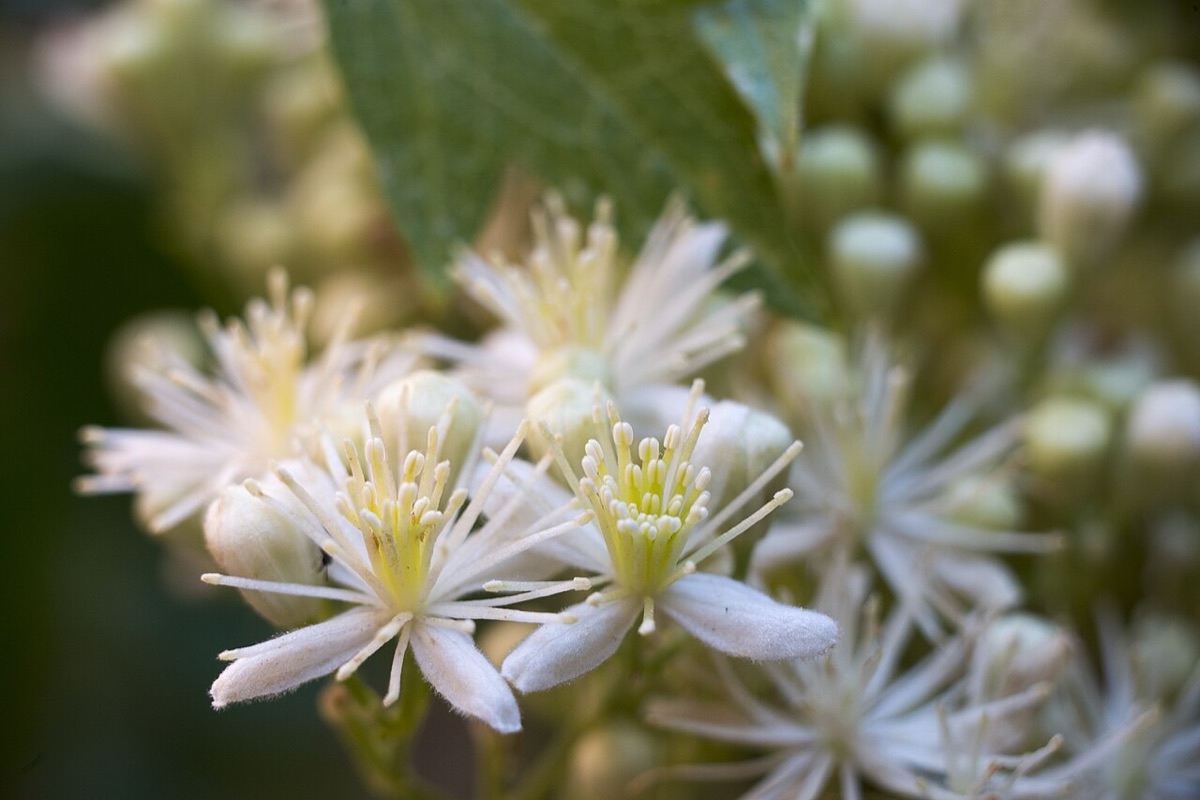
Clusters of small white flowers on western white clematis

Native & adapted

Western white clematis

Clematis ligusticifolia

Also known as Western virgin's bower · White virgin's bower · Yerba de chivato · Western clematis

A fast, native streamside clematis that covers a fence or arbor with clouds of small white flowers in summer, then fluffy seed heads into fall.

Arizona nativeWinter deciduousPollinatorCold hardy
Landscape layersClimbing
Mature size15–20 ft. long with support
Climate fitValley suburbs · USDA 9a–9b · Desert outskirts · USDA 8b–9b · High desert · USDA 6a–8b
Special categoriesPOLLINATOR ATTRACTING
Hardiness guidanceVery cold hardy; drops its leaves in winter. Grows wild from about 3,000 to 8,500 ft. in Arizona

Before you plant

These conditions determine whether it will thrive.

Cold hardinessHardy here

Grows wild into Canada, so Phoenix winters are no problem. It drops its leaves for winter. No cover needed.

Heat toleranceNeeds afternoon shade

A mountain creek-side plant, not a desert one. In Phoenix give it afternoon shade, an east or north exposure, and regular deep water all summer.

Sources: wildflower.org, ecorestore.arizona.edu

Right plant, right place

Will Western white clematis grow at your Arizona property?

It's happiest in the high desert. In the Valley it can work in a shady, watered spot, but it won't take a west wall or reflected heat. It climbs by wrapping its leaf stems, so give it wire or a trellis. Plants are male or female; females make the seed plumes. Don't eat any part of it.

Best regional fit: Valley suburbs · USDA 9a–9b, Desert outskirts · USDA 8b–9b, High desert · USDA 6a–8b.

Light

Sun exposure

Sun to shade in cooler places. In the Phoenix low desert, give it afternoon shade. An east or north side works best.

Water

Irrigation

Moderate to regular. This is a creek-side plant, not a desert one, so in Phoenix it needs steady deep water through summer.

Planting & stewardship

How to help Western white clematis thrive

  1. 1

    Plant on an east or north side, or under taller shade, with mulch over the roots.

  2. 2

    Water deeply and often enough that the soil never dries out completely in summer.

  3. 3

    It goes bare in winter. Cut out dead stems in late winter.

  4. 4

    Every few years, cut the whole plant back to about a foot tall to renew it.